
Reviewed · MULTI-DAY ROMANIA TOURS FROM BUCHAREST
8 Days Private Romania Tour from Bucharest
Romania reveals itself slowly on this eight-day private road trip, with the best moments often arriving between the famous sights: a high mountain pass, a wooden church, a village painted with folk patterns, or a local dish sampled beside a castle. You cover an enormous amount of ground, from Wallachia and Transylvania to Maramureș, Bucovina, Moldavia, and back toward Bucharest.
I like the freedom to adjust the daily plan and the fact that your own English-speaking guide-driver, Nicolas, stays with you throughout. I also like the unusual mix of sights, from the colorful Merry Cemetery and Salina Turda to the Transfăgărășan Highway and Romania’s painted monasteries. The main caution is simple: there is a lot of driving, and some days pack several stops into a long road journey.
Key points to know before booking
- Eight days, one private vehicle: You travel only with your own family or friends in a car or minibus.
- Nicolas as guide-driver: The guide is described as punctual, friendly, well prepared, and good for both information and humor.
- A serious road trip: Mountain passes, winding roads, and long transfers are central to the experience.
- Romania beyond Dracula: You see salt mines, wooden churches, Communist-era memorials, folk art, and painted monasteries.
- Flexible planning: Daily sightseeing can be changed after the tour begins, which helps when weather or energy levels shift.
- Budget carefully: The $2,825.81 price covers the private vehicle, guide, fuel, tolls, parking, guide expenses, and internet, but not your hotels, meals, drinks, or admission fees.
Why this private Romania tour works

This is not a quick highlights trip built around Bucharest, Bran Castle, and a few postcard views. It is a cross-country journey designed to show how different Romania’s regions can feel. You move from Wallachian princely sites to Saxon towns, from Maramureș woodwork to Moldavian monasteries, then back through the Carpathians to the castles around Brașov and Sinaia.
That range is the tour’s biggest strength. You see the country through architecture, food, religion, folk art, mountain roads, and difficult 20th-century history. A private guide also gives you a better chance to ask questions and pause at places that interest you.
The tradeoff is time in the vehicle. Some days include three or five major stops, and many roads cross mountainous country. If you enjoy seeing a lot in one trip and do not mind early starts or long transfers, the pace makes sense. If you prefer two or three slow days in one town, this will feel rushed.
The private format adds real value. Your group does not have to wait for strangers, and the daily plan can be adjusted. Nicolas is available for the full tour, and the feedback about his punctuality, friendly manner, preparation, and jokes suggests that the guide’s personality is an important part of the experience.
More multi-day Romania trips starting in Bucharest:
- 2-Day Medieval Transylvania with Brasov,Sibiu and Sighisoara Tour from Bucharest
★ 4.5 · 145 reviews - 2-Day Transylvania from Bucharest: Brasov, Bran, Sighisoara
★ 5.0 · 60 reviews - 4-Day Private Tour in Transylvania from Bucharest
★ 5.0 · 48 reviews
Day 1: Curtea de Argeș, Poienari, Sibiu, and the Transfăgărășan
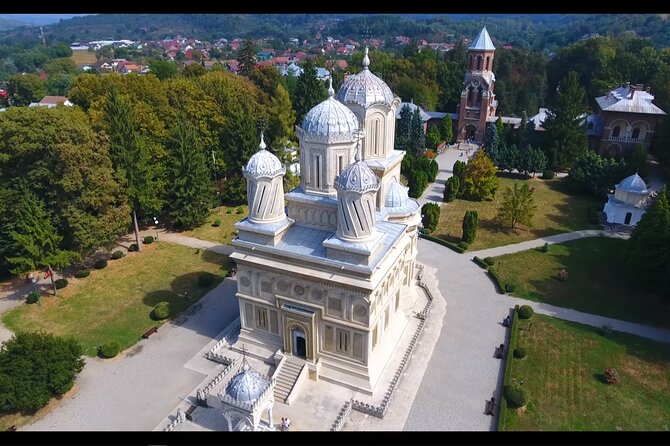
The opening day introduces several sides of Romania at once. At Curtea de Argeș, you visit the old princely center, the 13th-century Royal Church, and the monastery famous for its royal tombs. The monastery has an especially dramatic story tied to sacrifice, ambition, and the building of something meant to last.
You have about 30 minutes at the monastery, so this is an introduction rather than a long study visit. Admission is not included, and you should allow for that extra cost.
Next comes Poienari Fortress, a ruined stronghold high above the Argeș River. It is linked to Vlad the Impaler, the historical figure behind much of the Dracula legend. The fortress was repaired and strengthened under Vlad, then captured by Ottoman forces in 1462. The site receives about two hours, but the climb and exposed position make comfortable shoes important.
The route then reaches Sibiu and its Big Square. This is one of the most appealing urban stops on the tour, with the Evangelical Cathedral, the old center, and centuries of urban history shaped by German-speaking settlers. You have an hour to get a feel for the city, though you may wish it were longer if cafés, architecture, and squares are your main interests.
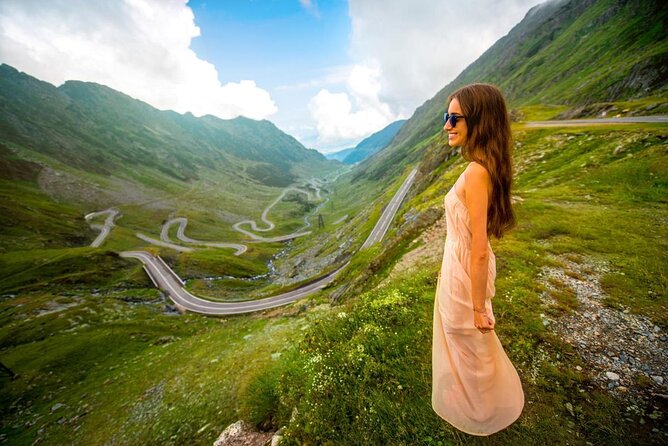
The final highlight is the Transfăgărășan Highway. The road stretches more than 150 kilometers and reaches 2,042 meters near Lake Bâlea. It is generally open only from June to October, so the season matters. The road itself is part of the attraction, with mountain views, bends, and a tunnel linking the northern and southern sides.
Day 2: Salt, Cluj, and a towering wooden church
Salina Turda is one of the tour’s most unusual stops. The former salt mines include the Iosif, Terezia, and Rudolf chambers, along with old mining machinery, a salt-carved altar, and the Stairway of the Rich. Salt extraction here reaches back to Roman times, giving the site both industrial and ancient connections.
The mine is also known for its saline air. The tour description points to its appeal for people with allergies or asthma, but you should treat that as a feature of the environment, not a medical promise. Admission is extra, and two hours gives you enough time to see the major underground spaces.
In Cluj-Napoca, the Alexandru Borza Botanical Garden provides a change of pace. The wider city center includes Baroque, Renaissance, and Gothic buildings, some dating from the 17th century. The stop is listed at about 90 minutes, so you will get an introduction rather than a full city visit.
The day ends at the wooden church in Surdești. Its tower rises to about 54 meters, and the church is praised for its craftsmanship and scale. It was built in 1721, when constructing such a tall wooden building required remarkable skill. The visit lasts about 45 minutes, which is enough to appreciate the structure but not enough for a slow architectural study.
Day 3: Merry Cemetery and the memory of Communism
Săpânța’s Merry Cemetery gives the tour one of its most distinctive stops. The painted crosses use humorous poems and scenes from the lives of the dead. The tone is unusual for a cemetery, but the art also preserves local memory and everyday character.
You have about an hour here. Take time to look closely at the carved figures and painted details rather than treating the cemetery as a quick photo stop. Admission is not included.
The Memorial of the Victims of Communism and of the Resistance in Sighet adds a much darker note. The museum examines the suffering caused by Romania’s totalitarian regime and the people who resisted it. The two-hour visit gives this difficult subject the attention it needs.
This contrast is one of the tour’s strengths. In the same region, you encounter playful folk art and a serious account of imprisonment, repression, and political control. Romania is easier to understand when both parts are seen together.
At Săpânța-Peri Monastery, you visit a wooden church associated with a religious settlement dating back to 1391. The church sits beside the village in a dendrology park, and the stop lasts about 45 minutes. Admission is free, making it a simple addition to an already full day.
A few more Bucharest trips worth putting side by side
- Castles of Transylvania: Private Day Trip from Bucharest
★ 4.5 · 248 reviews - Dracula’s Castle, Peles Castle and Brasov – Private Day Trip from Bucharest
★ 5.0 · 211 reviews - Best of Bucharest | Private Walking Tour
★ 5.0 · 199 reviews - Bucharest Panoramic Sightseeing – Private City Tour
★ 5.0 · 128 reviews
Day 4: Maramureș woodwork and the road to Bucovina

Bârsana Monastery is one of the most photogenic religious sites on the route. Its wooden church rises about 57 meters, and the surrounding complex is known for its careful wooden construction and peaceful setting. You have 45 minutes, so focus on the church, the grounds, and the details of the woodwork.
The route then crosses Tihuța Pass, also called Borgo Pass. At about 1,201 meters, it connects Moldavia and Transylvania through the Bârgău Mountains. The road was first built between 1812 and 1817, later paved, and can include slower traffic, particularly trucks.
That warning matters. The pass is scenic, but the driving time is listed at three hours, and road conditions or traffic can affect the schedule. Your guide’s flexibility is useful here, since the day may not unfold exactly as planned.
Ciocănești provides a lighter final stop. The village is known for houses decorated with colorful traditional patterns, often compared to Easter egg designs. It is a good example of local identity expressed through ordinary buildings rather than a formal museum.
Day 5: Bucovina’s painted monasteries
Day five is the tour’s strongest concentration of religious art. Voroneț Monastery is famous for the intense blue used in its exterior frescoes, often called Voroneț blue. Built by Stephen the Great in 1488, the church is sometimes called the Sistine Chapel of the East.
The visit lasts about 45 minutes. That is enough to see the main fresco program, but you will want to listen closely to Nicolas if you want help reading the scenes and symbols.
Humor Monastery offers another fortified religious complex, shaped by the need to protect spiritual treasures during troubled periods. Its church dates from roughly 500 years ago, while an earlier church on the site was built around 1400 and later destroyed.
Sucevița Monastery is another major stop, with painted walls and a fortified form. Its biblical scenes make the building feel like a large illustrated book, even if you do not know the religious stories in advance. The monastery is part of the UNESCO cultural heritage of the region.
At Moldovița Monastery, Byzantine, Gothic, and Moldavian elements come together. The murals cover both interior and exterior surfaces, making the church a rich visual stop even on a short visit.
The final stop is the Lucia Condrea Egg Museum in Moldovița. More than 5,500 decorated eggs are displayed across two levels and 56 cases. This is not a filler attraction. It shows how local craft traditions can become highly developed art, and it gives the day a welcome change from monumental churches.
Admission fees are extra at each of the monasteries and the museum. If you are sensitive to repeated church visits, this day may feel crowded. If you enjoy frescoes, religious art, and local craft, it is one of the tour’s highlights.
Day 6: Bicaz Gorge, Red Lake, and folk sculpture
Bicaz Gorge brings the tour back outdoors. The road cuts through about eight kilometers of rock, often with a cliff on one side and a drop on the other. The gorge connects the historic regions of Moldavia and Transylvania and is also known as a climbing area.
The drive is the main event, but you have about two hours to take in the views. A small cliff-dwelling bird called the wallcreeper can be seen in the area, although sightings are not guaranteed.
Nearby Red Lake sits at about 980 meters. It formed after a landslide in the 19th century, though the exact year is debated. The lake has traditional cabins and hotels around it, and the 45-minute stop gives you time to see the setting before continuing.
The Popa Museum in Târpești offers a very different experience. Sculptor Nicolae Popa founded the museum in his own home in the 1970s. After being wounded in the Second World War and imprisoned by the Communist regime, he devoted himself to Romanian values and folk-inspired art.
The museum is a useful reminder that Romanian culture is not only found in grand churches and castles. It also lives in handmade objects, personal collections, and artists who worked outside official institutions.
Day 7: Sighișoara, Viscri, and Brașov
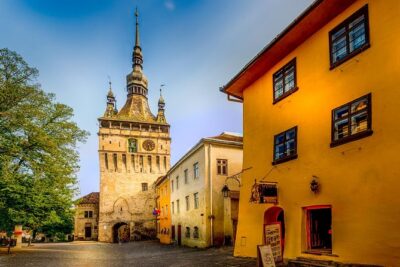
Sighișoara Clock Tower anchors the visit to one of Romania’s best-preserved medieval towns. The citadel dates to 1280 and has remained inhabited for more than 700 years. The two-hour stop includes the Clock Tower and Arms Museum.
Sighișoara is also associated with Vlad the Impaler’s birth, adding another historical layer to the Dracula connection. Here, though, the real interest is the living citadel: its streets, fortified character, and old buildings.
Viscri is a rural counterpoint. The village dates to the 12th century and is known for its fortified church and preservation work. Prince Charles helped bring international attention to the village, while the Mihai Eminescu Trust supported local renewal.
The two-hour stop should give you time to appreciate the village rather than simply photograph it from the roadside. This is one place where slower observation pays off.
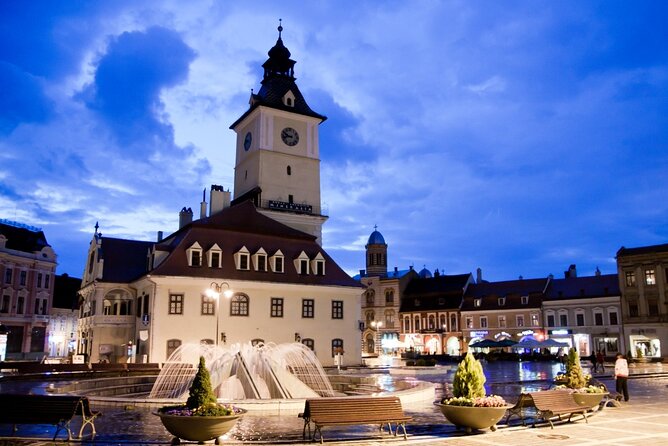
The day ends in Brașov’s Council Square, a historic market center surrounded by 18th- and 19th-century buildings. You have two hours here, enough for a useful walk and time to absorb the square’s urban setting. Compared with the remote villages earlier in the tour, Brașov feels more polished and city-like.
Day 8: Bran, Peleș, and Sinaia
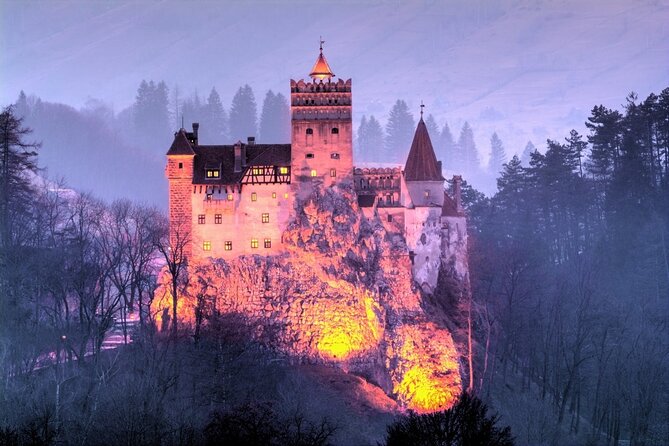
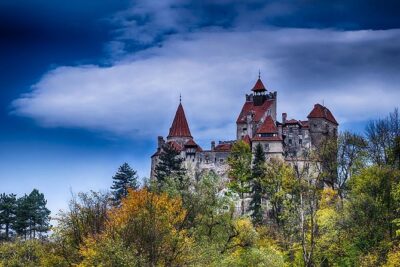
Bran Castle is the tour’s most famous Dracula stop. The connection between Bran and Bram Stoker’s fictional castle is largely a matter of resemblance and popular imagination, while the building itself has its own history. Inside, you can expect a castle visit shaped by rooms, objects, legends, and the strong Dracula brand.
The two-hour stop also gives you time outside the castle to sample traditional foods such as handmade cheeses, plum or pear brandy, ham, and sausages. Admission is extra.
Peleș Castle is the grand finale. Built as the Romanian royal family’s summer residence, it is known for its ornate design and royal associations. You have two hours, which should allow a more substantial visit than at some of the smaller religious sites.
Sinaia Monastery completes the journey. Founded in 1695 by Prince Mihail Cantacuzino, it was named after Saint Catherine’s Monastery on Mount Sinai. The monastery is still inhabited by Orthodox monks and provides a quieter closing stop after the crowds and spectacle of Bran and Peleș.
What the $2,825.81 price really covers
The price is high, but it is for a private eight-day service rather than a seat on a basic coach. It includes the vehicle, Nicolas as your licensed English-speaking guide-driver, fuel, parking, road tolls, guide accommodation and meals, and wireless internet in the car.
You still need to budget for your own hotels, meals, drinks, and entrance fees. The operator can recommend hotels based on your budget, but accommodation itself is not included. Since there are many paid sites, admission costs can add up.
The strongest value comes if you are traveling with family or friends who can share the private vehicle and guide service. The price is less attractive for a solo visitor unless privacy, flexibility, and the broad route matter more than keeping the cost low.
Who should book this road trip
I would choose this tour if you want to see several regions of Romania in one carefully connected journey. It suits people who enjoy castles but also want museums, folk art, churches, mountain roads, and difficult historical subjects.
It is especially useful for a small group that wants control over the pace. You can ask for changes after the tour begins, and the guide can help decide where to spend more time when the road takes longer than planned.
I would hesitate if you dislike long drives, have limited mobility for uneven or steep sites, or want a relaxed holiday centered on one or two bases. Poienari Fortress, mountain roads, and a packed series of daily stops require energy.
Free cancellation is available up to 24 hours before the start time. The tour is private, service animals are allowed, and most people can participate according to the supplied information.
Should you book it?
Book it if you want a wide-ranging introduction to Romania and enjoy the road as much as the destination. Nicolas’s role matters here: the experience depends on a guide who can keep long drives interesting, explain the country’s past, and adjust the plan when needed.
Skip it if you want slow mornings, included meals, or a short list of famous sights. This is an ambitious route with substantial driving and separate costs for hotels, food, and admission. For the right group, though, it offers a memorable look at Romania’s castles, mountains, villages, churches, art, and complicated past.
FAQ
Is this an eight-day private tour from Bucharest?
Yes. The tour begins in Bucharest and lasts approximately eight days. Only your own group participates, using a private car or minibus.
Is an English-speaking guide included?
Yes. A private licensed English-speaking guide-driver is available throughout the tour. The guide identified in the supplied information is Nicolas.
Are hotels included in the price?
No. Accommodation is not included. The operator can recommend hotels according to your budget.
Are meals and drinks included?
No. Your meals, beverages, and accommodation are not included. The guide’s accommodation and meals are covered.
Are entrance fees included?
No. Entrance fees for the listed attractions are paid separately. Several stops are marked as free, but many monasteries, museums, castles, and Salina Turda require admission.
Is the Transfăgărășan Highway open all year?
The supplied information says it is fully open only from June to October. Seasonal access can affect this part of the route.
Can the daily schedule be changed?
Yes. The private format allows flexibility, including changes to the daily plan after the tour has started.
What is included besides the guide and vehicle?
The price includes fuel, parking, road tolls, the guide’s accommodation and meals, and complimentary wireless internet in the vehicle.
Newest Bucharest trips we have written up
- Bucharest: Dealu Mare Winery Private Trip with Wine Tasting★ 4.9 · 6 reviews
- Winery touring & private wine tasting – one day private tour★ 5.0 · 3 reviews
- Traditions in Bucharest: Village Museum and Wine Tasting★ 5.0 · 8 reviews
- Village Museum Bucharest Guided Tour★ 5.0 · 6 reviews
- Your rendez-vous with Europe’s past: time-travel to Maramures, Transylvania★ 5.0 · 6 reviews
- Private Wine Tasting at Bucharest’s First Wine Bar★ 5.0 · 3 reviews
- Walking Tour of Bucharest City Center – Private Tour★ 5.0 · 4 reviews
- Wine tasting in Bucharest Old town – bonus cheese platter★ 4.5 · 6 reviews
Multi-Day Romania Tours from Bucharest, compared.
2-Day Medieval Transylvania with Brasov,Sibiu and Sighisoara Tour from Bucharest
Read our review →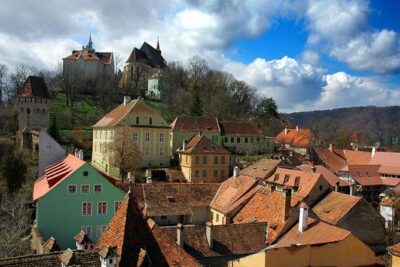
2-Day Transylvania from Bucharest: Brasov, Bran, Sighisoara
Read our review →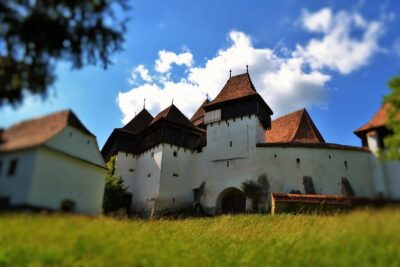
4-Day Private Tour in Transylvania from Bucharest
Read our review →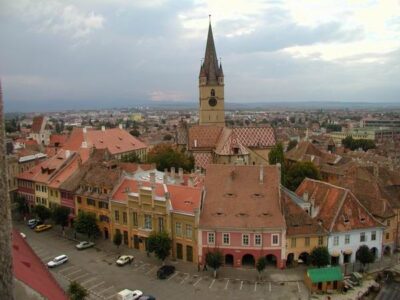
Transylvania Castles 4-day tour from Bucharest
Read our review →
2-Day Private Tour of Transylvania from Bucharest
Read our review →
Classic Romania Tour – small group in 8 days: Transylvania and Maramures
Read our review →
2 Days Private Tour in Transylvania from Bucharest – 4 Medieval Cities
Read our review →Browse the lists this tour appears in