
Reviewed · BRASOV AND TRANSYLVANIA DAY TRIPS FROM BUCHAREST
Your rendez-vous with Europe’s past: time-travel to Maramures, Transylvania
Romania’s past feels most alive in Maramures, where wooden churches, village cottages, and hand-painted cemetery crosses still tell local stories. This seven-day private trip links that northern rural world with Transylvania’s castles, fortified churches, and medieval towns, without asking you to manage Romania’s long drives yourself.
I like the personal scale of the tour and the way it mixes famous sights with places such as Breb, Ieud, and Desesti. I also like having guide Gelu and driver Vlad on hand, since Gelu brings warmth, history, and practical ideas, while Vlad handles the roads. The main drawback is the pace: several days involve long drives, and the price of $2,185.67 per person is a serious outlay, especially since most lunches and dinners are not included.
Key points to know before booking
- Traditional Breb cottage stay: Spend time in a Maramures village rather than sleeping only in city hotels.
- Private touring with Gelu and Vlad: Your group travels in an air-conditioned vehicle, with room to adjust the schedule.
- Seven nights with breakfast: Superior three-star hotels and guesthouses are included, along with two lunches and two dinners.
- A strong UNESCO route: See wooden churches, fortified churches, Sighisoara, and Alba Iulia.
- Big-name Transylvania sights: Bran Castle, Peles Castle, Brasov, Sibiu, and the Saxon villages all make the cut.
- Serious modern history: The Sighet prison memorial adds needed weight to a trip otherwise filled with beautiful towns and churches.
Why this route works for seeing Romania
Many Romania tours stay close to Bucharest, Brasov, and Bran Castle. This one reaches much farther north. That matters because Maramures gives you a clearer sense of old village life, while Transylvania supplies the medieval towns and castles most first-time visitors expect.
You travel privately, so the experience is not built around a fixed coach group. Gelu can adjust the timing and explain why a church, fortress, or town matters. The tour company describes the program as bespoke, but the route still has a clear shape: Wallachia on the first day, central Transylvania and Cluj, rural Maramures, then the Saxon heartland before returning to Bucharest.
The tradeoff is distance. Romania is a large country, and the route covers a great deal of ground in a week. You will spend plenty of time in the car, especially on the move from Maramures to Biertan and Sighisoara. The private vehicle makes this far more manageable than arranging the same route by public transport, but you should still be comfortable with full touring days.
More Brasov and Transylvania day trips from Bucharest:
- Bucharest: Dracula’s Castle, Peles Castle, & Brasov Old Town
★ 4.5 · 17,858 reviews - Bucharest: Dracula Castle, Peles Castle & Brasov Old Town
★ 4.6 · 10,891 reviews - Bucharest: Dracula’s Castle, Peleș Castle & Brașov Day Trip
★ 4.5 · 5,919 reviews
Day one: Cozia Monastery and Sibiu
Pickup is offered from your Bucharest hotel or the airport. The first drive follows the Olt River Valley, giving you an early look at Romania beyond the capital.
Cozia Monastery dates from 1388 and was founded by Mircea the Elder, a Wallachian prince and grandfather of Vlad the Impaler. The stop lasts about 30 minutes, so it is a short introduction rather than a full monastery visit. Still, it helps set the tone: Romanian history here is not confined to museums. It sits beside rivers, roads, and working towns.
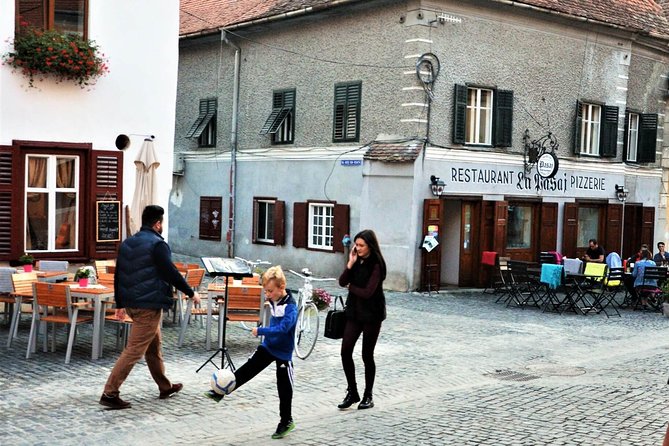
After lunch and a short rest, you reach Sibiu for roughly two hours of guided touring. The old city is one of the trip’s strongest urban stops, with the Grand Square, Small Square, and Albert Huet Square. The last is the oldest of the three, dating to the 12th century.
You also visit Sibiu’s Orthodox Cathedral and Evangelical Church. Climbing the medieval stairs of the Council Tower brings a fine view over the city, though anyone with mobility concerns should note that the tower climb is part of the appeal.
This first day combines a scenic drive, a historic religious site, and a polished medieval city. It is a long opening day, but the stops are varied enough to keep it from feeling like a simple transfer.
Day two: Alba Iulia’s fortress and Cluj-Napoca
Alba Iulia gives you a concentrated lesson in Romanian and Hungarian history. The Alba Carolina fortress is tied to John Hunyadi, also known as John Corvin, and his son Matthias Corvinus. Hunyadi was a major military commander who helped stop the Ottoman advance at Belgrade in 1456.
Inside the fortress, Saint Michael Cathedral contains Hunyadi’s burial place. Construction began in 1004, giving the church an age that is hard to grasp until you are standing among its stonework. You also see the Orthodox Coronation Cathedral and remains of the Roman castrum of the 13th Gemina Legion.
The visit lasts about two hours and admission is included. This is one of the places where a guide adds real value. Without context, the fortress can seem like a handsome collection of walls and churches. With Gelu’s historical explanation, it becomes a meeting point of Roman, medieval Hungarian, Orthodox, and modern Romanian stories.
The afternoon goes to Cluj-Napoca, a university city with a more contemporary feel. The short city tour ends near the house where Matthias Corvinus was born, now surrounded by places to eat and have a drink.
Cluj is not given as much time as Sibiu or Brasov, so you should think of it as a taste rather than a full city visit. That is a fair choice on this route, since the next day turns north toward Maramures.
Day three: wooden churches and village life in Breb
The road from Cluj heads into Maramures, described here as one of Europe’s last strongholds of traditional peasant culture. The main stop is Surdesti, home to a Greek-Catholic wooden church built in 1766.
Surdesti’s church is a UNESCO World Heritage monument and was, until recently, regarded as the tallest wooden church in the world. The stop takes about 30 minutes, enough to admire the construction and understand why these churches are so important, but not enough for a slow architectural study.
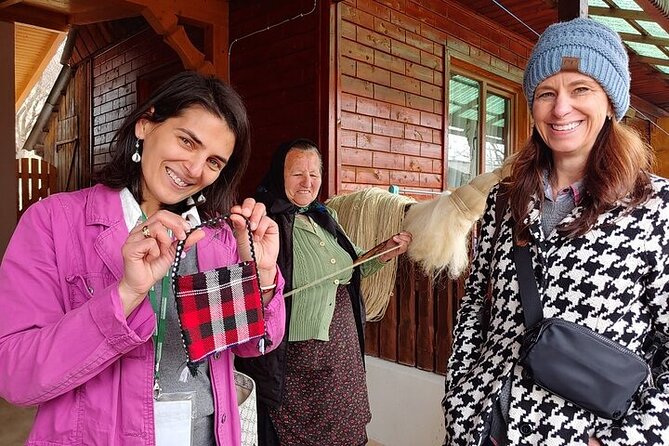
The more distinctive part of the day comes after noon, when you check into a traditional cottage in Breb. You stay there for the next couple of nights, with time for a quiet afternoon and traditional food from your hosts.
This is a valuable change of rhythm. After two days of fortresses and city streets, Breb gives you a closer look at village life. The information provided does not promise a list of organized activities, so do not expect a packed afternoon. The point is the setting, the cottage, and the chance to slow down.
For me, this is one of the best design choices in the trip. A standard hotel in a nearby town would be easier, but it would not give you the same sense of place. Accommodation in a traditional cottage can also be simpler than a city hotel, which is worth keeping in mind if you prefer uniform comfort.
Same city, a completely different sort of day:
- Bucharest: Palace of Parliament Tickets and Guide
★ 4.3 · 3,182 reviews - Bucharest: Day Trip to Dracula Castle, Peles Castle & Brașov
★ 4.4 · 3,049 reviews - Bucharest to Dracula Castle, Peles Castle and Brasov Guided Tour
★ 4.5 · 2,933 reviews - Bucharest: Palace of Parliament Tickets and Guided Tour
★ 4.4 · 1,877 reviews
Day four: Barsana, Sapanta, and the Sighet prison
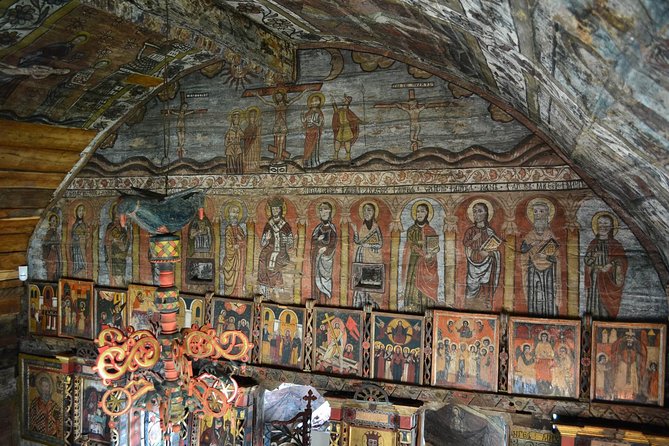
Day four is the most varied day in Maramures. You begin at Barsana Monastery, a large Orthodox complex built in the early 1990s. Its buildings use local forms and timber traditions, showing how Maramures style continues in modern religious architecture.
Next comes the Merry Cemetery in Sapanta. Local artist Stan Ioan Patras began carving and painting colorful wooden crosses in 1935. Each cross carries a short account of the person’s life or death, often with dry humor. The result is unusual and memorable, a cemetery where grief and laughter share the same painted boards.
This stop is not just a quick photo opportunity. It offers a glimpse of local character and a very different way of remembering the dead. The humor can be sharp, so it may not suit every visitor, but it is one of the most distinctive cultural stops in Romania.
The day then turns darker at the Memorial of the Victims of Communism and of the Resistance in Sighet. The former prison held political leaders, religious figures, academics, military officers, and members of Romania’s cultural elite from 1950 to 1955. Many were old or already ill, and the prison was used to crush opposition to the Communist regime.
Allow an hour here, but be ready for an emotionally heavy visit. The memorial gives necessary balance to the romantic image of Romania’s castles and villages. It explains the suffering behind the country’s 20th-century political story, not just its medieval legends.
The final stop is Desesti, another UNESCO wooden church. Its old, naive paintings are particularly noted. The visit lasts about 30 minutes, making it a fitting final glimpse of Maramures before the long move south the next day.
Day five: Ieud, Biertan, and medieval Sighisoara
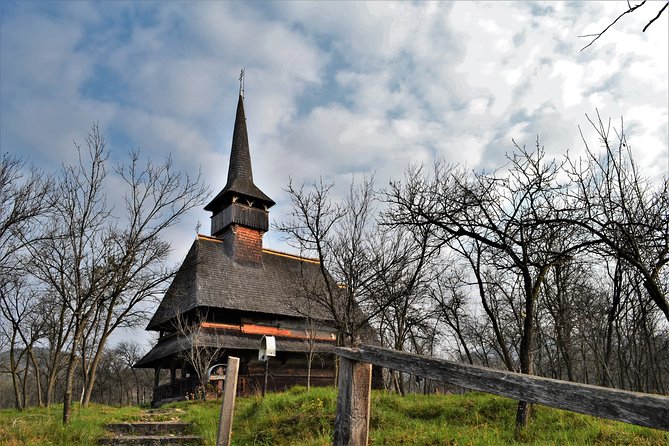
The morning begins at Ieud, where two wooden churches show different strands of local religious life. The Church on the Hill is an Orthodox building from the 17th century and a UNESCO site. The Church in the Valley is Greek-Catholic and is known as the Wooden Cathedral because of its slender proportions.
The Valley church dates from 1718, after the last Tartar invasion of Maramures. It was never painted, but it holds a collection of glass icons. That contrast makes the stop worthwhile: you are not simply seeing the same wooden church twice.
Then comes a long drive south toward the Saxon part of Transylvania. This is the day when the private car matters most. You do not need to change buses or calculate rural connections, but you should expect the road portion to take a substantial part of the day.
Biertan provides a well-chosen break. Its fortified church was built between 1486 and 1524 and is protected by defense walls. Inside are a striking nave ceiling and tombstones belonging to former bishops and other local figures. Admission is included, and the visit takes about an hour.
By late afternoon, you reach Sighisoara, one of Romania’s most appealing medieval towns. The citadel is a UNESCO site, and the old streets are especially atmospheric later in the day, when you can explore after the main daytime rush. Sighisoara is also linked with Vlad the Impaler, who was born here.
The town deserves your attention beyond the Dracula connection. Its appeal comes from the citadel itself, the preserved medieval setting, and the chance to walk rather than simply photograph a monument from outside.
Day six: Saxon villages and Brasov
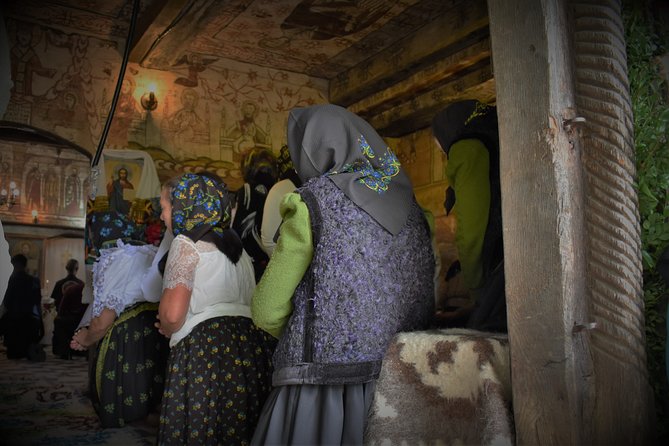
This day focuses on rural Saxon Transylvania. At Viscri, you have time for the fortified church and lunch in the remote village. The village became widely known after Prince Charles bought an old Saxon house there, a blue home built in 1753.
The appeal of Viscri lies in its rural setting and traditional buildings, not just the famous association. You should expect a slower village visit rather than a large attraction with many facilities. The fortified church is included, and the stop lasts about two hours.
On the road to Brasov, you see Saschiz fortified church, another UNESCO monument. Its tower resembles Sighisoara’s Clock Tower, creating a useful visual link between the two towns. You also catch sight of Rupea Fortress, one of Romania’s oldest fortifications, built over earlier Roman and Dacian sites.
These roadside views are important because they show how much of Transylvania’s character lies between the headline destinations. You do not get a full visit at every site, but the route gives you a broad sense of the fortified village network.
In Brasov, the tour turns urban again. The historic center grew from a fortress established in 1211 by the Teutonic Knights and later developed by German settlers. You visit the Black Church, a Gothic monument from the 14th century, as well as medieval fortifications, bastions, towers, and Rope Street, one of Europe’s narrowest streets.
Brasov is among the easiest places on the route to enjoy on foot. After several rural stops and long drives, its cafes, squares, and compact old center provide a welcome change.
Day seven: Bran Castle, Peles Castle, and Bucharest
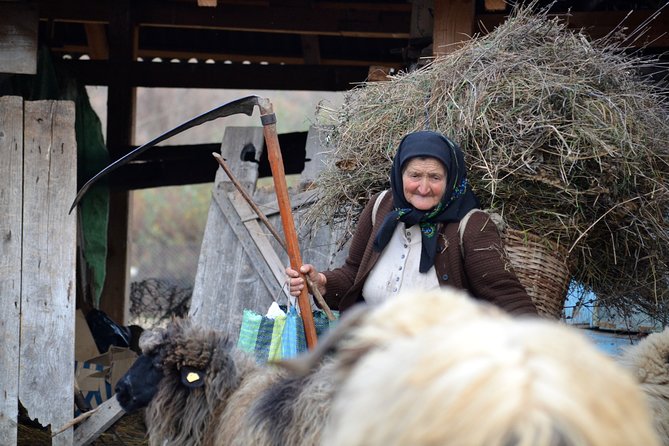
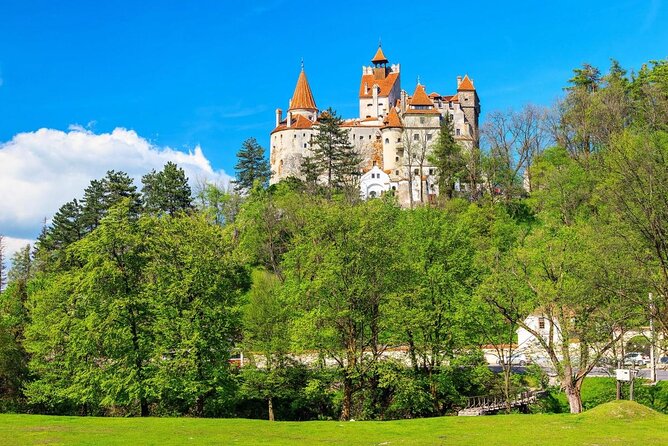
The final touring day begins with Bran Castle, the place most closely tied to the Dracula legend. The castle sits near Bran Pass, with views toward the Piatra Craiului and Bucegi mountains.
The legend brings many people here, but the castle’s appeal is broader. You get a dramatic setting and a clear look at how tourism has shaped Romania’s popular image. Admission is included, and two hours gives you time to visit rather than rush through.
After Bran, the road continues to Sinaia and Peles Castle. Built in the late 19th century, Peles is a sharp contrast to the medieval fortresses. It was commissioned by Carol I, Romania’s first king, whose German background and sober character contrast with the castle’s ornate style.
Peles is one of the strongest architectural stops on the route. The two-hour visit gives you room to appreciate the building’s elaborate interiors and its mountain setting. The castle may be the most polished attraction of the week, so it is a fitting final major visit.
Back in Bucharest, you visit Stavropoleos Church, built in 1724. The small monastery sits in the center of the city and offers a quiet closing note after the scale of the castles and long roads.
What the $2,185.67 price includes
The price covers private transportation in an air-conditioned vehicle, the driver and guide service, entrance fees described in the program, and seven nights in superior three-star hotels and guesthouses. Breakfast is included each morning, along with two lunches and two dinners.
That is a meaningful package for a private trip covering this much ground. You are paying for convenience, route planning, local guidance, and accommodation, not simply for admission to Bran Castle. A comparable self-drive trip would require arranging hotels, finding rural churches, managing parking, and navigating long distances.
Still, budget carefully. Most meals are not included, and photo fees are separate. The price is per person in a double room, so solo visitors may want to confirm how the cost changes. Group discounts are offered, but the tour remains private, meaning only your own party participates.
The cancellation terms are strict: the experience is non-refundable and cannot be amended for a refund. I would only book once your dates and group plans are firm.
Who will enjoy this private Romanian journey?
I would recommend it to you if you want Romania’s major sights but also care about local traditions, religious architecture, and 20th-century history. It works especially well for couples, families, or friends who prefer their own vehicle and a flexible guide rather than a large coach.
Gelu’s role is central. He is described as warm, passionate about Romania, and generous with time for questions, photographs, and practical suggestions about food and places to see. That makes a difference on a route where context turns a pleasant building into a meaningful stop.
You should think twice if you dislike long car journeys, frequent hotel changes, or full touring days. You should also be comfortable with a mix of accommodation, since the route uses both hotels and guesthouses and includes a traditional cottage in Breb.
Should you book it?
Book this tour if you want a private, history-led introduction to Romania that reaches well beyond Dracula and Bucharest. The strongest reasons are the Breb village stay, Maramures wooden churches, the Sighet memorial, Saxon fortified villages, and the practical ease of traveling with Gelu and Vlad.
Skip it if you want a slow holiday based in one or two towns, or if the price leaves little room for meals and extras. For an active first visit, though, this is a thoughtful route with real variety: royal castles, village traditions, medieval walls, religious sites, and difficult modern history all fit into one demanding but rewarding week.
FAQ
Where does the tour begin and end?
Pickup is available from your hotel in Bucharest or from the airport. The tour returns to Bucharest on the final day after visits to Bran Castle, Peles Castle, and Stavropoleos Monastery.
How long does the experience last?
The tour lasts approximately seven days and includes seven nights of accommodation.
Is this a private tour?
Yes. Only your group participates in the activity.
Who guides and drives the tour?
The guide is Gelu, and the driver is Vlad. The tour uses private transportation in an air-conditioned vehicle.
What accommodation is included?
Seven nights are included in superior three-star hotels and guesthouses, based on double-room occupancy. Breakfast is included.
Are meals included?
Two lunches and two dinners are included. Other meals are not included, and the price also excludes photo fees.
Are entrance fees included?
All fees and taxes are included, and admissions are specifically included for attractions such as Alba Iulia, the Surdesti wooden church, Barsana Monastery, the Merry Cemetery, the Sighet memorial, Biertan, Sighisoara, Viscri, Brasov, Bran Castle, and Peles Castle.
Does the tour visit Bran Castle and Peles Castle?
Yes. Bran Castle is visited on the final day, followed by Peles Castle in Sinaia.
Can the tour be changed or refunded after booking?
No. The experience is non-refundable and cannot be changed for any reason after booking.
Newest Bucharest trips we have written up
- Bucharest: Dealu Mare Winery Private Trip with Wine Tasting★ 4.9 · 6 reviews
- Winery touring & private wine tasting – one day private tour★ 5.0 · 3 reviews
- Traditions in Bucharest: Village Museum and Wine Tasting★ 5.0 · 8 reviews
- Village Museum Bucharest Guided Tour★ 5.0 · 6 reviews
- Private Wine Tasting at Bucharest’s First Wine Bar★ 5.0 · 3 reviews
- Wine tasting in Bucharest Old town – bonus cheese platter★ 4.5 · 6 reviews
- Walking Tour of Bucharest City Center – Private Tour★ 5.0 · 4 reviews
- Walking tour of Bucharest★ 5.0 · 3 reviews
Brasov and Transylvania Day Trips from Bucharest, compared.
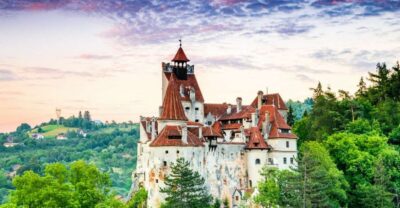
Dracula’s Castle, Peles Castle, & Brasov Old Town
Read our review →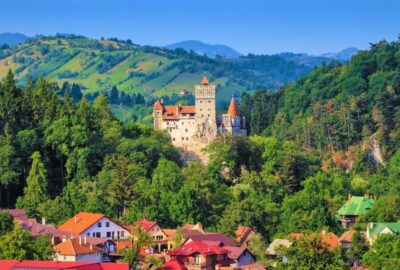
Dracula Castle, Peles Castle & Brasov Old Town
Read our review →
Dracula’s Castle, Peleș Castle & Brașov Day Trip
Read our review →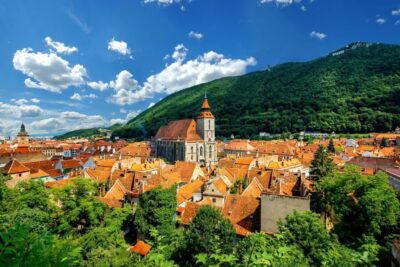
Day Trip to Dracula Castle, Peles Castle & Brașov
Read our review →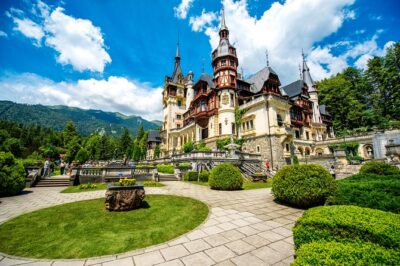
Bucharest to Dracula Castle, Peles Castle and Brasov Guided Tour
Read our review →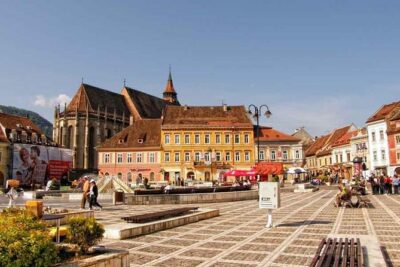
Dracula’s Castle, Peles Castle and Brasov Day Trip from Bucharest
Read our review →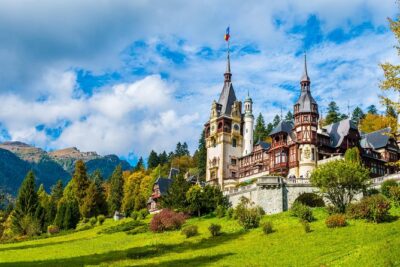
Transylvania and Dracula Castle Full Day Tour from Bucharest
Read our review →
Browse the lists this tour appears in