
Reviewed · BUCHAREST
Eastern Orthodox Church Art in Bucharest
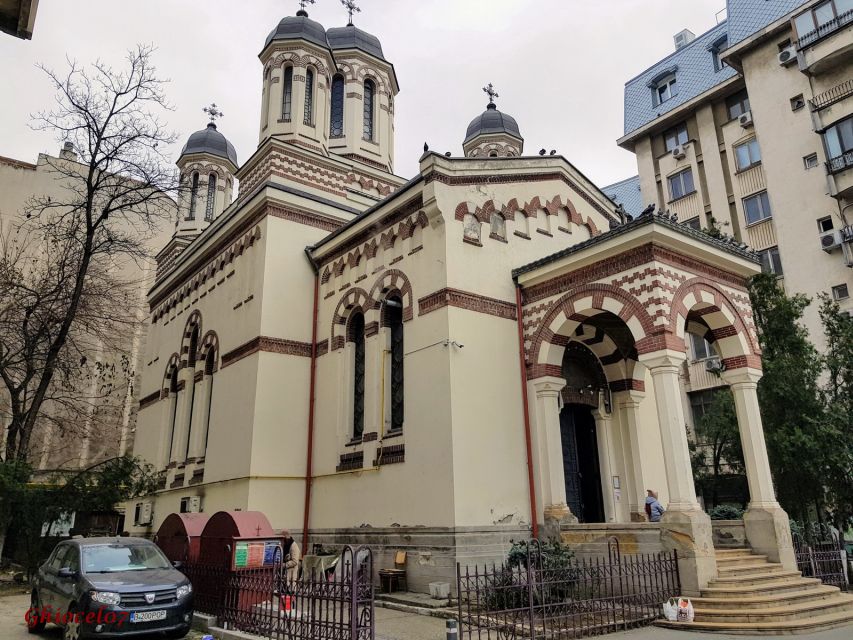
Bucharest’s Old Town is more than cafés, bars, and polished façades. Step through the doors of its active Orthodox churches and you find painted walls, incense, icons, and traces of Wallachia’s medieval world still used for worship. This 2.5-hour walking tour links six churches, including the tiny Lady’s Church and the ornate Stavropoleos Monastery.
I like two things here: the route reaches churches that can be difficult to locate on your own, and the small groups, limited to 10 people, allow the guide to adjust the pace. Guide Helen is praised for her clear explanations and warm manner, while one Spanish-language note identifies her as Elena. The main caution is that these are working churches, not museums, so modest dress and quiet behavior are essential. Also confirm the final church when booking, since the route description names Saint Demetrios while the included list names Saint Cyprian.
Key points before you book
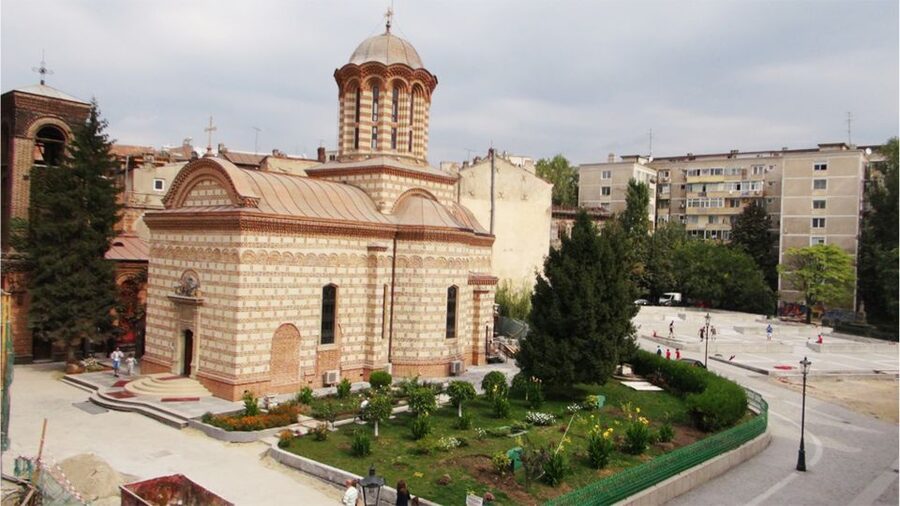
- Wallachian beginnings: Start beside the Old Princely Court and Saint Anton Church, a direct link to Bucharest’s medieval rulers.
- Six active churches: Visit Saint Anton, Saint George Km 0, Saint Elijah, the Lady’s Church, Stavropoleos Monastery, and a final church listed as either Saint Cyprian or Saint Demetrios.
- Rare original frescoes: The Lady’s Church has some of Bucharest’s oldest preserved original frescoes.
- A major church painter: Saint George contains a fresco by one of Romania’s leading church painters.
- Small-group guidance: No more than 10 people join, with tours offered in English, Spanish, or Romanian.
- Dress matters: Short skirts, sleeveless shirts, tight clothing, ripped clothing, strong fragrances, and pets are not allowed.
Why Bucharest’s church art deserves your time
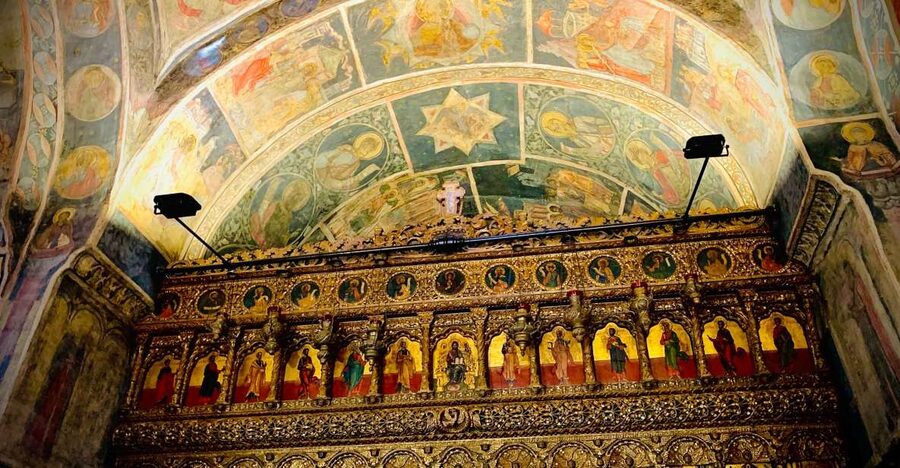
Bucharest can feel modern, patched together, and constantly on the move. Its Orthodox churches offer a different view of the city. Their art is not kept behind museum glass. It belongs to places where people still pray, light candles, attend baptisms, and mark family occasions.
That makes this tour useful for you if you want more than a quick look at Romanian architecture. The guide can explain how Byzantine and Orthodox art work, why a church interior is arranged as it is, and how these buildings connect with Wallachian history.
You should not expect a grand cathedral circuit. The appeal lies in scale and contrast. One stop may be a small church tucked into the Old Town, while another is an elaborate 19th-century building. Together, they show how Bucharest’s religious art changed over time without losing its Orthodox character.
The price is $57 per person. For 2.5 hours with a live guide and a group capped at 10, that is a fair price if you value explanation and local orientation. You are paying for access to a carefully connected route, not for food, drinks, or transport. If you are happy to walk alone and read brief information on your phone, the cost may feel high. If church art is new to you, the guide’s context is the main reason to book.
Other Bucharest trips people line up next to this one:
- Bucharest: Dracula’s Castle, Peles Castle, & Brasov Old Town
★ 4.5 · 17,858 reviews - Bucharest: Dracula Castle, Peles Castle & Brasov Old Town
★ 4.6 · 10,891 reviews - Bucharest: Dracula’s Castle, Peleș Castle & Brașov Day Trip
★ 4.5 · 5,919 reviews
Saint Anton and the Wallachian starting point
The meeting point is in front of the Anton icon shop, near the Old Princely Court. This is a smart place to begin because it puts you beside one of Bucharest’s clearest links to its princely past.
Saint Anton Church is the first stop. The tour uses it to take you back to the Wallachian Middle Ages, giving the rest of the walk a historical frame. Rather than treating each church as an isolated building, the guide can connect the art to the rulers, worshippers, and traditions that shaped the old city.
Starting near the Old Princely Court also keeps the first part of the tour focused. You do not spend valuable time crossing distant parts of Bucharest. Bring comfortable shoes, since the experience is built around walking between several central churches.
The Anton icon shop is also a practical meeting landmark. One private participant was taken there during the tour, which suggests the guide may offer a little flexibility when the group is small. Do not count on a shopping stop as part of the formal itinerary, but it can be useful if you are looking for Romanian icons.
Saint George Km 0 and the power of a fresco
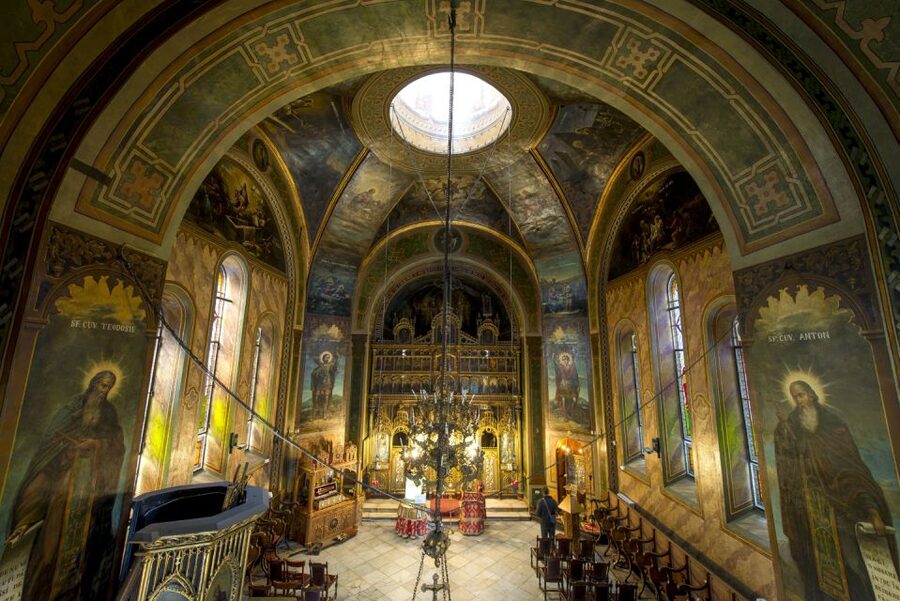
The route continues along Lipscani Street to Saint George Km 0 Church. Lipscani is one of the best-known streets in Bucharest’s Old Town, but this stop shifts your attention away from its restaurants and nightlife.
The church’s main draw is a fresco made by one of Romania’s greatest church painters. That detail matters because it gives you a reason to look closely rather than simply walk in, take a photograph, and move on.
A guide is especially helpful here. Orthodox church painting has its own visual language, and a good explanation can help you understand why certain figures, scenes, and arrangements appear where they do. You can ask questions as you go, rather than trying to work out the meaning from a general sightseeing guide.
This is also a useful point in the tour for comparing public Bucharest with sacred Bucharest. Outside, Lipscani is a busy central street. Inside, the pace changes. The contrast is part of the experience.
Saint Elijah, a basilica that is easy to miss
Saint Elijah is one of two Orthodox basilicas in Bucharest. It is also described as difficult to find, even for locals, so this is one of the strongest practical reasons to join a guided walk.
A church that is hard to locate can easily disappear from an independent Old Town visit. You may pass nearby without realizing what you are looking for, or lose time searching while other sights compete for your attention. With a guide, the route is already arranged and the building can be understood in relation to the other churches.
The basilica label also gives the guide a chance to explain the difference between church types and styles. The tour is not only about seeing painted walls. It is about noticing how Orthodox buildings vary in size, design, age, and religious importance.
Saint Elijah may appeal most to you if you enjoy finding less obvious places. It does not have the same name recognition as Stavropoleos, but that is part of its value. The stop adds discovery without requiring you to solve Bucharest’s church map alone.
Same city, a completely different sort of day:
- Bucharest: Palace of Parliament Tickets and Guide
★ 4.3 · 3,182 reviews - Bucharest: Day Trip to Dracula Castle, Peles Castle & Brașov
★ 4.4 · 3,049 reviews - Bucharest to Dracula Castle, Peles Castle and Brasov Guided Tour
★ 4.5 · 2,933 reviews - Bucharest: Palace of Parliament Tickets and Guided Tour
★ 4.4 · 1,877 reviews
The Lady’s Church and its old surviving paintings
The Lady’s Church is one of the most important stops for anyone interested in early church art. It contains some of the oldest preserved original frescoes in Bucharest.
That makes this a stop where the condition and survival of the paintings matter as much as their beauty. Original frescoes carry the marks of time and use. They help you see the church as an old religious place, not as a building recently arranged for sightseeing.
You will need to give this church your full attention. Smaller interiors can be easy to rush through, especially when the city outside is calling. I would listen closely to the explanation here and allow yourself time to look at details in the paintwork.
The church is active, so the mood may change during your visit. A service, prayer, or other religious activity can affect how long you stay and where you stand. That is not a flaw, but it does mean the tour is not completely controlled like a museum visit.
Stavropoleos Monastery and Bucharest’s ornate side
Stavropoleos Monastery is likely to be the most immediately striking stop for many people. The tour describes it as eclectic, which is a useful warning not to expect a plain, uniform Orthodox building.
Its decorative character gives the route a change of pace. After churches valued for age, frescoes, or local importance, Stavropoleos offers a more ornate architectural experience. You can compare its design with the medieval associations of Saint Anton and the preserved paintings at the Lady’s Church.
Because it sits next to the final stop, this part of the route should feel compact. You will not need to make a long transfer between the two buildings. That helps the tour keep its focus on art and worship instead of turning into a general city walk.
Stavropoleos is also the place where you may be most tempted to treat the church as a photo stop. Resist that urge for a few minutes. The guide’s explanation is what turns decorative detail into something you can remember.
The final church: confirm Saint Demetrios or Saint Cyprian
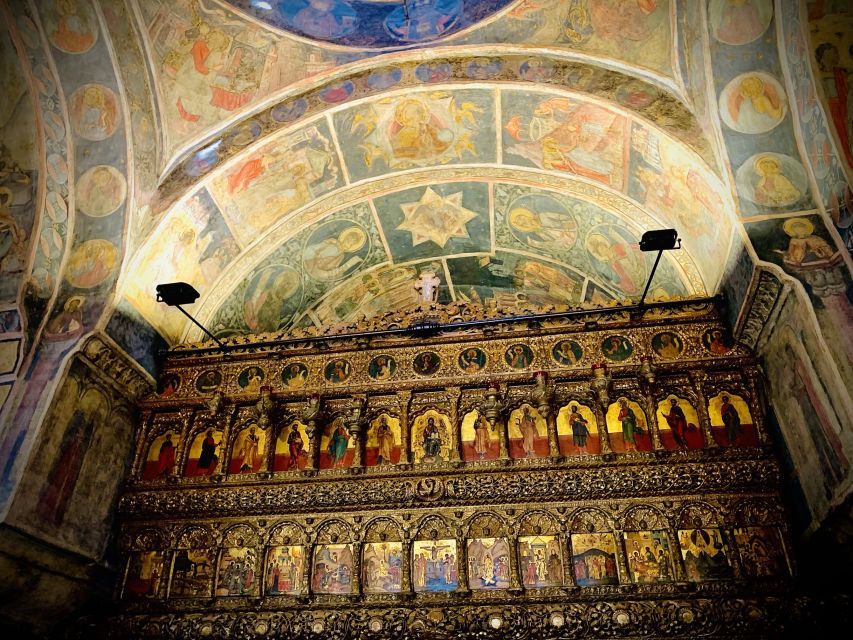
There is one detail you should clarify before setting out. The route description says the last stop is Saint Demetrios, described as a 19th-century neo-Baroque church. The included-sites list names Saint Cyprian instead.
Both details are useful, but they do not match. Saint Demetrios would add a 19th-century neo-Baroque example to the tour, creating a clear contrast with older Orthodox churches. Saint Cyprian is listed as included, but no further description is provided.
This is not a reason to reject the tour. It is a reason to send a quick question to the provider, Bucharest Break, before booking or at the meeting point. Ask which church is planned as the final stop and whether the route has changed.
If Saint Demetrios is included, the neo-Baroque style gives the walk a strong closing comparison. If Saint Cyprian is the actual stop, you will still have six churches on the advertised religious-art route, but you should know which building to expect.
The guide and the value of a small group
The guide is identified in the supplied tour information as Helen, while one Spanish-language comment calls her Elena. She leads tours in English, Spanish, and Romanian.
The strongest praise centers on her explanations, flexibility, and personal attention. She has been described as able to adjust the visit to individual needs, including a participant using crutches and another with a walking stick. One person also received help getting back to their hotel after the tour. Those details suggest a guide who pays attention to the group rather than delivering a fixed speech and moving on.
A small group of up to 10 people is important in active churches. You can hear the guide more easily, ask questions, and avoid turning a quiet religious space into a crowd. On one occasion, the group was only one person, allowing extra time for an icon shop visit.
The balance is that the experience depends heavily on the guide. Most of the available feedback praises Helen or Elena’s knowledge of Romanian Orthodox art, Byzantine art, and religious history. One participant reported feeling patronized after revealing a Catholic background. That is a serious concern for anyone who wants a respectful interfaith experience, even though it appears unlike the otherwise positive pattern. If you have particular religious sensitivities, you may want to ask how the guide approaches different Christian traditions.
What to wear and how to behave inside
These churches are active places of worship. Wear comfortable shoes for the walk, but also dress modestly: no short skirts, sleeveless shirts, tight clothing, or ripped clothing.
Avoid strong fragrances. Pets are not allowed. Keep your voice low and follow the guide’s instructions if a service, christening, or family ceremony is taking place.
The active setting can lead to memorable moments. During one visit, a group encountered a christening and was invited to share sweets and drinks with the family. That kind of welcome cannot be promised, but it shows why this tour is different from a museum visit. You may see Romanian religious life taking place in real time.
At the same time, do not expect every church to pause its normal activity for sightseeing. You might have less time in one building or need to stand quietly at the side. That is part of showing respect.
Who should book this church-art walk
I would choose this tour if you are interested in Byzantine art, Orthodox worship, Romanian history, or the less obvious corners of Bucharest’s Old Town. It is also a good first introduction if you are unsure how to read Orthodox church interiors.
The route suits solo visitors and couples who want conversation rather than a large group. It can also work well for people with limited mobility, since the guide has shown flexibility, but you should raise your needs before the walk. The experience still involves moving between six churches, so comfortable footwear matters.
You may want to skip it if you dislike religious sites, prefer a fast-paced sightseeing route, or want guaranteed museum-style access. This is a walking tour through active churches, and the atmosphere can change from one stop to the next.
There is no food or drink included. The group can stop at one of the many cafés, bars, or restaurants along the way, but plan to pay for anything you order and do not assume a meal is part of the $57 price.
Should you book it?
Book this tour if you want Bucharest explained through its churches rather than simply photographed from the street. The combination of Saint Anton, Saint George, Saint Elijah, the Lady’s Church, and Stavropoleos gives you a useful range of ages, styles, and religious art. The small group and flexible guiding add real value.
Before booking, confirm the final stop, since the information names both Saint Demetrios and Saint Cyprian. Go in modest clothing, wear good shoes, and treat the churches as places of worship. If that suits you, this is a focused and worthwhile way to see a quieter side of central Bucharest.
FAQ
How long does the Eastern Orthodox Church Art tour last?
The tour lasts 2.5 hours.
How much does the tour cost?
The price is $57 per person.
Where is the meeting point?
Meet in front of the Anton icon shop.
Which churches are included?
The included list names Saint Anton Church, Saint George Km 0 Church, Saint Elijah, the Lady’s Church, Stavropoleos Monastery, and Saint Cyprian Church.
Is Saint Demetrios part of the route?
The route description names Saint Demetrios as the final stop, while the included list names Saint Cyprian. Confirm the final church with Bucharest Break before the tour.
What languages are available?
The live tour is offered in English, Spanish, and Romanian.
How large is the group?
The tour is limited to 10 participants.
What clothing is required?
Wear modest clothing. Short skirts, sleeveless shirts, tight clothing, ripped clothing, and strong fragrances are not allowed. Comfortable shoes are recommended.
Newest Bucharest trips we have written up
- Bucharest: Dealu Mare Winery Private Trip with Wine Tasting★ 4.9 · 6 reviews
- Winery touring & private wine tasting – one day private tour★ 5.0 · 3 reviews
- Traditions in Bucharest: Village Museum and Wine Tasting★ 5.0 · 8 reviews
- Your rendez-vous with Europe’s past: time-travel to Maramures, Transylvania★ 5.0 · 6 reviews
- Village Museum Bucharest Guided Tour★ 5.0 · 6 reviews
- Private Wine Tasting at Bucharest’s First Wine Bar★ 5.0 · 3 reviews
- Walking Tour of Bucharest City Center – Private Tour★ 5.0 · 4 reviews
- Wine tasting in Bucharest Old town – bonus cheese platter★ 4.5 · 6 reviews