
Reviewed · MULTI-DAY ROMANIA TOURS FROM BUCHAREST
Best of Romania in 10 Days
Romania packs an astonishing amount into this 10-day road trip. You move from Wallachian monasteries and the Transfagarasan Highway to Transylvania’s castles, Bucovina’s painted churches, Moldavia’s old cities, and Bucharest’s grand communist-era buildings. It is a serious survey of the country, not a slow holiday in one region.
I like the small group of up to eight, which makes long driving days easier and gives you a better chance to ask questions. I also like the mix of famous sights and less expected stops, such as Turda Salt Mine, Corund pottery country, and the village of Viscri. The drawback is clear: the schedule is full, and several days involve many hours on the road.
Key details at a glance
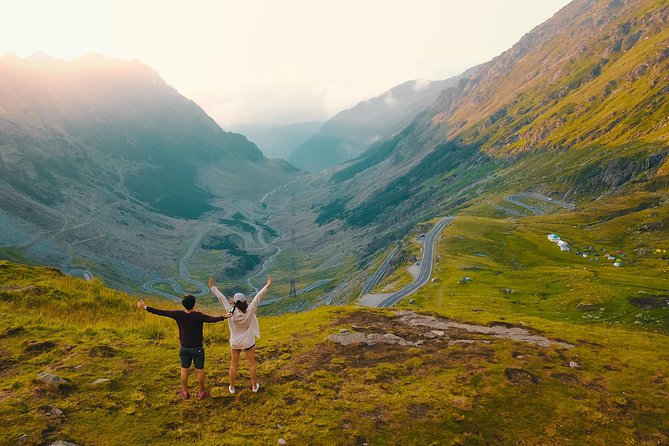
- Transfagarasan Highway on day one: Reach 2,042 meters in the Fagaras Mountains and begin with one of Romania’s great road journeys.
- Nine hotel nights included: Centrally located hotels, nine breakfasts, and one traditional Romanian dinner are part of the package.
- A maximum of eight people: The small vehicle and group size suit anyone who prefers a guided trip without a large coach.
- Romania’s painted monasteries: Voronet, Moldovita, and Sucevita show the distinctive religious art of Bucovina.
- A strong castle lineup: See Corvin Castle, Bran Castle, and Peles Castle, each with a very different story.
- Guide Emil is a standout option: He is an excellent driver with strong knowledge of history, local customs, food, and Romanian humor.
A countrywide route for people short on time
This tour covers a remarkable amount of ground. You start and finish in Bucharest, but the route reaches nearly every major cultural region named in the program: Wallachia, Transylvania, Bucovina, Moldavia, and the Carpathian Mountains.
That reach is the main reason to choose it. If you have only 10 days and want to see more than the capital and Dracula’s Castle, this route saves you from piecing together trains, buses, hotels, and entry tickets on your own.
The tradeoff is pace. A one-hour visit at each listed stop often means you will see the key sight, hear its story, take photographs, and move on. I would not choose this trip if your ideal holiday means lingering for several hours in each town or building in unscheduled time every afternoon.
Transportation is by modern vehicle, with airport pickup and drop-off included. The group is guaranteed to operate with at least two confirmed people, and the maximum is eight. That gives you the ease of a planned route without the scale of a full-size bus tour.
More multi-day Romania trips starting in Bucharest:
- 2-Day Medieval Transylvania with Brasov,Sibiu and Sighisoara Tour from Bucharest
★ 4.5 · 145 reviews - 2-Day Transylvania from Bucharest: Brasov, Bran, Sighisoara
★ 5.0 · 60 reviews - 4-Day Private Tour in Transylvania from Bucharest
★ 5.0 · 48 reviews
Day one: Curtea de Arges and the Transfagarasan Highway
Your first morning begins with a 9:00 am pickup from any hotel in Bucharest. The first stop is Curtea de Arges Monastery, built between 1512 and 1517. It was created during the period when Curtea de Arges served as the capital of Wallachia, and it remains one of Romania’s key historical monuments.
The monastery is tied to the legend of Manole, a master builder whose work required a terrible sacrifice to endure. You do not need to know the full story before arriving, but it gives the carved stone and religious setting extra weight. The site is also a royal burial place, making it more than a quick photo stop.
Then comes the road highlight: the Transfagarasan Highway. It crosses the Southern Carpathians through the Fagaras Mountains and reaches 2,042 meters. You have about an hour for the stop, so your main reward is the high mountain view and the road itself.
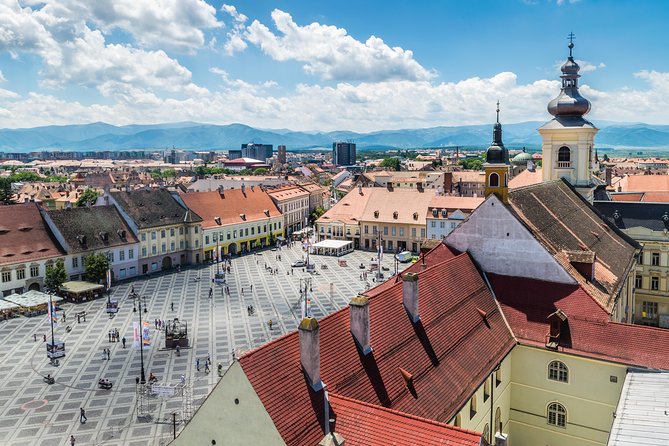
The day ends in Sibiu, a handsome medieval city with more than 900 years of history. A walking tour takes you through the historic center and Big Square before hotel check-in. Sibiu is also known for its summer International Theatre Festival and winter Christmas market, but this schedule gives you only a short introduction.
Day two: castles, a fortress, and an underground salt mine
Day two begins early in Hunedoara at Corvin Castle, also called Hunyad Castle. Its connection with John Hunyadi gives it a strong medieval identity, while its towers and dramatic setting make it one of Romania’s most memorable castles.
The one-hour visit is enough for the main tour, but the castle deserves your attention. Look for the contrast between its defensive character and the more ceremonial rooms. If castles are a major reason you are visiting Romania, this is one of the day’s best stops.
At Alba Iulia, you visit Alba Carolina Fortress, built from 1715 to 1738 in the Vauban style. More than 20,000 Romanian peasants worked on its construction. The fortress is linked to the union of Transylvania with Romania, one of the defining events in the country’s modern history.
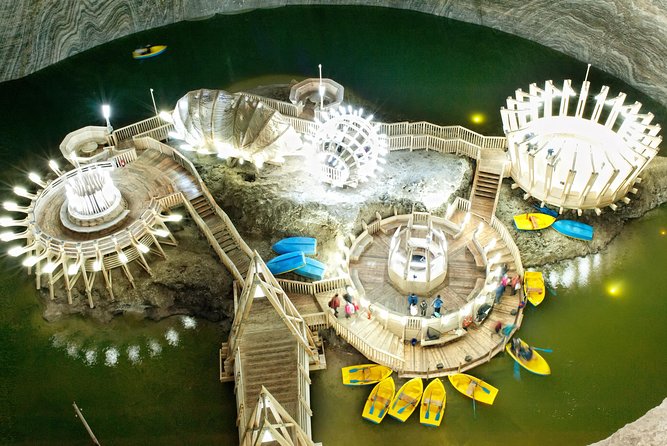
The surprise of the day is Turda Salt Mine. Thirteen underground levels hold an attraction that feels almost unreal: a Ferris wheel, mini-golf course, tennis court, and lake far below ground. You get about an hour here, so you will see the main spaces rather than spend a full afternoon underground.
Cluj-Napoca closes the day. It is one of Romania’s largest student centers, and a walk through the old center is followed by free time near the hotel. This is one of the better moments to enjoy a cafe or restaurant without a strict sightseeing list.
Days three and four: Bucovina’s painted monasteries
On day three, the route heads toward Bucovina, stopping first in Bistrita. The town lies near the Bargau Mountains and Pasul Tihuta, the road connecting Transylvania and Bucovina. Its Dracula connection comes from Bram Stoker’s character Jonathan Harker, who stayed in the area before meeting Count Dracula.
The stop also includes a short city visit and a taste of products from a local bakery. That small food break matters because the trip is not only about stone buildings and formal history. It gives you a glimpse of regional daily life.
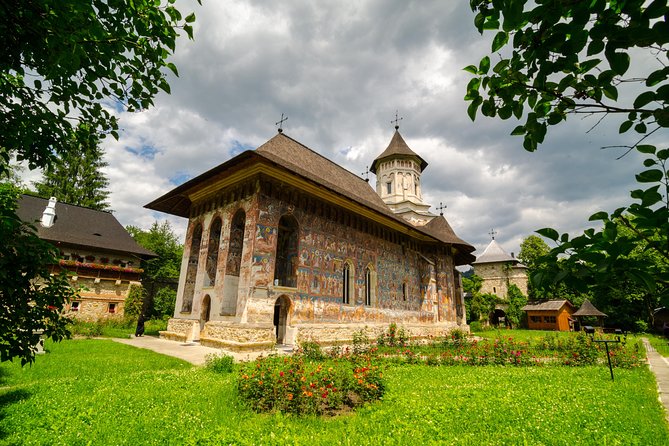
Voronet Monastery is the main sight that day. Built in 1488, it is one of Bucovina’s UNESCO Painted Monasteries and is famous for its distinctive blue pigment, often called the Blue of Voronet. The exterior paintings are the point of the visit, so listen closely to the guide’s explanation of the scenes and colors.
That evening includes a traditional Romanian dinner. It is the only dinner specifically included, so you should budget for additional evening meals during the rest of the trip.
Day four continues with Moldovita and Sucevita monasteries. Moldovita dates from 1532 to 1537 and entered the UNESCO World Heritage list in 1993. Sucevita was built in 1585 and is linked to a local story about a woman who carried building materials by ox cart in an effort to redeem her sins.
The repeated monastery visits can feel similar if you rush through them. They are worth doing because each site has its own painted walls, setting, and legends, but you will get more from the day if you treat them as variations on a theme rather than three unrelated photo stops.
In the evening, you reach Iasi, Romania’s second-largest city. A short tour introduces its historic center and links the religious art of Bucovina with the urban culture of Moldavia.
Same city, a completely different sort of day:
- Bucharest: Dracula’s Castle, Peles Castle, & Brasov Old Town
★ 4.5 · 17,858 reviews - Bucharest: Dracula Castle, Peles Castle & Brasov Old Town
★ 4.6 · 10,891 reviews - Bucharest: Dracula’s Castle, Peleș Castle & Brașov Day Trip
★ 4.5 · 5,919 reviews - Bucharest: Palace of Parliament Tickets and Guide
★ 4.3 · 3,182 reviews
Days five and six: fortresses, mountain roads, and Sighisoara
From Iasi, day five heads to Neamt Fortress, built during the reign of Peter I between 1375 and 1391. The citadel gives you another look at medieval defense, this time in the eastern part of the country.
You then reach Piatra Neamt, where a cable car ride is included before hotel check-in. This is a lighter day by comparison, though the route still requires a good deal of driving.
Day six returns toward Transylvania through the Bicaz Gorges. The road passes through steep mountain scenery before reaching Red Lake, formed in 1837 after storms caused part of Mount Ucigasu to collapse and block streams. The red coloring in the deposits gave the lake its name.
Corund follows. It is known for pottery, woodworking, and local trade, with clay taken from a nearby stream. This is one of the more grounded stops on the route. You see a craft center rather than a grand monument, and that makes it useful for understanding regional work and commerce.
Biertan brings you back to major heritage sites. Its fortified church belongs to the UNESCO Villages with Fortified Churches of Transylvania. Saxon colonists settled here in the 13th century, drawn in part by soil suited to winemaking.
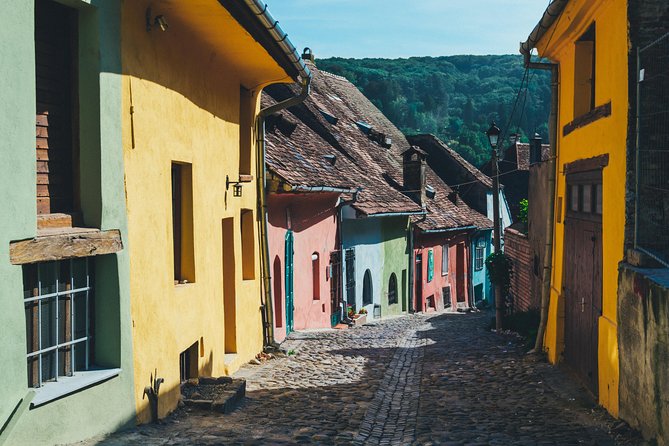
The day ends in Sighisoara, a 12th-century citadel founded by Saxon colonists. It is known as Europe’s last inhabited citadel and is protected as a UNESCO site. You should expect narrow streets, historic buildings, and a strong sense of a lived-in old town, though the one-hour stop will not allow a long exploration.
Days seven and eight: villages, Dracula, and royal grandeur
Viscri is the focus of day seven. The village is known for its preserved traditions and for attracting the interest of Prince Charles. You meet local women known for their cooking skills and visit the fortified church.
This is a valuable contrast with the castles and city centers. Viscri shows you a more rural side of Transylvania, where the appeal comes from local customs and village life rather than scale. It is also the sort of stop that can be lost on a rushed schedule, so use your time well.
Later, you reach Brasov for a walking tour of its historic center. Brasov is one of the country’s best-known cities, set among the Carpathians and filled with medieval and later architecture. The tour gives you an introduction rather than a full city stay.
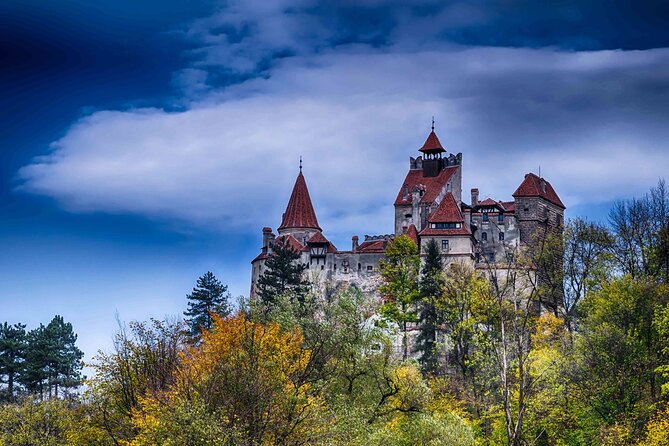
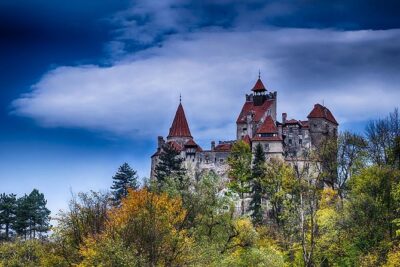
Day eight brings two of the most famous names in Romanian tourism. Bran Castle is about 30 minutes from Brasov and is marketed around its Dracula connection. The link between Vlad the Impaler and Bram Stoker’s fictional count is more complicated than the popular image suggests, and the guide’s explanation is important here.
Bran is worth visiting for the castle and the story, but you should not expect a literal Dracula residence. The attraction works best when you see it as a historic castle later shaped by legend and popular culture.
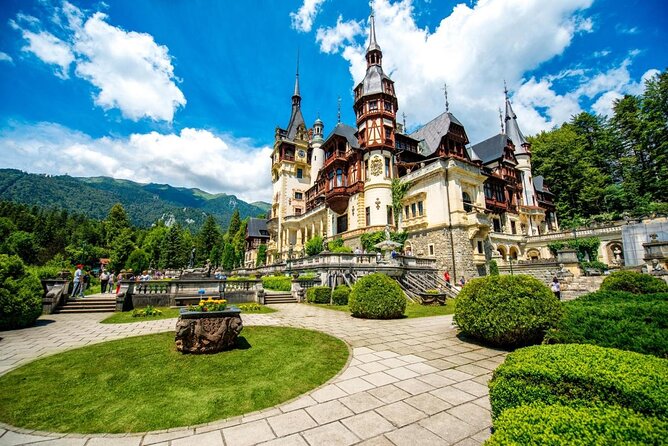
Peles Castle in Sinaia offers a very different experience. It was the first fully electrified castle in Europe and contains 160 rooms and more than 30 bathrooms in its completed form. Its collections include more than 4,000 European and Oriental weapons, along with an important painting collection.
I prefer Peles to Bran because its royal interiors and design give you a clearer sense of Romania’s monarchy. The two castles together make a good pairing: one is driven by myth and popular fame, the other by royal history and architecture.
That night, you return to Bucharest. The schedule lists free time in the Old Town, which is welcome after several long driving days.
Day nine: Bucharest beyond the Old Town
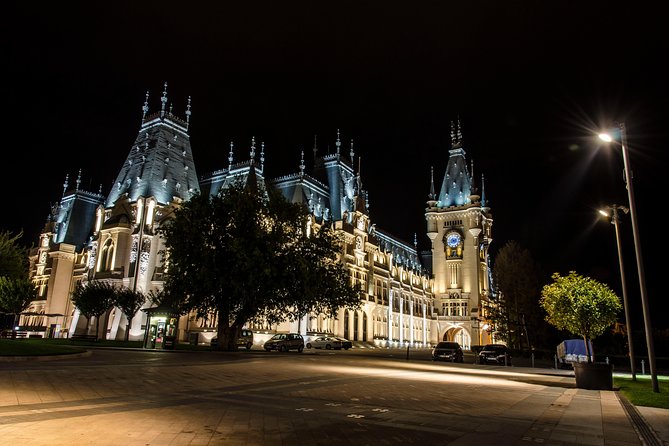
The final full sightseeing day begins with the Palace of the Parliament, also called the People’s House. It was built as part of Nicolae Ceausescu’s communist-era project and intended to house state institutions. Its enormous size was also meant to provide protection against earthquakes and even nuclear attack.
The building is difficult to absorb in a short visit. Its scale tells you something about the priorities and power of the communist state, but the human cost behind its construction is just as important. Your guide can help connect the grand rooms with the period that produced them.
Afterward, you have free time for lunch in Bucharest’s Old Town. The old center is the easiest place on this route to choose your own meal and enjoy a little unscheduled time.
The last stop is the Bucharest Village Museum, opened in 1936. The 14-hectare open-air museum contains 380 monuments, 60,000 traditional objects, and more than 250,000 archived documents related to Romanian life.
This is a smart final stop because it brings together ideas from the entire trip: village architecture, regional customs, and the difference between rural and urban Romania. Day ten is reserved for airport transfer according to your flight schedule.
What the $2,907.69 price covers
The price is $2,907.69 per person, based on two people sharing a double room. It includes nine nights in centrally located hotels, nine breakfasts, one dinner, modern transportation, airport transfers, an English-speaking professional guide, and entrance fees.
That is a substantial price, but it covers a lot of moving parts. You are paying for a private-feeling small group, hotel coordination across several cities, a driver, admissions, and a route that would be difficult to arrange efficiently on your own.
It is not an all-meals package. Lunches, most dinners, drinks, alcohol, travel insurance, flights, photography fees, room service, calls, and souvenirs are extra. Solo travelers also pay a single supplement, so the price works best for two people sharing a room.
The value depends on your priorities. If you want to see many regions in one visit and prefer one point of contact for transport and hotels, the cost may be reasonable. If you plan to stay mostly in Bucharest, Brasov, or Transylvania, a shorter regional tour will likely make more sense.
Who should book this Romanian road trip
I would choose this tour if you want a first broad look at Romania and do not want to drive. It suits people who enjoy historic buildings, mountain roads, religious art, local crafts, and guided context more than long stretches of free time.
A moderate fitness level is required. You will walk through historic centers, fortresses, castles, monasteries, and museum grounds, and you should be ready for repeated hotel changes and lengthy drives.
The tour may be less suitable if you dislike early starts or prefer a relaxed pace. The age range and differing activity levels in a group can also affect the experience. The operator suggests a private tour when age gaps or differing abilities are likely to create problems.
The English-speaking guide is important. If Emil is assigned, you can expect a guide who is also an excellent driver and brings history, local traditions, and Romanian humor into the journey. Guide assignments can vary, so I would confirm that detail before booking if it matters to you.
Should you book it?
Book this trip if your goal is to see as much of Romania as possible in 10 days, with hotels, transport, entry fees, and a guide handled for you. The strongest parts are the small group, the variety of regions, the painted monasteries, the Transfagarasan Highway, and the unusual mix of castles and village sites.
Skip it if you want slow mornings, long lunches, or several nights in each destination. This is a packed countrywide route, and its value comes from its reach. For a first visit, that reach is the main reason to go.
FAQ
How long is the Best of Romania tour?
The tour lasts approximately 10 days and includes nine nights of accommodation.
Where does the tour begin?
The tour begins with pickup from any hotel in Bucharest at 9:00 am.
Where does the tour end?
The tour ends with a transfer to Henri Coanda International Airport, also called Otopeni Airport, according to your flight schedule.
How many people can join the tour?
The maximum group size is eight people. Departures operate with at least two confirmed people on the selected date.
Is accommodation included?
Yes. Nine nights in centrally located hotels are included.
Are meals included?
Nine breakfasts and one dinner are included. Lunches, other dinners, drinks, alcohol, and personal expenses are not included.
Is the tour offered in English?
Yes. A professional English-speaking guide accompanies the tour.
Is transportation included?
Yes. Transportation in a modern vehicle, hotel pickup in Bucharest, and airport pickup and drop-off are included.
Are entrance fees included?
Yes. Entrance fees listed as included in the program are covered. Photography fees are not included.
Can I cancel for a full refund?
You can cancel for a full refund if you cancel at least 24 hours before the experience start time. Changes or cancellations made less than 24 hours beforehand are not accepted for a refund.
Newest Bucharest trips we have written up
- Bucharest: Dealu Mare Winery Private Trip with Wine Tasting★ 4.9 · 6 reviews
- Winery touring & private wine tasting – one day private tour★ 5.0 · 3 reviews
- Traditions in Bucharest: Village Museum and Wine Tasting★ 5.0 · 8 reviews
- Your rendez-vous with Europe’s past: time-travel to Maramures, Transylvania★ 5.0 · 6 reviews
- Village Museum Bucharest Guided Tour★ 5.0 · 6 reviews
- Private Wine Tasting at Bucharest’s First Wine Bar★ 5.0 · 3 reviews
- Walking Tour of Bucharest City Center – Private Tour★ 5.0 · 4 reviews
- Wine tasting in Bucharest Old town – bonus cheese platter★ 4.5 · 6 reviews
Multi-Day Romania Tours from Bucharest, compared.
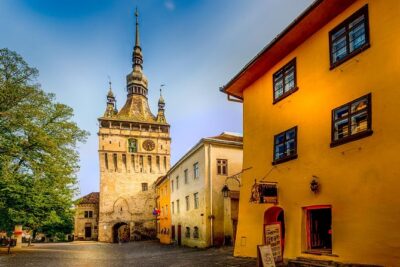
2-Day Medieval Transylvania with Brasov,Sibiu and Sighisoara Tour from Bucharest
Read our review →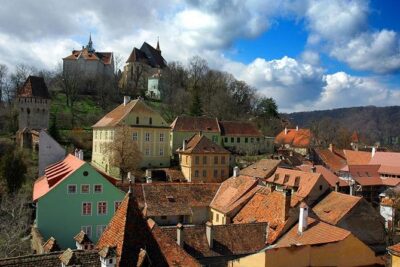
2-Day Transylvania from Bucharest: Brasov, Bran, Sighisoara
Read our review →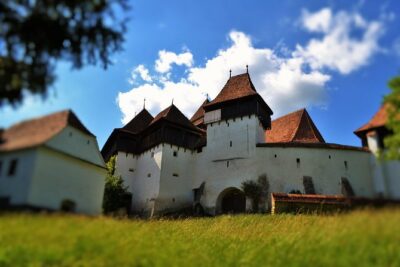
4-Day Private Tour in Transylvania from Bucharest
Read our review →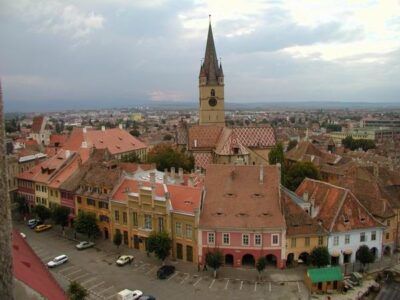
Transylvania Castles 4-day tour from Bucharest
Read our review →
2-Day Private Tour of Transylvania from Bucharest
Read our review →
Classic Romania Tour – small group in 8 days: Transylvania and Maramures
Read our review →
2 Days Private Tour in Transylvania from Bucharest – 4 Medieval Cities
Read our review →Browse the lists this tour appears in