Reviewed · PRIVATE
Bucharest: Charm of the Belle Époque Private Tour
Bucharest’s Belle Époque story comes alive along Victory Avenue, where palaces, music halls, grand restaurants, and former department stores reveal the city’s turn-of-the-century ambitions. The walk continues into the Old City, where cobblestones, old lamps, cafes, and beer houses give the past a more intimate setting.
I like the tour’s clear historical thread, from King Carol I and the rise of modern Bucharest to the social life of composers, artists, aristocrats, and fashionable shoppers. I also like the private format, which lets your guide adjust the pace and explain why neoclassical, Art Nouveau, Baroque, Byzantine, and local Brancovenesc styles appear side by side.
The main consideration is its focus on outdoor sightseeing and storytelling rather than extended interior visits. At four hours, you will cover a lot of ground, but access inside individual palaces, theaters, and cafes is not promised. Ask your guide early which buildings you will enter.
Key points to know before you book
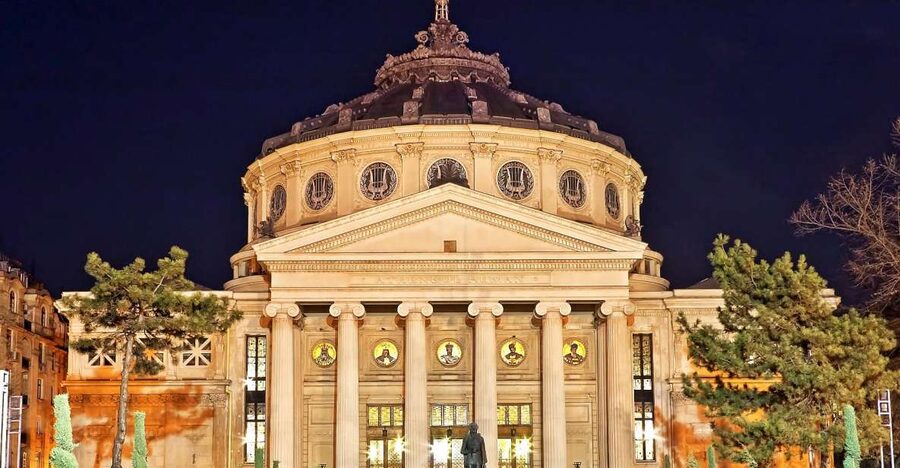
- Victory Avenue gives you Bucharest’s grandest architectural story, from the former Royal Palace to the Athenaeum and Capsa Restaurant.
- The Old City changes the mood, replacing formal boulevards with cobblestone lanes, vintage cafes, bistros, lounges, and old beer houses.
- King Carol I provides the historical framework, helping you understand how Bucharest became known as the Paris of the East.
- The tour is private and lasts four hours, so you get a personal guide rather than a large group moving from stop to stop.
- Hotel pickup and drop-off by car are included, a useful benefit if you are staying outside the central sightseeing area.
- Guide quality matters here, and past bookings specifically praised Michael for his stories and Emma for her personal, well-informed approach.
Why Bucharest’s Belle Époque matters
The Belle Époque was a period of peace, prosperity, fashion, music, and cultural growth in late 19th and early 20th-century Europe. In Bucharest, it also marked a strong push toward Western-style institutions and architecture.
That is why this tour works best as a story about change. Bucharest was not simply copying Paris. It was combining Western ideas with local traditions and the influence of its position between Central Europe, the Balkans, and the Ottoman world.
King Carol I played a major part in this transformation. His family connections to Napoleon III and Wilhelm I helped strengthen Bucharest’s ties to European royal and political circles. Under his reign, the city developed new cultural buildings, grand residences, public spaces, and fashionable meeting places.
Your guide’s job is to connect those buildings with the people who used them. A palace is easier to appreciate when you know who lived there. A restaurant becomes more interesting when you understand why artists and noblemen gathered there. A former gallery tells you something about the city’s growing appetite for Parisian fashion.
I would not treat this as a simple architecture walk. The useful question is not only what style is that building? It is also who paid for it, who visited it, and what did it say about Bucharest at the time?
A few more Bucharest trips worth putting side by side
- Castles of Transylvania: Private Day Trip from Bucharest
★ 4.5 · 248 reviews - Dracula’s Castle, Peles Castle and Brasov – Private Day Trip from Bucharest
★ 5.0 · 211 reviews - Best of Bucharest | Private Walking Tour
★ 5.0 · 199 reviews
Victory Avenue and the city’s public face
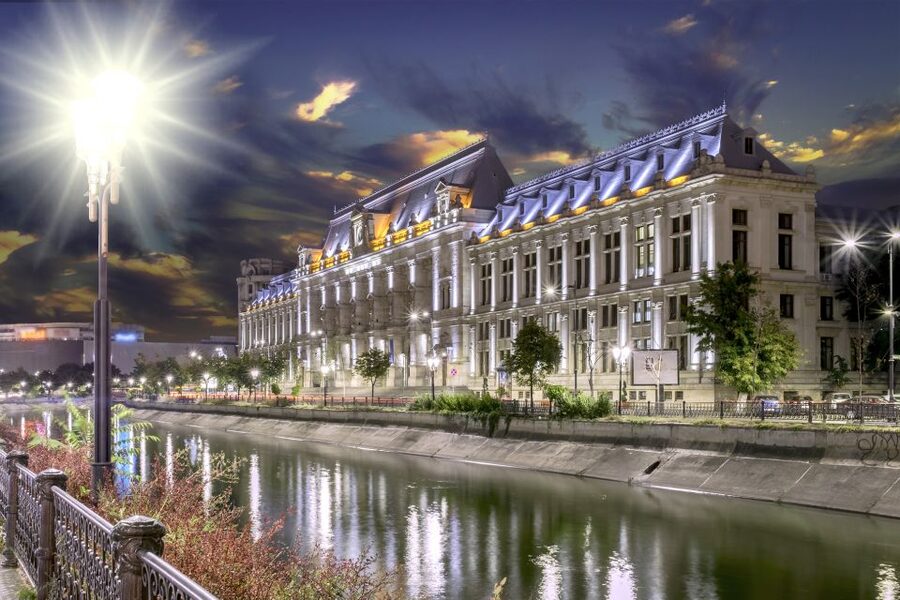
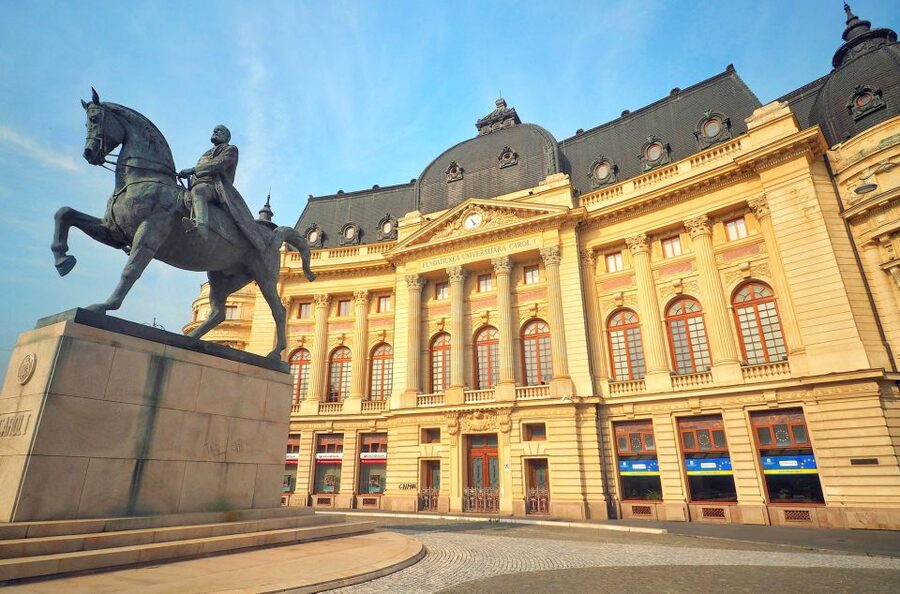
Victory Avenue, or Calea Victoriei, is the tour’s natural opening chapter. It is often compared with the Champs-Élysées, though the comparison should be taken as a broad guide rather than a precise match.
The avenue presents Bucharest at its most formal. You will see grand facades, cultural institutions, royal connections, and former commercial centers. The street helps you understand how the city wanted to present itself to the world during its period of rapid growth.
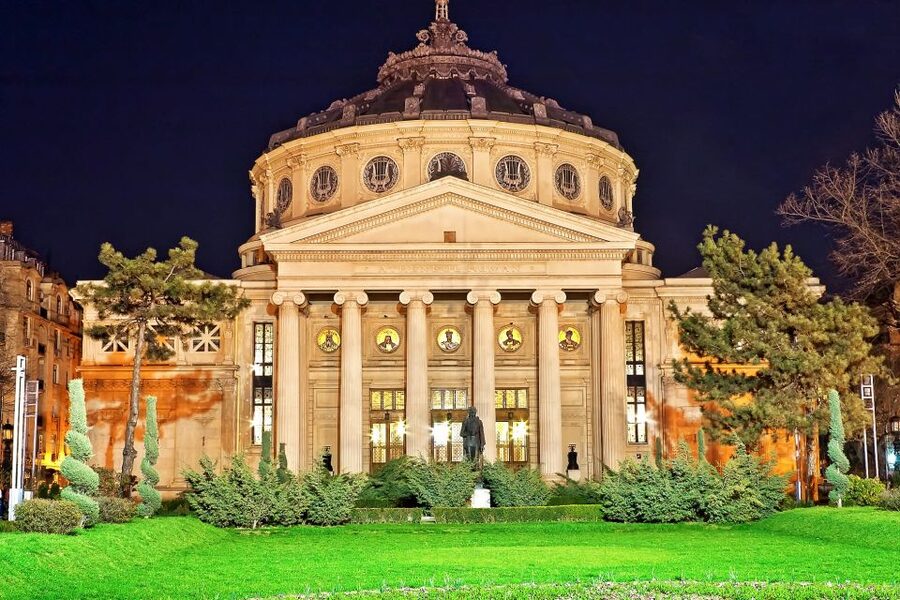
The route includes several important landmarks. The Romanian Athenaeum is one of the key cultural stops, a music hall tied to the city’s musical life and national pride. Its presence shows that Bucharest’s ambitions were not limited to government offices and private mansions. The city also wanted major cultural institutions.
You will also see the former Royal Palace, a building linked to Romania’s monarchy and the political life of the capital. The palace gives the tour a useful sense of scale. The Belle Époque was not only about cafe culture and elegant clothing. It was also about state power, royal ceremony, and the public image of a modern European kingdom.
Another stop is the former Lafayette Galleries. Its importance lies in what it represented: access to the latest Parisian fashions. The building connects Bucharest with the consumer culture of the era, when clothing, department stores, and imported styles helped define social status.
The palace associated with one of the most famous composers of the 20th century adds a more personal note. Instead of treating music as an abstract cultural achievement, the tour places it in a home and a neighborhood. Ask your guide to explain the composer’s link to the building, since the supplied details do not identify the composer by name.
Palaces, styles, and the look of old Bucharest
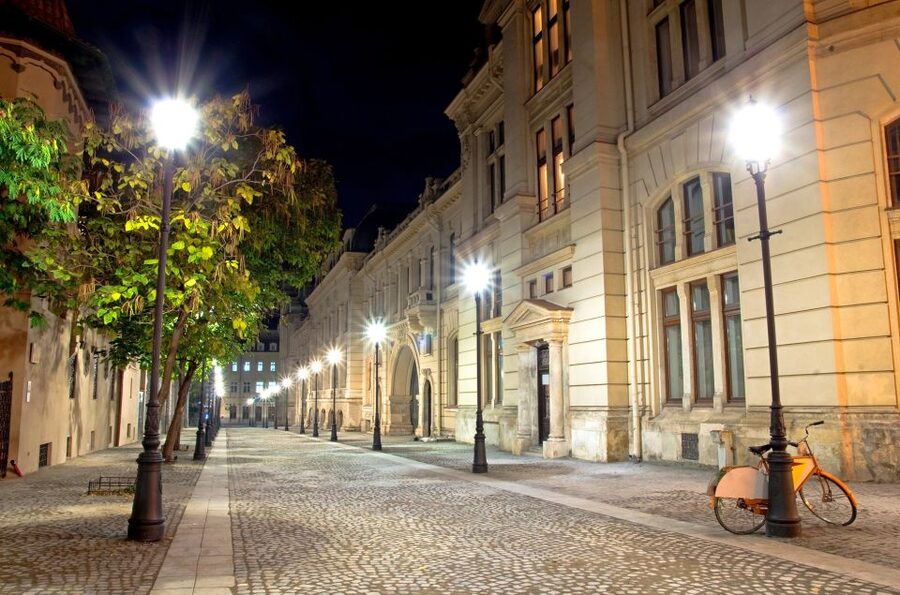
One reason this private tour earns its keep is the range of architecture packed into a short central route. You may see neoclassical symmetry, Art Nouveau decoration, Baroque touches, Byzantine influence, and Brancovenesc details, a local Romanian style associated with the period of Prince Constantin Brancoveanu.
Those combinations can seem confusing if you inspect buildings one by one. A guide gives you a way to read them as evidence of Bucharest’s mixed identity. Western forms were adapted to local tastes, religious traditions, climate, and building customs.
The Brancovenesc influence is especially useful to watch for. It helps prevent the common mistake of viewing Bucharest as a city that simply borrowed from Paris. The city’s architecture reflects several sources at once, and the contrast is part of its appeal.
Do not expect every building to be polished or perfectly preserved. The tour is about the city’s architectural and cultural patrimony, but Bucharest’s historic center has endured political change, war, neglect, renovation, and changing commercial uses. That mixture can make the streets feel less tidy than a purpose-built historic district.
For me, that is not a flaw to hide. It is part of the city’s character. You are seeing a capital that has been repeatedly reshaped, not a museum set frozen in one year.
Capsa Restaurant and the social life of the boulevard
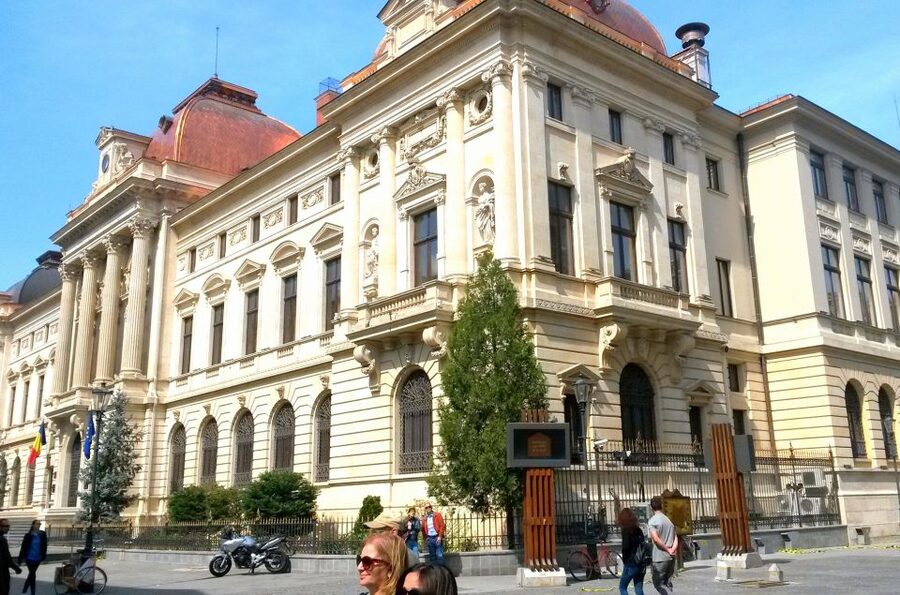
Capsa Restaurant offers one of the strongest social-history stops on the route. It was a meeting place for noblemen and artists, which makes it more than another attractive historic facade.
This is where your guide can explain how public venues shaped Bucharest’s elite culture. Restaurants, cafes, music halls, and hotels provided places for business, gossip, artistic debate, romance, and political discussion. The city’s cultural boom depended on these gathering places as much as on official institutions.
The tour’s Belle Époque theme becomes especially clear here. Think of formal dinners, fashionable clothing, music, private letters, and carefully managed social appearances. The references to tango, Charleston, balls, jockey clubs, and dance permits are not random decoration. They help show how leisure was organized and how social rules affected public life.
Some of the appeal is theatrical. The route brings up cabarets, theaters, and dance halls, including places that carried on older customs as inns or beer houses. You may not enter every one of these sites, but knowing what once happened there changes the way you see the street.
I would ask about which locations are still operating and which survive mainly through their buildings and stories. That distinction matters. A place with a continuing food or drink tradition offers a more direct connection to the past, while a former venue may be valuable mainly for its architecture.
Same city, a completely different sort of day:
- Bucharest: Dracula’s Castle, Peles Castle, & Brasov Old Town
★ 4.5 · 17,858 reviews - Bucharest: Dracula Castle, Peles Castle & Brasov Old Town
★ 4.6 · 10,891 reviews - Bucharest: Dracula’s Castle, Peleș Castle & Brașov Day Trip
★ 4.5 · 5,919 reviews - Bucharest: Palace of Parliament Tickets and Guide
★ 4.3 · 3,182 reviews
Entering the Old City on cobblestone streets
The Old City changes the scale of the experience. Victory Avenue gives you grand urban statements. The Old City brings you closer to doorways, lamps, cafes, narrow streets, and small details.
This is a large pedestrian area with cobblestone streets and 18th-century houses. Vintage cafes, bistros, and lounges occupy many of the old buildings. Street musicians may add a violin soundtrack, although performances are part of the atmosphere rather than something that should be treated as guaranteed.
The Old City also gives the tour a more relaxed rhythm. You can look at building fronts without the same sense of a major boulevard rushing past. The old inns and beer houses are important because they connect the district with ordinary social life, not just royal families and famous artists.
Expect a lively setting rather than a quiet archaeological quarter. The area is a functioning part of modern Bucharest, with places to eat, drink, and spend an evening. That means the historic character shares space with current nightlife and commercial activity.
The cobblestones are charming, but they can be uneven. Comfortable shoes are a sensible choice, and anyone who finds rough walking surfaces difficult should discuss the route with the operator before booking. The activity is listed as wheelchair accessible, but specific street conditions and access to individual historic buildings may vary.
What the private format changes
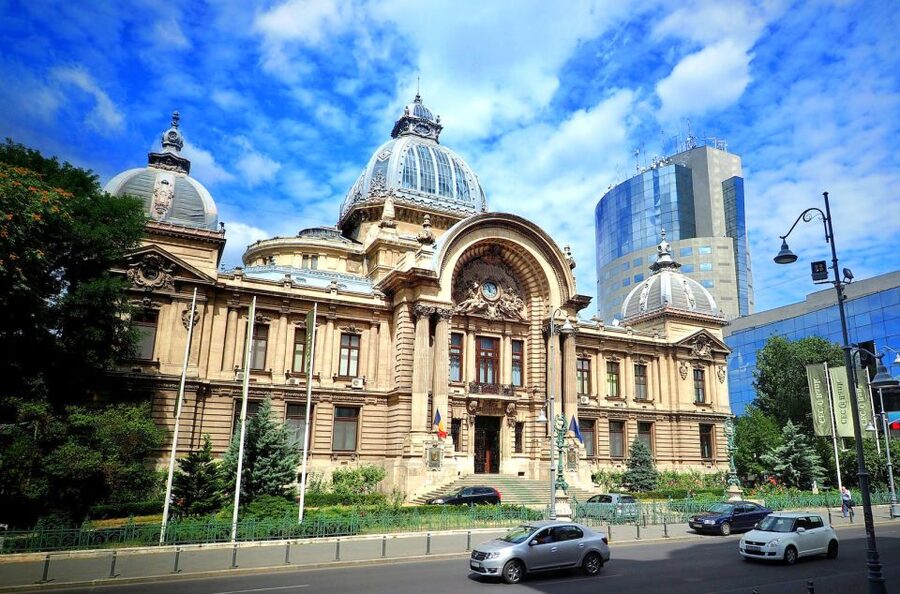
A private group makes a real difference on a history-heavy walking tour. Your guide can explain a detail when you ask, slow down near a building, or move along when a facade does not hold your interest.
That flexibility is particularly useful in Bucharest because the route contains several different kinds of information. One person may care most about royal history. Another may prefer music, fashion, cafes, or architecture. A private guide can adjust the balance better than a fixed large-group talk.
The experience includes hotel pickup and drop-off by car. For a four-hour tour, this saves useful time, especially if your accommodation is not close to central Bucharest. You are asked to wait in the hotel lobby near reception, or downstairs in front of an apartment accommodation.
The tour is available with an English or Romanian-speaking guide. Past guide names connected with especially strong feedback include Michael and Emma. Michael was praised for sharing interesting stories about the buildings and Romania, while Emma was described as personable and well informed about her city and country. Guide assignment can vary, so treat those names as examples rather than a guarantee.
Because the tour is private, it suits couples, families, and small groups who want conversation instead of a standard speech. It is also useful early in a Bucharest visit, since the route introduces the central districts and gives you ideas for places to revisit later.
The four-hour pace and what you will not get
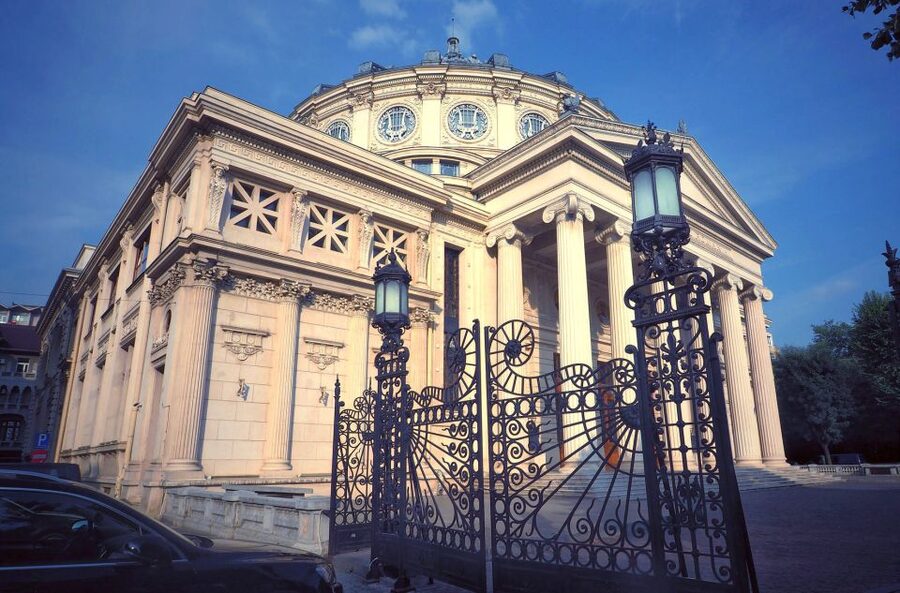
Four hours is long enough to create a proper historical thread, but not long enough for a slow museum schedule. You should expect a combination of walking, exterior viewing, explanations, and short pauses rather than extensive time inside every attraction.
The route is packed with major buildings: the Athenaeum, the former Royal Palace, the Lafayette Galleries, Capsa Restaurant, composer-related architecture, and the Old City. That breadth is a strength if you want orientation and context.
It is less suitable if your main goal is to sit inside one landmark for a long visit or study every facade in detail. The supplied information does not promise admission to the Athenaeum, the Royal Palace, Capsa Restaurant, or other named sites.
Meals and snacks are not included. This is easy to handle because the Old City contains cafes, bistros, lounges, inns, and beer houses, but you should budget separately if you want to stop for food or a drink. Ask your guide about timing if a cafe break matters to you.
Is $104 per person good value?
At $104 per person, the tour is not the cheapest way to see Bucharest’s center. Its value depends on how much you want from the visit.
You are paying for a four-hour private experience, a professional English or Romanian-speaking guide, and car pickup and drop-off at your hotel. For a couple or small group, the private format can make the cost more reasonable because you are buying direct attention and a flexible conversation, not just transportation.
The strongest value comes from interpretation. You can walk along Victory Avenue on your own and photograph the Athenaeum or the former Royal Palace. What you cannot easily reproduce is the connected story about royal ambition, cultural growth, fashionable shopping, elite meeting places, and Old City nightlife.
If you already know Bucharest well, this may feel expensive for a route centered largely on exteriors. If you are new to the city and want a well-organized introduction, the cost is easier to justify.
The booking terms also reduce financial risk. You can reserve now and pay later, and cancellation is free up to 24 hours before the activity for a full refund. Those terms are practical for a city break where plans may shift.
Who should book the Belle Époque tour?
I would choose this experience if you enjoy architecture but want more than a list of building names. It is also a strong fit if you like social history, royal stories, music, old cafes, and the way cities change through fashion and public life.
The tour suits first-time visitors who want a central orientation, especially those staying in Bucharest for a short visit. The included hotel transfer is useful when your time is tight.
It also works well for travelers who prefer a private guide. You can ask questions, set the pace, and focus on the subjects that interest you most. The activity is listed as wheelchair accessible, but it is sensible to confirm the exact route and interior access before booking, since cobblestone streets and historic buildings can present different conditions.
I would hesitate if you want a food tour, a museum tour, or guaranteed entry into major landmarks. Meals are not included, and the information provided does not promise interior admission.
Should you book it?
Book the Bucharest: Charm of the Belle Époque Private Tour if you want the city’s central architecture explained through people, fashion, music, monarchy, and nightlife. The route from Victory Avenue to the Old City has enough variety to keep four hours interesting, and the private guide format gives the experience a personal feel.
The best reason to book is the storytelling. Michael and Emma received especially strong praise for their explanations and personal approach, and that is exactly what this tour needs. Just keep expectations clear: you are paying for a guided city experience with car transfers, not a ticketed tour of every palace.
FAQ
How long does the Belle Époque private tour last?
The tour lasts four hours.
What areas does the tour visit?
It follows Victory Avenue and continues through Bucharest’s Old City, including its pedestrian streets, historic buildings, cafes, and former entertainment venues.
Is hotel pickup and drop-off included?
Yes. Pickup and drop-off by car are included. At a hotel, wait in the lobby near reception. At an apartment, wait downstairs in front of the accommodation.
What languages are available?
The live guide is available in English or Romanian.
Is the tour private?
Yes. It is offered as a private group experience.
Are meals or snacks included?
No. Meals and snacks are not included.
Can I cancel the booking for a full refund?
Yes. You can cancel up to 24 hours in advance for a full refund. You can also reserve now and pay later.
Newest Bucharest trips we have written up
- Bucharest: Dealu Mare Winery Private Trip with Wine Tasting★ 4.9 · 6 reviews
- Winery touring & private wine tasting – one day private tour★ 5.0 · 3 reviews
- Traditions in Bucharest: Village Museum and Wine Tasting★ 5.0 · 8 reviews
- Your rendez-vous with Europe’s past: time-travel to Maramures, Transylvania★ 5.0 · 6 reviews
- Village Museum Bucharest Guided Tour★ 5.0 · 6 reviews
- Private Wine Tasting at Bucharest’s First Wine Bar★ 5.0 · 3 reviews
- Walking Tour of Bucharest City Center – Private Tour★ 5.0 · 4 reviews
- Wine tasting in Bucharest Old town – bonus cheese platter★ 4.5 · 6 reviews
Private, compared.

Castles of Transylvania: Private Day Trip from Bucharest
Read our review →
Dracula’s Castle, Peles Castle and Brasov – Private Day Trip from Bucharest
Read our review →
Bucharest Panoramic Sightseeing – Private City Tour
Read our review →
THERME “Take It Easy” Pack: Full Spa Access + Private Transfers
Read our review →
4h Bucharest Private Tour (2h by Car and 2h Walking in Old Town)
Read our review →
Discover Bucharest: Private Highlights and Traditional Food Tour
Read our review →