
Reviewed · BRASOV AND TRANSYLVANIA DAY TRIPS FROM BUCHAREST
4 Days Private Tour in Transylvania Brasov Sighisoara Sibiu
The best part of this four-day journey is its range. In a single loop from Bucharest, you move from royal palace to Gothic church, fortified Saxon village, medieval town, high mountain road, and Orthodox monastery. Transylvania feels varied here, not reduced to Dracula folklore.
I especially like the private format and the carefully chosen overnight stops in Brașov, Sighișoara, and Sibiu. You get room to adjust the pace, and guide Mircea, who also uses the name Frank for visitors who find the Romanian pronunciation tricky, brings a personal touch. The main consideration is cost: at $872.67 per person, you still pay separately for hotels, meals, and attraction tickets.
Key points to know before booking
- Peleș and Bran arrive on the first day, followed by an evening in medieval Brașov.
- Viscri and Biertan show Transylvania beyond Dracula, with fortified churches tied to the region’s Saxon communities.
- Sighișoara and Sibiu provide the strongest town visits, with time to walk their historic centers.
- The tour is private, so only your own group travels in the air-conditioned vehicle.
- The Transfăgărășan and Bâlea Lake depend on mountain conditions, with the road open to cars in summer and cable-car access at other times.
- The listed price excludes about $70 per night for a room, $15 to $20 per meal, and $35 to $40 in entrance fees.
What this four-day Transylvania tour really covers
This is not a slow village holiday. It is a brisk but sensible circuit through southern Transylvania and Wallachia, with a lot of road time balanced by substantial stops.
You begin in Bucharest at 9:00 a.m. and finish on the fourth day after reaching Curtea de Argeș. The vehicle is private and air-conditioned, which matters on long drives between mountain towns and rural sites. Since the tour can be adjusted for your group, you have more control than on a fixed coach trip.
The route works best for you if you want a broad first look at the region. You will see famous places, but also smaller stops such as Viscri, Rupea, and Mălâncrav. The tradeoff is simple: you cover a lot, but you do not have long, unplanned stretches in each town.
More Sibiu and Sighisoara day trips from Bucharest:
- 2-Day Medieval Transylvania with Brasov,Sibiu and Sighisoara Tour from Bucharest
★ 4.5 · 145 reviews - 2-Day Transylvania from Bucharest: Brasov, Bran, Sighisoara
★ 5.0 · 60 reviews - 4 Days Private Tour in Transylvania: Sibiu, Sighisoara and Brasov
★ 5.0 · 18 reviews
Day one: Peleș, Bran, and Brașov
Peleș Castle and the royal road
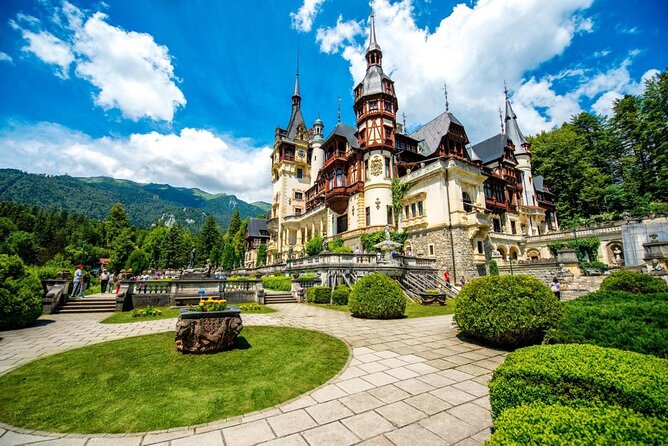
The first stop is Peleș Castle near Sinaia, in the Carpathian Mountains. Built for King Carol I between 1873 and 1914, the Neo-Renaissance palace was opened in 1883 and sits along the old route linking Wallachia with Transylvania.
Allow about two hours here. Peleș is the most polished and ornate castle on the route, and it gives you an important piece of Romanian royal history before the day turns toward Dracula legends. The setting in the mountains also makes this an attractive opening stop.
The practical catch is that the tour price does not include entrance tickets. The supplied schedule lists admission as free in the stop details, but the overall cost information clearly says attraction entrances are extra, totaling about $35 to $40 per person across the trip. Budget for that amount rather than assuming every interior visit is covered.
Bran Castle and the Dracula connection
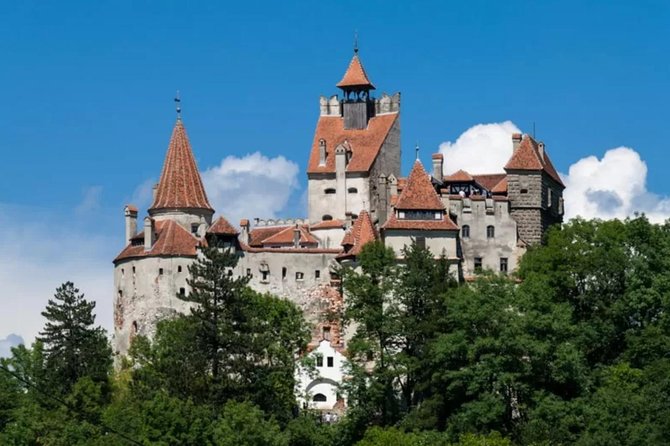
Next comes Bran Castle, usually called Dracula’s Castle. Perched on a high rock with towers and turrets, it is the most famous stop on the trip because of its connection to Bram Stoker’s fictional vampire.
The castle itself predates the Dracula story. A fortress existed on the site, and Bran was documented in 1377 when the Saxons of Kronstadt, now Brașov, received permission to build a citadel. The location also has links to the old route between Transylvania and Wallachia.
You get about two hours here. That is enough to see the castle and understand its place in popular culture, though you should keep your expectations grounded. Bran is a real medieval fortress with a famous literary association, not proof that Dracula lived there. The distinction makes the visit more interesting, not less.
More Brasov and Transylvania day trips from Bucharest:
- Bucharest: Dracula’s Castle, Peles Castle, & Brasov Old Town
★ 4.5 · 17,858 reviews - Bucharest: Dracula Castle, Peles Castle & Brasov Old Town
★ 4.6 · 10,891 reviews - Bucharest: Dracula’s Castle, Peleș Castle & Brașov Day Trip
★ 4.5 · 5,919 reviews - Bucharest: Day Trip to Dracula Castle, Peles Castle & Brașov
★ 4.4 · 3,049 reviews
Brașov’s old center after dark
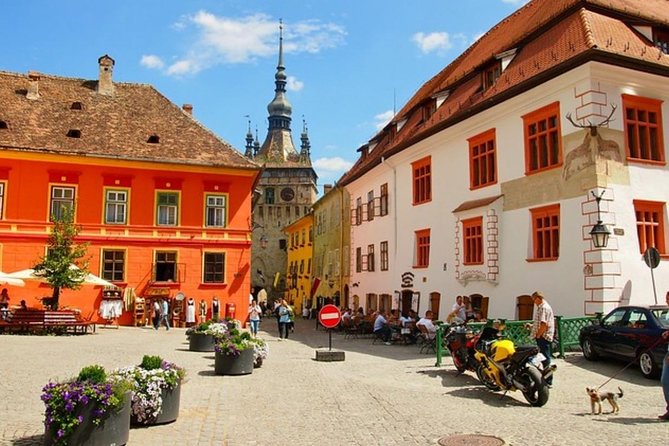
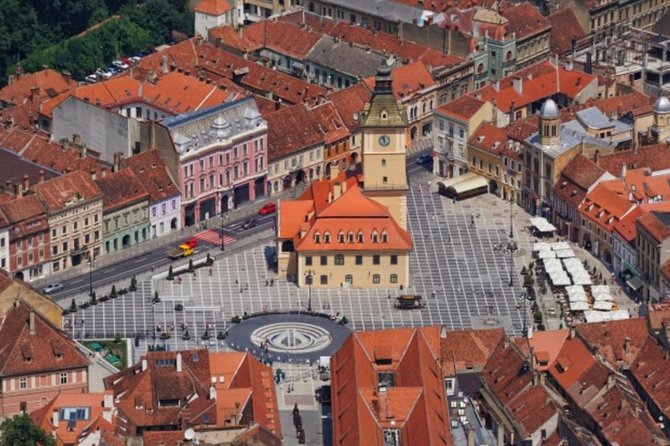
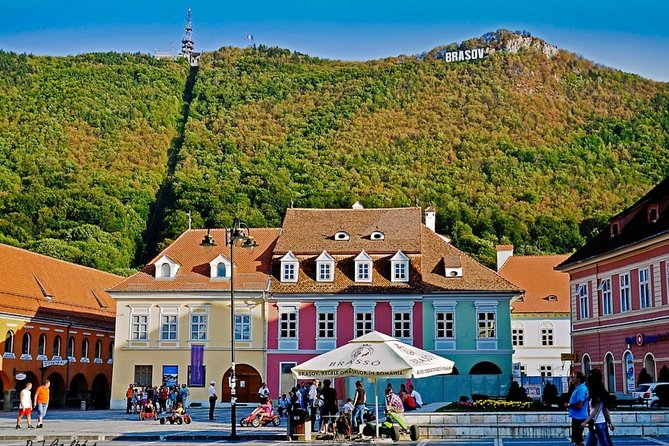
The day ends in Brașov, where you spend the night. Two hours are scheduled for the historical center, with cobbled streets, colorful façades, the Council Square, and the Gothic Black Church.
Brașov is one of the most rewarding stops because it feels like a living town rather than a single attraction. Cafes and buildings surround the main square, and the Carpathians form a strong backdrop. You can get your bearings quickly here, then return to the streets after the formal sightseeing time if your accommodation is nearby.
The first day is full. Peleș, Bran, and Brașov each deserve more time than a quick photograph, so the private vehicle and flexible schedule help. Still, you should expect a sightseeing day rather than a restful one.
Day two: Rupea, Viscri, and medieval Sighișoara
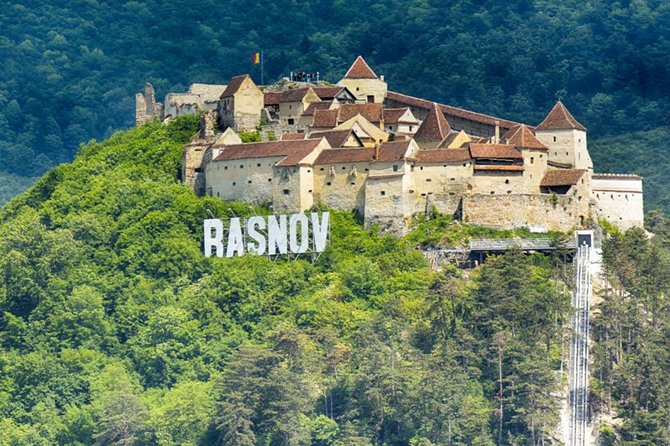
Rupea Fortress on the hill
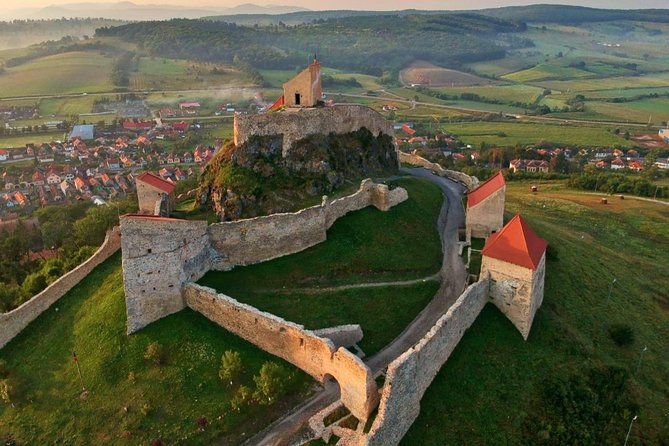
Rupea Citadel is a short but worthwhile stop, with about an hour scheduled. The fortress occupies a high position and has a long defensive story. Human settlement in the area reaches back to the Paleolithic and early Neolithic periods, while the citadel was first documented in 1324.
Its name comes from the Latin word rupes, meaning stone. The fortress later became an important link between Transylvania, Moldavia, and Wallachia. You get a useful sense of how roads, passes, and high ground shaped local power.
Rupea is less polished than Peleș and less famous than Bran. That is precisely its value. It helps you see Transylvania as a border region filled with defensive sites, not just castles built for royalty or folklore.
Viscri and the fortified church tradition
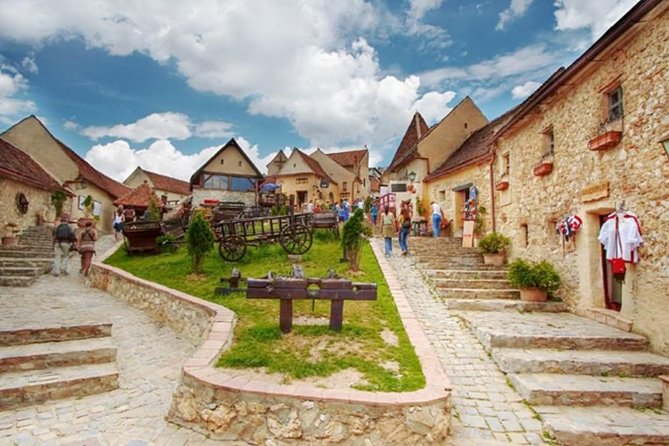
The village of Viscri introduces one of the most distinctive parts of Transylvanian culture. Its Lutheran fortified church was built by the ethnic German Transylvanian Saxon community. It began as a Roman Catholic church and became Lutheran after the Reformation.
The church and village form part of the UNESCO World Heritage site made up of Transylvanian villages with fortified churches. An hour is planned here, enough to visit the church and see the village setting.
The stop is important because the fortifications were practical. In medieval times, a church could also offer protection to the local community. Viscri gives you a clearer view of the Saxon presence in Transylvania, a theme that returns at Biertan, Sighișoara, and Sibiu.
The description connects Viscri with King Charles, but the main experience is the village and church, not a royal residence. You should treat it as a cultural and architectural stop.
Sighișoara, a medieval town with a famous name
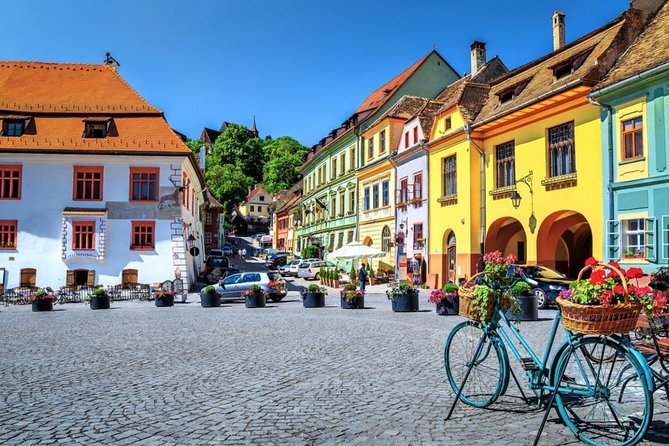
You spend the night in Sighișoara, with about three hours in its UNESCO-listed historical center. This is one of the strongest parts of the trip.
Fortified walls surround a compact old town of cobbled lanes and colorful buildings. The Clock Tower is the main landmark, and Vlad Dracula’s birthplace adds another connection to the Dracula story. Here the link is more direct than at Bran, since Vlad III, the historical ruler associated with the Dracula name, was born in Sighișoara.
Three hours lets you walk rather than simply stop for a photograph. You can focus on the Clock Tower, the square, the walls, and the narrow streets. The historic center is compact, but uneven cobblestones and uphill sections mean comfortable shoes are sensible.
Sighișoara is also a good overnight choice. You are not racing back to Bucharest after visiting it, and the town has a different mood from Brașov. Brașov feels more like a working city; Sighișoara is smaller and more enclosed by its medieval core.
Day three: Biertan and Sibiu’s Saxon legacy
Biertan’s church behind three defensive walls
Biertan is another fortified church village, with about an hour for the visit. The church dates from the 15th century and sits on a hill in the middle of the village, surrounded by three levels of defensive walls and connecting towers.
The late-Gothic church contains a large multi-paneled wooden altar made by artisans from Vienna and Nuremberg. Its wooden sacristy door is another notable feature, designed to protect church treasures.
Biertan belongs to the same UNESCO group as Viscri, but the two stops are not identical. Viscri feels more rural and compact, while Biertan presents a more formidable defensive complex. Seeing both helps you understand why fortified churches became such a defining feature of Saxon Transylvania.
The one-hour visit is focused. If you want a long village walk or a slow look at every architectural detail, the schedule may feel short. For a four-day circuit, though, the timing keeps the day moving toward Sibiu.
Sibiu, former capital of Transylvania
Sibiu receives about two hours, and you stay overnight. The city was once a center of the Transylvanian Saxons and remains one of Romania’s major cultural centers. It was named European Capital of Culture in 2007, alongside Luxembourg.
Two hours gives you a useful introduction to the old city, but not a full exploration of Sibiu’s museums and surrounding areas. The schedule is best for a walk through the historic center and a look at the city’s architecture and public spaces.
Sibiu is a good final town stop before the mountain road on day four. After two nights in medieval centers, you will have seen how Transylvania’s towns differ in scale and character. The overnight also breaks up the drive and avoids turning the route into one long transfer.
Day four: the Transfăgărășan and the road back south
Bâlea Lake high in the Făgăraș Mountains
Bâlea Lake sits at 2,034 meters in the Făgăraș Mountains. The glacial lake has mountain chalets, a weather station, and a mountain rescue station. The stop is planned for about an hour.
This is the point where season matters most. In summer, you reach the lake by car on the Transfăgărășan. During the rest of the year, the road is accessible to cars only as far as the Bâlea Cascadă chalet, with a cable car continuing toward the lake.
That means you should confirm the road and cable-car situation before booking around a fixed date. The tour information does not promise the same access in every season. The area also had Eastern Europe’s first ice hotel in 2006, an unusual detail that adds interest if it is operating during your visit, though no current operation is guaranteed.
The Transfăgărășan mountain highway
The Transfăgărășan, or DN7C, crosses the southern Carpathians and links Transylvania with Wallachia. Built in the early 1970s as a strategic military route, it reaches high mountain country between Romania’s highest peaks, Moldoveanu and Negoiu.
About an hour is allocated to this road, though the actual drive time can be longer depending on the route and conditions. Its value is the journey itself: bends, high passes, and open mountain views replace the medieval streets of the previous days.
This is also the least predictable part of the tour. Weather and seasonal access affect the experience, and the road is not simply another urban attraction. If the mountain route is a major reason you want this tour, ask about conditions before departure.
Vidraru Dam and Curtea de Argeș
Vidraru Dam is a brief 15-minute stop. Completed in 1966 on the Argeș River, the arch dam is 166 meters high and creates a large reservoir. The stop gives you a quick look at one of Romania’s major engineering projects.
The final main visit is Curtea de Argeș Monastery, where about an hour is planned. The cathedral dates from the early 16th century and is dedicated to the Dormition of the Mother of God. Its pale gray limestone exterior, frescoed interior, and unusual Moorish-style royal palace nearby give the site a different character from the Saxon churches in Transylvania.
The local legend of Meșterul Manole, the builder who could not finish the walls, is part of the monastery’s identity. You do not need to know every detail beforehand. The combination of Orthodox design, royal associations, and local legend provides a fitting end to a tour that has moved through several cultures and periods.
Price, extras, and the value of a private vehicle
The listed price is $872.67 per person. That figure covers private transportation in an air-conditioned vehicle, but not accommodation, meals, or entrance tickets.
The extra costs are clear:
- Hotel rooms average about $70 per night, with breakfast.
- Restaurant meals generally cost $15 to $20 per person.
- Attraction tickets add about $35 to $40 per person in total.
For four days, the base price is not a budget option, especially for a solo participant. The value improves for a small private group because the vehicle, guide time, and flexible route are shared only among your own party. Group discounts are offered, though the exact reduction is not stated.
I would compare the cost with a standard group tour based on what matters to you. If you want fixed departure times and the lowest possible price, a larger coach may be cheaper. If you want to adjust stops, avoid a crowded group, and ask questions throughout the drive, the private format has a real advantage.
Who should book this route?
I would recommend it to you if you have four days and want a first, wide-ranging look at central Romania. It suits people who care about castles, church architecture, medieval towns, mountain roads, and the mix of Romanian and Saxon traditions.
It is also a strong fit for a family or group of friends. The private setting means you do not have to match your pace to strangers, and the itinerary can be customized.
I would hesitate if you want deep time in one city, long hikes, or a relaxed village stay. The schedule includes many stops, and the first and fourth days involve significant driving. You should also reconsider if the Transfăgărășan is your top priority but your dates fall outside the summer road season.
The tour starts at 9:00 a.m., pickup is offered, and confirmation is provided at booking. Most people can participate, and public transportation is nearby. Free cancellation is available up to 24 hours before the start time; cancellations within 24 hours are not refunded.
Should you book this four-day route?
Book it if you want variety, privacy, and a guide-led route that connects the major sights with smaller fortified villages. The strongest sequence is Peleș, Bran, Brașov, Viscri, Sighișoara, Biertan, and Sibiu, while the final mountain crossing adds a dramatic change of scenery.
The decision comes down to pace and budget. You will pay extra for hotels, meals, and admissions, and you will spend part of each day on the road. But in return, you get a well-shaped private circuit and the chance to see far more of Transylvania than you could manage comfortably by arranging each transfer yourself. Ask about road conditions, confirm the attraction admissions, and choose this tour if that broad view is exactly what you want.
FAQ
Where does the tour start?
The tour starts in Bucharest, with a stated start time of 9:00 a.m. Pickup is offered.
How long does the tour last?
The experience lasts approximately four days.
Is the tour private?
Yes. Only your own group participates, and the route can be customized.
Is transportation included?
Private transportation in an air-conditioned vehicle is included.
Are hotels included?
No. Accommodation is separate. A hotel room costs an average of about $70 per night, including breakfast.
Are meals included?
No. Meals are separate, with a restaurant meal estimated at $15 to $20 per person.
Are entrance tickets included?
No. Attraction entrances are separate and cost about $35 to $40 per person in total.
Can the Transfăgărășan and Bâlea Lake be visited all year?
The Transfăgărășan reaches Bâlea Lake by car during summer. During the rest of the year, Bâlea Lake is accessible by cable car from the Bâlea Cascadă chalet, subject to conditions.
What is the cancellation policy?
You can cancel up to 24 hours before the experience for a full refund. Cancellations or changes made less than 24 hours before the start time are not accepted or refunded.
More multi-day Romania trips starting in Bucharest
- 4-Day Private Tour in Transylvania from Bucharest
★ 5.0 · 48 reviews - Transylvania Castles 4-day tour from Bucharest
★ 5.0 · 31 reviews - 3-Day Medieval Transylvania Package Tour
★ 4.7 · 31 reviews - 2-Day Private Tour of Transylvania from Bucharest
★ 5.0 · 24 reviews
Newest Bucharest trips we have written up
- Winery touring & private wine tasting – one day private tour★ 5.0 · 3 reviews
- Bucharest: Dealu Mare Winery Private Trip with Wine Tasting★ 4.9 · 6 reviews
- Traditions in Bucharest: Village Museum and Wine Tasting★ 5.0 · 8 reviews
- Your rendez-vous with Europe’s past: time-travel to Maramures, Transylvania★ 5.0 · 6 reviews
- Village Museum Bucharest Guided Tour★ 5.0 · 6 reviews
- Private Wine Tasting at Bucharest’s First Wine Bar★ 5.0 · 3 reviews
- Walking Tour of Bucharest City Center – Private Tour★ 5.0 · 4 reviews
- Wine tasting in Bucharest Old town – bonus cheese platter★ 4.5 · 6 reviews
Brasov and Transylvania Day Trips from Bucharest, compared.
Dracula’s Castle, Peles Castle, & Brasov Old Town
Read our review →
Dracula Castle, Peles Castle & Brasov Old Town
Read our review →
Dracula’s Castle, Peleș Castle & Brașov Day Trip
Read our review →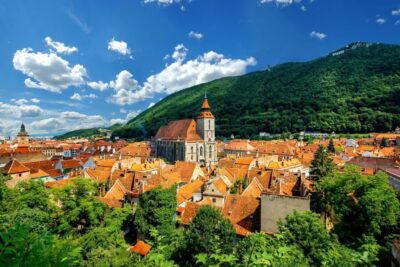
Day Trip to Dracula Castle, Peles Castle & Brașov
Read our review →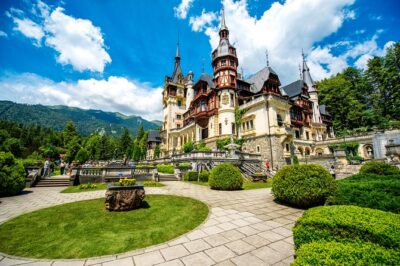
Bucharest to Dracula Castle, Peles Castle and Brasov Guided Tour
Read our review →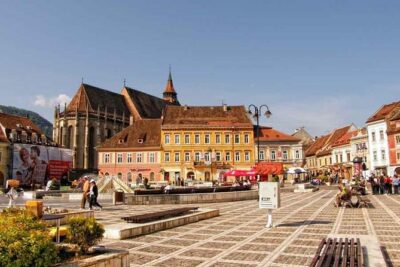
Dracula’s Castle, Peles Castle and Brasov Day Trip from Bucharest
Read our review →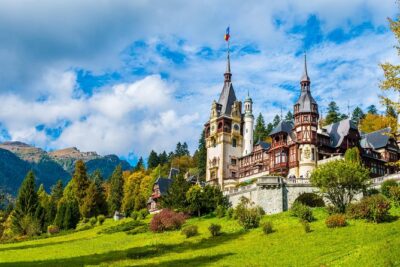
Transylvania and Dracula Castle Full Day Tour from Bucharest
Read our review →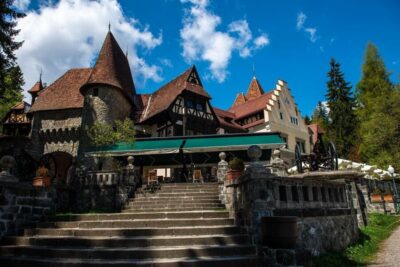
Browse the lists this tour appears in