
Reviewed · BRASOV AND TRANSYLVANIA DAY TRIPS FROM BUCHAREST
Transylvania & Bucovina Private Tour – 6 days
Romania saves its biggest surprises for the road between famous sights. In six days, you move from royal Peles Castle and Bran Castle to fortified Saxon towns, then east to Bucovina’s painted monasteries and the dramatic Bicaz Gorges. The route feels like several different trips joined together, with your own vehicle and guide keeping the changes manageable.
I like the private format, which means you can travel with only your own group and avoid the awkward pace of a large bus. I also like the mix of headline sights and quieter stops, especially Biertan, the village of Marginea, and the UNESCO churches of Bucovina. The main drawback is the long driving time, particularly on the transfer from Sighisoara to Voronet and the final run back to Bucharest.
Key points to know before booking
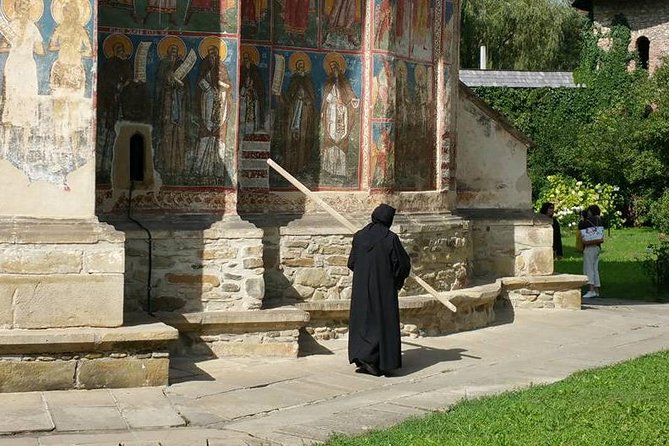
- Six days connect two very different regions: Transylvania brings castles, medieval towns, and fortified churches, while Bucovina brings painted monasteries and traditional crafts.
- The private vehicle saves planning time: Pickup, transport, hotels, breakfasts, and fuel are arranged for you.
- Four UNESCO painted monasteries appear on one day: Voronet, Humor, Sucevita, and Moldovita form the cultural heart of the trip.
- Gabriel may be worth requesting: One published account specifically praised his command of Romanian history, culture, and language, though guide assignment should be confirmed before booking.
- The schedule is active: Expect walking in old towns, visits to hilltop sites, and several full road days.
- The $1,419.55 price covers the framework, not everything: Entrance fees, photo fees, lunches, dinners, and some personal spending remain separate.
Why this route works so well
A six-day trip through Romania can easily become a logistical puzzle. Castles, monasteries, medieval centers, and mountain roads are spread across a large area, and public transport will not neatly connect all of them. This private tour removes that work. You are picked up in Bucharest, sleep in five included three- or four-star hotels, eat breakfast each morning, and return to Bucharest at the end.
I like the route because it does not stop at Dracula’s Castle and call the job done. Bran is famous, but the tour also gives you Sighisoara, Biertan, Sibiu, Bucovina, and Neamt. Those places show more of Romania than a single castle ever could.
The private setup matters most on a trip like this. You can ask questions as you go, keep your group together, and avoid waiting for a large coach. Still, private does not mean leisurely. The route covers a lot of ground, so you should be comfortable with long stretches in the vehicle and a steady stream of visits.
More Brasov and Transylvania day trips from Bucharest:
- Bucharest: Dracula’s Castle, Peles Castle, & Brasov Old Town
★ 4.5 · 17,858 reviews - Bucharest: Dracula Castle, Peles Castle & Brasov Old Town
★ 4.6 · 10,891 reviews - Bucharest: Dracula’s Castle, Peleș Castle & Brașov Day Trip
★ 4.5 · 5,919 reviews
Day 1: Royal Sinaia and fortified Brasov
The first day begins with a 7:30 am start from Bucharest. The early departure makes sense because the route includes Sinaia and a substantial walking tour in Brasov.
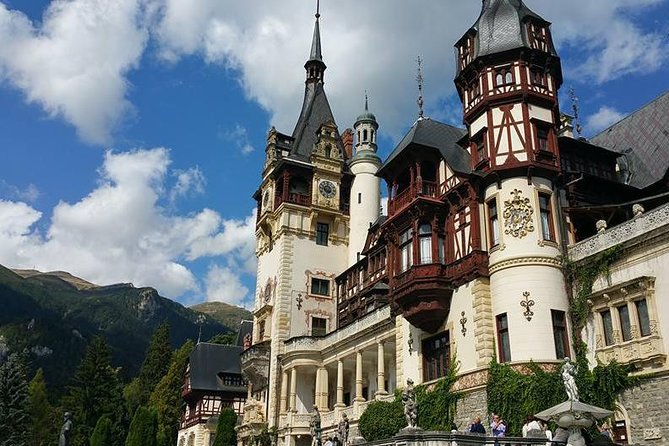
The Sinaia Orthodox Monastery provides the first cultural stop. From there, you visit Peles Castle, one of Romania’s most recognizable royal buildings. The appeal is not only the architecture. This is the point where the trip shifts from Bucharest into the mountain and castle country associated with Transylvania.
Brasov gives you the afternoon setting for a proper old-town walk. The itinerary includes the Black Church, the Citadel of Brasov, Ecaterina’s Gate, the White and Black Towers, and several old guild fortifications: the Blacksmiths Bastion, Weavers Bastion, Ropemakers Bastion, and Drapers Bastion.
That list tells you what kind of walking to expect. Brasov is not just a quick photo stop in a square. You will be tracing the defensive edge of a medieval city and seeing how craft guilds helped protect it. The Black Church and the old gates provide the strongest visual landmarks, while the towers and bastions give the visit its sense of place.
You spend the night in Brasov. Since the day starts early and includes several historic stops, comfortable shoes and a practical jacket will help. Entrance fees are not included, so keep some money available for Peles Castle and other sites you choose to enter.
Day 2: Bran Castle, Rasnov, and Sibiu
Bran Castle is the day’s big name. It is widely known as Dracula’s Castle, although the atmosphere of the building and its setting matter more than the vampire story. The castle offers the tour’s most obvious link to popular Romanian legend, but you should expect a historic attraction shaped in part by that modern association.
Rasnov Fortress provides a useful contrast. Instead of a castle interior, you get a high defensive site connected to the town below. Its position helps explain why fortresses were placed on hard-to-reach ground. The visit also keeps the day from becoming a string of royal residences.
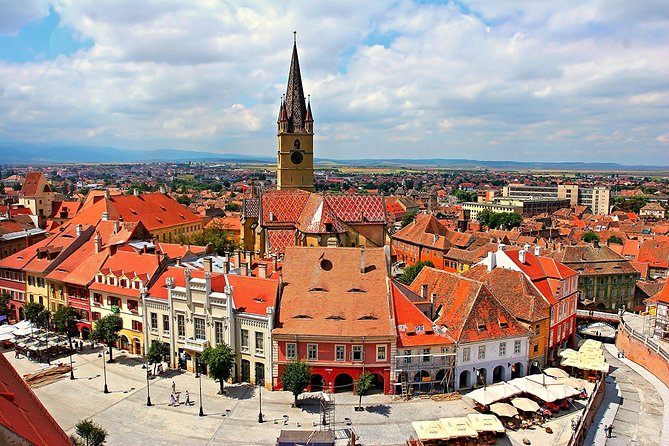
The route then continues to Sibiu, one of the strongest old-town stops on the trip. The tour includes the Evangelical Church, Holy Trinity Orthodox Cathedral, the Bridge of Lies, the historic center, the Stairs Passage, Brukenthal Museum, and old towers and bastions.
Sibiu is especially good for seeing the meeting of German, Romanian, and religious traditions in Transylvania. The Bridge of Lies and the Stairs Passage are compact landmarks, while the churches and Brukenthal Museum add more substance than a simple walk around the main square.
You sleep in Sibiu. This is another full day, so the private format gives you a better chance to ask the guide to explain what you are seeing instead of simply moving from one scheduled stop to the next.
Day 3: Biertan and the medieval streets of Sighisoara
Biertan is one of the tour’s quieter and more valuable stops. Its fortified church is a UNESCO World Heritage Site, and the visit includes a walk in the village. That village walk matters. It gives you a look at the setting around the church rather than treating the monument as an isolated building.
The fortified church reflects the defensive character of historic Transylvania. In this part of Romania, places of worship could also serve as community strongholds. Biertan helps you understand that pattern before the tour moves to the more famous Sighisoara.
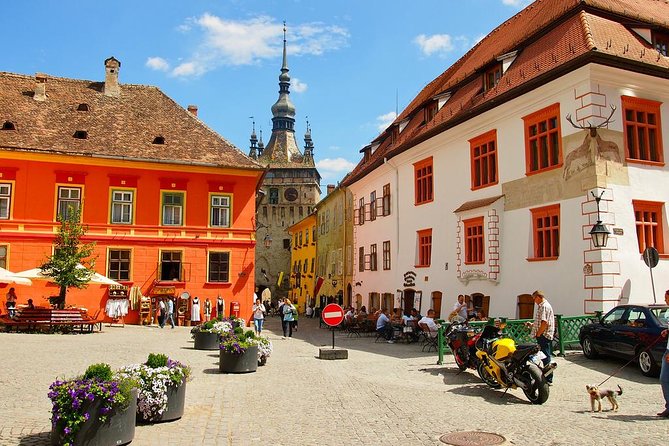
Sighisoara is another UNESCO-listed site and one of the most visually complete medieval towns on the route. The Clock Tower and History Museum anchor the visit. You also see the Church on the Hill, the House of Dracula, the covered schoolchildren’s stairs, and the German cemetery.
The pupils roofed stairways, as they are described in the tour details, are one of the memorable practical features of the town. The covered steps were built to make the climb to school and church easier in poor weather. They also give you a sense of how daily life shaped the town’s architecture.
The German cemetery adds a quieter note. It helps broaden the visit beyond Dracula imagery and postcard streets. Sighisoara can be busy with sightseeing, but the tour’s range of stops gives you more than a quick walk through the center.
You spend the night in Sighisoara. This is a good point to judge your energy level honestly. The next day includes the longest-feeling transfer of the trip, and you will appreciate having handled the town’s walking at a steady pace.
More multi-day Romania trips starting in Bucharest:
- 2-Day Medieval Transylvania with Brasov,Sibiu and Sighisoara Tour from Bucharest
★ 4.5 · 145 reviews - 2-Day Transylvania from Bucharest: Brasov, Bran, Sighisoara
★ 5.0 · 60 reviews - 4-Day Private Tour in Transylvania from Bucharest
★ 5.0 · 48 reviews - 3-Day Medieval Transylvania Package Tour
★ 4.7 · 31 reviews
Day 4: Red Lake and the Bicaz Gorges
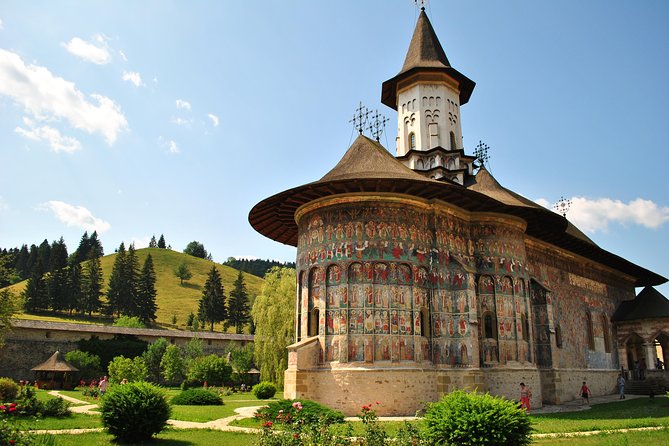
Day four changes the tone of the trip. You leave the Transylvanian towns and head toward Bucovina, stopping at Red Lake and Bicaz Gorges on the way.
Red Lake is described as Romania’s largest natural mountain lake. The stop gives you a break from churches and fortifications, with a setting shaped by water and high mountain terrain. The lake is also called a natural storage dam lake, which adds a geological and geographic angle to the visit.
Bicaz Gorges is the more dramatic road stop. The route twists uphill for about three miles through steep limestone cliffs that rise roughly 1,000 feet. Even if you are not interested in geology, the road itself makes the area memorable. The vehicle becomes part of the sightseeing here, as the route cuts through a narrow mountain passage.
The day ends in Voronet, in the Bucovina area. This is primarily a transfer day with major scenery rather than a packed list of indoor attractions. That balance is welcome after three days of historic centers, but the drive can still feel long.
You stay in Voronet for two nights, which is practical. It avoids changing hotels after every monastery and gives you a stable base for the main Bucovina day.
Day 5: Bucovina’s painted monasteries and village crafts
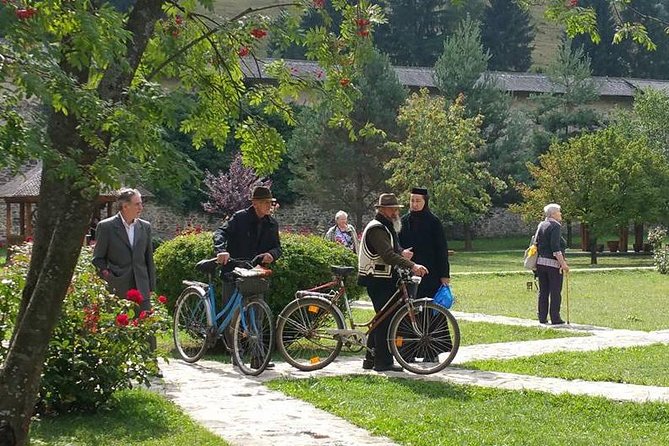
Day five is the cultural center of the tour. Voronet Monastery, Humor Monastery, Sucevita Monastery, and Moldovita Monastery are all UNESCO World Heritage Sites. The painted exteriors are the reason these churches matter, but the wider value is the way art, faith, and local history meet in one group of buildings.
Voronet comes first. It is often the best-known name among Bucovina’s painted churches, and the visit gives you a clear introduction to the style. Humor, Sucevita, and Moldovita then show how the same broad tradition appears in different settings and artistic treatments.
Seeing several monasteries in one day has a clear benefit: you can compare them. The drawback is that the churches may begin to blur together if you rush. Use the private format to ask for context and take short pauses between visits. Four UNESCO sites make an impressive list, but the quality of the day depends on giving each one enough attention.
The Painted Eggs Museum adds another local art form. It is a useful change of subject after the monasteries, and it keeps the day tied to Bucovina’s craft traditions rather than only its major religious buildings.
Lunch is not included, but it is built into the day. You should plan for that cost and ask about dietary needs when booking, as the tour requests this information in advance.
Marginea village brings the focus to black pottery workshops. This is one of the most appealing stops for anyone who wants a sense of living craft rather than only historic monuments. The visit shows how the region’s identity continues through handmade work.
You return to Voronet for the night. With four monasteries, a museum, lunch, and a pottery stop, this is likely the most concentrated day of the trip. It is rewarding, but not restful.
Day 6: Neamt Monastery, Neamt Fortress, and the return to Bucharest

The final day begins with Neamt Monastery, founded in the 12th century and described as one of Romania’s oldest and most important religious settlements. Its high walls and defense tower give it a fortress-like appearance, while its position near the Ceahlau Mountains and old forests adds a quieter setting.
Neamt Fortress is perched on a rocky hill above Targu Neamt. For almost six centuries, it played a role in defending the area against raids. The hilltop position is the key feature, but it also means you should expect some physical effort. The tour requires a moderate fitness level, and this is one reason why.
After these stops, you return to Bucharest for hotel drop-off. The final transfer is long, so do not treat day six as a short sightseeing morning followed by an easy ride. It is the closing road day of a route that has crossed much of central and eastern Romania.
What the $1,419.55 price really buys
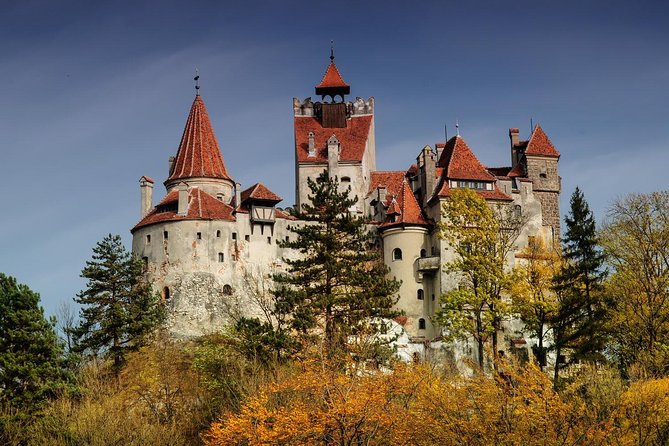
At $1,419.55 per person, this is not a budget excursion. The price becomes easier to judge when you look at what is included: private transportation, hotel pickup and drop-off, a professional guide, five nights in three- or four-star hotels, breakfast, and fuel.
The strongest value is time. You do not need to arrange separate transfers between Bucharest, Brasov, Sibiu, Sighisoara, and Bucovina. You also avoid trying to connect mountain attractions and rural monasteries by public transport.
The price does not cover entrance fees or photo fees. Lunch and dinner are also separate, so your actual spending will be higher. Ask for the current entrance costs before departure if you want a precise budget.
I see this tour as better value for a couple, family, or small group that values convenience and interpretation over the lowest possible price. A solo visitor may find the per-person cost harder to justify, while a private group can spread the value of the vehicle and guide across its own members.
Guide quality and the private advantage
Guide quality matters on a route packed with history. One account gives special praise to Gabriel, noting his command of Romanian history, culture, and language and his eagerness to share it. If Gabriel is available, you can ask about requesting him, but the guide for your departure should be confirmed rather than assumed.
The private format also helps with the human side of travel. You can raise a question about a church, spend a little longer at a fortress, or clarify a local custom without addressing a full coach. The tour remains scheduled, but it is less rigid than a large group departure.
The tradeoff is that you are responsible for your own group’s pace. If everyone wants to see every site, the days will feel full. If your group prefers long meals and slow wandering, this route may ask more of you than you want to give.
Who should book this Romanian circuit
I would choose this tour if you have about a week in Romania and want both Transylvania and Bucovina without building the route yourself. It suits first-time visitors who want castles and medieval towns, but who also want something more distinctive than the standard Dracula circuit.
It is a good match for people who enjoy history, churches, traditional crafts, and scenic road journeys. You should have moderate fitness, accept early starts, and be comfortable spending substantial time in the vehicle.
I would hesitate if your priority is a slow holiday in one city. The itinerary changes regions quickly and includes several major sites each day. I would also hesitate if you need flexible cancellation, since the booking is non-refundable and cannot be changed for any reason.
Final call: is this six-day tour worth booking?
Book it if you want a private, tightly organized route that combines Transylvania’s castles and fortified towns with Bucovina’s UNESCO monasteries. The strongest parts are the regional contrast, the four painted churches, the Bicaz Gorges drive, and the ease of having transport and hotels handled.
Skip it if you prefer independent travel, long unscheduled meals, or a lighter pace. At this price, the tour earns its keep through convenience and coverage, not free time. For a first visit to Romania with only six days available, that trade can make good sense.
FAQ
Where does the tour start and finish?
The tour starts in Bucharest with hotel pickup and ends with drop-off at your hotel in Bucharest.
How long does the tour last?
The tour lasts six days and includes five nights of accommodation.
What time does the tour start?
The stated start time is 7:30 am.
Is this a private tour?
Yes. Only your group participates in the private activity.
What accommodation is included?
Five nights in three-star or four-star hotels are included.
Are meals included?
Breakfast is included. Lunch and dinner are not included, although lunch is scheduled during the Bucovina monastery day.
Are entrance fees included?
No. Entrance fees and photo fees are not included.
What fitness level is required?
A moderate physical fitness level is recommended. The route includes walking in historic towns and visits to sites such as hilltop Neamt Fortress.
Newest Bucharest trips we have written up
- Bucharest: Dealu Mare Winery Private Trip with Wine Tasting★ 4.9 · 6 reviews
- Winery touring & private wine tasting – one day private tour★ 5.0 · 3 reviews
- Traditions in Bucharest: Village Museum and Wine Tasting★ 5.0 · 8 reviews
- Your rendez-vous with Europe’s past: time-travel to Maramures, Transylvania★ 5.0 · 6 reviews
- Village Museum Bucharest Guided Tour★ 5.0 · 6 reviews
- Private Wine Tasting at Bucharest’s First Wine Bar★ 5.0 · 3 reviews
- Walking Tour of Bucharest City Center – Private Tour★ 5.0 · 4 reviews
- Wine tasting in Bucharest Old town – bonus cheese platter★ 4.5 · 6 reviews
Brasov and Transylvania Day Trips from Bucharest, compared.
Dracula’s Castle, Peles Castle, & Brasov Old Town
Read our review →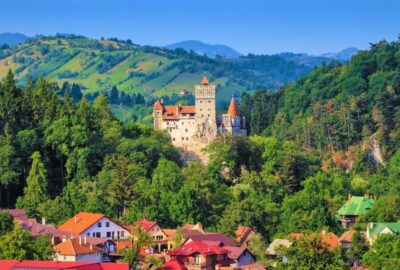
Dracula Castle, Peles Castle & Brasov Old Town
Read our review →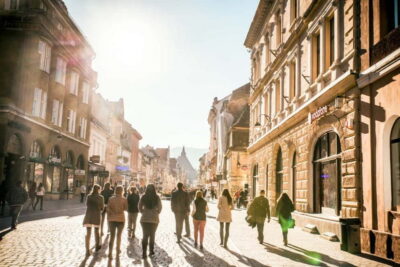
Dracula’s Castle, Peleș Castle & Brașov Day Trip
Read our review →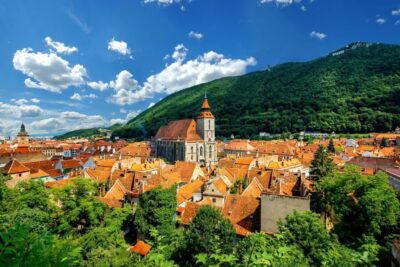
Day Trip to Dracula Castle, Peles Castle & Brașov
Read our review →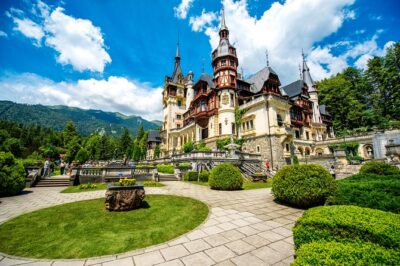
Bucharest to Dracula Castle, Peles Castle and Brasov Guided Tour
Read our review →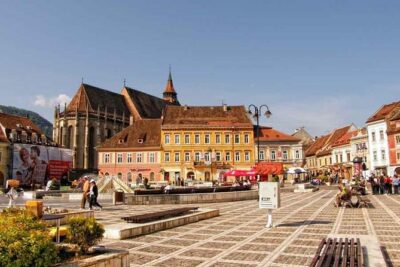
Dracula’s Castle, Peles Castle and Brasov Day Trip from Bucharest
Read our review →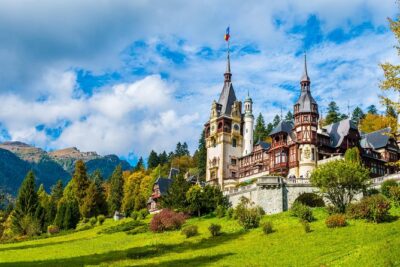
Transylvania and Dracula Castle Full Day Tour from Bucharest
Read our review →
Browse the lists this tour appears in