
Reviewed · DRACULA AND BRAN CASTLE TOURS FROM BUCHAREST
8h Bucharest Communism Tour – Best of Bucharest with Dracula’s Tomb
Bucharest’s past comes into sharp focus on this eight-hour private tour, which moves from the crushing scale of the Palace of Parliament to the intimate rooms of Ceausescu’s former home. The surprise ending is Snagov Monastery, an island church linked to the tomb of Vlad the Impaler, the figure behind the Dracula legend.
I like the mix of subjects. You get communist-era politics, royal Bucharest, traditional village life, and a little medieval mystery in one day. I also like the private format, since guides such as Nicolas and Răzvan can adjust the pace and add practical suggestions for the rest of your stay.
The main drawback is cost: at $297.38 per person, this makes the most sense for a small private group that wants door-to-door transport and a full historical overview. Entrance tickets and food are extra, and several stops require paid admission.
Key points to know before booking
- The Palace of Parliament takes center stage: Expect about two hours on the biggest and most politically charged stop of the day, with admission paid separately.
- Snagov adds the Dracula connection: The monastery sits on an island about 40 minutes outside Bucharest and requires its own entry ticket.
- Ceausescu’s private world feels different: The Spring Palace shows how Romania’s ruling family lived behind the public image of austerity.
- You cover a lot of Bucharest: Calea Victoriei and Revolution Square add churches, museums, royal buildings, and the setting of the 1989 uprising.
- Traditional Romania gets a full stop: The National Village Museum offers wooden houses, adobe buildings, mills, and a wooden church from different parts of the country.
- Private transport saves time: Hotel pickup, drop-off, fuel, and a private vehicle are included, but food and admissions are not.
A full day that explains Bucharest through contrasts
This is not just a sightseeing loop. Its shape is built around contrasts: grand government buildings beside ordinary homes, traditional village life beside communist power, and royal architecture beside the site where a dictator fled by helicopter.
You spend about eight hours with your own group and a driver-guide. That matters in Bucharest, where the stops are spread across the city and beyond it. Instead of arranging several taxis or trying to connect separate museums, you can move in one private vehicle and keep the day together.
The tour is especially useful if you have limited time in the capital. It gives you a broad first look, though it does not offer long, unhurried visits at every location. The day works best for people who want context and variety rather than one museum studied in great detail.
The guiding is a major part of the value. Nicolas is described as friendly, flexible, entertaining, and well informed about Bucharest. Răzvan is also noted for adapting to the group and providing extra ideas for what to see on other days. Those details matter because a day with six major stops can feel rushed without a guide who manages the clock well.
More Dracula and Bran Castle trips from Bucharest:
- Bucharest: Dracula’s Castle, Peles Castle, & Brasov Old Town
★ 4.5 · 17,858 reviews - Bucharest: Dracula Castle, Peles Castle & Brasov Old Town
★ 4.6 · 10,891 reviews - Bucharest: Dracula’s Castle, Peleș Castle & Brașov Day Trip
★ 4.5 · 5,919 reviews
The Palace of Parliament and the cost of communist ambition
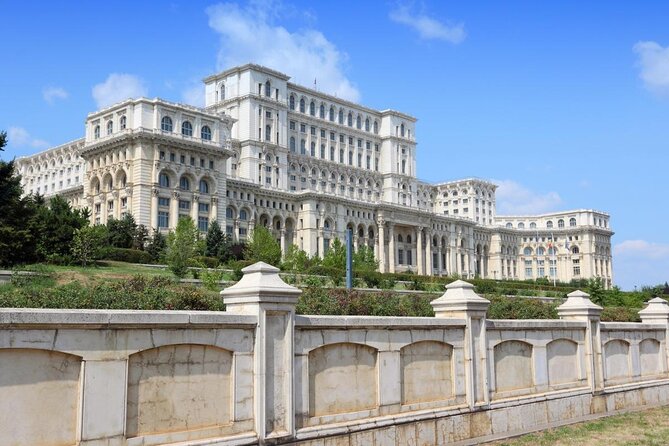
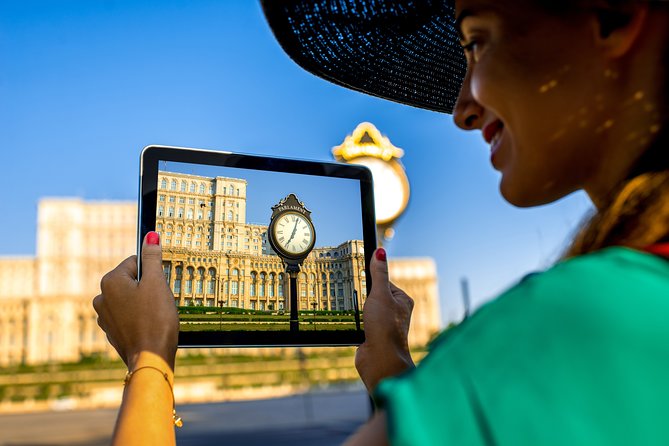
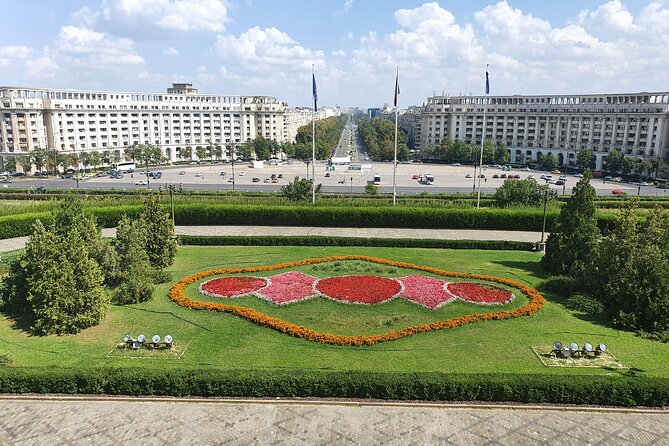
Begin with the Palace of Parliament, also called the People’s House. The building is the clearest physical expression of Nicolae Ceausescu’s rule: enormous, expensive, and designed to project absolute authority.
You will spend roughly two hours here. The scale is the point. The building ranks as the second-largest administrative building in the world after the Pentagon, and its size helps explain the mismatch between official grandeur and everyday life under communism.
A guide can help you read the building as political evidence, not just as a large piece of architecture. You will consider what happens when one leader controls the state, demands vast resources, and uses construction to display power. The result is a place that can feel impressive at first, then troubling once you think about its human and financial cost.
Admission is not included. Check the ticket arrangements before setting out, since this is one of the day’s main paid visits. You should also allow enough time for security and the building visit itself, since the advertised two hours is more than a quick photo stop.
This is the tour’s strongest stop for understanding the damage caused by a totalitarian system. If your main interest is communist-era Bucharest, this visit alone gives the day a clear purpose.
The National Village Museum and an older Romania
The National Village Museum changes the mood. Instead of monumental stone and government offices, you see traditional houses brought together from different parts of Romania.
Expect homes made from wood, adobe, stone, and other local materials. The museum also includes national symbols such as a mill and a wooden church. The value here is not only visual. You get a sense of how village communities organized daily life with modest materials and a close connection to their surroundings.
This stop helps prevent the tour from treating Romania as only a communist story. The country’s identity reaches much further back, and the museum offers a practical look at homes, work, and spiritual life across different regions.
The description emphasizes ecological and sustainable village environments. That does not mean a modern environmental exhibit. Rather, the interest is in how people built with local materials and used what was available around them.
Give this stop your attention if you like architecture, folk traditions, or social history. If your priority is the 1989 revolution, you may find the village museum less urgent than the city center stops. Still, it gives the day welcome balance and makes the later discussion of communism more meaningful.
Calea Victoriei, where Bucharest’s past meets its present
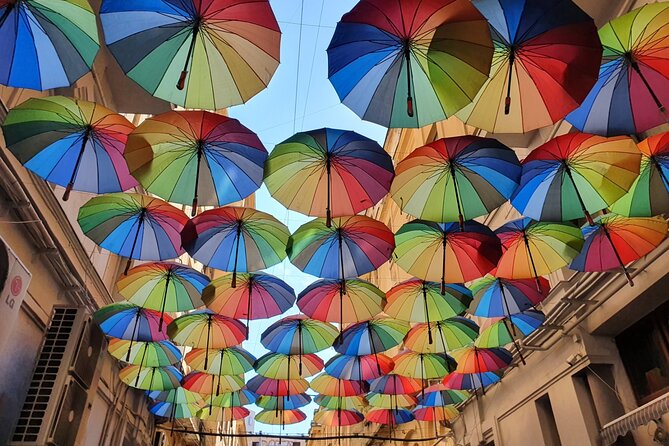
Calea Victoriei is the city walk and drive section, lasting about 45 minutes. It is one of the best places to see Bucharest’s history in layers.
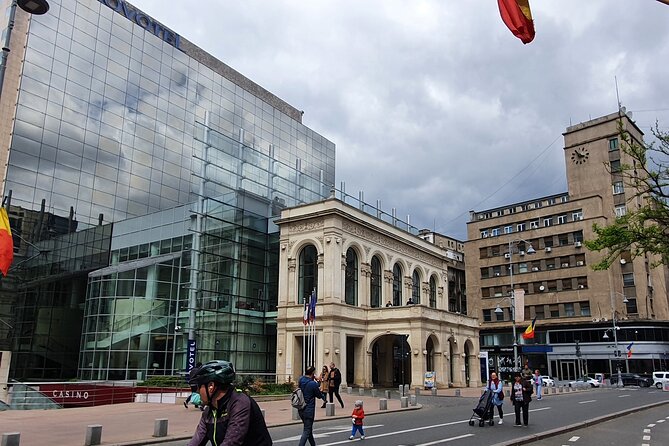
Your guide points out the Royal Palace on one side and the former Central Committee of the Romanian Communist Party nearby. That physical contrast is powerful. The street also brings together old Orthodox churches, museums, theaters, restaurants, tea shops, shops, and gift stores.
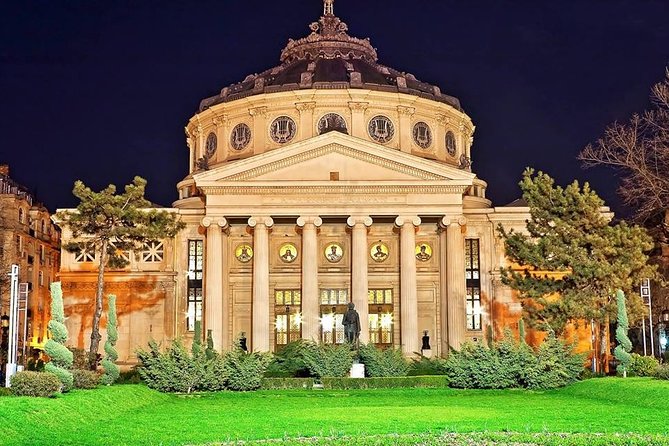
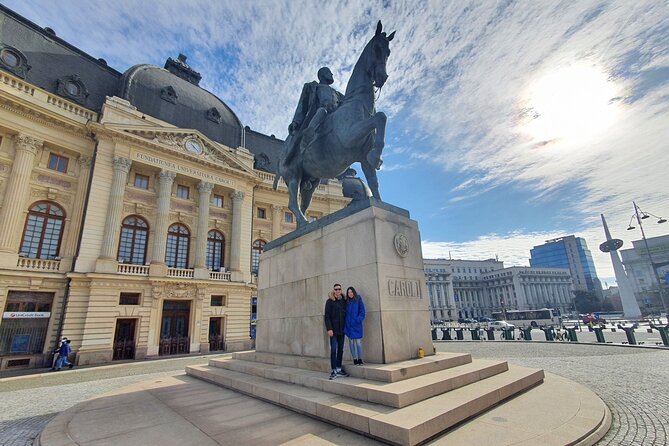
Important buildings along or near the avenue include the National History Museum, the Romanian Athenaeum, and the CEC Palace. Each gives you another piece of the city’s architectural story. You may also pass music shops and casinos, which add to the sense that Calea Victoriei is both a historic route and a living city street.
This is not a long walking tour with extended interior visits. Admission is listed as free for this part, but the time is limited. Think of it as a guided orientation that helps you decide where to return later.
I like this section because it keeps the day from becoming a series of isolated museums. You see how royal, religious, cultural, and commercial buildings occupy the same urban space. The guide’s commentary is particularly useful here, since the buildings can look attractive without revealing the political changes they have witnessed.
More communism and Ceausescu tours in Bucharest:
- The Real tour of Communism
★ 5.0 · 666 reviews - Life under Communism
★ 5.0 · 358 reviews - 3-Hour Guided Tour of Communist Bucharest
★ 4.9 · 303 reviews - Bucharest Essential Tour: Old Town, Calea Victoriei & Communism
★ 5.0 · 142 reviews
Revolution Square and the end of Ceausescu’s rule
At Revolution Square, the tour turns directly to December 1989. You spend about 30 minutes near the former Central Committee building, now associated with the Senate Palace and the start of the Romanian Revolution.
This is where Ceausescu addressed the crowd before losing control of the situation. The tour connects the square with his flight from the city by helicopter, the collapse of his rule, and the later controversy around his wealth, state security, and offshore accounts.
Thirty minutes is enough for a focused explanation and some time to look around. It is not enough for a full study of the revolution, so you should treat the stop as an introduction. If this subject matters greatly to you, ask your guide for suggestions on further reading or places to visit.
The square can be more affecting than a polished museum because the events happened in an ordinary public setting. The buildings and open space help you picture how quickly a political system can change when public fear gives way to mass action.
Snagov Monastery and the Dracula connection
About 40 minutes outside Bucharest, Snagov Monastery brings a change of pace. The church sits on an island, and the stop lasts about an hour.
The main attraction is the tomb associated with Vlad the Impaler, the historical figure connected to the Dracula story. The tour presents this as a surprise element, and it works best if you enjoy the meeting point between documented history and later legend.
You should keep your expectations measured. This is not a castle visit or a full Dracula-themed attraction. It is a monastery stop with a famous association, and the appeal comes from the setting, the church, and the story tied to Vlad’s name.
Admission is not included. The extra drive also means Snagov takes a real portion of the day. That is worth it if you want something beyond central Bucharest, but less so if you prefer to spend every hour on communist history.
The island setting gives the day a quieter pause after the city’s heavy political sites. It also makes the tour feel less predictable. You begin with a twentieth-century dictatorship and end with a medieval ruler whose reputation grew into a modern cultural myth.
Ceausescu Mansion and the private face of power

The Ceausescu Mansion, also called the Spring Palace, was the private home of Nicolae and Elena Ceausescu and their children, Nicu, Zoia, and Valentin. The family lived there from 1965 to 1989.
The visit lasts about one hour and 20 minutes, making it one of the day’s longer indoor stops. That extra time is useful because the house tells a different story from the Palace of Parliament. The government building shows public power. The mansion shows how the ruling family lived away from the public.
The residence was built in the mid-1960s and enlarged between 1970 and 1972. Aron Grimberg-Solari designed the home, while architect Robert Woll worked on the interiors and landscaping. These details help you see the property as a planned private world, not simply a residence preserved for display.
The mansion is valuable because it places political privilege in domestic terms. Rooms, design choices, and the size of the home help you compare the family’s private comfort with the shortages and restrictions experienced by many Romanians during the same period.
Admission costs extra. Since the building is a major part of the tour, check whether tickets are available for your chosen date and factor the additional expense into the advertised price.
What the $297.38 price really covers
The price is $297.38 per person, with group discounts available. That figure is high compared with a basic city sightseeing bus, but this is a private eight-hour outing with hotel pickup and drop-off, a private vehicle, a driver-guide, and a local guide.
Fuel, facility fees, and landing fees are included. Food and drinks are not, and entrance tickets are also separate. The final cost can therefore rise once you add the Palace of Parliament, Ceausescu Mansion, Snagov Monastery, and any other paid entry.
The value improves for a small group. If several people share the private vehicle and guide, you gain flexibility and avoid spending the day joining strangers. You also save the time and effort of arranging transport between central Bucharest, Snagov, and the outer parts of the city.
I would not choose this tour mainly to save money. I would choose it to fit a lot of history into one day with a guide who can connect the locations. Nicolas and Răzvan are both associated with a warm, flexible style, and the clean, air-conditioned vehicle with comfortable seats is useful during a long day on the road.
Who will get the most from this tour
This experience suits you if you want a broad introduction to Bucharest and do not want to manage transport yourself. It is a good fit for first-time visitors, families, couples, and small groups interested in politics, architecture, local traditions, and the Dracula story.
It also works well for people who like asking questions. A private tour gives you room to request more detail about the revolution, the Ceausescu family, or what to see later in Bucharest.
You may want another plan if you prefer slow museum visits, long meals, or a single subject. Six stops create variety, but the schedule naturally limits the time available at each one. The tour is full rather than relaxed.
Most people can participate, and service animals are allowed. Hotel pickup and drop-off are provided, but the exact pickup details should be confirmed when booking.
Practical booking advice
Wear comfortable shoes, since several stops involve walking around large buildings and historic areas. Keep some budget aside for admissions and food, since neither is included.
Free cancellation is available if you cancel at least 24 hours before the start time. Changes or cancellations made within 24 hours are not accepted for a refund, and the cut-off follows local Bucharest time.
Before booking, ask about the day’s ticket plan. The Palace of Parliament and Ceausescu Mansion are central to the experience, and knowing how admission will be handled can prevent surprises.
Should you book the Best of Bucharest with Dracula’s Tomb?
Book it if you want one private day that connects communist power, traditional village life, royal Bucharest, the 1989 revolution, and Dracula lore. The range is the main attraction, and the private vehicle makes the spread-out itinerary practical.
Skip it if the price feels too high once admissions are added, or if you prefer to explore Bucharest at a slower pace. For a small group with limited time, though, the combination of door-to-door transport and guides such as Nicolas or Răzvan gives you a useful first understanding of the city, with enough unusual stops to keep the day from feeling like a standard capital-city tour.
FAQ
How long does the tour last?
The tour lasts approximately eight hours.
Is hotel pickup and drop-off included?
Yes. Hotel pickup and drop-off are included in the tour.
Is this a private tour?
Yes. Only your group participates in the private activity.
Are entrance tickets included?
No. Entrance tickets are not included. Food and drinks are also separate.
How far is Snagov Monastery from Bucharest?
Snagov Monastery is about 40 minutes outside Bucharest. It is located on an island.
Who lived at Ceausescu Mansion?
Nicolae and Elena Ceausescu lived there with their children, Nicu, Zoia, and Valentin, from 1965 to 1989.
Can I cancel for a full refund?
Yes, if you cancel at least 24 hours before the experience starts. Cancellations or changes made less than 24 hours in advance are not accepted for a refund.
Newest Bucharest trips we have written up
- Bucharest: Dealu Mare Winery Private Trip with Wine Tasting★ 4.9 · 6 reviews
- Winery touring & private wine tasting – one day private tour★ 5.0 · 3 reviews
- Traditions in Bucharest: Village Museum and Wine Tasting★ 5.0 · 8 reviews
- Your rendez-vous with Europe’s past: time-travel to Maramures, Transylvania★ 5.0 · 6 reviews
- Village Museum Bucharest Guided Tour★ 5.0 · 6 reviews
- Private Wine Tasting at Bucharest’s First Wine Bar★ 5.0 · 3 reviews
- Walking Tour of Bucharest City Center – Private Tour★ 5.0 · 4 reviews
- Wine tasting in Bucharest Old town – bonus cheese platter★ 4.5 · 6 reviews
Dracula and Bran Castle Tours from Bucharest, compared.
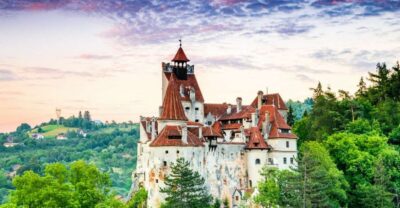
Dracula’s Castle, Peles Castle, & Brasov Old Town
Read our review →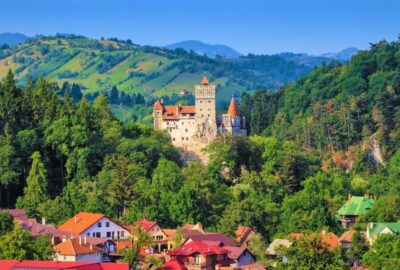
Dracula Castle, Peles Castle & Brasov Old Town
Read our review →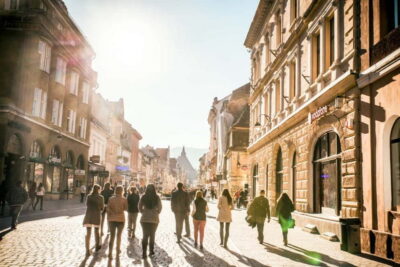
Dracula’s Castle, Peleș Castle & Brașov Day Trip
Read our review →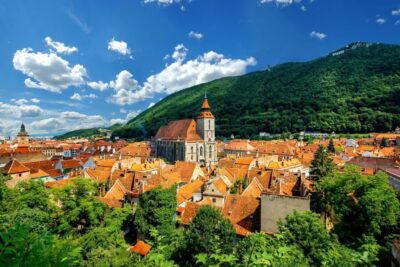
Day Trip to Dracula Castle, Peles Castle & Brașov
Read our review →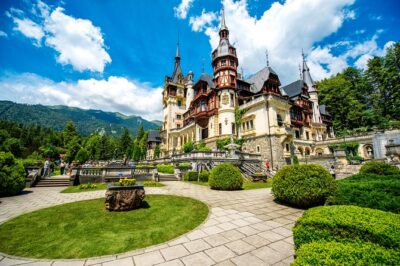
Bucharest to Dracula Castle, Peles Castle and Brasov Guided Tour
Read our review →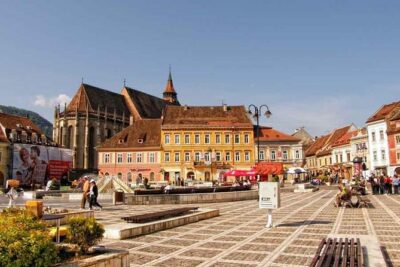
Dracula’s Castle, Peles Castle and Brasov Day Trip from Bucharest
Read our review →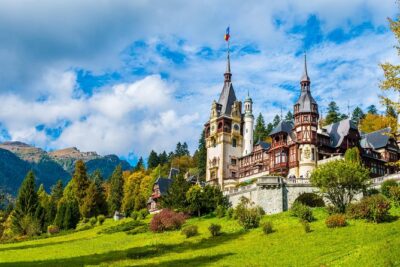
Transylvania and Dracula Castle Full Day Tour from Bucharest
Read our review →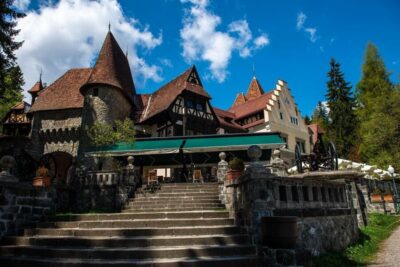
Browse the lists this tour appears in