
Reviewed · BUCHAREST COMMUNISM AND CEAUSESCU TOURS
Bucharest Essential Tour: Old Town, Calea Victoriei & Communism
Bucharest’s story is written in sharp contrasts: royal buildings beside communist monuments, elegant Calea Victoriei leading toward an Old Town shaped by trade, and Revolution Square carrying the memory of the 1989 uprising. This 2.5-hour walking tour gives you a useful first look at those layers without asking you to cross the whole city.
I like the easy central meeting point and the route’s steady mix of buildings, statues, and street stories. I also like the practical touch of a local guide who can suggest places to eat and visit afterward. The main consideration is pace: you cover a lot in a short time, and the tour is outdoors, so poor weather can affect the experience.
Key points at a glance
- Revolution Square in context: Learn how communist control, food rationing, and the December 1989 uprising changed Romania.
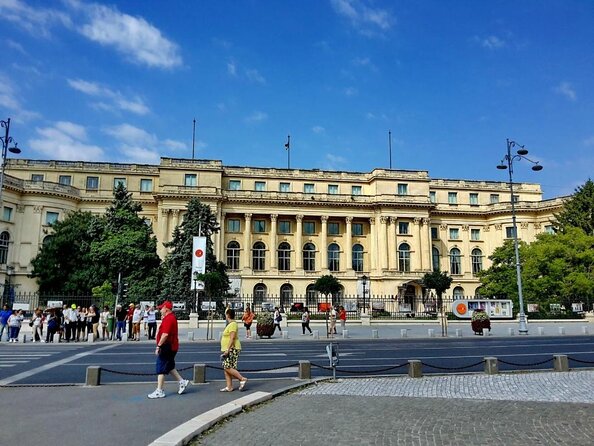
- Royal Bucharest on foot: See the Romanian Athenaeum, Carol I’s statue, the former Royal Palace, and the University Library.
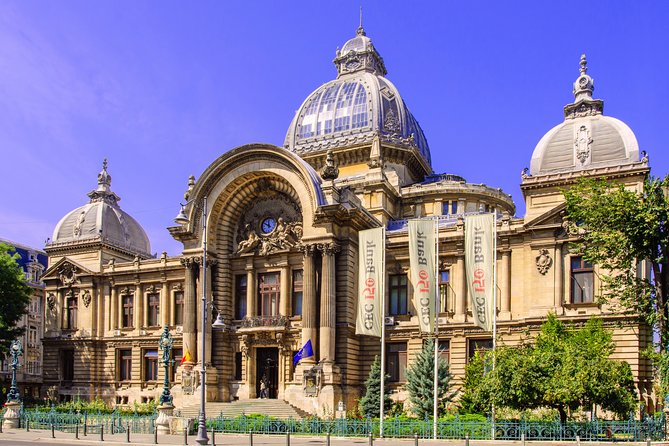
- Calea Victoriei’s grand facades: Walk past the CEC Palace and Grand Hôtel du Boulevard along the city’s historic royal avenue.
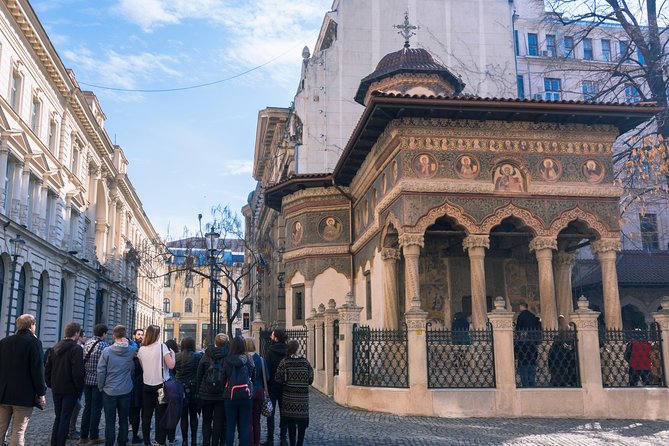
- Old Town with more than nightlife: Visit Manuc’s Inn, Stavropoleos Monastery, Villacrosse Passage, and the site linked to Vlad Dracula.
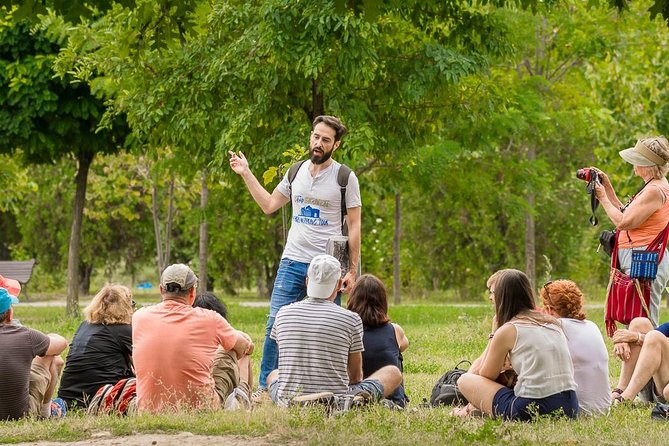
- Small-group feel: The group is capped at 12 people, with private personalized arrangements available.
- Good first-day value: At $24.20 per person, the tour combines orientation, history, and local advice at a modest price.
A fast introduction to Bucharest’s many faces
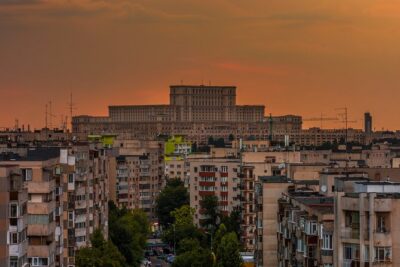
This route works because it does not treat Bucharest as a single postcard view. You move from royal architecture to communist memory, then into the medieval and commercial roots of the Old Town. That sequence helps you understand why the city can feel grand, scarred, elegant, and lively within a few blocks.
The tour begins at Strada Benjamin Franklin 8, near the Romanian Athenaeum, and finishes at Hanul lui Manuc in the Old Town. The start is easy to find in central Bucharest, while the finish near Piața Unirii puts you close to transport, restaurants, and more walking.
You should expect a real walking tour, not a sightseeing bus with brief photo stops. The route is described as easy, and the duration is manageable for most people. Still, bring comfortable shoes and be ready to spend the full time outside. You receive a tourist map, but lunch, coffee, and tea are not included.
The group maximum of 12 is a useful middle ground. You get more room to ask questions than on a large city tour, but you may not receive the same uninterrupted attention as on a one-person private booking. If only one person signs up, a private format may be possible, but you should treat that as a booking-day arrangement rather than a promise.
More communism and Ceausescu tours in Bucharest:
- The Real tour of Communism
★ 5.0 · 666 reviews - Life under Communism
★ 5.0 · 358 reviews - 3-Hour Guided Tour of Communist Bucharest
★ 4.9 · 303 reviews
The Romanian Athenaeum begins the royal chapter
The Romanian Athenaeum is the opening stop, with about 15 minutes to hear why it is considered Bucharest’s most beautiful building. Admission is not included, and the supplied details do not promise an interior visit, so plan on viewing it from outside unless your guide tells you otherwise.
That is still a strong start. The building gives you an immediate sense of Bucharest’s late 19th-century ambitions, when the capital was shaping a European identity through music, culture, and grand civic design. Your guide can use the facade as a doorway into the city’s royal period rather than treating it as a quick photo backdrop.
This is also a good place to get your bearings. The meeting point at Strada Benjamin Franklin 8 is central and close to the next royal landmarks, so you are not spending the first part of the tour on a long transfer.
Carol I and the old royal center
The next stop brings you to the equestrian statue of Carol I, Romania’s first king. In about 15 minutes, you see the statue, the former Royal Palace, and the University Library while learning how monarchy shaped the country.
This short section is valuable because it links people to buildings. Carol I is not presented only as a statue in a square. The nearby palace and library help explain the public world he represented, including Romania’s effort to build institutions and a modern capital.
I would pay close attention here if you are interested in politics or architecture. The buildings are not isolated sights. Together, they show how power was displayed in central Bucharest before the communist period changed the city’s public language.
The stop is brief, so you will not get a full museum-style treatment of the monarchy. That is part of the tour’s tradeoff. You receive a clear introduction, then move on before one subject takes over the entire afternoon.
Revolution Square makes the past personal
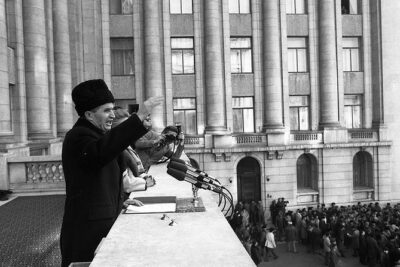
Revolution Square is the emotional center of the walk. You spend about 30 minutes here learning how Romania’s communist regime controlled daily life, including hunger and food rationing, before turning to the bloody December 1989 revolution and the fall of Nicolae Ceaușescu.
This part gives the tour weight. Communist Bucharest is not reduced to a few stern buildings or a quick mention of dictatorship. The focus includes ordinary life and the pressure placed on local people, as well as the regime’s claims of achievement and progress.
Images from the period may be used to make the events easier to picture. That matters because the square can look calm today. Without explanation, it is easy to miss how much fear and political force gathered here during the revolution.
You will also hear about the birth of democratic Romania. The stop does not promise a museum visit or an indoor exhibit, so the value comes from the guide’s storytelling and the physical setting. Guides such as Stefania, Laura, Dana, Maria, and Stefan have been praised for explaining the city with energy, answering questions, and bringing buildings and events to life. Laura is also known for carrying large extra photographs, which can help when discussing people and moments from the past.
If you want only light sightseeing, this section may feel more serious than expected. I see that as a strength for anyone who wants to understand Bucharest instead of simply collecting pretty facades.
More Old Town walks in Bucharest:
- Bucharest: Dracula’s Castle, Peles Castle, & Brasov Old Town
★ 4.5 · 17,858 reviews - Bucharest: Dracula Castle, Peles Castle & Brasov Old Town
★ 4.6 · 10,891 reviews - Bucharest: Peles Castle, Bran Castle, & Brasov Old Town Tour
★ 4.5 · 1,035 reviews - Bucharest Pub Crawl in the Old Town
★ 5.0 · 462 reviews
Calea Victoriei links elegance and power
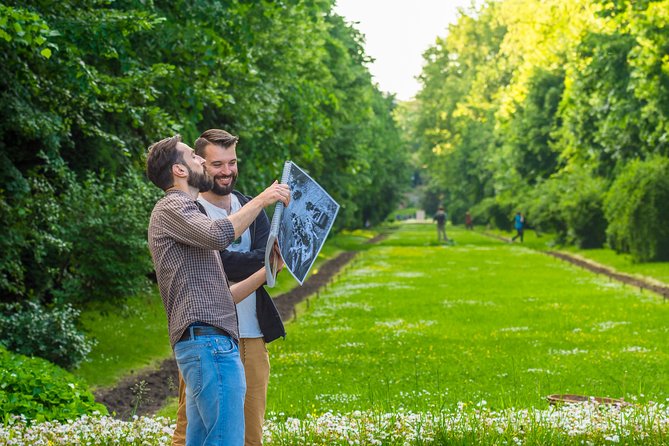
From Revolution Square, the route continues along Calea Victoriei, the avenue once used by kings for their daily strolls. You spend about 30 minutes walking past Belle Époque buildings, including the CEC Palace, Grand Hôtel du Boulevard, and the University Library.
This is the most visually polished stretch of the tour. The avenue helps you see why Bucharest was once called an elegant capital, while also showing how the city’s identity changed through different political periods. Your guide’s explanation turns a line of attractive buildings into a story about status, commerce, monarchy, and urban life.
The CEC Palace is especially useful as a stop because its ornate exterior makes the financial ambitions of old Bucharest visible. The Grand Hôtel du Boulevard adds another piece of the city’s former social world. You are not just looking at old buildings. You are seeing the public spaces that served rulers, institutions, merchants, and the city’s growing middle class.
The walking time here is moderate, but you should expect frequent pauses. That means the route is not a workout, yet you remain on your feet for most of the 2.5 hours. The pace is described as easy, and a guide can accommodate walking needs, but mention any concern at the start.
Old Town begins with Vlad Dracula and trade
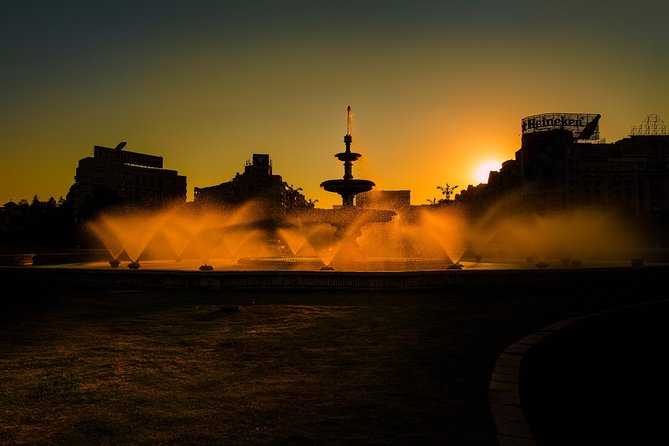
The Old Town section takes about an hour, making it the longest part of the route. It starts with Vlad Dracula, the historical figure associated with the city, and the remains of his former fortress. The emphasis is on separating the gruesome legend from the physical and political past of Bucharest.
This is a smart way to handle the Dracula connection. You get the memorable name, but the focus remains on place and history rather than costume-style folklore. The stop helps explain that Bucharest’s story reaches back well before the royal avenues and communist blocks.
Nearby, Manuc’s Inn shows another side of the city. This former caravanserai was a commercial settlement where different trading worlds met. The guide explains how Bucharest developed at the meeting point of East and West, which gives the Old Town a useful economic context.
Manuc’s Inn is also where the tour ends, at Strada Franceză 62. You can finish with a meal or continue toward Piața Unirii, though lunch is not part of the booking. The final location is practical because it leaves you in one of the city’s most useful central areas rather than sending you back to the starting point.
Stavropoleos and Villacrosse show the Old Town’s mix
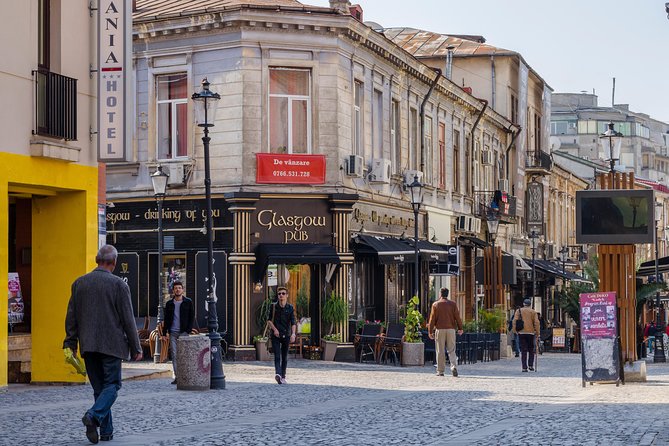
The Old Town walk continues through an eclectic group of buildings and lanes. You see the National Bank of Romania, Stavropoleos Monastery, and Villacrosse Passage, while taking in the quarter’s lively atmosphere.
Stavropoleos Monastery offers a quieter counterpoint to the surrounding streets. Its presence reminds you that the Old Town is not only bars and late-night venues. The National Bank adds another reminder of finance and state power, while Villacrosse Passage brings in the city’s more decorative commercial side.
This mix is one of the tour’s strongest features. In a short distance, you encounter religious architecture, banking, trade, royal-era design, and modern city life. A guide is particularly useful here because many of the sights can be easy to overlook if you walk through the area alone.
The hour in the Old Town is also when you are most likely to benefit from practical advice. Guides have offered restaurant suggestions, bakery stops, and lists of additional places to try after the tour. Those details can save you from choosing a meal at random in a heavily visited area.
One point to keep in mind: the Old Town is lively, and its atmosphere may be less quiet than the royal sections of the route. The experience is best if you enjoy city streets with activity around you. If you prefer museums and long indoor visits, this tour may feel too focused on exterior sights.
What the guides add to the walk
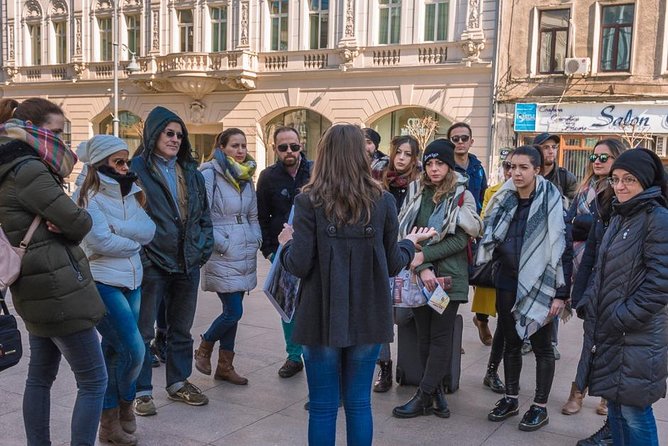
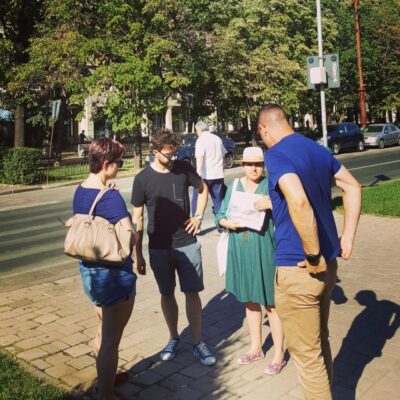
The guide is the main variable in any walking tour, and this experience places real weight on that role. Names associated with the tours include Stefania, Laura, Dana, Maria, Stefan, and Ioan. Each has been described as friendly, clear, and strongly engaged with Bucharest’s past and present.
Stefania is noted for answering detailed questions and connecting buildings and events. Laura has used large photographs to clarify historical figures and moments, and she has offered extra recommendations for the rest of a stay. Dana is described as bringing local history to life with humor and enthusiasm. Maria has also provided hotel pickup when requested in one case, though the listed meeting point remains Strada Benjamin Franklin 8.
Ioan has helped with photographs and kept the route welcoming and easy to follow. Stefan has been praised for thoughtful storytelling and surprising facts. These details suggest that the experience is not built around a fixed speech alone. A good guide can adjust the emphasis to your interests and explain why a plain-looking corner matters.
You should still remember that guide assignments can change. Book this for the route and subject matter first, then treat a particular guide as a pleasant possibility rather than a guarantee.
Is $24.20 good value?
At $24.20 per person, the price is reasonable for a 2.5-hour guided walk in central Bucharest. You are paying for a compact orientation, a small maximum group of 12, a tourist map, and the chance to ask questions while standing in front of the places being discussed.
The value is strongest if this is your first time in Bucharest. In one outing, you cover the royal center, the communist period, the 1989 revolution, Calea Victoriei, and the Old Town. Doing that alone would be possible, but you would need to research the connections in advance and might walk past important sites without understanding them.
The price does not cover food, coffee, tea, or admission tickets. Since the route is mainly outdoors and admission is listed as free at most stops, those exclusions should not add much unless you choose to stop for something during or after the walk.
Private arrangements can make the price more attractive for a couple, family, or small group that wants a flexible conversation. For a larger group, the listed group discounts may matter. Ask about the available format when booking if the size of your party is important.
Timing, meeting point, and practical details
The tour starts at Strada Benjamin Franklin 8, 030167 București, near the Romanian Athenaeum. This is a clear central meeting point, but give yourself enough time to find the exact location. The walk ends at Hanul lui Manuc on Strada Franceză 62, near Piața Unirii.
Mobile tickets make entry simple, and confirmation is provided at booking. The tour is offered in English. Service animals are allowed, and the route is near public transportation.
Most people can take part, but the experience requires good weather. If rain or other poor conditions cause cancellation, you are offered another date or a full refund. The same applies if the minimum number needed to run the tour is not reached.
For a full refund, cancel at least 24 hours before the local start time. Changes or cancellations made later are not accepted for a refund. Those rules are standard enough, but they matter if your Bucharest schedule is uncertain.
Who should book this Bucharest walk?
I would choose this tour for a first visit, especially if you want a clear framework before exploring museums, cafés, and neighborhoods on your own. It also suits anyone interested in how monarchy, communism, and the 1989 revolution shaped one city.
It is a good fit for history-minded visitors, couples, solo visitors, and small groups who like asking questions. The easy pace and central route also work well if you want a useful introduction without committing to a full-day excursion.
You may want something else if you need extensive interior visits, a food-focused experience, or a relaxed route with very little walking. The tour is mainly about outdoor sights and explanation. Its success depends on the guide’s storytelling, the weather, and your interest in the city’s difficult past.
Should you book the Essential Tour?
Yes, if you want an affordable first look at Bucharest that connects the city’s most important central sights. The strongest reason to book is the range: the Romanian Athenaeum, Carol I, Revolution Square, Calea Victoriei, Vlad Dracula’s former fortress, Manuc’s Inn, and the Old Town all fit into one well-planned walk.
Book it early if your dates are fixed, since it is often reserved well ahead of time. I would schedule it near the beginning of your stay, then use the guide’s restaurant and sightseeing suggestions to shape the days that follow. At $24.20, it offers enough context and local help to earn its place on a first Bucharest itinerary.
FAQ
How long does the Bucharest Essential Tour last?
The tour lasts approximately 2 hours and 30 minutes.
Where does the tour start?
It starts at Strada Benjamin Franklin 8, 030167 București, Romania, near the Romanian Athenaeum.
Where does the tour end?
It ends at Hanul lui Manuc, at Strada Franceză 62 in the Old Town. The location is close to Piața Unirii.
How many people can join the tour?
The maximum group size is 12 people. Private personalized arrangements are also available.
Is food included?
No. Lunch, coffee, and tea are not included. A tourist map of Bucharest is included.
What happens if the weather is poor?
The experience requires good weather. If it is canceled because of poor conditions, you are offered another date or a full refund.
Newest Bucharest trips we have written up
- Bucharest: Dealu Mare Winery Private Trip with Wine Tasting★ 4.9 · 6 reviews
- Winery touring & private wine tasting – one day private tour★ 5.0 · 3 reviews
- Traditions in Bucharest: Village Museum and Wine Tasting★ 5.0 · 8 reviews
- Your rendez-vous with Europe’s past: time-travel to Maramures, Transylvania★ 5.0 · 6 reviews
- Village Museum Bucharest Guided Tour★ 5.0 · 6 reviews
- Private Wine Tasting at Bucharest’s First Wine Bar★ 5.0 · 3 reviews
- Walking Tour of Bucharest City Center – Private Tour★ 5.0 · 4 reviews
- Wine tasting in Bucharest Old town – bonus cheese platter★ 4.5 · 6 reviews
Bucharest Communism and Ceausescu Tours, compared.


Museum of Communism Ticket with Communist Coffee
Read our review →
Dinner+Tour at Museum of Communism after closing
Read our review →
Contrasts of Communism – Small Group Walking Tour in Bucharest
Read our review →Browse the lists this tour appears in