
Reviewed · BUCHAREST COMMUNISM AND CEAUSESCU TOURS
Contrasts of Communism – Small Group Walking Tour in Bucharest
Bucharest’s communist past makes the most sense when you leave the grand avenues and visit the places where ordinary people lived, protested, and died. This three-hour walk links Ceausescu’s final speech, the 1989 Revolution, a working-class neighborhood, a memorial cemetery, and the Palace of Parliament.
I like the small group of up to eight, which gives you room to ask hard questions. I also like the use of public transport, old photographs, and personal family stories. The main drawback is that this is not a gentle stroll. You walk a fair amount, use city transport, and need a moderate level of fitness.
Key points to know
- Revolution history with real city context: Visit the exact places tied to the uprising of December 1989.
- A small group format: With no more than eight people, the guide can adjust the pace and answer questions.
- Public transport is part of the tour: You see more than the central monuments, including a working-class district.
- Old photos bring the past into view: Elena often uses historic images to show how Bucharest changed.
- A personal Romanian perspective: The discussion includes family experience and the lasting effect of communism.
- Good value for history-minded visitors: At $42.05, the price includes a focused three-hour experience, though transport and any paid admission are separate.
Why Bucharest needs this kind of history walk
Bucharest can look confusing at first. Austere communist blocks sit beside elegant older buildings. Huge avenues lead toward grand state projects, while small streets reveal everyday life. A standard sightseeing walk may show you the Palace of Parliament, but it may not explain why it was built, who paid for it, or how its scale affected the city.
This tour gives you that missing link. It focuses on Nicolae Ceausescu’s dictatorship, the events of December 1989, and the years before and after the revolution. You are not simply shown buildings. You are asked to connect power, fear, protest, memory, and present-day Romania.
The tone is serious but conversational. Elena is the guide most often named in the feedback, and her approach is built around discussion rather than a fixed speech. She brings old photographs, answers questions, and uses family experience to explain what communist rule meant beyond slogans and official dates. One booking names Martha as the guide, so the exact guide may vary.
That personal element matters. Romania’s communist period is not distant medieval history. Families lived through it, and its effects remain part of public life. You get a better sense of that when the guide explains the subject through both national events and everyday experience.
More communism and Ceausescu tours in Bucharest:
- The Real tour of Communism
★ 5.0 · 666 reviews - Life under Communism
★ 5.0 · 358 reviews - 3-Hour Guided Tour of Communist Bucharest
★ 4.9 · 303 reviews
Revolution Square and the end of Ceausescu’s rule
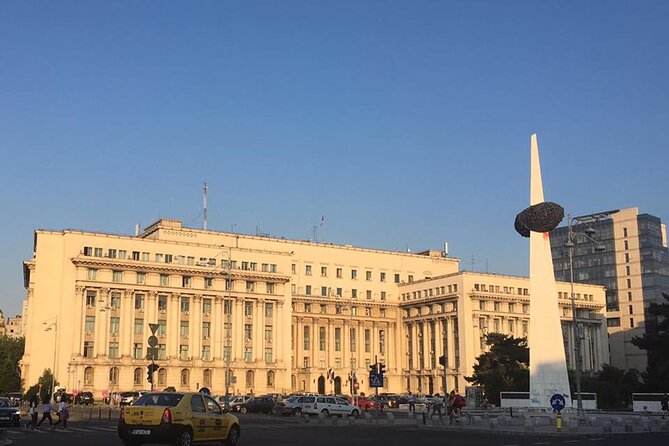
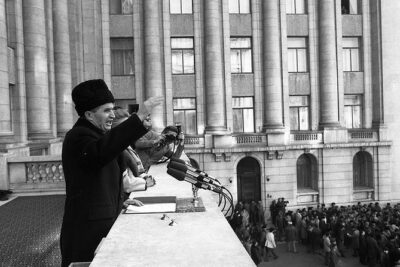
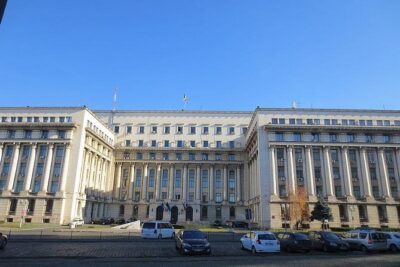
The tour begins at Revolution Square, a natural place to set the scene. This is where Ceausescu gave his final speech in 1989, an event that marked the collapse of his authority in front of the nation.
You will spend about 30 minutes here. There is no admission fee, and the value comes from the explanation. The guide sets out how the communist dictatorship rose, how the personality cult worked, and why the final days moved so quickly.
This stop works best if you want political history tied to a physical place. You can picture the crowd, the speech, and the sudden moment when public loyalty broke down. The square also helps explain why the revolution remains such a powerful reference point in Romania.
Do not expect a museum visit at this stage. The experience is outdoors, and the guide carries much of the story. If you arrive with a few questions about Ceausescu, state control, or the 1989 uprising, this is a good place to ask them.
University’s Square and the meaning of public protest
Next comes University’s Square, another major site connected with Romania’s return to free speech. You will stand at what the tour describes as KM0 of Romanian freedom of speech and learn about the first people killed for liberty in Bucharest on December 21, 1989.
This 30-minute stop shifts the focus from dictatorship to protest. Revolution Square shows the collapse of a leader’s public authority. University’s Square shows the personal cost of resisting that system.
The discussion also reaches into Romania’s current political climate. That makes the stop more useful than a simple memorial explanation, since it helps you see how the memory of 1989 still affects civic life. The guide encourages questions, so you can ask for clarification instead of trying to absorb a long lecture.
This is one of the strongest parts of the route for anyone interested in modern European history. It also rewards visitors who want more than a polished version of events. The subject is difficult, and the tour treats it that way.
A working-class neighborhood beyond the center
The route then leaves the best-known central sights. Using public transportation, you travel to Eroii Revolutiei and a typical working-class neighborhood. Depending on the transport used that day, the experience can include the metro, a tram, or a public bus.
The ride is not filler. It shows how Bucharest works as a living city and gives you a change of scale. Instead of only seeing monumental state buildings, you see an area shaped by the housing and planning choices of the communist decades.
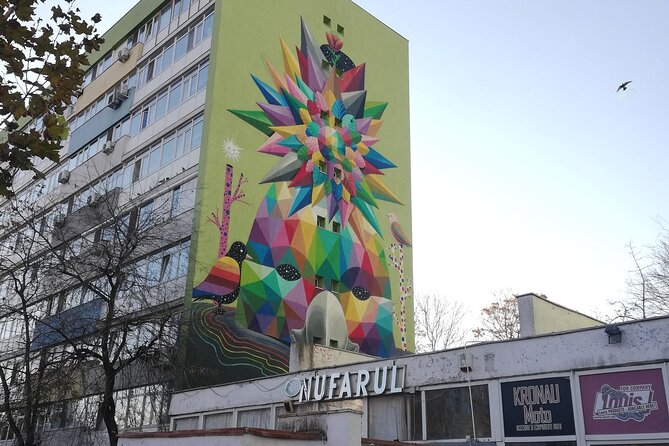
The gray apartment blocks date largely from the 1970s. Their plain appearance reflects a period when housing was built quickly and in large numbers, with little concern for charm. Yet the area is not frozen in the past. Colorful street art is helping reshape the feel of these blocks.
You spend about 15 minutes here, so do not expect an extended neighborhood tour. Its purpose is sharper: to show how old communist-era spaces are being reused and reinterpreted. This is also where the trip feels least like a standard sightseeing circuit.
More Bucharest walking tours:
- Bucharest: City Highlights Guided Walking Tour
★ 4.9 · 1,482 reviews - Bucharest Highlights Walking Tour
★ 5.0 · 469 reviews - Bucharest: Ghost Stories & Romanian Mythology Walking Tour
★ 4.9 · 287 reviews - Bucharest: Guided Walking Tour with Romanian Snack
★ 4.9 · 228 reviews
The Heroes of the Revolution Memorial Cemetery
The Memorial Cemetery dedicated to the Heroes of the Revolution provides a quieter pause. You walk along its paths and hear the personal stories of people killed during the 1989 uprising.
The stop lasts about 30 minutes and has no admission fee. After the political discussion at the squares, this place brings the cost of the revolution into focus. Names and individual lives replace broad talk about regimes and national change.
I value this part of the route because it slows the pace. You are not rushing from one photo stop to another. The cemetery gives you time to listen, reflect, and ask about the people remembered there.
It is also a useful reminder that the revolution was not only a change of government. People died in the streets, and families carried the loss forward. If you prefer light sightseeing, this section may feel heavy. That is also why it is important.
Carol Park and a monument built for a different political age
At Carol Park, you reach one of Bucharest’s higher hills and get a broad view across the city. The park adds a little breathing space after the cemetery and the transport ride.
The main subject here is the Monument of the Heroes for the Freedom of the Motherland. It was built to honor communist party leaders, so its meaning changed sharply after the fall of the regime. The monument offers a useful lesson in how public places can be repurposed, renamed, or remembered differently as political systems change.
You spend about 30 minutes in the park. The elevated view helps you read Bucharest as a city of contrasts: central avenues, apartment blocks, monumental projects, and older areas all occupying the same urban space.
This is one of the more visual stops, but the interpretation matters more than the view alone. The guide explains the political purpose behind the monument, helping you understand why communist architecture often aimed to impress, instruct, or intimidate.
The Palace of Parliament and Ceausescu’s final obsession
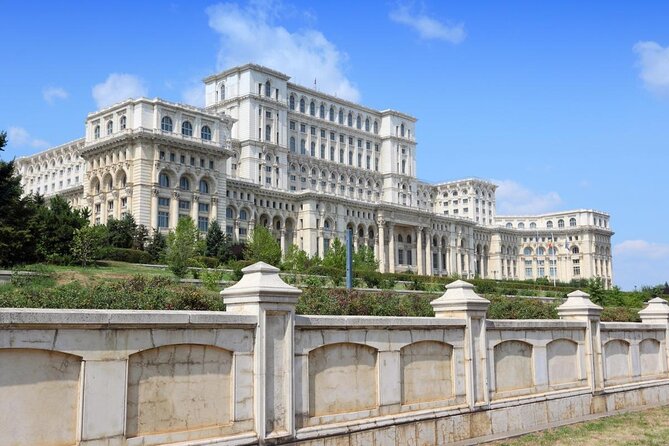
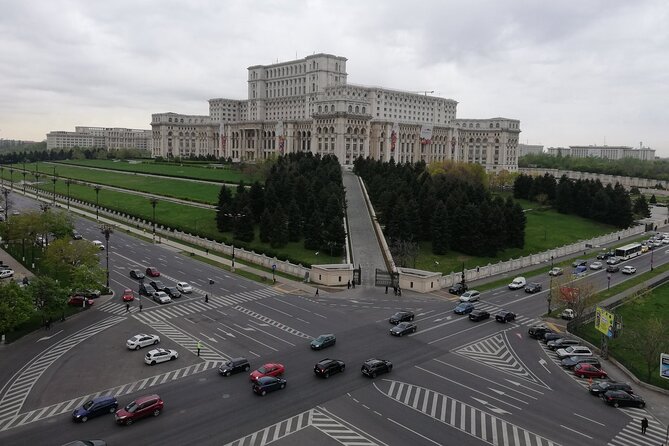
The Palace of Parliament is the biggest visual climax of the route. You return toward the city center and stand outside the enormous administrative building often described as the second-largest administrative building in the world.
The tour presents it as the last grand whim of Nicolae Ceausescu. That wording points to the central issue: the building was not just an oversized office complex. It reflected the regime’s desire for control, ceremony, and personal glory.
You spend about 30 minutes here. The outside visit is included, but paid admission is not included. The route does not promise an interior tour, so you should book this experience for the history and exterior setting rather than expecting a visit inside the building.
The Palace becomes more meaningful after you have already seen the working-class blocks and heard about ordinary life under communism. Its vast scale is easier to judge when you understand the human and urban cost of the policies behind it.
This stop can be crowded and visually imposing, but the guide gives it purpose. Instead of simply taking a photo, you learn why this building dominates Bucharest and how it fits into Ceausescu’s wider reshaping of the city.
Unirii Boulevard and the fountains made to impress
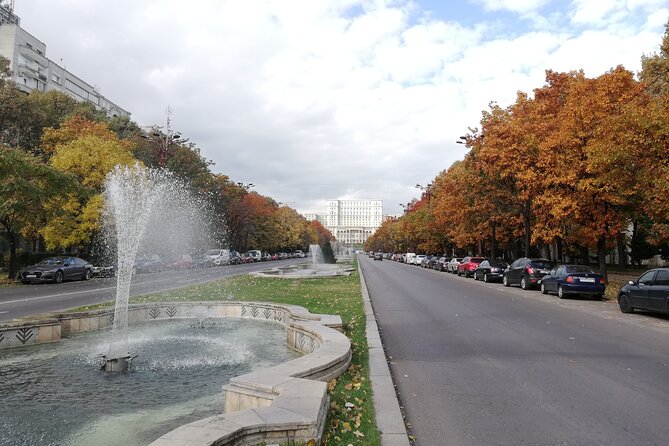
The final stop is Unirii Boulevard, near the dancing fountains. The boulevard was designed as a grand approach to the Palace of Parliament and as a kind of home-court advantage meant to humble visiting world leaders.
You spend about 15 minutes here. It is a fitting end because the boulevard shows the regime’s public face: wide, formal, theatrical, and designed to project power.
By this point, you have seen a different Bucharest from the one presented in a basic old-town walk. You have visited protest sites, a cemetery, apartment blocks, a political monument, and a massive government building. The fountains and boulevard tie those parts together through the language of spectacle.
The tour ends at Bulevardul Unirii 25, near Parliament and the old town. That makes it easy to continue sightseeing or find a place to eat after the walk.
What makes the small group worth the price
At $42.05 per person, this is not the cheapest way to spend three hours in Bucharest. It is a fair price if you want a guide who can explain difficult history, take you beyond the central sights, and answer questions along the way.
The group limit of eight is important. A large group can turn a serious subject into a march behind a flag. Here, the guide can adjust the pace, stop for questions, and respond to your interests. Some people have even received restaurant suggestions and extra help with Bucharest plans, which adds practical value if this is your first day in the city.
The price also covers more than a standard walk. You use public transport, see an everyday neighborhood, and visit sites that you might not reach alone. There are no admission fees at the main stops, but the Palace of Parliament does not include an interior ticket.
You should also count the physical effort. The tour lasts around three hours, but it includes walking, public transport, standing, and time outdoors. Eat breakfast first, wear comfortable shoes, and be ready for a route that covers ground rather than a short loop around the center.
The guide’s approach and the value of old photographs
The strongest feature is the guide’s way of explaining the subject. Elena is repeatedly described as friendly, clear, flexible, and well prepared. The important point is not simply that she knows dates. She connects political events with daily life, family experience, the cult of personality, and changes in Bucharest after 1989.
Old photographs are especially helpful. They let you compare past and present instead of imagining the former city from words alone. A building, square, or boulevard becomes easier to understand when you can see how it looked during the communist period.
The conversational format also suits this subject. You can ask about food shortages, public control, the revolution, urban change, or the effect of communism on Romanian families, as long as the guide has time to address your interests. The route is not presented as a quick list of facts.
English is the offered language, and the feedback describes Elena’s English as excellent. One booking also highlights her ability to speak Spanish, though Spanish is not listed as a standard tour language.
Who should book this Bucharest experience
This tour is a strong match for you if:
- You want to understand Romania’s recent past before exploring the city on your own.
- You prefer small groups to large walks with headphones or a loudspeaker.
- You want to see ordinary neighborhoods as well as famous buildings.
- You enjoy asking questions and discussing politics, memory, and daily life.
- You are comfortable walking and using public transport.
- You want a local perspective rather than a quick architectural tour.
It may not suit you if you want a relaxed old-town stroll, a purely scenic outing, or a tour with no serious subject matter. The cemetery and revolution sites require attention and respect. The route also depends on good weather. If poor weather forces cancellation, you are offered another date or a full refund.
Free cancellation is available up to 24 hours before the start time. Changes or cancellations inside that window are not accepted for a refund.
Should you book Contrasts of Communism?
Book it if you want Bucharest to make more sense. The route combines major landmarks with places you would be unlikely to visit alone, and the use of public transport keeps the experience connected to everyday city life.
I would especially recommend it near the start of your stay. The background on Ceausescu, the 1989 Revolution, and the city’s apartment districts will improve your understanding of later sightseeing. At $42.05, the tour earns its price through access, context, and conversation rather than admission tickets.
Choose another activity if you only have energy for a gentle walk or prefer lighter sightseeing. For anyone ready to spend three thoughtful hours with Romania’s recent past, this is one of the more useful ways to get your bearings in Bucharest.
FAQ
How long does the Contrasts of Communism tour last?
The tour lasts approximately three hours.
What language is the tour offered in?
The tour is offered in English.
How many people can join the tour?
The maximum group size is eight people.
Where does the tour begin?
The meeting point is Boteca 13, Strada Boteanu 3, Bucharest 010027, Romania.
Where does the tour end?
The tour ends at Bulevardul Unirii 25, near Parliament and Bucharest’s old town.
Is the Palace of Parliament admission included?
No. Admission to the Palace of Parliament is not included. The tour includes standing outside the building.
Does the tour use public transportation?
Yes. Public transportation is part of the route. The experience includes travel away from the central area to see a working-class neighborhood.
How much does the tour cost?
The listed price is $42.05 per person.
What level of fitness is needed?
You should have a moderate level of physical fitness because the experience includes a fair amount of walking and time on your feet.
Can I cancel for a full refund?
Yes, if you cancel at least 24 hours before the local start time. Cancellations made less than 24 hours in advance are not refunded.
Newest Bucharest trips we have written up
- Bucharest: Dealu Mare Winery Private Trip with Wine Tasting★ 4.9 · 6 reviews
- Winery touring & private wine tasting – one day private tour★ 5.0 · 3 reviews
- Traditions in Bucharest: Village Museum and Wine Tasting★ 5.0 · 8 reviews
- Your rendez-vous with Europe’s past: time-travel to Maramures, Transylvania★ 5.0 · 6 reviews
- Village Museum Bucharest Guided Tour★ 5.0 · 6 reviews
- Private Wine Tasting at Bucharest’s First Wine Bar★ 5.0 · 3 reviews
- Walking Tour of Bucharest City Center – Private Tour★ 5.0 · 4 reviews
- Wine tasting in Bucharest Old town – bonus cheese platter★ 4.5 · 6 reviews
Bucharest Communism and Ceausescu Tours, compared.
Bucharest Essential Tour: Old Town, Calea Victoriei & Communism
Read our review →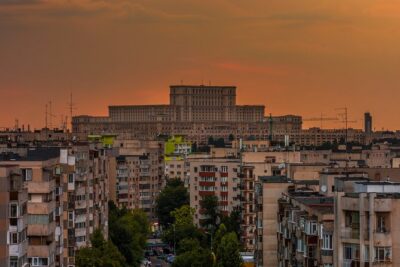


Museum of Communism Ticket with Communist Coffee
Read our review →
Dinner+Tour at Museum of Communism after closing
Read our review →Browse the lists this tour appears in