
Reviewed · BUCHAREST WALKING TOURS
Bucharest Highlights Walking Tour
Bucharest reveals itself quickly on this 2.5-hour walking tour, which links old merchant inns, grand banks, an Orthodox monastery, royal buildings, a Stalin-era hall, and the Palace of Parliament. It is a smart first look at a city that changed sharply from trading town to royal capital, communist center, and modern European capital.
I like the route for two clear reasons: it gives you a useful historical map of central Bucharest, and the guides, including Ed, Dan, Andrei, and Lucia, explain the city with stories, humor, and plenty of room for questions. The main drawback is simple: you are outdoors for most of the walk, so winter cold, rain, or strong sun can affect the experience.
Key points to know before booking
- Manuc’s Inn begins the story: Start among Bucharest’s oldest surviving buildings and learn how trade shaped the city.
- The route covers several eras: Ottoman trade links, Orthodox faith, royal rule, communism, and democracy all appear within one walk.
- The guides add useful local detail: Ed, Dan, Andrei, Lucia, and Alex are praised for clear explanations, humor, flexibility, and practical suggestions.
- The Palace of Parliament is the grand finish: The tour ends in front of one of the world’s largest administrative buildings.
- Expect a small-to-medium group: The maximum is 25 people, with a mobile ticket and English commentary.
- Bring weather protection: The tour needs good weather, and standing outside can feel cold in winter.
Why this is a strong first look at Bucharest
Bucharest can feel confusing at first. The Old Town has handsome facades, churches, cafes, neglected buildings, and busy streets packed into a small area. Then, only a short walk away, enormous state buildings and broad avenues recall the communist period.
This tour helps you connect those pieces. Instead of seeing a church, a bank, and a palace as separate photo stops, you learn how each reflects a different stage of Romanian life. That context is the real value here.
The walk begins at Piața Sfântul Anton 64, near Manuc’s Inn, and finishes at Piața Constituției, in front of the Palace of Parliament. The route takes about two and a half hours and is designed for people who want a broad introduction without spending a full day on their feet.
I would book it near the start of a Bucharest stay. You will get your bearings, learn which parts of the center deserve a second look, and pick up suggestions for food and other places to visit. Andrei, for example, is noted for offering local recommendations along with his commentary.
More Bucharest walking tours:
- Bucharest: City Highlights Guided Walking Tour
★ 4.9 · 1,482 reviews - Bucharest: Ghost Stories & Romanian Mythology Walking Tour
★ 4.9 · 287 reviews - Bucharest: Guided Walking Tour with Romanian Snack
★ 4.9 · 228 reviews
Manuc’s Inn and the trading town behind modern Bucharest
Manuc’s Inn, or Hanul lui Manuc, is the natural place to begin. The building introduces Bucharest as a trading center rather than simply a capital filled with government monuments.
The inn is one of the city’s oldest buildings, and the guide uses it to explain Bucharest’s early development. You can expect about 20 minutes here, with no admission fee listed for the stop.
The building’s importance is not only its age. It points to the way merchants, goods, and travelers once moved through the city. This is where the tour starts making sense of Bucharest’s unusual mix of Eastern European, Balkan, Ottoman, and later Western influences.
A good guide will also help you notice how much of the city has been rebuilt or altered. Bucharest does not offer one perfectly preserved old center. Its story is more uneven, and that makes the explanation especially useful.
Hanul Gabroveni and Bucharest’s caravanserai past
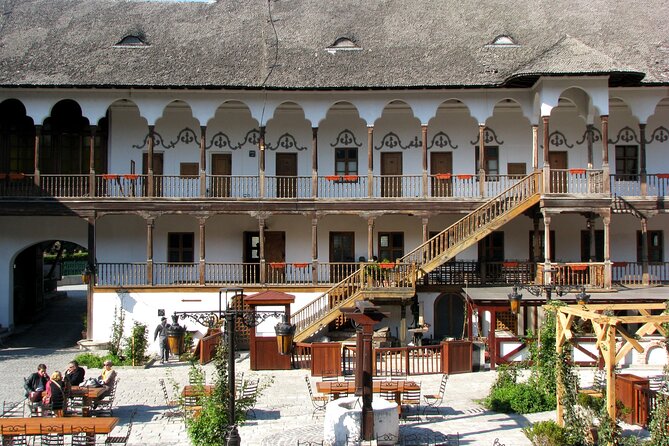
A short walk brings you to Hanul Gabroveni, another reminder that old Bucharest depended on trade. Two centuries ago, one in four buildings in the old center was a caravanserai, a place where merchants could stay, store goods, and conduct business.
Only three of these buildings remain, and Hanul Gabroveni is one of them. The stop lasts about 20 minutes and is free to visit.
This is one of the route’s most revealing stops because it changes the way you read the Old Town. The area was not built only for local shops or grand civic life. It was also a working commercial district tied to long-distance movement.
I like this part of the walk because it gives the old center a practical purpose. You are not just looking at pretty courtyards. You are seeing the remains of a town built around exchange.
The BNR Palace and the city’s former financial district
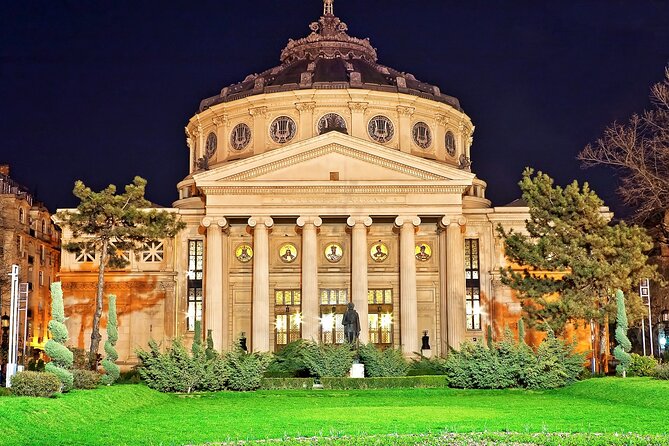
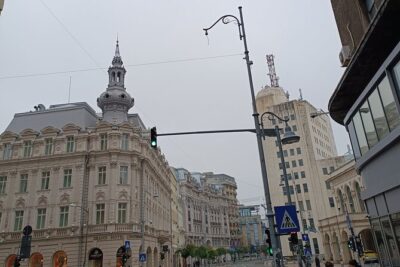
At the BNR Palace, the focus shifts from caravan trade to modern finance. A century ago, this area formed Bucharest’s financial district, with the National Bank, the former Stock Exchange, the Palace of Trading and Commerce, and other public and private banks close together.
The stop is shorter, about 10 minutes, but it adds useful detail to the city’s rise as a capital. The buildings show that Bucharest was not only a provincial or regional center. It also developed the financial institutions needed by a modern state.
This section should appeal to anyone who enjoys architecture and urban history. The guide can point out how the surrounding buildings worked together as a center of money and administration.
You will not spend long at each financial building, so this is an overview rather than an architectural lecture. That is a sensible choice on a 2.5-hour walk. The route gives you enough background to recognize the area later without bogging down in dates and technical terms.
More Bucharest city tours:
- Bucharest: 2-Hour City Highlights Bike Tour
★ 4.8 · 269 reviews - Bucharest Tuk Tuk city tour
★ 5.0 · 188 reviews - Bucharest Tuk Tuk City Tour
★ 4.9 · 167 reviews - Bucharest Panoramic Sightseeing – Private City Tour
★ 5.0 · 128 reviews
Stavropoleos Monastery and Orthodox Bucharest
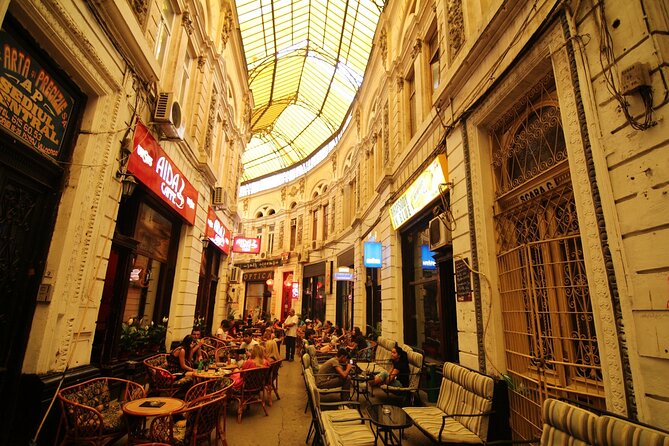
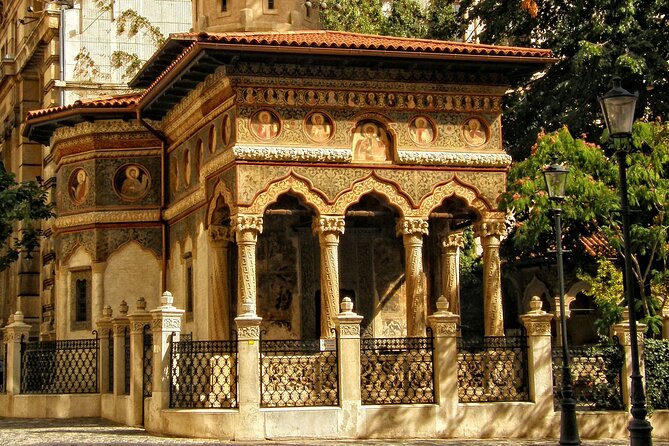
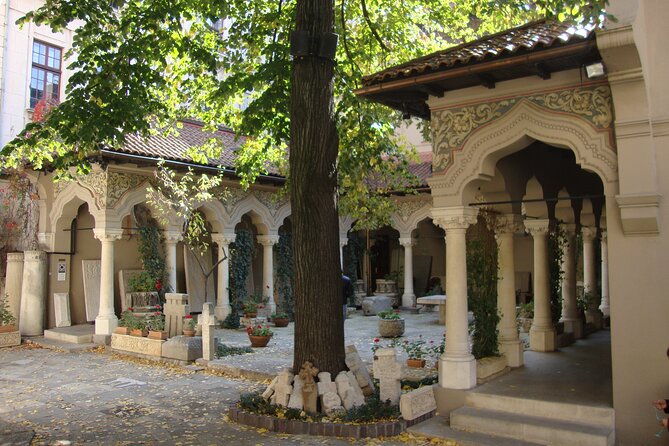
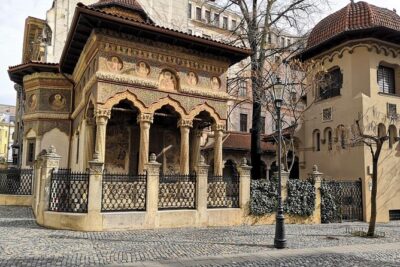
Stavropoleos Monastery offers a sharp change of mood. Romanian Orthodox Christianity remains central to national culture, and this small monastery gives you a close look at that tradition through its architecture and religious setting.
The visit lasts about 10 minutes. Admission is listed as free.
This stop matters because it keeps the tour from becoming only a story of banks, palaces, and political power. The monastery provides a glimpse of the spiritual side of Bucharest, with details that help explain the country’s Orthodox heritage.
You should think of this as a guided introduction, not a long religious visit. The group moves through a city route, so the time here is limited. Still, it is enough to understand why Stavropoleos is one of the city’s most important landmarks.
As with any active religious site, follow the guide’s instructions and behave respectfully. The tour’s strength is that it places the monastery within the wider story of Bucharest rather than treating it as an isolated photo stop.
Palatul CEC and Bucharest’s changing face
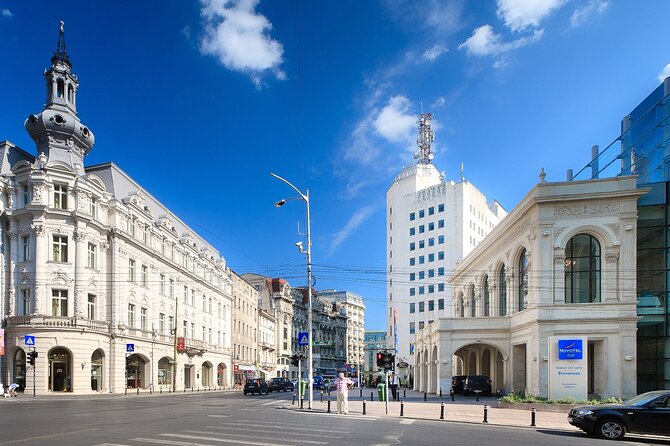
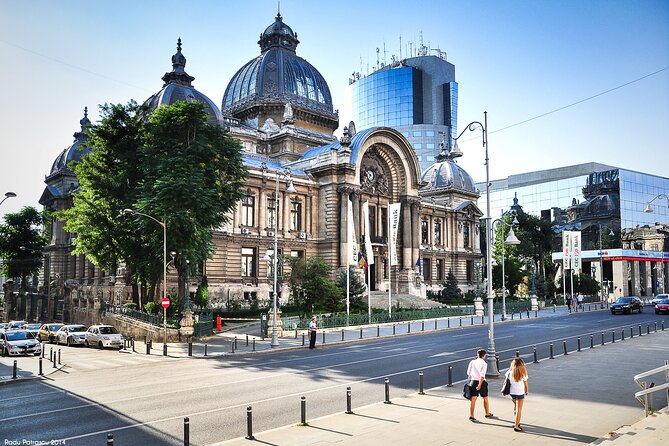
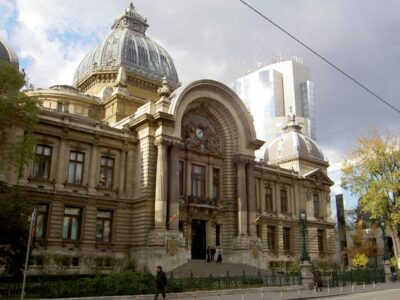
Palatul CEC is one of the most striking buildings on the walk. Its ornate exterior is often considered among the finest examples of old architecture in Bucharest, and the guide uses it to explain why much of the city’s older architecture is not as old as you might expect.
The stop takes about 10 minutes. Admission is not included, so you should not assume that an interior visit forms part of the tour.
This is a valuable distinction. Bucharest has a long history, but the city you see today was repeatedly remodeled and reshaped over roughly six centuries. Many buildings reflect later rebuilding, changing tastes, and efforts to create a more formal capital.
Palatul CEC is a good place to pause and ask questions about architecture. The guides are often praised for pointing out design details and explaining how different styles appear side by side. Ed, in particular, is described as making architectural facts easy to follow without turning the walk into a dry lecture.
Macca-Villacrosse Passage and the pleasure of spending money
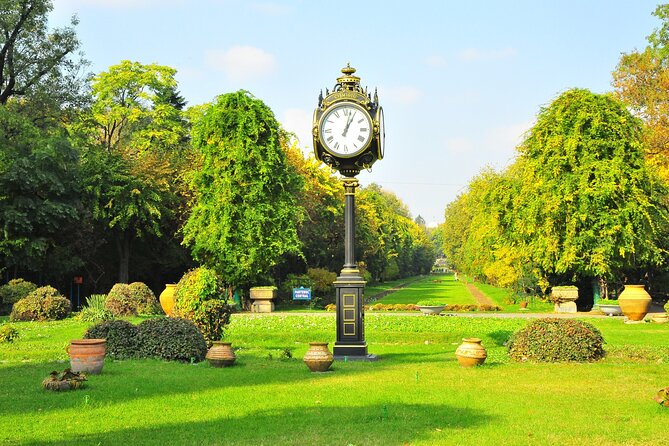
The Macca-Villacrosse Passage is a brief stop, about five minutes, but it adds a lighter note to the financial district. The covered galleries once represented the kind of refined shopping and social life that followed money.
The passage shows that a commercial center needs more than banks. It also needs places where people spend, meet, eat, and show their status. This little stop helps connect the financial buildings to daily life.
You will not spend much time here, but that is fine. The walk has several landmarks to cover, and the passage works best as a quick visual break between larger historical subjects.
The Royal Palace and the road from monarchy to democracy
At the Royal Palace, the guide turns to Romania’s more recent political story. The building connects the monarchy, the communist period, and the country’s return to democracy.
About 10 minutes are planned here, and admission is not included. The tour therefore gives you an exterior orientation rather than a full museum visit.
This is one of the most important stops for understanding modern Romania. The country’s political changes were not distant events. They shaped the buildings, streets, monuments, and public spaces you are walking through today.
The guides are especially useful here because the subject can become complicated quickly. A good explanation helps you follow the broad sequence without getting lost in names and dates. Ed is repeatedly praised for making history engaging, while Dan is noted for using stories, Romanian music, and songs to add a more personal sense of place.
Sala Palatului and the look of the Stalin era
Sala Palatului gives you a clear architectural marker for the communist period. The stop lasts about 10 minutes and is free.
The building’s design places you firmly in the Stalin-era aesthetic, a style that is heavier and more formal than the older commercial and religious buildings nearby. Seeing the contrast in person is more helpful than reading a short description. Within a compact section of the city, you move from ornate nineteenth-century architecture to a very different political visual language.
This is another point where the tour’s sequence works well. You are not studying architecture in isolation. You are watching the city change as power changes.
Cismigiu Park, a welcome pause among the monuments
Cismigiu Park brings greenery and breathing room into the route. It is Bucharest’s oldest park, and the planned stop lasts about 10 minutes.
The park is a welcome change after streets lined with masonry and traffic. It also shows that the city’s identity is not made only of government offices, historic churches, and enormous monuments.
Do not expect a long break or a picnic stop. Ten minutes is enough to take in the park and hear its place in Bucharest’s development, but the tour continues. If you want to explore Cismigiu at a slower pace, mark it for a return visit.
The Palace of Parliament as the final statement
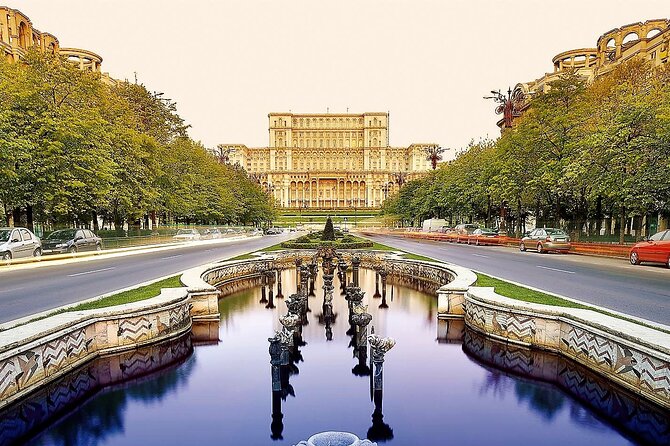
The walk ends at the Palace of Parliament, in front of the building at Piața Constituției. The stop is planned for about 20 minutes, and admission is not included.
The building is described as the second-largest administrative building in the world after the Pentagon, and heavier than it. That fact alone gives you a sense of its scale, but the guide’s political context is more important than the measurement.
The Palace of Parliament represents the extreme scale of communist-era construction and the power concentrated in that period. Ending here gives the route a strong shape. You begin with merchant inns and finish with a massive state building designed to project authority.
Do not book this walk expecting a tour inside Parliament. The route ends outside, and any admission fee is not included. If you want to enter, you will need to arrange that separately and confirm the current rules.
The guides make the difference
The tour is only as good as its commentary, and this experience puts much of its value in the guide. Ed is praised for a lively style, strong knowledge of Bucharest’s history and architecture, and a good sense of humor. Dan is described as attentive and willing to make extra stops for bathroom breaks, coffee, or hot chocolate when conditions are cold.
Andrei is noted for relaxed commentary and practical suggestions for food and other sights. Lucia brings history and background with humor, while Alex has been able to adjust the walk for a smaller private group, including an extra stop at an old pharmacy building awaiting renovation.
Those details matter. You are not simply following a fixed script while the guide points at buildings. Questions are welcomed, and the walk may run longer than the planned two and a half hours if the group needs more time. The exact guide is not specified in advance, so you should expect the style to vary slightly.
The group limit is 25 people. That is large enough to keep the price low but small enough for the guide to keep people together and answer questions. One useful detail from the tour experience is that guides make a point of checking that everyone is accounted for before moving on.
Price, timing, and practical value
At $21.77 per person, this is a good-value introduction to central Bucharest. You are paying for a local English-speaking guide, not entrance tickets, transport, or a full-day sightseeing program.
The value is strongest if you are visiting for the first time, have limited time, or want context before exploring alone. A private guide would cost more, while walking the same route without explanation would give you the buildings but not the connections between them.
The main cost to plan for is your time and energy. You will be outdoors for around 2.5 hours, with periods of standing while the guide explains each stop. Wear comfortable shoes and bring layers in cold months. Several people have found winter conditions painfully cold, even when the commentary was excellent.
The tour is offered in English, uses a mobile ticket, and starts near public transportation. Most people can participate, but the route is still a walking activity with limited sitting. It requires good weather, and if poor weather or low enrollment cancels the experience, you are offered another date or a full refund.
You can cancel free of charge up to 24 hours before the start time. Changes or cancellations made later are not refunded.
Who should book this Bucharest walk
I would choose this tour if you want an efficient first look at the city and prefer stories over a list of dates. It suits solo visitors, couples, families with older children, and anyone who wants help reading Bucharest’s mixed architecture.
It is also a good choice for a short stay. The walk covers enough ground to show you the Old Town, central institutions, royal history, communist architecture, a major park, and Parliament without taking an entire day.
You may want something else if you need extensive interior visits, a slower photography walk, or a tour devoted only to the communist period. Several stops are viewed from outside, and some are brief. The strength here is range and explanation, not long visits inside individual buildings.
Should you book the Bucharest Highlights Walking Tour?
Yes, if you want a clear, lively orientation to Bucharest for a modest price. The route is well chosen, the historical sequence makes sense, and the guides add the humor and local detail that turn a collection of buildings into a story.
Book it early in your stay, dress for the forecast, and keep some time afterward for the Palace of Parliament area or Cismigiu Park. If you can handle the weather and do not need included entrance tickets, this is one of the most useful short introductions to Bucharest.
FAQ
How long is the Bucharest Highlights Walking Tour?
The tour lasts approximately 2 hours and 30 minutes. It can run longer if the guide spends extra time answering questions or helping the group with breaks.
Where does the tour start and finish?
It starts at Piața Sfântul Anton 64 in Bucharest, near Manuc’s Inn. It ends at Piața Constituției, in front of the Palace of Parliament.
Is the tour offered in English?
Yes. The experience is offered in English and includes a local guide.
Are entrance fees included?
No. All fees and taxes are not included. Admission is listed as free at several stops, while fees are not included for Palatul CEC, the Royal Palace, and the Palace of Parliament.
How many people can join the tour?
The maximum group size is 25 people.
What happens if the weather is bad?
The experience requires good weather. If it is canceled because of poor weather, you will be offered a different date or a full refund.
Newest Bucharest trips we have written up
- Bucharest: Dealu Mare Winery Private Trip with Wine Tasting★ 4.9 · 6 reviews
- Winery touring & private wine tasting – one day private tour★ 5.0 · 3 reviews
- Traditions in Bucharest: Village Museum and Wine Tasting★ 5.0 · 8 reviews
- Your rendez-vous with Europe’s past: time-travel to Maramures, Transylvania★ 5.0 · 6 reviews
- Village Museum Bucharest Guided Tour★ 5.0 · 6 reviews
- Private Wine Tasting at Bucharest’s First Wine Bar★ 5.0 · 3 reviews
- Walking Tour of Bucharest City Center – Private Tour★ 5.0 · 4 reviews
- Wine tasting in Bucharest Old town – bonus cheese platter★ 4.5 · 6 reviews
Bucharest Walking Tours, compared.
Ghost Stories & Romanian Mythology Walking Tour
Read our review →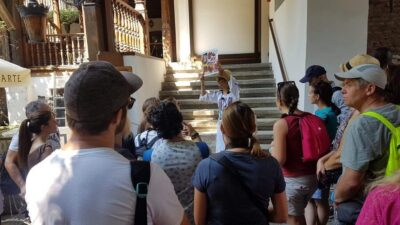
Walking Tour- Delightful Bucharest (Highlights, Stories, Sights)
Read our review →
4h Bucharest Private Tour (2h by Car and 2h Walking in Old Town)
Read our review →
Browse the lists this tour appears in