
Reviewed · BUCHAREST WALKING TOURS
Walking Tour- Delightful Bucharest (Highlights, Stories, Sights)
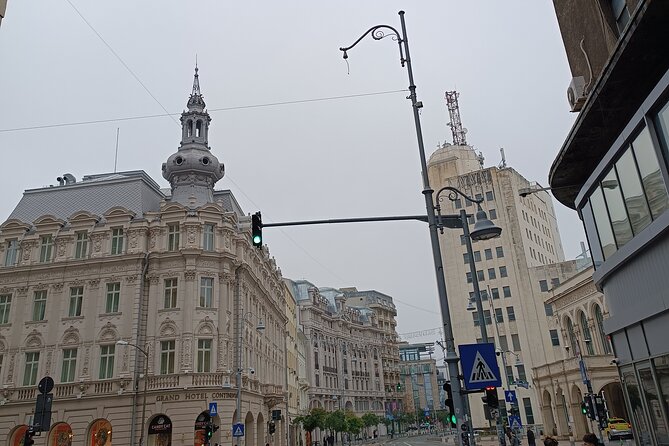
Bucharest reveals itself through contrasts: a quiet Orthodox courtyard, ornate belle époque buildings, a covered arcade, and Revolution Square, where Romania’s political order changed. This roughly two-hour walk links those places in a compact route, led by local guide Adrian, and finishes at the Romanian Athenaeum rather than returning to the starting point.
I like the way the tour mixes major landmarks with personal stories, including local memories of the communist era and unusual tales connected to Romanian religious life. I also like the price: at $22.99, you get a useful first look at central Bucharest without spending half a day on a formal sightseeing package.
The main caution is the walking itself. Old Town has uneven cobblestones, and the group can move at a brisk pace. Rain, cold, or slippery streets may make the experience less comfortable, so wear steady shoes and speak up early if you need a slower rhythm.
Key points to know before you book
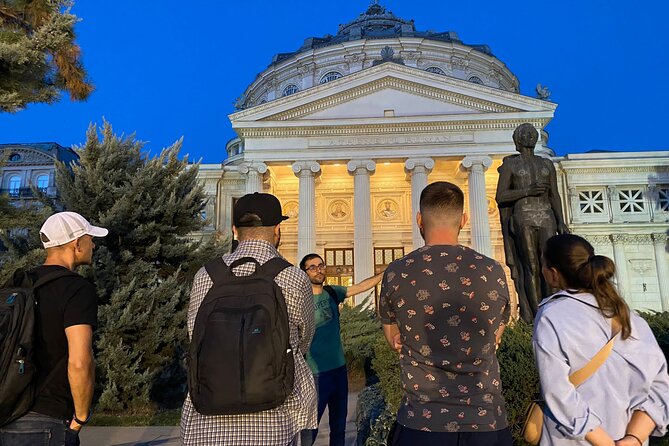
- A compact route through central Bucharest: The walk connects Old Town, Revolution Square, and the Romanian Athenaeum in about two hours.
- Adrian gives the tour a personal tone: Expect local observations, humor, family memories, and practical suggestions for the rest of your stay.
- Several sights are viewed from outside: The Athenaeum, Palace of Telephones, National Military Club, and CEC Palace are not entered.
- The route ends somewhere useful: You finish at the Romanian Athenaeum, one of the city’s finest landmarks, rather than back at the starting hotel.
- The price suits a first-day orientation: At $22.99 per person, it is a low-cost way to learn the layout and choose what to revisit.
- Plan for pavement and weather: Cobblestones, rain, and cold can affect the pace and comfort of the walk.
Why this two-hour walk works as a Bucharest introduction
Bucharest can be hard to read at first. Its central streets shift from medieval remnants to French-inspired architecture, communist-era monuments, modern commercial buildings, and grand national institutions. A short walk with a guide helps you connect those pieces instead of seeing them as a pile of unrelated façades.
This route is especially useful if you have just arrived or have only a short stay. You get an orientation to Old Town and the central avenues, plus enough historical background to make later solo sightseeing more rewarding.
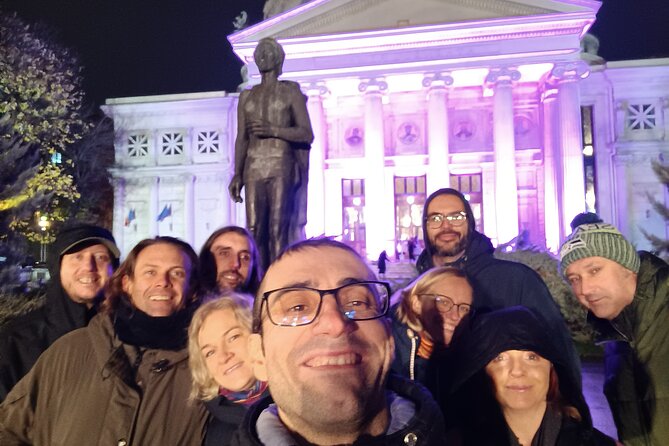
The tour is offered in English and is capped at 25 people. That is not a tiny private group, but it is small enough for a guide to manage questions and keep the walk together. One group of 10 found Adrian able to answer questions while continuing through the city, which gives you a good idea of the tour’s informal, conversational style.
Adrian’s approach is energetic and humorous. That works well for a two-hour walk, since long architectural explanations can wear you down. His style also includes personal material, from memories connected with the communist period to stories about local customs and religious practices. You are not getting only dates and building names. You are getting a sense of how the city has been lived in.
The humor may not suit every listener. One piece of negative feedback raised concerns about jokes, pace, personal questions, and nationalistic commentary. That is a useful reminder that Adrian’s style is lively and strongly personal, rather than neutral and academic. Most of the available feedback describes him as friendly, entertaining, and well informed, but if you prefer a quiet, strictly factual guide, you may find his approach more animated than expected.
More Bucharest walking tours:
- Bucharest: City Highlights Guided Walking Tour
★ 4.9 · 1,482 reviews - Bucharest Highlights Walking Tour
★ 5.0 · 469 reviews - Bucharest: Ghost Stories & Romanian Mythology Walking Tour
★ 4.9 · 287 reviews
Starting at Marmorosch Bucharest
The tour begins outside The Marmorosch Bucharest, Autograph Collection, at Strada Doamnei 2. This puts you close to the center of the Old Town and within reach of public transportation.
Arrive ready to walk rather than expecting a vehicle transfer. The tour is not a pickup service, and the route is point to point. The finishing location is clearly different from the start, so save the endpoint in your map before setting out.
That arrangement is practical. You begin in the historic center and finish beside the Romanian Athenaeum, a setting that makes a natural end to a first look at Bucharest. It also means you should not leave anything at the starting point or assume you will be escorted back there.
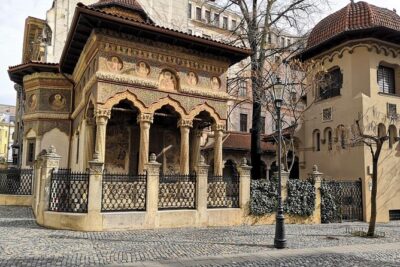
Stavropoleos Monastery: a quiet first stop
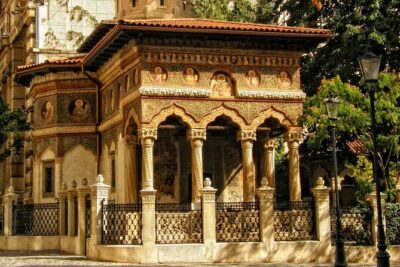
The first major stop is Stavropoleos Monastery, a small Orthodox church complex in the middle of the city. It is described as a jewel of Orthodox Christianity and an example of late Romanian Renaissance design.
The contrast is part of its appeal. Outside, central Bucharest can feel crowded and noisy. Inside the monastery setting, the scale becomes more intimate. The carved stone, decorative details, and courtyard atmosphere give you an early look at Romanian religious architecture without requiring a long visit.
You have about 15 minutes here, with admission included. That is enough for an introduction and a look around, but not a slow architectural study. If church interiors are a priority for you, treat this stop as a preview and consider returning on your own if the opening conditions allow.
The stories here also give Adrian room to connect the building with living local traditions. One personal story shared on the walk involved attending an exorcism with his grandmother at a Romanian church that still conducts them. That sort of anecdote is unusual, and it helps explain why the tour feels more like a local conversation than a recitation of dates.
CEC Palace and the idea of Little Paris
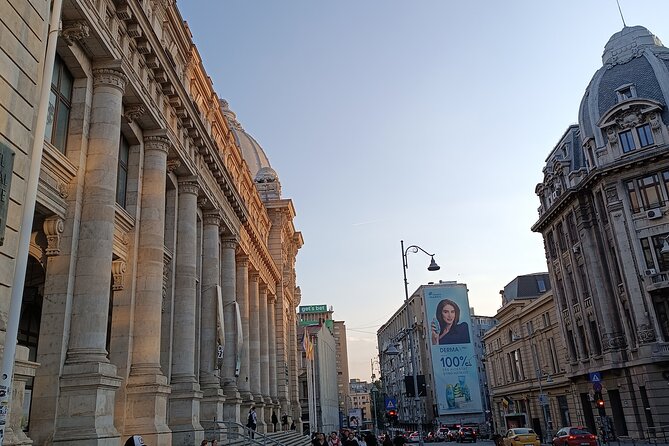
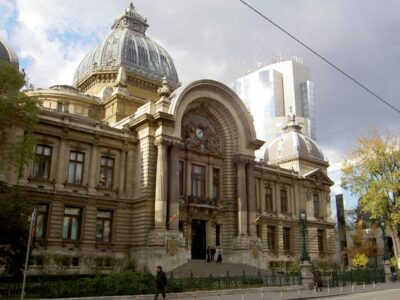
From Stavropoleos, the route continues to Palatul CEC, usually called CEC Palace. Its ornate exterior represents the belle époque side of Bucharest, when the capital was often associated with the nickname Little Paris.
This is one of the tour’s best stops for architecture lovers. Look for the grand scale, decorative exterior, and theatrical roofline. The building shows how strongly Bucharest once looked toward Western European styles while developing its own local character.
You view the palace from outside. Interior admission is not included, and the site cannot be visited inside as part of this tour. That limitation matters if you are hoping to see the grand banking interiors. Still, the exterior is a worthwhile stop because Adrian can explain the building’s place in the city rather than leaving you to identify it from a photograph.
The allotted time is about 15 minutes. That gives you room for photographs and a short explanation before moving on. The route is designed to keep momentum, not to linger at every façade.
Same city, a completely different sort of day:
- Bucharest: Dracula’s Castle, Peles Castle, & Brasov Old Town
★ 4.5 · 17,858 reviews - Bucharest: Dracula Castle, Peles Castle & Brasov Old Town
★ 4.6 · 10,891 reviews - Bucharest: Dracula’s Castle, Peleș Castle & Brașov Day Trip
★ 4.5 · 5,919 reviews - Bucharest: Palace of Parliament Tickets and Guide
★ 4.3 · 3,182 reviews
Macca-Villacrosse Passage: a small change of scale
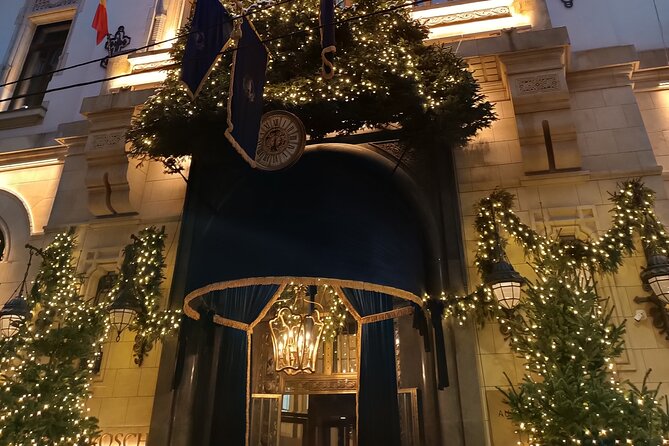
Macca-Villacrosse Passage is one of the more charming parts of the walk. This covered, arcaded street has a distinct atmosphere and an interesting past, offering a welcome change from Bucharest’s grand public buildings.
It is the kind of place that is easy to miss if you are following only the biggest sights. The passage has a more intimate feel, with a covered walkway and decorative details that reward a slower glance. The stop lasts about 10 minutes, and admission is included.
I like this inclusion because it keeps the route from becoming a parade of official monuments. You get a sense of everyday urban design and commercial Bucharest, not just national symbols. It is also a good photo stop, particularly if the weather is poor.
The passage is close to the Old Town streets, so this part of the walk can feel lively. Keep your group in sight and pay attention to the guide’s meeting instructions, especially if you stop for photographs.
National Military Club and Palace of Telephones
The National Military Club offers a different view of Bucharest’s ambitions. Its monumental design reflects the power and public image the Romanian Army wanted to project. Adrian uses the building to raise a simple question: why was it built in this form?
The tour spends about 10 minutes here, looking from outside. The interior is not part of the experience, so the value comes from the explanation of the building’s purpose, style, and political meaning.
The Palace of Telephones follows with another architectural and historical turn. The stop lasts about 15 minutes, and the building has a twisted story that Adrian uses to explain why the location became known as a lucky place. The interior is not visited.
These two stops work well together because they move beyond the standard Old Town checklist. You are asked to notice how institutions represented themselves through architecture. That is one of the strongest reasons to take a guided walk rather than simply follow a map.
The exact details matter less than the habit of looking closely. Who commissioned a building? What image did it want to create? Why did a site acquire a reputation or nickname? Adrian’s commentary aims to answer those questions in a lively way.
Revolution Square and Romania’s turning points
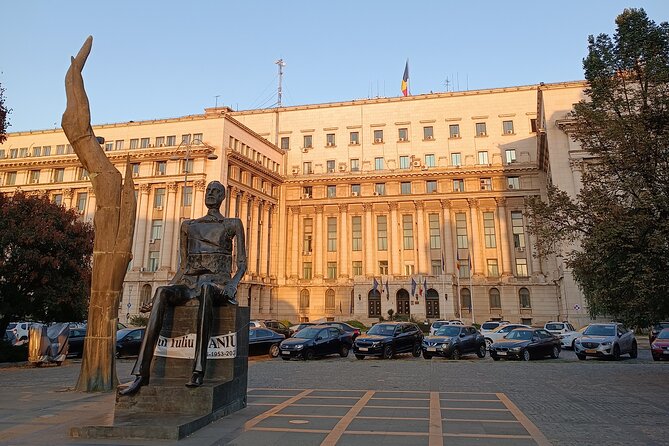
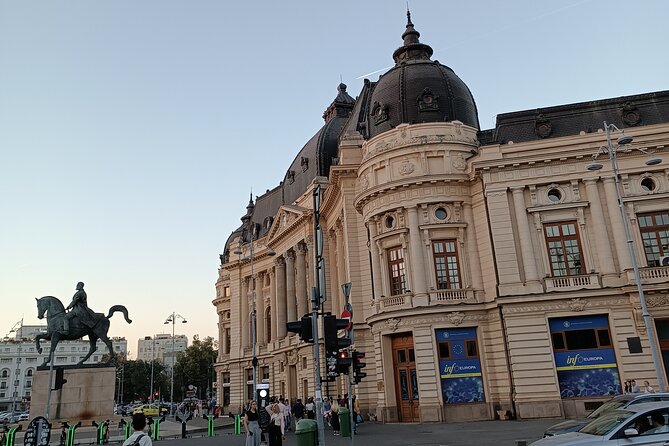
Revolution Square is the longest stop, at about 20 minutes, and it is the political center of the route. The square represents major changes in Romanian society, with different political periods beginning and ending here.
This is where the walk moves from architecture to memory. You are not only looking at buildings. You are considering how public space can become the setting for protest, political change, and national uncertainty.
The square benefits from a guide because its significance is not always obvious from the paving, traffic, and surrounding façades. Adrian connects the place with recent Romanian history and with personal memories from the communist era. That gives the stop a human scale, though his national perspective may feel more strongly expressed than some visitors prefer.
Allow time to listen rather than rushing through for photographs. Revolution Square is one of the places where the context is the main attraction. The buildings matter, but the events attached to them matter more.
The Romanian Athenaeum finishes the route
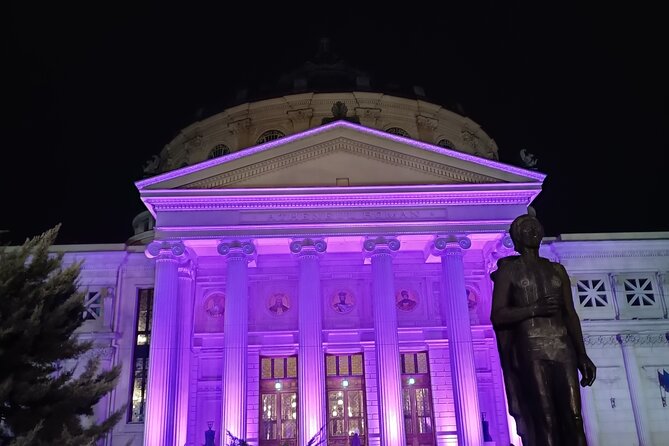
The final stop is the Romanian Athenaeum, on Strada Benjamin Franklin. This is often considered one of Bucharest’s most impressive 19th-century buildings, and the tour presents it as a kind of national temple.
The exterior is the focus. Since this is a walking tour, you do not go inside, and admission is not included. That is the clearest limitation for anyone who wants to see the concert hall, interior decorations, or ceiling.
Even so, ending here is a strong choice. The grand façade and columned entrance give the walk a visual finish, and the building brings together many themes from the route: national identity, European influence, public ambition, and the role of culture in Romanian life.
The tour ends after Adrian’s story about the Athenaeum. You are then in a central area and can continue exploring independently. The route does not return to Marmorosch Bucharest, so check your map before booking anything immediately afterward.
How much value do you get for $22.99?
At $22.99 per person, this is inexpensive for a guided city walk. The value comes from the number of meaningful stops packed into roughly two hours, along with the local interpretation between them.
You are not paying for entry to a major museum or an extended interior visit. Several sights are exterior-only, and the included admission applies to Stavropoleos Monastery and Macca-Villacrosse Passage. The price makes sense if your goal is orientation, stories, and architectural context rather than a series of paid attractions.
I would especially consider it good value on your first day. You can learn the basic shape of central Bucharest, hear about places you may want to revisit, and ask Adrian for practical suggestions. One particularly useful recommendation was a local restaurant with traditional food, fresh bread, reasonable prices, live music, and a courtyard. That kind of tip can improve the rest of your visit, though restaurant conditions can change.
The tour is also a sensible choice for a short stopover. You see Old Town and newer central areas without spending an entire day on sightseeing. If you already know Bucharest well, the route may feel more introductory than fresh.
Pace, pavement, and weather
The walk is described as relaxed by some people and fast paced by others. In practical terms, expect steady movement between stops, with short explanations at each site. The tour lasts about two hours, although one account describes a total closer to two and a half hours, so avoid scheduling a tight connection afterward.
Old Town includes uneven cobblestone pavement. This can be awkward with a stroller and tiring if you have mobility concerns. Most people can take part, and service animals are allowed, but the route is still a real city walk rather than a smooth pedestrian promenade.
Weather matters. Adrian has continued tours in rain and found covered places for explanations, but wet streets can become slippery. Cold weather can also take the edge off the experience, especially when you are standing outside at monuments.
Wear shoes with a firm sole, check the forecast, and bring a rain layer when needed. If you need a slower pace, say so clearly at the beginning. The one notably negative account makes this worth stressing, even though the wider feedback about the tour is strongly positive.
Who should take this Bucharest walking tour?
This experience suits first-time visitors, short-stay visitors, solo explorers, and anyone who wants a quick orientation before touring alone. It is also useful if you enjoy buildings more once you understand the stories behind them.
You will probably like it if you want:
- A central route with several important sights
- Local stories rather than only textbook facts
- An English-speaking guide
- A short activity that fits into a busy itinerary
- Suggestions for restaurants and other places to see
- A low-cost way to get your bearings
It may be less suitable if you need step-free access, dislike uneven streets, want to visit every building inside, or prefer a silent and highly formal presentation. The group can include up to 25 people, so this is not a private tour.
Booking confirmation is provided at the time of purchase. Free cancellation is available up to 24 hours before the start time for a full refund. Changes or cancellations made less than 24 hours ahead are not accepted for a refund.
Should you book Delightful Bucharest?
Yes, if you want a lively first look at central Bucharest for a modest price. The best parts are the range of sights, the personal stories, the useful ending at the Romanian Athenaeum, and Adrian’s ability to make buildings feel connected to Romanian life.
Book it early in your stay, then use the route to decide where you want more time. Give yourself flexibility after the walk, wear good shoes, and remember that several landmarks are seen only from outside.
Skip it if your main goal is interior access or a slow, private tour. For most first-time visitors with two hours to spare, though, this is a practical and entertaining introduction to Bucharest.
FAQ
How long is the Delightful Bucharest walking tour?
The tour lasts approximately two hours. Allow a little extra flexibility, since walking pace and group questions may affect the finishing time.
What language is the tour offered in?
The tour is offered in English.
How much does the tour cost?
The listed price is $22.99 per person.
Where does the tour begin?
It begins at The Marmorosch Bucharest, Autograph Collection, at Strada Doamnei 2, București 030053, Romania.
Where does the tour finish?
The tour ends at the Romanian Athenaeum, at Strada Benjamin Franklin 1-3, București 010287, Romania.
Does the tour return to the starting point?
No. The walk ends at the Romanian Athenaeum rather than at The Marmorosch Bucharest.
Which sights are included on the route?
The route includes Stavropoleos Monastery, CEC Palace, Macca-Villacrosse Passage, the National Military Club, the Palace of Telephones, Revolution Square, and the Romanian Athenaeum.
Can you go inside every building?
No. The National Military Club, Palace of Telephones, CEC Palace, and Romanian Athenaeum are viewed from outside. Admission is included at Stavropoleos Monastery and Macca-Villacrosse Passage.
How many people can join the tour?
The maximum group size is 25 people.
Can you cancel for a full refund?
Yes. You can cancel at least 24 hours before the experience start time for a full refund. Cancellations or changes made less than 24 hours before the start time are not accepted for a refund.
Newest Bucharest trips we have written up
- Bucharest: Dealu Mare Winery Private Trip with Wine Tasting★ 4.9 · 6 reviews
- Winery touring & private wine tasting – one day private tour★ 5.0 · 3 reviews
- Traditions in Bucharest: Village Museum and Wine Tasting★ 5.0 · 8 reviews
- Your rendez-vous with Europe’s past: time-travel to Maramures, Transylvania★ 5.0 · 6 reviews
- Village Museum Bucharest Guided Tour★ 5.0 · 6 reviews
- Private Wine Tasting at Bucharest’s First Wine Bar★ 5.0 · 3 reviews
- Walking Tour of Bucharest City Center – Private Tour★ 5.0 · 4 reviews
- Wine tasting in Bucharest Old town – bonus cheese platter★ 4.5 · 6 reviews
Bucharest Walking Tours, compared.
Ghost Stories & Romanian Mythology Walking Tour
Read our review →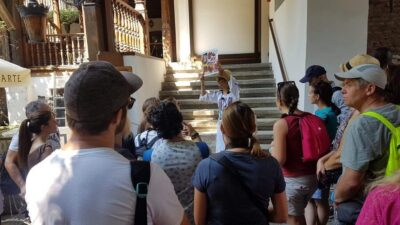
4h Bucharest Private Tour (2h by Car and 2h Walking in Old Town)
Read our review →
Browse the lists this tour appears in