
Reviewed · BUCHAREST COMMUNISM AND CEAUSESCU TOURS
Private Tour -The Last Day of Nicolae Ceaușescu in a Romanian Car
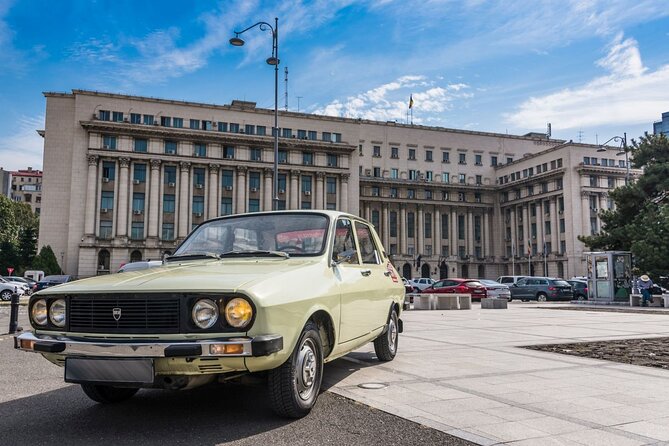
Nicolae Ceaușescu’s final day becomes startlingly tangible when you follow it in the kind of Dacia that filled Romanian roads during his rule. The tour begins at Revolution Square, where the Communist regime cracked in public, then follows the escape route toward Târgoviște, where Ceaușescu and Elena were captured.
I like the fully restored Dacia, which turns an ordinary road trip into a moving piece of social history. I also like the private format, since guides such as Ivan and Crinu can adjust the explanation to your questions instead of delivering a fixed speech. The main drawback is comfort: these 1970s and 1980s cars have no air-conditioning, ABS, GPS, power steering, or automatic transmission, and you do not drive the car on this tour.
Key points before you book

- You trace December 22, 1989: Follow the route taken after Ceaușescu fled the Communist Party headquarters by helicopter.
- You ride in a historic Dacia: The cars are restored Dacia 1300 or 1310 models, including named vehicles such as Domnica, Letiția, and Malvina.
- You visit Palatul Primăverii: The former private residence of Nicolae and Elena Ceaușescu is included with a guided visit.
- You cover a long route: Expect roughly 180 kilometers toward Târgoviște and back, with the full experience lasting about six to seven hours.
- You get a private tour: Only your own group participates, and pickup is offered.
- You need to accept strict conditions: Children under 10 and pets are not permitted, and cancellations less than 24 hours before departure are not refundable.
Why Ceaușescu’s final day makes a strong tour theme
This is not simply a sightseeing drive outside Bucharest. It follows one tightly defined day: December 22, 1989, when a regime that had ruled Romania for almost 24 years began to collapse within hours.
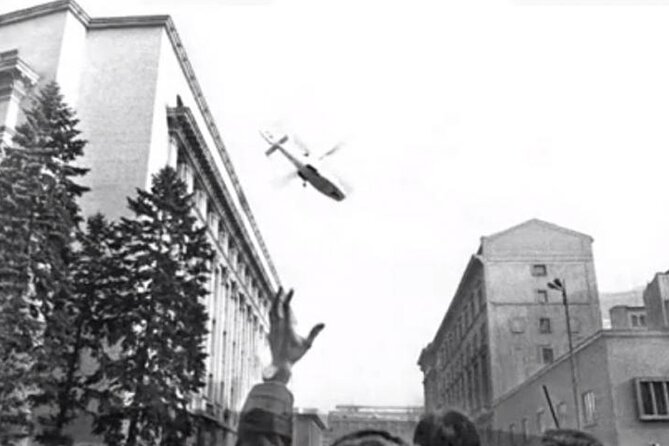
At 12:07 p.m., Ceaușescu and Elena left the roof of the Communist Party headquarters by helicopter. A crowd of about 100,000 people had gathered around the building and was calling for his resignation. The escape was an attempt to regroup, reach support from the working class and army, and hold on to power.
That plan failed. The couple made their way toward the area around Târgoviște and were captured later that day. By placing you on the same general route, the tour connects Bucharest’s city center with the roads and towns tied to the final stage of the Communist leadership.
I find this approach useful because it keeps the story human-scaled. You are not trying to absorb four decades of Romanian history in one lecture. You are following a few frantic hours, moving from a roof, to a helicopter, to a road escape, and finally to arrest.
The route does not make the period simple. Ceaușescu’s dictatorship involved surveillance, shortages, political fear, and severe restrictions, but the final day also involved crowds, confusion, shifting loyalties, and a rapid loss of control. A good guide can explain those changes as you travel.
More communism and Ceausescu tours in Bucharest:
- The Real tour of Communism
★ 5.0 · 666 reviews - Life under Communism
★ 5.0 · 358 reviews - 3-Hour Guided Tour of Communist Bucharest
★ 4.9 · 303 reviews
Starting at Revolution Square
The morning begins at 9:00 a.m., with pickup offered in Bucharest. The first important stop is Revolution Square, the place where the public break with Ceaușescu’s rule became visible.
This is the right starting point. The square links the tour to the moment when Ceaușescu tried to address the crowd from the Communist Party headquarters and found that the old choreography no longer worked. The building’s roof is associated with his helicopter escape, making the location more than another central Bucharest photo stop.
Your guide can explain the setting before the drive begins. This matters because the later route makes more sense once you understand what happened in the square. Without that background, Târgoviște can feel like a distant endpoint. With it, the road becomes the next chapter in a single day’s crisis.
The private format helps here. You can ask about the crowd, the political atmosphere, and the physical route without worrying about holding up a large group. Guides including Ivan and Crinu have been praised for explaining difficult material in a way that works for people with different levels of background knowledge.
Riding in a restored Dacia 1300
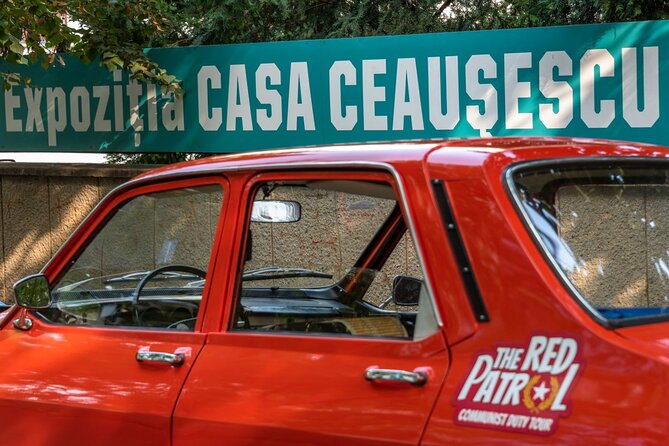
The car is part of the interpretation, not just transportation. The Dacia 1300 and 1310 were familiar Romanian cars from the 1970s and 1980s, and the restored vehicles used by Red Patrol are presented as working classics rather than museum pieces.
Some have names. Domnica is a 1989 blue Dacia associated with this route, while Letiția and Malvina have also been used for tours. The names give the cars personality, but the more important point is what the interior does to your sense of the period. You are sitting in a vehicle built for the Romania of Ceaușescu’s time, not in a modern minivan with tinted windows and a digital screen.
The cars are fully restored and meet current traffic safety regulations. That is reassuring, but you should keep your expectations realistic. There is no air-conditioning, ABS, GPS navigation, power steering, or automatic gear drive. In winter, the cars are heated. In warm weather, the lack of air-conditioning may be noticeable during a six to seven-hour outing.
You also do not drive the Dacia on this experience. The guide drives while you follow the route and listen. If driving a classic Dacia is your main goal, the separate Red Patrol Communist Tour of Bucharest is the better choice.
For a car enthusiast, the vehicle may be half the reason to book. For everyone else, it adds a physical connection to the story. You can see the dashboard, hear the older mechanical feel of the car, and understand why the journey is designed as a road trip rather than a standard museum visit.
The drive from Bucharest toward Târgoviște

After the Bucharest stops, the tour heads west toward Pitesti and then toward Târgoviște, following the broad direction of Ceaușescu’s escape. The listed route covers about 180 kilometers toward Târgoviște and back, while the total itinerary has also been described as roughly 220 kilometers depending on the exact route and stops.
This is a substantial drive. You should book it because you want the full story, not because you are looking for a quick city excursion. The time on the road gives the guide room to explain why Ceaușescu chose this direction and what he hoped to find there.
The journey also shows the limits of treating history as a list of monuments. Much of the experience takes place between stops, while the Dacia moves through ordinary Romanian towns and roads. You will not be hopping from one major attraction to another every 20 minutes. The value comes from the conversation, the route, and the gradual change from central Bucharest to the area connected with the final escape.
The long drive can be a weakness if you prefer constant sightseeing. It can also be tiring in an older car, especially in hot weather. Ask yourself whether you enjoy historical road trips and guided conversation. If you do, the distance is part of the point. If you want a compact introduction to Communist Bucharest, choose a shorter city tour instead.
A few more Bucharest trips worth putting side by side
- Castles of Transylvania: Private Day Trip from Bucharest
★ 4.5 · 248 reviews - Dracula’s Castle, Peles Castle and Brasov – Private Day Trip from Bucharest
★ 5.0 · 211 reviews - Best of Bucharest | Private Walking Tour
★ 5.0 · 199 reviews - Bucharest Panoramic Sightseeing – Private City Tour
★ 5.0 · 128 reviews
Why Târgoviște matters
Târgoviște is connected with the end of the escape. Ceaușescu and Elena were captured near the city on December 22, after their attempt to reach support and regain control had failed.
The tour’s purpose is not to present Târgoviște as a grand sightseeing prize. Its importance comes from the role it played in the final hours. You are seeing where the flight from Bucharest stopped and where the regime’s attempt to recover collapsed.
That distinction helps set expectations. The experience is about a historical route, not a list of famous attractions. The guide’s explanation is essential because the meaning of the stop comes from the sequence of events.
The drive also gives you a clearer sense of distance. A helicopter escape from the capital, followed by an improvised road journey, sounds fast in a written account. Traveling the route by car helps you grasp the time, uncertainty, and practical difficulty involved.
Visiting Palatul Primăverii
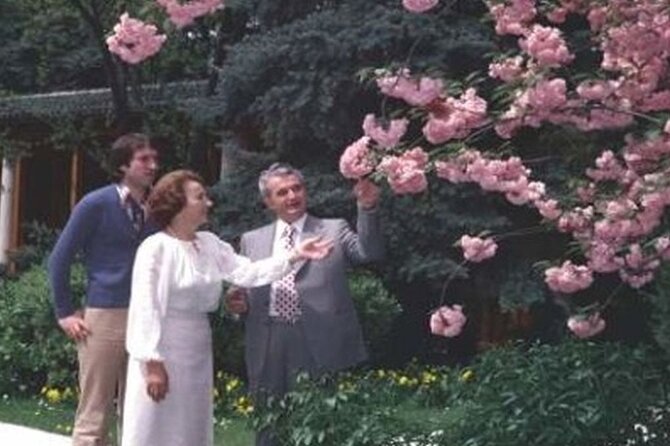
The tour includes a guided visit to Palatul Primăverii, Nicolae and Elena Ceaușescu’s private residence. This adds an important second angle to the day’s story.
Revolution Square shows public power breaking down. Palatul Primăverii shows the private setting of the people who had occupied the top of that system. The contrast is useful. You can consider not only how Ceaușescu lost power, but also how the ruling family lived while ordinary Romanians faced a very different daily reality.
The residence visit is a guided tour, so you are not left to wander through rooms without context. It also breaks up the long drive with a fixed indoor stop. If the weather is poor, that matters.
The palace is not interchangeable with a general Communist-era museum. It is tied specifically to Ceaușescu and his family, which makes it especially relevant to this tour. If you want to understand the personal side of the regime, this is one of the strongest parts of the itinerary.
The guide makes the difference
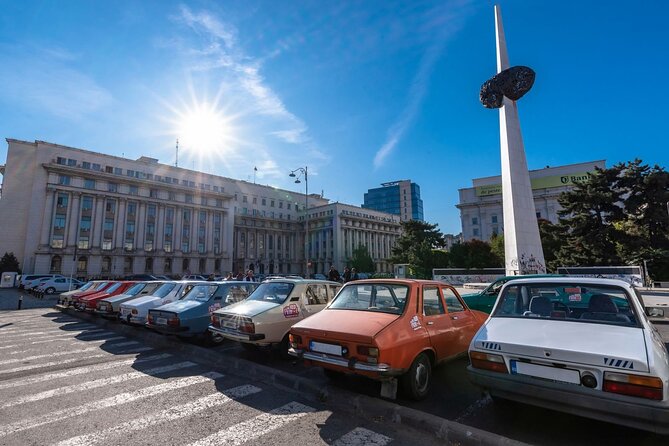
The car catches your eye, but the guide determines how much you take away. Ivan and Crinu are among the guides associated with the experience, and the tour works best when you use the private format actively.
Ask questions. If you are interested in cars, ask how the Dacia differs from modern vehicles. If your main interest is Romanian politics, ask about the final speech, the crowd, the army, and the attempt to reach support outside Bucharest. If you are traveling with older children, ask the guide to explain the events in plain language.
The experience has also been used successfully with teenage children, with guides adjusting the material so younger listeners can follow it. That does not mean every child will enjoy six or seven hours in a classic car. The age restriction is clear: children under 10 are not allowed.
The strongest part of the guiding is the connection between published history and local memory. A guide may explain details that are difficult to pick up from a general history book, including how Romanians experienced the period and how the events of December 1989 unfolded on the ground.
Comfort, timing, and practical limits
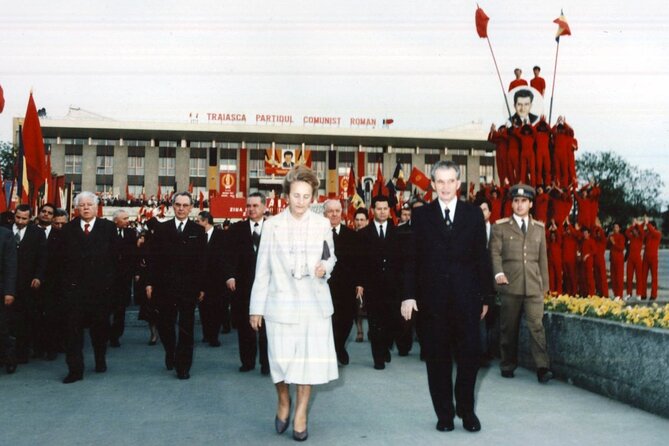
Pickup is offered, and the start time is 9:00 a.m. Since this is a private activity, your own group participates rather than joining a large shared vehicle.
The six to seven-hour duration is long enough for the route to feel substantial. It is also long enough that you should dress for the season and be ready for time in a non-modern car. Winter vehicles are heated, but the absence of air-conditioning in warmer months is worth taking seriously.
The cars are equipped to meet current traffic safety regulations, but they retain their period design. There is no power steering or automatic transmission, and you should not expect onboard GPS navigation. These limitations are part of the old-car experience, yet they may matter if you have mobility or comfort concerns.
Pets are not allowed. The operator also does not allow children under 10. Most older participants can take part, but the supplied information does not promise full accessibility accommodations, so anyone with specific needs should confirm before booking.
Confirmation is normally provided at booking. If you book within five days of departure, confirmation may arrive within 48 hours and remains subject to availability. Cancellation is free up to 24 hours before the start time. After that cutoff, the amount paid is not refunded, and late changes are not accepted.
Is $223.55 per person good value?
At $223.55 per person, this is not a budget way to see Bucharest. You are paying for a private vehicle, a dedicated guide, pickup, a long out-of-town route, and the Palatul Primăverii visit.
The value improves if two or more people in your group share the experience and care about Romanian history. A private six to seven-hour day with transportation and guiding can be reasonable when compared with arranging separate taxis, a distant visit, and individual explanations. Group discounts may also be available.
The price is harder to justify if you mainly want a ride in an old car. The Dacia is a major attraction, but the tour’s real substance is the history and the distance. If you are not interested in Ceaușescu, the 1989 revolution, or Communist-era Romania, a shorter city tour will likely give you better value.
Car enthusiasts should also note the difference between riding and driving. This tour lets you experience the restored Dacia as a passenger. It does not include driving time, so do not book it expecting a hands-on classic-car rental.
Who should book this tour?
I would choose this tour if you want history presented through places and movement. It suits visitors who have already seen central Bucharest and want to understand the political events that shaped modern Romania.
It is especially suitable for:
- People interested in the fall of European Communist regimes
- Car enthusiasts who enjoy period vehicles
- Couples or small groups seeking a private experience
- Visitors who prefer discussion with a guide over a large group lecture
- Families with children aged 10 and older who can manage a long day
- Anyone willing to trade modern comfort for atmosphere
I would skip it if you dislike long drives, need a cool modern vehicle, want to drive yourself, or have only a short time in Bucharest. The route is focused and memorable, but it is not a general overview of every major attraction in the city.
Should you book The Last Day of Nicolae Ceaușescu?
Book it if you want to connect Bucharest’s Revolution Square with the road toward Târgoviște and understand how quickly Ceaușescu’s power vanished. The restored Dacia, the private guide, the residence visit, and the long route work together better than any one feature would on its own.
Go in ready for a genuine old-car experience. You may find the ride warm, noisy, or less comfortable than a modern tour vehicle. That is the tradeoff. For a history-minded visitor who values atmosphere, personal guiding, and a clear story, the trade is worthwhile. For a visitor seeking maximum comfort or a quick city introduction, choose another Red Patrol option instead.
FAQ
What is the tour about?
It follows Nicolae and Elena Ceaușescu’s final day in power on December 22, 1989, from their helicopter escape in Bucharest toward the area of Târgoviște and back.
How long does the experience last?
The tour lasts approximately six to seven hours.
What time does the tour start?
The stated start time is 9:00 a.m.
How far does the route travel?
The route covers about 180 kilometers toward Târgoviște and back. It has also been described as approximately 220 kilometers depending on the itinerary.
Will I visit Revolution Square?
Yes. Revolution Square is part of the tour and is connected with the place where Ceaușescu fled by helicopter from the Communist Party headquarters.
Is Palatul Primăverii included?
Yes. You visit Palatul Primăverii, the private residence of Nicolae Ceaușescu, as part of a guided visit.
What kind of car is used?
The tour uses a fully restored Dacia 1300 or 1310, classic Romanian cars from the 1970s and 1980s.
Can I drive the Dacia?
No. You ride as a passenger on this experience. A separate Red Patrol Communist Tour of Bucharest is offered for those who want to drive a Dacia.
Does the car have air-conditioning or automatic transmission?
No. The Dacia cars do not have air-conditioning, ABS, GPS navigation, power steering, or automatic gear drive. The cars are heated during winter.
Are children and pets allowed?
Children under 10 and pets are not permitted. Most older participants can take part.
Is the tour private?
Yes. Only your own group participates.
Is pickup available?
Yes. Pickup is offered, and the tour begins at 9:00 a.m.
What is the cancellation policy?
You can cancel at least 24 hours before the local start time for a full refund. Cancellations or changes made less than 24 hours before departure are not accepted for a refund.
How much does the tour cost?
The listed price is $223.55 per person. Group discounts may be available.
Newest Bucharest trips we have written up
- Bucharest: Dealu Mare Winery Private Trip with Wine Tasting★ 4.9 · 6 reviews
- Winery touring & private wine tasting – one day private tour★ 5.0 · 3 reviews
- Traditions in Bucharest: Village Museum and Wine Tasting★ 5.0 · 8 reviews
- Your rendez-vous with Europe’s past: time-travel to Maramures, Transylvania★ 5.0 · 6 reviews
- Village Museum Bucharest Guided Tour★ 5.0 · 6 reviews
- Private Wine Tasting at Bucharest’s First Wine Bar★ 5.0 · 3 reviews
- Walking Tour of Bucharest City Center – Private Tour★ 5.0 · 4 reviews
- Wine tasting in Bucharest Old town – bonus cheese platter★ 4.5 · 6 reviews
Bucharest Communism and Ceausescu Tours, compared.
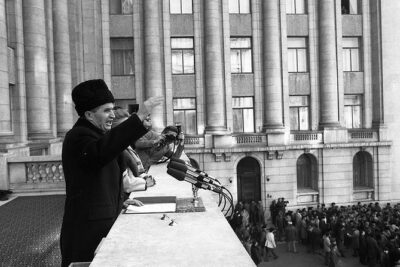

Bucharest Essential Tour: Old Town, Calea Victoriei & Communism
Read our review →

Museum of Communism Ticket with Communist Coffee
Read our review →
Dinner+Tour at Museum of Communism after closing
Read our review →Browse the lists this tour appears in