
Reviewed · 7-DAY EXPERIENCES
Transylvanian week
Transylvania is far more than Dracula, and this six-day private tour shows you why. You move from medieval castles and fortified churches to Saxon villages, mountain roads, and grand Romanian cities, with guide Gelu Trandafir helping connect the stones, rulers, legends, and modern life.
I like the private air-conditioned vehicle, which saves you from juggling trains, rural buses, and hotel changes. I also like the slower stops at places such as Malancrav and Viscri, where the trip gets beyond the standard castle circuit. The drawback is the price, $2,166.68 per person, and the long driving days. The schedule also needs checking: it says six days but includes six nights, so confirm the exact arrival and departure plan before paying.
Key points at a glance
- Corvin Castle and Alba Iulia: One day combines a dramatic Gothic castle with Roman, medieval, and modern Romanian history.
- Saxon Transylvania: Biertan, Malancrav, Viscri, Saschiz, and Prejmer show why fortified churches matter here.
- Three excellent city stops: You get guided time in Sibiu, Sighisoara, Brasov, and Bucharest rather than simply passing through.
- Private touring: Your group travels by air-conditioned vehicle, with pickup from a Bucharest hotel or the airport.
- More than Dracula: Bran Castle gets the legend treatment, but the tour also explains Vlad the Impaler, John Hunyadi, Romanian kings, and German settlers.
- Guide-led flexibility: Gelu and his brother George run the company, and Gelu is described as adaptable and attentive to the small details of a long private trip.
Why this route works for a first look at Transylvania
This is a good route if you want Romania’s major sights without building a six-day plan from scratch. You start in Bucharest, travel north through the Olt River Valley, sleep in Sibiu and Brasov, then return through Sinaia and the Prahova Valley.
The private format matters. You are not tied to a large coach schedule, and the route includes rural churches and villages that are harder to reach by public transport. You also get pickup at your Bucharest hotel or the airport, which makes the first morning simple.
The listed package includes six nights in three-star superior hotels or guesthouses, breakfast, private transport, entrance fees, taxes, and lunch. Other meals, photo fees, and flights are extra. At more than $2,100 per person, this is not a budget tour, but the cost covers the guide, vehicle, accommodation, and a long string of admission tickets.
I would ask for a precise day-by-day confirmation before booking. The description calls the tour six days, yet it also says six nights and includes a return to Bucharest on Day 6. That may mean the final night is included after the Bucharest visit, but the wording is not clear.
A few more Bucharest trips worth putting side by side
- 4×4 Driving Experience at Flying Altitudes – 7 Days
★ 5.0 · 13 reviews - 7-Day Private Tour of Transylvania from Bucharest
★ 5.0 · 13 reviews - Amazing Romania – Seven day private tour from Bucharest
★ 5.0 · 7 reviews
Day 1: Cozia Monastery and Sibiu’s old squares
Your pickup begins in Bucharest, either at your hotel or the airport. The road heads northwest along the Olt River Valley, giving you a scenic start rather than a motorway-only transfer.
Cozia Monastery is the first stop. Mircea the Elder founded it in 1388, and he was the grandfather of Vlad the Impaler. The visit takes about 30 minutes and admission is listed as free, so this is a short but useful introduction to Wallachian medieval power and religious life.
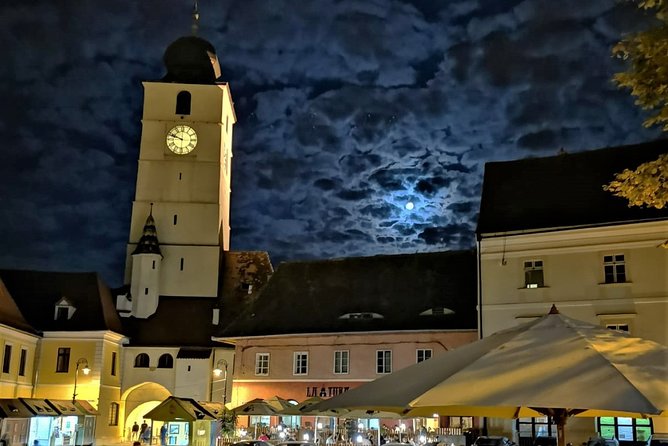
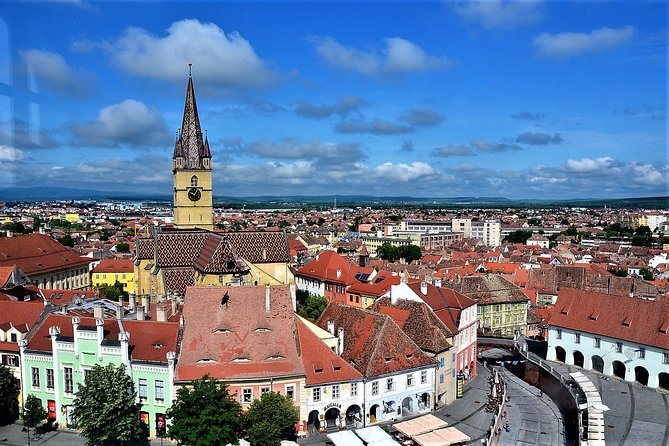
After lunch and a rest, you reach Sibiu for a two-hour guided walk. The city is one of the strongest urban stops on the route, with the Grand Square, Small Square, and Albert Huet Square forming a compact historic core.
You climb the medieval stairs of the Council Tower for a broad view over the old city. That climb is worth noting if stairs are difficult for you. The tour also includes the Orthodox Cathedral and the large Evangelical Church, giving you a quick look at two different religious traditions.
Sibiu works well early in the trip because it helps explain the Saxon influence that appears again in the villages later. You get an actual city walk, not just a photo stop. The two-hour visit is enough for the main sights, though you will not have much free time for museums or independent shopping.
Day 2: Corvin Castle and Alba Iulia’s many layers
Corvin Castle, also called Hunyadi Castle, is one of the visual highlights of the week. Its towers, walls, and Gothic shape give it the fairy-tale appearance many people expect from Transylvania, but its importance is not only architectural.
Your guide explains John Hunyadi, one of the major military leaders of medieval Central Europe. His father, Voicu, received the castle in 1409 from Sigismund of Luxembourg. John Hunyadi later became regent of Hungary and defeated the Ottoman army at Belgrade.
You have about an hour inside the castle. That is enough for a focused visit, but you should not expect a full day of wandering through every room and exhibit. The value here comes from seeing the building while learning how its owners fit into the political struggles of the region.
Next comes Alba Iulia, where two hours cover several centuries in one compact area. The Alba Carolina fortress recalls the city’s military role, while St. Michael Cathedral contains the tomb of John Hunyadi. The cathedral’s construction began in 1004, giving it an age that is easy to underestimate when you are moving through the modern city.
The Orthodox Coronation Cathedral adds another important layer. You also see the remains of a Roman camp associated with the elite 13th Gemina Legion. This is one of the tour’s best history days because the Roman, medieval, religious, and Romanian national stories sit close together.
You return to Sibiu for a second night. That repeated base is practical. It avoids another hotel change and gives you a familiar place after a full day on the road.
Day 3: Biertan, Malancrav, and Sighisoara after the crowds
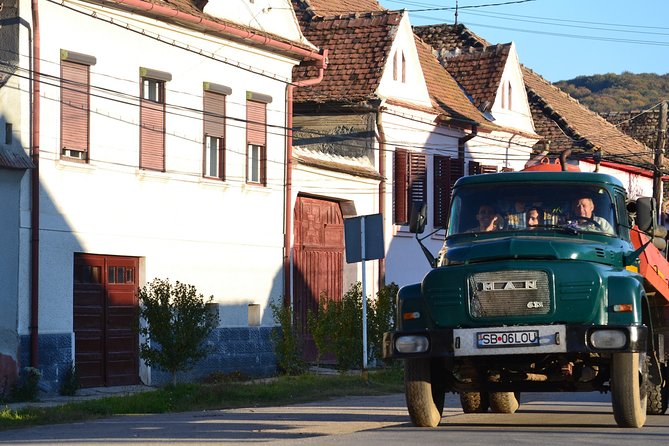
The road from Sibiu to Sighisoara passes through the Hartibaciu Valley, old Saxon villages, and wooded country. The route is as important as the stops because it shows how scattered settlements shaped Transylvania.
Biertan Fortified Church gets about an hour. These churches were not only places of worship. Their defensive walls reflect a region where villages had to protect themselves from attack. The fortified churches are among the most distinctive sights in the area, and Biertan is one of the best-known examples.
Malancrav offers a quieter stop. Its Lutheran church contains a large Gothic fresco that was uncovered during restoration work in 1914. The medieval paintings had been covered with chalk after the Lutheran Reformation, and the surviving images now give you a rare look at religious art from before that change.
The visit lasts about an hour, but the setting is part of the appeal. Malancrav is a small village, so you are seeing a less polished side of rural Transylvania. That can be more rewarding than moving only between major monuments, although opening arrangements in small places can sometimes affect the pace of a day. The provided schedule does not give a specific lunch plan here, so ask how meals are handled.
You finish in Sighisoara, a UNESCO-listed medieval citadel and one of the tour’s most atmospheric stops. The Clock Tower is the main landmark, and the old streets are especially appealing late in the day, when you have two hours to explore.
Sighisoara is also linked to Vlad the Impaler, who was born here. The connection is historically important, but it is easy for Dracula marketing to flatten the story. A good guide can separate Vlad’s real political life from the later fictional count, and Gelu’s role includes explaining that difference.
Same city, a completely different sort of day:
- Bucharest: Dracula’s Castle, Peles Castle, & Brasov Old Town
★ 4.5 · 17,858 reviews - Bucharest: Dracula Castle, Peles Castle & Brasov Old Town
★ 4.6 · 10,891 reviews - Bucharest: Dracula’s Castle, Peleș Castle & Brașov Day Trip
★ 4.5 · 5,919 reviews - Bucharest: Palace of Parliament Tickets and Guide
★ 4.3 · 3,182 reviews
Day 4: Viscri, Prejmer, and the road to Brasov
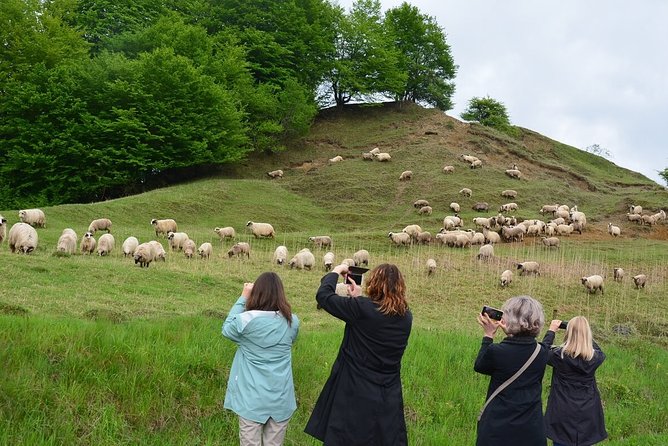
The route continues toward Brasov, with a view of the fortified church at Saschiz along the way. Its tower recalls Sighisoara’s Clock Tower, a useful visual link between the villages and the larger citadel.
Viscri is the day’s most personal-feeling stop. The village became better known after King Charles bought a Saxon house there, a blue 1753 home at number 163. The tour includes lunch time in Viscri and a visit to its fortified church, with about two hours allocated.
Do not expect a polished resort town. Viscri’s appeal is its rural character and the chance to see how Saxon village life shaped this part of Romania. The stop is valuable because it slows down the route and gives you a sense of place rather than another quick photograph.
On the way onward, you catch sight of Rupea Fortress. It was built over earlier Roman and Dacian fortifications, though the schedule describes this as a viewing stop rather than a full visit. That distinction matters if Rupea is high on your personal list.
Prejmer is a more substantial church and fortress visit, with one hour inside the UNESCO-listed complex. Teutonic Knights began the foundations around 1200, and Saxon settlers completed the work after the knights left the area.
The defensive walls show how worship and protection were combined. You can appreciate the building as a church, but also as a place designed to shelter a village during attack. Prejmer is one of the clearest stops for understanding why these fortified churches are central to Transylvania’s identity.
Brasov follows, with check-in and a two-hour historic-center tour. The city developed around a fortress founded in 1211 and later expanded by German settlers. You see medieval walls, bastions, towers, and Rope Street, one of Europe’s narrowest streets.
Brasov is a lively city with more urban energy than the villages. Two hours covers the main sights, but it leaves limited time for independent exploration. If you want to return to a particular square, church, or café, ask your guide where you can fit that in.
Day 5: Poiana Brasov, Bran Castle, and the Dracula question
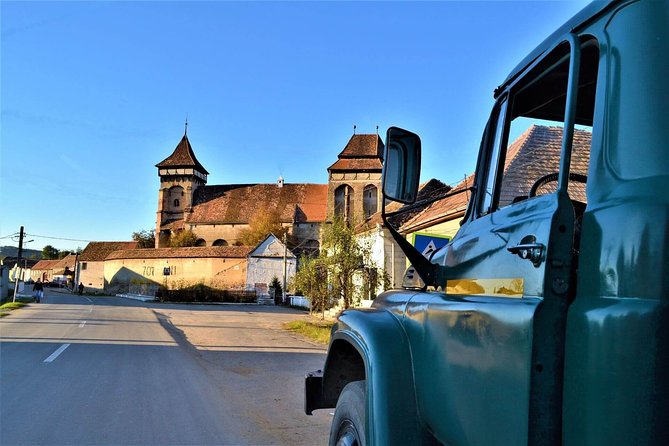
The morning heads uphill to Poiana Brasov, a mountain resort. If weather conditions cooperate, you take a cable car to about 1,727 meters near Postavaru Peak for views over the Carpathians and the Transylvanian plateau.
The schedule allows two hours here, including the cable-car outing. Weather is the key variable. On a clear day this adds a fine mountain view; in poor weather, the ride may offer much less. The tour description does not say whether the cable-car ticket is included, so confirm that cost before the visit.
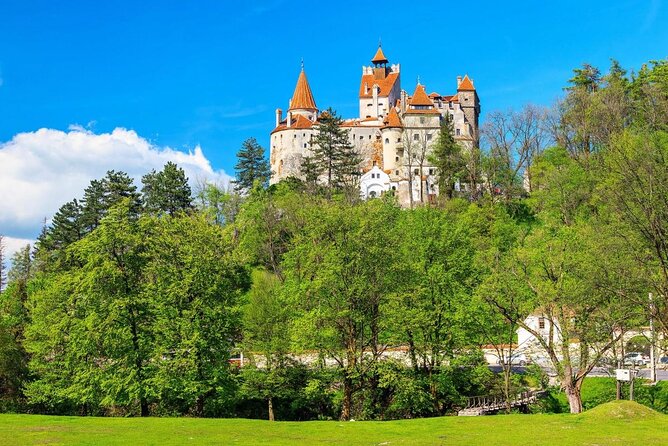
Bran Castle is the main attraction of the day. Built in the fourteenth century, it guarded a commercial route between Wallachia and Transylvania. Its position on a rocky outcrop helped create the dramatic setting that later made it a natural home for Dracula stories.
The useful part of the visit is learning where fiction and fact separate. Bran Castle is tied to Count Dracula in popular culture, while Vlad the Impaler’s real connection to the building is much less direct than many souvenir shops suggest. You should enjoy the legend, then let the guide put it in its proper historical frame.
The route back to Brasov includes a distant view of Rasnov Fortress, a thirteenth-century stronghold probably linked to the short period of Teutonic Knight control. Since this is described as seeing the fortress from afar, do not book the tour expecting an interior visit.
Back in Brasov, you visit the Black Church for about an hour. This Gothic church is one of the city’s major landmarks and gives the day a strong architectural finish. The combination of mountain views, Bran, Rasnov, and the Black Church makes Day 5 varied, though it is another full day with several road sections.
Day 6: Peles Castle and a final evening in Bucharest
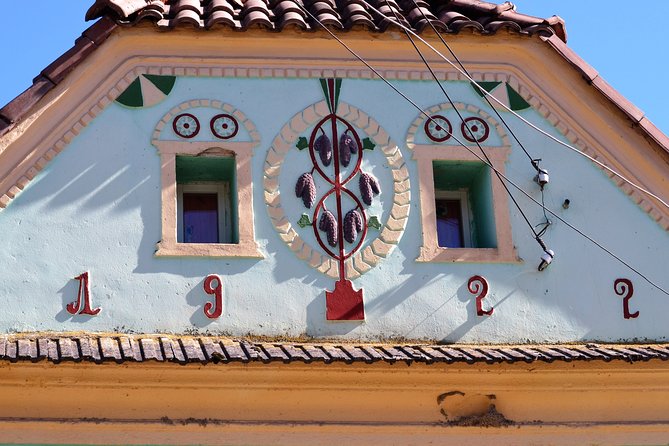
You leave Transylvania through the Prahova Valley toward Bucharest, stopping in Sinaia at Peles Castle. Built at the end of the nineteenth century, Peles looks very different from the medieval fortresses earlier in the week.
Its founder was Carol I, Romania’s first king, who ruled for 48 years and pushed the country toward modernization. The castle’s ornate style contrasts with the sober personality associated with Carol I, making the visit useful as a change of period and mood.
Two hours are scheduled here. Admission is included, but photo fees are not, so check the rules before taking pictures inside. Peles is one of the tour’s strongest contrasts: after days of defensive walls, you see a royal residence designed to express a modern European monarchy.
The final stop is Bucharest, where you check in and take a guided evening tour. Stavropoleos Monastery, built in 1724, is included. Its church brings the route back to religious architecture, but in a distinctly urban setting.
The schedule says the Bucharest tour takes two hours. That should give you a useful introduction, though not a full survey of the capital. If you arrive late after Peles and the drive south, confirm how much of the evening remains for sightseeing.
What the $2,166.68 price really buys
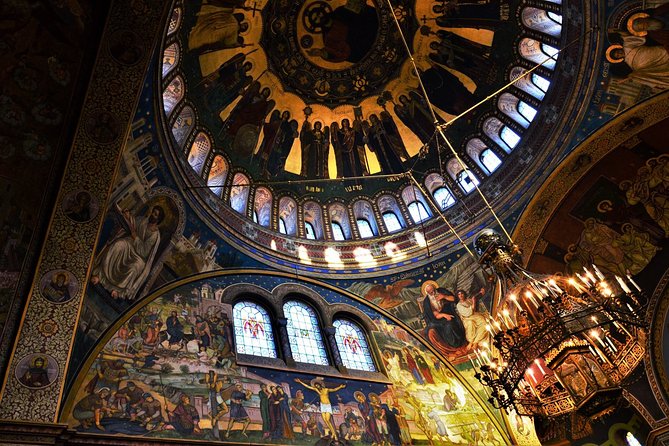
The price is high for a six-day regional tour, but it covers more than transport. You receive a private air-conditioned vehicle, a licensed guide, six nights in three-star superior hotels or guesthouses, breakfast, lunch, admission fees, and taxes.
That package can be good value if you place a high price on convenience. The route includes rural churches and villages where independent connections could be awkward. You also avoid arranging a new hotel, driver, and entrance ticket at each stop.
The value is weaker if you prefer cheap local transport, simple accommodation, or plenty of unplanned time. Meals beyond the included lunch and breakfasts are extra, and flights and photo fees are not included. Group discounts are offered, so larger private groups may find the per-person cost easier to justify.
The experience is private, meaning only your group participates. That gives you more room to ask questions and discuss changes than a large coach tour. Past trips led by Gelu and George have also included help with practical requests, such as taking a family to a shopping mall, although you should not assume every extra stop is guaranteed on this particular schedule.
Who should book this private week
I would choose this tour if you want Romania’s major Transylvanian sights with one guide and one vehicle. It suits couples, families, and small groups who prefer a planned route but still want personal attention.
It is especially useful for first-time visitors who want context at castles, churches, and citadels rather than simply collecting photographs. Gelu’s background in handling complicated routes and changing needs is a plus, and the supplied information identifies him and his brother George as the people behind the company.
You should think twice if you dislike early starts, long drives, or fixed sightseeing blocks. Several days combine multiple stops, and the one-hour visits at major sites may feel brief if you want every museum room or a leisurely meal.
The tour states that most people can participate, service animals are allowed, and the activity is near public transport. Still, Council Tower stairs, fortress paths, castle interiors, and cable-car conditions may affect comfort. Ask specific mobility questions before booking.
The cancellation policy is strict: the experience is non-refundable and cannot be changed for any reason. That makes it important to confirm the six-day versus six-night wording, hotel arrangements, cable-car costs, and pickup details first.
Should you book it?
Book this tour if you want a strong first portrait of Transylvania, with castles, Saxon villages, UNESCO churches, mountain views, and the main medieval cities handled in one private trip. The best parts are the range of places, the rural stops at Malancrav and Viscri, and the chance to have Gelu explain the difference between Dracula legend and Romanian history.
Skip it if your priority is low cost or long stretches of free time. For everyone else, the tour offers a practical way to see a complicated region without spending your holiday on schedules, driving, and hotel planning. Just get the final timing and inclusions in writing before you commit the full price.
FAQ
How long is the Transylvanian week tour?
The experience is described as a six-day tour, but the accommodation details state six nights. Confirm the exact length and final overnight arrangement with the provider before booking.
Where does the tour begin?
Pickup is offered from your hotel in Bucharest or from the airport.
Where does the tour end?
The route returns to Bucharest after visiting Peles Castle in Sinaia and includes an evening guided visit to Bucharest.
Is transportation included?
Yes. Private transportation in an air-conditioned vehicle is included, along with an air-conditioned vehicle and all listed taxes and fees.
What accommodation is included?
Six nights in a double room at a three-star superior hotel or guesthouse are included, with breakfast.
Are meals included?
Breakfast and lunch are included. Other meals are not included.
Is the tour private?
Yes. Only your group participates in this private activity.
Newest Bucharest trips we have written up
- Bucharest: Dealu Mare Winery Private Trip with Wine Tasting★ 4.9 · 6 reviews
- Winery touring & private wine tasting – one day private tour★ 5.0 · 3 reviews
- Traditions in Bucharest: Village Museum and Wine Tasting★ 5.0 · 8 reviews
- Your rendez-vous with Europe’s past: time-travel to Maramures, Transylvania★ 5.0 · 6 reviews
- Village Museum Bucharest Guided Tour★ 5.0 · 6 reviews
- Private Wine Tasting at Bucharest’s First Wine Bar★ 5.0 · 3 reviews
- Walking Tour of Bucharest City Center – Private Tour★ 5.0 · 4 reviews
- Wine tasting in Bucharest Old town – bonus cheese platter★ 4.5 · 6 reviews
7-Day Experiences, compared.
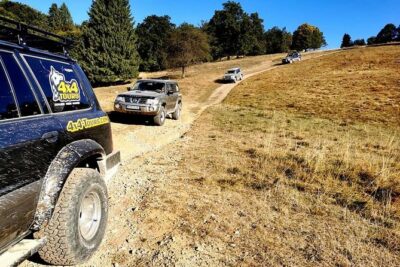
4×4 Driving Experience at Flying Altitudes – 7 Days
Read our review →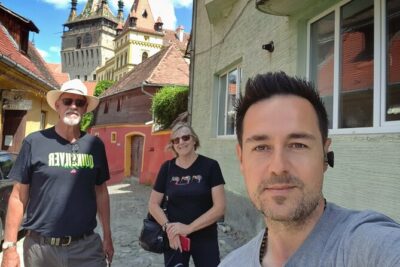
7-Day Private Tour of Transylvania from Bucharest
Read our review →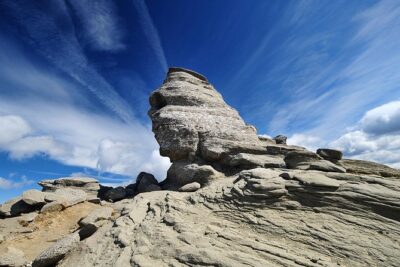
Amazing Romania – Seven day private tour from Bucharest
Read our review →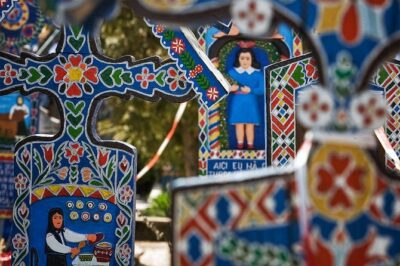
7 days Private Romania Grand Tour from Bucharest
Read our review →
7 Days Private Guided Tour in Romania from Bucharest
Read our review →
7-Day Dracula Tour in Romania from Bucharest including ‘The Ritual of Killing of a Living Dead’
Read our review →Browse the lists this tour appears in