
Reviewed · BUCHAREST COMMUNISM AND CEAUSESCU TOURS
Life in Communism
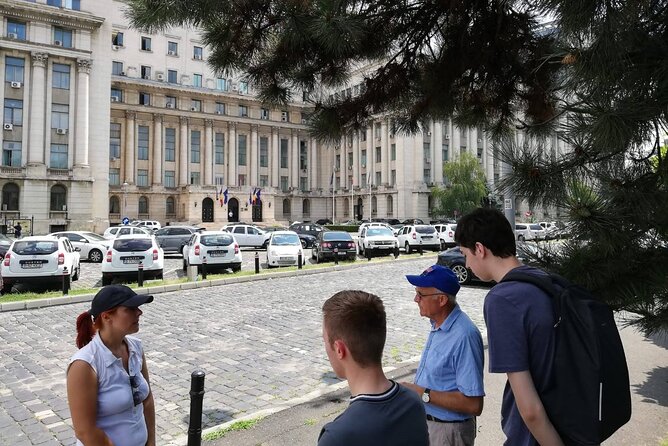
Bucharest’s communist past is easiest to understand on foot, where grand avenues, altered buildings, and Revolution Square show how politics reshaped daily life. This three-hour walk links about 15 sites to nationalization, demolitions, Secret Police activity, and the changes that still shape Romania today.
I like the small group of no more than 15 people, which gives you room to ask questions, and I like the way the tour uses buildings and streets rather than a lecture room. Guides such as Daniela, Andreea, Andrea, Augustin, and John have been praised for clear explanations and personal stories. The main drawback is simple: three hours on city streets requires moderate fitness, and drinks during the break cost extra.
Key points to know before booking
- About 15 communist-era stops: You connect separate buildings and streets to a timeline of political change.
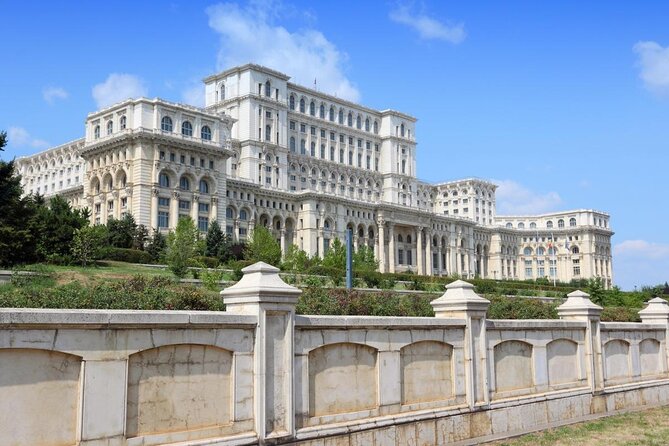
- The Palace of Parliament: The tour places Bucharest’s most famous communist construction project in its wider human and urban context.
- Revolution Square: This is one of the key places for understanding the end of the regime and the country’s present.
- Small English-speaking group: The maximum group size is 15, useful for questions and discussion.
- Personal stories from the guides: Daniela, Andreea, Andrea, Augustin, and John have all been praised for adding clear explanations or firsthand memories.
- Communist-era snacks: A small snack is included, while drinks during the break are paid separately.
Why communist Bucharest makes a strong walking tour

Communism in Romania was not only a matter of speeches and political leaders. It changed where people lived, what they could buy, how the state controlled work and property, and which parts of Bucharest survived or disappeared.
That is why this tour works best as a walking route. You see the physical results while your guide explains the policies behind them. A demolished neighborhood, a monumental government building, or a broad avenue can tell part of the story, but the guide helps you connect those sights to ordinary life.
The route covers major changes linked to nationalization, Secret Police control, demolitions, and the communist timeline. You are not simply looking at old buildings. You are learning why the city looks the way it does and how the regime changed its people and institutions.
I would take this tour early in a Bucharest visit. It gives you a useful frame for later sightseeing, especially if you plan to explore the central avenues and historic buildings on your own. Once you understand the political story, details that might otherwise seem random become easier to read.
More communism and Ceausescu tours in Bucharest:
- The Real tour of Communism
★ 5.0 · 666 reviews - Life under Communism
★ 5.0 · 358 reviews - 3-Hour Guided Tour of Communist Bucharest
★ 4.9 · 303 reviews
Starting at the Patriarchal Cathedral
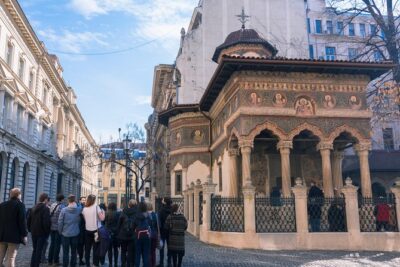
The meeting point is the Patriarchal Cathedral at Aleea Dealul Mitropoliei 25. The tour begins here and ends back at the same meeting point, which makes the route easier to manage than a walk that leaves you across town.
Starting at the cathedral also gives the tour an interesting point of departure. The subject is communist rule, but Romania’s story did not begin in 1947 and did not end in 1989. The opening area helps place the regime within Bucharest’s older civic and religious setting before the walk turns toward the landmarks most closely tied to the communist period.
You should arrive ready for a real city walk. The tour lasts about three hours, and a moderate level of fitness is expected. Wear comfortable shoes and dress for the weather. The supplied details do not give an exact walking distance, so you should not assume this is a short stroll between only three buildings.
The advertised stops include roughly 15 objectives, though only three are named in the route outline. That is worth understanding before you book. The experience is built around a wider sequence of sites, with the Palace of Parliament, Calea Victoriei, and Piata Revolutiei serving as the clearest anchors.
The Palace of Parliament and the price of monumental power
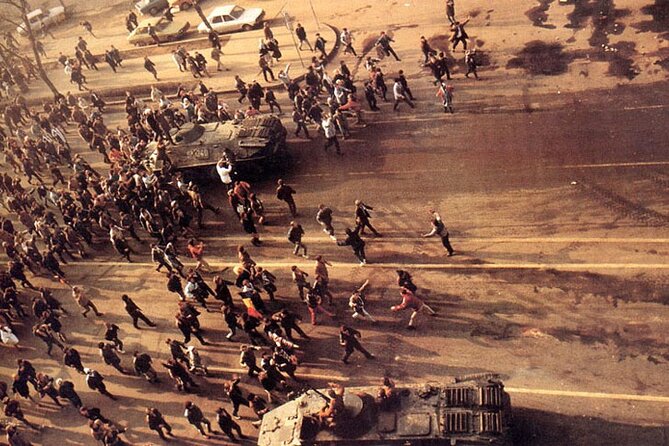
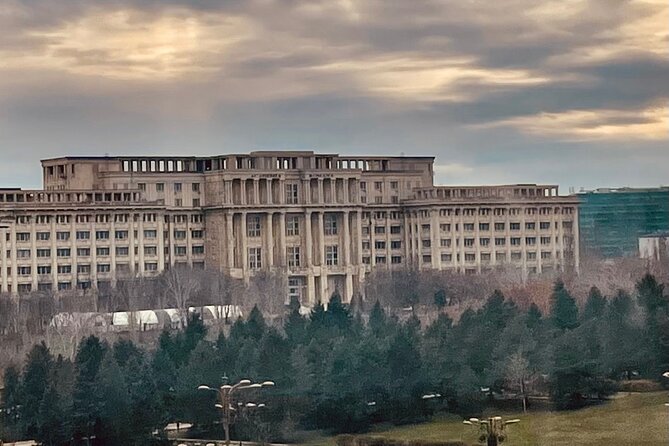
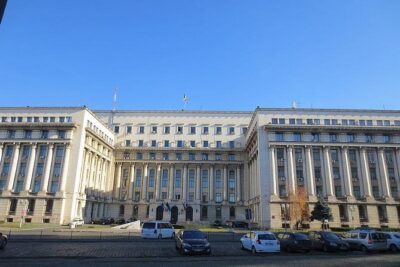
The Palace of Parliament is the biggest named stop and likely the point where the scale of communist ambition becomes most visible. The tour uses it to explain how the regime changed Bucharest, including the demolitions and major rebuilding projects that reshaped the city.
This is not just an architectural photo stop. The building helps you think about the relationship between power and public space. Its huge scale reflects the state’s desire to project authority, while the surrounding urban changes show what had to be cleared or altered to create that vision.
At $31.24 per person, the tour’s value depends largely on how much context your guide provides here and at the other stops. You are not paying simply to see a famous building from outside. You are paying for a three-hour explanation of how the building fits into the city’s political past.
The tour information does not say that interior entry to the Palace of Parliament is included, so do not book expecting a building admission. The strength of this stop is the guide’s interpretation of its place in the communist story.
Calea Victoriei and the city shaped by policy
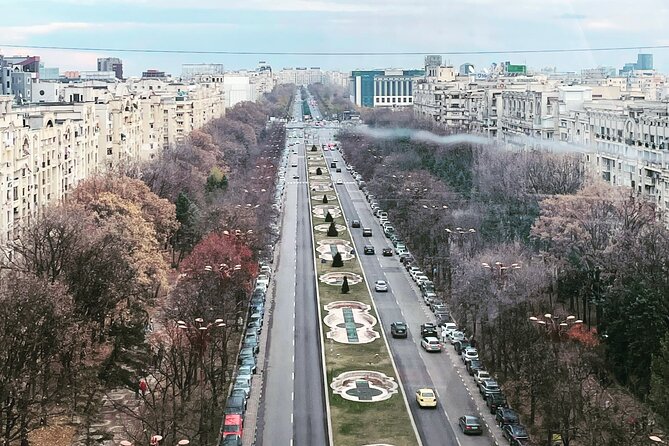
Calea Victoriei is one of Bucharest’s central arteries, and on this tour it becomes a way to see how communist decisions affected an established urban street. The value here is in comparison. You can look at the city as it exists now while learning how the regime altered its architecture, institutions, and public life.
Your guide may use this part of the route to connect visible structures with less visible systems such as nationalization and Secret Police control. These subjects matter because they explain how government power reached beyond official buildings and into property, employment, privacy, and everyday choices.
This is also where the walking format earns its keep. In a museum, you might see photographs of policy or political events. Along Calea Victoriei, you can place the discussion against actual streets and buildings. The result is more practical: you begin to notice how old and new layers of Bucharest sit beside each other.
The route is not presented as a general highlights walk. If your main interest is shopping, cafés, or the city’s older architecture without political context, this stop may feel slower than a standard sightseeing tour. If you want to understand why the center looks as it does, it should be useful.
Same city, a completely different sort of day:
- Bucharest: Dracula’s Castle, Peles Castle, & Brasov Old Town
★ 4.5 · 17,858 reviews - Bucharest: Dracula Castle, Peles Castle & Brasov Old Town
★ 4.6 · 10,891 reviews - Bucharest: Dracula’s Castle, Peleș Castle & Brașov Day Trip
★ 4.5 · 5,919 reviews - Bucharest: Palace of Parliament Tickets and Guide
★ 4.3 · 3,182 reviews
Revolution Square and the end of the regime
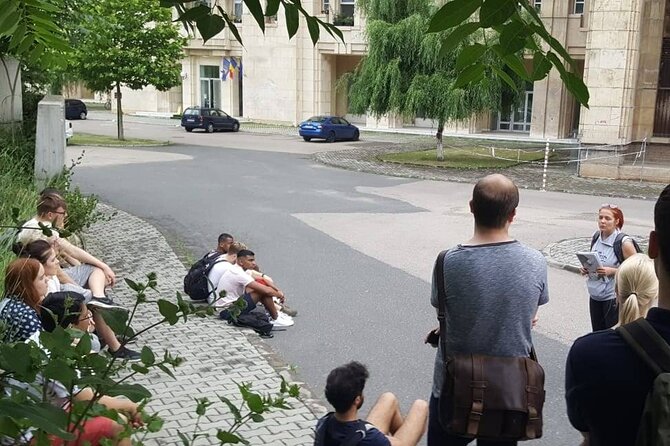
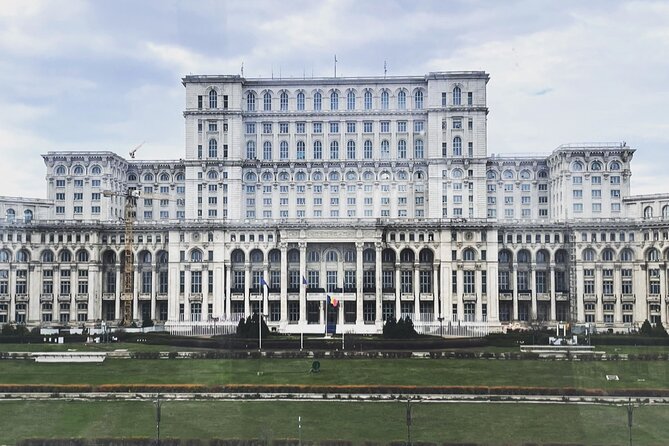
Piata Revolutiei, or Revolution Square, is the tour’s clearest link to the collapse of communism. It marks a specific moment in the regime’s timeline and helps connect the earlier discussion of state control and urban change to Romania’s present.
The strength of this stop is the sense of sequence. You begin with the structures and policies of communist rule, then reach a place associated with the break from that system. A good guide can show you how the square fits into the broader story without reducing the period to a simple good-versus-bad tale.
That nuance matters. One of the strongest guide descriptions in the supplied material praised Augustin for presenting a careful, complex account of communism in Bucharest. Other guides, including Daniela and Andreea, were praised for clear explanations, strong English, and personal experiences. The quality of the tour will depend partly on who leads your departure, but the guide is clearly central to the experience.
Revolution Square is also a good place to ask questions. You might want to know how the political changes affected ordinary households, how people experienced shortages or surveillance, or how Romania’s present reflects the years before 1989. The small group makes those questions more manageable than they would be on a crowded city walk.
Fifteen stops, one connected story
The route covers about 15 objectives, each tied to a particular moment or change during the communist period. Only three are named in the supplied route details, so you should think of the tour as a guided sequence rather than a fixed checklist of famous attractions.
That format has an advantage. The guide can explain why a less famous building, street, or urban space matters. You are likely to remember a political idea better when it is linked to a physical place rather than presented as a list of dates.
The tour covers several major themes:
- Nationalization: How communist rule changed ownership and control.
- Secret Police: How surveillance and state power affected private life.
- Demolitions: How large redevelopment projects altered Bucharest.
- Architecture: How buildings and broad urban plans expressed the regime’s aims.
- Everyday life: What the political system meant for people beyond official slogans.
- The present: Why these changes still matter in modern Bucharest.
The guide’s explanation is especially important because the route does not promise a formal museum collection or a large number of interior visits. You are getting a street-level reading of the city. That makes the tour more personal, but it also means you should expect to spend much of the time listening outdoors.
Guides who add personal memory
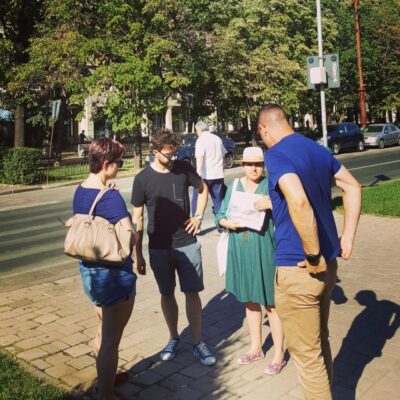
The guide is the heart of this experience. Several names appear in the available feedback: Daniela, Andreea, Andrea, Augustin, and John. You may not be able to request a particular guide, but these examples show the range of strengths the operation has offered.
Daniela is described as friendly, clear, and very well prepared on life under communism. Andreea and Andrea are praised for strong English, an easy-to-follow speaking style, and personal experiences that put historical facts into practical terms. Augustin is noted for a carefully researched and nuanced account, while John added stories from his own experience.
That personal element is valuable, but it also deserves a little balance. A personal story can make the past easier to grasp, yet one person’s memory is not the entire history of Romania. I would listen for both: the guide’s firsthand perspective and the wider explanation of how the political system worked.
The small-group limit of 15 helps here. You are less likely to feel like a face in a crowd, and you have a better chance to ask about subjects that interest you. The tour is offered in English, so clear communication is important, especially when the guide is explaining complicated political changes.
The snack break and what to budget

A communist-era snack is included. This is a small feature, but it suits the subject because food is one of the most direct ways to talk about daily life. A snack can open a conversation about availability, habits, and the difference between official promises and ordinary experience.
The tour includes a short break in the middle. Drinks are not included, and you should ideally carry cash to pay for your own beverage. The details do not specify the exact café, drink selection, or snack items, so you should treat this as a modest extra rather than a full food stop.
The break also matters for comfort. Three hours of walking and listening can be tiring, particularly in cold or unsettled weather. The tour details mention that the pause can give you a chance to warm up, but you should still dress appropriately because much of the experience takes place outdoors.
Alcoholic beverages are specifically excluded. That is not a problem for most people, but it is useful to know if you were expecting a tasting element. This is a history walk with a small themed snack, not a food or nightlife tour.
Is $31.24 good value?
At $31.24, I consider this a fair price if you want context rather than a quick look at Bucharest’s monuments. The cost covers about three hours, an English-speaking guide, a small group, roughly 15 stops, and a themed snack.
The value is strongest for first-time visitors who want to understand the city before exploring independently. You get a basic map of communist Bucharest, a timeline of major changes, and several places to revisit later.
It is less compelling if you only want interior access to the Palace of Parliament, because the supplied details do not include admission. It may also feel expensive if you prefer to read about history alone and walk at your own pace.
Group discounts are available, which may improve the price for a party booking together. The tour is usually booked about 22 days ahead, so popular dates may fill before a last-minute visit. Free cancellation is available when you cancel at least 24 hours before the start time. Changes or cancellations made less than 24 hours ahead are not refunded.
Who should book this Bucharest walk?
I would recommend it to you if you enjoy recent history, political change, architecture, or personal accounts of daily life. It is also a smart choice if you have just arrived in Bucharest and want a guided orientation before setting off on your own.
The tour suits adults and older children who can manage about three hours of walking and outdoor listening. Service animals are allowed, and the starting point is near public transportation. The group is capped at 15, but the activity still requires moderate fitness.
You may want something else if your main goal is Romanian food, general sightseeing, nightlife, or a long interior visit at the Palace of Parliament. This experience is focused and serious, with occasional humor and a snack rather than a broad city sampler.
Should you book Life in Communism?
Book it if you want Bucharest’s streets to make more sense. The Palace of Parliament, Calea Victoriei, and Revolution Square are more useful when you understand the policies and human consequences behind them, and this tour links those places into one clear story.
I especially like the small group, the 15-stop format, and the chance to hear guides such as Daniela, Andreea, Andrea, Augustin, or John explain the period in direct, personal terms. Just plan for three hours on foot, bring cash for a drink, and do not assume the price includes entry inside the Palace of Parliament.
FAQ
How long does the Life in Communism tour last?
The walking tour lasts about three hours.
Where does the tour begin?
It begins at the Patriarchal Cathedral, Aleea Dealul Mitropoliei 25, Bucharest, Romania.
Where does the tour end?
The activity ends back at the meeting point.
Is the tour offered in English?
Yes. The tour is offered in English.
How many people can join the tour?
The maximum group size is 15 people.
Which Bucharest landmarks are named on the route?
The named stops are the Palace of Parliament, Calea Victoriei, and Piata Revolutiei.
How many places do you visit?
You visit roughly 15 objectives connected with Romania’s communist period.
Is food included?
A communist-era snack is included.
Are drinks included?
No. Drinks during the short break are self-supported, and carrying cash is recommended.
Can I cancel for a full refund?
Yes, if you cancel at least 24 hours before the experience start time. Cancellations made less than 24 hours ahead are not refunded.
Newest Bucharest trips we have written up
- Bucharest: Dealu Mare Winery Private Trip with Wine Tasting★ 4.9 · 6 reviews
- Winery touring & private wine tasting – one day private tour★ 5.0 · 3 reviews
- Traditions in Bucharest: Village Museum and Wine Tasting★ 5.0 · 8 reviews
- Your rendez-vous with Europe’s past: time-travel to Maramures, Transylvania★ 5.0 · 6 reviews
- Village Museum Bucharest Guided Tour★ 5.0 · 6 reviews
- Private Wine Tasting at Bucharest’s First Wine Bar★ 5.0 · 3 reviews
- Walking Tour of Bucharest City Center – Private Tour★ 5.0 · 4 reviews
- Wine tasting in Bucharest Old town – bonus cheese platter★ 4.5 · 6 reviews
Bucharest Communism and Ceausescu Tours, compared.
Bucharest Essential Tour: Old Town, Calea Victoriei & Communism
Read our review →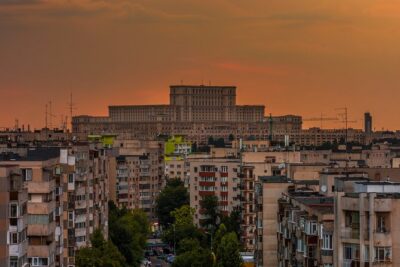


Museum of Communism Ticket with Communist Coffee
Read our review →
Dinner+Tour at Museum of Communism after closing
Read our review →Browse the lists this tour appears in