
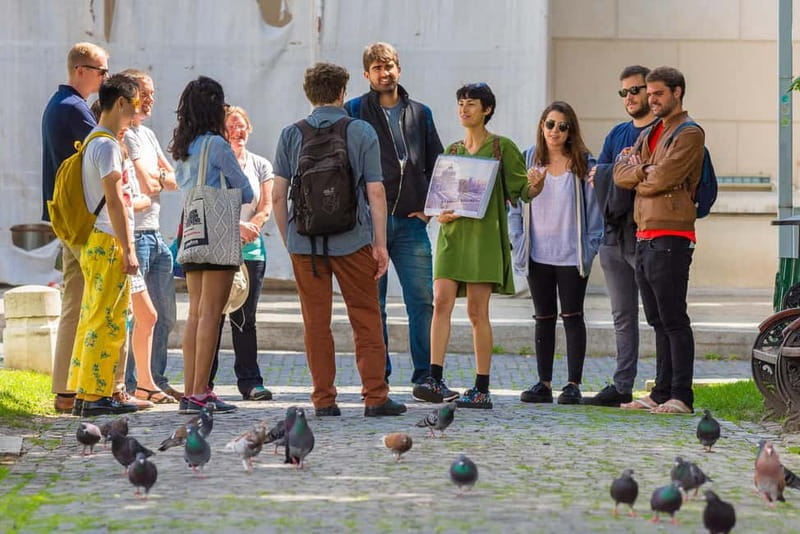
Reviewed · BUCHAREST COMMUNISM AND CEAUSESCU TOURS
Bucharest: Tour of Old Town, Calea Victoriei & Communism
Bucharest’s story turns sharply at Revolution Square. One moment you are among concert halls, royal buildings, and French-inspired facades. The next, you are hearing how Nicolae Ceaușescu’s Communist regime ended in a televised uprising and bloodshed. This 2.5-hour walking tour gives you that contrast in a single, well-planned route.
I like the way the tour links big political events to streets and buildings you can actually see. I also like the Old Town finish, with its cobblestones, Manuc’s Inn, colorful Stavropoleos Church, and tucked-away Macca-Villacrosse Passage. The main consideration is pace: there is a lot to cover on foot, so comfortable shoes matter, and the tour runs rain or shine.
Key points at a glance
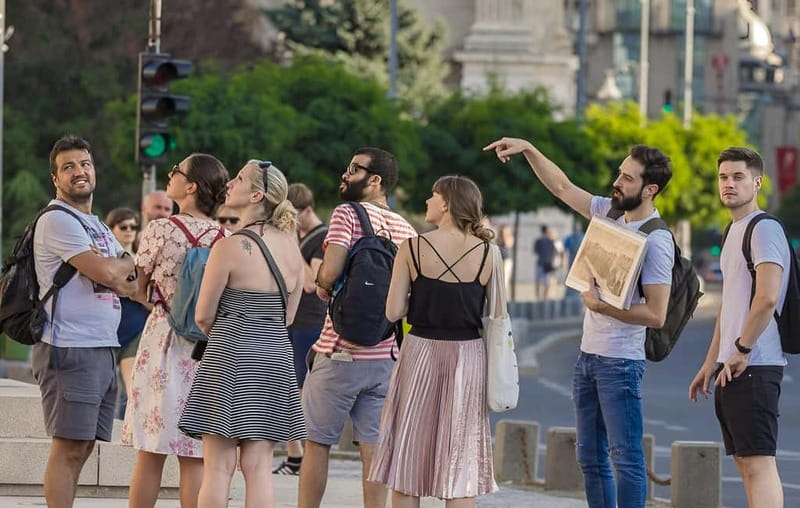
- Start at the Romanian Athenaeum: Meet your guide on the steps of Bucharest’s grand concert hall, surrounded by royal and French-style buildings.
- See the place where Communism ended: Revolution Square explains Ceaușescu’s rule and the 1989 uprising that was broadcast live on television.
- Walk Calea Victoriei: Explore Bucharest’s old showpiece avenue, lined with Belle Époque hotels and Art Deco landmarks.
- Enter the Old Town: Follow cobblestone lanes past the History Museum, CEC Palace, Manuc’s Inn, and small merchant houses.
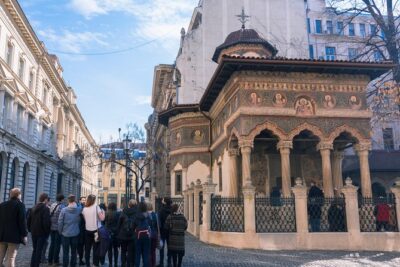
- Pause at Stavropoleos Church: Visit the only active monastery in central Bucharest, a calm and ornate stop in the middle of the city.
- Get strong value for $21: The price covers a professional local guide and a Bucharest map, with no separate transport or meal costs.
Why this route explains Bucharest so well
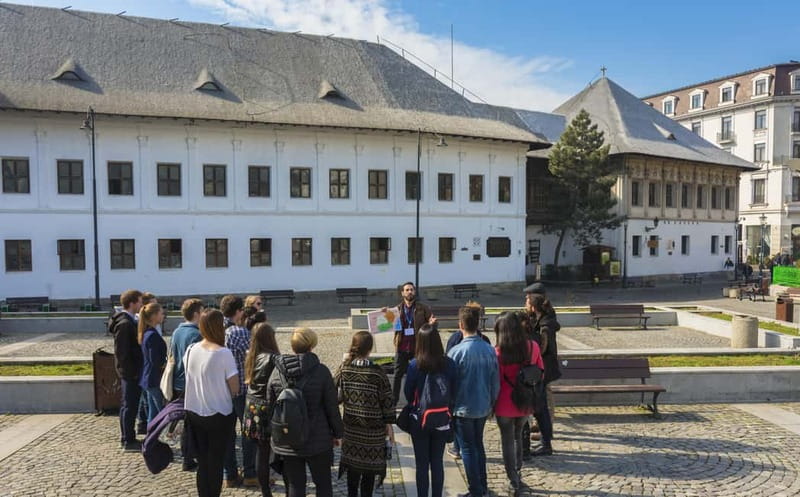
Bucharest can be hard to read at first. Its center mixes medieval traces, royal ambition, interwar elegance, Communist power, and modern city life. These parts do not always sit together neatly, which is exactly why a guided walk helps.
The route gives you a useful timeline. You begin with the monarchy and the city’s attempt to look like a little Paris. You then move into the Communist period, when grand avenues and public buildings served a very different political purpose. Finally, you reach the Old Town, where medieval trade routes, Ottoman-style inns, churches, restaurants, and 19th-century houses crowd together.
I like that the guide does not treat Bucharest as only a Dracula destination. Vlad Dracula appears in the medieval section, but the tour gives equal weight to kings, world wars, urban design, Communism, and the 1989 revolution. That makes the city easier to understand than a tour built around one famous name.
The route is also efficient for a first visit. You see many of the central sights without spending time on a bus or moving between distant neighborhoods. At $21 per person, the value comes from the interpretation: you are paying for the stories that connect the buildings, not for admission to a large collection of interiors.
More communism and Ceausescu tours in Bucharest:
- The Real tour of Communism
★ 5.0 · 666 reviews - Life under Communism
★ 5.0 · 358 reviews - 3-Hour Guided Tour of Communist Bucharest
★ 4.9 · 303 reviews
Meeting the guide at the Romanian Athenaeum
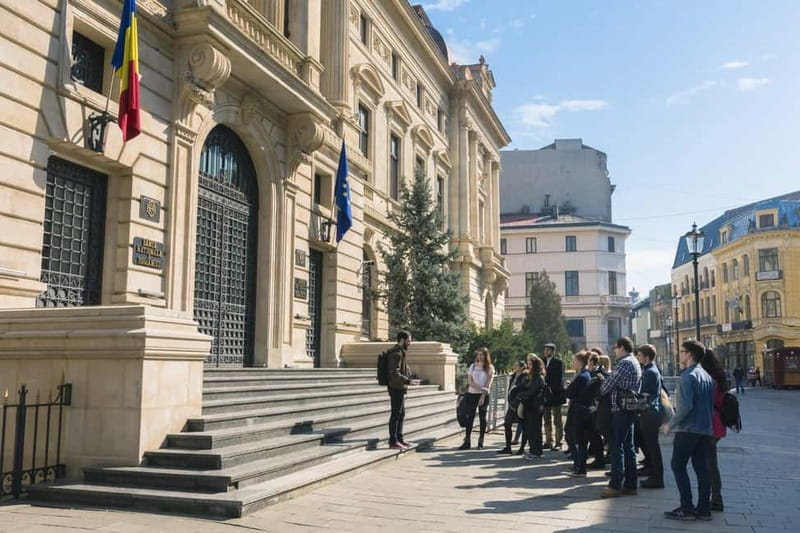
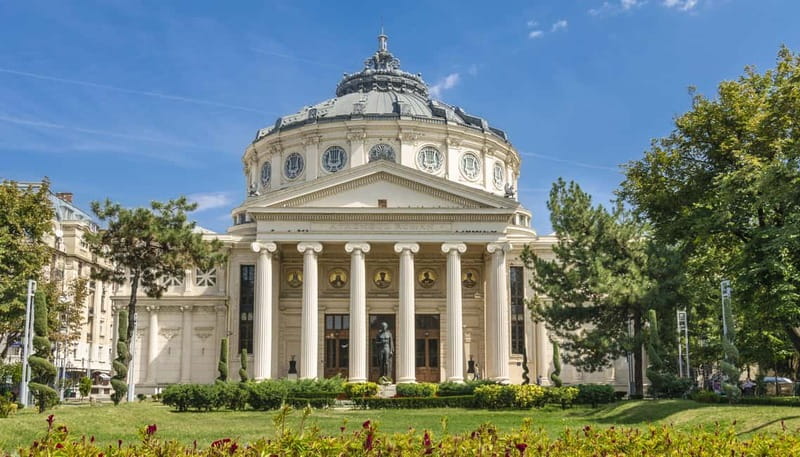
The tour begins in front of the Romanian Athenaeum, with the guide waiting by the columns on the building’s steps. Look for a name tag. This clear meeting point is useful because the Athenaeum is one of Bucharest’s easiest landmarks to identify.
The concert hall is a strong opening. Its neoclassical design sets the tone for the royal and French-influenced side of the city. Around it are the former Royal Palace, the University Library, and the Athenee Palace Hotel. Together, these buildings show the Bucharest that wanted to present itself as a cultured European capital.
I would arrive a few minutes early so you can look at the facades before the walking begins. The tour does not include hotel pickup, so you need to make your own way to the Athenaeum. It also does not include food or drinks, a minor point on a 2.5-hour route but worth knowing before you set out.
If your guide is Laura, expect a warm, professional presentation with plenty of Romanian history along the way. Her approach has been especially praised for making the central sights feel connected rather than treating them as isolated photo stops.
Revolution Square and the end of Ceaușescu’s rule
From the Athenaeum, the walk moves toward Revolution Square for about 30 minutes of guided exploration. This is where the royal Bucharest of King Carol meets the Communist capital that followed it.
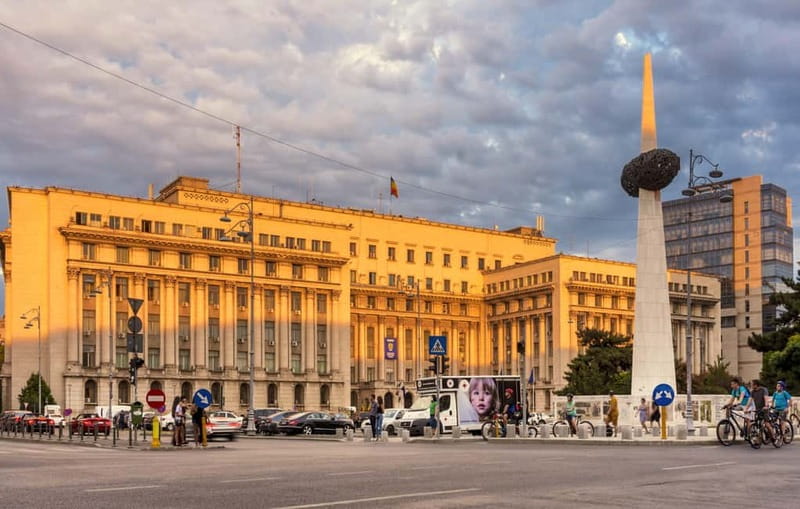
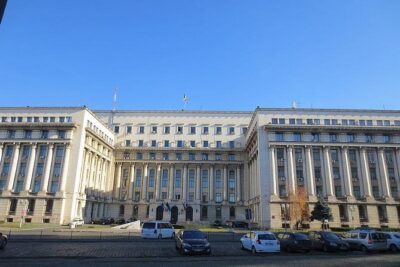
The statue of King Carol offers a useful way into the story. Around you are reminders of Romania’s monarchy and the world wars, while nearby sits the former headquarters of the Communist Party. From this building, major decisions were made between 1950 and 1989.
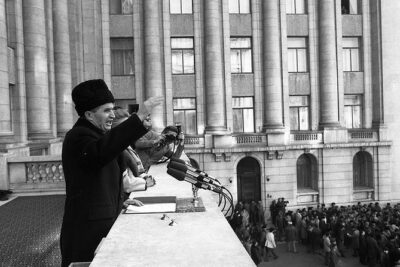
The guide’s account of Nicolae Ceaușescu is one of the most important parts of the experience. You hear about his life, his dictatorship, and the system of oppression that shaped daily life in Communist Romania. The story is not presented as a remote political lesson. It is tied to the square where power was exercised and where the regime finally lost control.
The 1989 revolution is the emotional center of the tour. Romania’s uprising was the first revolution in the world to be broadcast live on television, and the route helps you understand why Revolution Square became such a powerful setting. The regime ended in bloodshed, not through a quiet political handover.
This stop rewards careful listening. The square contains monuments and buildings, but the most important details are historical: who used the buildings, what decisions were made there, and how quickly public anger turned into open revolt. If you prefer a tour focused only on architecture, this section may feel heavy. I think that weight is necessary. Bucharest’s beauty makes little sense without the political trauma beneath it.
Calea Victoriei and Bucharest’s elegant public face
The tour then spends about an hour on Calea Victoriei, one of the city’s most famous avenues. This is where Bucharest’s interwar and Belle Époque identity comes into view.
The street is lined with buildings that reflect wealth, fashion, and a desire to look west. The Grand Hotel Continental, the Telephone Palace, and the Military Club each add a different note. You will also see Art Deco details and hotels connected to the city’s bourgeois life before the Second World War.
This section works best if you enjoy looking up. Calea Victoriei is not just a route between stops. Its value is in the changing facades, proportions, and details that reveal how Bucharest presented itself during its prosperous periods.
I appreciate the contrast with Revolution Square. The tour shows you how the same city could move from royal ceremony and fashionable hotels to Communist control, then toward the uncertain present. The guide can also explain why Bucharest earned the nickname Paris of the East without reducing the city to a simple copy of Paris.
The practical drawback is that an hour on a central avenue can feel less intimate than the Old Town section. You are seeing major landmarks from the street rather than spending long periods inside them. Still, for a first orientation, this is time well used because Calea Victoriei provides the architectural bridge between the opening and the Old Town.
More Old Town walks in Bucharest:
- Bucharest: Dracula’s Castle, Peles Castle, & Brasov Old Town
★ 4.5 · 17,858 reviews - Bucharest: Dracula Castle, Peles Castle & Brasov Old Town
★ 4.6 · 10,891 reviews - Bucharest: Peles Castle, Bran Castle, & Brasov Old Town Tour
★ 4.5 · 1,035 reviews - Bucharest Pub Crawl in the Old Town
★ 5.0 · 462 reviews
Macca-Villacrosse Passage and the smaller details
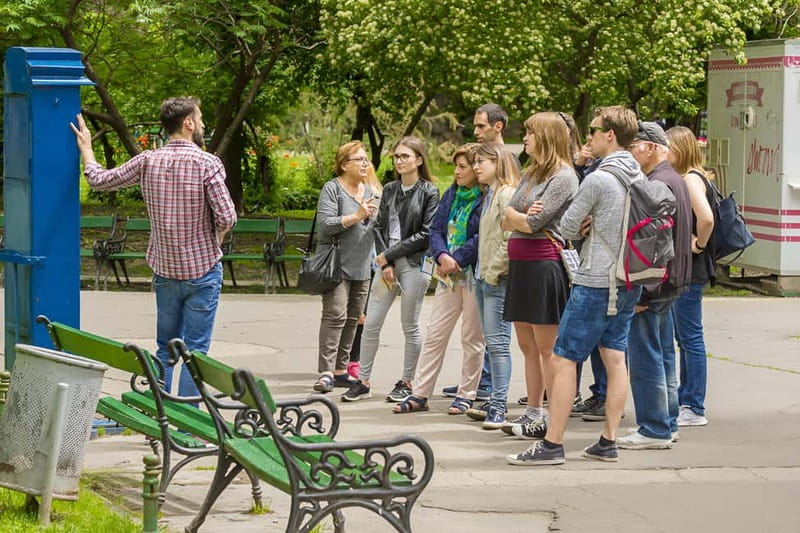
The next stop is Macca-Villacrosse Passage, with about 15 minutes for a visit and guided explanation. This covered passage offers a change of scale after the broad avenue.
Here, the focus shifts from national monuments to intimate urban spaces. The passage helps you see the 19th-century commercial side of Bucharest, when merchant houses, small businesses, and covered walkways shaped city life.
I like this stop because it breaks up the larger political story. The Athenaeum and Revolution Square are about institutions and power. Macca-Villacrosse is about how people moved through the city and used its smaller spaces.
Do not expect a long independent visit. Fifteen minutes is enough for an introduction and photographs, but not for a slow architectural study. The benefit is that your guide points out a place you might otherwise pass without understanding its role.
Stavropoleos Church, a quiet Old Town pause
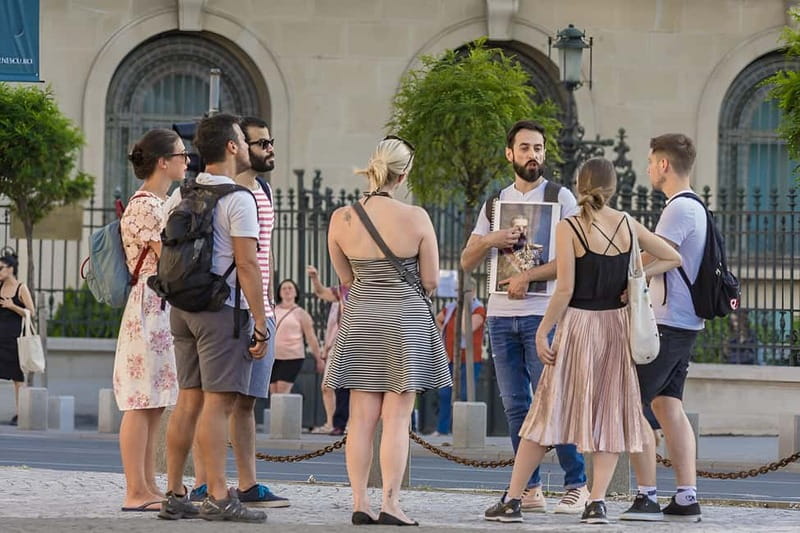
The tour continues into the Old Town and visits Stavropoleos Church for around 30 minutes. It is described as the only active monastery in central Bucharest, and it provides one of the route’s most peaceful moments.
The church is known for its colorful design and intimate setting. Compared with the grand public buildings earlier in the walk, Stavropoleos feels personal and enclosed. Its presence also shows that Bucharest’s religious history survived alongside royal power, commercial growth, and Communist rule.
This is an important stop for anyone who wants more than a surface-level Old Town stroll. The church gives the cobblestone streets a sense of continuity. It is not simply an attractive building placed among cafes and shops. It is a working religious site and a quiet corner in the center.
Please treat this part with respect. The tour includes a visit, but it is still an active monastery. The guide can explain the setting, while you should be prepared for the atmosphere to be calmer and more reflective than the street outside.
The 30-minute allotment is generous compared with the brief passage stop. That suggests the church is meant to be understood, not merely photographed. I would consider it one of the strongest parts of the route for travelers who enjoy architecture, religion, and small details.
Manuc’s Inn and the medieval Old Town
The Old Town walk brings you through cobblestone streets filled with medieval Oriental inns, small 19th-century merchant houses, and imposing palaces. This is where Bucharest’s older trading identity comes to the front.
Manuc’s Inn is the final listed stop and includes a photo stop, a visit, and guided explanation for about 15 minutes. Its importance lies in the way it represents historic travel and commerce. Inns like this were not just places to sleep. They were meeting points for merchants, goods, news, and political conversation.
The Old Town also includes the History Museum and the CEC Palace. These landmarks help show the range of the quarter. You are not walking through one uniform historic district. You are moving among older commercial buildings, grand financial architecture, religious sites, and later urban additions.
This part of the tour is likely to feel the most immediately atmospheric. The cobblestones and narrow lanes make the center feel different from Calea Victoriei, even though the areas are close together. At the same time, you should keep your expectations realistic. The tour gives you an overview of the essential sights, not a detailed interior visit to every building.
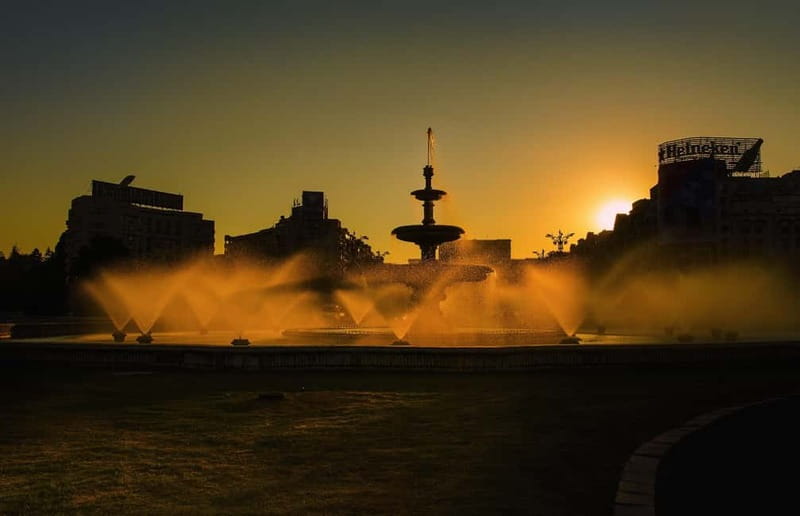
The route description also mentions finishing by the fountains in Unirii Square, while the listed endpoint is Manuc’s Inn. Since the final meeting point is specified as Manuc’s Inn, confirm the exact ending spot when you meet your guide. That small clarification can save confusion if you have a restaurant reservation or another activity afterward.
What the $21 price really buys you
At $21, this is a low-cost way to get a structured introduction to central Bucharest. The included professional local guide and map are the main value. There are no meal, drink, or hotel transfer costs built into the price, but that keeps the tour focused and affordable.
You are not paying for entry to a major museum or an elaborate transport experience. You are paying for a human explanation of places that can otherwise seem disconnected. The guide turns the Athenaeum, Revolution Square, Calea Victoriei, and the Old Town into one story.
The tour is especially good value if you have only a short stay in Bucharest. In two and a half hours, you cover royal architecture, Communist history, the 1989 revolution, interwar design, medieval trade, and Orthodox religious heritage. Booking separate visits or trying to build this route yourself would take more planning.
The limitation is depth. No walking tour of this length can explain every building or give you long interior visits. If you already know central Bucharest well, you may want a more specialized Communist, architectural, or food-focused experience. For a first look, the broad range is a strength.
Who should book this Bucharest walk
I would recommend this tour if you want historical context before exploring Bucharest on your own. It suits first-time visitors, couples, solo sightseers, and anyone who prefers walking to a bus-based city tour.
It is also a good choice for people who want the difficult parts of Romanian history explained clearly. The Ceaușescu section and Revolution Square are not decorative sightseeing. They help you understand how recent political events still shape the city.
The tour is available in English and Spanish, and it is wheelchair accessible. It runs rain or shine, so bring weather-appropriate clothing and comfortable shoes. The cobblestones, long route, and repeated standing make footwear more important than fashion.
Families with older children may appreciate the mix of Dracula, kings, revolution, and unusual buildings. Younger children may find the Communist section too serious, especially if they are not interested in political history.
Final verdict: a smart first walk in Bucharest
Book this tour if you want a compact, affordable introduction that explains why Bucharest looks so different from one block to the next. The strongest features are the route’s contrasts, the clear focus on Revolution Square, the walk along Calea Victoriei, and the calm visit to Stavropoleos Church.
Skip it only if you want a slow museum visit, a food tour, or a narrowly focused architectural study. For most first-time visitors, the $21 price and central route make this a sensible way to get your bearings fast, learn the city’s difficult recent past, and find Old Town sights worth revisiting later.
FAQ
Where does the Bucharest walking tour start?
The tour starts in front of the columns on the steps of the Romanian Athenaeum. The guide will be wearing a name tag.
Where does the tour finish?
The listed finishing point is Manuc’s Inn. The route description also refers to the fountains in Unirii Square near the end, so confirm the exact final location with your guide.
How long does the tour last?
The tour lasts 2.5 hours.
Which languages are available?
The tour is available with a live guide in English or Spanish.
Is the tour wheelchair accessible?
Yes, the activity is wheelchair accessible.
What should I bring?
Bring comfortable shoes. The tour is a walking experience and includes cobblestone streets.
Does the tour run in bad weather?
Yes. The tour takes place rain or shine.
Newest Bucharest trips we have written up
- Bucharest: Dealu Mare Winery Private Trip with Wine Tasting★ 4.9 · 6 reviews
- Winery touring & private wine tasting – one day private tour★ 5.0 · 3 reviews
- Traditions in Bucharest: Village Museum and Wine Tasting★ 5.0 · 8 reviews
- Your rendez-vous with Europe’s past: time-travel to Maramures, Transylvania★ 5.0 · 6 reviews
- Village Museum Bucharest Guided Tour★ 5.0 · 6 reviews
- Private Wine Tasting at Bucharest’s First Wine Bar★ 5.0 · 3 reviews
- Walking Tour of Bucharest City Center – Private Tour★ 5.0 · 4 reviews
- Wine tasting in Bucharest Old town – bonus cheese platter★ 4.5 · 6 reviews
Bucharest Communism and Ceausescu Tours, compared.
Bucharest Essential Tour: Old Town, Calea Victoriei & Communism
Read our review →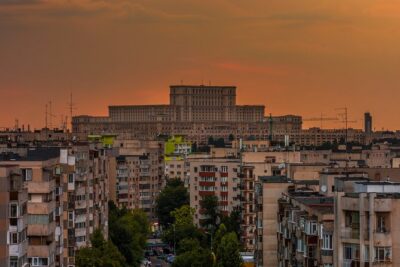

Museum of Communism Ticket with Communist Coffee
Read our review →
Dinner+Tour at Museum of Communism after closing
Read our review →Browse the lists this tour appears in