
Reviewed · BUCHAREST FOOD TOURS
Bucharest: Street Food Tour with a Local Guide
Bucharest’s best food tour is also a moving introduction to the city. You start with a humble pretzel and yogurt, ride public transport through the Jewish and Armenian quarters, shop and snack at Obor Market, then finish with hot papanasi near Cismigiu Park. I like the mix of ordinary local food and city history, and I like that tram and trolleybus rides are part of the experience rather than an extra cost.
The main drawback is that the food selection can feel modest for $74. You get several Romanian specialties, but this is not a long tasting parade. The tour also crosses a wide area, so the transit rides can feel like backtracking, and you should be ready to walk.
Key points to know before booking

- Obor Market is the heart of the tour: Explore one of Romania’s oldest and largest markets, with produce, honey, cheese, crafts, and prepared food.
- The menu follows a local day: Try pretzel and yogurt, Romanian ground meat rolls with beer, and hot Wallachian papanasi with jam and cream.
- Public transport adds local flavor: Tram and trolleybus tickets are included, with views of the Jewish and Armenian quarters along the way.
- The guides shape the experience: Guides such as Laura and Riga have been praised for friendly service, city stories, patience, and practical recommendations.
- Allow four hours and wear good shoes: The route includes market walking, city sightseeing, and transfers, and it is not suited to people with limited mobility.
Starting with Bucharest’s communist-era breakfast
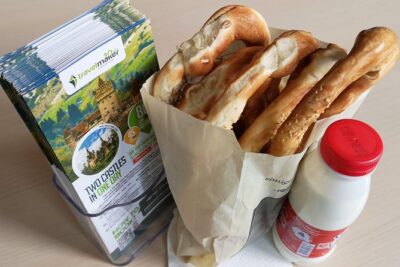
Meet your English-speaking guide at the Lupa Capitolina Monument on 36 I.C. Bratianu Boulevard. The tour begins with a Romanian pretzel and yogurt, described as a snack of communism and a common breakfast for communist workers.
This is a smart opening. It is cheap, plain, filling, and connected to everyday life rather than restaurant dining. Food tours often begin with a grand specialty. Here, you begin with something that tells you how people ate during a particular period of Romanian history.
Do not expect a large first course. The value is in the context and in the chance to start with a local habit before moving on to more substantial food. If you arrive hungry, you will have more to eat later at Obor Market and at the final restaurant.
Your guide should explain the connection between the snack and Bucharest’s past. Guides Laura and Riga have both been singled out for their friendly manner and city knowledge, though the exact guide depends on the departure.
More food tours in Bucharest:
- Street Food’n’Culture Tour
★ 5.0 · 209 reviews - Discover Bucharest: Private Highlights and Traditional Food Tour
★ 5.0 · 86 reviews - Cooking Class traditional food
★ 5.0 · 22 reviews
Riding the tram through older Bucharest quarters
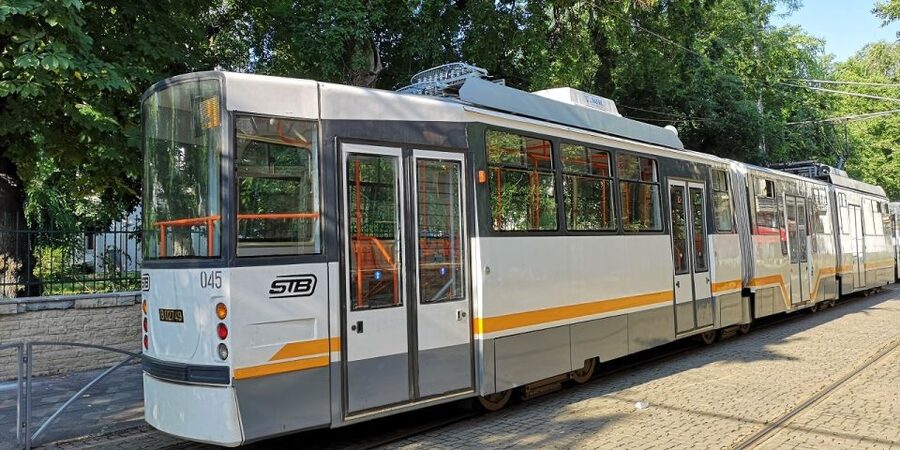
After the opening snack, you take a short tram ride toward Obor Market. Your tram and trolleybus tickets are included, which saves you from dealing with small transport purchases while the guide handles the route.
The ride is part of the sightseeing. You pass through areas associated with Bucharest’s Jewish and Armenian communities and get a look at buildings that you could easily miss on a standard central walking route. This is not a sightseeing bus with a fixed view and a recorded script. You are moving through the city as residents do, with changing streets and ordinary neighborhoods outside the window.
There is one practical catch. The tour begins in the central area, goes out toward Obor, and later returns toward University Square. Some people will enjoy this broad view of Bucharest. Others may find the route spread out, especially if they prefer a compact walking tour with one stop after another.
I would treat the tram ride as part of the point, not wasted time. It shows how the market fits into the wider city. Still, if you dislike public transport or want a tour built around dense sightseeing, this arrangement may test your patience.
At Obor Market, Bucharest gets practical
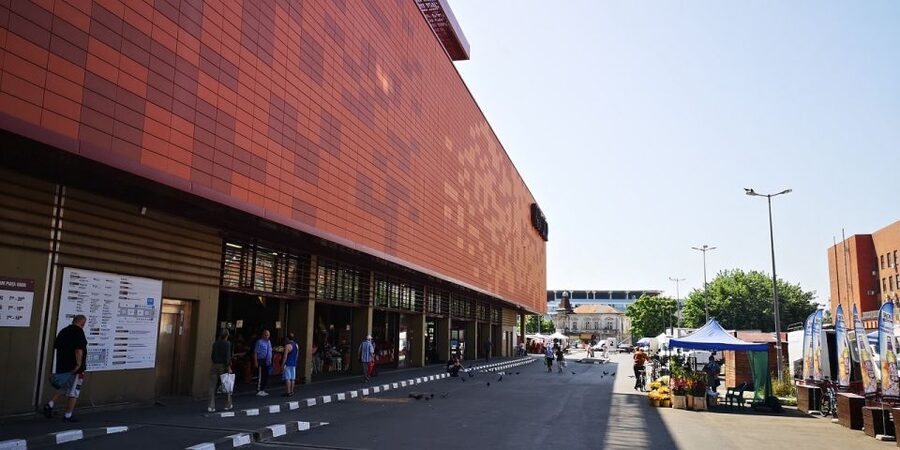
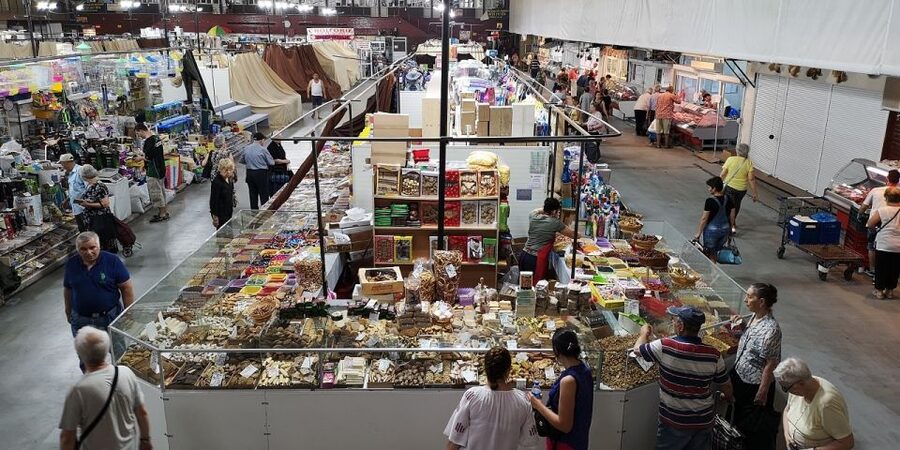
Obor Market is the most important stop on the route. It is one of Romania’s largest and oldest markets, and it gives you a better sense of local shopping than a polished food hall would.
You can walk past stalls selling fresh produce, honey, cheese, and other food products. The market also has non-food goods, including handcrafted wooden bowls. That mix matters. You are not simply stopping for arranged samples. You are seeing a place where food, household items, and daily errands share the same space.
Your guide helps you make sense of what you are seeing. This is where the tour’s success depends most on the person leading it. Laura has been praised for her enthusiasm and city stories, while Riga has been described as patient, kind, and full of useful information. A strong guide can turn a row of unfamiliar cheeses or jars into a short lesson about Romanian eating habits.
The market is also the place to keep your expectations clear. The included food is not a full tasting of every category on sale. You are responsible for personal purchases, so you can buy extra items if something catches your eye. Bring spending money if you want to browse seriously, but do not assume those purchases are part of the $74 price.
Mici, beer, and the tour’s heartiest bite
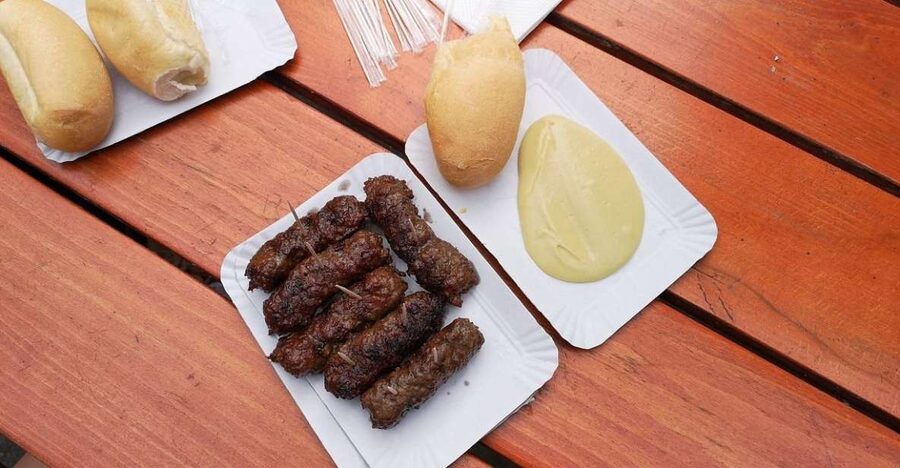
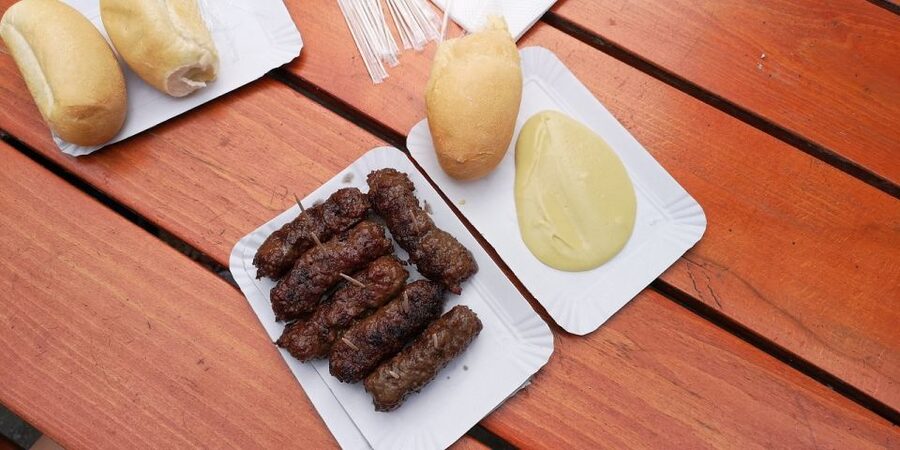
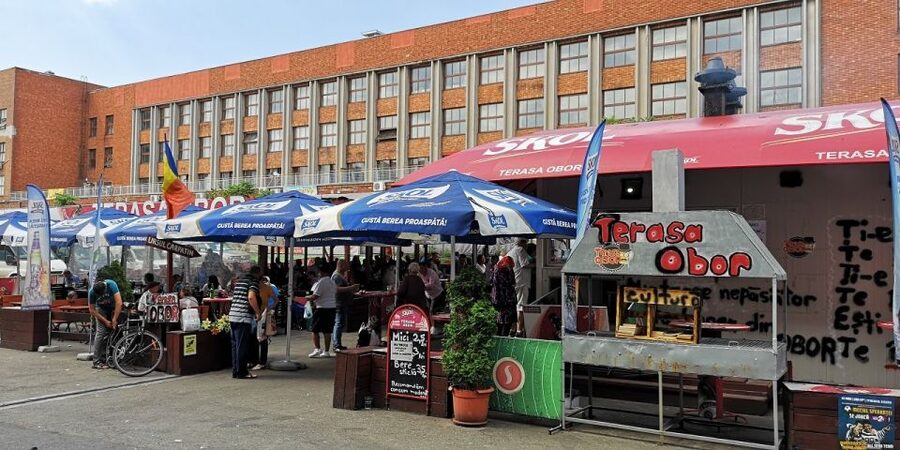
At a well-known market stall, you sample Romanian ground meat rolls, commonly known as mici, with a cool beer. This is the most substantial savory stop and likely the moment when the tour feels most like a proper meal.
Mici are a fitting market food: direct, casual, and best eaten fresh. The beer makes the stop feel social rather than formal. You are not sitting through a long restaurant service. You are eating in the middle of the market atmosphere, with the guide helping you order and explaining what is on the plate.
The portions and drinks deserve attention. The advertised experience includes the food and drinks named in the route, including beer, but one person reported receiving only one beer rather than one per participant. I would confirm the included amount with the guide at the start, especially if the drink is important to you.
The food itself has generally been described as tasty and fresh, but the tour does not offer a wide range of market samples. One useful criticism is that you may spend more time looking at produce than tasting it. If you expect small bites of cheese, cold meats, Romanian wine, and several market specialties, you may find the menu limited.
That does not make the stop poor. It means the tour is better understood as a city walk with selected food stops, not a four-hour grazing session.
Same city, a completely different sort of day:
- Bucharest: Dracula’s Castle, Peles Castle, & Brasov Old Town
★ 4.5 · 17,858 reviews - Bucharest: Dracula Castle, Peles Castle & Brasov Old Town
★ 4.6 · 10,891 reviews - Bucharest: Dracula’s Castle, Peleș Castle & Brașov Day Trip
★ 4.5 · 5,919 reviews - Bucharest: Palace of Parliament Tickets and Guide
★ 4.3 · 3,182 reviews
From University Square to Cismigiu Park
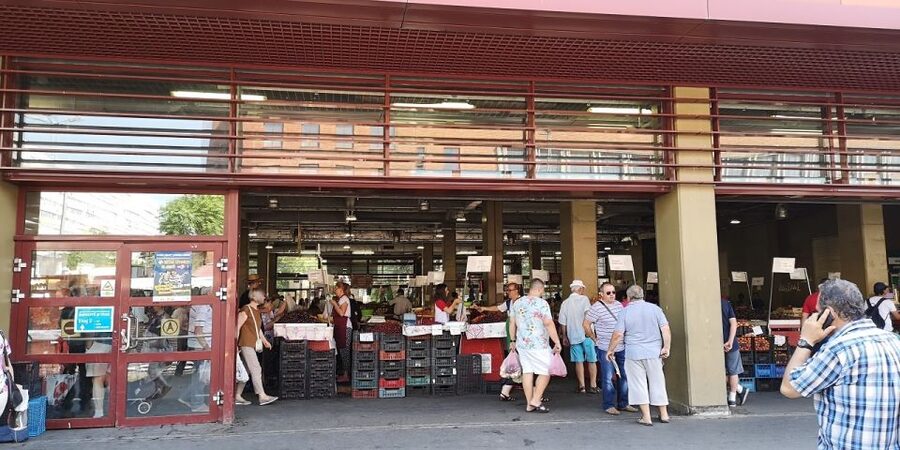
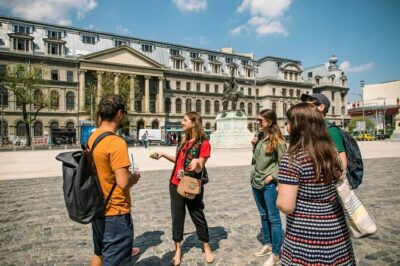
After Obor, you take the trolleybus to University Square. The route then continues on foot toward Cismigiu Park, with explanations of major landmarks along the way.
This section gives the tour a second purpose. You are no longer just learning what to eat. You are connecting Bucharest’s food culture with its streets, public spaces, and political past. University Square is one of the city’s important central points, and the walk toward Cismigiu lets you hear about landmarks in a useful geographic order.
The walking section also helps balance the market visit. Food is an easy way into a city, but you need some context to understand what you are seeing. A guide who explains the buildings and events as you move between them can help you get your bearings for the rest of your stay.
The quality here will depend on how much your guide talks while walking. One weaker experience involved too much waiting while the guide stood in line to order food, with not enough explanation of the history or dishes. That is a fair concern. You should expect time to wander at the market, but the guide should still keep the experience informative.
Wear comfortable shoes. The tour is four hours, includes city walking, and is not recommended for people with mobility impairments. Pets are not allowed.
Finishing with hot papanasi
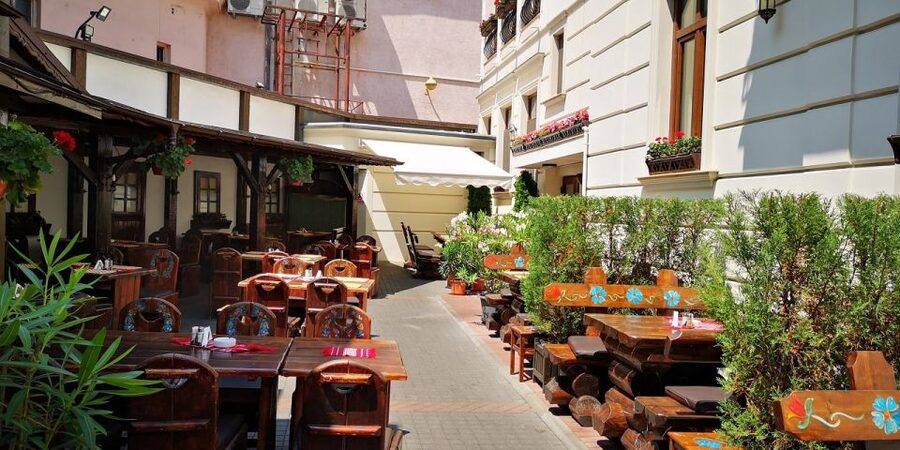
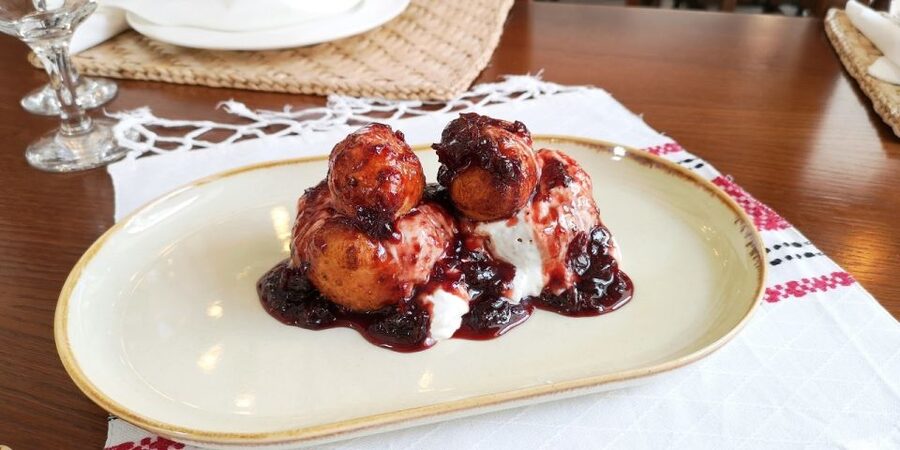
The final stop is a fine dining restaurant for papanasi, a Wallachian doughnut served hot with jam and cream. After the plain opening snack and the savory market food, this is a rich and satisfying finish.
Papanasi is not just a generic dessert. It is a Romanian specialty with a different character from the pretzel and mici earlier in the day. The hot dough, sweet jam, and cream give you a clear final taste to remember, and the restaurant setting creates a change of pace after the market.
This is also your chance to ask for food advice. You can use the final stop to ask your guide what else to eat, which neighborhoods to visit, and how to plan the rest of your time in Bucharest. Guides Laura and Riga have been praised for offering useful suggestions beyond the route, so come prepared with questions.
If you want a dessert-only food tour, this is not it. The tour is designed around a beginning snack, a market visit, a savory dish, public transport, city history, and a final dessert. Its strength is the combination.
What $74 gets you in Bucharest
At $74 per person, this tour is not the cheapest way to eat in Bucharest. You are paying for four hours with an English-speaking guide, the included food and drinks, bottled water, and tram and trolleybus tickets.
The value depends on how much you want guidance. If you visit Obor alone, you can spend less and still see the market. You may not know which stall to choose, what the unfamiliar foods are, or how to connect the market with the city’s Jewish, Armenian, and central neighborhoods.
I see the price as reasonable for someone who wants a first-day orientation and does not want to plan the route. It is less convincing for a serious food enthusiast who expects a broad menu. You do not receive Romanian wine, multiple cheese tastings, cold meats, or a long series of small plates as part of the listed experience.
You should also budget for personal purchases and any additional food or drinks. Those costs are not included. The tour works best when you value the guide’s time and local direction as much as the food itself.
The guides make the largest difference
The strongest praise has gone to the guides’ personal qualities. Laura has been described as charming, pleasant, passionate, and well informed about Bucharest’s food culture. Riga has been praised for patience, kindness, energy, and detailed city stories.
Those qualities matter here because the route has several moving parts. You need someone who can explain the opening snack, manage the market stop, handle public transport, place food orders, and make the historical walk feel connected.
The guide also needs to manage time well. You want enough freedom to look around Obor, but not so much unstructured waiting that the four hours lose momentum. If the guide explains the ingredients, customs, and history while you wait, the pause becomes useful. If not, it can feel like dead time.
At the beginning, ask what food and drinks are included for each person. Also ask how much time you will have at the market and what historical stops are planned after University Square. These are simple questions that can align your expectations before the route gets under way.
Who should book this food tour?
I would recommend it to a first-time Bucharest visitor who wants several things at once: a local market, Romanian food, public transport, neighborhood views, and a basic history lesson. It is especially useful early in your stay because the guide can point you toward other dishes and places to visit.
It also suits people who prefer ordinary city life to a polished tasting room. The pretzel and yogurt, tram ride, market stall, and mici offer a more everyday version of Bucharest. The final restaurant and papanasi add a comfortable finish.
I would hesitate if your main goal is maximum food variety. The itinerary names a small set of foods, and the most filling savory serving is concentrated in the mici stop. You may leave satisfied but not amazed by the number of dishes.
I would also skip it if you have limited mobility. The tour includes walking through a large market, transfers by tram and trolleybus, and a city walk. Comfortable shoes are essential, and the experience is not designed for people with mobility impairments.
Seasonal details and booking flexibility
The minimum group size changes during the year. From March through October, and from December 16 through January 6, at least four people are required. From January 7 through February 29 and from November 1 through December 15, at least two people are required.
If the minimum is not reached, you will be offered another date or a full refund. You can also cancel up to 24 hours before the tour for a full refund, and the reserve-now-pay-later option lets you hold a place without paying immediately.
Check the available starting time before booking. The tour lasts four hours, and the exact departure time is not fixed in the information provided.
Should you book it?
Book this tour if you want an easy introduction to Bucharest that combines food with neighborhoods, transit, and history. The Obor Market visit is the strongest reason to go, and the friendly guides, including Laura and Riga, can add real value through explanations and practical advice.
Do not book it expecting a full Romanian feast or a tightly packed list of tastings. The menu is focused, the route covers a lot of ground, and the price is easier to justify for the guidance than for the food alone.
For a first visit, I think it is a worthwhile choice if you enjoy seeing how a city eats in everyday settings. Go with comfortable shoes, keep room in your budget for market purchases, and confirm the beer and food inclusions at the start.
FAQ
How long does the Bucharest street food tour last?
The tour lasts four hours.
What language is the tour conducted in?
The tour is conducted in English with a live English-speaking guide.
Where does the tour meet?
The meeting point is the Lupa Capitolina Monument at 36 I.C. Bratianu Boulevard in Bucharest, Romania.
What food is included?
The included food consists of a Romanian pretzel and yogurt, traditional Romanian ground meat rolls at Obor Market, and papanasi, a Wallachian doughnut served with jam and cream.
Is beer included?
Beer is listed among the included food and drinks. The experience information does not specify the exact quantity per person, so confirm this with the guide at the start.
Are public transport tickets included?
Yes. Tram and trolleybus tickets are included.
Can I buy extra food at Obor Market?
Yes. You can purchase additional food, drinks, and personal items at Obor Market, but these purchases are not included in the tour price.
Is the tour suitable for people with limited mobility?
No. The tour is not recommended for people with mobility impairments and requires walking through the market and city.
Can I cancel the tour for a refund?
Yes. You can cancel up to 24 hours in advance for a full refund. If the minimum group size is not reached, you will be offered another date or a full refund.
Newest Bucharest trips we have written up
- Bucharest: Dealu Mare Winery Private Trip with Wine Tasting★ 4.9 · 6 reviews
- Winery touring & private wine tasting – one day private tour★ 5.0 · 3 reviews
- Traditions in Bucharest: Village Museum and Wine Tasting★ 5.0 · 8 reviews
- Your rendez-vous with Europe’s past: time-travel to Maramures, Transylvania★ 5.0 · 6 reviews
- Village Museum Bucharest Guided Tour★ 5.0 · 6 reviews
- Private Wine Tasting at Bucharest’s First Wine Bar★ 5.0 · 3 reviews
- Walking Tour of Bucharest City Center – Private Tour★ 5.0 · 4 reviews
- Wine tasting in Bucharest Old town – bonus cheese platter★ 4.5 · 6 reviews
Bucharest Food Tours, compared.
Discover Bucharest: Private Highlights and Traditional Food Tour
Read our review →

Premium 8-Day Private Culinary Vacation in Romania
Read our review →
Browse the lists this tour appears in