
Reviewed · MULTI-DAY ROMANIA TOURS FROM BUCHAREST
7 days Private Romania Grand Tour from Bucharest
Romania’s best sights are spread across a large sweep of mountains and old towns, and this private tour links them by road. In seven days, you move from the Olt Valley and Saxon Sibiu to the wooden churches of Maramures, the painted monasteries of Bucovina, Dracula country, and Bucharest.
I like the private minivan and local guide, which give you a more personal trip than a large coach tour. I also like the unusual mix of places: Salina Turda, Merry Cemetery, Bicaz Gorges, and the Moldavian monasteries are far more distinctive than a simple castle-hopping route. The main drawback is the pace. Several days involve long drives and short visits, and the published details conflict on whether the tour includes six nights or seven, and whether entrance fees are included, so confirm both before paying.
Key points to know before booking
- Seven days on the road: You cover much of Romania, from Bucharest to northern Maramures and Bucovina, then back through Transylvania.
- Private travel by air-conditioned minivan: Your group travels with its own driver-guide rather than joining a large departure.
- Excellent cultural variety: Medieval towns, Orthodox and Greek Catholic churches, folk craft, castles, salt mines, and mountain roads all feature.
- Guides named in the experience: George helps with tour planning and arrival guidance, while Liviu is identified as one of the guides who leads the route.
- Budget for admissions: Several major sights list entrance fees separately, despite other wording suggesting they may be included.
- Best for active sightseers: The trip suits you if you enjoy full days, frequent hotel changes, and seeing a lot of Romania in one booking.
What this Romania route does well
This is not a relaxed base-and-day-trips holiday. It is a point-to-point journey through several parts of Romania, with the private format making the long distances easier to manage. You sleep in different places as the route moves north and east, then return toward Bucharest through the best-known Transylvanian sights.
The route is especially good at showing Romania as more than Dracula castles. You get Saxon town squares in Sibiu and Sighisoara, Romanian Orthodox monasteries, Greek Catholic wooden churches, Hungarian cultural influence in Cluj-Napoca, mountain scenery, village customs, and modern Bucharest.
The private setup matters here. A local driver-guide can explain the different communities and religious traditions as you move between regions. George is connected with the tour operation and helped one booking party understand the travel rules before arrival. Liviu is named as a guide on the road, particularly praised for handling the mountain routes, monasteries, and castle stops.
Still, this is an ambitious schedule. Some visits last only 30 minutes, and the arrival in Sighisoara on Day 5 is late, followed by a fuller visit the next morning. If you want long museum visits, slow meals, or free afternoons, this route will feel rushed.
More multi-day Romania trips starting in Bucharest:
- 2-Day Medieval Transylvania with Brasov,Sibiu and Sighisoara Tour from Bucharest
★ 4.5 · 145 reviews - 2-Day Transylvania from Bucharest: Brasov, Bran, Sighisoara
★ 5.0 · 60 reviews - 4-Day Private Tour in Transylvania from Bucharest
★ 5.0 · 48 reviews
Day 1: Cozia Monastery and Sibiu’s three squares
Your first morning begins at 9:00 a.m. with the drive toward the Olt Valley and Cozia Monastery. Founded in the fourteenth century by Mircea the Old, the monastery is a fine introduction to Wallachian religious architecture. Look for the Armenian decorative work on the exterior and the painted interior.
The stop is listed at 30 minutes, so treat it as an orientation rather than a detailed study. You will have enough time to see the main features, but not to linger.
Sibiu receives about three hours and deserves the time. Its Big Square, Small Square, and Huet Square create a compact medieval center that is easy to explore on foot. The city’s Saxon, Romanian, Catholic, Orthodox, and Protestant past can be read in its churches and streets.
Keep an eye on the famous houses with eye-shaped roof windows. The Evangelical Church, with its tall Gothic form, is another major sight. Sibiu was European Capital of Culture in 2007 and is known for its annual theater festival, though this tour does not specify time for a performance.
I like this opening because it gives you a manageable first day. The caution is that the driving and later hotel arrival may leave little energy for anything beyond the central squares.
Day 2: Alba Iulia, the Turda salt mine, and Cluj-Napoca
Alba Iulia is a short historical stop, lasting about an hour. The city is tied to the creation of Greater Romania on December 1, 1918, soon after the First World War. Your time here is enough for a brief look at the setting and its national importance, but not a full city visit.
The main event is Salina Turda, where you descend about 400 feet into a former salt mine. This is one of the tour’s most unusual stops. Underground, you will find an amphitheater, bowling alley, lake with paddle and row boats, and a Ferris wheel.
The salt mine is not simply a historic excavation. It has been turned into a large underground attraction, so it works well for families and for anyone who wants something different from churches and castles. Allow for the fact that the experience is underground and can feel very different from the outdoor portions of the trip.
Admission to Salina Turda is listed as not included. The same applies to several later sights, so set aside extra money for tickets.
Cluj-Napoca follows with about an hour. The city’s St. Michael’s Church and the statue of King Matthias Corvinus are the main points mentioned. Cluj is also a university center where lectures are held in several languages, and its Hungarian influence adds another layer to the route.
An hour is brief for a city of this size. Think of Cluj as a useful snapshot rather than a proper city tour.
Day 3: Wooden churches and village life in Maramures
Day 3 turns north toward Maramures, one of the most distinctive parts of the trip. At Surdesti, you visit a UNESCO-listed wooden church built in 1721 from oak logs. Its tower reaches 54 meters, and the church has a double-eaved roof, unusual in the region.
The church is Greek Catholic, which helps show the religious variety of northern Romania. The two rows of arches above the porch are another detail worth looking for. The stop lasts about an hour, with admission listed separately.
Barsana Monastery offers a different style of wooden architecture. Its tall Orthodox church spires fit the local tradition, while the present monastery complex is a convent associated with sixteen nuns. You receive another hour here.
The day then moves from formal religious buildings to practical village craft at Vadu Izei. A valtoare is a wooden whirlpool mechanism powered by a fast stream. Water is guided through a wooden channel into a wooden bowl, where it can be used to wash laundry and wool.
This is the kind of small, local sight that gives the tour character. It is not a grand monument, but it shows how people used mountain water before modern machines. The visit lasts an hour and has no admission charge listed.
Because the day focuses on Maramures villages and religious buildings, you should expect a quieter pace in spirit, even if the schedule remains full. Dress respectfully for churches and expect some stops to involve walking outdoors.
A few more Bucharest trips worth putting side by side
- 4×4 Driving Experience at Flying Altitudes – 7 Days
★ 5.0 · 13 reviews - 7-Day Private Tour of Transylvania from Bucharest
★ 5.0 · 13 reviews - Transylvanian week
★ 5.0 · 7 reviews - Amazing Romania – Seven day private tour from Bucharest
★ 5.0 · 7 reviews
Day 4: Merry Cemetery and Bucovina’s painted monasteries
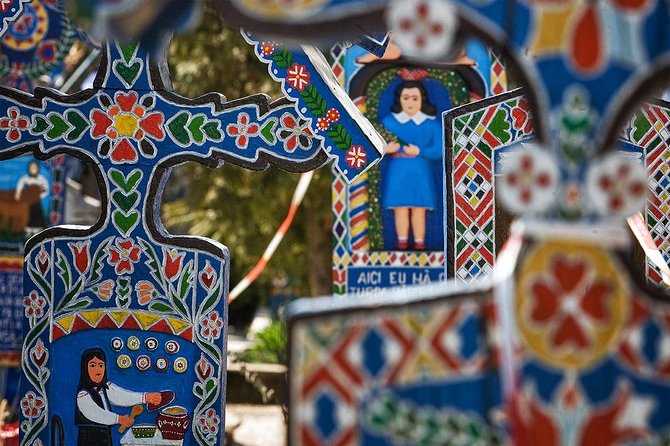
At Sapanta, Merry Cemetery presents death in a strikingly direct way. More than 800 brightly painted wooden crosses describe the lives and deaths of local people through pictures and short verses. The humor is unusual, but the cemetery is also a record of village life and personal memory.
You have about an hour here. Admission is listed separately.
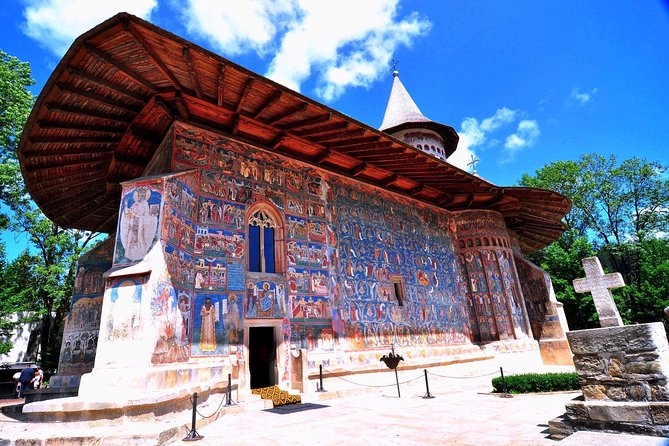
The route then crosses toward Bucovina and the Moldovita Monastery, founded by Petru Rares in the sixteenth century. Its painted exterior and interior show the regional style that blends Byzantine and Gothic elements.
Sucevita Monastery continues the theme. Its frescoes remain visible on the northern wall because protective walls were preserved around the church. That detail matters: the art is not just decoration, but part of a long effort to protect these religious buildings.
Marginea adds a short craft stop. Local artisans make black ceramic, and you can watch the working process in a workshop. Painted eggs and other Bucovinan objects are also available to buy.
The final listed stop is Voronet Monastery, one of the best-known painted monasteries in Romania. The supplied schedule contains an error here, describing a valtoare instead of giving a proper account of Voronet, so ask the operator to confirm exactly what you will see and how much time is planned.
This is one of the strongest days for cultural content, but it is also a long one. Four religious and craft stops require attention to opening hours and admission charges, and the route covers a lot of ground.
Day 5: Bicaz Gorges, Red Lake, and Sighisoara
Piatra Neamt receives only 30 minutes. You may see the setting around the old citadel and hear about the fifteenth-century connection with Stephen the Great. The city also has an eighteenth-century synagogue and sits among wooded mountain slopes.
The route then reaches Bicaz Gorges. The road passes between high cliffs beside a stream, making this a memorable driving section. There is also a roadside market selling local handicrafts and souvenirs.
Red Lake was formed when part of a mountain slid and created a natural barrier. Tree trunks still rise from the water, giving the place an unusual appearance. The visit lasts about an hour, with local legends tied to the lake’s name.
This is a scenic day, but the timing is tight. Piatra Neamt and the gorges are short stops, and the late arrival in Sighisoara means you should not count on a full evening there.
Day 6: Sighisoara, Bran Castle, and Brasov
Sighisoara deserves more than the brief arrival stop on Day 5. The next morning gives you about two hours in its UNESCO-listed historic center, with colorful houses, fortified streets, the Clock Tower, and churches tied to different communities.
The town is also associated with Vlad Dracula, who was born here in 1431. That connection adds a useful historical layer to the Dracula theme, but Sighisoara is worth seeing for its medieval town plan and fortified character even if you have little interest in vampire stories.
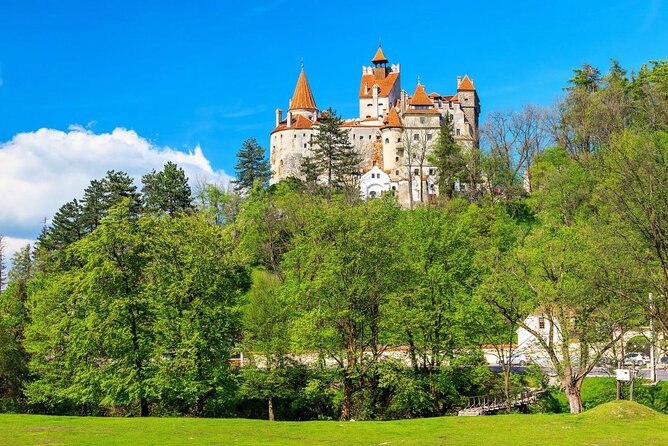
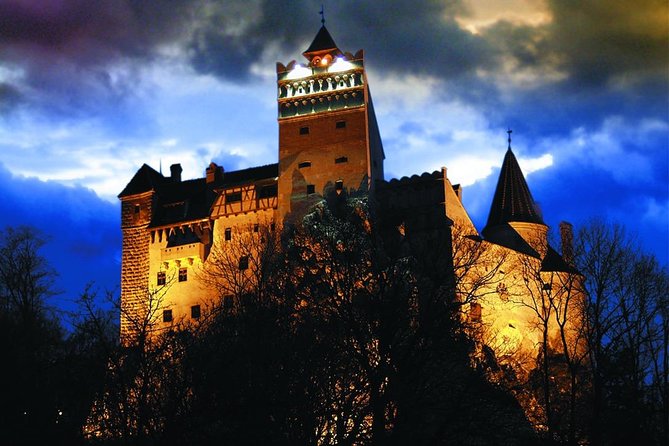
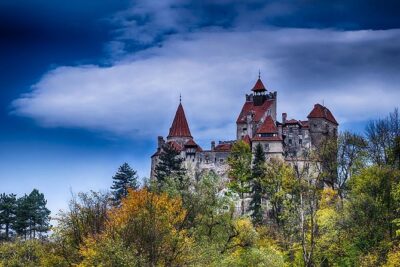
Bran Castle receives two hours. It is widely marketed as Dracula’s Castle, though the description here presents it first as a medieval defensive stronghold near the former border between Wallachia and Transylvania. That distinction is useful. You can enjoy the legends while also looking at the castle’s military purpose and position.
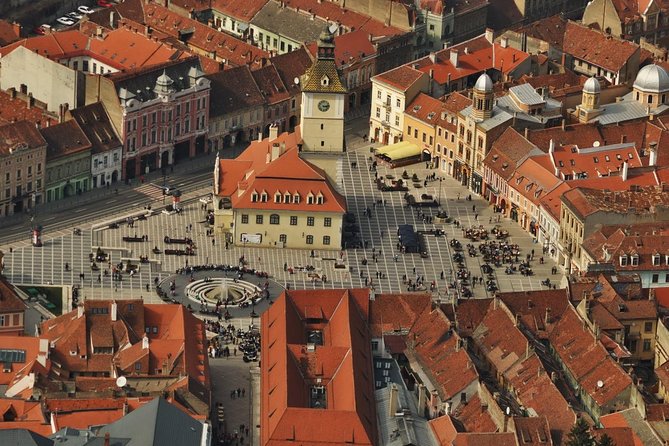
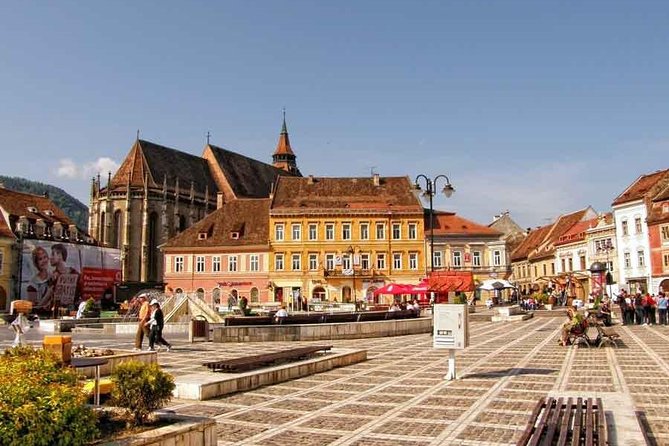
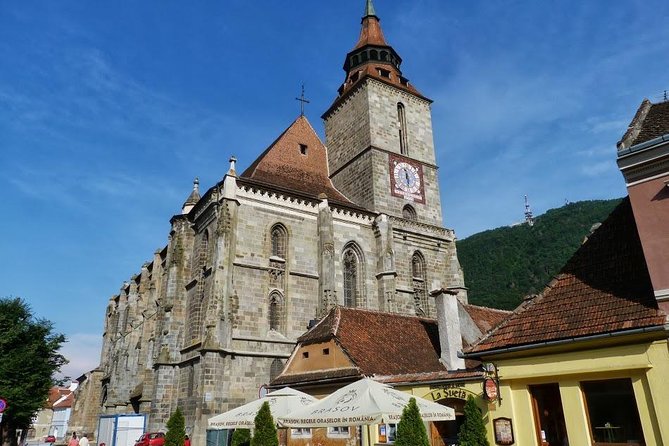
Brasov gets about three hours. Its center combines Gothic, Baroque, Renaissance, and German-influenced architecture. The itinerary includes the Black Church and the First Romanian School in the Schei district, once the Romanian quarter outside the old fortified center.
You will also hear about the old Catherine’s Gate and Schei Gate. This is a strong final Transylvania day, but entrance fees are listed as extra for Sighisoara, Bran Castle, and Brasov sights. Confirm which buildings are actually included in your visit.
Day 7: Peles Castle and a Bucharest finish
Peles Castle is the final major sight. Built as the summer residence of King Carol I of Hohenzollern, the castle was designed by a Czech architect and constructed between the nineteenth and twentieth centuries.
The interiors are the main reason to visit. Each room uses a different style, and the Florentine room has a Renaissance feel. Two hours gives you enough time for a proper visit if the castle is operating normally, though admission is listed separately.
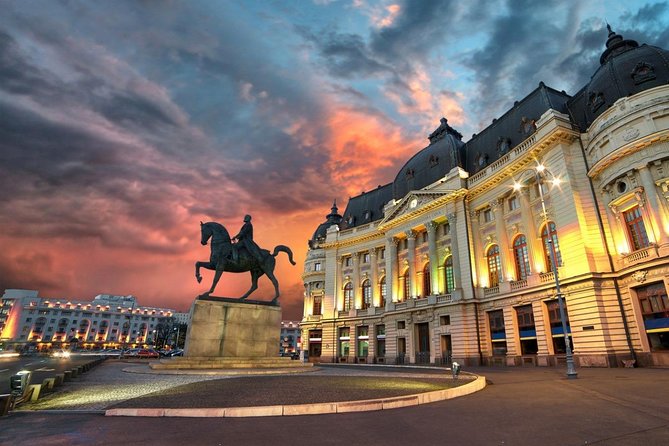
The return to Bucharest ends with a 30-minute panoramic tour. You pass the Triumph Arch, Romanian Athenaeum, Revolution Square, and Parliament Palace. This is a useful introduction to the capital, but it is not a full Bucharest sightseeing day.
If Bucharest matters greatly to you, add extra nights before or after the tour. The package brings you back to the city, but the listed final visit is brief.
What the $1,719.59 price includes
At $1,719.59 per person, this is not a budget road trip. The value comes from having a private vehicle, driver-guide, hotel pickup and drop-off, private touring, six breakfasts, and six nights of accommodation listed as included.
That can be fair for a route covering so much of Romania. You are paying to avoid arranging several long-distance transfers, finding hotels in multiple regions, and coordinating remote monasteries and mountain stops.
But check the final cost carefully. The tour information conflicts in several places. The overview refers to seven nights and calls the experience eight days, while the itinerary has seven days and the included section lists six nights. It also says entrance fees are included in one place, while the detailed inclusions say they are not, and several stops clearly list admission as extra.
A single-room supplement of 150 euros is payable locally by cash or card. Tips for the guide and driver are also excluded.
Who should book this private tour?
I would choose this route if you want to see a large part of Romania in one trip and prefer a private vehicle to public transport. It is especially suited to couples, families, friends, and older travelers who value door-to-door transport and the ability to ask a guide questions along the way.
The trip also works well for first-time visitors who want the major Transylvanian names plus less familiar places such as Maramures, Bucovina, and Salina Turda. The strong points are the range of experiences and the local guides, especially if your departure is led by someone such as Liviu.
I would hesitate if you dislike long drives, frequent hotel changes, or short visits. I would also not book until Trip2Ro confirms the number of nights, total entrance costs, and the exact Voronet schedule in writing.
Should you book it?
Book this private Romania tour if your priority is coverage. In one week, you see painted monasteries, wooden churches, salt mines, mountain roads, fortified towns, Bran Castle, Peles Castle, and Bucharest.
Skip it if you want a slow holiday. The route is ambitious, and some stops are compressed. For an active first visit to Romania, though, the mix is unusually strong, and the private format makes a demanding itinerary much easier to handle.
FAQ
How long is the tour?
The itinerary runs for seven days, beginning and ending in Bucharest. The overview also refers to an eight-day tour and seven nights, while the included section lists six nights, so confirm the exact schedule before booking.
What time does the tour start?
The listed start time is 9:00 a.m.
Is hotel pickup and drop-off included?
Yes. Hotel pickup and drop-off in Bucharest are included.
Is this a private tour?
Yes. Only your group participates, and transportation is provided by private vehicle.
What meals are included?
Six breakfasts are listed as included.
Are entrance fees included?
The detailed inclusions say entrance fees are not included, and several stops list admission separately. However, other wording says entrance fees are included, so you should confirm the current policy and expected ticket costs before booking.
Is a single room available?
Yes. A single-room supplement of 150 euros is payable locally by cash or card.
What happens if bad weather cancels the tour?
If poor weather causes cancellation, you are offered a different date or a full refund.
Newest Bucharest trips we have written up
- Bucharest: Dealu Mare Winery Private Trip with Wine Tasting★ 4.9 · 6 reviews
- Winery touring & private wine tasting – one day private tour★ 5.0 · 3 reviews
- Traditions in Bucharest: Village Museum and Wine Tasting★ 5.0 · 8 reviews
- Your rendez-vous with Europe’s past: time-travel to Maramures, Transylvania★ 5.0 · 6 reviews
- Village Museum Bucharest Guided Tour★ 5.0 · 6 reviews
- Private Wine Tasting at Bucharest’s First Wine Bar★ 5.0 · 3 reviews
- Walking Tour of Bucharest City Center – Private Tour★ 5.0 · 4 reviews
- Wine tasting in Bucharest Old town – bonus cheese platter★ 4.5 · 6 reviews
Multi-Day Romania Tours from Bucharest, compared.
2-Day Medieval Transylvania with Brasov,Sibiu and Sighisoara Tour from Bucharest
Read our review →
2-Day Transylvania from Bucharest: Brasov, Bran, Sighisoara
Read our review →
4-Day Private Tour in Transylvania from Bucharest
Read our review →
Transylvania Castles 4-day tour from Bucharest
Read our review →
2-Day Private Tour of Transylvania from Bucharest
Read our review →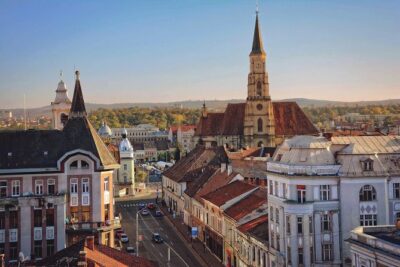
Classic Romania Tour – small group in 8 days: Transylvania and Maramures
Read our review →
2 Days Private Tour in Transylvania from Bucharest – 4 Medieval Cities
Read our review →Browse the lists this tour appears in