
Reviewed · BUCHAREST DARK HISTORY AND GHOST TOURS
Bucharest: 3-Hour Dark History Tour with a Local
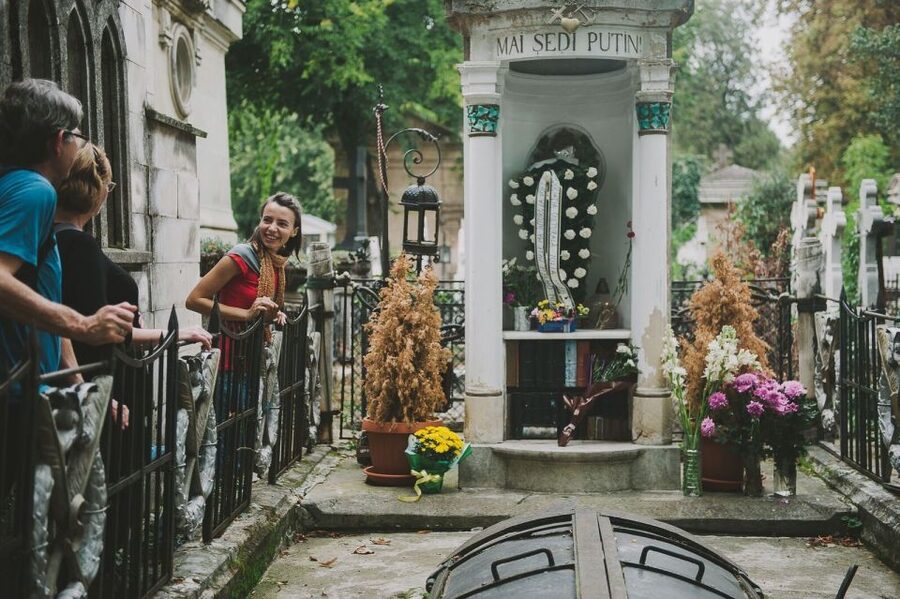
Bucharest’s darkest stories are not locked away in a museum. They unfold in old cemeteries, beside bullet-marked buildings, and around squares where Romania’s modern history turned violent. This three-hour tour connects those places with stories about the 1989 Revolution, communist prisons, interwar sex work, and a 1970s serial killer.
I like the Bellu Cemetery visit, where elaborate tombs and sad, strange stories give the past a human face. I also like the local touch: guides such as Alex, Elena, Andra, Irina, and Vlad explain Romania through personal experience, folklore, architecture, and small details that are easy to miss alone.
The main consideration is physical and emotional. You will walk a lot, spend time outdoors, and hear about torture, murder, political repression, and death. Winter visitors should bundle up, while anyone seeking a light sightseeing stroll may find the subject matter heavy.
Key points to know before you book
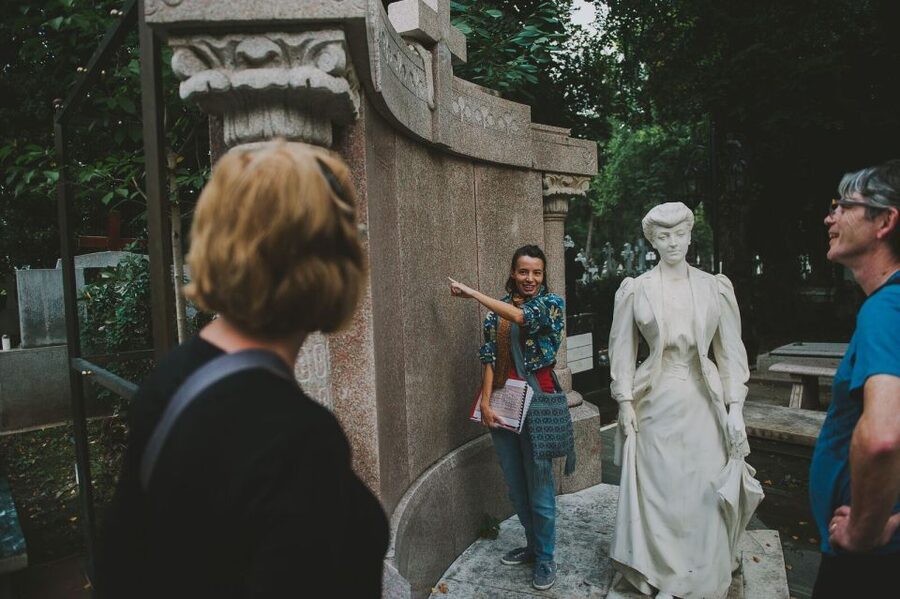
- Bellu Cemetery is the tour’s visual centerpiece: Expect ornate funerary art, family stories, folklore, and unusual tales among the graves.
- The tour covers several periods: You move from interwar Bucharest and its sex trade to the 1970s serial killer case, then to communist repression and the 1989 Revolution.
- It is more than a ghost walk: The focus is political and social history, with spooky stories used as part of a wider picture of Romanian life.
- You use the Bucharest Metro: Metro tickets are included, making it easier to connect the cemetery area with central sites.
- The group is kept small: A maximum of 12 people allows room for questions and conversation with the guide.
- Plan for weather and walking: Comfortable shoes are essential, and warm clothing matters in the colder months.
Why Bucharest’s dark side makes a good introduction
Bucharest can be difficult to read at first. Grand nineteenth-century buildings, communist blocks, memorials, neglected corners, and lively streets sit close together, but their connections are not always obvious. This tour gives you a way to read the city through conflict, loss, fear, and survival.
The subject is not dark merely for shock value. The tour uses grim stories to explain how Bucharest changed under kings, during the interwar period, under Nicolae Ceaușescu, and after the 1989 Revolution. You hear about ordinary people as well as famous figures, including the pressures of finding food, work, safety, and a way through an authoritarian system.
I especially like this approach for a first visit. A standard city tour may tell you what a building is, but this experience asks what happened there, who suffered, and why the place still matters. Guides also bring in architecture, local beliefs, street art, plants, and personal memories, so the city feels less like a collection of monuments.
The tone depends partly on your guide. Alex has been praised for combining facts, photographs, personal anecdotes, and close attention to details such as bullet holes. Elena is warm and conversational, while Andra is known for clear explanations and humor. Vlad has a relaxed style and often asks about your interests before shaping the discussion. Other guides include Irina, Bogi, Anita, Helena, and Anda.
More dark history and ghost walks in Bucharest:
- Bucharest Ghosts Stories and Mythology
★ 5.0 · 292 reviews - Bucharest: Ghost Stories & Romanian Mythology Walking Tour
★ 4.9 · 287 reviews - Darkside Tour of Bucharest – small group
★ 5.0 · 139 reviews
Six cemeteries on one Bucharest street
The tour begins near the city center, at the main entrance of the Ion Luca Caragiale National Theatre on Bulevardul Nicolae Bălcescu 2. From there, you head toward a street lined with no fewer than six cemeteries.
That concentration is striking. Within a relatively small area, you encounter places tied to different religious, national, and political communities. The Cemetery of the Victims of the 1989 Revolution recalls the bloodshed that ended communist rule. The Jewish Cemetery and the Cemetery of the Russian Soldiers add other layers to Bucharest’s past. The old Bellu Cemetery is the main stop.
This opening section helps you understand that Bucharest’s history is not tidy. Different communities, wars, governments, and tragedies share the same urban space. You do not simply pass a cemetery and move on. The guide explains why each site is there and how death, memory, and public space have been handled over time.
Because much of the explanation takes place outside, the weather matters. In cold weather, you may be standing still while listening, which feels chillier than walking. A warm coat, hat, and gloves are sensible in winter. In every season, comfortable shoes will make the afternoon easier.
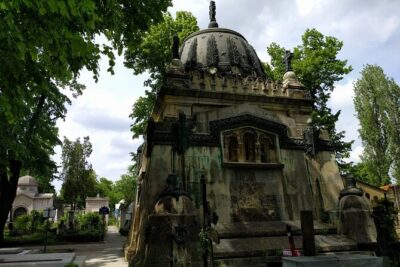
Bellu Cemetery, where tombs become storybooks
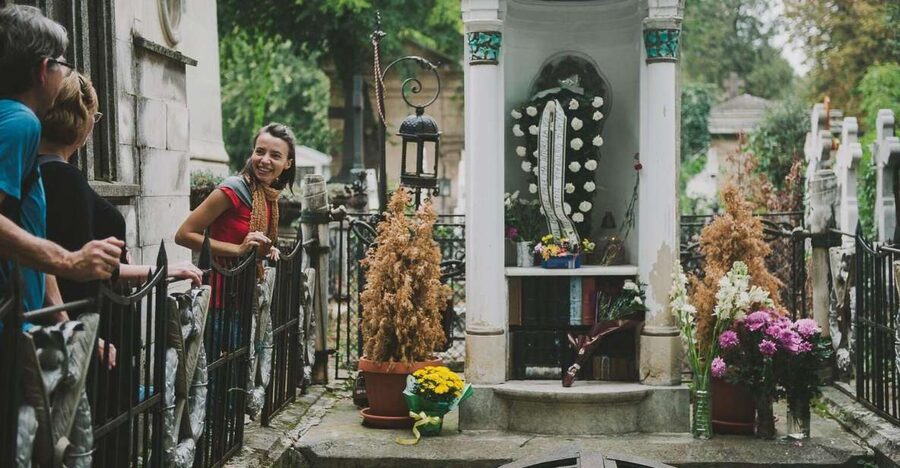
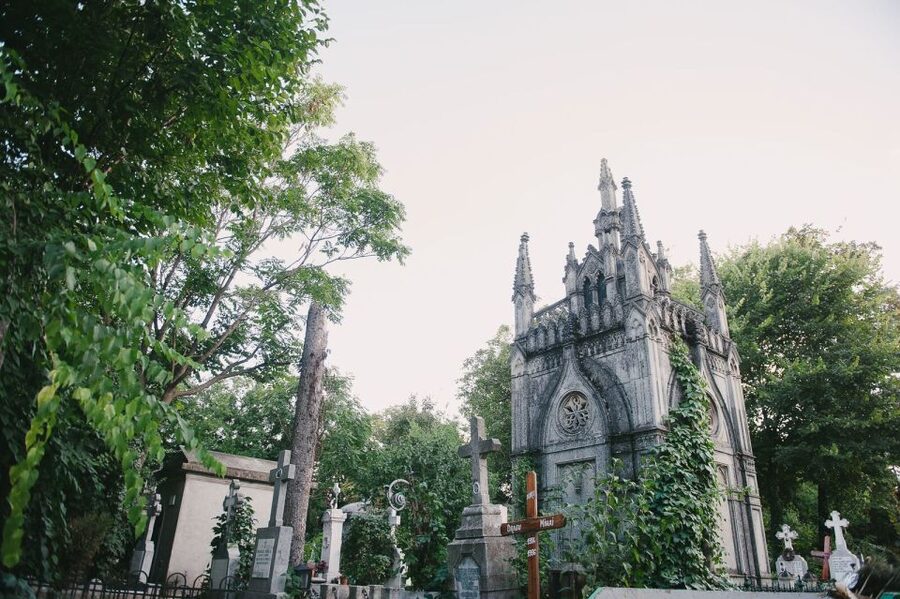
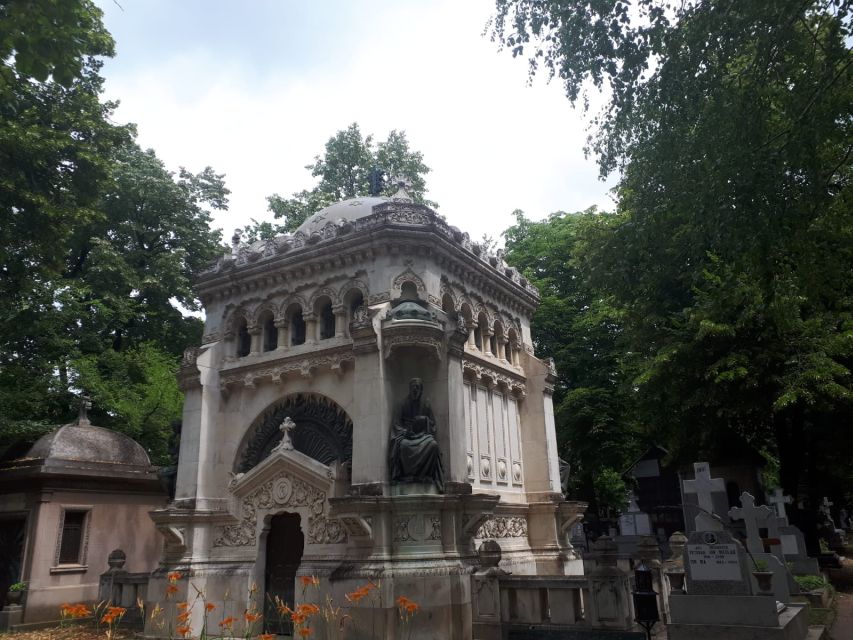
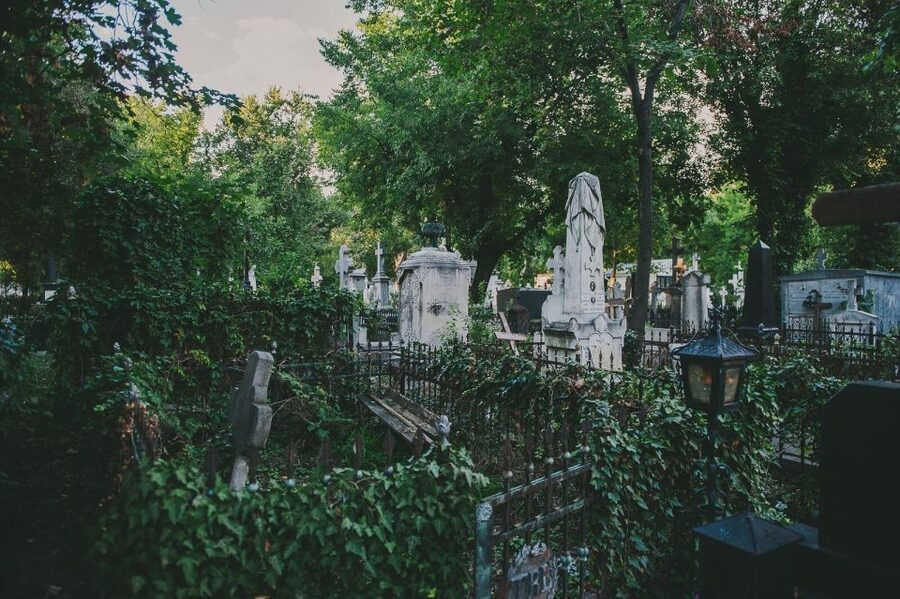
Bellu Cemetery is a national historical monument and the emotional center of the tour. It is also one of the places that can be hard to appreciate without guidance. You can admire statues and crypts on your own, but the guide supplies the stories that give them meaning.
Expect funerary architecture, sculpted memorials, and a mixture of famous names and lesser-known lives. The stories range from tragic love to sinister mysteries. Some are connected to Romanian folklore and local ideas about death. Others show how families used monuments to display grief, status, affection, or artistic taste.
This is not a polished attraction in the usual tourist sense. Its appeal comes from the combination of beauty, age, silence, and human drama. You might find yourself studying a carved figure one moment and listening to a story about a family tragedy the next.
Several guides also care for the animals living around the cemetery. Elena has been especially attentive to the cats and dogs found there, and part of the experience can include feeding or petting these unofficial cemetery residents. That detail is not the reason to book the tour, but it adds warmth to a place otherwise associated with death.
The cemetery section is also where a small group helps most. With no more than 12 people, you can ask about a monument, Romanian funeral customs, or a story that catches your attention. If your group is unusually small, the guide may have time to expand the route or discuss your interests in greater detail, although the advertised duration remains three hours.
From Little Paris to the Vampire of Bucharest
The tour then shifts from old tombs to the social world of interwar Bucharest. During this period, Bucharest was often called Little Paris because of its French influence, elegant ambitions, cafés, architecture, and sophisticated public life. The tour adds a less polished part of that picture: the city’s sex trade.
You will hear about famous prostitutes in interwar Bucharest and see what remains of a former brothel. The point is not simply scandal. Sex work reveals how class, gender, money, nightlife, and social reputation worked in the city. It also helps correct the postcard version of Little Paris. Sophistication and exploitation existed side by side.
This portion suits visitors who prefer social history to a list of dates. You learn about people who rarely receive much attention in conventional city tours, including women whose lives were shaped by limited choices and public judgment.
The tour also tells the story of a serial killer nicknamed the Vampire of Bucharest, who terrorized the city in the early 1970s. This is one of the more sensational stops, but it fits the broader theme of fear in urban life. The story gives you a look at Bucharest during the communist period, when crime, public information, and official control existed in a very different setting from today.
If you are expecting a full true-crime investigation, keep your expectations measured. The serial killer story is one part of a wider route, not the entire focus. The tour moves quickly between architecture, folklore, social history, crime, and politics.
More history-led tours in Bucharest:
- Bucharest: Small Group History, Art & Secrets Tour
★ 4.7 · 152 reviews - Guided Walking Tour of Historical Bucharest
★ 5.0 · 84 reviews - Bucharest Jewish Heritage | Holocaust Memorial | Private Car Tour
★ 5.0 · 38 reviews - Private Bucharest: History & Food with Traditional Meal
★ 5.0 · 34 reviews
University Square and the blood of 1989
University Square is one of Bucharest’s most important public spaces. It played a major role during the 1989 Revolution and later during anti-communist student protests in the 1990s. The tour uses the square to explain how public space can become a stage for protest, confrontation, and state violence.
This section gives you useful context for the final stop at Revolution Square. Romania’s 1989 uprising was not a clean, simple change of government. People died, information was confused, and the old system did not disappear overnight. The guide helps you follow those events through specific places rather than treating the Revolution as a distant textbook chapter.
A strong guide can make this part especially meaningful. Vlad has shared personal insights about life under communism, while other guides bring their own family or local perspective. You may also hear about how people managed daily shortages, fear, surveillance, and uncertainty.
The setting is central and accessible, but it is not a quiet museum. Traffic, pedestrians, and city noise continue around you. That can make the experience feel more real, though it may occasionally make conversation harder. Stay close to the guide and ask for clarification if a detail is lost.
Revolution Square and the machinery of communist fear
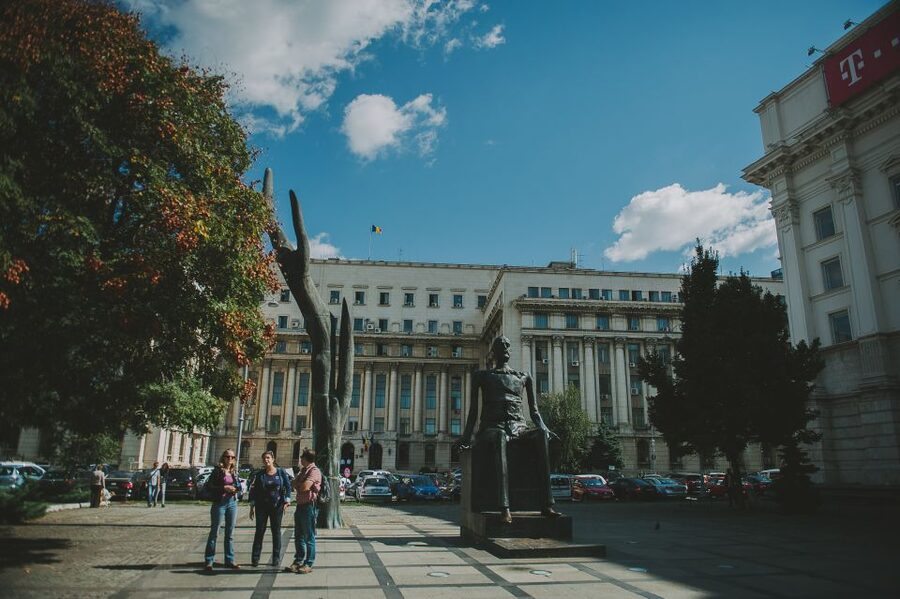
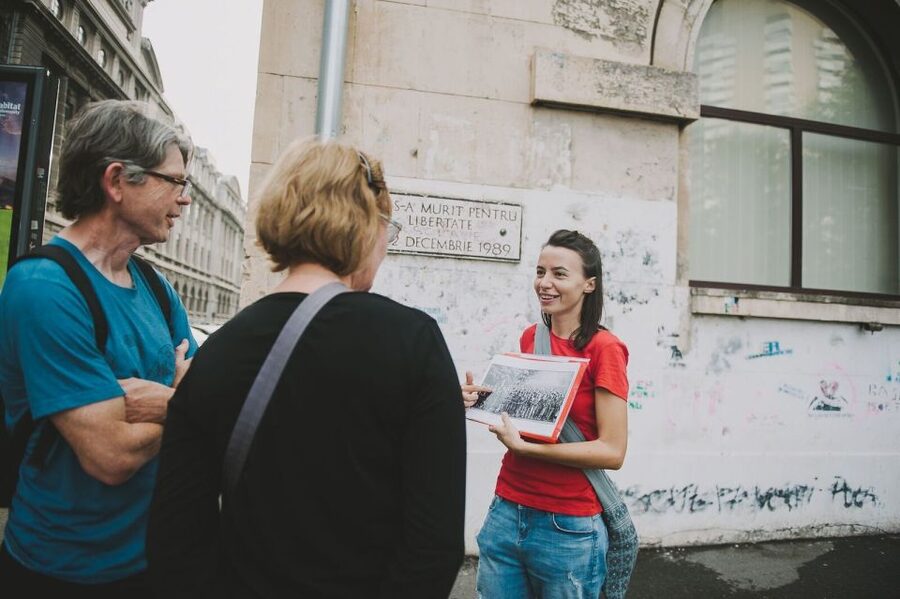
The last major section is Revolution Square, where the 1989 Revolution began in Bucharest. Here the focus turns firmly to Ceaușescu’s dictatorship, the Securitate, political prisons, labor camps, and methods of torture used to silence critics.
This is where the tour’s separate threads come together. The cemetery shows how Bucharest remembers the dead. University Square shows how people challenged power in public. Revolution Square brings you to the system that created fear and the uprising that finally broke it.
The Securitate is described as Romania’s own KGB, though the comparison should be understood as a shorthand for a powerful secret police system, not as a complete explanation. The guide covers surveillance and intimidation, but also the ordinary hardships of communist life. That balance matters. Political repression was severe, yet people also had to manage practical problems every day, from shortages to restricted choices.
I appreciate that the tour does not treat communism as a costume drama. The best guides connect national events to lived experience. You may discuss how people navigated work, family, food, information, and fear. Personal memories, photographs, and small physical traces such as bullet holes can make the period easier to grasp.
The subject is serious, and the guide’s personality affects the mood. Alex, Elena, Andra, Irina, and Vlad have all been described as engaging and able to explain difficult ideas in a clear way. Humor appears, but it does not erase the suffering being discussed.
Walking, metro rides, and the pace of three hours
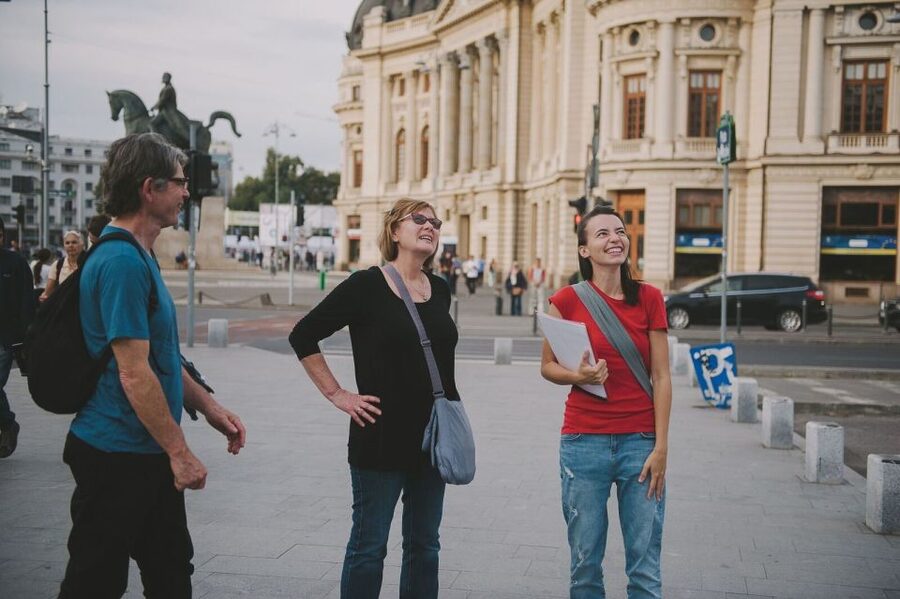
The tour lasts three hours and includes two Bucharest Metro rides. Metro tickets are included, so you do not need to work out separate fares during the experience. The public transport also helps connect locations that would make the route too long on foot.
Do not mistake the metro rides for a sit-down tour. You will still walk a substantial amount, especially around Bellu Cemetery and the central squares. One guide may stop regularly to check that everyone is comfortable, but you should come prepared for an active afternoon.
The meeting point at the National Theatre is easy to identify, and the tour ends in the city center around the Revolution Square area. The exact pacing can vary with group size, questions, and the guide’s style. Private or very small groups may receive extra explanation or additional nearby stops, but you should not count on an extended tour.
A traditional Romanian street snack is included. Depending on the guide, you may also receive water or a small Romanian chocolate bar. Additional food and drinks are not included, so bring money if you want to eat beyond the provided snack.
Is $55 a fair price?
At $55 per person, this is not the cheapest way to spend three hours in Bucharest. You are paying for a specialist route, an English-speaking local guide, metro tickets, a snack, and access to stories that are difficult to assemble on your own.
The value depends on how you normally travel. If you enjoy wandering alone and reading historical material before a trip, you could visit some central sites independently for less. Bellu Cemetery and the Revolution locations are more rewarding, however, when someone explains the people and events connected to them.
The small maximum group size also matters. Twelve people is not a private tour, but it is far more manageable than a large coach group. You can ask questions, hear personal explanations, and stay connected to the guide while moving through busy streets.
Free cancellation up to 24 hours before the start gives you some flexibility, and the reserve-now, pay-later option may help if your Bucharest plans are still shifting. Travelers under 16 cannot join, so this is designed for adults and older teens only.
Who will get the most from this tour?
I would choose this experience if you want Bucharest explained through difficult subjects rather than only grand buildings and royal stories. It suits people interested in communism, the 1989 Revolution, folklore, old cemeteries, crime stories, architecture, and everyday Romanian life.
It is also a good early-trip activity. The guides often offer restaurant, café, food, and further sightseeing suggestions, and the route gives you a better sense of how the city fits together. You may leave with places to revisit on your own.
I would hesitate if you dislike cemeteries, stories of murder, or discussions of torture and political violence. The tour is not designed for children, and the subject can feel intense even when the guide uses humor.
Bring comfortable shoes and dress for the forecast. In winter, wrap up warmly. The route is most enjoyable when you can listen instead of worrying about cold feet, sore legs, or wet clothes.
Should you book it?
Book this tour if you want the human stories behind Bucharest’s darkest places. Bellu Cemetery is the strongest visual stop, while University Square and Revolution Square provide the clearest political context. The interwar brothel story and the Vampire of Bucharest add unusual social and crime history that standard sightseeing routes often skip.
I would not book it as a substitute for every major Bucharest attraction. It is a focused history walk, not a general city overview. But if you have already seen the usual center, or you want a more serious introduction to Romania, $55 is a fair price for three hours with a local guide who can connect monuments, memory, dictatorship, and daily life.
FAQ
Where does the Bucharest Dark History Tour begin?
It begins at the main entrance of the Ion Luca Caragiale National Theatre, at Bulevardul Nicolae Bălcescu 2, Bucharest.
How long does the tour last?
The tour lasts three hours.
What language is the tour offered in?
The live tour is conducted in English.
What places are included?
The route includes a street with several cemeteries, Bellu Cemetery, University Square, a former interwar brothel area, and Revolution Square.
Is Bellu Cemetery part of the tour?
Yes. Bellu Cemetery is a central stop and includes funerary architecture, stories, mysteries, and local beliefs about death.
Are metro tickets included?
Yes. Metro tickets for the rides used during the tour are included in the price.
Is food included?
A traditional street snack is included. Additional food and drinks are not included.
Can children join the tour?
No. Travelers under 16 are not permitted to join, and the tour is not suitable for children under 16.
Newest Bucharest trips we have written up
- Bucharest: Dealu Mare Winery Private Trip with Wine Tasting★ 4.9 · 6 reviews
- Winery touring & private wine tasting – one day private tour★ 5.0 · 3 reviews
- Traditions in Bucharest: Village Museum and Wine Tasting★ 5.0 · 8 reviews
- Your rendez-vous with Europe’s past: time-travel to Maramures, Transylvania★ 5.0 · 6 reviews
- Village Museum Bucharest Guided Tour★ 5.0 · 6 reviews
- Private Wine Tasting at Bucharest’s First Wine Bar★ 5.0 · 3 reviews
- Walking Tour of Bucharest City Center – Private Tour★ 5.0 · 4 reviews
- Wine tasting in Bucharest Old town – bonus cheese platter★ 4.5 · 6 reviews
Bucharest Dark History and Ghost Tours, compared.


Ghost Stories & Romanian Mythology Walking Tour
Read our review →
Abandoned and haunted military base – the ghosts tour
Read our review →Browse the lists this tour appears in