
Reviewed · BUCHAREST COMMUNISM AND CEAUSESCU TOURS
Bucharest Communism: From Lenin to Ceausescu
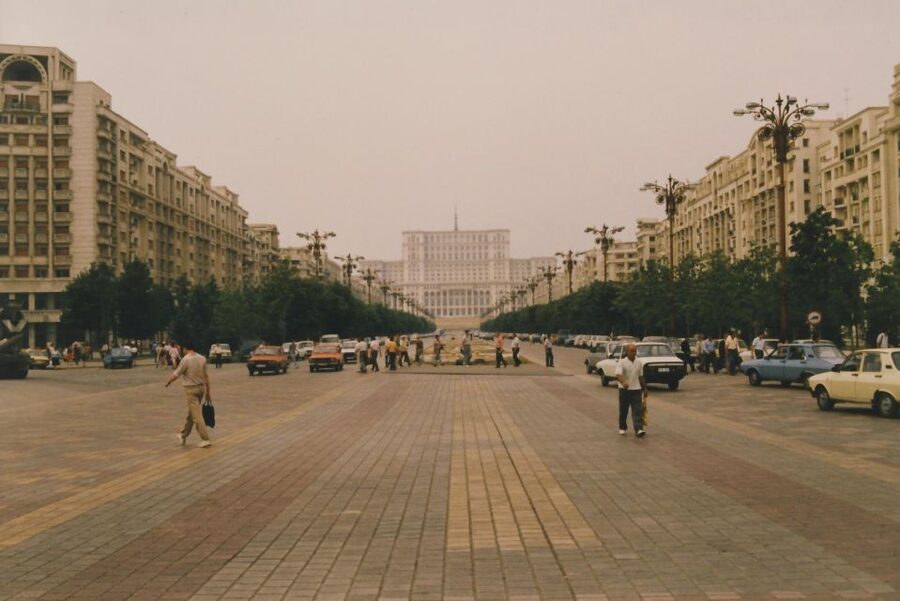
Bucharest’s communist story begins with a giant act of destruction: three neighborhoods and about 40,000 homes were cleared to make room for Ceausescu’s grand boulevard and the Palace of Parliament. This walking tour follows that political project from Unirii to Revolution Square, connecting enormous buildings with the daily realities of shortages, surveillance, and fear. I like the route because it gives you both the grand architecture and the human cost behind it. I also like that guides such as Alex and Horia explain the bigger political ideas before getting to Ceausescu, so the revolution makes sense rather than arriving as a sudden final chapter.
The main consideration is pace. In 2.5 hours, you cover many major places, and several stops are short. You should expect an outdoor history walk, not a long interior visit to the Palace of Parliament. Entrance tickets are not included, and the experience is most useful if you are ready to walk, listen, and ask questions.
Key points to know before you book
- The route crosses Ceausescu’s grandest building project, from Bulevardul Unirii to the Palace of Parliament and Revolution Square.
- The story reaches beyond Ceausescu, beginning with Marxist thought, the Bolshevik Revolution, and Romania’s earlier political structure.
- Daily life gets as much attention as politics, including food rationing, the secret police, and the pressure of dictatorship.
- Three neighborhoods and 40,000 households were demolished to create the Socialist Victory Boulevard and surrounding government district.
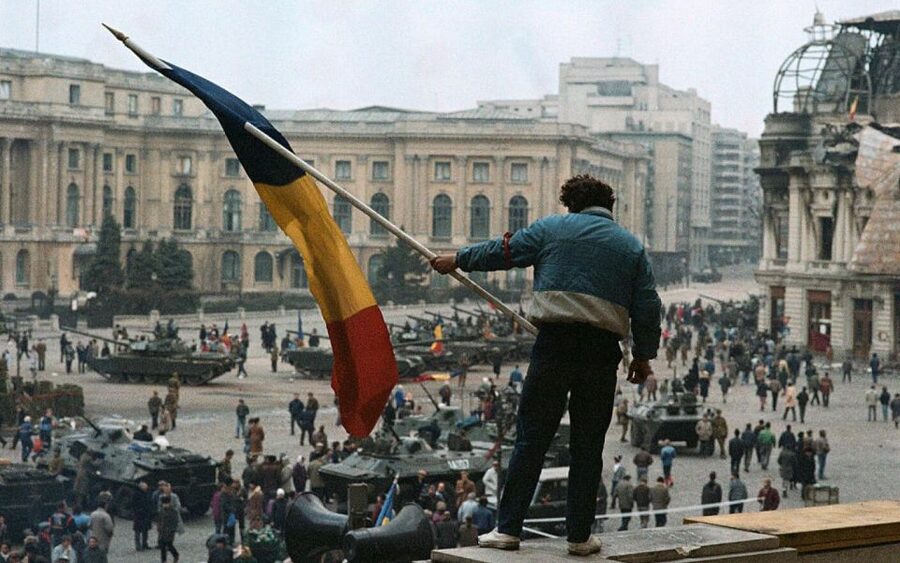
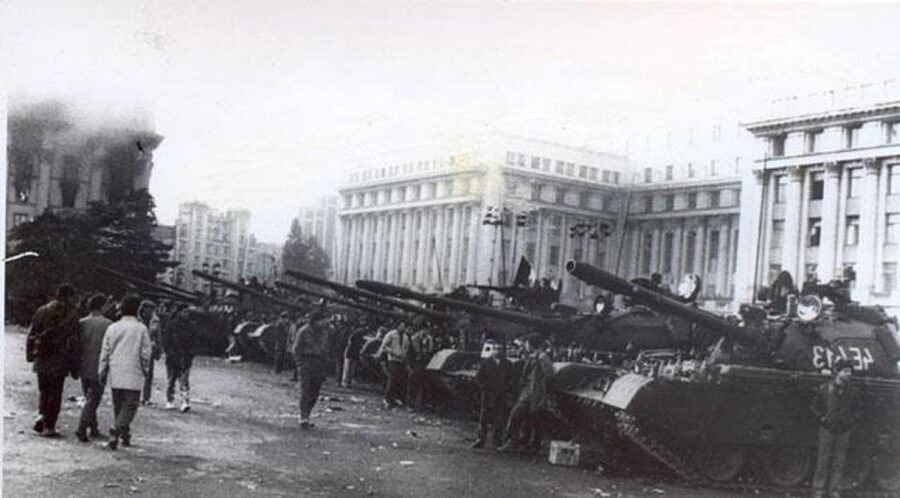
- The ending focuses on December 1989, including the protests, Ceausescu’s final days, his trial, and execution.
- The $23 price is strong value if you want a guided introduction to Bucharest’s political past rather than a museum-only visit.
Starting beside Constitution Square
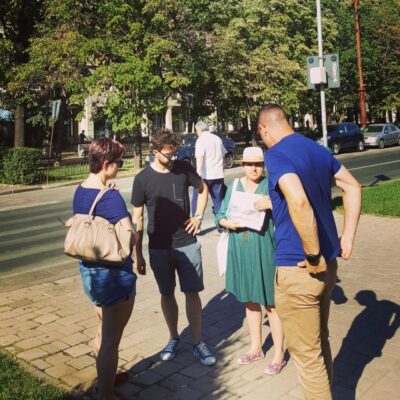
Meet next to The Coffee Shop Constitutiei on Bulevardul Unirii. Arrive 10 minutes early, since the opening discussion sets up the rest of the walk and the route moves through central Bucharest without returning to the start.
The setting is useful from the first minute. You are near the Palace of Parliament and the broad boulevard created during Ceausescu’s final years. This is not just a street with impressive government buildings. It is the physical result of a plan that erased established neighborhoods, churches, homes, and streets to create a grand capital worthy of the regime’s image.
Your guide places that plan in context. The story may begin with Hegel, Marx, and Engels, then move through feudal Eastern Europe and the Bolshevik Revolution before reaching Romanian communism. That may sound academic, but it helps answer a basic question: how did an idea about class and state power become a system that controlled food, work, speech, and private life?
Guides Alex and Horia have both received particularly strong praise for making difficult political material easy to follow. Their style includes humor, personal explanation, and room for questions. Guide assignments can change, so you should not book on the assumption that one particular person will lead your group, but the tour is designed around a live English or Romanian-speaking guide rather than a recorded script.
More communism and Ceausescu tours in Bucharest:
- The Real tour of Communism
★ 5.0 · 666 reviews - Life under Communism
★ 5.0 · 358 reviews - 3-Hour Guided Tour of Communist Bucharest
★ 4.9 · 303 reviews
The Palace of Parliament and the price of a boulevard
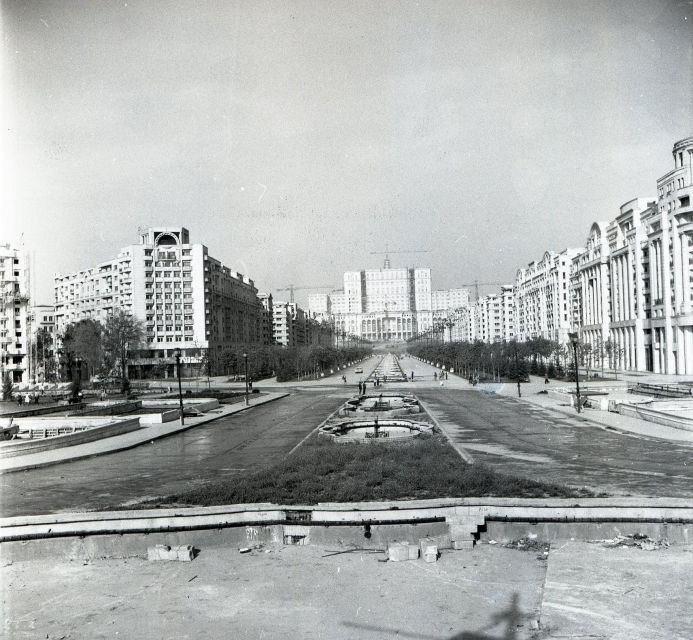
The Palace of Parliament is the clear visual center of the walk. It is the second-largest administrative building in the world, and its scale is difficult to understand from photographs alone. The building was part of Ceausescu’s plan to remake Bucharest into a ceremonial capital centered on state power.
At this stop, you learn how the project reshaped the city. Three neighborhoods were demolished, taking roughly 40,000 households with them. The new boulevard, often connected with the name Socialist Victory, was built to lead toward the palace and present a carefully controlled view of national authority.
The important point is not simply that the palace is huge. It is that its size had a political purpose. The building projected strength while many Romanians faced shortages and strict limits on ordinary life. That contrast gives the tour its central tension: monumental public ambition on one side, private hardship on the other.
The scheduled stop is about 20 minutes. That is enough for a clear explanation and exterior sightseeing, but not enough for a full architectural study. Entrance tickets are not included, so treat this as part of a walking route rather than a guaranteed palace interior tour. If you want to go inside separately, check the palace’s current ticket rules and time requirements.
Antim Monastery and what the bulldozers missed
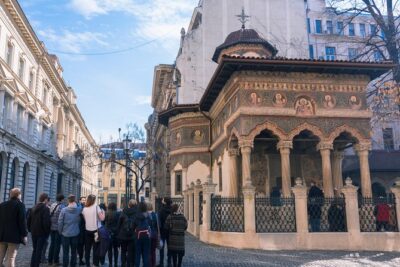
The walk continues to Antim Monastery, a quieter religious site that helps you see what existed before the grand redesign. The stop lasts about 10 minutes, with a guided visit and sightseeing.
This part of the route adds needed texture. Communism did not erase every older building, and Bucharest’s religious sites offer a reminder that the city had a long cultural and spiritual life before the dictatorship. The monastery also helps explain why the redevelopment was so controversial. Streets and homes were not empty pieces of land waiting for a new plan. They formed lived-in communities with institutions, memories, and places of worship.
You should not expect a long religious tour here. The visit is brief, and the main subject remains the political transformation of Bucharest. Still, this is one of the stops that keeps the tour from becoming a march of government buildings.
The Patriarchal Cathedral and state control
At the Patriarchal Cathedral, the guide connects religion, power, and the city’s older identity. The stop combines a visit, walking, and explanation, with about 20 minutes scheduled.
The cathedral is especially useful for understanding the uneasy relationship between the communist state and religious institutions. The tour does not treat communism as a simple story of buildings and slogans. It looks at how the regime tried to shape public life, what it permitted, and what it pushed aside.
This is also a good point to ask questions. The guides are used to discussing both the official system and the ordinary experience of living under it. If you want to know how ideology affected family life, belief, work, or access to goods, this is the sort of stop where a direct question can make the history more personal.
Same city, a completely different sort of day:
- Bucharest: Dracula’s Castle, Peles Castle, & Brasov Old Town
★ 4.5 · 17,858 reviews - Bucharest: Dracula Castle, Peles Castle & Brasov Old Town
★ 4.6 · 10,891 reviews - Bucharest: Dracula’s Castle, Peleș Castle & Brașov Day Trip
★ 4.5 · 5,919 reviews - Bucharest: Palace of Parliament Tickets and Guide
★ 4.3 · 3,182 reviews
Fountains, Unirii, and the city as a political stage
The Bucharest Fountains receive a short five-minute visit before the route moves through Piața Unirii. These stops may seem less important than the palace or Revolution Square, but they show how the redesigned city used open space, water, traffic routes, and sightlines to create a grand public image.
Piața Unirii is part of the same broad urban project. The open scale makes the boulevard and government-centered design easier to read. The tour asks you to look beyond the surface and consider who the space was built for, what message it sent, and who paid the cost.
The practical drawback is exposure to weather. Much of the experience takes place outdoors, and the route includes several open squares. Wear comfortable shoes and bring water. Food and drinks are not included, so plan around the 2.5-hour duration if you need a snack or coffee before starting.
Old Town and the life behind the official story
The walk then reaches Bucharest’s Old Town for roughly 15 minutes. This change of setting matters. After the wide, formal spaces of the communist center, the older streets give you a more human scale and a chance to compare different layers of the city.
The guide uses the route to explain what life was like under the regime. The central themes include rationing, restricted choices, and the secret police. One striking measure used in the tour’s explanation of shortages is the daily target of 2,000 calories, alongside monthly amounts described as 500 grams of cheese, 10 eggs, and 1.5 kilograms of meat.
Those figures help turn a political system into something you can picture at home: meals planned around availability, queues, and official limits. The story is not only about what the state built. It is also about what people could not easily buy, say, or do.
This section works well for visitors who already know the broad outline of the Cold War but want Romanian examples. It also works for younger visitors who need concrete details rather than a long list of leaders and dates.
University Square and the pressure building in public
University Square is another short stop, about five minutes. Its value comes from its connection to public protest and the political mood of late communist Romania.
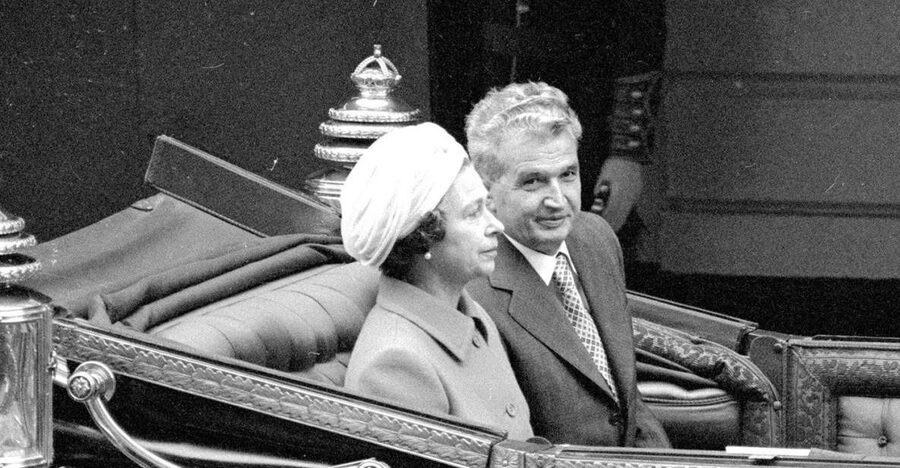
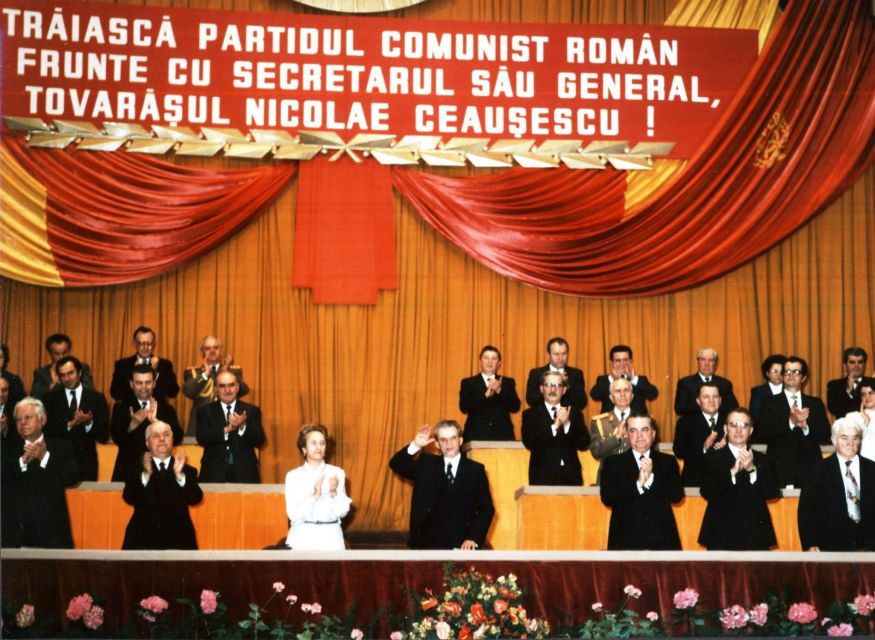
By this point, the guide has explained Ceausescu’s rise from a poor background to the top of the state, as well as the length and severity of his rule. The tour describes his dictatorship as lasting 25 years and presents Romania’s system as one of the most oppressive in the Eastern Bloc, with comparisons to the closed dynastic rule of North Korea.
That comparison is strong, and a good guide needs to explain it rather than use it as a slogan. The point is the concentration of power around one family, the personality cult, and the reach of state control into daily life. You can ask questions here about how Romania differed from other communist countries, since the experience was not identical across the region.
The short stop also shows one limit of this tour. You will hear a broad political account, but you will not spend long at any single square. If your main interest is the architecture of University Square, this is not a specialist building tour. If your interest is protest and power, the stop fits the larger story.
The Royal Palace and the Romanian Athenaeum
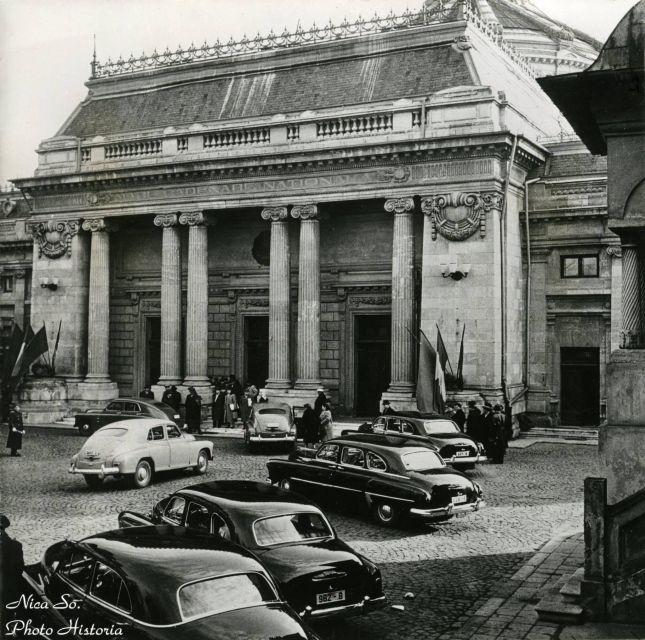
The Royal Palace of Bucharest and the Romanian Athenaeum shift the focus toward the city’s pre-communist identity. Each receives about 10 minutes of guided sightseeing.
These buildings help establish what the communist state inherited and then tried to redefine. The Royal Palace points to the monarchy and the older political order. The Athenaeum represents another side of Bucharest, tied to national culture, public life, and the city’s European ambitions.
The route does not pretend that Bucharest began with communism. That is one of its strengths. By placing these sites before the final stop at Revolution Square, the guide shows you a city with several political eras layered together. The contrast also makes Ceausescu’s building campaign easier to judge. His project was not created in a vacuum. It was an attempt to overpower, replace, or absorb earlier symbols.
Again, the time is limited. You will get orientation and political context, not a full palace or concert-hall tour. The value is in the connections between places.
Revolution Square and the end of Ceausescu’s rule
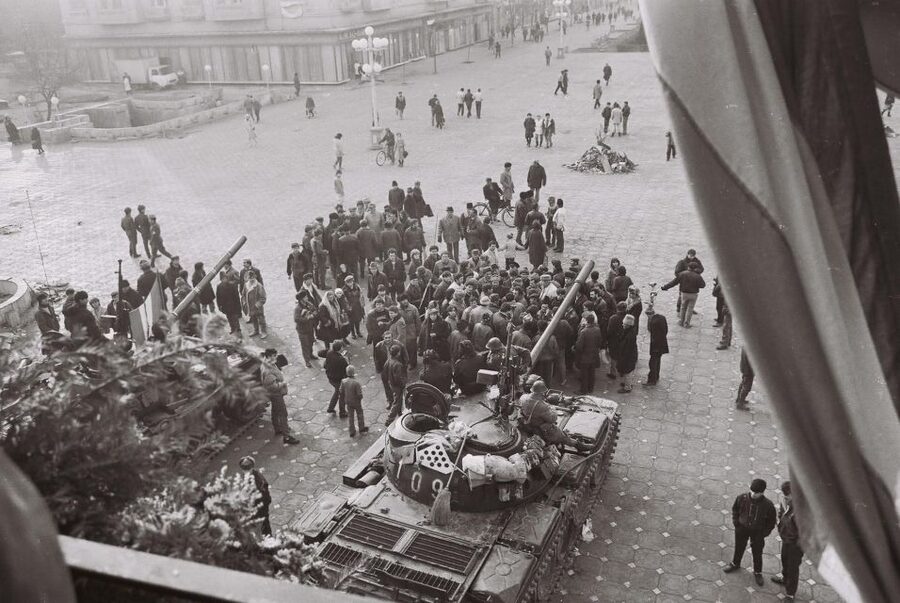
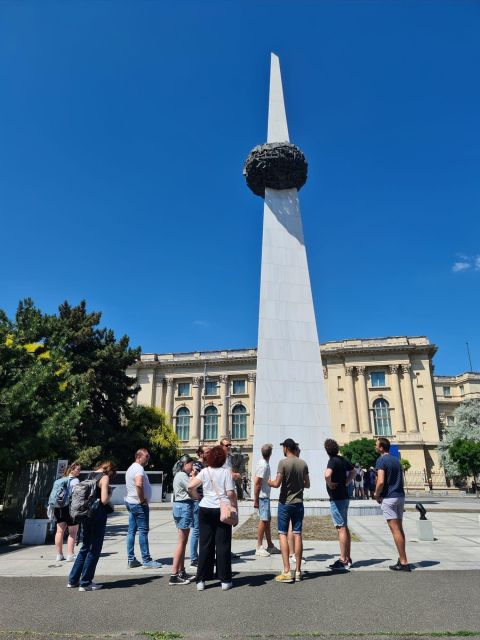
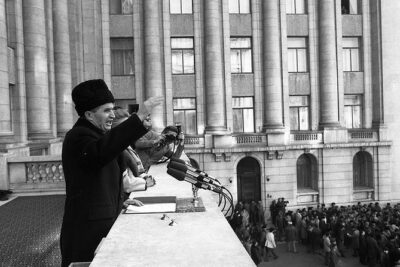
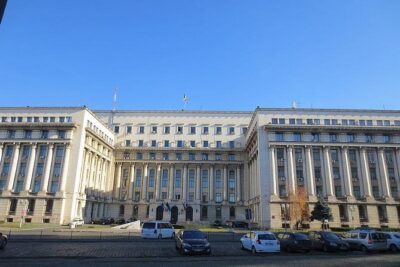
The tour finishes at Revolution Square, with about 20 minutes devoted to the events that ended the dictatorship. This is the strongest closing section because the route has already explained the system that was collapsing.
You learn about the group of agitators who helped set the end of Ceausescu’s regime in motion, followed by the unrest, his last days, the trial, and the execution. The guide places these events in the square’s physical setting, which makes the final chapter easier to grasp than it would be in a textbook.
Several guides are praised for explaining the revolution in a clear and engaging way, and this is where that approach matters most. The events of 1989 can become confusing very quickly, with changing loyalties, public demonstrations, state violence, and a sudden end to a government that had seemed firmly fixed. A live guide can pause, answer questions, and clarify the sequence.
The ending is serious, but the tour is not presented as a dry lecture. Humor appears earlier in the walk, especially when it helps make complex material easier to absorb. At Revolution Square, the tone becomes more focused. You leave with a better sense of how a dictatorship that controlled so much could still unravel so fast.
What the $23 price gets you
At $23 per person, this is good value for a 2.5-hour guided walk that covers several major central sights and gives them a shared political meaning. You are paying mainly for interpretation, not admission fees. The local guide is included, while food, drinks, and entrance tickets are not.
I would compare the cost with the price of a standard city orientation walk. This tour covers many familiar Bucharest landmarks, but its purpose is more specific. If you want a broad introduction to communist Romania, the price is fair. If you plan to visit the Palace of Parliament inside, budget separately for that ticket and any required reservation.
The booking terms are also useful for a changing schedule. You can reserve now and pay later, and cancellation is free up to 24 hours before the activity for a full refund. Check available starting times when booking, since the exact departure schedule is not fixed here.
Who should take this Bucharest communism tour?
I would recommend it to anyone interested in Cold War Europe, dictatorship, urban design, political protest, or the way ordinary people lived under a controlled economy. It is also a smart first activity in Bucharest if you want the city’s major sights explained through one clear theme.
It suits visitors who enjoy asking questions. The guides are described as friendly, engaged, and willing to recommend books, so you can use the walk as a starting point for further reading. The tour also works well for people who find political history hard to follow in museums, since each idea is tied to a place you can see.
I would hesitate only if you want a relaxed sightseeing stroll with little serious discussion, or if you dislike walking between short stops. The route covers a lot of ground and gives more attention to political context than to decorative detail. It is also not a substitute for an interior visit to the Palace of Parliament.
Should you book it?
Book this tour if you want to understand why Bucharest looks the way it does and how Ceausescu’s rule affected ordinary life. The combination of the Palace of Parliament, demolished neighborhoods, food restrictions, secret police, and Revolution Square gives you a useful framework for the rest of your time in Romania.
The best reason to choose it is the guide-led storytelling. Alex and Horia are noted for making complicated subjects clear, personal, and occasionally funny, though the guide on your date may be someone else. For $23, you get a focused history lesson with a substantial central-city walk. Bring good shoes, arrive early, and treat the palace interior as a separate plan.
FAQ
How long does the Bucharest Communism tour last?
The tour lasts 2.5 hours.
What is the price per person?
The price is $23 per person.
Where does the tour start?
It starts at Bulevardul Unirii 5, next to The Coffee Shop Constitutiei.
Where does the tour finish?
It finishes at Revolution Square.
Which languages are available?
The live guide speaks English or Romanian.
Is a local guide included?
Yes, a local guide is included.
Are entrance tickets included?
No. Entrance tickets are not included in the activity price.
Are food and drinks included?
No. Food and drinks are not included.
How early should I arrive?
You should arrive 10 minutes before the activity starts.
Can I cancel for a full refund?
Yes. You can cancel up to 24 hours in advance for a full refund.
Newest Bucharest trips we have written up
- Bucharest: Dealu Mare Winery Private Trip with Wine Tasting★ 4.9 · 6 reviews
- Winery touring & private wine tasting – one day private tour★ 5.0 · 3 reviews
- Traditions in Bucharest: Village Museum and Wine Tasting★ 5.0 · 8 reviews
- Your rendez-vous with Europe’s past: time-travel to Maramures, Transylvania★ 5.0 · 6 reviews
- Village Museum Bucharest Guided Tour★ 5.0 · 6 reviews
- Private Wine Tasting at Bucharest’s First Wine Bar★ 5.0 · 3 reviews
- Walking Tour of Bucharest City Center – Private Tour★ 5.0 · 4 reviews
- Wine tasting in Bucharest Old town – bonus cheese platter★ 4.5 · 6 reviews
Bucharest Communism and Ceausescu Tours, compared.
Bucharest Essential Tour: Old Town, Calea Victoriei & Communism
Read our review →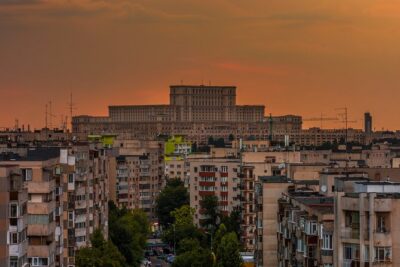

Museum of Communism Ticket with Communist Coffee
Read our review →
Dinner+Tour at Museum of Communism after closing
Read our review →Browse the lists this tour appears in