
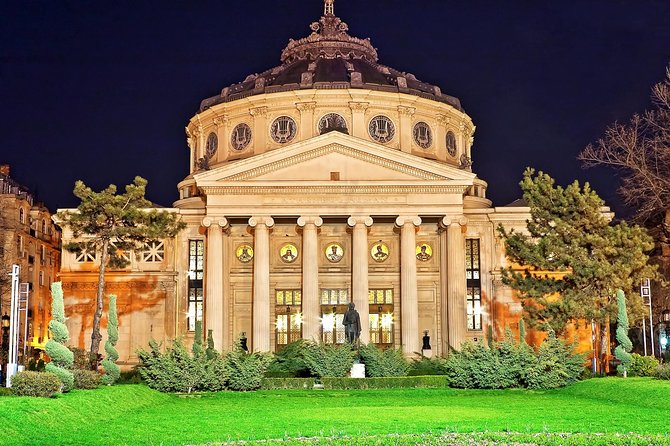
Reviewed · BUCHAREST BIKE AND SEGWAY TOURS
Bucharest Highlights Bike Tour
Bucharest’s story comes into focus quickly from a bicycle seat. In about two hours, you move from old monasteries and merchant inns to Ceaușescu’s grand civic projects, the Palace of Parliament, and the square where his final speech ended. I especially like the way the tour links early Romanian history with the communist era, rather than treating the city center as a string of unrelated sights. I also like the time saved on two wheels, especially when you want a first look at several parts of Bucharest.
The main catch is the riding itself. Bucharest is not built throughout as a calm cycling city, and parts of the route pass through narrow streets, pedestrians, and traffic. You should feel steady on a bike and stay alert, although guides such as Alex, Ed, Lucia, Horia, and Ciprian receive repeated praise for clear explanations, good humor, and care with the group.
Key things to know before you ride
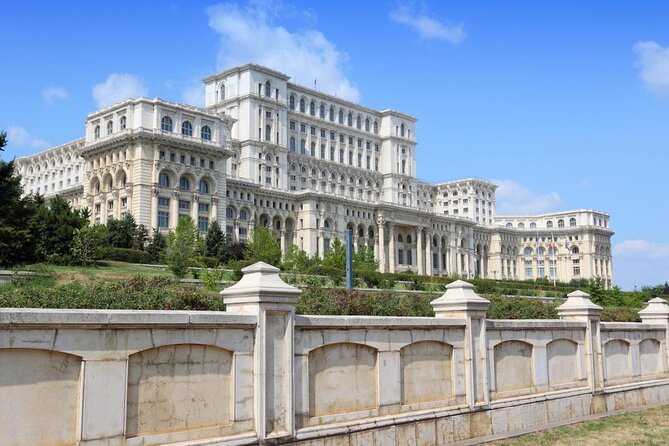
- The route covers several eras: old Bucharest, royal Romania, communism, and the city today.
- Manuc’s Inn gives the tour local character: this old trading inn helps explain Romanian food and outside cultural influences.
- The Palace of Parliament is part of a larger story: the short stop works best as a lesson in communist urban planning, not as an interior visit.
- Guides make the difference: Alex, Ed, Dan, Horia, Ciprian, and Lucia are among the guides praised for humor, detail, and personal attention.
- The bike saves time but does not remove effort: you cover more ground than on foot, but you still ride near cars and through busy pedestrian areas.
- The price is fair for a first orientation: at $33.86, the bike, helmet, guide, and compact route offer useful value if you want history and city coverage in one outing.
Why a bike works well in Bucharest
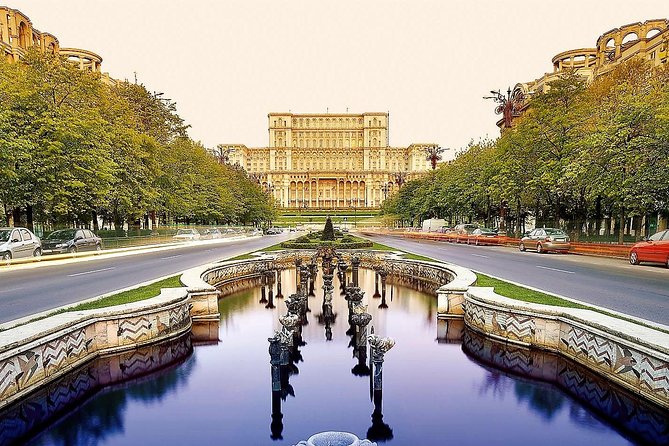
Bucharest can feel scattered on a first visit. The old town, Patriarchal Hill, the Palace of Parliament, Revolution Square, and Calea Victoriei are close enough to connect, but not so close that walking between every stop feels efficient during a short stay.
That is where this tour earns its price. You are not simply pedaling around one square. You move across several sections of the center, with the guide filling in the political and architectural changes between them. I like this format for an arrival afternoon, when you want a map in your head before exploring the city on foot.
The bike also gives you a better sense of scale. The contrast between the older streets and the broad communist civic zone becomes clearer when you ride from one to the other. A walking tour can cover the same main sights, and one review fairly points out that the bicycle is not strictly necessary. Still, the bike reduces the time spent transferring between landmarks.
The group can reach 30 people, so the experience may feel more like a standard group ride than a private outing. The strongest reports credit the guide with keeping the commentary engaging. Alex is repeatedly described as funny, warm, and full of useful details, while Ed is praised for making the history entertaining. Other guides, including Dan, Horia, Ciprian, and Lucia, are also singled out for strong delivery and care.
More bike and segway rides in Bucharest:
- Bucharest: Half Day Bike Tour
★ 4.9 · 379 reviews - Bucharest Half a Day Bike Tour
★ 5.0 · 325 reviews - Bucharest: 2-Hour City Highlights Bike Tour
★ 4.8 · 269 reviews
Starting at Strada Operetei and meeting old Bucharest
The tour begins at Strada Operetei 12 at 3:00 pm and ends back at the same meeting point. The first ten minutes are listed as getting onto the bikes and starting the city ride, but the real value begins as the guide establishes Bucharest’s story.
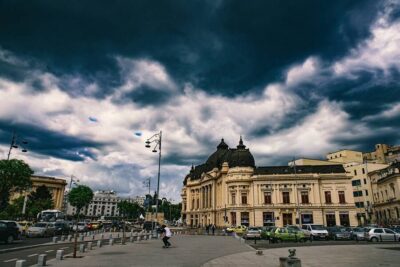
You can expect an introduction to the city’s early development, followed by stops connected to the first National Bank and one of Bucharest’s oldest monasteries. These opening points help explain how commerce, religion, and government shaped the city before the communist period.
This is a useful beginning because Bucharest is often reduced to its 20th-century troubles. The tour gives you older foundations first. You see that the capital was not created all at once by royal planners or communist rulers. It grew through trade, religious institutions, banking, and changing political power.
The guide’s commentary matters here. Alex, Dan, and Ciprian are praised for answering questions and connecting individual buildings to larger events. If you enjoy dates and political detail, stay close enough to hear clearly. If you prefer a lighter approach, guides such as Horia and Ed bring humor into the explanations.
Hanul Gabroveni and the old city in pictures
Hanul Gabroveni is a short stop, listed at about five minutes. The focus is Oriental Bucharest and an old city photo gallery. That may sound modest, but it gives the route a welcome visual pause.
This is one of the places where the tour can show you a Bucharest that does not fit the grand boulevard image. The old center carries traces of trade and contact with the wider region, and the gallery helps you picture how the area looked before later changes.
Five minutes is not enough for a long visit, so think of this as a brief orientation rather than a museum stop. The guide does the heavy lifting with context. You will likely get more from listening than from expecting time to browse at leisure.
Manuc’s Inn and the taste of merchant Bucharest
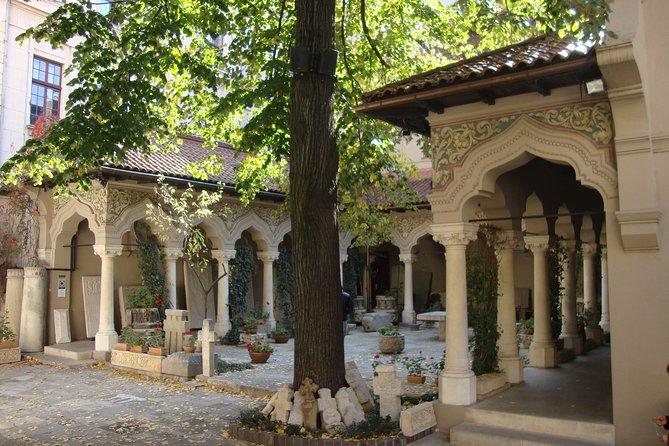
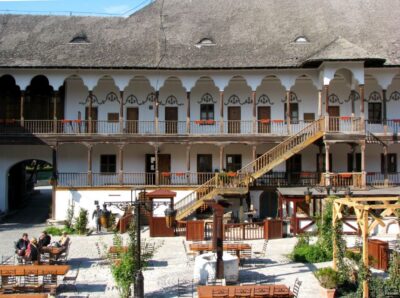
Manuc’s Inn, or Hanul lui Manuc, receives about ten minutes. It is one of the most memorable stops because the guide uses it to explain outside influences on Romanian traditional food.
That detail makes the stop more than an architectural photo opportunity. Food offers a practical way to understand Bucharest’s position between different regions and cultures. You begin to see Romanian cooking as part of a long exchange, not as something isolated from its neighbors.
Manuc’s Inn also fits the larger theme of the morning or afternoon: Bucharest has repeatedly absorbed, adapted, and reshaped outside influences. The tour does not require you to sit down for a meal, and food and drinks are not included, but the explanation may help you choose what to try later.
I would not book this ride expecting a food tour. The stop is short, and the value lies in the cultural explanation. Still, it is exactly the sort of detail that can make a quick city tour feel grounded in daily life.
More Bucharest city tours:
- Bucharest: City Highlights Guided Walking Tour
★ 4.9 · 1,482 reviews - Bucharest Highlights Walking Tour
★ 5.0 · 469 reviews - Bucharest Tuk Tuk city tour
★ 5.0 · 188 reviews - Bucharest Tuk Tuk City Tour
★ 4.9 · 167 reviews
The Patriarchal Cathedral and the first Romanian Parliament
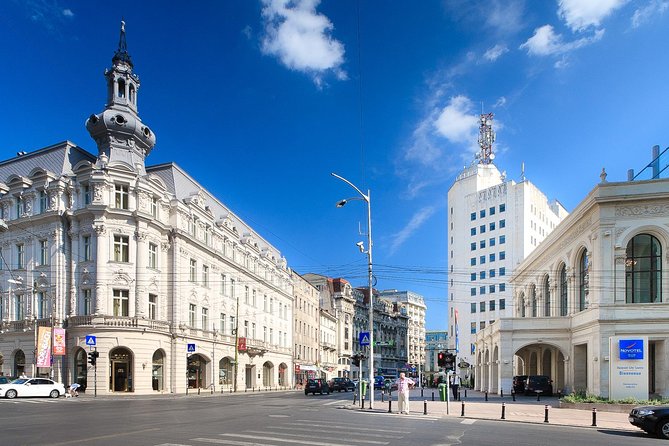
At Catedrala Patriarhala, the tour spends about ten minutes. The stop connects the cathedral with the first Romanian Parliament, bringing religion and state power into the same chapter.
This is a good place to pay attention to how the guide explains Romania’s political development. The route is not only about buildings that look impressive. It asks why these institutions appeared where they did and how Bucharest’s center changed as the country’s government developed.
The cathedral also offers a change of mood after the commercial character of the old inns. You move from trade and food to religious authority and political organization. That variety keeps the ride from becoming a repetitive list of facades.
The tour does not promise an extended interior visit at each stop. The listed timing suggests short explanations and photo pauses. If you want to study the cathedral in detail, return on your own later. The bike tour is better for connections and orientation.
Antim Monastery and the city’s translated buildings
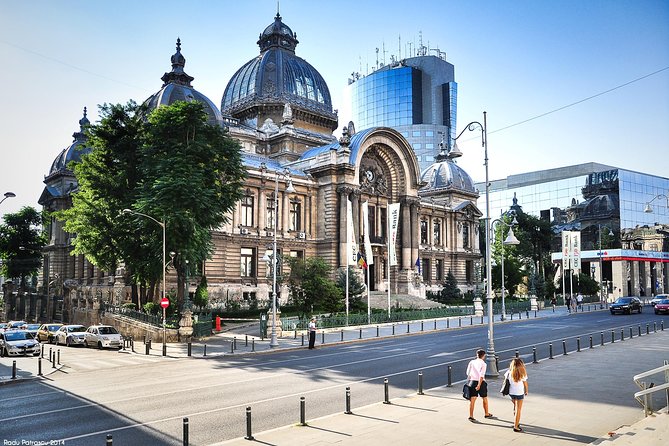
Manastirea Antim is another brief stop, listed at about five minutes. The itinerary describes translated buildings, which points to the way Bucharest’s architecture and institutions have been interpreted, adapted, or moved through changing periods.
This is a compact stop, but it reinforces a useful idea: the city is not architecturally uniform. Old religious buildings, later civic structures, and modern interventions exist close together. A guide can point out those layers faster than a guidebook can, especially when you are riding between them.
I would treat this stop as part of the route’s larger rhythm rather than a destination requiring a long visit. You pause, listen, take in the setting, and move on. That approach suits a two-hour tour, but it may feel too quick if your main interest is religious architecture.
The communist civic center and Palace of Parliament
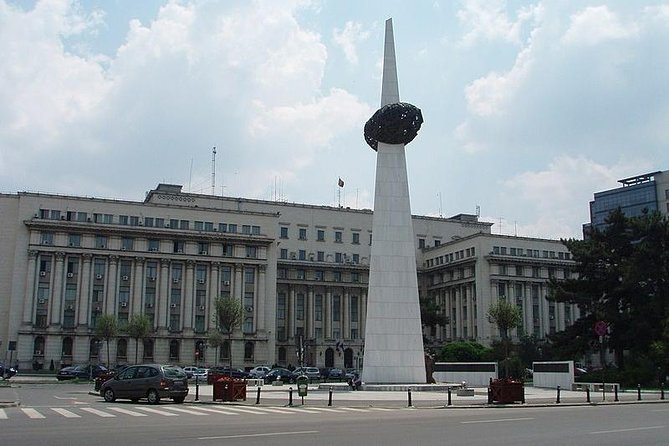
The ride then shifts sharply toward the new civic center, the communist alternative to the old city center. This is one of the strongest parts of the route because the change in scale is hard to miss.
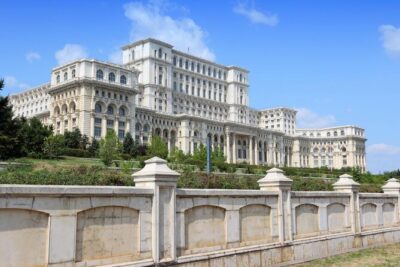
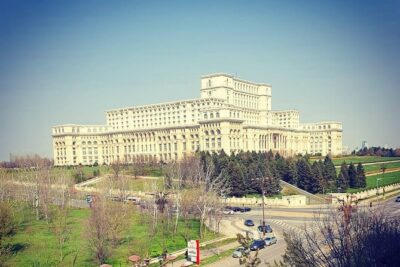
The Palace of Parliament is described as the final megalomaniac communist project. The stop itself lasts about five minutes, so this is not a building tour or an interior examination. Instead, the guide frames the palace within Ceaușescu’s plans for power, order, and monumental urban space.
That distinction matters. You will get the most from this stop if you want political and architectural context rather than a long visit inside the palace. The short stop lets you see the building and understand its place in the city, then continue through the surrounding civic zone.
I like this part because it makes Bucharest’s recent past visible. The broad planning and monumental scale feel very different from the older lanes and inns. The contrast is not polished away. You see how an entire part of the city was reshaped to express communist authority.
Some groups report a tour lasting closer to three hours, while the advertised duration is about two hours. Do not count on the longer timing when planning your day. It is safer to allow extra room, especially if the guide pauses for more questions or weather changes the pace.
Parks, communist architecture, and the winter Royal Palace
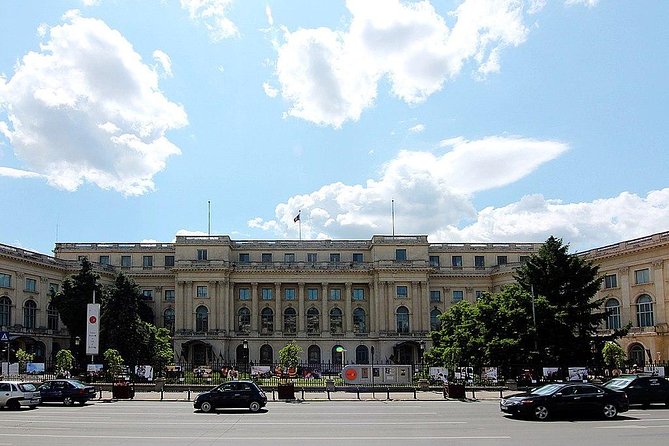
The route continues past Bucharest’s first park, examples of purely communist architecture, the winter Royal Palace, and the main old boulevard. These stops widen the story beyond one famous palace.
The first park adds a little breathing room after the large civic buildings. The communist structures show how the regime’s visual language extended beyond the Palace of Parliament. Then the winter Royal Palace brings you back to the monarchy and the pre-communist state.
This sequence is one of the tour’s best teaching choices. You can compare royal and communist ideas of public space within a short ride. The guide’s job is to explain what changed, what survived, and how the city’s main boulevard ties the different periods together.
You should expect brief roadside explanations rather than long building visits. The bicycle keeps the route moving, which is useful for seeing more but means you will not linger at every facade. Bring your camera, but listen first. The historical links are the part you cannot easily reconstruct later from a photograph.
Revolution Square and Ceaușescu’s final speech
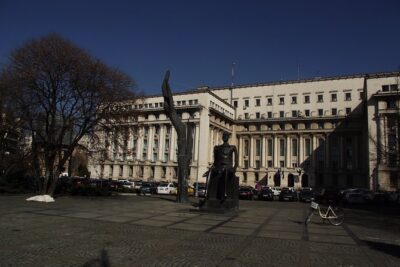
The final major stop is Piata Revolutiei, or Revolution Square, where Ceaușescu gave his last speech. This is the point where the communist story becomes intensely personal and political.
The stop is listed at about five minutes, but the event deserves more than a quick photograph. The square helps explain the collapse of Ceaușescu’s rule and the way public protest changed Romania. A strong guide can turn a familiar historical reference into a clear picture of what happened in this space.
This is also where the tour’s earlier stops pay off. You have seen the older city, the religious institutions, the monarchy, and the communist civic plan. Revolution Square gives those periods a dramatic ending before the ride returns to Strada Operetei.
The route does not present Bucharest as a museum frozen in one era. It shows a capital still marked by political change. That is a major reason I would take the tour early in a Bucharest visit.
Bikes, traffic, and the real riding conditions
The bicycles and helmets are included. One detailed experience describes bikes with locks, lights, bells, and baskets, though equipment can vary by day. Bikes are generally reported as new or in good condition, and Lucia is specifically praised for checking that a child’s bicycle and helmet fit properly.
The route is not a fully separated cycle path experience. You may ride near cars and pedestrians, and some streets are narrow. One review calls for confidence on a bike, while another says the route was planned to keep a family off busy roads. Both points can be true: the guide may choose a sensible route, but Bucharest still presents normal city traffic and crowded walking areas.
Children must be accompanied by an adult. Most people can participate, but you should be comfortable starting, stopping, steering, and riding in an urban setting. Families with children aged 10 and 13 had a good experience, and one guide adapted well when rain arrived, taking the group to a restaurant until the ride could continue.
That rain example is useful, but weather remains a real factor. The tour requires good conditions and may be canceled if the weather is poor. In that case, you receive a choice of another date or a full refund.
Is $33.86 good value?
At $33.86 per person, the tour includes the bicycle, helmet, driver or guide, local guide, and professional guide. Food, drinks, and hotel pickup are not included.
I consider that fair value if your aim is to see the main central sights and get a coherent introduction to Bucharest in one outing. The cost is less attractive if you already know the center well or want long visits inside monuments. The tour is built around movement and explanation, not admissions or extended museum time.
The strongest value comes from the guide. Alex, Ed, Horia, Dan, Ciprian, and Lucia are all associated with different strengths in the supplied experiences: humor, historical detail, flexibility, family care, and local enthusiasm. The exact guide is not guaranteed, so book for the route and format rather than one individual personality.
Free cancellation is available up to 24 hours before the 3:00 pm start for a full refund. Changes or cancellations inside that window are not accepted for a refund. The tour also needs a minimum number of participants, so a cancellation for that reason brings a different date, another experience, or a full refund.
Who should book this ride?
I would choose this tour if you have only a short time in Bucharest, want a first orientation, or enjoy history explained beside the actual buildings where events unfolded. It suits confident cyclists, couples, families with older children, and anyone who wants to cover more ground than a walking tour allows.
It is especially useful on your first day. You can note the places worth revisiting, then return to Manuc’s Inn, the Palace of Parliament, Calea Victoriei, or Revolution Square at your own pace.
I would hesitate if you dislike traffic, need a completely quiet cycling route, or want detailed interior visits. A walking tour may feel calmer, and the bike is not essential for seeing the same central sights. Still, the movement between old Bucharest and the communist civic center gives the city’s contrasts extra force.
Should you book the Bucharest Highlights Bike Tour?
Yes, if you want a compact, history-led introduction and feel comfortable riding in city conditions. The 4.9 rating from 102 reviews and 99 percent recommendation fit the experience’s strongest points: guides who explain well, bikes in solid condition, and a route that packs many major sights into a short afternoon.
Book it early in your stay, wear comfortable clothes, and leave room in your schedule in case the ride runs longer than two hours. If you want Bucharest reduced to its most important stories, with enough movement to see how the districts connect, this is a sensible and well-priced choice.
FAQ
Where does the Bucharest Highlights Bike Tour start?
The tour starts at Strada Operetei 12, București 030167, Romania.
What time does the tour begin?
The scheduled start time is 3:00 pm.
How long does the tour last?
The listed duration is approximately two hours. Some experiences have taken closer to three hours, so allow extra time when planning your day.
Where does the tour finish?
The activity ends back at the starting meeting point.
What is included in the price?
The price includes use of a bicycle, use of a helmet, and a driver or professional local guide. Food and drinks are not included.
Which Bucharest sights are visited?
The route includes Hanul Gabroveni, Manuc’s Inn, the Patriarchal Cathedral, Antim Monastery, the Palace of Parliament, Revolution Square, Calea Victoriei, the old boulevard, royal sites, parks, and communist-era architecture.
Can children join the tour?
Yes. Children must be accompanied by an adult. Most people can participate, and the tour has accommodated children, including ages 10 and 13.
What happens if the weather is poor?
The tour requires good weather. If it is canceled because of poor conditions, you are offered another date or a full refund.
Newest Bucharest trips we have written up
- Bucharest: Dealu Mare Winery Private Trip with Wine Tasting★ 4.9 · 6 reviews
- Winery touring & private wine tasting – one day private tour★ 5.0 · 3 reviews
- Traditions in Bucharest: Village Museum and Wine Tasting★ 5.0 · 8 reviews
- Your rendez-vous with Europe’s past: time-travel to Maramures, Transylvania★ 5.0 · 6 reviews
- Village Museum Bucharest Guided Tour★ 5.0 · 6 reviews
- Private Wine Tasting at Bucharest’s First Wine Bar★ 5.0 · 3 reviews
- Walking Tour of Bucharest City Center – Private Tour★ 5.0 · 4 reviews
- Wine tasting in Bucharest Old town – bonus cheese platter★ 4.5 · 6 reviews
Bucharest Bike and Segway Tours, compared.
Browse the lists this tour appears in