
Reviewed · BUCHAREST COMMUNISM AND CEAUSESCU TOURS
Communist Era Bucharest Tour
Bucharest’s communist past is easiest to grasp on foot, where grand boulevards, oversized fountains, former party buildings, and Revolution Square reveal how power reshaped the city. This private tour connects those places with stories about ordinary life, political change, and the 1989 uprising.
I like the personal format, which lets you ask direct questions and shape the conversation around your interests. I also like the guides’ willingness to explain both the benefits and hardships of the era, from childhood memories of Alina or Claire to the effect of Ceaușescu’s building schemes on Bucharest.
The main drawback is that three hours can feel short for such a large subject, and the tour is largely outdoors. One review also noted some difficulty understanding the guide, while another felt the account of communism was too forgiving, so you should be ready for a personal interpretation rather than a strictly academic lecture.
Key points at a glance
- Private tour with Alina or Claire: Your group has the guide’s full attention, with room for questions and changes in emphasis.
- Communist Bucharest in physical form: See Unirii Square, Boulevard of Socialist Victory, Parliament Palace, and former state buildings.
- Revolution Square is the emotional center: Learn where Ceaușescu gave his final speech and where the 1989 Revolution unfolded.
- Personal stories add texture: The guides discuss daily life, family experiences, and the contrast between communist Romania and the country today.
- Hotel pickup may be available: You can meet at a central hotel or outside Manuc’s Inn in the Old Centre.
- Good value at $30.72: For a private three-hour city walk, the price is reasonable, especially if you want history rather than a quick sightseeing circuit.
Why this tour helps explain Bucharest
Communist-era Bucharest is not confined to one museum. It is spread across the city in broad avenues, cleared neighborhoods, monumental buildings, memorials, and public spaces designed to display state power. That makes a walking tour useful. You are not just hearing dates. You are looking at the places that changed shape under Nicolae Ceaușescu.
The tour also places communism within a longer story. The guides have discussed Romania’s creation after the Ottoman period, the role of King Carol I, the years between the two world wars, the communist takeover, and life after 1989. That wider frame matters because Ceaușescu’s Romania did not appear from nowhere.
You should expect a conversation-led experience rather than a formal museum tour. Alina is praised for giving clear context and for explaining how life under communism compared with life today. Claire is described as open, warm, and willing to discuss her own childhood and adolescence during the regime. The names matter because the guide is central to the experience, not simply a person delivering a fixed script.
More communism and Ceausescu tours in Bucharest:
- The Real tour of Communism
★ 5.0 · 666 reviews - Life under Communism
★ 5.0 · 358 reviews - 3-Hour Guided Tour of Communist Bucharest
★ 4.9 · 303 reviews
Starting at Manuc’s Inn and Unirii Square
The usual meeting point is outside the main entrance of Manuc’s Inn, at 62 Strada Franceză in the Old Centre. Hotel pickup is also offered from a centrally located hotel. From there, the route moves toward Piața Unirii, one of the city’s key public spaces.
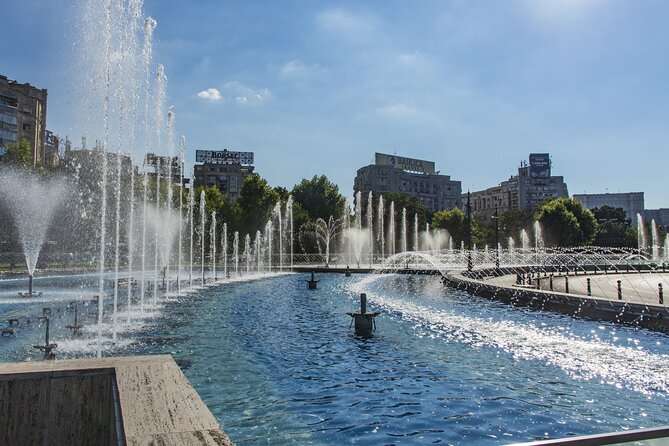
Unirii Square was reshaped as part of the communist plan to modernize Bucharest. Today it is a busy city center, with the restored Unirii fountains providing a more polished scene than the stark political setting that once surrounded them. Your guide uses the square to explain how communist planning favored grand scale, traffic routes, and public display.
The stop is brief, about 10 minutes, and admission is free. That sounds short, but the square works as an opening lesson. You can quickly see the contrast between a planned state project and the modern city that has grown around it.
Walking Boulevard of Socialist Victory
From Unirii Square, the tour follows part of Bulevardul Unirii, once called the Boulevard of Socialist Victory. The route was designed as Bucharest’s answer to the grand ceremonial avenues of other communist capitals, with the scale intended to impress and control movement.
The boulevard includes 17 artesian fountains decorated around the four seasons. They add color and movement to a space that was built to project authority. Your guide can help you read the avenue as more than a pleasant walk: its width, alignment, and relationship to Parliament Palace reflect the ambitions of the regime.
The listed stop lasts about five minutes, so do not expect an extended fountain visit. It is best understood as part of the walk toward the enormous parliamentary complex.
Seeing Parliament Palace from the city
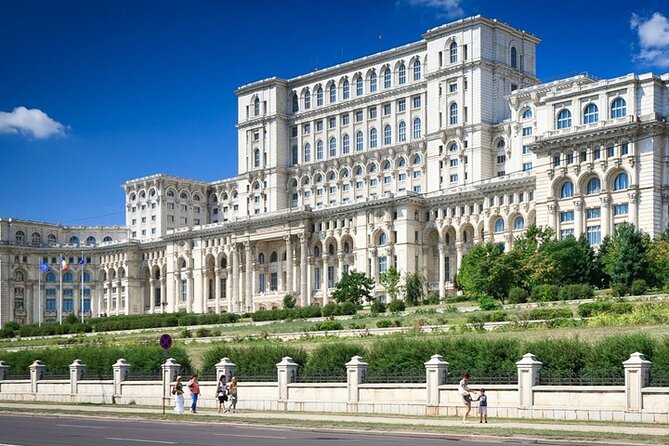
Parliament Palace, formerly known as Casa Poporului, is the tour’s biggest visual subject. Ceaușescu ordered the massive building as part of his transformation of central Bucharest. It was intended to be the House of the People, but its size and cost became symbols of the regime’s power and excess.
The building is described as the heaviest in the world. Your guide explains its construction and the ideas behind it while you take in its huge exterior. The scale is hard to ignore. It dominates the city center and shows how an entire urban district could be remade around one political vision.
Be clear about what is included: the supplied details describe seeing the building and hearing its history, but they do not promise an interior visit or admission ticket. If entering Parliament Palace is important to you, check the booking details before setting out.
Same city, a completely different sort of day:
- Bucharest: Dracula’s Castle, Peles Castle, & Brasov Old Town
★ 4.5 · 17,858 reviews - Bucharest: Dracula Castle, Peles Castle & Brasov Old Town
★ 4.6 · 10,891 reviews - Bucharest: Dracula’s Castle, Peleș Castle & Brașov Day Trip
★ 4.5 · 5,919 reviews - Bucharest: Palace of Parliament Tickets and Guide
★ 4.3 · 3,182 reviews
Victoria Avenue and the state institutions of old Bucharest
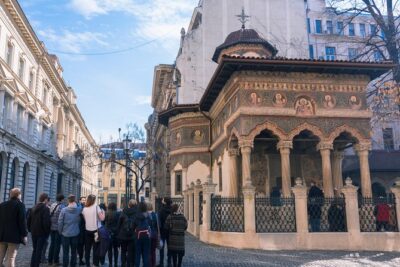
The route then takes you along part of Calea Victoriei, or Victoria Avenue, one of Bucharest’s best-known streets. Here, the communist story is set against older architecture, shops, banks, and public buildings.
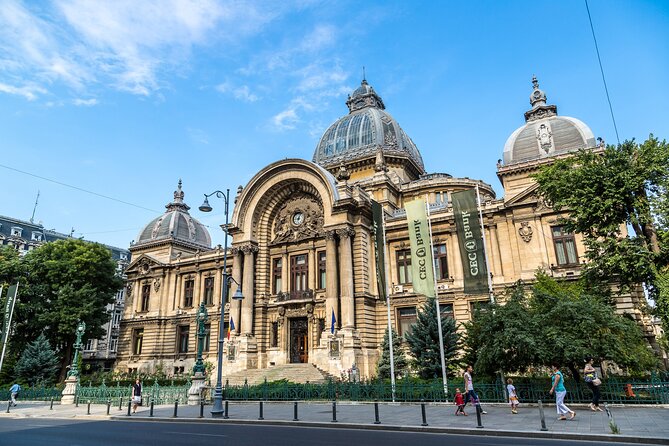
The CEC Bank appears as the former bank of the people during the communist years. You also see the grandeur of the National Bank of Romania and hear about its past. These stops help explain how financial institutions worked within a state-controlled economy, while the buildings themselves show that Bucharest’s architectural story did not begin with communism.
The tour also passes University Square, home to the oldest and largest university in Bucharest. Nearby is the Intercontinental Hotel, completed and opened in 1971. Its presence gives the guide another way to discuss the changing city, modern construction, and the kind of public spaces that mattered during the communist period.
You pass the National Theatre of Bucharest as well. The building has gone through several design changes in a relatively short time, making it a useful example of how public architecture can reflect shifting political and cultural tastes.
These are passing stops rather than long interior visits. I like that the route includes them because they prevent the tour from becoming a parade of communist monuments. You see how the old city, communist institutions, and present-day Bucharest overlap.
Revolution Square and the end of Ceaușescu’s rule
Piața Revoluției, or Revolution Square, is the most important historical stop. This is where the events of December 1989 brought Ceaușescu’s rule to an end.
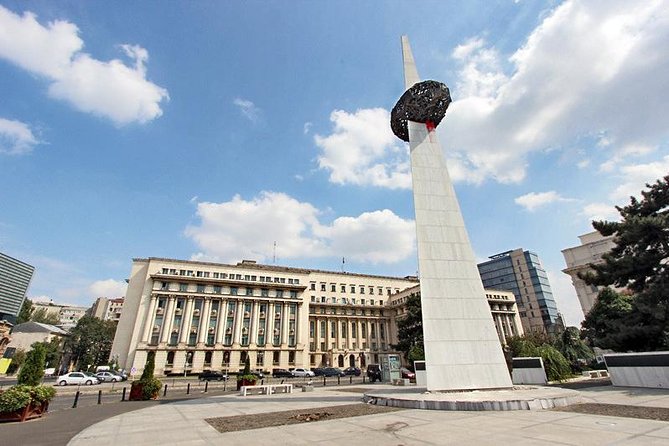
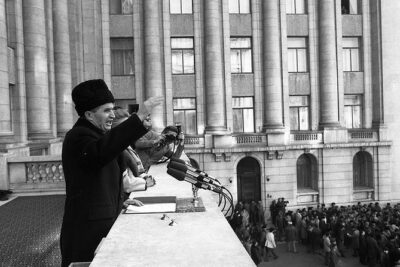
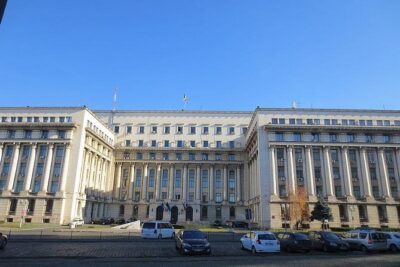
The square includes the former headquarters of the Communist Party and the balcony where Ceaușescu made his final public speech. Your guide explains how the crowd turned against him and how the revolution unfolded. The location gives the story force because the buildings and open space remain in view as you hear about the sudden collapse of authority.
You also see the Monument of Rebirth, King Carol I’s equestrian statue, the university library, and other memorials. The monument, a 25-meter structure, commemorates the struggles and victims of the Christmas 1989 Revolution. It is an arresting sight, though its unusual form can invite different reactions. Your guide can supply the political and emotional context behind it.
The listed time here is about 10 minutes, but this is one place where questions can easily stretch the visit. If you want to discuss the revolution, censorship, shortages, family life, or the transition after 1989, this is the natural point to ask.
Iuliu Maniu and the cost of early communism
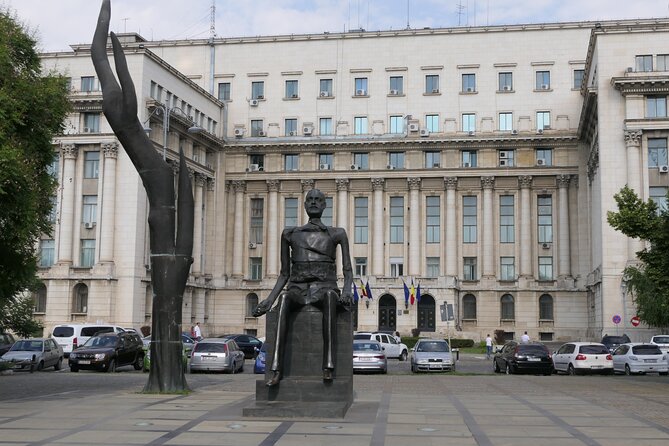
The Iuliu Maniu statue adds a less familiar chapter. Maniu served three times as prime minister and opposed the communist takeover. The guide discusses his struggle during the early years of communist rule, giving you a view of political repression before the later Ceaușescu period.
This stop lasts about five minutes. It is short, but it helps keep the tour from focusing only on Ceaușescu. Romania’s communist era began with the suppression of opponents, not just with the grand construction projects associated with the 1970s and 1980s.
The route also includes a beautiful historic building with gardens, described as having been built for the people of Bucharest more than 100 years ago. The supplied details do not identify the site by name, but it offers another photo stop and another reminder that communist Bucharest sits within a much older city.
What the guides add to the walk
The strongest part of this experience is the guide’s ability to connect public events with private life. You hear about the regime, but also about what it meant for ordinary Romanians and their families.
Alina is repeatedly praised for explaining the period in context and for covering a great deal in three hours. One private group spent an extra half hour talking in the streets. Another tour extended to four and a half hours because the guide continued the conversation while walking.
Claire is also described as someone who presents facts without forcing a single emotional response. She has spoken about her own experience as a child and adolescent, including both positive and negative aspects of life under communism. That balance can be useful, but it also creates the tour’s main interpretive risk: personal memory is not the same thing as a complete historical record.
One review raised concern that the guide’s account seemed too favorable toward Ceaușescu and communist life. Another praised the guide for explaining the good, bad, and ugly. These responses tell you to listen actively. Ask how a particular policy affected different groups, and separate nostalgia for familiar routines from approval of the political system.
The language is English, and most feedback describes the guides as clear and well-informed. Still, one person had trouble understanding the guide. If you have hearing or language concerns, stay close, ask for clarification, and do not hesitate to request a slower explanation.
Price, pace, and practical value
At $30.72 per person, this is a strong price for a private tour lasting about three hours. A shared group walk can cost less, but you usually lose the ability to pause for your own questions. Here, the private format gives you a better chance to explore family stories, politics, architecture, or the 1989 Revolution in the depth you prefer.
The value is especially good for a first visit to Bucharest. You cover a broad central area and get an orientation to several major landmarks without paying separate admission fees. The tour also ends where it begins, which makes it simple to continue exploring the Old Centre afterward.
The pace is moderate but requires a reasonable level of fitness. Comfortable walking shoes are recommended. Much of the experience takes place outside, so your enjoyment will depend on being ready for city walking rather than sitting in a museum.
Morning and afternoon departures are available, which helps you fit the tour around other plans. Pickup can be arranged at a centrally located hotel, or you can meet outside Manuc’s Inn. The activity is offered in English, and service animals are allowed.
Free cancellation is available if you cancel at least 24 hours before the start time. Changes or cancellations inside that window are not accepted for a refund.
Who should book this Bucharest tour?
I would choose this tour if you want the communist period explained through streets, buildings, and personal accounts. It suits history-minded visitors, first-time Bucharest visitors, and anyone who wants more than a list of dates.
It is also a good choice if you prefer private guiding to a large group. You can ask direct questions about religion, shortages, surveillance, family life, the role of the state, and the transition after 1989. The guides appear willing to discuss difficult topics rather than rush past them.
You may prefer another activity if you want to enter Parliament Palace, visit museums, or receive a tightly scripted academic lecture. This tour focuses on walking and conversation. The listed stops are free, and the information provided does not include interior admission to the major buildings.
Should you book it?
Book this Communist Era Bucharest Tour if you want a personal introduction to how politics reshaped the city and affected daily life. The route covers the right places, from Unirii Square and Socialist Victory Boulevard to Parliament Palace and Revolution Square, while the private format gives you room to ask the questions that matter to you.
Go in expecting interpretation, not a single final verdict on communist Romania. If you listen closely, compare viewpoints, and ask for context, the tour can turn Bucharest’s oversized buildings and quiet memorials into a much clearer story.
FAQ
How long does the Communist Era Bucharest Tour last?
The tour lasts approximately three hours.
What language is the tour offered in?
The tour is offered in English.
Is this a private tour?
Yes. Only your group participates in the activity.
Is hotel pickup available?
Yes. Pickup is offered from a centrally located hotel. You can also meet outside the main entrance of Manuc’s Inn at 62 Strada Franceză.
Where does the tour end?
The tour ends back at the meeting point.
What are the main places visited?
The route includes Unirii Square, Boulevard of Socialist Victory, Parliament Palace, Victoria Avenue, Revolution Square, the Iuliu Maniu statue, and the Memorial of Rebirth. It also passes several banks, University Square, the National Theatre, and other historic buildings.
Is admission included?
The listed outdoor stops have no admission charge. The provided details do not confirm an interior visit to Parliament Palace or other buildings.
Are morning and afternoon tours available?
Yes. You can select a morning or afternoon excursion.
What should I wear?
Comfortable walking shoes are recommended. You should also be prepared to spend much of the tour outdoors.
Can I cancel for a full refund?
Yes, if you cancel at least 24 hours before the experience start time. Cancellations or changes made less than 24 hours before the start time are not refunded.
Newest Bucharest trips we have written up
- Bucharest: Dealu Mare Winery Private Trip with Wine Tasting★ 4.9 · 6 reviews
- Winery touring & private wine tasting – one day private tour★ 5.0 · 3 reviews
- Traditions in Bucharest: Village Museum and Wine Tasting★ 5.0 · 8 reviews
- Your rendez-vous with Europe’s past: time-travel to Maramures, Transylvania★ 5.0 · 6 reviews
- Village Museum Bucharest Guided Tour★ 5.0 · 6 reviews
- Private Wine Tasting at Bucharest’s First Wine Bar★ 5.0 · 3 reviews
- Walking Tour of Bucharest City Center – Private Tour★ 5.0 · 4 reviews
- Wine tasting in Bucharest Old town – bonus cheese platter★ 4.5 · 6 reviews
Bucharest Communism and Ceausescu Tours, compared.
Bucharest Essential Tour: Old Town, Calea Victoriei & Communism
Read our review →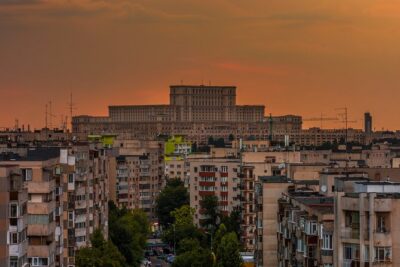

Museum of Communism Ticket with Communist Coffee
Read our review →
Dinner+Tour at Museum of Communism after closing
Read our review →Browse the lists this tour appears in