
Reviewed · BUCHAREST COMMUNISM AND CEAUSESCU TOURS
Exploring a Former Communist Prison
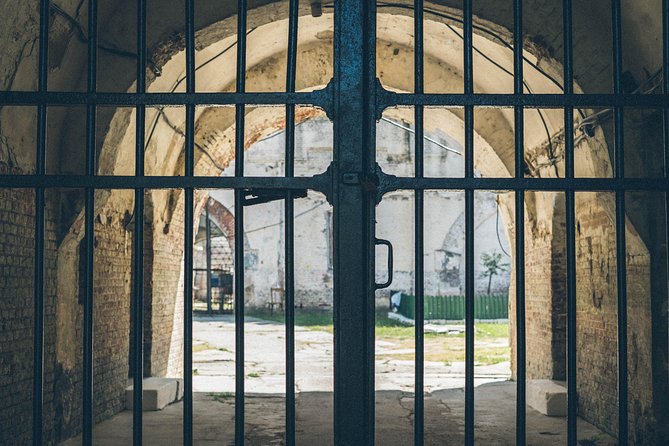
Fort 13 Jilava is the heart of this experience: a 19th-century military fort later used as a communist prison and execution site. You reach it after seeing Revolution Square, communist housing, and the Palace of Parliament, so the prison visit has a wider story around it rather than arriving as an isolated sight.
I like the small maximum of eight people, which leaves room for questions and gives the guide space to explain difficult subjects carefully. I also like the personal angle offered by guides such as Mircea, who was in Revolution Square in December 1989 when communism fell.
The main consideration is the subject matter. Fort 13 Jilava is a serious place, not a light sightseeing stop, and the six-hour route includes a drive through poorer parts of Bucharest. The price of $173.47 per person is high for a day in the city, though the small group, private-style vehicle, drinks, snacks, and rare prison access help explain the cost.
Key points at a glance
- Fort 13 Jilava is the main event: You enter a former military fort inside Bucharest’s largest prison complex.
- The tour connects places: Revolution Square, communist housing, Carol Park, and the Palace of Parliament help explain how the regime shaped the city.
- Mircea may guide your day: His personal connection to the December 1989 revolution adds a human voice to the history.
- Small groups matter: The tour is limited to eight people, useful when discussing a painful and complicated past.
- Practical extras are covered: You receive bottled water, a covrig or other local snack, coffee or tea, and one beer or equivalent.
- Bring a real camera: Phones are forbidden inside Fort 13, while cameras are allowed.
Why Fort 13 Jilava is worth the trip
Many Bucharest tours focus on grand buildings, old churches, and elegant streets. This experience takes a harder route. It asks you to look at the city through the communist period, including the machinery of detention and the social changes that followed.
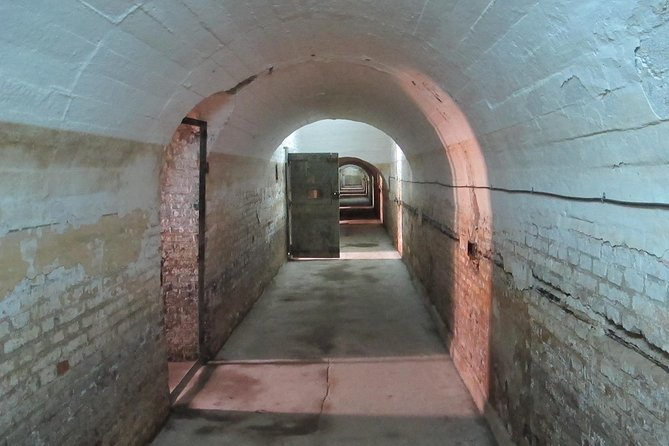
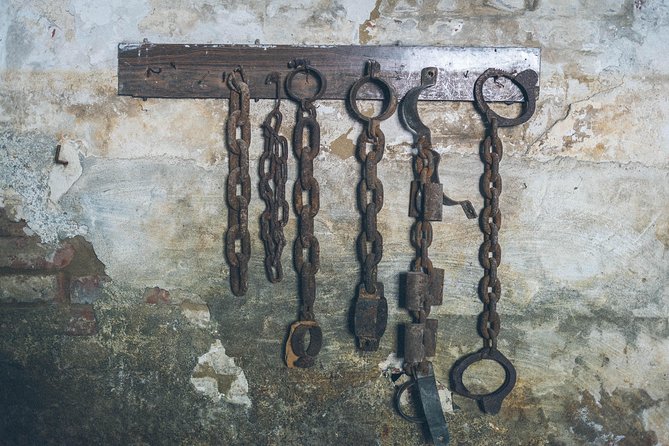
Fort 13 Jilava began as a military fort in the 19th century. Under communism, it became part of a prison system used against people who opposed the regime. The tour presents it as a detention and execution camp, making clear that this was not simply an old fortress with an interesting military past.
That distinction matters. You are not visiting a polished museum with a neat display and a tidy timeline. You are entering a memorial space connected to a working prison site. The setting gives the visit an added weight, but it also means you should expect basic conditions and an emotionally demanding stop.
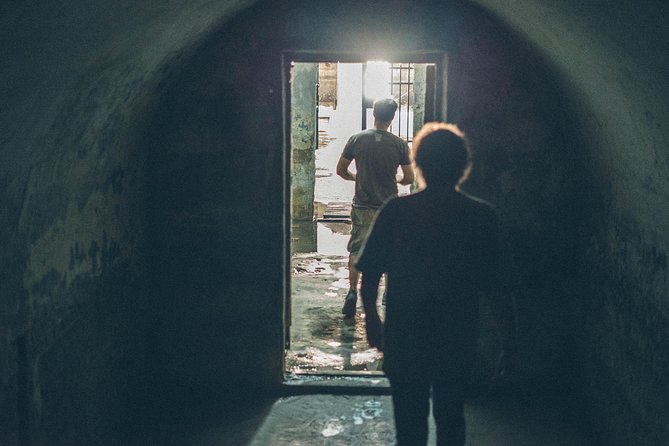
The prison visit lasts about two hours. That is a large portion of a six-hour day, and rightly so. You have time to look at the fort and listen rather than rush through a few rooms for a photograph.
More communism and Ceausescu tours in Bucharest:
- The Real tour of Communism
★ 5.0 · 666 reviews - Life under Communism
★ 5.0 · 358 reviews - 3-Hour Guided Tour of Communist Bucharest
★ 4.9 · 303 reviews
Revolution Square and the December 1989 turning point
The morning begins at the Memorial of Rebirth in Piața Revoluției at 9:30 a.m. This square is an important place to begin because it connects Bucharest’s older political story with the fall of communism.
You first receive an overview of how Bucharest developed over roughly 500 years. The guide also explains the city’s military fortification system, giving you a foundation before the tour shifts to the 20th century.
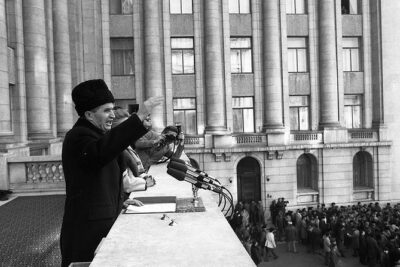
The most valuable part may be the guide’s account of December 1989. If Mircea leads your visit, you can hear from someone who was present in Revolution Square when communism collapsed. That does not replace historical context, but it gives the events a direct local voice.
You spend about an hour exploring different parts of the city by car and learning about the regime and its aftermath. This is more than a stop for a quick photograph. The point is to connect the square to the neighborhoods and institutions you see later.
Seeing communist Bucharest from the vehicle
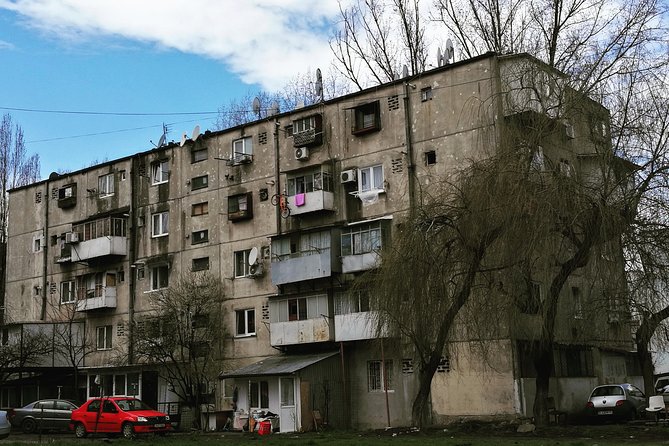
The drive through the city includes communist residential districts, described as the Bronx of Bucharest. You see the large bedroom-style housing blocks that shaped daily life for much of Romania during the final decades of the regime.
This part of the route is useful because communist rule was not only about political prisons. It also changed where people lived, how neighborhoods were built, and how the city functioned. The housing districts give you a view of that social history from the street.
The stop is not presented as a polished attraction, and that is part of its value. You see areas outside the usual tourist route and get a more direct picture of Bucharest’s uneven development. At the same time, the drive may feel uncomfortable for some people. You are looking at real neighborhoods rather than a staged historical set, so approach this section with respect and attention.
The air-conditioned vehicle makes the long route easier, especially in warm weather. With a maximum of eight people, the group should remain small enough for the guide to point out details and answer questions without turning the drive into a lecture from the front of a large coach.
The Palace of Parliament, seen from the outside
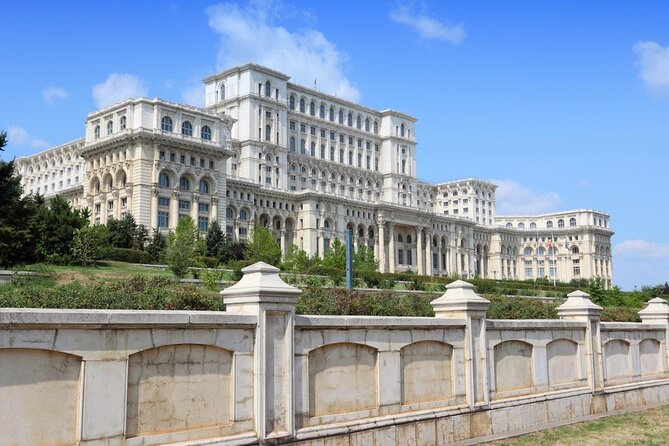
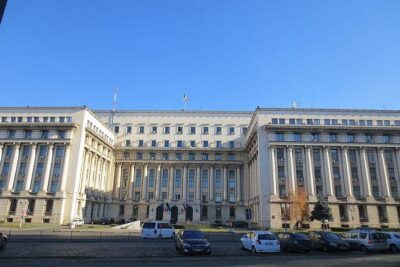
The Palace of Parliament receives a quick 20-minute stop. You circle one of the largest administrative buildings in the world and hear about its darker stories and its impact on the local community.
This is not an interior tour. Admission is not included, and the stop is mainly for exterior views and explanation. That makes it a useful pause rather than a full visit to the building.
The contrast is sharp. The palace represents the scale and authority of Nicolae Ceaușescu’s regime, while the surrounding story includes the people displaced and the huge resources used to create it. A short visit works well here because the building is difficult to understand as a normal sightseeing attraction. The guide’s context is more important than simply taking a picture of its enormous facade.
If you want to tour the interior, you will need to arrange that separately. This experience does not provide it.
Same city, a completely different sort of day:
- Bucharest: Dracula’s Castle, Peles Castle, & Brasov Old Town
★ 4.5 · 17,858 reviews - Bucharest: Dracula Castle, Peles Castle & Brasov Old Town
★ 4.6 · 10,891 reviews - Bucharest: Dracula’s Castle, Peleș Castle & Brașov Day Trip
★ 4.5 · 5,919 reviews - Bucharest: Palace of Parliament Tickets and Guide
★ 4.3 · 3,182 reviews
Carol Park and the communist memorial
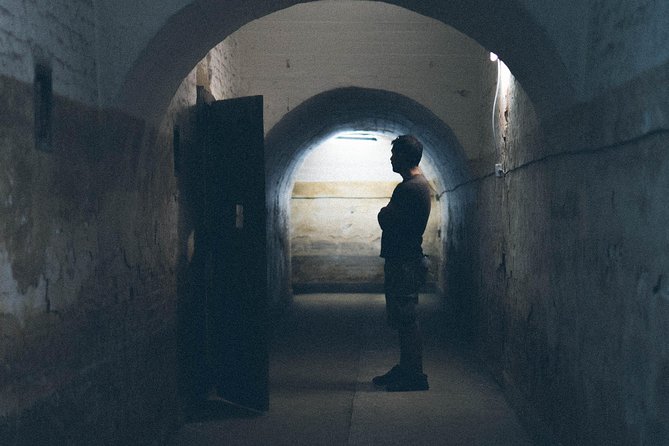
Carol Park provides a quieter stop of about 30 minutes. Here you see a mausoleum associated with communist leaders and hear more about the way the former regime commemorated its own figures.
The park gives the day some breathing room after the city drive and before Fort 13. It also shows how public spaces can carry competing meanings. A monument may be designed to honor one political order, then viewed very differently after that order disappears.
The itinerary also describes a traditional communist meal at this point. The stated food inclusions specifically cover a covrig and local traditional bites, plus one drink, coffee or tea, and bottled water. Because a full meal is not separately itemized in the inclusions, I would confirm exactly what is provided if lunch matters to your plans.
The included covrig, a Romanian pretzel, is a welcome local touch. It is simple street food, but it suits the tone of the tour better than a generic packaged snack.
Entering Fort 13 Jilava
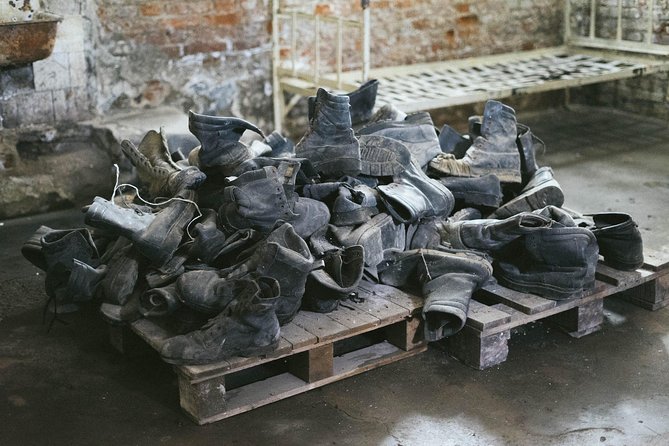
The final major stop is Fort 13 Jilava, reached outside central Bucharest. The fort sits inside an active prison complex, which makes this visit unlike a normal museum admission.
You spend around two hours at the site. That length gives the guide time to explain how a military structure became a place of communist detention and execution. It also allows you to take in the setting without racing through it.
Mobile phones are not allowed inside the prison. You may take photographs only with a camera, so leave your phone secured in the vehicle or another permitted place and bring a standalone camera if you want images. Do not count on using your phone for notes, translation, or photographs during the visit.
The restriction may feel inconvenient, but it also changes the mood. You are less likely to treat the fort as a casual photo stop. Pay attention to the guide, the spaces, and the memorial function of the site.
Expect the material to be sober. The experience is best for someone who wants to understand how repression worked, not for someone looking for an entertaining final attraction. The fort’s power comes from its connection to real imprisonment and suffering.
What the $173.47 price includes
At $173.47 per person, this is one of the more expensive half-day experiences in Bucharest. The cost is easier to assess when you look at what is bundled together.
You receive:
- Air-conditioned transportation for the day
- Admission to Fort 13 Jilava
- A covrig and local traditional bites
- One 500-milliliter bottle of water
- One 400-milliliter beer or equivalent
- Coffee or tea
The strongest value is the access and transport. Fort 13 is outside central Bucharest and connected to an active prison site, so arranging the visit on your own may not be simple. You also get a small group and a guide who can connect several parts of the city into one story.
The weak point is that the itinerary covers a lot in six hours. Revolution Square, the communist neighborhoods, the Palace of Parliament, Carol Park, and Jilava each receive limited time except for the fort. If you prefer long visits at one museum or building, this pace may feel busy.
Additional food, drinks, souvenirs, and personal purchases are not included. The tour does include a beer or equivalent, but you should not assume that all meals or extra refreshments are covered.
Who should book this experience
I would recommend this tour to you if you have already seen some of Bucharest’s main sights and want to understand the city’s recent political past. It also suits anyone with a strong interest in Cold War Europe, political repression, military architecture, or the 1989 Romanian revolution.
The tour is a good match for curious, serious-minded visitors who appreciate local explanation more than a long list of photo stops. The personal account connected to Revolution Square can make the morning especially meaningful.
You may want to skip it if you dislike prison sites, find political history upsetting, or want a relaxed food-and-scenery outing. The route includes a poorer urban district and a former detention camp, so the tone remains sober for much of the day.
The small group helps. Eight people is a useful limit for asking questions, and it avoids the feel of a large bus tour. Still, the subject itself matters more than the group size. Go because you want to face a difficult part of Romania’s past.
Timing, meeting point, and cancellation terms
Meet at the Memorial of Rebirth in Piața Revoluției at 9:30 a.m. The activity ends back at the same meeting point after about six hours.
The starting point is near public transportation. Confirmation is sent within 48 hours, subject to availability, and the experience requires a minimum number of participants.
You can cancel for a full refund up to 24 hours before the start time. Changes made less than 24 hours before the start are not accepted, and late cancellations are not refunded. Poor weather can also lead to a new date or a full refund.
Most people can participate, according to the supplied details, but anyone concerned about mobility or the physical conditions at a former fort should ask the operator before booking. The most useful preparation is simple: wear practical clothes, bring water if you want more than the included bottle, and carry a camera instead of relying on your phone.
Should you book Fort 13 Jilava?
Book it if you want the serious side of Bucharest: the revolution, the housing blocks, the political monuments, and a former communist prison that is still connected to an active prison complex. The tour gives you access and context that would be difficult to assemble alone.
Do not book it expecting a conventional city tour or a cheerful afternoon outing. The price is substantial, and several stops are brief. But for a small group of up to eight people, transport, refreshments, and a two-hour visit to Fort 13 Jilava, the cost can be fair for the right audience.
Bring a camera, listen closely, and give the subject the respect it deserves. If that sounds like your kind of Bucharest, this is a powerful choice.
FAQ
How long does the experience last?
The experience lasts approximately six hours.
Where does the tour begin?
It begins at the Memorial of Rebirth in Piața Revoluției, Bucharest.
What time does the tour start?
The scheduled start time is 9:30 a.m.
Where does the tour end?
It ends back at the starting point in Piața Revoluției.
Is admission to Fort 13 Jilava included?
Yes, admission to Fort 13 Jilava is included.
Are mobile phones allowed inside the prison?
No. Mobile phones are not allowed inside the prison.
Can I take photographs at Fort 13 Jilava?
Yes, but only with a camera. Photography with a mobile phone is not allowed inside.
Is the Palace of Parliament admission included?
No. The Palace of Parliament stop is an exterior visit, and admission is not included.
What food and drinks are included?
The experience includes a covrig and local traditional bites, one 500-milliliter bottle of water, one 400-milliliter beer or equivalent, and coffee or tea.
How many people can join the tour?
The group has a maximum of eight participants.
Newest Bucharest trips we have written up
- Bucharest: Dealu Mare Winery Private Trip with Wine Tasting★ 4.9 · 6 reviews
- Winery touring & private wine tasting – one day private tour★ 5.0 · 3 reviews
- Traditions in Bucharest: Village Museum and Wine Tasting★ 5.0 · 8 reviews
- Your rendez-vous with Europe’s past: time-travel to Maramures, Transylvania★ 5.0 · 6 reviews
- Village Museum Bucharest Guided Tour★ 5.0 · 6 reviews
- Private Wine Tasting at Bucharest’s First Wine Bar★ 5.0 · 3 reviews
- Walking Tour of Bucharest City Center – Private Tour★ 5.0 · 4 reviews
- Wine tasting in Bucharest Old town – bonus cheese platter★ 4.5 · 6 reviews
Bucharest Communism and Ceausescu Tours, compared.
Bucharest Essential Tour: Old Town, Calea Victoriei & Communism
Read our review →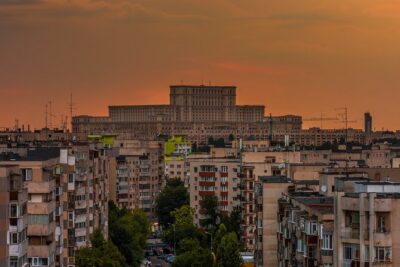


Museum of Communism Ticket with Communist Coffee
Read our review →
Dinner+Tour at Museum of Communism after closing
Read our review →Browse the lists this tour appears in