
Reviewed · BUCHAREST
Slavery in Romania Myths and Truths About Gypsies
Bucharest’s Roma story is rarely told through grand buildings, political statues, a park walk, and a small craft shop. This three-hour route does exactly that, connecting slavery, education, politics, wartime persecution, and living Roma traditions. The Holocaust Memorial and the final stop at Mesteshukar ButiQ give the tour its strongest emotional weight.
I like the small group size, limited to 15 people, and the way the route uses free public places rather than padded attractions with extra admission fees. I also like that guide Mihai is specifically praised for his command of Romanian Roma history. The main consideration is pace: this is a walking tour with several stops, so you need moderate physical fitness and comfortable shoes.
Key points to know before booking
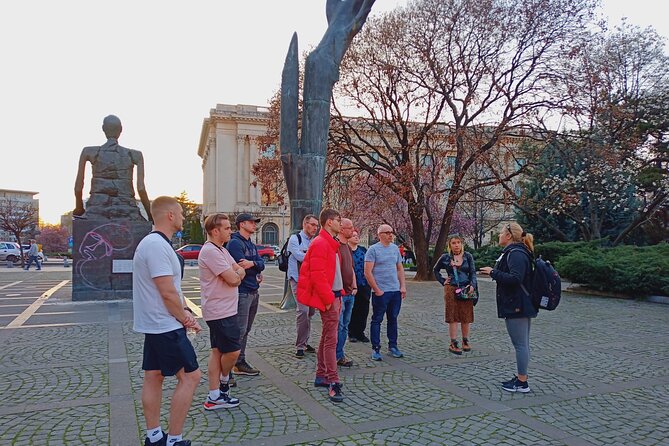
- A serious subject handled across eight central Bucharest stops: The route covers Roma enslavement, political reform, education, the Holocaust, and present-day craft.
- The Holocaust Memorial is the emotional center: You will learn about the persecution of Roma people during the Second World War and the often overlooked Holocaust in Romania.
- Mesteshukar ButiQ gives the tour a present-day ending: Handmade Roma jewelry and crafts connect the historical discussion with living skills and culture.
- The tour stays outdoors for most of its three hours: Admission is free at the listed stops, but you will walk between them.
- The group is capped at 15 people: That is small enough for questions without making the outing feel private or expensive.
- A cake snack is included, coffee and tea are not: There is a short café stop, but you pay for those drinks yourself.
Why this Bucharest walk matters
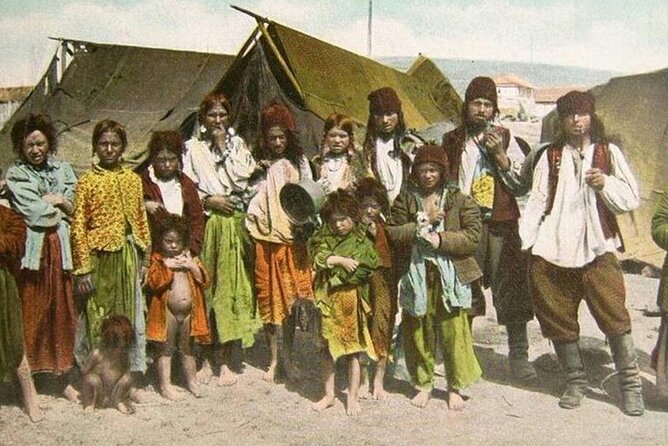
The title uses the word Gypsies, a term found in older English-language writing and in the tour’s own name. During the walk, you will be dealing with the history of Roma people, including centuries of forced labor and discrimination in Romania. Roma is the respectful term used today, and that distinction matters when discussing a community whose story has often been told by outsiders.
This is not a tour built around one museum or one preserved building. It uses Bucharest itself as the classroom. A concert hall, a politician’s statue, a former princely residence, a school, a park, a memorial, and a craft store each add a different piece.
I find that approach useful because it shows how Roma history was tied to the wider development of Romania. The subject is not kept apart from national politics or city life. You will hear about people who shaped modern Romania, then consider how Roma communities were treated within the same society.
The three-hour length is enough to develop an argument without turning the outing into a full-day commitment. Still, the time includes walking between every stop. You are not simply being driven from one sight to another, so plan for a steady outing rather than a seated lecture.
More Roma Community Tours in Bucharest
- Slavery in Romania,Myths and Truths on Gypsies, Walking Tour
★ 4.9 · 42 reviews - Bucharest: Real Roma Community – Crafting Workshop
★ 5.0 · 13 reviews - The Real Story of Gypsies – Slavery in Romania
★ 5.0 · 7 reviews
Start near Piața Amzei and the Romanian Athenaeum
The meeting point is at Teatrul Ion Creangă, Sala Mare, on Strada Piața Amzei 13. The tour begins at 10:00 a.m., placing you in one of central Bucharest’s useful starting areas.
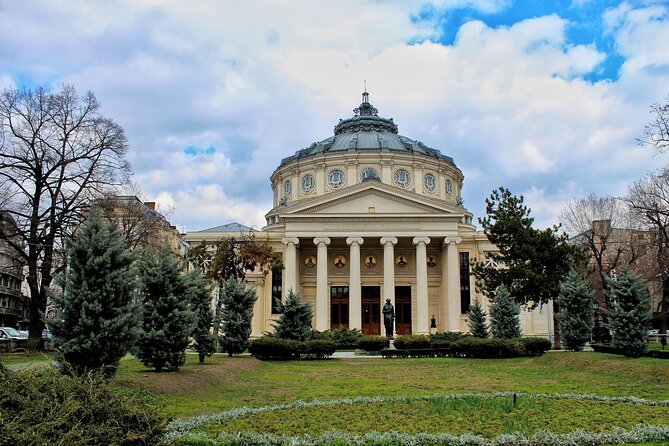
The first stop is the Romanian Athenaeum, one of the city’s best-known cultural buildings. It houses the National Romanian Philharmonic and is often called Romania’s house of art. Here, the guide places the Roma story inside the wider artistic and civic life of the capital.
You should not expect a concert or an extended interior visit. The stop lasts about 20 minutes, and admission is listed as free. Its value is the setting and the conversation. The building provides an immediate reminder that Bucharest’s national culture is not a single, simple story.
The Athenaeum also helps set the tone. You are beginning with a major public symbol, not a remote site connected only to one minority community. That framing can help you understand the later discussion about politics, education, and public memory.
Iuliu Maniu and the politics of modern Romania
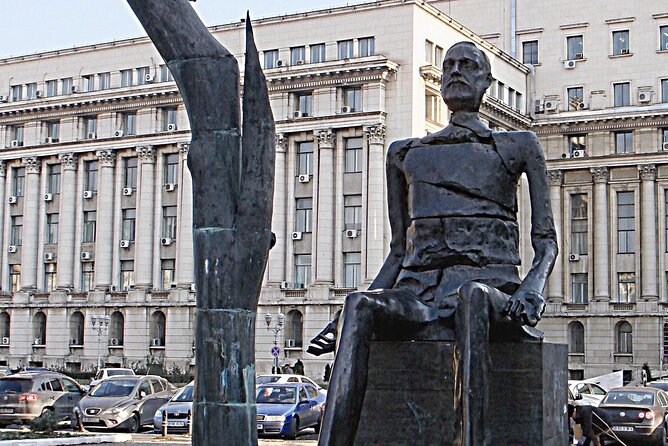
The route continues to the statue of Iuliu Maniu, with about 20 minutes devoted to the stop. Maniu was an important political figure in Romanian public life, and his connection to the Roma story is explained as part of the country’s political development.
This is the kind of stop that works best with a guide. A statue alone tells you little beyond a name and a pose. The useful part is learning why a national politician belongs in a tour about Roma people, and how political decisions affected the course of modern Romania.
I like this stop because it prevents the tour from becoming only a sequence of suffering. Politics, law, and state-building shaped Roma life, and the statue gives the guide a concrete place to discuss those links.
The drawback is that visitors wanting a full biography of Maniu may find the time short. The focus remains the tour’s central theme, not every chapter of his career.
Palatul Stirbei and the age of Wallachian rulers
At Palatul Stirbei, you step into a nineteenth-century setting associated with Barbu Stirbey, one of the rulers of Wallachia. The stop lasts about 20 minutes and gives the guide another way to discuss the social and political order that shaped Roma lives.
This location is especially useful because it connects the subject to the old ruling class. Roma enslavement in the Romanian principalities was not an isolated custom or a vague medieval practice. It was part of a larger system involving rulers, estates, monasteries, and private owners. The guide’s discussion here helps place that past in a physical and political setting.
The building also breaks up the walking route with a strong architectural landmark. You will not need a separate admission ticket according to the tour details, but you should not assume that the schedule includes a full interior tour. The stated stop is a short visit connected to the story.
Same city, a completely different sort of day:
- Bucharest: Dracula’s Castle, Peles Castle, & Brasov Old Town
★ 4.5 · 17,858 reviews - Bucharest: Dracula Castle, Peles Castle & Brasov Old Town
★ 4.6 · 10,891 reviews - Bucharest: Dracula’s Castle, Peleș Castle & Brașov Day Trip
★ 4.5 · 5,919 reviews - Bucharest: Palace of Parliament Tickets and Guide
★ 4.3 · 3,182 reviews
Cismigiu Park, ruins, and a slower stretch
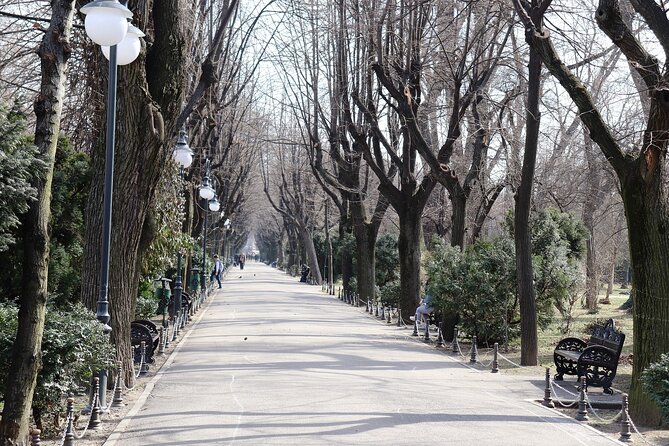
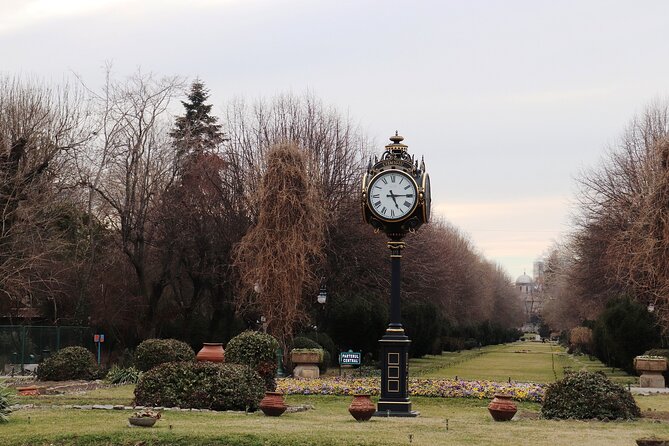
Cismigiu Park provides the most relaxed portion of the morning. You will spend about 30 minutes walking through Bucharest’s largest and most beautiful garden, with several short stops along the way.
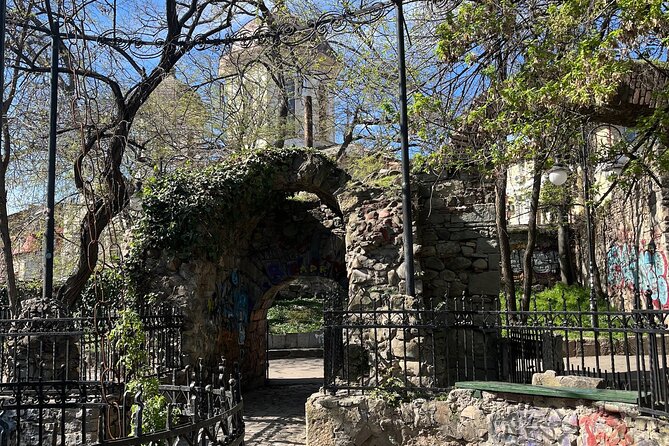
The park section includes a well-known high school, the ruins of an old monastery, a viewpoint over the gardens, and other points selected by the guide. These details make the walk more varied than a simple path from one monument to the next.
For me, this is where the tour’s format works particularly well. You get a chance to breathe, look around, and keep discussing the subject without being fixed in front of a plaque. The garden setting also gives the group a change of mood before the more painful material at the Holocaust Memorial.
Do not read the word park as a promise of a long free period. The 30 minutes are still part of a guided route, and the guide uses the space to make specific connections. You will continue walking, so sturdy shoes remain a good idea.
Education at Gheorghe Lazăr National College
The Gheorghe Lazăr National College sits near the entrance to Cismigiu Park and receives about 15 minutes of attention. It is described as one of Bucharest’s most highly regarded and frequently cited high schools.
The point here is education as a route toward opportunity and social change. The school gives the guide a simple, visible place to discuss why access to education matters so much for Roma communities.
That idea is easy to reduce to a slogan, but the location makes it more concrete. You are looking at an institution associated with academic achievement while considering who has historically been allowed to enter such institutions, and who has been pushed to the margins.
This stop is brief, so expect a focused explanation rather than a visit inside the school. Its importance comes from the contrast between a respected educational institution and the long barriers Roma people have faced.
The Holocaust Memorial and the Forgotten Holocaust
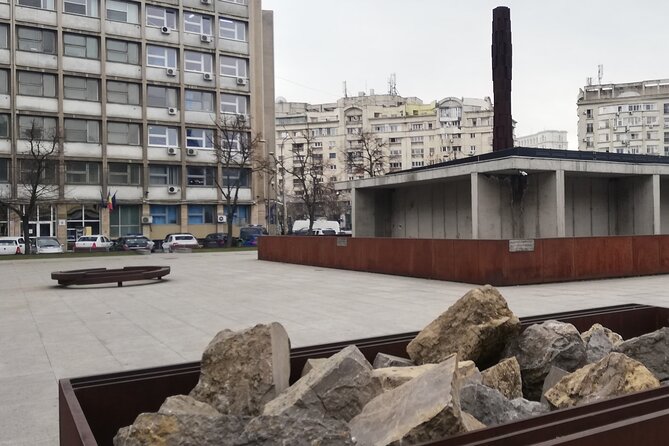
The Holocaust Memorial is the most serious stop on the route. You will spend about 15 minutes learning about the persecution of Roma people during the Second World War and what is often called the Forgotten Holocaust.
The memorial is described as the most impressive monument built in memory of Holocaust victims in Romania. That makes it more than a quick photo stop. It is the place where the tour asks you to confront wartime persecution directly and consider why Roma victims have received less public attention than they deserve.
The subject can be difficult, and the short time does not make it less weighty. You may want to pause after the guide finishes speaking rather than rushing straight into the next part of the route.
This stop is one reason I would not treat the tour as a light sightseeing walk. The experience asks for attention and respect. It can be particularly useful if you want Romanian history presented with Roma voices and experiences included, rather than added as a footnote.
Mihail Kogălniceanu and the written record
At Piața Mihail Kogălniceanu, the guide introduces Mihail Kogălniceanu in relation to Roma history. He was a major Romanian politician and writer, and he is identified here as the first person to write about Romanian Gypsies.
The square gives the tour another public figure and another angle on historical memory. Written accounts can preserve evidence, shape policy, and influence how later generations understand a community. Kogălniceanu’s place on this route shows that Roma history was discussed in Romanian public life, even when the treatment of Roma people remained deeply unequal.
The stop lasts only about 10 minutes, making it one of the shortest. That is enough for a clear connection, but not enough for a full study of his writing or political career. If you have a strong interest in nineteenth-century Romanian politics, you may want to ask questions while the group is here.
Mesteshukar ButiQ brings the story into the present
The final stop is Mesteshukar ButiQ, at Bulevardul Mihail Kogălniceanu 12. This small shop sells handmade pieces made by Roma craftspeople, and the visit lasts about 20 minutes.
This ending is one of the best choices on the route. After discussing enslavement, exclusion, education, and wartime murder, you finish by looking at skill, work, and cultural expression in the present. The shop is not just a retail stop. It gives you a direct way to see Roma craft traditions represented through objects made by Roma artisans.
You might find jewelry and other handmade pieces, and you can consider buying something if you want a physical reminder of the walk. The available information does not specify prices or the exact range of goods, so treat shopping as an option rather than a guaranteed part of the package.
The route ends here, not back at the starting point. That matters when planning the rest of your day. It also creates a clear finish: the tour moves from public monuments and historical memory to a living expression of Roma talent.
Group size, walking pace, and what to bring
The group is limited to 15 people. That is a useful middle ground. You get more room for questions than on a large city tour, while the price remains below what a private guide would usually suggest.
The experience lasts about three hours, with the remaining time used to walk between stops. The listed stop times add up to roughly two and a half hours, so the rest is spent moving through central Bucharest and making the short café pause.
Wear shoes suited to city walking. The tour requires a moderate level of physical fitness, and the route includes a park walk and several transitions between sites. Service animals are allowed, and the route is near public transportation, which helps with reaching the meeting point.
A professional English-speaking guide leads the tour. Mihai is the guide specifically praised for his strong understanding of Romanian Roma history, though you should confirm the assigned guide when booking if that matters to you.
A cake snack is included. Coffee and tea cost extra during the short stop, so carry a little money if you want a hot drink.
Is $127.37 a fair price?
At $127.37 per person, this is not a bargain-priced city stroll. You are paying for a specialized subject, an English-speaking professional guide, a small group capped at 15, and three hours of structured walking through central Bucharest.
The free admission at each listed stop helps explain where the price goes. You are not paying for major entrance tickets. The value is in the guide’s interpretation, the route design, and the care needed to connect places that would otherwise seem unrelated.
The price makes the most sense if Roma history is a main reason you want this tour. If you only want a general introduction to Bucharest’s landmarks, a standard city walk may cover more sights for less money. If you want to understand how Roma history fits into Romanian politics, public memory, and current craft traditions, this focused tour offers something more specific.
The high rating and praise for Mihai’s historical command are encouraging, but the small number of published ratings means I would not treat that score as the only reason to book. Judge the tour by its subject and format first.
Who should book this walk?
I would recommend it to people who want history linked to real streets and public places. It suits first-time visitors who want a serious subject alongside Bucharest sightseeing, as well as returning visitors who have already seen the main landmarks.
It is also a good fit if you care about minority history, Holocaust education, political reform, or ethical cultural tourism. The final craft shop adds a practical way to support Roma artisans, though purchasing something is not required.
I would think twice if you dislike walking, want a museum-heavy program, or prefer a cheerful orientation tour with little difficult material. The route includes painful history, and the guide’s job is to address it plainly.
Should you book it?
Book this tour if you want a focused and thoughtful look at Roma history in Romania, especially if the Holocaust Memorial and the Mesteshukar ButiQ visit appeal to you. The route has a clear purpose, a manageable three-hour length, and a small group format.
Skip it if you are looking mainly for interior sightseeing, extensive free time, or a low-cost overview of Bucharest. For the right audience, the price buys more than a walk between landmarks. It buys context, and in this case, context is the point.
Free cancellation is available when you cancel at least 24 hours before the 10:00 a.m. start time. Changes or cancellations made less than 24 hours ahead are not refunded.
FAQ
Where does the tour begin?
It begins at Teatrul Ion Creangă, Sala Mare, at Strada Piața Amzei 13 in Bucharest.
What time does the tour start?
The tour starts at 10:00 a.m.
Where does the tour end?
It ends at Mesteshukar ButiQ, at Bulevardul Mihail Kogălniceanu 12 in Bucharest.
How long does the tour last?
The tour lasts approximately three hours.
Is the tour offered in English?
Yes. A professional English-speaking guide leads the experience.
How many people can join the group?
The tour has a maximum of 15 participants.
Are entrance tickets included?
All listed stops show free admission. No separate paid entrance ticket is identified for the route.
Is food included?
A cake snack is included. Coffee and tea are not included and must be paid for separately.
Is the tour physically demanding?
Participants should have a moderate level of physical fitness. The remaining time is used for walking between stops.
Can I cancel for a full refund?
Yes, if you cancel at least 24 hours before the experience start time. Cancellations made less than 24 hours before the start are not refunded.
Newest Bucharest trips we have written up
- Bucharest: Dealu Mare Winery Private Trip with Wine Tasting★ 4.9 · 6 reviews
- Winery touring & private wine tasting – one day private tour★ 5.0 · 3 reviews
- Traditions in Bucharest: Village Museum and Wine Tasting★ 5.0 · 8 reviews
- Your rendez-vous with Europe’s past: time-travel to Maramures, Transylvania★ 5.0 · 6 reviews
- Village Museum Bucharest Guided Tour★ 5.0 · 6 reviews
- Private Wine Tasting at Bucharest’s First Wine Bar★ 5.0 · 3 reviews
- Walking Tour of Bucharest City Center – Private Tour★ 5.0 · 4 reviews
- Wine tasting in Bucharest Old town – bonus cheese platter★ 4.5 · 6 reviews