
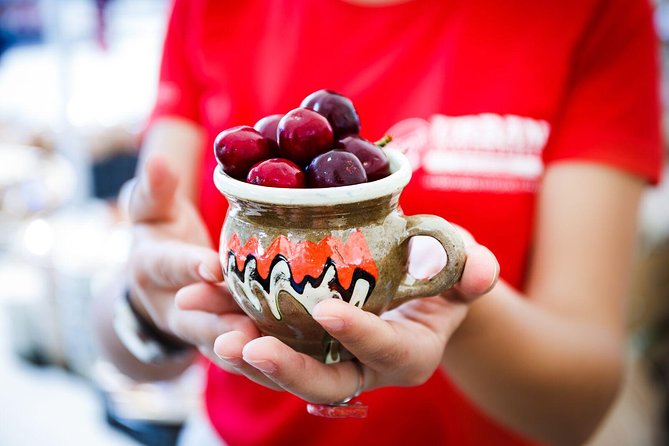
Reviewed · FOOD
Taste Bucharest: A Food Lover’s Tour of Markets & Neighbourhoods
Bucharest’s best food experiences are often found away from the grand avenues. This five-hour tour takes you from the National Theatre through old neighborhoods and the Armenian Quarter, then by tram to Obor Market for cheeses, cured meats, mici, seasonal produce, beer, and țuică.
I like the way the tour joins food with city history instead of treating lunch as the whole point. I also like the small maximum of 12 people, which gives guides such as Angelica, Bogdan, Mihaela, Julian, and Andreea room to answer questions and adjust the pace.
The main caution is simple: this is not a parade of hot Romanian dishes. Much of the tasting is cold food, spreads, cheeses, and meat, with mici and a doughnut providing the warm finish. You will also walk about 6 kilometers and use public transport.
Key points at a glance
- Obor Market is the main event: Shop stalls, produce, deli counters, and street food show you where Bucharest residents buy and eat.
- The food is broad but not fixed: Expect cheeses, cured meats, zacusca, aubergine dip, beans, fish roe, pickles, mici, and a Wallachian doughnut, with seasonal changes.
- History comes between bites: The route covers the 1989 Revolution, Neo-Romanian buildings, Orthodox architecture, the Armenian Quarter, and Communist-era Bucharest.
- You get local drinks: A shot of țuică, up to three beers, or soft drinks and coffee or tea are included.
- The group stays manageable: A maximum of 12 people makes this more personal than a large coach tour.
- Come ready to walk: The route lasts about five hours, includes roughly 6 kilometers on foot, and uses Bucharest trams and other public transport.
Why this food tour feels different
This is a food tour with a city route attached, not simply a series of restaurant stops. You begin in central Bucharest, then move east through older neighborhoods before reaching Obor, one of the city’s best-known markets.
That route matters. Bucharest can feel divided between grand central buildings, quiet streets lined with aging villas, Communist-era blocks, and local markets where daily life is less polished and more direct. You see several of those sides in one outing.
The tour is also useful early in a Bucharest visit. A guide can explain unfamiliar foods before you order them on your own, point out areas beyond the center, and offer practical suggestions for later meals. Andreea, Angelica, Bogdan, Julian, Mihaela, Elena, Daniel, and Alex are among the guides praised for combining food explanations with stories about Romania and the capital.
The experience has earned a 4.9 rating from 689 ratings, with 98 percent recommending it. That high score reflects a clear pattern: the guides are usually the strongest part of the day, and the combination of food, architecture, and public transport gives the tour more substance than a standard tasting walk.
More food tours in Bucharest:
- Street Food’n’Culture Tour
★ 5.0 · 209 reviews - Wine Tasting in Bucharest
★ 5.0 · 183 reviews - Discover Bucharest: Private Highlights and Traditional Food Tour
★ 5.0 · 86 reviews
Starting at the National Theatre and the 1989 Revolution
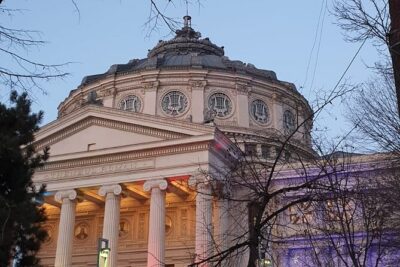
Meet at the Ion Luca Caragiale National Theatre on Bulevardul Nicolae Bălcescu. The first stop lasts about 15 minutes and sets the political tone for the day.
Here, your guide explains the theatre’s role during the Romanian Revolution, including the street fighting that shaped Bucharest in December 1989. This is a brief stop, but it gives you useful context for understanding why the city contains such a mix of grand older buildings, Communist construction, and post-1989 change.
Do not expect a full museum visit. Admission is free, and the value comes from the guide’s explanation rather than from entering a paid attraction. If you prefer a food tour to begin with a snack in hand, this opening history may feel a little slow. For me, it earns its place because it frames the capital before the tastings begin.
Strada Batiștei and the old American embassy
The walk to Strada Batiștei takes about 20 minutes. This is where the tour begins to feel less like a central sightseeing route and more like a neighborhood walk.
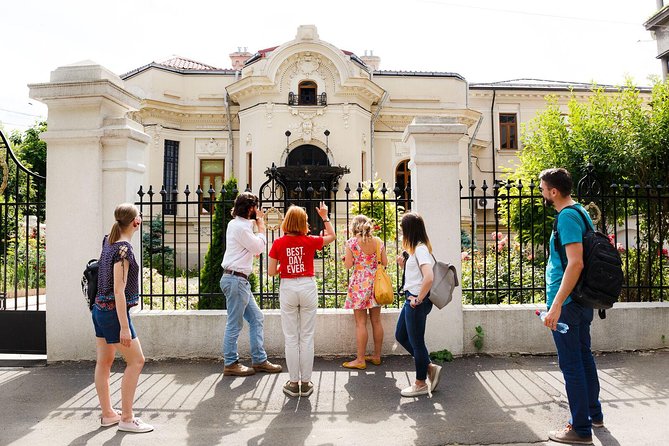
The street was once home to the old American embassy. Along the way, you learn about 19th-century Neo-Romanian architecture and the area’s place in Bucharest’s past.
The architecture is part of the pleasure here. Rather than presenting Bucharest as a city of only famous monuments, the tour draws your attention to houses and streets that are easy to pass without a guide. Your guide can explain the styles, ownership, and changes that shaped the neighborhood.
The walk also lets you work up an appetite. Wear shoes you can use comfortably for several hours, since the full route includes about 6 kilometers on foot, with public transport breaking up the longer stretches.
Batiștei Church and Romanian Orthodox detail
At Batiștei Church on Strada Batiștei 19, you spend about 15 minutes learning about the building and its role in Romanian Orthodox heritage.
This is a short stop, but it adds another layer to the route. You are not only sampling national dishes. You are also seeing the religious buildings, older homes, and street plan that help explain Bucharest’s character.
The stop is best appreciated as part of the sequence. The National Theatre gives you modern political context, Strada Batiștei shows older architecture, and the church brings in Romanian religious tradition. None of these visits takes long enough to become a formal monument tour, which helps keep the day moving.
Same city, a completely different sort of day:
- Bucharest: Dracula’s Castle, Peles Castle, & Brasov Old Town
★ 4.5 · 17,858 reviews - Bucharest: Dracula Castle, Peles Castle & Brasov Old Town
★ 4.6 · 10,891 reviews - Bucharest: Dracula’s Castle, Peleș Castle & Brașov Day Trip
★ 4.5 · 5,919 reviews - Bucharest: Palace of Parliament Tickets and Guide
★ 4.3 · 3,182 reviews
The Armenian Quarter and Bucharest’s oldest documented house
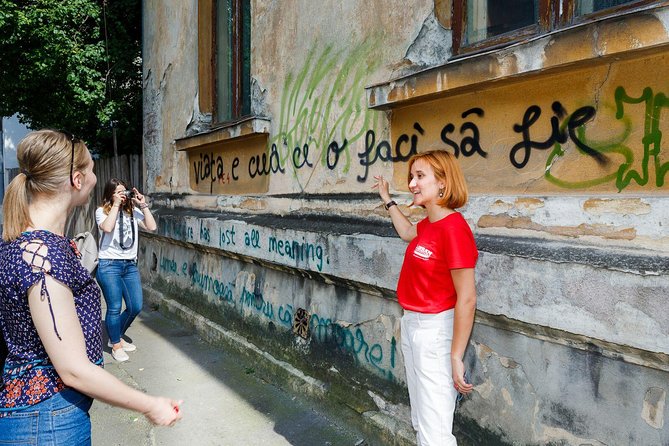
The Armenian Church and surrounding quarter receive about an hour, making this the longest cultural stop before Obor Market.
This part of Bucharest is known for mixed architectural influences and its Armenian community. You also visit the city’s oldest documented house. That detail makes the area especially worthwhile for anyone interested in how Bucharest grew through different communities and building styles.
Your guide’s storytelling matters here. Mihaela has been praised for showing parts of the city away from the usual center, while guides such as Andreea and Julian have been singled out for explaining Romanian history and architecture in clear, friendly English.
This is also a point where the tour can feel history-heavy if you want nonstop eating. One person found the historical portion a little long and expected more cooked food. That is a fair warning. The tour promises culture as well as food, so you should book it because you want both.
The tram ride along Calea Moșilor
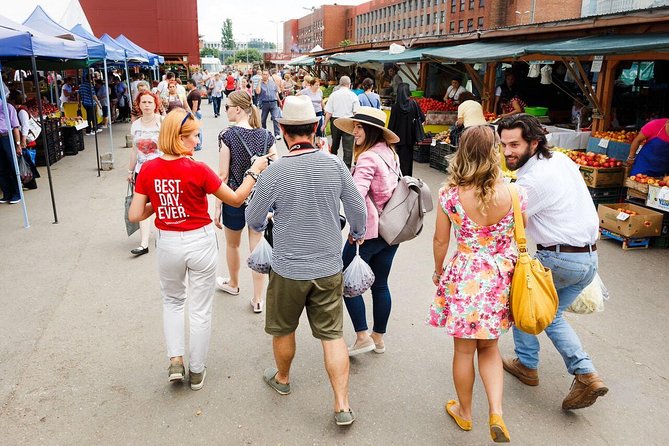
Next comes a short tram ride along Calea Moșilor, lasting about 20 minutes. You move into Communist-era Bucharest on the way to Obor.
The tram is not just a practical transfer. It shows you how locals move through the city and gives your feet a break. It also links the older streets around Batiștei with the market district, making the route feel like a small cross-section of Bucharest rather than a loop around the tourist center.
Public transport can be part of the fun, but it also means you should expect ordinary city conditions. The experience is not a private vehicle tour, and exact routes may change. The operator can adjust the route and places visited according to the day’s conditions.
Obor Market, the tour’s main feast
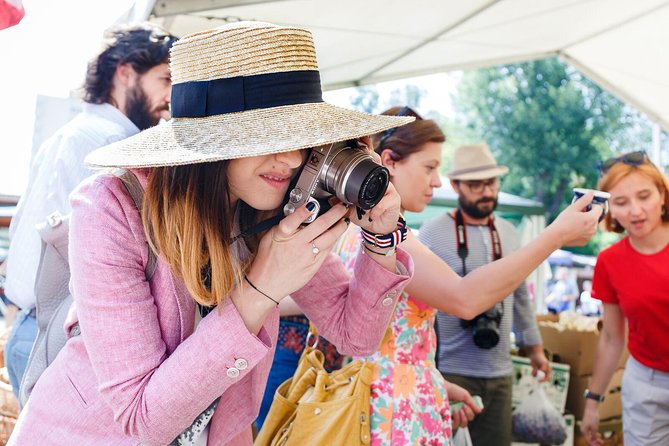
You spend about 1 hour and 40 minutes at Piata Obor Bucuresti. This is where the food side takes over.
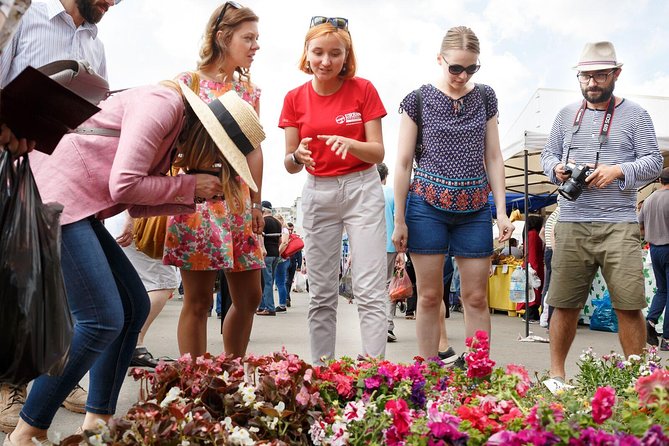
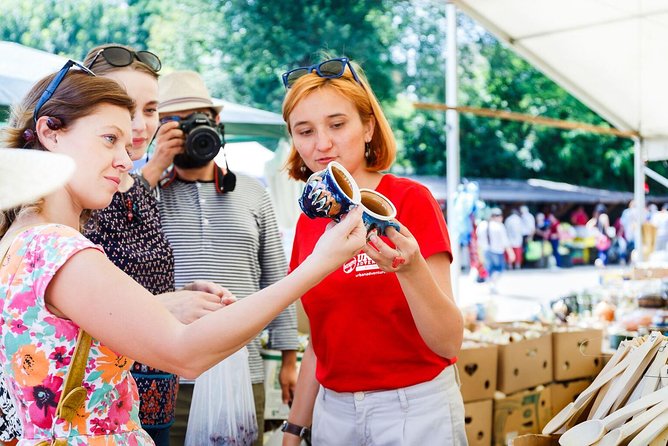
Obor is a large local market with produce, deli goods, traditional items, and street food. You walk through the stalls, take in the smells and colors, and learn how different foods fit into Romanian cooking. Guides may buy fresh produce during the visit and use it as part of the tasting, adding a practical market lesson to the meal.
The food generally includes a peasant platter with some combination of:
- Aubergine dip and zacusca
- Whipped beans and fish roe
- Telemea and burduf cheeses
- Cow, sheep, and goat cheeses
- Sausages, smoked bacon, and cracklings
- Red onions, tomatoes, and toast
- Seasonal produce such as pickles, grapes, watermelon, wild strawberries, or wild garlic
Exact items depend on the season and what is available that day. That is good news for freshness, but it means you should not treat every listed item as guaranteed.
Romanian food can be especially rewarding when you understand the ingredients. Zacusca, for example, is a vegetable spread often made with eggplant and peppers. Telemea is a salty fresh cheese, while burduf has a stronger sheep-cheese character. Cracklings and smoked bacon bring a heavier, old-fashioned note to the platter.
Mici, mustard, beer, and a Wallachian doughnut
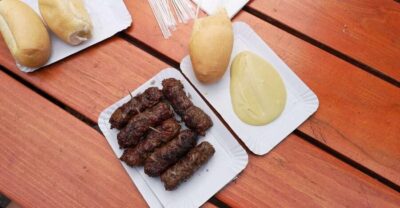
The most recognizable hot bite is mici, Romanian grilled skinless sausage served with mustard. This is one of the tour’s clearest food highlights, and it gives you the smoky, savory dish some people expect from a Romanian food tour.
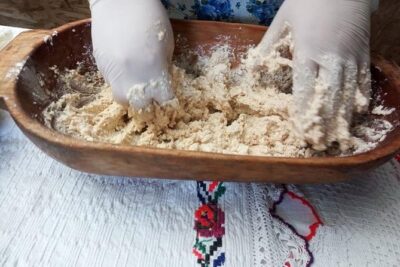
You may also try a Wallachian doughnut toward the end. The doughnut is a small but welcome finish after the salty foods, and several guides have made it a memorable part of the day.
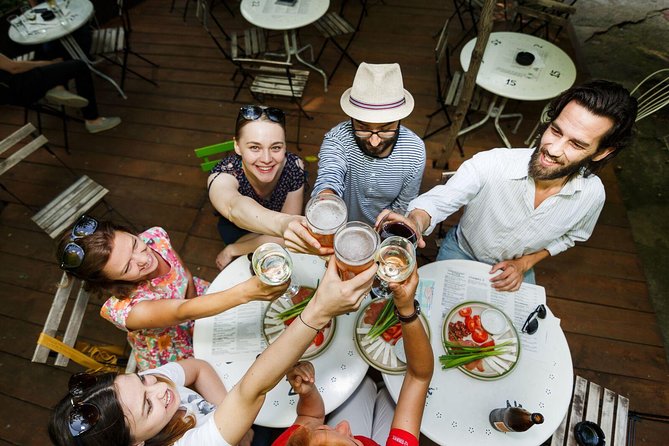
Drinks usually include a shot of țuică, Romania’s fruit brandy, and up to three beers. Nonalcoholic choices include soft drinks, coffee, or tea. Drink inclusions can change with availability, so tell the guide if you want a nonalcoholic option.
The alcohol servings make the $102.79 price easier to assess, but the real value comes from the amount of food, the market access, and the guide’s time. You are paying for a five-hour experience with tastings, transport, neighborhood interpretation, and a small group. If you only want a cheap plate of mici, this is not the right purchase. If you want an introduction to Romanian food and Bucharest beyond the center, the price is more reasonable.
What the food selection does well, and where it falls short
The tour gives you range. You taste dairy, meat, vegetables, dips, pickles, sausage, sweets, beer, and brandy. That makes it useful for learning the basic building blocks of Romanian eating.
The selection is also flexible. Seasonal produce means the menu can change, and the market setting allows the guide to respond to what looks fresh and available. You get a better sense of everyday food than you would from a fixed restaurant menu.
Still, you should set the right expectation. Cabbage rolls, soup, and other substantial hot dishes are not part of the stated food plan. Most of the meal is built around cold platters, spreads, cheeses, vegetables, and cured meats, with mici as the main hot item.
That is not a flaw if you want an introduction to ingredients and market food. It can disappoint you if your idea of a food tour centers on several cooked regional dishes. I would schedule this earlier in your trip, then use the guide’s recommendations to seek out soup, sarmale, or other specialties afterward.
Why the small group and guide make a difference
The maximum group size is 12. That is small enough for a guide to explain unfamiliar foods, keep an eye on the group during tram travel, and answer questions without turning every stop into a lecture.
The guides are a major part of the experience. Angelica is described as warm and attentive, with a talent for explaining each dish while keeping the history moving. Bogdan is praised for his English and for bringing together food, culture, and Romanian history. Julian adds humor and a relaxed style, while Mihaela is known for local knowledge and a personal approach.
Alex has also been noted for making the market visit especially practical, including helping with local shopping questions. Elena is associated with a relaxed explanation of Romania and an excellent doughnut stop. The exact guide cannot be guaranteed, but the range of guide feedback suggests that the human side of the tour is a real strength.
A private option may offer more flexibility, but the supplied details emphasize small-group or private departures with the same maximum of 12 people. Ask about the format at booking if traveling as a couple or family and group size matters to you.
Walking, food restrictions, and planning advice
Plan on about five hours from the National Theatre to Saint George Square near Unirea Square. The end point is different from the start, so leave your schedule open rather than planning a tight return to your hotel.
You will walk roughly 6 kilometers and use Bucharest public transport, including a tram. Comfortable shoes are essential. This is not a sit-down food crawl with short strolls between restaurants.
Tell the operator about allergies, vegetarian or vegan needs, gluten intolerance, or other dietary restrictions at least 24 hours ahead. The team will try to help, but options may be limited because the food depends on market availability and seasonal supply.
The experience is offered in English and uses a mobile ticket. Most people can take part, and the meeting point is near public transportation. Additional food and drinks are not included, and gratuities for the guide are separate.
Free cancellation is available up to 24 hours before the start time. Changes or cancellations made later are not accepted for a refund.
Who should book this Bucharest food tour?
I would choose this tour if you want food tied to place. It suits first-time visitors who want a quick introduction to Bucharest’s neighborhoods, people who enjoy markets, and anyone who likes learning the story behind a dish.
It is also a good fit if you are in Bucharest for a short stay. The route covers architecture, politics, religion, public transport, and local food in one half-day.
I would think twice if you want a strictly culinary itinerary with several hot meals. You may also prefer another activity if 6 kilometers of walking and a tram ride sound tiring. Finally, heavy drinking is not the point, even though beer and țuică are included.
Should you book it?
Book it if you want a social, active introduction to Bucharest with a real market at its center. The strongest reasons are the guides, the Obor Market visit, the mix of neighborhoods, and the chance to taste foods you might not confidently order alone.
Skip it if you want a restaurant-focused tour built around soups, cabbage rolls, and large cooked portions. For everyone else, the combination of market food, local drinks, architecture, and public transport gives you a useful first look at the city, and the small group keeps the experience personal.
FAQ
How long does the Bucharest food tour last?
The experience lasts approximately five hours.
Where does the tour start and end?
It starts at the Ion Luca Caragiale National Theatre, Bulevardul Nicolae Bălcescu 2, Bucharest. It ends at Saint George Square near Unirea Square.
How much walking is involved?
You can expect approximately 6 kilometers of walking. The tour also uses Bucharest public transportation, including a short tram ride.
What food is included?
Typical tastings include Romanian cheeses, cured meats, sausages, smoked bacon, cracklings, aubergine dip, zacusca, whipped beans, fish roe, seasonal produce, mici with mustard, and a Wallachian doughnut. Items can change with the season and daily availability.
What drinks are included?
The usual drinks are a shot of țuică, up to three beers, and nonalcoholic alternatives such as soft drinks, coffee, or tea. Exact choices may vary.
Can dietary restrictions be accommodated?
You should report allergies, sensitivities, vegetarian or vegan needs, or gluten intolerance at least 24 hours before the tour. The operator will try to accommodate you, but options may be limited.
Newest Bucharest trips we have written up
- Bucharest: Dealu Mare Winery Private Trip with Wine Tasting★ 4.9 · 6 reviews
- Winery touring & private wine tasting – one day private tour★ 5.0 · 3 reviews
- Traditions in Bucharest: Village Museum and Wine Tasting★ 5.0 · 8 reviews
- Your rendez-vous with Europe’s past: time-travel to Maramures, Transylvania★ 5.0 · 6 reviews
- Village Museum Bucharest Guided Tour★ 5.0 · 6 reviews
- Private Wine Tasting at Bucharest’s First Wine Bar★ 5.0 · 3 reviews
- Walking Tour of Bucharest City Center – Private Tour★ 5.0 · 4 reviews
- Wine tasting in Bucharest Old town – bonus cheese platter★ 4.5 · 6 reviews
Food, compared.
Discover Bucharest: Private Highlights and Traditional Food Tour
Read our review →
Private Bucharest: History & Food with Traditional Meal
Read our review →
Private Tour – Food, Culture, History & Traditions
Read our review →Browse the lists this tour appears in