
Reviewed · BUCHAREST HIDDEN GEMS AND ALTERNATIVE TOURS
Troubled – Notorious Neighborhood – area known for social issues
Bucharest’s polished center tells only part of the story. This private tour takes you into Ferentari and Rahova, then out to Sintești, where the contrast between hardship and lavish Roma homes is hard to miss. Guides such as Sebastian, Catalin, Valerica, Bogdan, and Matthew explain what you are seeing and set clear limits for respectful behavior.
I like the small private format, since your guide can explain sensitive subjects without turning the visit into a scripted group show. I also like the mix of driving and walking, which brings you through local markets, flower stalls, and ordinary streets rather than keeping you behind a sightseeing window.
The main caution is simple: this is not a light sightseeing trip. You are entering areas affected by poverty and social strain, so you must dress plainly, avoid expensive items, and follow the guide’s instructions about photos and conversations.
Key points at a glance
- Three very different settings: Ferentari, Rahova, and the village of Sintești show several sides of Bucharest-area Roma life.
- Private for your group: You are not joined by strangers, which allows more direct questions and a quieter approach to sensitive topics.
- Mostly by vehicle: Walking is limited to places such as local markets, flower markets, and selected residential areas.
- Guides add context: Sebastian, Catalin, Valerica, Bogdan, and Matthew are among the guides associated with the experience.
- Plain clothing matters: Leave jewelry and costly belongings behind, and never take photos without permission.
Why this Bucharest tour goes beyond the center
Bucharest is easy to visit in layers. You can spend days around the Old Town, grand boulevards, churches, and palaces without seeing how the city changes beyond the usual sightseeing route. This tour takes a deliberate turn away from that familiar circuit.
The subject is poverty, social inequality, and Roma life. That makes the tone more serious than a standard city walk, but the guide also brings humor and everyday detail into the conversation. You are not simply shown run-down streets. You are given background on how these districts developed, how people shop and live, and why Roma communities can include both severe poverty and remarkable wealth.
That range matters. The tour presents more than one picture. Ferentari and parts of Rahova are associated with low living standards, while Sintești is known for large Roma houses often called palaces. Seeing both helps you avoid the lazy idea that an entire community lives in one fixed way.
You should also expect an ethical element. The guide explains where you may walk, when you should put your phone away, and how to behave around residents. That guidance is one of the most useful parts of the outing. In a place where a camera can feel intrusive, knowing when not to take a picture is part of being a decent visitor.
More hidden corners of Bucharest:
- Bucharest: Small Group History, Art & Secrets Tour
★ 4.7 · 152 reviews - Private Walking Tour: Essential Bucharest + Hidden Gems
★ 5.0 · 53 reviews - Unique Tour of Hidden Bucharest
★ 5.0 · 42 reviews
Ferentari: Bucharest’s hardest stop
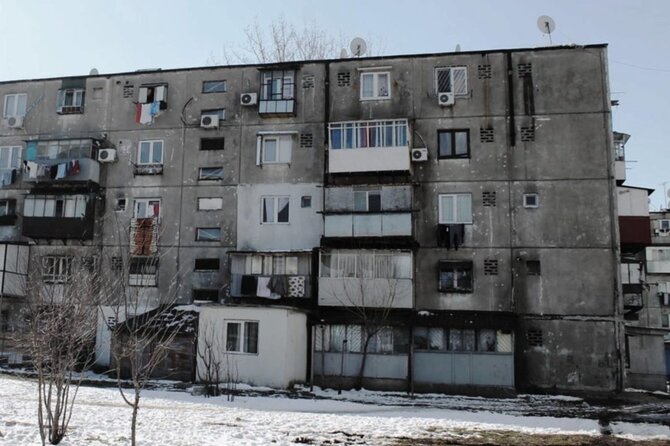
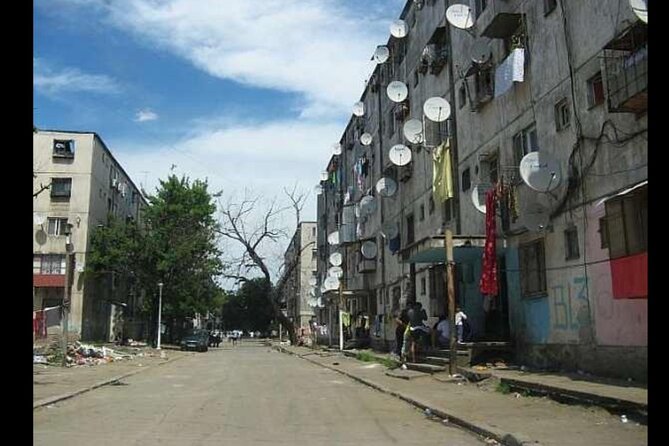
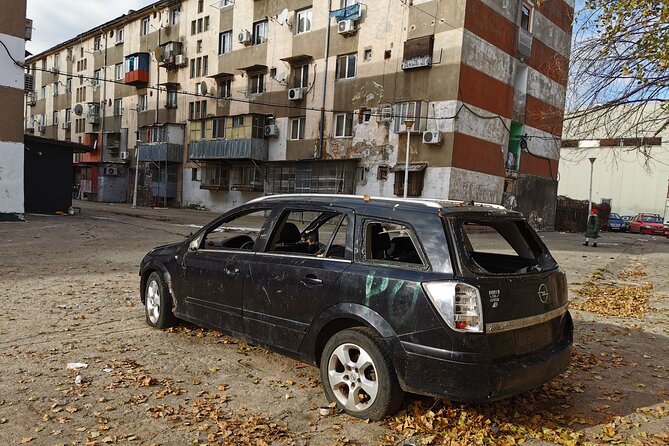
The first section lasts about 1 hour and 10 minutes and focuses on Ferentari, described as one of Bucharest’s most troubled districts and a place with the capital’s lowest standard of living.
That wording sets a stark tone, but the value of the stop is in the detail. Instead of treating the neighborhood as a spectacle, your guide can explain the local pressures and point out what daily life looks like away from central Bucharest. The tour is designed to show a working community, not just a collection of poor buildings.
This is also where the private format helps. You can ask what you are seeing without holding up a large group, and the guide can adjust the pace to the mood of the area. Sebastian is described as combining a good sense of humor with clear explanations, while Valerica is noted for careful, disciplined guiding and attention to local customs.
You may walk through parts of the neighborhood, but a large share of the visit is by vehicle. That matters for two reasons. First, it lets you cover more ground in the short three-and-a-half-hour schedule. Second, it keeps the visit controlled in an area where wandering with a camera would not be wise.
Do not expect polished attractions or formal exhibits here. The point is the setting itself, along with the explanation of how people manage work, shopping, housing, and family life. If you want an easy, cheerful morning, choose a palace tour or food walk instead. If you want a more direct look at urban hardship, Ferentari is the reason to book.
Rahova: markets, streets, and a difficult past
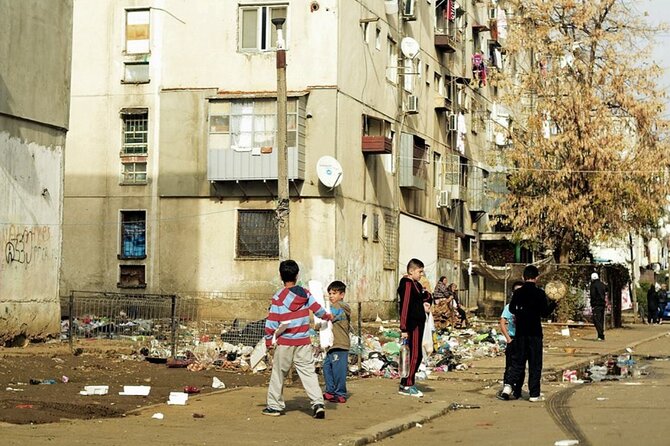
The second stop is Rahova, also allotted about 1 hour and 10 minutes. The area is linked with a large Roma population and with a once-feared penitentiary on Strada Adrian 4.
Rahova gives the tour a more active street element. You may stop at a local market, a flower market, or grocery stalls, and you can see where residents shop. Some visitors have bought everyday goods at the market, but you should follow the guide’s lead rather than treating the place as a photo opportunity or informal performance.
This part is likely to feel more social than Ferentari. You may see people going about ordinary errands, and there may be a chance for brief conversation. Still, do not assume anyone wants to be photographed or questioned. The guide’s instructions about privacy are not optional decoration. They are central to making this kind of visit respectful.
The Rahova Penitentiary adds historical weight, though the experience is not presented as a prison museum visit. You are seeing the location as part of the district’s story. Ask your guide what the prison meant locally and how the surrounding neighborhood changed over time.
Catalin is described as especially good at explaining Roma history and social conditions while keeping the mood friendly. Bogdan is also praised for telling the story of Bucharest in an approachable way. Guide assignments can vary, so you should not book expecting a specific person unless the operator confirms it.
The market walks are one of the strongest practical details of the tour. They move the experience away from abstract talk about poverty and toward normal routines. Food shopping, flowers, streets, and local commerce tell you more about a place than a quick drive past a block of buildings.
Sintești: from hardship to Roma palaces
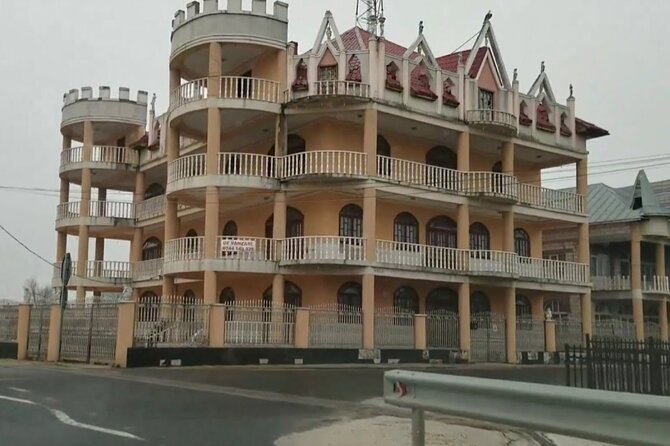
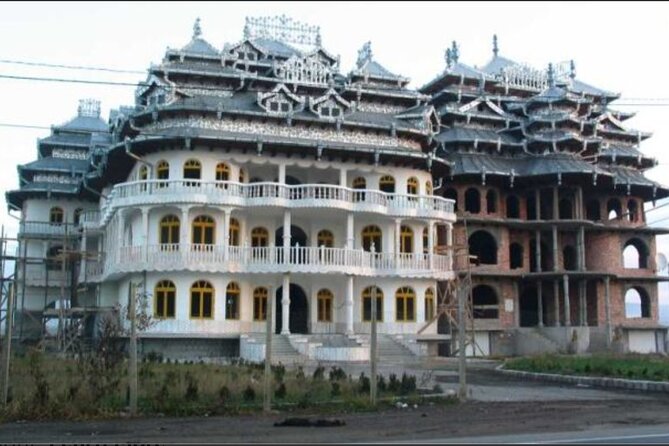
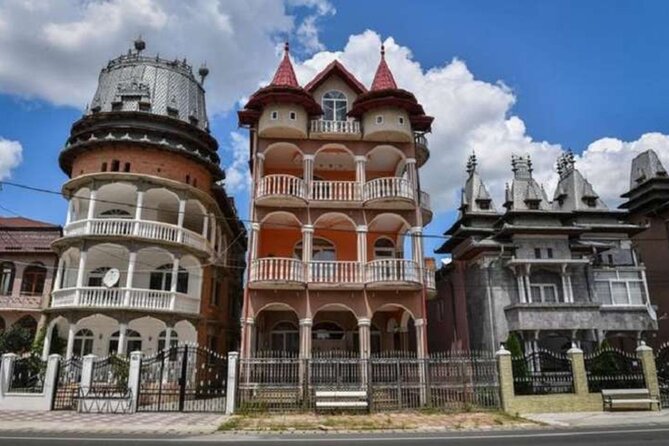
The final 1 hour and 10 minutes takes you to Sintești, identified as a village with Roma palaces. This is the tour’s sharpest contrast with Ferentari and Rahova.
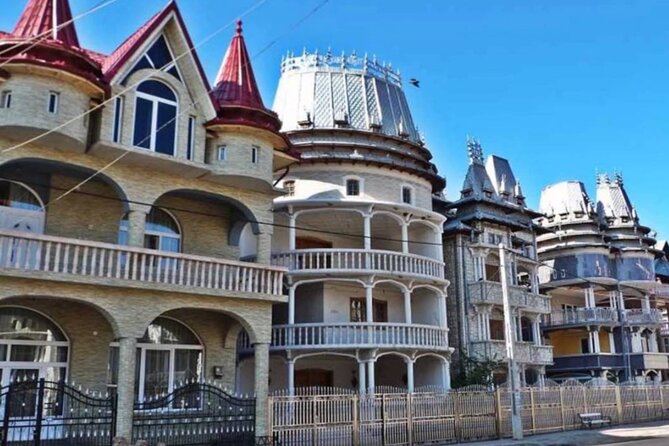
The large houses can be startling. Their size and decorative style point to a very different level of spending from the conditions seen earlier in the day. The guide’s job here is to explain the contrast without reducing it to gossip. You can ask how these homes fit into local life, but you should avoid making assumptions about individual owners or businesses.
This stop gives the tour an important second half. Without Sintești, the visit might leave you with a narrow image of Roma life as only deprivation. Without Ferentari and Rahova, the palaces could look like an isolated curiosity. Together, the three stops show social differences within and around the same broad community.
The village is reached by vehicle, and the listed location is Strada Principală Nr. 353A in Sintești. Expect viewing and explanation rather than a formal interior tour. The available information does not promise entry into private homes, so treat the palaces as visible examples of local architecture and wealth from public areas.
This is also a good point to keep your camera in your pocket unless your guide says otherwise. A large house may look like a public attraction to you, but it remains someone’s home. That small act of restraint can make the visit feel less like sightseeing at people’s expense.
Same city, a completely different sort of day:
- Bucharest: Dracula’s Castle, Peles Castle, & Brasov Old Town
★ 4.5 · 17,858 reviews - Bucharest: Dracula Castle, Peles Castle & Brasov Old Town
★ 4.6 · 10,891 reviews - Bucharest: Dracula’s Castle, Peleș Castle & Brașov Day Trip
★ 4.5 · 5,919 reviews - Bucharest: Palace of Parliament Tickets and Guide
★ 4.3 · 3,182 reviews
What the guide adds to a sensitive subject
The guide is the difference between a thoughtful social tour and a voyeuristic drive through poor neighborhoods. You need someone who can explain context, read the situation, and tell you when to slow down or move on.
Several guides are associated with the experience. Sebastian is described as safe, engaging, and strong on local explanation. Catalin is noted for clear accounts of Roma history and a friendly manner. Valerica is described as disciplined, careful, and willing to spend time explaining daily life, social rules, and ongoing struggles. Bogdan and Matthew are also named as guides who bring local stories into the route.
Do not assume you will get all of them. The guide is assigned by the operator, and the information does not promise a choice. Still, the repeated emphasis on guide quality is meaningful because this route depends less on monuments and more on interpretation.
A good guide can also add pieces of general Bucharest history during the drive. That helps connect the outskirts to the wider city instead of making them seem like a separate world. You may hear jokes, personal observations, and explanations of local customs alongside the more difficult material.
The tour is offered in English. Confirmation arrives when you book, and pickup is offered. The exact pickup process is not detailed, so check the meeting arrangements carefully before setting out. The route is also near public transportation, although much of the visit itself takes place in the supplied vehicle.
Price, timing, and what your money buys
The price is $130.83 per person. That is a serious amount for three and a half hours, especially when the stops do not charge admission.
You are paying for something other than tickets. The fee covers a private experience for your group, vehicle-based transport between several locations, the guide’s time, and access to places you would be unlikely to understand or approach on your own. It also buys a controlled route through sensitive neighborhoods, where a random self-guided visit would be both less informative and potentially unwise.
Value depends heavily on your interests. If you want famous sights, museums, or an inexpensive walking tour, the price will feel high. If you want a guided look at Bucharest beyond the center and prefer not to navigate unfamiliar districts alone, the private format makes more sense.
The tour is often reserved well in advance, with an average booking lead time of about 48 days. That suggests you should not leave it until the last minute if it is central to your Bucharest plans. Free cancellation is available up to 24 hours before the start time. A cancellation made less than 24 hours ahead is not refunded, and late changes are not accepted.
Group discounts are available. Since the activity is private, the per-person value may improve when several people share the booking, though the exact discount depends on the reservation.
How to behave during the visit
Your clothing choices matter. Dress as simply as possible, skip jewelry, and do not carry expensive items that could attract attention. This is practical advice, not a costume request.
Keep your phone and camera ready to put away. You may be able to take pictures in some areas, but the guide decides what is suitable. Ask before photographing people, homes, stalls, or children. If someone says no, accept it without argument.
Do not treat residents as part of the attraction. Buy something at a market only if you genuinely want it, speak politely, and avoid turning a short conversation into an interview. You are entering someone else’s neighborhood, not a set built for visitors.
Most people can participate, and the route is near public transportation. Still, the information does not describe the walking surfaces, vehicle type, or specific mobility arrangements. If you have access needs, ask the supplier before booking.
Who should book this tour?
I would recommend it to you if you have already seen central Bucharest and want to understand the city’s social divisions, or if you prefer local stories to postcard sights. It suits adults and older children who can listen carefully, follow instructions, and handle serious subject matter.
It is also a good fit for photographers who can accept strict limits. You may see striking contrasts, but the tour is not a license to document everything. Your best pictures may come from what you observe rather than what you upload.
I would be cautious about booking it for very young children or anyone seeking a carefree outing. The route includes poverty, social problems, and places where you must stay alert. The experience can be engaging and even funny at times, but it should never be treated as entertainment built around other people’s hardship.
Should you book the Ferentari, Rahova, and Sintești tour?
Book it if you want context, contrast, and a private guide rather than another tour of Bucharest’s center. Ferentari shows severe economic hardship, Rahova adds markets and the story of the penitentiary, and Sintești challenges the idea that Roma communities share one economic reality.
Skip it if you dislike sensitive social subjects, need a fully predictable sightseeing route, or feel uncomfortable with strict photography rules. At $130.83, it is not a bargain city tour, but it offers access and explanation that a cheap bus ride cannot provide. Dress plainly, leave valuables behind, respect the guide’s boundaries, and you will be better prepared for an unusually direct side of Bucharest.
FAQ
Where does the tour take place?
The tour visits locations in Bucharest including Ferentari and Rahova, then goes to Sintești, a village known for Roma palaces.
How long does the tour last?
The tour lasts approximately 3 hours and 30 minutes. Each of the three main stops is allocated about 1 hour and 10 minutes.
How much does the tour cost?
The listed price is $130.83 per person. Group discounts are available.
Is pickup available?
Yes. Pickup is offered, though the supplied information does not give a specific pickup schedule or meeting arrangement.
Is the tour private?
Yes. Only your group participates in the private activity.
What language is the tour offered in?
The tour is offered in English.
Will I walk during the tour?
Yes. Some parts take place on foot, including visits to local markets, flower markets, and selected areas in Rahova. A large part of the route is completed by vehicle.
What should I wear?
Dress as simply as possible. Do not wear jewelry, and avoid bringing expensive items.
Can I cancel for a full refund?
Yes, if you cancel at least 24 hours before the local start time. Cancellations or changes made less than 24 hours before the tour are not accepted, and the amount paid is not refunded.
Newest Bucharest trips we have written up
- Winery touring & private wine tasting – one day private tour★ 5.0 · 3 reviews
- Bucharest: Dealu Mare Winery Private Trip with Wine Tasting★ 4.9 · 6 reviews
- Traditions in Bucharest: Village Museum and Wine Tasting★ 5.0 · 8 reviews
- Your rendez-vous with Europe’s past: time-travel to Maramures, Transylvania★ 5.0 · 6 reviews
- Village Museum Bucharest Guided Tour★ 5.0 · 6 reviews
- Private Wine Tasting at Bucharest’s First Wine Bar★ 5.0 · 3 reviews
- Walking Tour of Bucharest City Center – Private Tour★ 5.0 · 4 reviews
- Wine tasting in Bucharest Old town – bonus cheese platter★ 4.5 · 6 reviews
Bucharest Hidden Gems and Alternative Tours, compared.
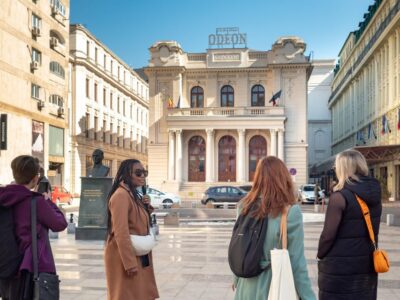
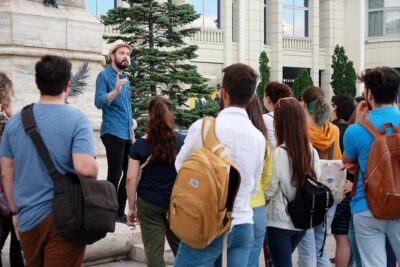
Private Walking Tour: Essential Bucharest + Hidden Gems
Read our review →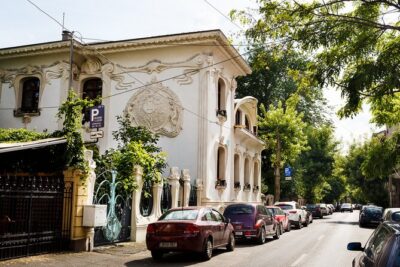
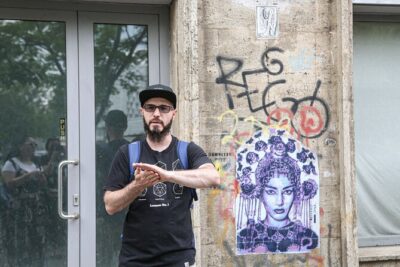
Alternative Bucharest: 2.5-3 Hours Walking tour (Small groups)
Read our review →
Discover Bucharest: Explore Hidden Old Town Walking Tour
Read our review →
Hidden Bucharest: Discover Secrets of the Old Town
Read our review →Browse the lists this tour appears in