
Reviewed · BUCHAREST HIDDEN GEMS AND ALTERNATIVE TOURS
Unique Tour of Hidden Bucharest
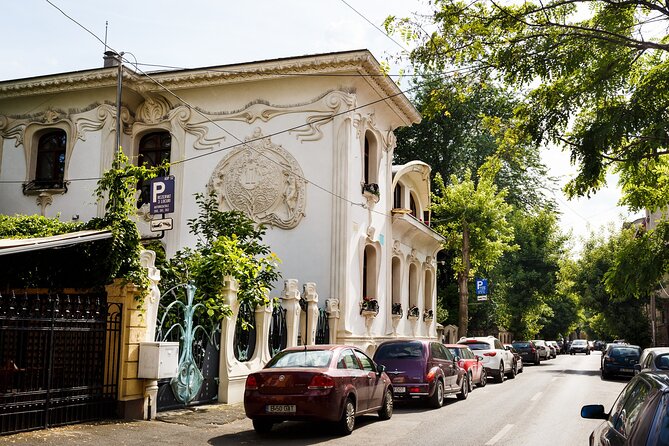
Just beyond Bucharest’s grand avenues lies a quieter city of old mansions, former ethnic quarters, Orthodox churches, and streets that can feel surprisingly rural. This walking tour introduces you to that less obvious side of the capital, with guides such as Ioana, Mircea, Andreea, and Lala bringing the buildings and neighborhoods to life.
I like two things especially: the focus on architecture and the way the route connects buildings to Bucharest’s difficult past. I also like the small-group limit of 12, which leaves room for questions, photo stops, and route adjustments. The main consideration is that the advertised timing varies between about 2 hours 30 minutes and 3 hours, and the walk requires moderate fitness.
Key points at a glance
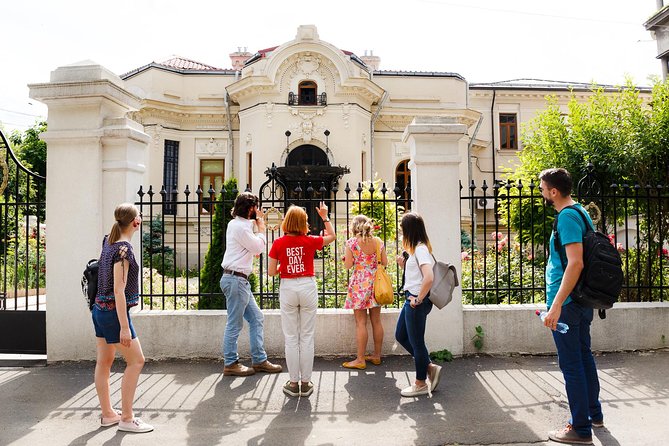
- See Bucharest’s old mahallas: Walk through Batiștei and nearby Armenian, Jewish, Mantuleasa, Olari, Ioanid, and Icoanei areas.
- Read the city through its buildings: Your guide explains French, German, Armenian, Ottoman, Belle Epoque, and communist influences.
- Expect a personal walk: The group is capped at 12, and some departures have become private tours when only one booking was made.
- Enjoy a local pause: Snacks are included, with opportunities to buy a drink at a café, garden, or historic tea house.
- Get more than dates and names: Guides share practical restaurant suggestions and explain why grand houses are restored, abandoned, or tied up in ownership disputes.
- Plan for a city walk: The route is near public transport, starts at 10:00 a.m., and ends near KFC on Bulevardul General Gheorghe Magheru.
Why this Bucharest walk feels different
Many first visits to Bucharest concentrate on big boulevards, Communist-era monuments, the Old Town, and the Palace of Parliament. Those sights matter, but they do not explain the city’s quieter residential quarters. This tour turns into streets where the story is told by peeling stucco, carved doorways, compact villas, small gardens, and houses being slowly brought back to life.
The word mahalla is important here. In the Ottoman sphere, a mahalla was a small quarter organized around a religious building or shared community. Bucharest was not an Ottoman town, but it developed under Ottoman influence and shared some features with cities in that wider orbit. Over time, separate quarters merged into larger neighborhoods shaped by migration, commerce, religion, and changing political power.
That gives the walk a useful thread. You are not simply looking at old houses. You are learning why an Armenian quarter developed, how Jewish and French influences left marks on the city, and how modernization, earthquakes, two world wars, and Communist demolition altered the old neighborhoods.
I like this approach because it makes Bucharest easier to understand. The city can seem visually confusing at first, with an elegant villa beside a damaged house, a modern block beside a 19th-century façade, and a grand avenue suddenly giving way to a narrow lane. A good guide helps you see that the contrasts are not random.
More hidden corners of Bucharest:
- Bucharest: Small Group History, Art & Secrets Tour
★ 4.7 · 152 reviews - Private Walking Tour: Essential Bucharest + Hidden Gems
★ 5.0 · 53 reviews - Alternative Bucharest Walking Tour
★ 5.0 · 34 reviews
Beginning at the National Theatre
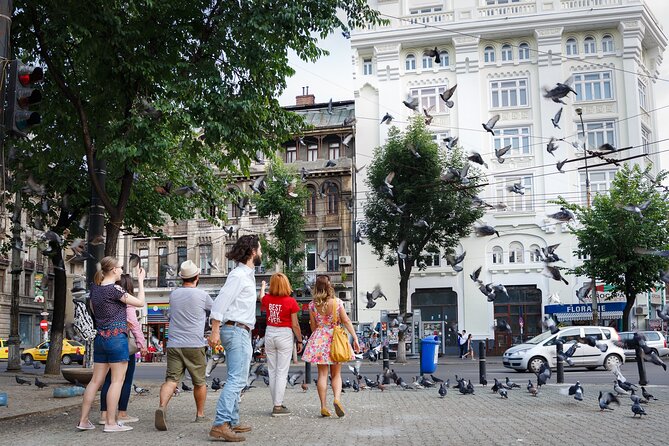
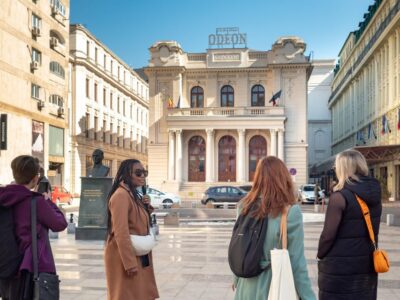
The meeting point is outside the Ion Luca Caragiale National Theatre on Bulevardul Nicolae Bălcescu 2. The tour begins at 10:00 a.m., a useful time for getting oriented before the city grows busier and warmer.
The National Theatre is an appropriate starting point because it places you in central Bucharest, close to the layers the tour will explore. From here, your guide introduces the city’s development and the complicated relationship between Romanian lands and the Ottoman Empire. The point is not to label Bucharest as an Ottoman city. It is to show how political and cultural influence can shape urban life without producing a simple copy of another place.
Allow about 30 minutes for this first section. Admission is free, and the emphasis is on the surrounding story, architecture, and overlooked corners rather than on a formal theater visit.
This is also a good place to ask questions early. If you are interested in architecture, photography, religious history, or Communist-era change, say so. Guides have adapted walks for photo stops, unusual buildings, and individual interests. That flexibility is one of the stronger features of a small walking tour.
Batiștei and the old neighborhood pattern
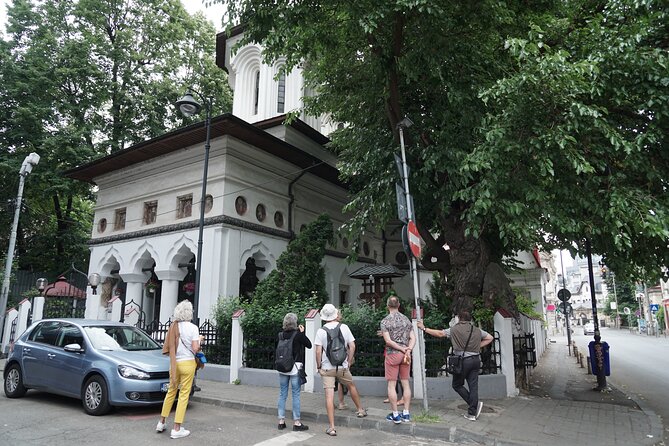
The next section, around Strada Batiștei, lasts about 35 minutes. Here the idea of the mahalla becomes more concrete. You move through neighborhoods that once had stronger ethnic, religious, or social identities, including Batiștei, the Armenian Quarter, Mantuleasa, and the Old Jewish Quarter.
The pleasure of this part is in the mixture. You may see different building styles close together, along with traces of changing communities and cuisines. The guide explains how neighborhoods formed, fused, and changed as Bucharest expanded.
This is also where the city’s difficult 20th-century story becomes unavoidable. Earthquakes damaged buildings. Wars altered the urban fabric. Communist demolition projects erased whole areas and displaced residents. Later, the shift to a market economy brought new problems, including neglected properties and disputes over ownership.
I find this context more useful than a simple list of architectural styles. It explains why a once-grand mansion might be empty, why another has become a restaurant, and why some streets look partly restored and partly forgotten. Bucharest’s beauty is often imperfect. You will see graceful details on buildings that need serious repair.
Guides also point out the smaller things that are easy to miss alone: an unusual entrance, a decorative window, an old church, or a building whose present use hides its earlier purpose. Several guides have taken time for photographs and adjusted the pace when someone wanted to stop.
Parcul Ion Voicu and Belle Epoque Bucharest
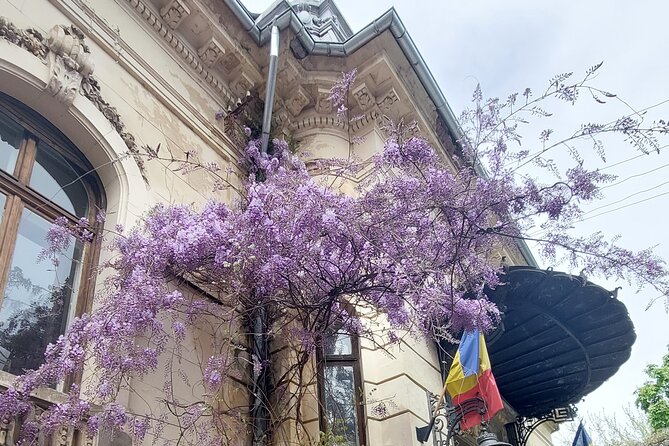
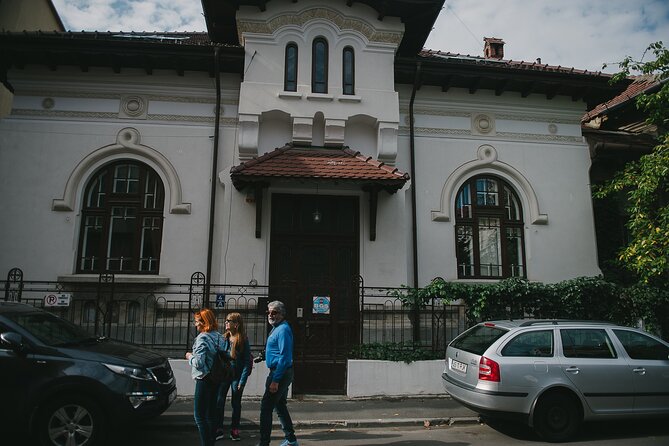
The itinerary continues toward Parcul Ion Voicu, with about 40 minutes devoted to this Belle Epoque area. The neighborhood is known for mansions dating from the late 19th century, when Bucharest was developing a strong European identity and affluent families were commissioning elaborate homes.
This is likely the most visually rewarding part of the walk. Look for decorative façades, carefully proportioned villas, gates, balconies, and the contrast between restored buildings and those still deteriorating. The route gives you time to understand the architecture rather than rushing past it on the way to a major attraction.
The surrounding areas can include Ioanid, Icoanei, and Olari, depending on the guide’s route and the interests of the group. The exact path may shift slightly. One guide might spend more time on a church or a mansion, while another may focus on street planning, family histories, or places to eat.
That flexibility is usually a benefit, but it can also make the tour feel less tightly organized. One participant found the route somewhat random, even while enjoying the information and the chance to see a side of central Bucharest that would otherwise be easy to miss. If you prefer a fixed sequence of major landmarks, this may feel loose. If you like following a local’s eye, it works better.
Same city, a completely different sort of day:
- Bucharest: Dracula’s Castle, Peles Castle, & Brasov Old Town
★ 4.5 · 17,858 reviews - Bucharest: Dracula Castle, Peles Castle & Brasov Old Town
★ 4.6 · 10,891 reviews - Bucharest: Dracula’s Castle, Peleș Castle & Brașov Day Trip
★ 4.5 · 5,919 reviews - Bucharest: Palace of Parliament Tickets and Guide
★ 4.3 · 3,182 reviews
The architecture lesson is the real attraction
This experience is best understood as an architecture and city-history walk rather than a standard sightseeing circuit. Your guide may discuss French, German, Armenian, Ottoman, Romanian, and Communist influences, often within a few blocks of each other.
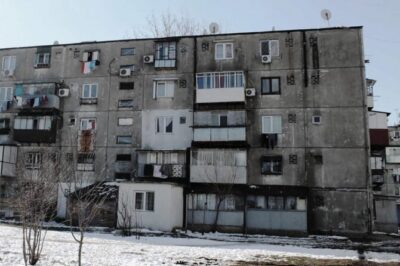
That makes the tour particularly useful early in your stay. You gain a visual vocabulary for the rest of Bucharest. Later, you may notice a Brâncovenesc detail, a Belle Epoque villa, a Communist apartment block, or a recently restored façade and understand more about where it fits.
The guides receive especially strong praise for explaining what is not immediately visible. Mircea, for example, has helped visitors keep comfortable in very hot weather and has offered extra information after the walk. Lala has been described as warm and deeply familiar with Bucharest, offering practical suggestions for food and nearby sights. Roxana has been praised for explaining the mahallas and architectural details in a personal way.
Guide assignments can change, so you should not book only to meet one named person. Still, the repeated pattern is clear: the experience depends heavily on the individual guide. You get the best value when you ask questions and tell the guide what interests you.
Snacks, cafés, and useful local advice
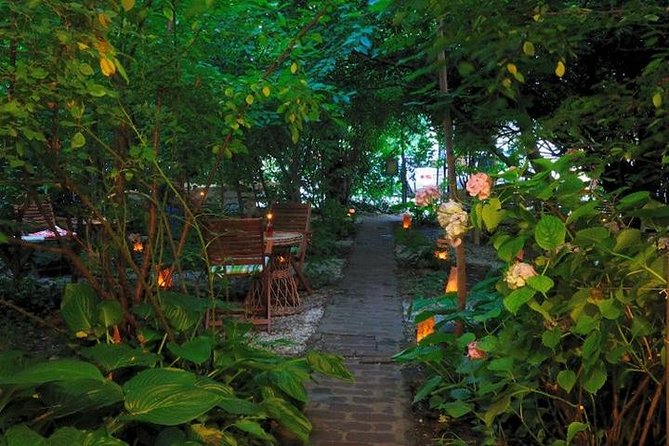
Snacks are included. The exact refreshment may vary, but past walks have included a traditional Romanian pastry and stops for coffee, lemonade, smoothies, or another soft drink. Alcoholic drinks are not included, though they can be purchased.
The food element is modest, not a full tasting tour. That is worth keeping clear in your mind. You are paying mainly for the walk and interpretation, with refreshments adding a pleasant break.
The stop can be one of the most social parts of the experience. Some guides have taken people to a summer garden, a small café, or a historic tea house. Others have recommended restaurants for lunch or dinner, including places suitable for particular dietary needs. One guide helped arrange a restaurant reservation, while another ended the walk near a cozy place for lunch.
You should not expect the restaurant stop to be guaranteed or included in the price. It depends on timing, the guide, and the group. But the local suggestions can be valuable, especially if you have just arrived and do not yet know where to eat.
How much walking and how much time?
The tour is described as lasting about 2 hours 30 minutes, while the highlights refer to a 3-hour walk. In practice, allow roughly three hours so you are not rushing to your next booking.
The walk requires moderate physical fitness. You should be comfortable spending several hours on foot and standing during explanations. The route is in the city center and near public transport, but no hotel pickup or drop-off is included.
Wear solid walking shoes. The route includes ordinary city streets and quieter residential lanes, and the tour may pause often. In warm weather, bring water and sun protection. One group completed the walk during extreme heat, but the guide made a point of keeping the participants hydrated and comfortable. That kind of care is reassuring, though cooler morning conditions are still preferable.
The tour ends at the KFC on Bulevardul General Gheorghe Magheru 28-30. This is practical for continuing into central Bucharest, but it is not a dramatic final landmark. Treat the ending as a convenient city-center drop point rather than part of the sightseeing.
Is $46.86 a fair price?
At $46.86 per person, this is not the cheapest way to spend a morning in Bucharest. You can walk through residential areas on your own for free. The question is what you would learn without someone explaining the buildings, communities, and political changes behind them.
For a small-group tour capped at 12 people, the price is reasonable if you care about context and local guidance. It becomes especially good value when the group is small or private. Several departures have had only one booking or a small group, creating a relaxed pace and plenty of time for questions. You should not assume a private tour is guaranteed, but the limited group size gives the experience a more personal feel than a large city walk.
The value is also stronger if this is your first day in Bucharest. You get orientation, neighborhood recommendations, restaurant tips, and a better sense of which areas deserve more time later. If you are already an architecture expert or mainly want major monuments, you may find the price less compelling.
Group discounts are available. Confirmation is provided at booking, and free cancellation applies if you cancel at least 24 hours before the start time. Changes or cancellations inside that window are not accepted for a refund.
Who should book this walk?
I would recommend it to you if you enjoy:
- Older residential neighborhoods more than famous monuments
- Architecture, urban change, and local stories
- Small groups and room for questions
- Photography stops and imperfect, atmospheric buildings
- Practical food and sightseeing advice from a local
- Seeing how war, earthquakes, Communism, and redevelopment altered a city
It also suits a first-time visitor who wants a gentle introduction. One early arrival used the walk to settle into Bucharest before the rest of the group arrived. That is a smart use of the experience because the route gives you both a city orientation and a sense of local character.
I would hesitate if you want a fast-moving tour with guaranteed interior visits, major ticketed attractions, or a formal culinary program. Most of the interest comes from the streets, façades, stories, and guide commentary. Some buildings may be closed, damaged, or viewed only from outside.
Final recommendation for Bucharest
Book this tour if you want to understand the city behind its main avenues. The best parts are the mahallas around Batiștei, the Belle Epoque houses near Parcul Ion Voicu, and the explanation of why Bucharest can look both elegant and worn within the same block.
The experience is not perfectly rigid, and the advertised duration is slightly inconsistent. Still, that looseness can work in your favor. With a good guide, you get the feeling of walking with a local friend who knows which doorway, church, mansion, café, or side street deserves a closer look.
For architecture lovers, curious first-time visitors, and anyone tired of the standard route, this is a strong choice. You will not simply collect another list of sights. You will leave with a clearer understanding of how Bucharest became the complicated, fascinating city you are seeing today.
FAQ
Where does the tour begin?
The tour begins at the Ion Luca Caragiale National Theatre, Bulevardul Nicolae Bălcescu 2, Bucharest.
What time does the tour start?
The stated start time is 10:00 a.m.
Where does the tour end?
The tour ends at the KFC at Bulevardul General Gheorghe Magheru 28-30, Bucharest.
How long does the experience last?
The duration is approximately 2 hours 30 minutes, while the tour description also refers to a three-hour walk. You should allow about three hours.
Is the tour offered in English?
Yes. The tour is offered in English.
What is included in the price?
A local guide and snacks are included. Alcoholic drinks and other food or drinks are not included unless specified.
How large is the group?
The maximum group size is 12 people. Some departures may be much smaller, and a few have operated as private walks when only one person booked.
Do I need to be physically fit?
You should have a moderate level of physical fitness because this is a walking tour lasting roughly two and a half to three hours.
Can I cancel for a refund?
Yes. You can cancel at least 24 hours before the local start time for a full refund. Cancellations or changes made less than 24 hours before the start time are not accepted for a refund.
Newest Bucharest trips we have written up
- Bucharest: Dealu Mare Winery Private Trip with Wine Tasting★ 4.9 · 6 reviews
- Winery touring & private wine tasting – one day private tour★ 5.0 · 3 reviews
- Traditions in Bucharest: Village Museum and Wine Tasting★ 5.0 · 8 reviews
- Your rendez-vous with Europe’s past: time-travel to Maramures, Transylvania★ 5.0 · 6 reviews
- Village Museum Bucharest Guided Tour★ 5.0 · 6 reviews
- Private Wine Tasting at Bucharest’s First Wine Bar★ 5.0 · 3 reviews
- Walking Tour of Bucharest City Center – Private Tour★ 5.0 · 4 reviews
- Wine tasting in Bucharest Old town – bonus cheese platter★ 4.5 · 6 reviews
Bucharest Hidden Gems and Alternative Tours, compared.
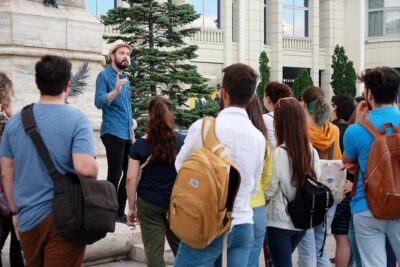
Private Walking Tour: Essential Bucharest + Hidden Gems
Read our review →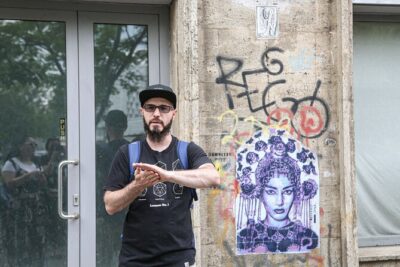
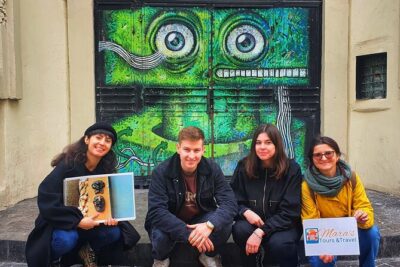
Alternative Bucharest: 2.5-3 Hours Walking tour (Small groups)
Read our review →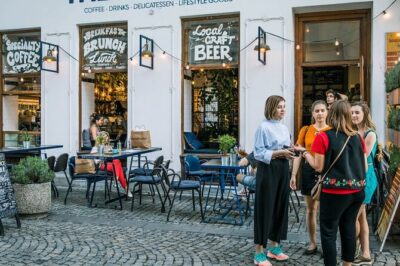
Discover Bucharest: Explore Hidden Old Town Walking Tour
Read our review →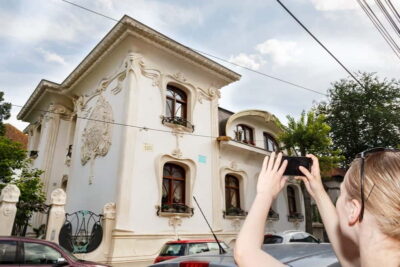
Troubled – Notorious Neighborhood – area known for social issues
Read our review →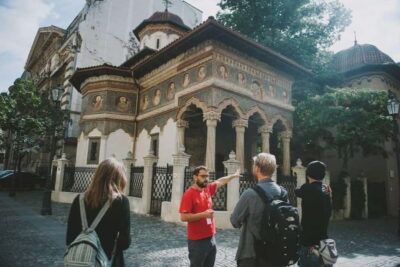
Hidden Bucharest: Discover Secrets of the Old Town
Read our review →Browse the lists this tour appears in