
Reviewed · BUCHAREST
The Real Story of Gypsies – Slavery in Romania
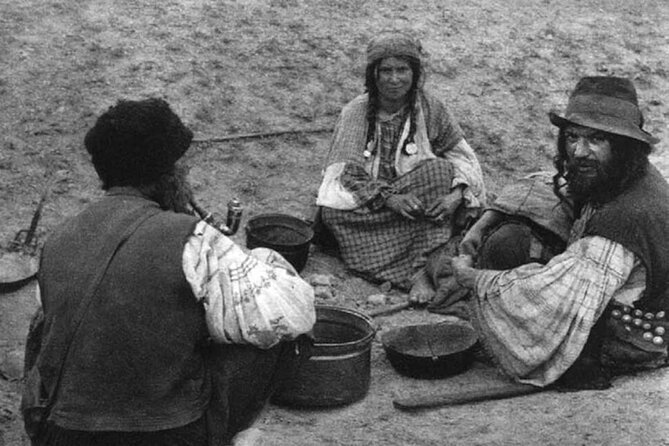
Bucharest’s Roma story is not tucked away in a museum. This three-hour walk brings it into the city streets, connecting an old slave market site, a Holocaust memorial, political history, and living craft traditions. It is a serious tour, but it does not end in the past.
I like two things right away: the route links major Bucharest sights with a history many visitors miss, and it finishes at Mesteshukar ButiQ, where Roma craftsmen make copper goods today. The small group, capped at 15 people, also gives the guide room to answer questions.
The main consideration is the subject matter. Slavery, persecution, and genocide are not light sightseeing topics, and several stops are brief. You should book this for context and honest discussion, not for grand interiors or a long museum visit.
Key points to know before booking
- The tour begins at Romana Square: Meet at Teatrul Ion Creangă, Sala Mare, at 10:00 a.m.
- The old slave market site sets the tone: You learn how Roma slavery shaped identity and public memory in Romania.
- The route combines history with Bucharest landmarks: Stirbei Palace, the Romanian Athenaeum, and Cismigiu Park add architectural and civic context.
- The Holocaust Memorial is an important, quiet stop: The tour addresses the Roma victims of persecution and genocide in Romania.
- The final stop supports living Roma craftsmanship: Mesteshukar ButiQ sells goods made by Roma craftsmen, including copper work.
- Expect about 1 hour 20 minutes of walking: The remaining time is spent at the seven listed stops, with admission included where applicable.
Why this Bucharest walk matters
Many first visits to Bucharest focus on grand buildings, broad boulevards, and the legacy of communism. This tour asks you to look at the city through a different lens: the long treatment of Roma people in Romania, from slavery to modern cultural identity.
The title uses the word Gypsies, a term found in older historical and social language. During the walk, the focus is on Roma people and Roma communities, while the wording helps explain how this group was described in different periods. That distinction matters, especially on a tour dealing with discrimination and public memory.
You will not spend three hours inside one museum. Instead, the guide uses places across central Bucharest as prompts for discussion. That format makes the experience useful for anyone who wants to understand how history appears in ordinary city spaces, not only behind glass.
The route also has a clear arc. It begins with slavery, moves through buildings and public figures tied to Romanian society, pauses for the country’s wartime crimes, and ends with present-day craft. The last stop does not erase the difficult material that came before it. It gives you a way to see Roma culture as living, skilled, and ongoing.
More Roma Community Tours in Bucharest
- Slavery in Romania,Myths and Truths on Gypsies, Walking Tour
★ 4.9 · 42 reviews - Bucharest: Real Roma Community – Crafting Workshop
★ 5.0 · 13 reviews - Slavery in Romania Myths and Truths About Gypsies
★ 5.0 · 8 reviews
Starting at Romana Square and the old slave market
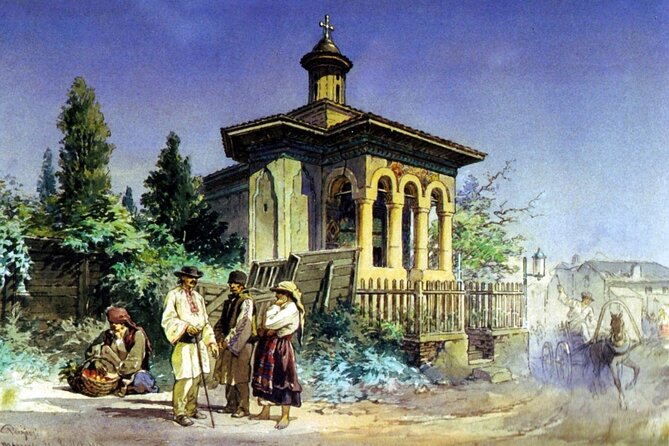
Meet at Teatrul Ion Creangă, Sala Mare, at Strada Piața Amzei 13. The meeting point is near Romana Square and public transportation, which makes the 10:00 a.m. start fairly practical if you are staying in central Bucharest.
The first stop is Platoul Piața Amzei, the site of an old slaves market. This is the point where the tour moves beyond general statements about prejudice and places the discussion in a specific setting. You learn about the trade in human lives and the lasting effect of slavery on Roma identity.
The stop lasts about 15 minutes, so expect a focused explanation rather than a long historical lecture. There is no admission charge. The value comes from the guide’s interpretation of the location and from connecting the site to later events on the route.
I would pay close attention here, because this first stop gives you the questions that shape the rest of the morning. How does a community carry the memory of enslavement? How do old labels and social roles survive after the legal system changes? The tour is designed to address those issues as you walk.
Stirbei Palace and the people behind the story
Palatul Stirbei is a beautiful Bucharest palace built in 1835. You spend around 10 minutes here, learning about the role of its owner in one of the most important moments in Roma history in Romania.
This is a useful change of scale. The opening stop deals with a market and the human cost of slavery. Stirbei Palace brings the discussion toward the powerful people and institutions that shaped events. The building is not presented simply as an attractive facade. Its connection to the story helps you consider who held authority and how decisions affected Roma lives.
Admission is free, and the visit is brief. Do not expect a tour of the palace rooms. The stop works best as part of the walking narrative, with architecture serving as a clue to the social order of the time.
The Romanian Athenaeum and cultural identity
The Romanian Athenaeum is one of Bucharest’s best-known buildings, and the group spends about 15 minutes passing by and discussing it. Its grand design and role as a national cultural symbol create a sharp contrast with the difficult history covered earlier.
Here, the subject turns toward the arts and the ways culture can shape public ideas about Roma people. That does not mean you receive a performance or enter for a concert. The point is to think about who gets represented in a country’s official cultural story, and who is left out.
I like this stop because it prevents the tour from becoming a list of suffering alone. Roma history is also tied to questions of art, national identity, and public image. The Athenaeum gives the guide a strong visual setting for that part of the discussion.
You have about 15 minutes here, so take in the exterior and listen for the connection between a celebrated national building and the less visible communities that share the same city.
Same city, a completely different sort of day:
- Bucharest: Dracula’s Castle, Peles Castle, & Brasov Old Town
★ 4.5 · 17,858 reviews - Bucharest: Dracula Castle, Peles Castle & Brasov Old Town
★ 4.6 · 10,891 reviews - Bucharest: Dracula’s Castle, Peleș Castle & Brașov Day Trip
★ 4.5 · 5,919 reviews - Bucharest: Palace of Parliament Tickets and Guide
★ 4.3 · 3,182 reviews
Cismigiu Park and the line between fact and myth
Cismigiu Park is the oldest and largest garden in Bucharest. After the heavier historical stops, the group takes a more relaxed walk through its paths and greenery for about 15 minutes.
The park is used to sort through truths and myths about Roma people. That makes this stop especially useful for visitors who arrive with impressions shaped by stereotypes, secondhand stories, or vague ideas about the word Gypsy. The guide can place those assumptions beside historical evidence and lived cultural traditions.
The park also gives the tour a change of pace. You are still learning, but the setting is less formal than a palace or memorial. A walking tour needs these shifts, especially when its subject includes slavery and genocide.
Do keep your expectations in check. This is not a long park visit or a nature tour. Cismigiu is a setting for conversation, and the stop lasts roughly 15 minutes.
The Holocaust Memorial and Romania’s wartime crimes
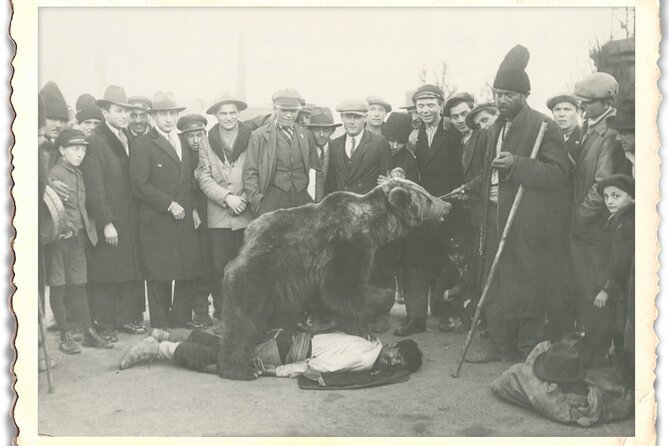
The Holocaust Memorial is the most somber part of the route. The group spends about 15 minutes at this important landmark, remembering victims of the Holocaust in Romania, including the thousands of Roma people killed through persecution and genocide.
This stop gives necessary weight to the tour. A discussion of Roma history that ends with slavery or old stereotypes would be incomplete. The memorial places Roma suffering within the broader story of wartime persecution and makes clear that this was not only a matter of social exclusion.
Expect a respectful pause and direct historical explanation. The stop is not designed as entertainment, and that is precisely why it belongs here. You should allow yourself time to listen rather than trying to rush toward the next sightseeing point.
For some people, this will be the most valuable section of the morning. For others, it may feel emotionally demanding. That is not a flaw, but it is a reason to choose this experience with care. The tour asks you to face painful events rather than soften them.
The Iuliu Maniu statue and changing names
At the Iuliu Maniu statue, you spend another 15 minutes exploring a later moment in Roma history, when the community was still widely called Gypsies.
The stop helps show how language changes, and why older terms need context. It also signals that discrimination did not end with the abolition of slavery. Public attitudes, political choices, and everyday descriptions continued to affect how Roma people were viewed.
A statue can seem like a simple sightseeing stop if you do not know the story behind it. Here, the guide uses it as a marker for political memory. You are asked to think about the people honored in public spaces, the people left out, and how Roma history fits into the story Romania tells about itself.
Again, the time is short. The tour covers a lot in three hours, so you will hear a concise account rather than a full biography of Iuliu Maniu.
Mesteshukar ButiQ and the living end of the route
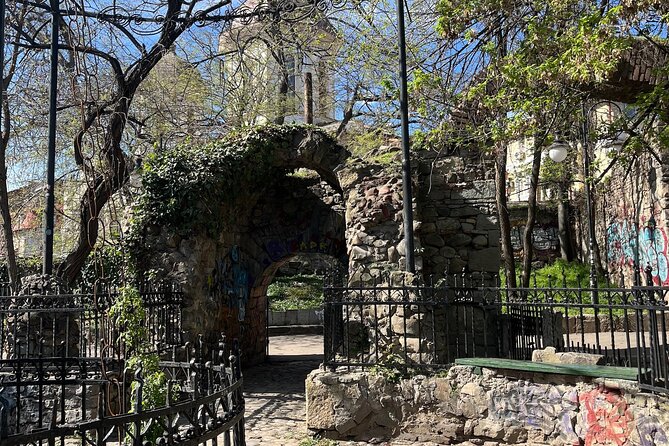
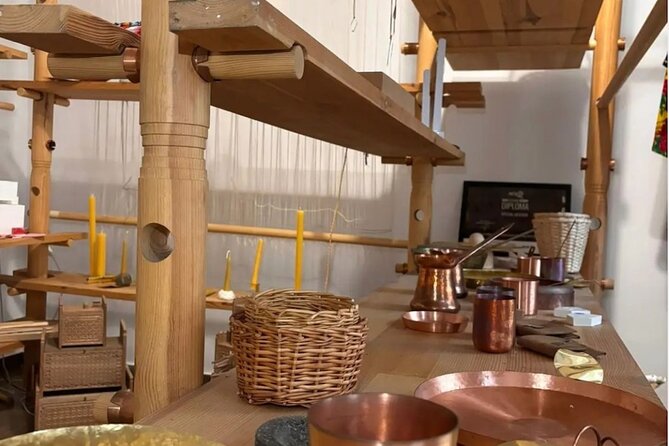
The final stop is Mesteshukar ButiQ, at Bulevardul Mihail Kogălniceanu 12. This small shop sells products made only by Roma craftsmen, and the visit focuses on copper work and the skill behind it.
This ending is one of the strongest choices in the route. After hearing about exploitation, prejudice, and loss, you see Roma craftsmanship in the present tense. The shop offers a direct reminder that Roma culture is not only an object of historical study. It includes working artists, inherited skills, and goods made for contemporary life.
The stop lasts about 15 minutes. You have the chance to see the craftsmanship and, if you wish, look at the products. The data provided does not specify purchase prices or the full range of goods, so consider shopping an option rather than a guaranteed part of the experience.
The tour ends here, not back at Romana Square. That matters when planning the rest of your day. Mesteshukar ButiQ is on Mihail Kogălniceanu Boulevard, so check your onward route before setting out.
What the three-hour schedule feels like
The listed stops account for about 1 hour 40 minutes altogether. The remaining 1 hour 20 minutes is walking time. That balance means this is an active city tour, even though none of the individual walks is presented as difficult.
You will move between central Bucharest locations, with several short explanations along the way. Comfortable shoes make sense. The tour is offered in English, and a mobile ticket is accepted, which keeps the practical side simple.
The maximum group size is 15. That is small enough for questions without promising a private tour. One guide identified in the feedback is Mihai, who was praised for clear English, detailed answers, and an easy conversational manner. Guide assignments can change, so book with the expectation of an English-speaking guide rather than a guaranteed appearance by Mihai.
The experience is generally suitable for most people who can participate in a walking tour. The supplied information does not give a specific accessibility assessment, so anyone needing detailed mobility information should confirm before booking.
Is the $30.04 price good value?
At $30.04 per person, the price is reasonable if you want guided historical context rather than a quick circuit of famous buildings. The admissions listed for the stops are free, so you are paying mainly for the guide’s time, the research behind the route, and the connections between places.
The value is strongest for a first or second visit to Bucharest, when a local guide can help you see more than the surface of central streets. You receive seven stops, about three hours of discussion and walking, and a final visit to a Roma craft shop.
It is less useful if you want extended time inside historic buildings or a conventional sightseeing tour. The Athenaeum and Stirbei Palace are viewed in short visits, and the Holocaust Memorial requires a reflective mood rather than casual photo stops.
The small group helps justify the cost. With no more than 15 people, the guide has a better chance of hearing your questions. The feedback specifically highlights clear English and the willingness to spend time answering questions, which is important on a tour where the subject is complex and terms need careful explanation.
Who should book this experience?
I would recommend it to you if you want:
- A focused introduction to Roma history in Romania
- A walking route that connects lesser-known history with famous Bucharest sights
- A serious discussion of slavery and the Holocaust
- A small-group experience in English
- A final stop centered on living Roma craft
- A guide who can take questions rather than deliver only a fixed script
You might skip it if your main goal is art, architecture, or relaxed sightseeing. The route passes notable places, but the history of the Roma community is always the main subject.
It also suits curious visitors who want to challenge easy assumptions. The tour does not reduce Roma identity to either victimhood or folklore. Its strongest feature is the movement from past injustice to present-day craftsmanship.
Book at least a few days ahead if possible. The experience is booked, on average, about 10 days in advance, so a last-minute place may not be available. You can cancel for a full refund up to 24 hours before the start time. Changes or cancellations made inside that window are not accepted for a refund.
Should you book it?
Book this tour if you want a thoughtful, human-scale look at a part of Romanian history that is often missed. The old slave market site, Holocaust Memorial, and Roma craft shop give the morning a clear purpose, while Bucharest’s palace, Athenaeum, park, and statue keep you connected to the city around you.
Skip it if you are looking for grand interiors, entertainment, or a light introduction to Bucharest. This is a compact but serious walk. For the right reader, the $30.04 fee buys something more useful than a list of landmarks: a better understanding of who has shaped the city, who has been pushed aside, and how Roma culture continues today.
FAQ
Where does the tour start?
It starts at Teatrul Ion Creangă, Sala Mare, on Strada Piața Amzei 13 in Bucharest, near Romana Square.
What time does the tour begin?
The start time is 10:00 a.m.
Where does the tour end?
The tour ends at Mesteshukar ButiQ, Bulevardul Mihail Kogălniceanu 12, Bucharest.
How long does the experience last?
It lasts approximately three hours. About 1 hour 20 minutes is assigned to walking between locations.
What language is the tour offered in?
The tour is offered in English.
What is the maximum group size?
The group can include a maximum of 15 people.
Are admission tickets included?
The listed stops have free admission. The tour information does not list separate entry fees.
Can I cancel for a full refund?
Yes. You can cancel at least 24 hours before the local start time for a full refund. Cancellations or changes made less than 24 hours before the start time are not accepted for a refund.
Newest Bucharest trips we have written up
- Bucharest: Dealu Mare Winery Private Trip with Wine Tasting★ 4.9 · 6 reviews
- Winery touring & private wine tasting – one day private tour★ 5.0 · 3 reviews
- Traditions in Bucharest: Village Museum and Wine Tasting★ 5.0 · 8 reviews
- Your rendez-vous with Europe’s past: time-travel to Maramures, Transylvania★ 5.0 · 6 reviews
- Village Museum Bucharest Guided Tour★ 5.0 · 6 reviews
- Private Wine Tasting at Bucharest’s First Wine Bar★ 5.0 · 3 reviews
- Walking Tour of Bucharest City Center – Private Tour★ 5.0 · 4 reviews
- Wine tasting in Bucharest Old town – bonus cheese platter★ 4.5 · 6 reviews