
Reviewed · BUCHAREST COMMUNISM AND CEAUSESCU TOURS
The Real tour of Communism
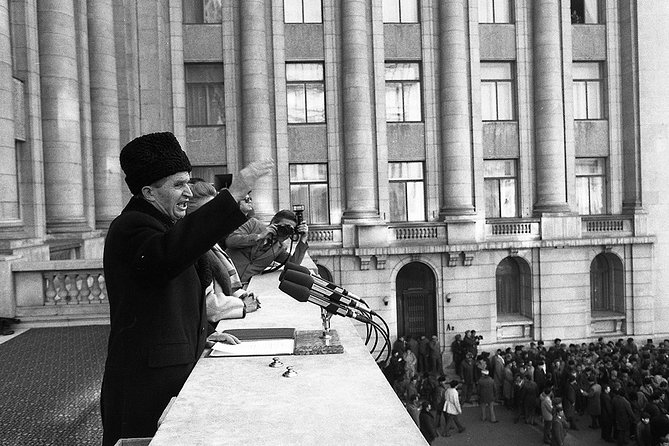
Bucharest’s communist past is easiest to understand on foot, where grand buildings, hidden churches, old restaurants, and Revolution Square connect into one difficult story. This three-hour walk follows the final years of Nicolae Ceaușescu, the forced reshaping of the city, and the bloody 1989 uprising that ended his rule.
I like the small group limit of 15 people, which gives you room to ask questions. I also like the mix of public history and everyday detail, from rationing and food to the way entire churches were moved to save them from demolition. Guides such as Octavian, Daniela, Andrea, and Mihai are praised for clear explanations and personal memories.
The main drawback is that this is a walking tour with little shelter, and Bucharest weather can be rough. The route also includes only a short stop at the Palace of Parliament, with entry fees not included, so you should book a separate interior visit if that is a priority.
Key points to know before you book
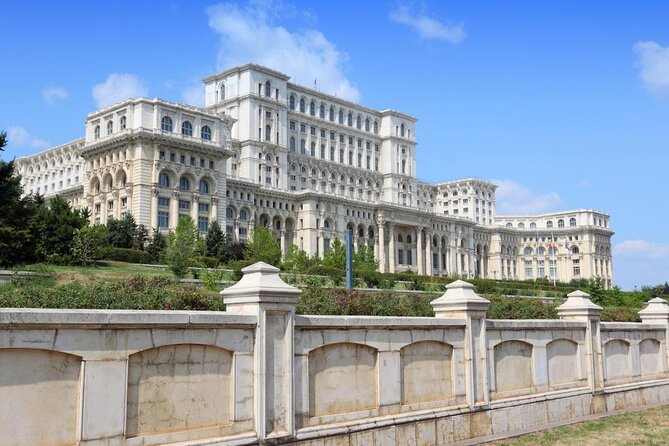
- The route links five important places: Begin at the Patriarchal Cathedral and finish at Revolution Square, with the Palace of Parliament, Mihai Vodă Monastery, and Old Town along the way.
- The human stories are the strongest part: Expect discussion of rationing, politics, food, fear, and ordinary life under communism.
- The 1989 revolution gets real attention: You will hear about Ceaușescu’s last days and the first days after more than 40 years of communist rule.
- The Palace of Parliament is viewed briefly: The tour explains its scale and story, but admission is not included.
- A communist-era snack is included: Guides have used surviving sweets and food samples to make the period more tangible.
- Plan for three hours outdoors: Wear suitable clothing, bring water, and allow for a coffee or restroom break during the route.
Why this Bucharest walk is more than a list of buildings
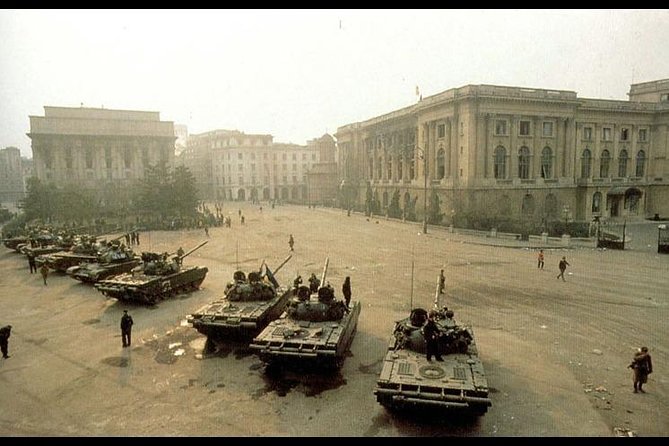
The useful thing about this tour is its framework. You are not simply shown a giant government building, an old church, and a public square. The guide connects them to Ceaușescu’s plans, the pressure placed on ordinary people, and the sudden collapse of the regime in December 1989.
That connection matters in Bucharest. Communist architecture can look imposing or merely ugly if you do not know why it was built. A church can seem like a pretty historic stop until you learn that it was physically moved to protect it from demolition. Revolution Square can look like another open city space until you understand the violence and confusion that unfolded there.
The tour has earned a 4.9 rating from 666 reviews, with 99 percent recommending it. Those numbers do not guarantee that every guide will use the same stories or pace, but they do point to a clear strength: the experience depends heavily on the guide, and the available guides are consistently praised for making a complicated period understandable.
More communism and Ceausescu tours in Bucharest:
- Life under Communism
★ 5.0 · 358 reviews - 3-Hour Guided Tour of Communist Bucharest
★ 4.9 · 303 reviews - Bucharest Essential Tour: Old Town, Calea Victoriei & Communism
★ 5.0 · 142 reviews
Starting at the Patriarchal Cathedral and former assembly headquarters
The meeting point is the Patriarchal Cathedral at Aleea Dealul Mitropoliei 25. This is not simply a church visit. The nearby Patriarchal Palace once served as the headquarters of the Great National Assembly during the communist period, making it an appropriate place to begin a tour about political power.
Allow extra time to find the exact meeting point. The cathedral is inside an estate, and you need to walk up a slope to reach it. This small detail has caused some confusion, so do not wait at the bottom of the street and assume the group will come looking for you.
The first stop lasts about 15 minutes and is free. It sets up the link between religion and the communist state. The tour can show you how a place associated with the Romanian Orthodox Church also became tied to the formal machinery of communist government.
That tension runs through the whole experience. Romania was officially communist, but religion did not simply vanish. Churches survived, sometimes by luck, sometimes through political compromise, and sometimes through remarkable acts of relocation.
The Palace of Parliament and the cost of grand plans
The next stop is the Palace of Parliament, one of Bucharest’s defining sights. You get about 15 minutes to hear the story behind what is described as the second-largest building in the world.
That short stop is enough to place the building in context, but not enough for a full architectural visit. The tour price does not include admission, and the experience as described does not promise an interior tour. If you want to see the grand halls inside, arrange a separate visit and check its own entry requirements.
The value here is not just the building’s size. The Palace of Parliament represents Ceaușescu’s effort to remake central Bucharest around a monumental political vision. That project involved the destruction or alteration of large parts of the old city, the removal of homes, and the subdivision of former palaces into apartments.
A guide can explain why the building still provokes anger as well as awe. Its vast scale tells you something about the leadership’s priorities at a time when many people faced shortages and strict limits in daily life.
This is one place where the guide’s storytelling makes a difference. The best explanations move from architecture to consequences: what was removed, who paid the price, and why the building remains a source of frustration for some residents.
Mihai Vodă Monastery and the churches that escaped demolition
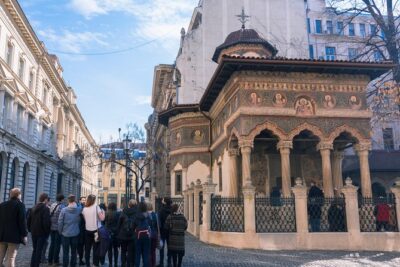
At Mihai Vodă Monastery, you spend roughly 15 minutes learning how churches from the 16th and 17th centuries were saved by being moved.
The word moved sounds simple. In practice, shifting historic churches so they could survive a major urban redevelopment plan is one of the tour’s most memorable ideas. It shows that communist city planning was not only about building new structures. It also forced old buildings to be hidden, relocated, or cut off from their former surroundings.
This stop gives the tour a welcome change of scale. The Palace of Parliament is enormous and political. Mihai Vodă Monastery brings you close to the older religious architecture that existed before Ceaușescu’s reshaping of Bucharest.
You should not expect a long church visit. The stop is brief, and the purpose is mainly historical context. Still, it is a smart inclusion because it explains why some old churches remain in the city even though the neighborhoods around them changed so dramatically.
Same city, a completely different sort of day:
- Bucharest: Dracula’s Castle, Peles Castle, & Brasov Old Town
★ 4.5 · 17,858 reviews - Bucharest: Dracula Castle, Peles Castle & Brasov Old Town
★ 4.6 · 10,891 reviews - Bucharest: Dracula’s Castle, Peleș Castle & Brașov Day Trip
★ 4.5 · 5,919 reviews - Bucharest: Palace of Parliament Tickets and Guide
★ 4.3 · 3,182 reviews
Old Town, communist dining, and the texture of ordinary life
The Old Town stop lasts about 15 minutes and focuses on restaurants favored by the communist leadership. This is not the usual Old Town stroll aimed at nightlife or pretty facades. The guide uses the area to discuss privilege, power, and the different realities experienced by party officials and ordinary citizens.
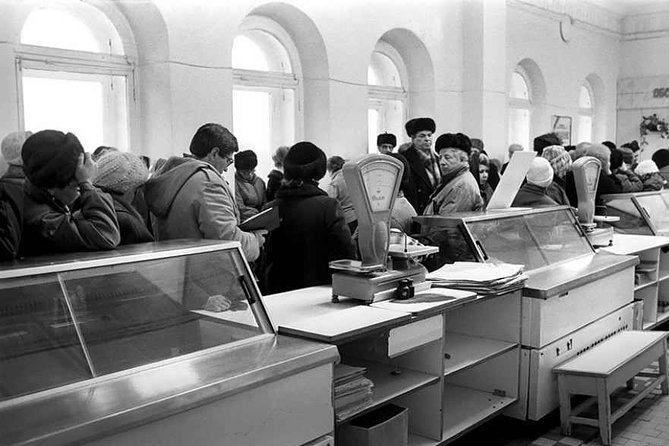
This is where the tour becomes especially practical and human. Politics can feel distant when reduced to names and dates. Food makes it immediate. The discussion can lead into rationing, shortages, queues, and the gap between what the leadership could obtain and what most people could buy.
A snack connected to the communist period is included. Guides have used sweets and other food samples to give you something concrete to associate with the era. It is a small gesture, but it helps turn an abstract history lesson into something you can see and taste.
Some groups have also stopped at a coffee shop during the walk for warmth, a restroom break, and a chance to regain energy. Treat this as part of the practical rhythm of the tour rather than a formal meal. Food and drinks beyond the included snack are not covered, so carry some money if you want coffee.
The Old Town portion can also help you place communist Bucharest beside the city that came before and after it. Guides may discuss the period before communism, the decades under Ceaușescu, and the changes that followed 1989. That broader frame is useful if you plan to visit other former communist countries along the Danube.
Revolution Square and the final days of Ceaușescu
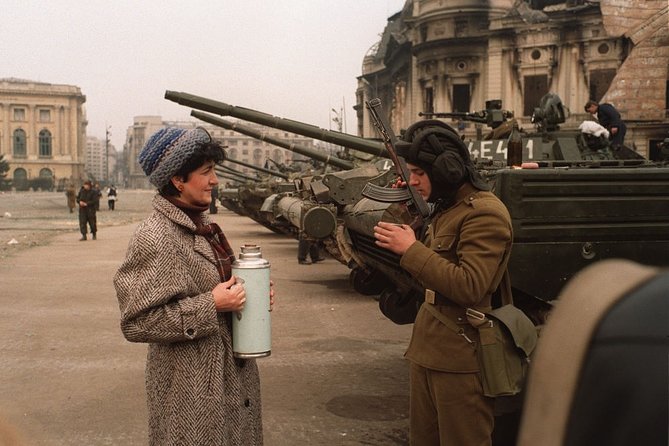
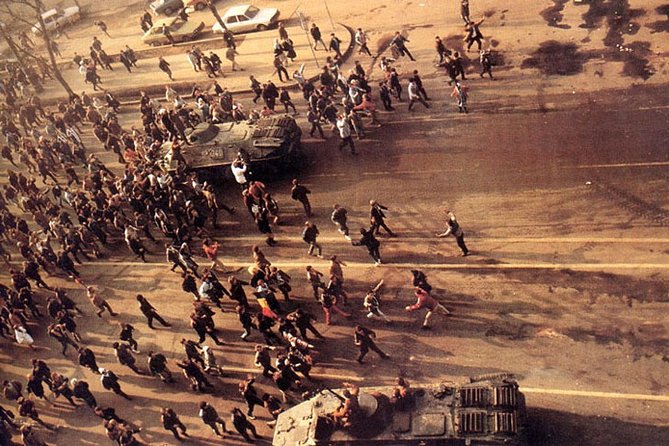
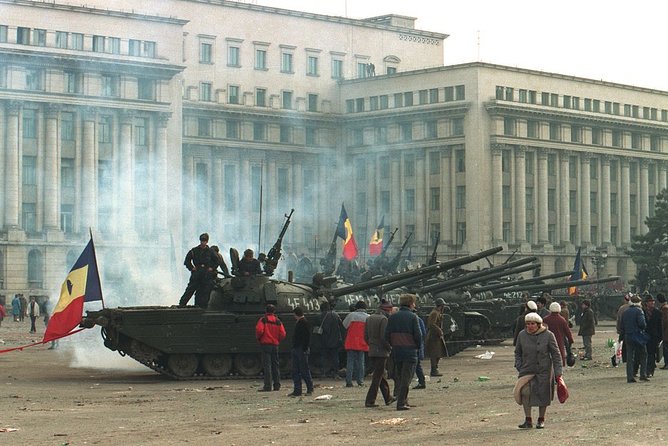
The route ends at Revolution Square, the most emotionally charged stop. Here you hear about the 1989 uprising against Romania’s communist party, described as the only bloody revolution among the former Iron Curtain countries.
The square is where the tour’s main themes meet. You have already seen the buildings reshaped by communist power, heard about religious sites threatened by redevelopment, and discussed food and privilege. Now the guide explains how that system began to break apart.
The stop covers Ceaușescu’s last days in power and the first days of freedom after more than 40 years of communism. It is worth allowing time for questions here. The history is recent enough that guides can connect political events to family memories and personal experience.
That personal element is one of the tour’s strongest features. Octavian, also spelled Oktavian in some guide references, has shared memories of rationing and the harder years of communist Romania. Other guides, including Daniela, Andrea, Andreea, John Sever, and Mihai, have been praised for explaining not only the official events but also how the period affected relatives, homes, work, food, and daily choices.
You will not get a full academic treatment of the revolution in 15 minutes. What you do get is a clear starting point for understanding the square, the regime’s collapse, and Romania’s difficult transition afterward.
The guides shape the experience
This is a guide-led history walk, so the quality of the explanation matters more than the number of stops. The strongest guide style here appears to be direct, personal, and well organized.
Octavian is noted for combining research with memories of life under communism. Daniela is praised for presenting the period with the right amount of detail while linking past events to current issues. Andrea and Andreea are described as friendly and clear, while John Sever has added context from before and after communism rather than treating the period as an isolated block of time.
Names and guide assignments can change, so you should not book on the assumption that one particular person will lead your departure. Still, the range of positive guide feedback suggests that the company has several strong storytellers.
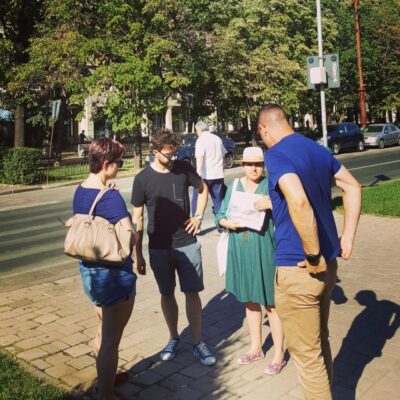
I would ask questions. The groups are capped at 15, and the guides are described as encouraging discussion. Good questions about food, religion, housing, propaganda, or the 1989 uprising can turn a standard walk into a much more personal lesson.
What three hours feels like on the street
The advertised duration is about three hours, with each main stop listed at around 15 minutes. In practice, the walk includes movement between locations, explanations while standing outdoors, questions, and possibly a break at a cafe.
The route is long enough to give you a real picture of central Bucharest but short enough to fit into a morning or afternoon. You need a moderate level of fitness, and the tour operates in all weather conditions unless poor weather causes cancellation. Wear shoes suited to city walking and clothing that can handle cold, rain, or strong sun.
One group completed the walk in freezing rain and still found the stories worthwhile. Another found the pace manageable on a very hot day. That tells you something useful: the route keeps moving, but weather can shape your comfort more than the distance itself.
The walking format is also part of the lesson. You see how grand government projects, old religious buildings, commercial streets, and public squares sit beside one another. A bus could carry you between sights, but it would not give you the same sense of how the city’s layers meet.
Is $32.65 a fair price?
At $32.65 per person, this is not the cheapest way to walk around Bucharest. It is a reasonable price if you want a focused history lesson led by someone who can explain the city rather than simply point out buildings.
The value comes from three hours of interpretation. You are paying for the connections between the Palace of Parliament, displaced churches, communist restaurants, rationing, and Revolution Square. Without a guide, you could see these places and miss the political reasons they look the way they do.
The small group limit helps. A maximum of 15 people is large enough to keep the price down but small enough for questions. Group discounts may also be available, which can improve the value if you are booking with family or friends.
The price does not include Palace of Parliament admission, hotel pickup, or food and drinks beyond the specified snack. You also need to reach the cathedral on your own and make your own way onward from Revolution Square. Those are modest limitations, but they matter if you are comparing this with a private tour or a package that includes entry tickets.
Who should book this walk?
I would choose this tour if you want to understand Bucharest’s communist period through places and personal stories rather than a museum display alone. It suits history-minded visitors, first-time Bucharest visitors, and anyone planning to continue through other former communist countries.
It is also a good choice if you are curious about ordinary life. The discussion goes beyond Ceaușescu and monumental buildings to food, shortages, housing, family memories, and the impact that communist rule still has on Romania.
You may want something else if your main goal is a detailed interior visit to the Palace of Parliament. This tour gives that building only a short stop, and admission is separate. It may also disappoint if you want a relaxed cafe walk, since the subject is serious and the route runs in changing weather.
The tour is offered in English. Service animals are allowed, public transportation is nearby, and confirmation is provided when you book. Free cancellation is available until 24 hours before the start time. If the provider cancels because of poor weather, you can choose another date or receive a full refund.
Should you book The Real Tour of Communism?
Yes, if you want the city to make more sense. The strongest reason to book is the combination of architecture, political history, and firsthand memories. A snack from the communist era, a story about a church moved to safety, and an explanation of the 1989 uprising can stay with you longer than a string of dates.
Book it early if your schedule is fixed, since it is often reserved about 22 days ahead. Wear for the weather, arrive at the Patriarchal Cathedral with time to find the uphill meeting point, and arrange a separate Palace of Parliament visit if you want to go inside.
For $32.65, this is a focused and useful introduction to modern Bucharest. It will not explain every part of Romanian history, but it gives you the context to see the city with sharper eyes.
FAQ
How long is The Real Tour of Communism?
The walking tour lasts approximately three hours.
Where does the tour start?
It starts at the Patriarchal Cathedral, Aleea Dealul Mitropoliei 25, Bucharest.
Where does the tour end?
The tour ends at Revolution Square, Piața Revoluției, in Bucharest.
What places are visited?
The route includes the Patriarchal Cathedral area, the Palace of Parliament, Mihai Vodă Monastery, Bucharest Old Town, and Revolution Square.
Is Palace of Parliament admission included?
No. Admission to the Palace of Parliament is not included in the tour price.
Is food included?
A snack connected with the communist period is included. Other food and drinks are not included unless specifically stated.
How many people can join the group?
The tour has a maximum of 15 participants.
Is the tour offered in English?
Yes. The tour is offered in English.
What happens if the weather is poor?
The tour operates in all weather conditions, so you should dress accordingly. If the experience is canceled because of poor weather, you will be offered another date or a full refund.
Newest Bucharest trips we have written up
- Bucharest: Dealu Mare Winery Private Trip with Wine Tasting★ 4.9 · 6 reviews
- Winery touring & private wine tasting – one day private tour★ 5.0 · 3 reviews
- Traditions in Bucharest: Village Museum and Wine Tasting★ 5.0 · 8 reviews
- Village Museum Bucharest Guided Tour★ 5.0 · 6 reviews
- Your rendez-vous with Europe’s past: time-travel to Maramures, Transylvania★ 5.0 · 6 reviews
- Private Wine Tasting at Bucharest’s First Wine Bar★ 5.0 · 3 reviews
- Walking Tour of Bucharest City Center – Private Tour★ 5.0 · 4 reviews
- Wine tasting in Bucharest Old town – bonus cheese platter★ 4.5 · 6 reviews
Bucharest Communism and Ceausescu Tours, compared.
Bucharest Essential Tour: Old Town, Calea Victoriei & Communism
Read our review →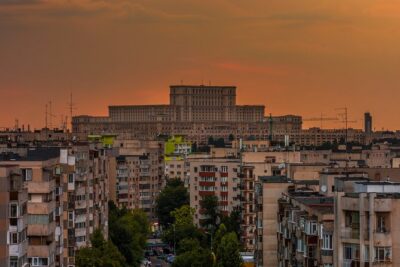


Museum of Communism Ticket with Communist Coffee
Read our review →
Dinner+Tour at Museum of Communism after closing
Read our review →
Contrasts of Communism – Small Group Walking Tour in Bucharest
Read our review →Browse the lists this tour appears in