
Reviewed · ROMANIAN WINE TASTINGS NEAR BUCHAREST
Traditions in Bucharest: Village Museum and Wine Tasting Tour
Romania’s story comes into focus through its houses, churches, food, and wine. This tour links all four, starting with the Dimitrie Gusti National Village Museum, then moving to handmade crafts and a wine bar on Calea Victoriei. Guide Mihai has earned special praise for turning old buildings into clear, lively stories.
I like the private vehicle and hotel pickup, especially in Bucharest traffic, and I like the smart mix of sights and tastes. You see where Romanian traditions came from, then sample the country through Feteasca Neagra and other local grapes. The main drawback is that the craft shop and wine stop leave little time for other major Bucharest sights, so this works best as a focused half-day outing.
Key points at a glance
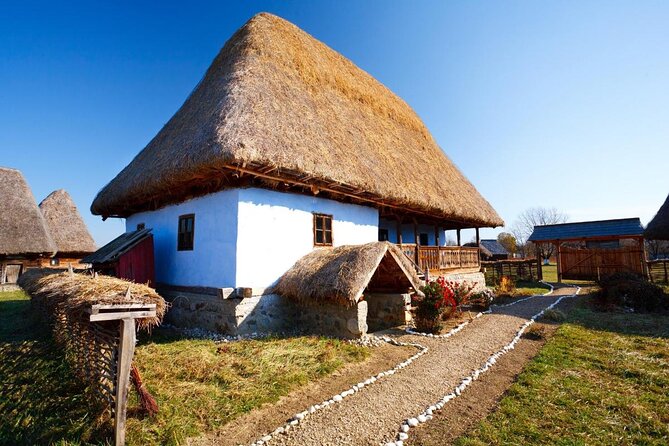
- Traditional Romania in one open-air museum: See homes, churches, barns, mills, and farm buildings from several historic regions.
- Guiding makes the difference: Mihai, Michael, and Emma have all led this experience, with special praise for their storytelling and English.
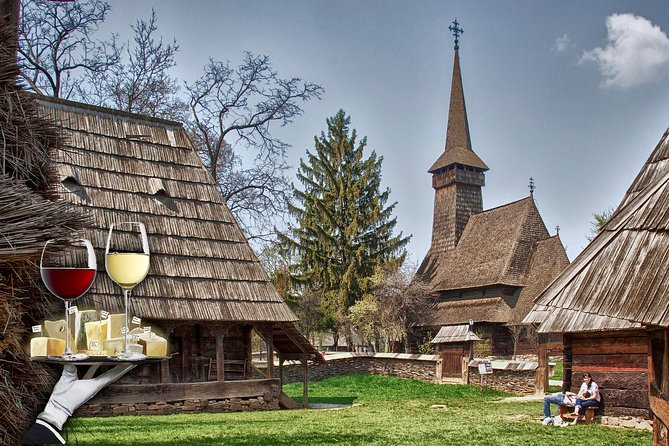
- A useful taste of Romanian wine: Sample three glasses with cheese and charcuterie, including regional varieties such as Feteasca Neagra.
- Easy private transport: Hotel pickup is free within Bucharest city limits, with an air-conditioned vehicle for your group.
- A short craft stop: Browse handmade ie blouses, painted eggs, Horezu pottery, woodwork, books, sweets, and Dracula-themed souvenirs.
- Convenient city-center finish: The wine bar is close to the Romanian Athenaeum and about 15 minutes from Old Town on foot.
Why this five-hour tour works
I like this experience because it gives you a cultural foundation before you tackle Bucharest on your own. The city can feel like a mix of grand French-style avenues, Communist-era blocks, lively cafés, and scattered older buildings. The Village Museum helps explain the rural traditions behind the country’s regional identity.
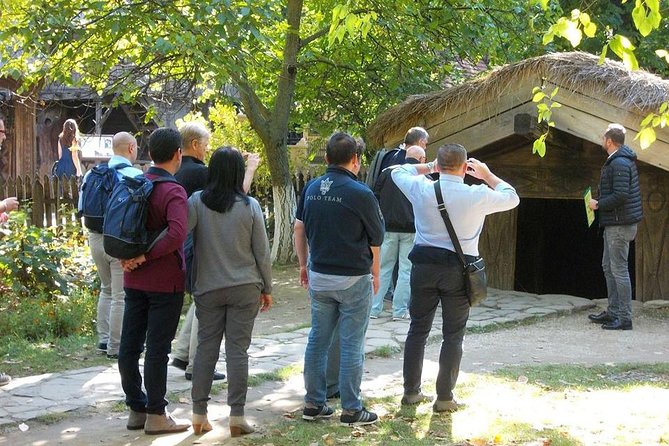
The tour is private, so your guide can adjust the pace and focus. That matters at the museum, where a quick walk past old houses would miss the point. The buildings are not just pretty objects. Their roof shapes, timber, plaster, porches, and placement tell you about climate, materials, work, wealth, and local customs.
You also get a practical introduction to Romanian wine. Three glasses and a plate of cheese and charcuterie turn the final stop into more than a tasting. You learn a little about the country’s long wine tradition, try local grape varieties, and get a relaxed place to ask questions about food, regions, and daily life.
The tour costs $148.19 per person. That is not a budget sightseeing walk, but the price includes private transportation, a licensed guide, hotel pickup within Bucharest, the Village Museum entrance, three wines, cheese, and charcuterie. For two people or a small group, the convenience and private format can make the cost reasonable. If you are mainly looking for cheap transportation between sights, it will feel expensive.
More museums and tickets in Bucharest:
- Bucharest: Museum of Senses Entry Ticket
★ 4.2 · 364 reviews - Communism in Bucharest – Landmarks, Museum & Communist Appetizers
★ 5.0 · 111 reviews - Bucharest: Entry ticket at the Museum of Communism
★ 4.6 · 57 reviews
Entering Romania through the Village Museum
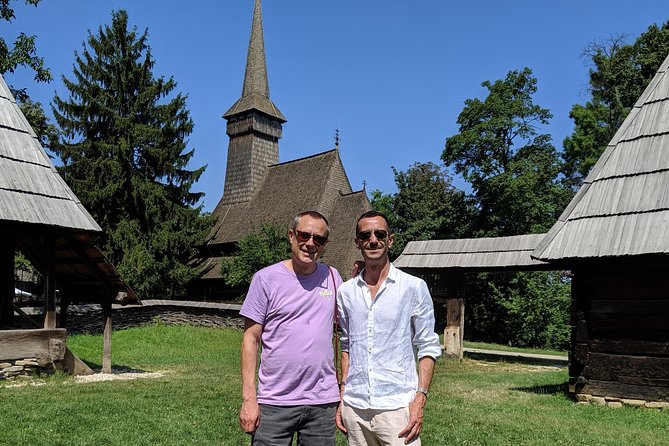
The first stop takes about two hours at the Dimitrie Gusti National Village Museum beside Herastrau Park. This is an open-air collection of traditional buildings from Romania’s historical provinces, with examples dating as far back as the 17th century.
The museum’s strength is variety. You might see steep-roofed peasant homes, thatched barns, log cabins, watermills, windmills, oil presses, road crucifixes, and wooden churches. The regional contrast is the real lesson.
Your guide can point out the reed-roofed houses associated with the Danube Delta, the cleaner lines of Moldavian and Wallachian buildings, and the carved wooden facades linked with Transylvania. You begin to see why local building styles differ instead of treating every old house as simply Romanian.
The churches deserve special attention. Their woodwork and painted decoration offer a more personal look at rural faith than a formal city church often can. One family with Romanian ancestry found the museum especially moving because it created a link with the places their ancestors may have known. You do not need family connections to appreciate it, but the setting can make those old structures feel surprisingly close.
I would give this stop your full attention rather than treating it as a photo break. Mihai has used printed maps and photographs to show where the buildings came from, which is helpful when several regional styles appear close together. His approach gives you a map of Romania in your head before you continue your trip.
There is some walking, but the total amount for the activity is described as less than one mile. Paths and outdoor surfaces can still require sensible shoes. If you walk slowly, say so at the start. One guide has adjusted the route for people who needed a gentler pace, allowing them to see more without rushing.
A half-hour among Romanian crafts
The second stop lasts about 30 minutes at an art and craft shop on Calea Victoriei. This is a shopping stop, but it also gives you a compact display of regional handiwork.
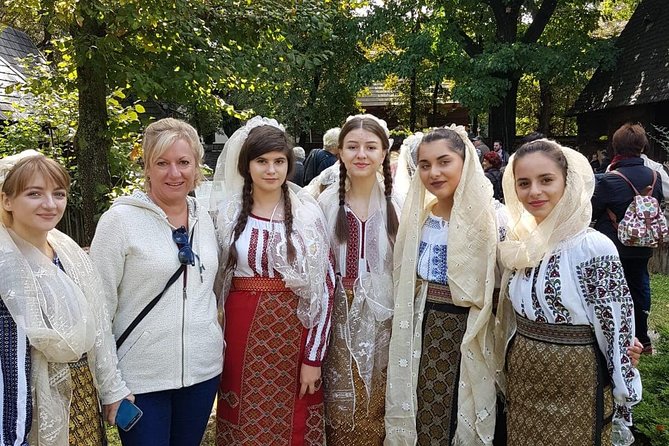
Look for the ie, the traditional Romanian blouse, along with glass-painted icons, Moldavian Easter eggs, Horezu pottery, and wooden masks linked with Transylvania. You may also find books, traditional sweets, Dracula-themed souvenirs, and small gifts.
The shop is useful if you want a tangible reminder of the museum’s regional themes. Horezu pottery, for example, gives you a chance to see how decoration and craft carry local identity into modern life. Traditional knot cookies and chocolate nuts offer a small taste of Romanian sweets without turning the stop into a full meal.
I would not book this tour mainly for shopping. Thirty minutes is enough for browsing, but not for a long search or a serious buying session. Prices, stock, and exact items are not specified, so treat this as a short cultural pause rather than a guaranteed shopping list.
Romanian wine on Calea Victoriei
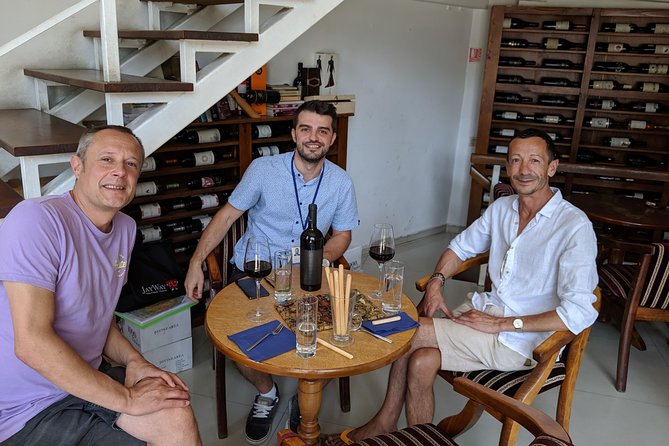
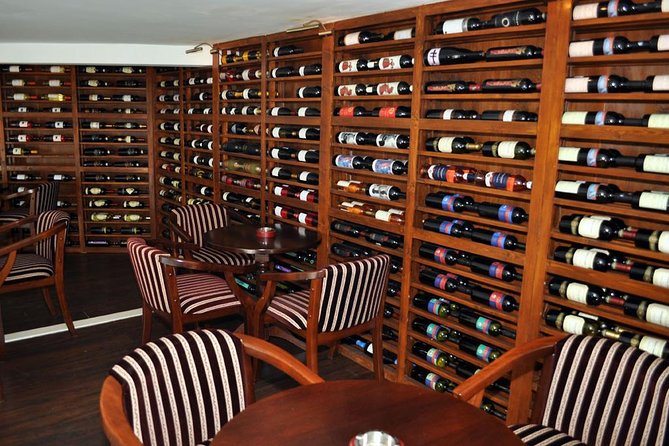
The final stop lasts about two hours at a local wine bar in the city center. This is where the tour shifts from buildings and objects to taste.
Romania has more than 2,000 years of wine-making tradition and ranks among the world’s major wine producers. The tasting focuses on Dealu Mare, one of the country’s best-known wine regions, while also introducing local grapes such as Feteasca Neagra and Negru de Dragasani.
You receive three glasses of wine per person, plus a plate of traditional cheese and charcuterie. One tasting included four wines instead of three, but the stated inclusion is three glasses, so I would plan around that rather than count on an extra pour.
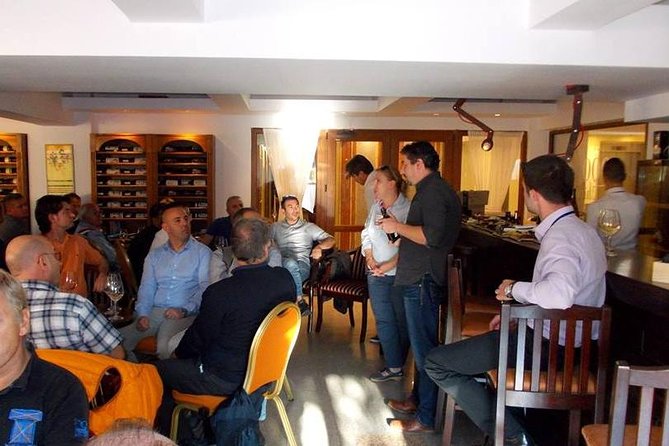
The guide explains the history of Romanian wine and the idea of regional character. You do not need to know wine terms to enjoy this. The point is to notice how local grape varieties differ from the international labels you may already recognize.
This stop also works well for conversation. Several guides, especially Mihai, have been praised for making time to discuss Romanian food, politics, history, Bucharest, and other parts of the country. That kind of open conversation can give you useful ideas for the rest of your trip.
You can remain at the wine bar after the official tour ends, but extra food and drinks are not included. The guide can point you toward the nearby Old Town or help you find your way back to your accommodation. Since the bar sits on historic Calea Victoriei, near the Romanian Athenaeum, you finish in one of the most convenient parts of central Bucharest.
More Romanian wine tastings near Bucharest:
- Wine Tasting in Bucharest
★ 5.0 · 183 reviews - Private Tour to Salt Mine, Lunch at Winery and Dracula Grave
★ 5.0 · 60 reviews - Bucharest: Private Wine Tasting Experience
★ 5.0 · 44 reviews - Wine Tasting in Bucharest long version
★ 5.0 · 22 reviews
The private guide is the main value
The buildings at the Village Museum are worth seeing on their own, but the guide shapes the experience. Without context, you may notice a roof or a carved door and then move on. With a good explanation, you understand why the structure looks that way and what it says about the people who built it.
Mihai has been particularly praised for clear English, humor, personal warmth, and strong storytelling. He has also helped with practical details, including checking a confusing accommodation address and calling ahead to confirm the correct pickup point. Michael has been praised for his enthusiasm and ability to adjust the route for gentle walkers. Emma has connected the museum and wine tasting to a family’s Romanian background in a personal way.
Those names come from past bookings, so you may not receive the same guide. Still, they show the kind of service the company aims to provide. The experience is not designed as a scripted bus tour. It is a private outing where questions and conversation are part of the value.
The private setting is also useful for families. A family with two small children found both the museum and wine bar suitable, and the vehicle was described as comfortable and roomy. The wine tasting is for adults, but the wider tour is not limited to wine enthusiasts.
Pickup, timing, and the end of the day
The tour lasts about five hours. Free pickup is offered at hotels and accommodations within Bucharest city limits. Your guide meets you in the lobby near reception, which is simpler than finding a street-side meeting point in unfamiliar traffic.
The listed start and end point is the Romanian Athenaeum at Strada Benjamin Franklin 1-3. In practice, pickup can be arranged from your accommodation, and the tour ends at the wine bar on Calea Victoriei. From there, the Athenaeum is only a few minutes away, while Old Town is roughly a 15-minute walk.
The private, air-conditioned vehicle is more than a luxury in Bucharest. Traffic can be heavy and unpredictable, and a private ride saves you from working out multiple taxi or transit connections. A guide who drives carefully also lets you focus on the city rather than the road.
The schedule is usually a good fit for a first or second day in Bucharest. The museum gives you context early, and the central finish leaves you close to restaurants, museums, hotels, and Old Town. You can continue exploring after the tasting instead of losing time returning to the edge of the city.
The tour is offered in English. Most people can take part, and only a small amount of walking is involved, but you should mention mobility concerns when booking so the guide can plan the museum visit sensibly.
Who should book this experience?
I would choose this for someone who wants more than a list of Bucharest sights. It suits you if you like architecture, food, local customs, and history, or if you are beginning a longer trip around Romania and want a useful introduction.
It is also a good choice for couples, families, and small private groups. The wine tasting adds an adult pleasure, while the museum and craft shop give the outing wider appeal. Group discounts may help if you are booking for several people.
You may want something else if your main goal is Communist-era Bucharest, the Palace of Parliament, or a broad city tour. None of those are part of this experience. It also may not suit anyone who dislikes wine, since the final two hours center on tasting and conversation.
Book ahead if your dates are fixed. The experience is often reserved well in advance, with an average booking lead time of about 146 days. You can cancel for a full refund up to 24 hours before the start time, but changes or cancellations inside that window are not accepted.
Is this Bucharest tour worth the price?
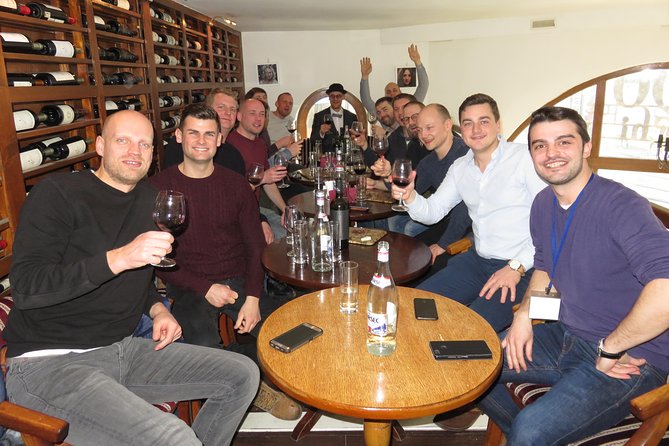
For $148.19 per person, I see the strongest value in the private format, not just the included admission and food. You get door-to-door pickup, an air-conditioned vehicle, a licensed guide, a two-hour museum visit, and a city-center finish with wine and local snacks.
The most important question is how you like to travel. If you want a guide to explain why Romanian regions look and taste different, I think this is a strong half-day choice. If you prefer to wander independently and spend your money on major city attractions, the price may be harder to justify.
I would book it early in a Bucharest stay. The museum gives you cultural context, and the guide’s recommendations can help shape the rest of your time in Romania. Choose it for the conversation, the regional architecture, and the chance to taste local grapes in a relaxed setting. Skip it only if your schedule is tight or wine and rural traditions are not high on your list.
FAQ
How long does the tour last?
The experience lasts approximately five hours, including the Village Museum, craft shop, and wine tasting.
Is hotel pickup included?
Yes. Free pickup is available from hotels and accommodations within Bucharest city limits. Your guide meets you in the lobby near the reception desk.
What is included in the wine tasting?
The tasting includes three glasses of wine per person, along with a plate of cheese and charcuterie.
Which wines might I taste?
The tasting focuses on Romanian wine, including wines from Dealu Mare and local grape varieties such as Feteasca Neagra and Negru de Dragasani.
Is the Village Museum entrance included?
Yes. The Village Museum admission fee is included in the tour price.
Where does the tour end?
The tour ends at the wine bar on Calea Victoriei, a few minutes from the Romanian Athenaeum and about 15 minutes on foot from Old Town.
Is the tour private?
Yes. Only your group participates, with a private licensed guide and private transportation.
What is the minimum drinking age?
The minimum drinking age for the wine tasting is 18.
More food tours in Bucharest
- Taste Bucharest: A Food Lover’s Tour of Markets & Neighbourhoods
★ 5.0 · 689 reviews - Street Food’n’Culture Tour
★ 5.0 · 209 reviews - Discover Bucharest: Private Highlights and Traditional Food Tour
★ 5.0 · 86 reviews - Bucharest Beer and Culture Tour with a Local
★ 5.0 · 47 reviews
Newest Bucharest trips we have written up
- Bucharest: Dealu Mare Winery Private Trip with Wine Tasting★ 4.9 · 6 reviews
- Winery touring & private wine tasting – one day private tour★ 5.0 · 3 reviews
- Traditions in Bucharest: Village Museum and Wine Tasting★ 5.0 · 8 reviews
- Your rendez-vous with Europe’s past: time-travel to Maramures, Transylvania★ 5.0 · 6 reviews
- Village Museum Bucharest Guided Tour★ 5.0 · 6 reviews
- Private Wine Tasting at Bucharest’s First Wine Bar★ 5.0 · 3 reviews
- Walking Tour of Bucharest City Center – Private Tour★ 5.0 · 4 reviews
- Wine tasting in Bucharest Old town – bonus cheese platter★ 4.5 · 6 reviews
Romanian Wine Tastings near Bucharest, compared.
Private Tour to Salt Mine, Lunch at Winery and Dracula Grave
Read our review →
Salt Mine , Lunch at Winery & Dracula Grave – Private Tour
Read our review →
Salt Mine, the Muddy Volcanoes and Wine Tasting Private Day Tour from Bucharest!
Read our review →

Browse the lists this tour appears in