
Reviewed · PALACE OF PARLIAMENT TOURS
Palace of the Parliament, Village Museum & Ceaușescu Mansion
Bucharest’s story is easiest to understand when you see its grandest symbols side by side: the giant Palace of the Parliament, traditional village buildings, and the former dictator’s private home. This six-hour private tour links all three by air-conditioned minivan, with city-center pickup and drop-off.
I like the sharp contrast between the stops, and I like having a guide to explain the political meaning behind the buildings rather than simply pointing out marble and chandeliers. Gabriel is specifically praised for his kind manner, clear explanations, and ability to answer questions. The main catch is that entrance fees are extra, and a Palace of the Parliament visit cannot always be guaranteed.
Key points at a glance
- Palace of the Parliament: Walk through grand halls built during Nicolae Ceaușescu’s communist rule, if entry tickets are available.
- Dimitrie Gusti National Village Museum: See authentic wooden houses, churches, windmills, and other buildings moved from Romanian regions.
- Ceaușescu Mansion: Visit the former family residence, with lavish interiors and a close look at private life under the regime.
- Private minivan touring: Travel between the three sites without arranging separate taxis or public transport.
- Three language choices: Live guiding is available in English, Italian, or Spanish.
- Important planning note: The Ceaușescu Mansion is closed on Mondays, and everyone needs valid identification to enter the Parliament Palace.
Why these three Bucharest sights belong together
At first, the Palace of the Parliament, Village Museum, and Ceaușescu Mansion may seem like an odd trio. One is a colossal government building, one is an open-air collection of rural homes, and one is a polished private villa.
Together, they show three sides of Romania’s recent story. The Parliament Palace expresses the scale and control of Ceaușescu’s state. The Village Museum preserves older rural customs and building styles from across the country. The mansion shows how the ruling family lived away from the public eye.
That contrast gives the day its shape. You move from power, to tradition, to private luxury. I find that far more useful than seeing three unrelated attractions in one hurried route.
The private format also matters. Instead of joining a large group, you have a guide and your own group in a minivan. You can ask questions as they come up, and the guide can give more attention to the parts that interest you most. Gabriel, one named guide associated with this experience, is praised for being caring and for explaining Romanian history and culture clearly.
The tour costs $45 per person, before entrance tickets. That makes it a good value if you want transport, a private guide, and three major stops in one day. It is less of a bargain if you already know the city well, prefer to explore at your own pace, or expect all admission costs to be included.
More Palace of Parliament visits:
- Bucharest: Palace of Parliament Tickets and Guide
★ 4.3 · 3,182 reviews - Bucharest: Palace of Parliament Tickets and Guided Tour
★ 4.4 · 1,877 reviews - Bucharest: Parliament Palace Skip-the-line Ticket
★ 4.2 · 1,518 reviews
The Palace of the Parliament: marble, scale, and political power
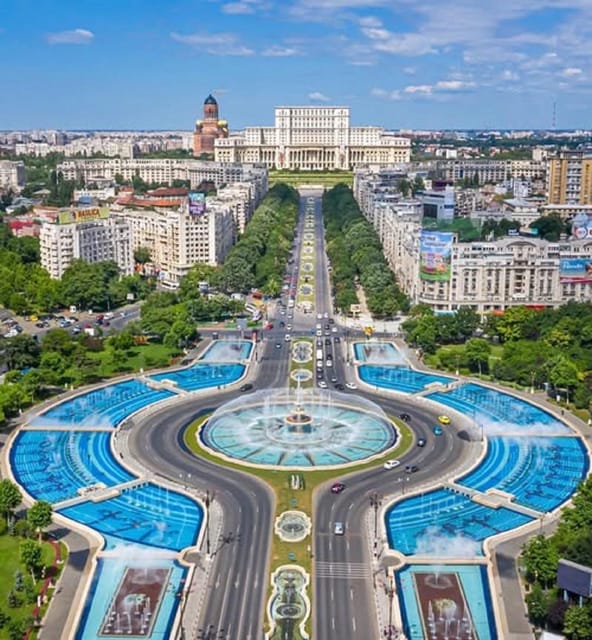
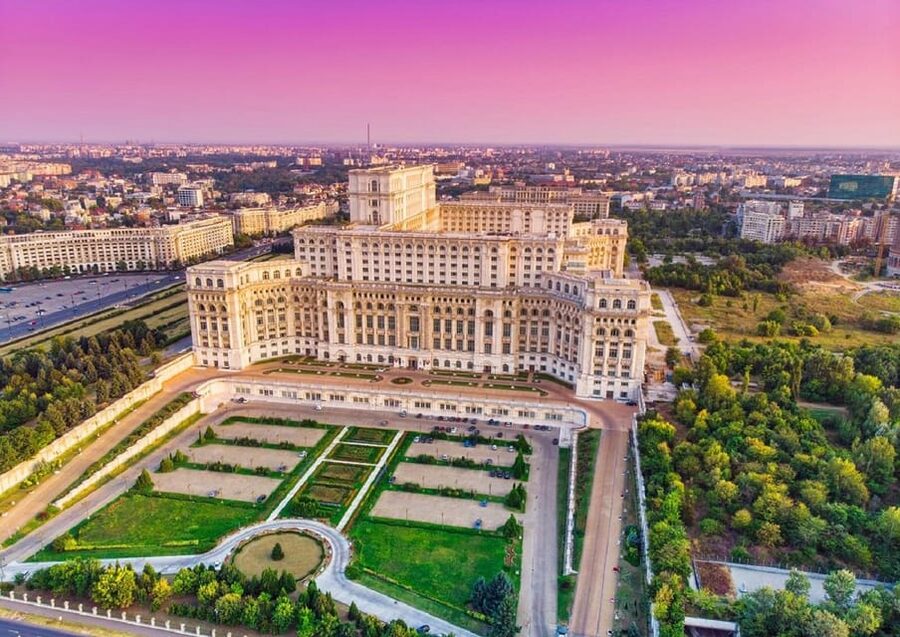
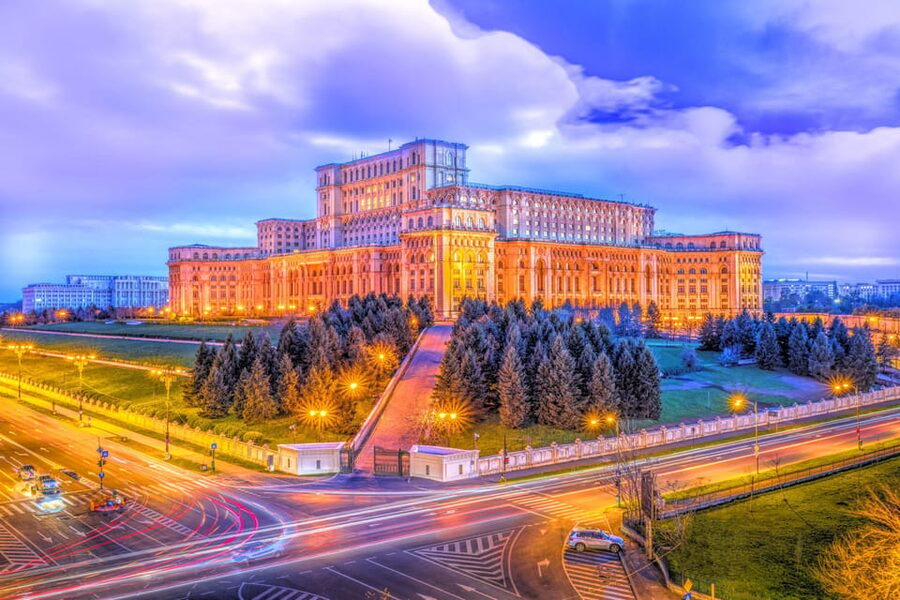
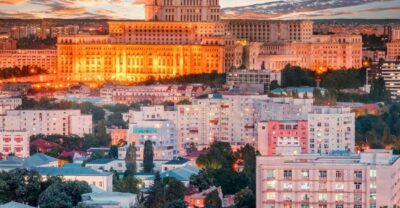
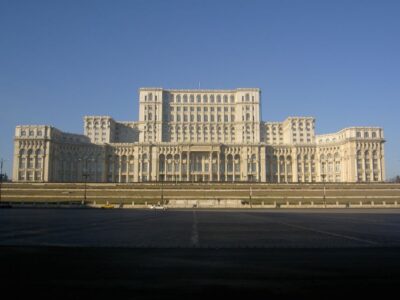
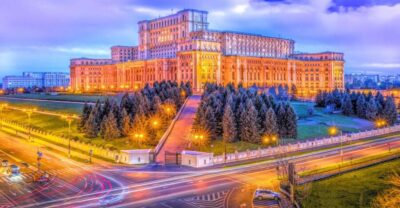
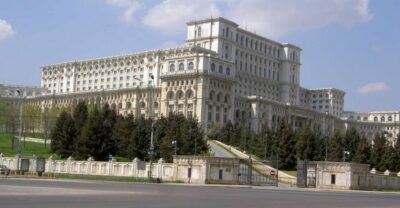
The day begins with the Palace of the Parliament, also called Palatul Parlamentului. It is the largest administrative building in Europe and the most visually overwhelming stop on this route.
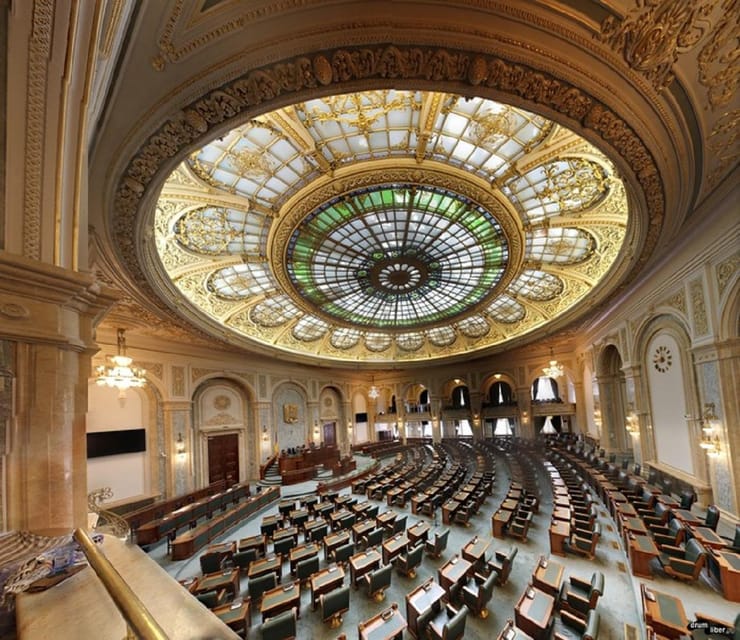
The building was ordered under Nicolae Ceaușescu and grew into one of the most extravagant construction projects of Romania’s communist era. Its scale is the first thing you notice. Inside, the emphasis is on grand rooms, marble, gold, crystal, conference spaces, ceremonial halls, and broad formal corridors.
A guide adds needed context here. Without explanation, the building can look like a long series of lavish rooms. With the historical background, its size and cost become part of the story. The palace reflects a political system that wanted to project authority through architecture, even while ordinary people faced restrictions and shortages.
The tour is scheduled for about an hour and a half, including the guided visit, photographs, free time, and possible shopping. You may see a grand balcony overlooking Bucharest, along with conference and ceremonial rooms. Exact access depends on the day’s entry arrangements and security rules.
Bring a valid ID. This is not a minor detail. The Palace of the Parliament requires identification for entry, and you should have the required document with you rather than assume a hotel card or photocopy will be accepted.
There is also a real uncertainty here. Entrance tickets are not included, and access cannot always be guaranteed. If tickets are unavailable, the visit changes to an exterior panorama. That still gives you a view of the building’s scale, but it is not the same as walking through its marble interiors.
The operator can book tickets on your behalf, which may help with the line, but you should still confirm the arrangement before paying for the tour. If seeing the inside is the main reason you are booking, this is the most important point to clarify.
The Village Museum: a quieter look at Romanian life
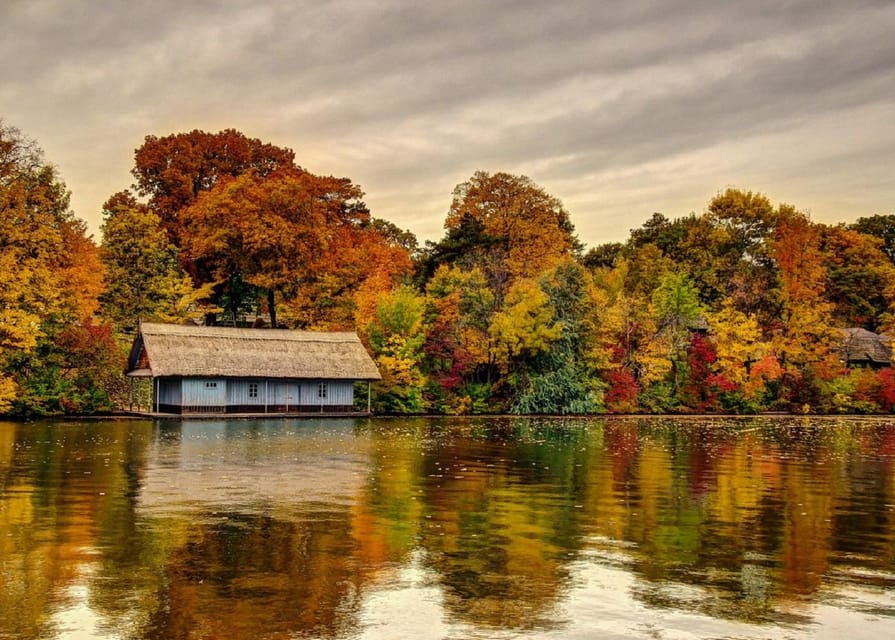
After the palace, the tour shifts from monumental government architecture to the Dimitrie Gusti National Village Museum. The change is welcome. The museum sits in Herastrau Park and offers a slower, more open-air experience.
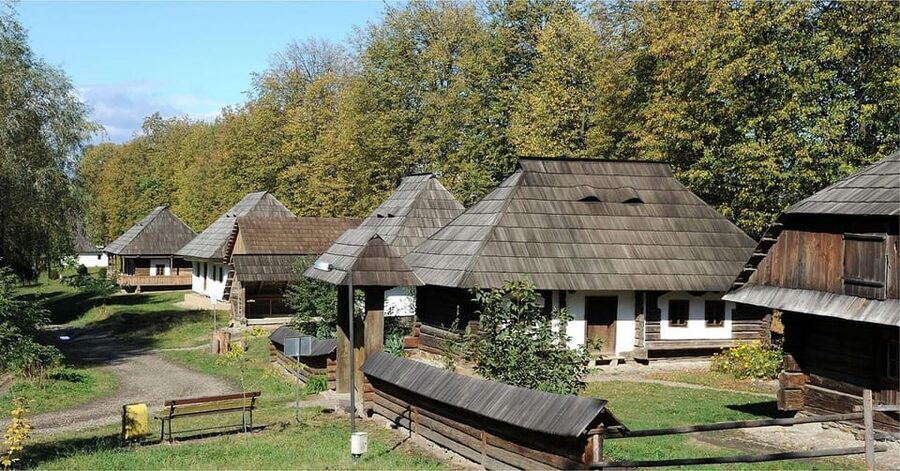
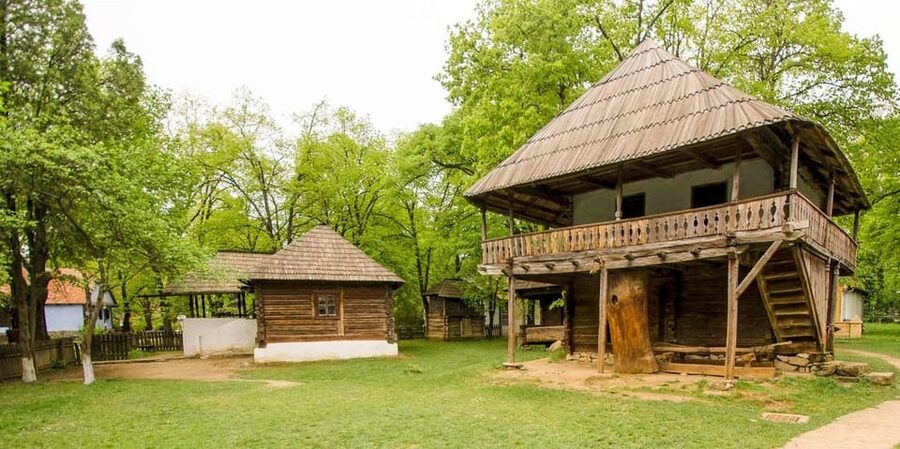
Here, you walk among authentic wooden houses, churches, windmills, and other rural structures brought from different parts of Romania. The buildings represent regional styles and traditional ways of living. Rather than viewing village life through a modern gallery display, you see the buildings themselves arranged across a park setting.
Your guide explains how architectural details vary from one Romanian region to another. You might find differences in woodwork, construction, layout, and decoration. These details help turn a walk among old houses into a lesson about local identity and rural craftsmanship.
The scheduled visit lasts about an hour and a half. That includes a break, photographs, guided touring, free time, and possible shopping. You should have room to explore beyond the guide’s main explanation, which is useful if you want to take photographs or pause at buildings that catch your eye.
I especially like this stop for the contrast it creates. The Palace of the Parliament is formal and overpowering. The Village Museum is human in scale, with buildings tied to everyday work, family life, and regional customs.
The grounds also give you a pause from indoor sightseeing. If you have spent the morning looking at marble halls and political architecture, the open-air setting makes the second half of the tour feel less rushed.
Still, remember that this is not a full day devoted to the museum. The stop is part of a three-site route, so anyone wanting to inspect every building in detail may find the time limited. The private format helps because you can ask your guide to focus on the types of architecture or traditions you care about most.
The Ceaușescu Mansion: private luxury behind closed doors
The last major stop is the former Ceaușescu family residence, commonly called the Ceaușescu Mansion or Primăverii Palace. The itinerary also identifies the final area as Cotroceni Bucharest, so it is sensible to confirm the exact meeting point and stop details when booking. The supplied description clearly presents the mansion as the intended attraction.
This home offers a different view of the same regime seen at the Parliament Palace. The public building projected national power. The mansion shows personal comfort and privilege.
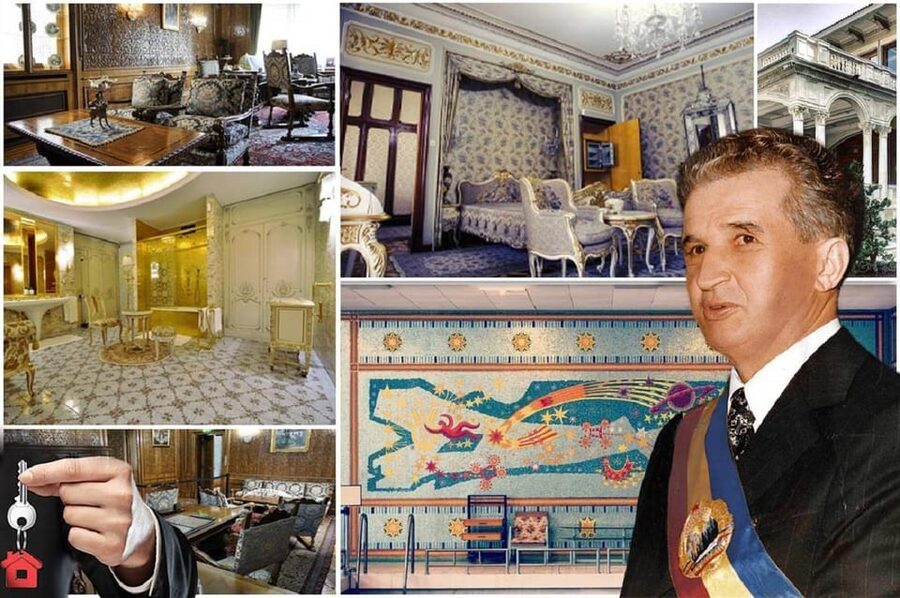
Inside, you can expect preserved rooms with grand chandeliers, expensive decoration, and highly personalized touches. The description specifically points to gold-plated bathrooms and opulent interiors. These details matter because they make the gap between official ideology and private life easier to grasp.
Your guide explains the lives of Nicolae and Elena Ceaușescu, their leadership, and the way this home served as a private retreat. The visit is not only about interior decoration. It is also about how political power shaped daily life at the top.
This stop is scheduled for about an hour and a half, with time for photographs, a guided visit, free time, and a break. It is a strong finish because it brings the day back from national symbols to personal space.
The major scheduling warning is simple: the mansion is closed on Mondays. Do not book this route for Monday assuming the stop will operate normally. If the mansion is essential to your plans, choose another day and confirm the current opening arrangements.
More communism and Ceausescu tours in Bucharest:
- The Real tour of Communism
★ 5.0 · 666 reviews - Life under Communism
★ 5.0 · 358 reviews - 3-Hour Guided Tour of Communist Bucharest
★ 4.9 · 303 reviews - Bucharest Essential Tour: Old Town, Calea Victoriei & Communism
★ 5.0 · 142 reviews
What the minivan and private format add
The tour includes transfers in an air-conditioned minivan, with pickup and drop-off from Bucharest’s city center. That saves you from arranging transport between sites that are spread around different parts of the city.
The vehicle is especially useful for a six-hour route. You are not spending the day figuring out taxi fares, checking bus connections, or losing time between attractions. The minivan also keeps the group together and gives the guide a chance to continue the story while you travel.
Because this is a private group, the pace can feel more personal than a standard coach excursion. You can ask about Ceaușescu, Romanian architecture, village customs, or Bucharest itself. The guide can also explain how the three places connect instead of delivering three isolated speeches.
There are limits. Private does not mean unlimited flexibility. The tour has a planned route and roughly ninety minutes at each main attraction. If you prefer long, unstructured museum visits, you may find the schedule too fixed.
The experience is wheelchair accessible, and live guiding is available in English, Italian, and Spanish. Those language options make it easier to choose a tour that suits your group without relying on written information alone.
Price, tickets, and the real value
The advertised price is $45 per person. For a private six-hour outing with a professional guide, city-center pickup, minivan transport, and three significant Bucharest attractions, that is a fair starting price.
But you need to budget beyond the headline amount. Entry tickets to the Palace of the Parliament, Village Museum, and Ceaușescu Mansion are not included. The operator can arrange tickets for you and help you skip the ticket line, but you should treat those admissions as additional costs.
That structure is common for guided sightseeing, yet it affects how you compare this tour with other options. A cheaper-looking tour may not remain cheaper after tickets are added. Ask for the full expected total before booking, especially if the Parliament Palace interior is the main attraction you want.
The ticket issue at the Parliament Palace deserves extra attention. Admission cannot be guaranteed. If tickets are unavailable, you receive an exterior panorama instead. For a visitor who mainly wants the building’s famous interior halls, that uncertainty lowers the tour’s value.
For someone who wants a simple introduction to Bucharest’s major historical symbols, the package still makes good sense. You get transport, interpretation, and a private setting in one block of time. You also avoid the work of planning three separate visits.
Who will enjoy this route most
I would recommend this tour to a first-time visitor who wants a clear introduction to Bucharest’s political past, traditional culture, and architecture. It suits couples, families, and small private groups that value door-to-door transport and the chance to ask questions.
It is also a good fit if you have only one full day for major sights. The route covers a lot without forcing you to learn the city’s transport system first.
History-minded visitors will get the most from the contrast between the palace and mansion. Architecture fans will appreciate the jump from communist monumental design to regional wooden buildings and lavish domestic interiors.
You may want a different plan if you dislike guided schedules, want long independent visits, or are unwilling to pay admission fees separately. You should also avoid Monday if the Ceaușescu Mansion is a priority.
Give yourself a little flexibility around the starting time. The experience lasts six hours, but the exact start time depends on availability. Since the Palace Palace entry situation can change, confirming the timing and ticket plan before the day begins is sensible.
What to know before you reserve
Book with a valid ID ready for the Parliament Palace. This is the one document requirement clearly attached to entry, and forgetting it could affect the first major stop.
Confirm that the Ceaușescu Mansion is operating on your chosen date. It is closed on Mondays, so the weekly calendar matters.
Ask whether admission tickets will be booked for your group and what they will cost. The operator offers ticket booking, but the tour price itself does not cover the three entrances.
Choose your guide language when available: English, Italian, or Spanish. Gabriel is one named guide, and his strengths are described as kindness, care, clear history explanations, and thoughtful answers to questions.
The tour allows free cancellation up to 24 hours before the start and offers reserve-now, pay-later booking. Those terms help if your Bucharest schedule is still changing, though you should still check the exact conditions at the time of reservation.
Should you book this Bucharest tour?
Book it if you want three major Bucharest sights in one private outing, with transport and a guide handling the connections. The Palace of the Parliament gives you scale and politics, the Village Museum adds Romanian tradition, and the Ceaușescu Mansion reveals the private side of dictatorship.
The best reason to choose it is the contrast. The biggest caution is the extra admission cost and the fact that Parliament Palace entry is not guaranteed.
If you confirm the ticket plan, avoid Monday, bring valid identification, and accept the scheduled pace, this is a practical and worthwhile introduction to Bucharest. If the interior of the Parliament Palace is non-negotiable, ask about ticket availability before booking.
More museums and tickets in Bucharest
- Bucharest: Museum of Senses Entry Ticket
★ 4.2 · 364 reviews - Communism in Bucharest – Landmarks, Museum & Communist Appetizers
★ 5.0 · 111 reviews - Bucharest: Entry ticket at the Museum of Communism
★ 4.6 · 57 reviews - Bucharest: Museum of Communism Ticket with Communist Coffee
★ 4.6 · 52 reviews
Newest Bucharest trips we have written up
- Bucharest: Dealu Mare Winery Private Trip with Wine Tasting★ 4.9 · 6 reviews
- Winery touring & private wine tasting – one day private tour★ 5.0 · 3 reviews
- Traditions in Bucharest: Village Museum and Wine Tasting★ 5.0 · 8 reviews
- Your rendez-vous with Europe’s past: time-travel to Maramures, Transylvania★ 5.0 · 6 reviews
- Village Museum Bucharest Guided Tour★ 5.0 · 6 reviews
- Private Wine Tasting at Bucharest’s First Wine Bar★ 5.0 · 3 reviews
- Wine tasting in Bucharest Old town – bonus cheese platter★ 4.5 · 6 reviews
- Walking Tour of Bucharest City Center – Private Tour★ 5.0 · 4 reviews
Palace of Parliament Tours, compared.
Parliament Senate Entry Tickets and Guided Tour
Read our review →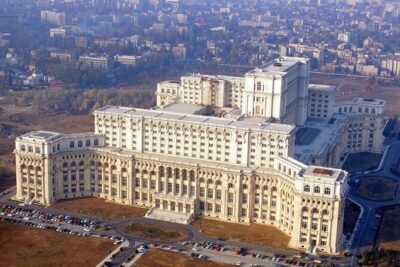
Skip the Line Ticket of the Palace of Parliament in Bucharest
Read our review →
tour in the Parliament in Italian+exterior visit with guide
Read our review →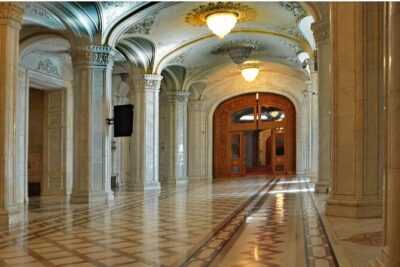
Bucharest Private Tour, Parliament Palace, Ceausescu House Visit
Read our review →
Private Bucharest city tour visit the Palace of the Parliament & Village Museum
Read our review →Browse the lists this tour appears in