
Reviewed · BUCHAREST COMMUNISM AND CEAUSESCU TOURS
Life under Communism
Bucharest’s communist past is easiest to understand when you see it on foot. This tour links grand buildings, battered facades, religious sites, and Revolution Square with stories about Ceausescu’s rule and the daily strain of life under his regime. Cristina, Stefan, and Victor are among the guides who lead it, and the experience is designed to explain both political events and ordinary routines.
I like the way the route balances monumental sites with easily missed details, such as a former food shop, old security offices, and bullet marks connected with the 1989 uprising. I also like the personal angle, especially when Cristina connects national events with the experiences of her parents and grandparents. The main drawback is simple: this is a walking tour of about three hours, so comfortable shoes and suitable clothing matter. One booking also went badly because the guest missed the meeting point and the guide continued after waiting 15 minutes, so arrive early and make contact before the start.
Key points to know before you book
- See Ceausescu’s Bucharest up close: The Palace of Parliament reveals the scale and cost of the dictator’s building program.
- Hear about ordinary life: Food shortages, queues, state control, religion, and daily habits receive as much attention as political dates.
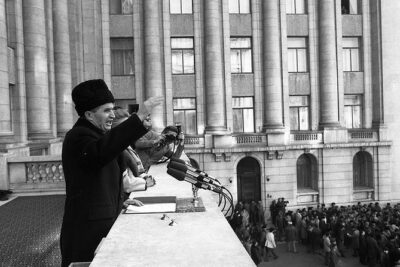
- Visit the places where Communism fell: Revolution Square connects the final days of Ceausescu’s rule with the violence of December 1989.
- Expect a personal guide-led walk: Cristina is especially noted for clear English, family stories, patience, and a warm approach. Stefan and Victor also lead some departures.
- Look beyond the famous buildings: Small Communist-era structures and former food shops help explain how the system worked at street level.
- Plan for the practical details: The tour begins near the Patriarchal Cathedral, ends at Revolution Square, and accepts up to 20 people.
Why this tour helps explain Bucharest
Romania’s Communist period can look like a set of grim buildings and difficult dates if you only read about it in a book. This walk gives those facts a physical setting. You move from a religious center to Ceausescu’s enormous parliament, through Old Town, and finally to the square where the regime collapsed.
The route also avoids treating Communism as a simple story with one clear lesson. You hear about the political system, but also about how people managed daily life within it. That distinction matters. The tour is not built only around condemning the dictatorship, nor does it praise the system. It aims to explain what changed, what people endured, and why memories of the period can differ across generations.
The best part is the link between large events and small places. A grand avenue can tell you about state power. A former food shop can tell you about shortages and queues. A monastery can show how religious life survived pressure from an officially atheist government.
The price is about $42.33 per person. For a three-hour guided walk with a professional guide, that is a fair price if you want context rather than a quick photo stop. You are paying for the guide’s explanations, not entrance-heavy sightseeing. The Palace of Parliament admission is not included, and food and drinks are also extra, so keep that in mind when comparing the cost with a free walk.
More communism and Ceausescu tours in Bucharest:
- The Real tour of Communism
★ 5.0 · 666 reviews - 3-Hour Guided Tour of Communist Bucharest
★ 4.9 · 303 reviews - Bucharest Essential Tour: Old Town, Calea Victoriei & Communism
★ 5.0 · 142 reviews
Starting beside the Patriarchal Cathedral
The meeting point is Aleea Dealul Mitropoliei 19, near Catedrala Patriarhala. The first stop takes about 10 minutes and introduces the violent beginning of Romanian Communism.
This is a smart place to start because the cathedral grounds bring religion, national identity, and political power into the same story. Rather than beginning with Ceausescu’s most famous building, the guide first sets out how the Communist system took hold and how its early years brought force and upheaval.
You should arrive a little early. The meeting point is a specific address, and the one poor experience in the feedback came from a guest who did not recognize the guide and missed the start. The guide reportedly waited 15 minutes, made calls and sent messages, then continued so the group could stay on schedule. That is a useful warning for any small walking tour: keep your phone available, identify the guide, and do not count on a late arrival being rescued.
Admission to the cathedral stop is free. The tour operates in all weather conditions, so bring appropriate clothing. Rain did not stop one group from enjoying the walk, but wet streets and a long route can make poor shoes a real nuisance.
The Palace of Parliament and the cost of power
The Palace of Parliament receives about 15 minutes on this route. The tour explains the real story behind the building, including the political ambition and human cost tied to its construction.
The palace is one of Bucharest’s defining Communist-era landmarks. Its scale helps you grasp how Ceausescu wanted the capital to display state power. The building is not simply a large government office. It represents a period when architecture, urban planning, and political theater were fused together.
A short stop cannot cover every room or construction detail, and this is not presented as a full interior visit. Admission is not included, so you should not assume that the tour fee covers entry. The value here is the guide’s explanation from the route, which gives the building meaning instead of leaving you with only an oversized facade.
I like this part because it makes the connection between city planning and private life clear. Ceausescu’s vision reshaped Bucharest on a vast scale, while ordinary people faced limits on food, energy, speech, and movement. The contrast is hard to miss when you look at the capital’s grandest building in the context of what was happening beyond its walls.
Antim Monastery and religion under Communist rule
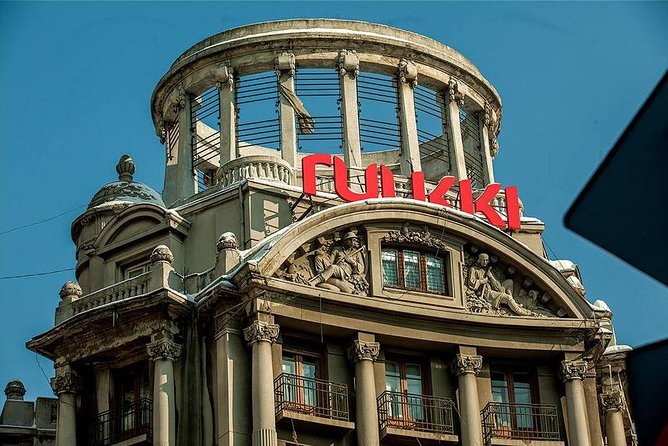
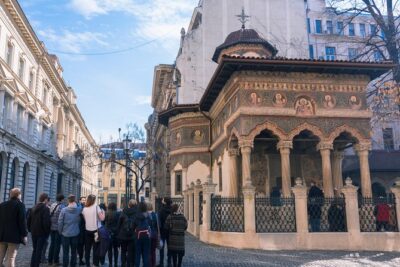
At Manastirea Antim, the group spends around 10 minutes. This picturesque medieval monastery provides a sharp change of mood and subject.
The guide explains how religion was affected by the Communist government. That makes the stop more useful than a simple architectural pause. You see a historic religious site, then learn how religious institutions and believers had to function under a state that promoted atheism and sought control over public life.
The monastery also gives the walk visual variety. After the heavy political weight of the parliament, its older architecture helps you see that Bucharest is not only a city of Communist blocks and monumental government buildings. The stop is brief, though, so you should expect an introduction rather than a long religious or architectural tour.
This is one place where a personal guide can add real value. Rules and official policy explain one part of the story. Family memories and local experience can help you understand how those policies affected real households. Cristina’s approach, based on accounts from several generations of her family, fits this kind of subject particularly well.
Same city, a completely different sort of day:
- Bucharest: Dracula’s Castle, Peles Castle, & Brasov Old Town
★ 4.5 · 17,858 reviews - Bucharest: Dracula Castle, Peles Castle & Brasov Old Town
★ 4.6 · 10,891 reviews - Bucharest: Dracula’s Castle, Peleș Castle & Brașov Day Trip
★ 4.5 · 5,919 reviews - Bucharest: Palace of Parliament Tickets and Guide
★ 4.3 · 3,182 reviews
Old Town, Caru’ cu bere, and controlled hospitality
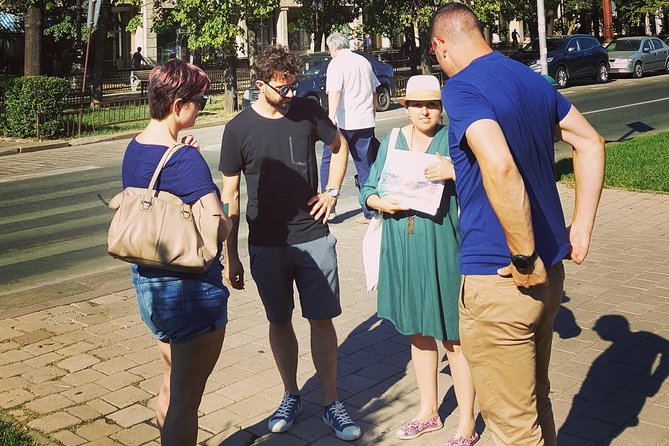
The route then reaches Old Town for about 10 minutes. The stop includes Caru’ cu bere, the famous restaurant, and its role in foreign policy during Communist rule.
That detail makes the Old Town stop more than a break among historic streets. Under a tightly controlled regime, certain restaurants and public places could serve as carefully managed showcases for foreign visitors. The guide uses Caru’ cu bere to explain how Romania presented itself abroad while people inside the country dealt with a very different reality.
You should not expect a meal to be included. Food and drinks are not part of the tour unless specifically stated, and the restaurant visit is presented as a historical stop rather than a dining package. If you want to eat there, plan that separately after the walk.
Old Town can also be busy, and the group may need to pause in places with passing pedestrians. A maximum of 20 people is not huge, but it is larger than a private walk. The upside is that the tour can have some group energy and shared questions. The tradeoff is that you may not receive the same uninterrupted conversation available on a two-person departure.
Small Communist details you could miss alone
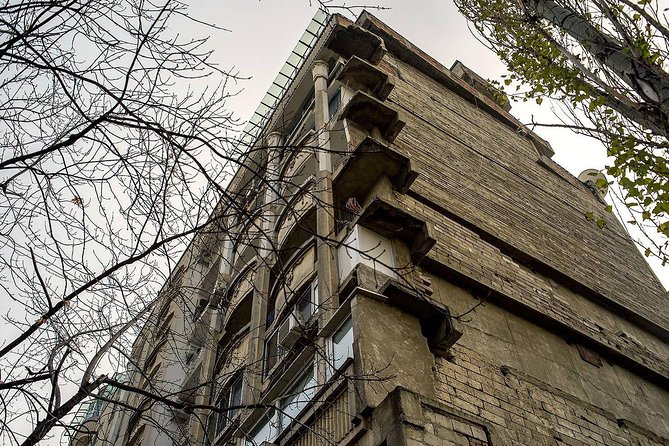
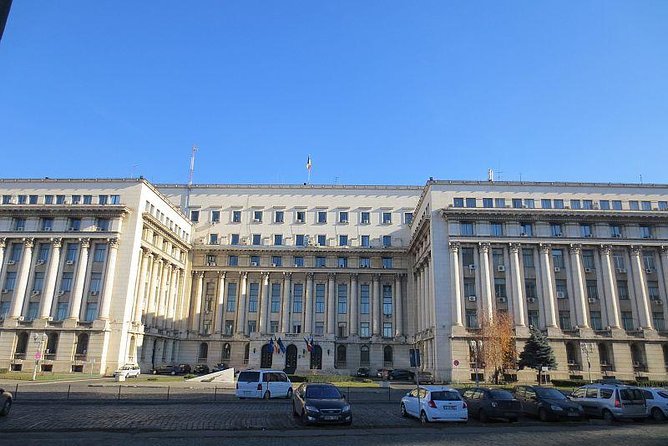
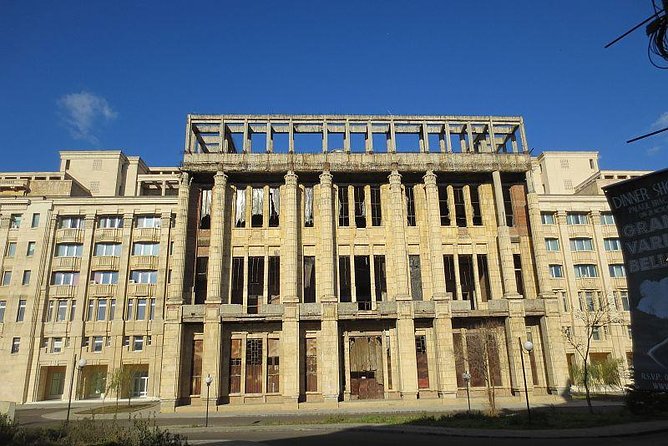
One of the strongest parts of this experience is its attention to ordinary places. The route includes less obvious Communist-era buildings, a former Securitate office, and an old Alimentara food shop that can be easy to overlook if you explore Bucharest without a guide.
These details help you picture daily life. The Palace of Parliament shows what the state wanted people to see. A former food shop suggests what people actually had to do to obtain basic goods. A security office, even when it looks like an unremarkable building in a worn area, points to the surveillance and fear that shaped private conversations.
One guide also provides a Communist-era snack, giving the history a small, practical connection to everyday consumption. That is a modest touch, but it can make the subject easier to remember. You are not only hearing about shortages and state-controlled supply. You are seeing the kinds of places where those policies affected daily routines.
The route’s personal stories are another major strength. Cristina is praised for clear English and for explaining events through the experiences of her family. Other guides, including Stefan and Victor, are described as open to questions and able to connect the political period with ordinary life. You can ask about Ceausescu’s rise, the meaning of socialism, family experiences, or how Romania changed after 1989.
Revolution Square and the fall of Ceausescu
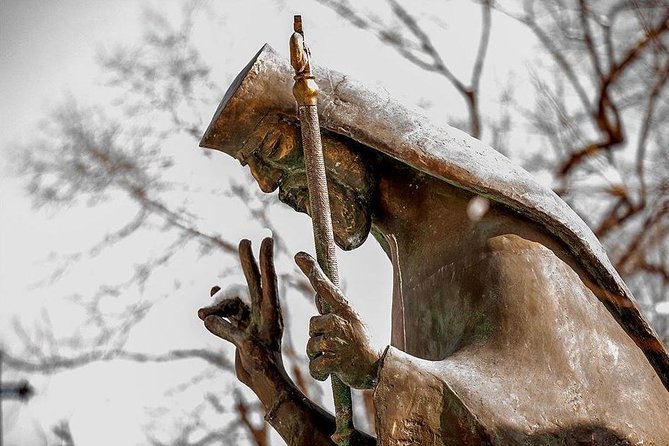
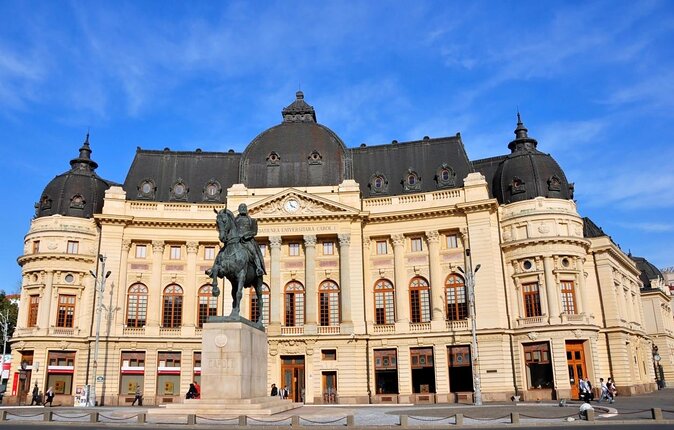
The final stop is Piata Revolutiei, or Revolution Square, where the tour ends. The stop lasts about 15 minutes and focuses on the violent collapse of Communism and Ceausescu’s downfall.
This is the natural ending. The earlier stops explain how the regime was built and maintained. Revolution Square shows how quickly fear and obedience could break apart. The site also contains physical reminders of the uprising, including bullet marks on buildings. Those marks give the events a direct presence that a timeline cannot provide.
The guide explains the final days in a way that connects public protest with the wider political climate. You learn about the collapse of Ceausescu’s authority and the violence that followed. Because the stop is in the actual setting of those events, it can be one of the most affecting parts of the walk.
The tour ends here rather than returning to the starting point. That is useful if you plan to continue exploring central Bucharest, but you need to arrange your own way back. Revolution Square is near public transportation, according to the practical information provided.
How personal stories change the experience
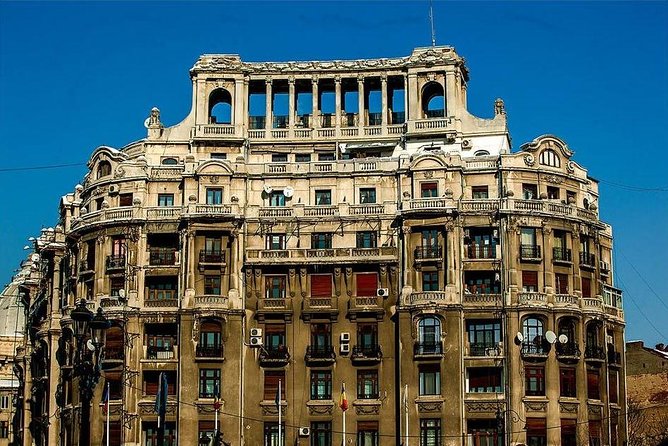
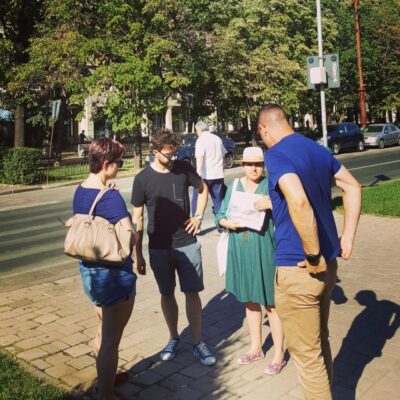
The strongest praise for this tour centers on the guides, especially Cristina. Her clear English matters because the subject includes complicated political shifts, Romanian names, and several decades of change. Her style also includes personal family accounts, which can make the period easier to understand without reducing it to a collection of slogans.
You may meet Cristina, Stefan, or Victor, depending on the departure. The feedback describes all three as willing to answer questions, though Cristina receives the most detailed praise. She has also been attentive to different walking speeds, stopping where a participant could sit or lean and adjusting the pace for an older parent.
That does not mean you should treat the walk as effortless. It lasts about three hours and includes outdoor stops between the listed locations. If walking is difficult for you, contact the operator before booking and be realistic about the distance. The group format also means the guide must balance individual needs with the schedule.
The personal approach is especially helpful if you have little background in Romania. You do not need to arrive knowing the difference between the various stages of Communist rule. A good question from you can lead into politics, culture, family life, or the lasting effects of the period.
Group size, timing, and value
The tour lasts approximately three hours and accepts a maximum of 20 participants. That size allows questions, but it is not a private tour. The experience can feel quite personal if the group is small, and one departure had only two people, but you should not book expecting that every time.
At $42.33, the cost makes most sense for people who want a guide to interpret the city. If you only want to see the Palace of Parliament from outside and take a few photos, you can spend less by walking independently. If you want to understand why the buildings, memorials, shops, and religious sites matter, the guide adds the main value.
The tour is offered in English with a mobile ticket. It is near public transportation, allows service animals, and most people can take part. Hotel pickup and drop-off are not included, so you need to reach the cathedral meeting point yourself and make your own plans after arriving at Revolution Square.
Free cancellation is available up to 24 hours before the start time for a full refund. Cancellations or changes within 24 hours are not refunded, and poor weather may lead to a new date or a full refund. Since the tour runs outdoors, check the forecast and dress for the conditions.
Who should book Life under Communism
I would choose this tour if you are interested in 20th-century European history, Cold War politics, architecture, or the personal effects of dictatorship. It is also a strong choice early in a Bucharest visit because it gives later sights more context.
You will get the most from it if you enjoy asking questions and listening to family stories alongside formal history. The walk suits adults, older children who can manage the subject matter and distance, and anyone who wants more than a standard city introduction.
You may want a different option if you dislike walking, need guaranteed private attention, or mainly want to tour the interior of the Palace of Parliament. That building receives only a short stop, and admission is separate. You should also avoid booking at the last minute if you are unsure about reaching the meeting point on time, since the group cannot wait indefinitely.
Should you book this Bucharest walking tour?
Book it if you want to understand how Communism shaped Bucharest and Romanian life, not just photograph its most famous buildings. The combination of the Palace of Parliament, Antim Monastery, Caru’ cu bere, overlooked Communist sites, and Revolution Square gives the tour a useful range.
I especially like the balance between public history and personal memory. Cristina’s family stories, Stefan’s and Victor’s question-friendly guiding, and the route’s small street-level details can turn an unfamiliar political period into something you can picture.
Skip it if you want a short, vehicle-based sightseeing trip or a full palace interior visit. Otherwise, wear good shoes, arrive early, keep your phone ready for guide contact, and book at least 24 hours ahead if you want the option of a full refund.
FAQ
How long does the Life under Communism tour last?
The tour lasts approximately three hours.
Where does the tour begin?
It begins at Aleea Dealul Mitropoliei 19 in Bucharest, near Catedrala Patriarhala.
Where does the tour end?
The tour ends at Revolution Square, or Piața Revoluției, in Bucharest.
Is admission to the Palace of Parliament included?
No. Admission to the Palace of Parliament is not included in the tour price.
Is food included?
No. Food and drinks are not included unless specifically stated.
What language is the tour offered in?
The tour is offered in English and includes a professional guide.
What is the cancellation policy?
You can cancel up to 24 hours before the start time for a full refund. Cancellations or changes made less than 24 hours before the experience are not refunded. If poor weather causes the tour to be canceled, you will be offered another date or a full refund.
Newest Bucharest trips we have written up
- Bucharest: Dealu Mare Winery Private Trip with Wine Tasting★ 4.9 · 6 reviews
- Winery touring & private wine tasting – one day private tour★ 5.0 · 3 reviews
- Traditions in Bucharest: Village Museum and Wine Tasting★ 5.0 · 8 reviews
- Your rendez-vous with Europe’s past: time-travel to Maramures, Transylvania★ 5.0 · 6 reviews
- Village Museum Bucharest Guided Tour★ 5.0 · 6 reviews
- Private Wine Tasting at Bucharest’s First Wine Bar★ 5.0 · 3 reviews
- Walking Tour of Bucharest City Center – Private Tour★ 5.0 · 4 reviews
- Wine tasting in Bucharest Old town – bonus cheese platter★ 4.5 · 6 reviews
Bucharest Communism and Ceausescu Tours, compared.
Bucharest Essential Tour: Old Town, Calea Victoriei & Communism
Read our review →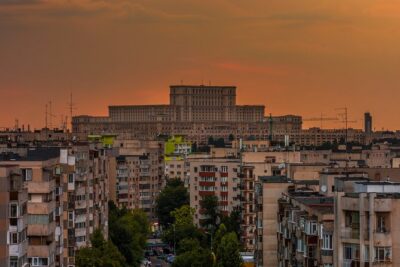
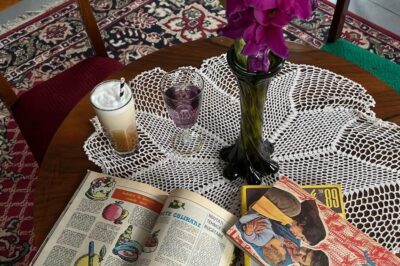

Museum of Communism Ticket with Communist Coffee
Read our review →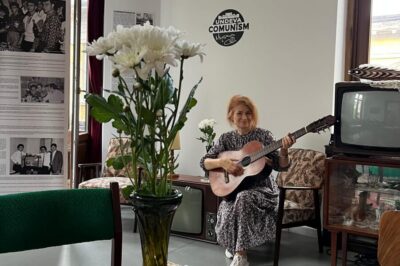
Dinner+Tour at Museum of Communism after closing
Read our review →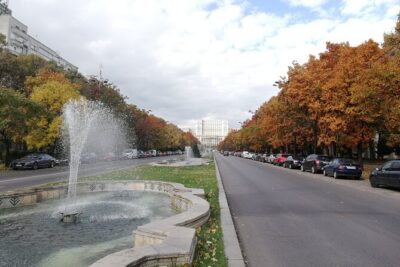
Contrasts of Communism – Small Group Walking Tour in Bucharest
Read our review →Browse the lists this tour appears in