
Reviewed · BUCHAREST FOOD TOURS
Bucharest Panoramic City Tour & Street Food
Bucharest makes the most sense when you see its sharp contrasts side by side: grand Belle Époque palaces, huge communist boulevards, leafy old neighborhoods, and a noisy food market where locals shop for lunch. This private four-hour tour ties those pieces together by car or air-conditioned van, with stops for coffee, pastries, and Romanian mici at Obor Market.
I like the way the tour combines major sights with ordinary city life, rather than treating Bucharest as a string of monuments. I also like the private format. Guides such as Vlad, Petre, and Andrei have been praised for clear communication, friendly service, and adapting the route to the group. The main caution is price: at $150 per person, this is best value for a small group that wants a private vehicle and a broad overview, not for a solo visitor seeking the cheapest introduction.
Key points to know before booking

- Obor Market adds real local flavor, with Romanian mici, fresh produce, cheese, salami, and other everyday shopping.
- The route covers a lot of ground, including Parliament Palace, Calea Victoriei, Unirii Boulevard, Primăverii, the Triumph Arch, Village Museum, and the Romanian Atheneum.
- Private transport keeps the day easy, especially in hot weather or when you want to avoid navigating Bucharest on your own.
- Coffee and local pastries begin the tour, while food, drinks, and attraction entrances cost extra.
- The communist past receives serious attention, including the enormous boulevards and Nicolae Ceaușescu’s former private residence.
- The tour suits first-time visitors best, though you should confirm how much time is available for any interior visit.
Why Bucharest is best understood through contrast
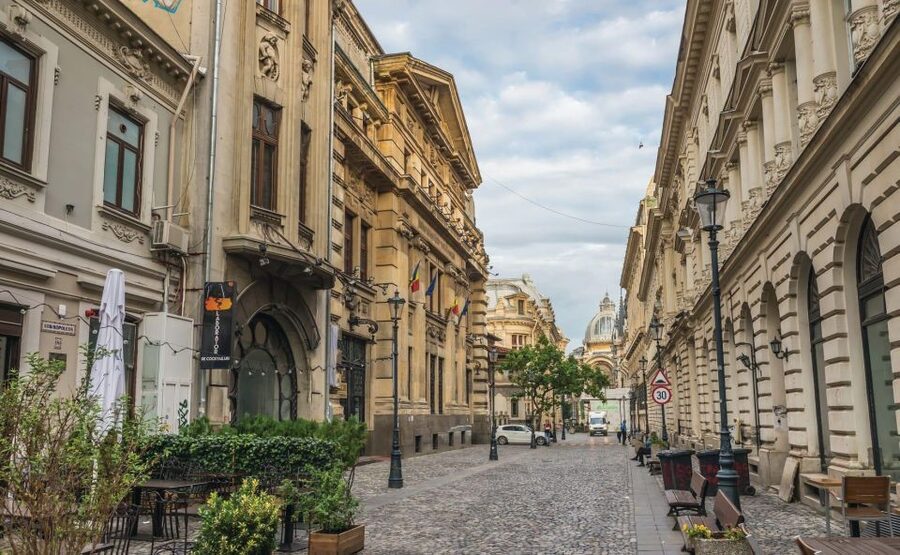
Bucharest was once called Little Paris, especially during the interwar years. Calea Victoriei still gives you a taste of that era, with elegant residences, museums, and palaces gathered along one of the city’s most important streets.
Then the view changes. Broad communist avenues and oversized government buildings reveal a different Bucharest, shaped by Nicolae Ceaușescu’s rule and his grand plans for the capital. The charm of this tour is that you do not have to choose between old Bucharest and modern Bucharest. You see both in one continuous route.
I find a private vehicle particularly useful here. Bucharest’s key sights are spread out, and the city can be tiring when you try to connect them on foot. From the car or spacious van, you can watch the city shift from historic center to monumental boulevard, from residential district to open-air market.
The itinerary lasts about four hours, though the description allows four to five hours. Pickup is planned for around 10 a.m. at your hotel or apartment, followed by drop-off at a location arranged with the tour. That morning start gives you a practical first look at the capital without taking up your entire day.
More food tours in Bucharest:
- Street Food’n’Culture Tour
★ 5.0 · 209 reviews - Discover Bucharest: Private Highlights and Traditional Food Tour
★ 5.0 · 86 reviews - Cooking Class traditional food
★ 5.0 · 22 reviews
Coffee, pastries, and a gentler start at 10 a.m.
The tour begins with a freshly roasted gourmet coffee and local pastries. This is a small detail, but it gives the morning a pleasant rhythm. You start with something local before moving into the more formal sightseeing.
Do not read this as a full breakfast. Food and drinks are not included in the price, so you should expect to pay for any coffee, pastries, lunch, mici, or additional drinks yourself. The included water and Wi-Fi are useful touches during the drive.
Your guide is also an important part of the experience. English is the stated tour language, and previous groups have had guides named Vlad, Petre, and Andrei. Petre was singled out for being engaging, personable, and responsive to feedback. Vlad was praised for keeping the day smooth and adapting to the group’s needs, while Andrei handled hotel pickup and a wide historical route with ease.
You cannot select a particular guide from the information provided, so treat those names as examples rather than a promise. Still, they give you a good sense of the tour’s intended style: conversation, context, and flexibility rather than a fixed speech delivered at every stop.
Calea Victoriei and the old Little Paris
Calea Victoriei is one of the strongest early stops because it introduces the city’s pre-communist character. As you travel along this famous street, you will see museum houses, palaces, and grand urban buildings linked to the period when Bucharest wanted to look toward Paris.
This is the place to pay attention to architectural contrast. Some buildings are polished and formal, while others show the wear and uneven upkeep that give Bucharest much of its character. Your guide can help connect the facades to the city’s interwar identity and later political changes.
The route is designed for observation and photography, so you should be ready for short stops and views from the vehicle. If you want long interior visits, ask early. Entrance fees are not included, and the four-hour schedule has to cover many parts of the city.
That tradeoff is worth understanding. You gain range, but not unlimited time at each attraction. I would choose this tour to get your bearings and understand how Bucharest fits together, then return independently to one or two places you want to explore inside.
Parliament Palace and the scale of communist Bucharest
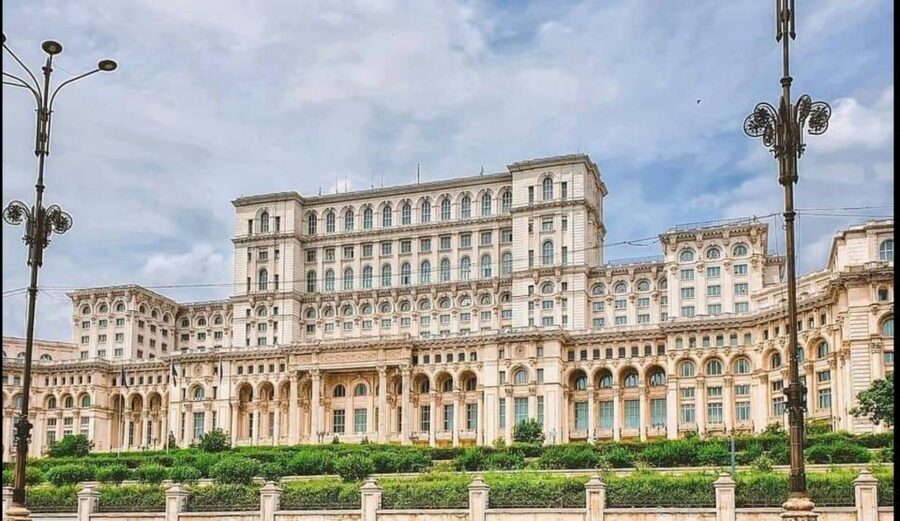
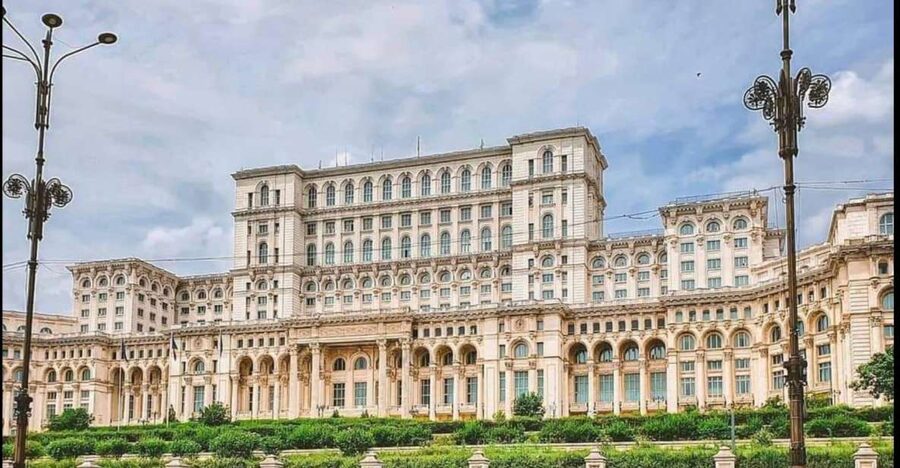
The Palace of Parliament is the tour’s most imposing sight. It is described as the second-largest administrative building in the world, a massive symbol of Ceaușescu’s ambitions and the enormous cost of his rebuilding program.
Even from outside, the building helps explain why Bucharest feels so different from many European capitals. Its size is not subtle. The structure and the surrounding spaces were made to project state power, and the nearby boulevards reinforce that message.
The tour also includes the Army House, the CEC Palace, Unirii Boulevard, and Alba Iulia Square. Together, these stops show several layers of the capital. The CEC Palace brings you back toward the older architectural tradition, while Unirii Boulevard is the communist answer to a grand ceremonial avenue.
Unirii Boulevard is sometimes described as Bucharest’s communist Champs-Élysées. The comparison is useful, but the mood is different. Here, the scale feels more political than romantic. You see a city built for parades, official movement, and visual power.
This part of the route is especially helpful if you want more than pretty photographs. Your guide can explain how daily life changed under communism and how the city’s neighborhoods were reshaped. The tour does not treat Bucharest as a museum piece. It shows the lasting effect of those decisions on streets that people still use every day.
More Bucharest city tours:
- Bucharest: City Highlights Guided Walking Tour
★ 4.9 · 1,482 reviews - Bucharest Highlights Walking Tour
★ 5.0 · 469 reviews - Bucharest: 2-Hour City Highlights Bike Tour
★ 4.8 · 269 reviews - Bucharest Tuk Tuk city tour
★ 5.0 · 188 reviews
Obor Market brings the tour down to earth
Obor Market is where the tour shifts from national symbols to daily Romanian life. It is described as Bucharest’s largest outdoor and indoor market, and it gives you a chance to see how locals shop, eat, and move through the city.
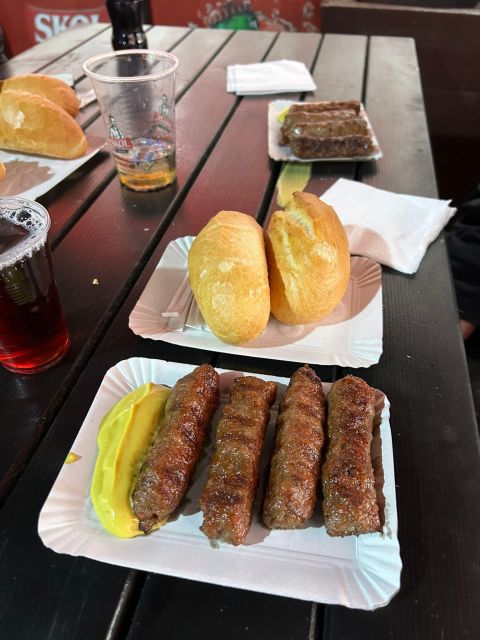
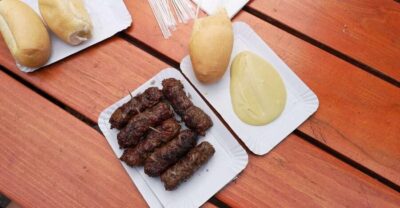
The planned food stop is Romanian mici, the grilled minced meat rolls that are closely tied to casual local eating. This is not a polished restaurant meal. It is a quick, hearty market bite, and that is exactly why it works here.
Remember that food is not included, despite the tasting element in the itinerary. Bring some Romanian lei or make sure you can pay locally. You may also want time to look beyond the meal. The market offers fresh and inexpensive fruit, salami, and cheese, making it a useful stop if you want to buy snacks for later.
One group used the market not only for lunch but also for shopping. That tells you what kind of stop this is. You are not just being shown a market from the edge. You can take part at your own pace, within the time allowed.
Obor is also one of the best places to ask practical questions about Romanian food. Your guide can explain what you are seeing and help you understand the difference between a tourist meal and an everyday market snack. If you are cautious about unfamiliar foods, mici is a simple introduction, though you should mention dietary needs before the tour.
Primăverii and Ceaușescu’s private home
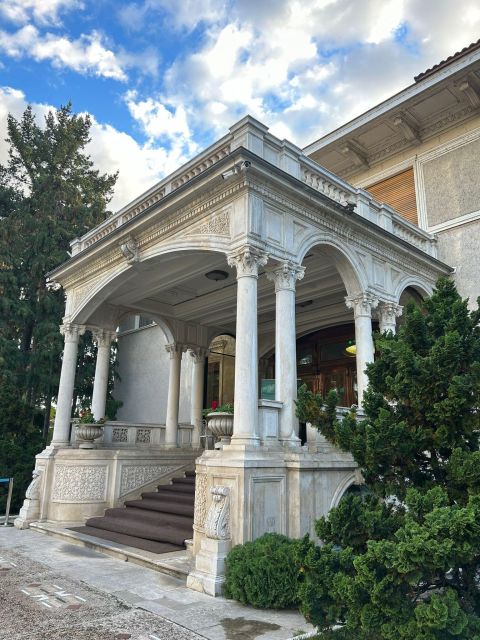
After Obor, the route continues to the Primăverii neighborhood, associated with Romania’s former political elite. This is where you see the private side of the communist leadership, including Nicolae Ceaușescu’s former home.
The contrast is striking. Much of communist Romania was marked by shortages and strict control, while the ruling family lived in a protected residential setting. Seeing the neighborhood after the huge public projects gives the political story a more personal scale.
The tour description identifies the former residence as a stop, but it does not confirm that an interior entrance is included. Entrance fees are excluded, so ask your guide whether the schedule allows a visit and what extra cost applies. If the home is viewed from outside, the value comes mainly from the explanation and the setting.
This is a good place to listen rather than rush for photographs. The neighborhood helps you understand how power operated in Bucharest, and it adds a human dimension to the larger story told at Parliament Palace and Unirii Boulevard.
Triumph Arch and Village Museum
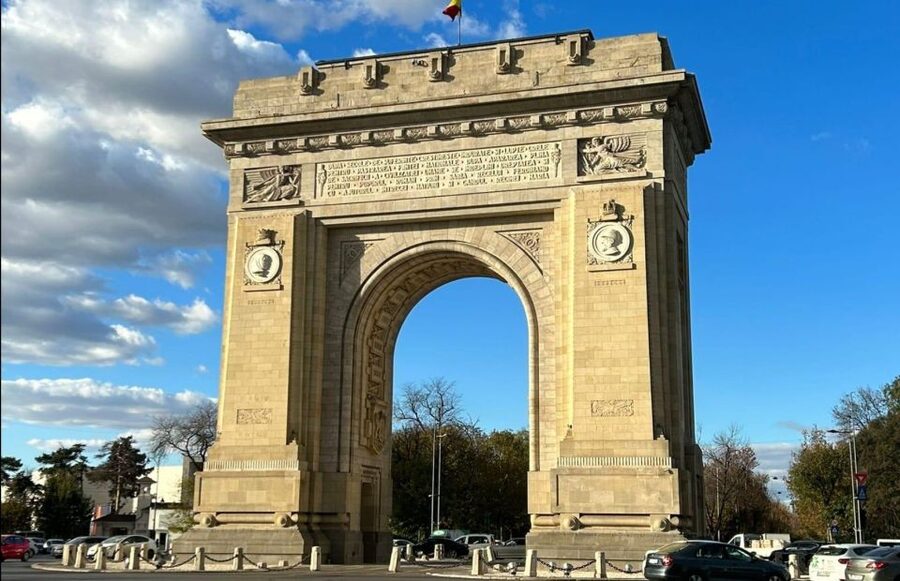
The Triumph Arch offers another change of scene. It is one of Bucharest’s best-known landmarks and gives the city a grand civic focal point. The route also includes the National Village Museum, a different kind of attraction that presents traditional Romanian buildings and village life.
That pairing is smart. The arch represents the capital as a national stage, while the Village Museum points toward the country beyond Bucharest. In a short city tour, you get a quick sense of both Romania’s official image and its rural traditions.
The Village Museum can be rewarding if you enjoy architecture, folk culture, and outdoor exhibits. It can also feel rushed if the group spends much of the morning at earlier stops. Since the tour covers so many sights, ask the guide how much walking time is planned there.
Wear comfortable shoes and clothes. The tour uses a car or van for most of the route, but stops such as the market and museum may involve walking over uneven or open-air areas. The activity is not suitable for wheelchair users, so anyone with mobility concerns should contact the provider before booking.
The Romanian Atheneum closes the route with music and style
The final stop is the Romanian Atheneum, home of the Romanian Philharmonic Orchestra. Its role in the tour brings the route back to Bucharest’s cultural and architectural identity.
After the heavy political subjects and the practical energy of Obor, the Atheneum offers a calmer finish. It is a reminder that Bucharest is not only a city of grand government projects and difficult memories. Music, design, and public culture matter here too.
Again, the listed price does not include entrances. The itinerary does not guarantee a concert or interior tour, so think of the Atheneum as a sightseeing stop unless your guide confirms otherwise.
The drop-off follows the final stop. Since hotel or apartment pickup and drop-off are included, this can save you time at the end of a full morning. Confirm the return location when you book if you need to reach a train station, airport, or another part of the city.
Vehicle, group size, and comfort
For one to three people, transportation is by sedan. Groups of four to eight use a van. The van is described as clean, spacious, and air-conditioned, which matters during Bucharest’s warmer months and on a route with many stops.
Private transport also lets the guide respond to your interests. If you want more time at a market, more explanation of communist history, or a change in emphasis, the tour can adapt to special requests. The exact flexibility depends on timing, but a private group is far easier to adjust than a large shared bus.
The tradeoff is cost. At $150 per person, the tour can become expensive for one person or a couple. For a group of several people, the private vehicle, guide, hotel pickup, and broad route make the figure easier to justify. You are paying for convenience and personal attention, not just admission to one attraction.
The four-hour format is also efficient. You will not spend the day walking between far-flung districts, but you will need to accept brief visits. I would choose it early in a Bucharest stay, then use what you learn to decide where to return on your own.
What the price includes, and what it does not
Included:
- English-speaking tour guide
- Private transportation
- Hotel or apartment pickup and drop-off
- Water
- Wi-Fi
Not included:
- Food
- Drinks
- Attraction entrances
Budget separately for the coffee, pastries, mici, market purchases, and any paid interior visits. The food stop is central to the experience, so it would be a mistake to assume the $150 covers lunch.
The booking terms are traveler-friendly. You can reserve now and pay later, and cancellation is free up to 24 hours before the tour for a full refund. Those terms are useful if your Bucharest plans are still shifting.
Who should book this Bucharest tour?
I would recommend it to a first-time visitor who wants a broad introduction without managing Bucharest’s traffic, distances, and complicated historical layers alone. It is also a strong choice for families, couples, and small groups that value hotel pickup and a private vehicle.
It suits you especially well if you want to combine famous sights with a working market. Obor gives the tour more character than a route made only of palaces and monuments.
I would hesitate if you are mainly interested in long museum visits, a slow food tour, or the lowest possible price. The schedule is broad, so individual stops may be short. You should also confirm entrance plans in advance, since tickets are not included and the exact interior access is not stated.
Should you book the Bucharest Panoramic City Tour?
Book it if you want to understand Bucharest quickly and comfortably. The route covers the city’s main visual themes: Little Paris architecture, communist power, local food, elite neighborhoods, national monuments, and traditional village culture.
The strongest reasons to choose it are the private format, the Obor Market stop, and the chance to ask direct questions about Romania’s past. The main reason to think twice is the price, especially if you are traveling alone.
For a small group that wants a personal guide and a useful first look at Bucharest, this is a well-shaped half-day. Ask about the planned time at each stop, interior entrances, and food arrangements before paying. That simple check will help you decide if the tour’s fast, wide-ranging style matches your plans.
FAQ
How long does the Bucharest Panoramic City Tour last?
The activity is listed as four hours, while the itinerary describes a four to five-hour experience. Check the available start time when booking.
What time does the tour start?
Pickup is planned for around 10 a.m. Availability should be checked when you reserve.
Is hotel pickup included?
Yes. Pickup and drop-off from your hotel or apartment are included.
Is the tour private?
Yes. This is a private group experience.
What language is the tour offered in?
The live tour guide speaks English.
What sights are included?
The route includes Calea Victoriei, Parliament Palace, the Army House, CEC Palace, Unirii Boulevard, Alba Iulia Square, Obor Market, Primăverii, Ceaușescu’s former home, the Triumph Arch, Village Museum, and the Romanian Atheneum.
Is food included in the price?
No. Food and drinks are not included, although the itinerary includes coffee, local pastries, and a Romanian mici stop.
Are attraction entrance fees included?
No. Entrance fees are not included.
What vehicle is used?
One to three people travel by sedan. Four to eight people travel in a van.
Is the tour suitable for wheelchair users?
No. The activity is listed as not suitable for wheelchair users.
Can I cancel for a full refund?
Yes. You can cancel up to 24 hours in advance for a full refund. Reserve now and pay later is also available.
Newest Bucharest trips we have written up
- Bucharest: Dealu Mare Winery Private Trip with Wine Tasting★ 4.9 · 6 reviews
- Winery touring & private wine tasting – one day private tour★ 5.0 · 3 reviews
- Traditions in Bucharest: Village Museum and Wine Tasting★ 5.0 · 8 reviews
- Your rendez-vous with Europe’s past: time-travel to Maramures, Transylvania★ 5.0 · 6 reviews
- Village Museum Bucharest Guided Tour★ 5.0 · 6 reviews
- Private Wine Tasting at Bucharest’s First Wine Bar★ 5.0 · 3 reviews
- Walking Tour of Bucharest City Center – Private Tour★ 5.0 · 4 reviews
- Wine tasting in Bucharest Old town – bonus cheese platter★ 4.5 · 6 reviews
Bucharest Food Tours, compared.
Discover Bucharest: Private Highlights and Traditional Food Tour
Read our review →
Premium 8-Day Private Culinary Vacation in Romania
Read our review →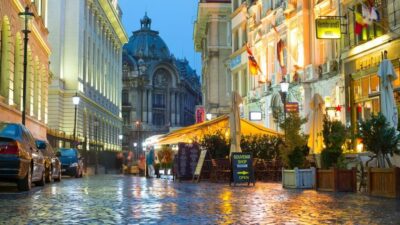
Browse the lists this tour appears in