
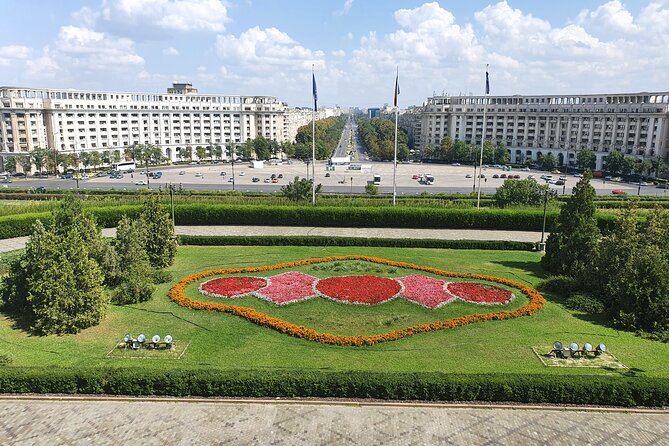
Reviewed · BUCHAREST CITY TOURS
Bucharest: City Highlights Guided Private Tour
Bucharest’s story comes into sharp focus when you set its communist mega-projects beside old churches, royal buildings, and village homes from across Romania. This private tour links the Palace of Parliament, Revolution Square, Calea Victoriei, and the Romanian Athenaeum in one four-hour route.
I like the private car and flexible schedule, since you can adjust the day for your group instead of following a fixed bus timetable. I also like the contrast between the Village Museum’s modest wooden houses and the dictator’s oversized palace. The main catch is that admission tickets are not included, so the advertised price is not the final cost if you enter the paid sights.
Key points at a glance
- The Palace of Parliament gives you a direct lesson in Ceaușescu-era excess, but its entrance fee is extra.
- The Village Museum brings traditional Romanian homes, mills, and wooden churches into one open-air setting.
- Revolution Square connects the former Communist Party headquarters with the 1989 uprising.
- Calea Victoriei packs royal, religious, cultural, and commercial Bucharest into one central avenue.
- A private English-speaking guide and car make hotel pickup, airport pickup, and itinerary changes simple.
- The four-hour schedule is useful for a first look, though time inside each stop is limited.
A four-hour route through Bucharest’s sharpest contrasts
This is less a single sightseeing walk than a compact city orientation by private vehicle. You move between major sights with a licensed English-speaking guide and driver, using a private car or minibus reserved for your own family or friends.
The route covers about four hours. The listed stop times add up to roughly three hours and forty minutes, leaving the rest for driving, parking, and transitions. That makes the schedule realistic for a focused introduction, but not for slow museum visits or long interior tours.
The tour’s strongest idea is its contrast. One moment you are looking at the enormous Palace of Parliament, built to project state power. Later, you are among traditional homes and wooden churches at the Village Museum. The shift helps you understand Romania through its buildings rather than through a long lecture.
The price is listed at $173.03 per person. That can be good value for a small group that wants door-to-door transport, a private guide, and the freedom to change the route. For a solo traveler, or for two people on a tight budget, it is less attractive once admission tickets are added.
More Bucharest city tours:
- Bucharest: City Highlights Guided Walking Tour
★ 4.9 · 1,482 reviews - Bucharest Highlights Walking Tour
★ 5.0 · 469 reviews - Bucharest: 2-Hour City Highlights Bike Tour
★ 4.8 · 269 reviews
Palace of Parliament: power built in concrete and marble
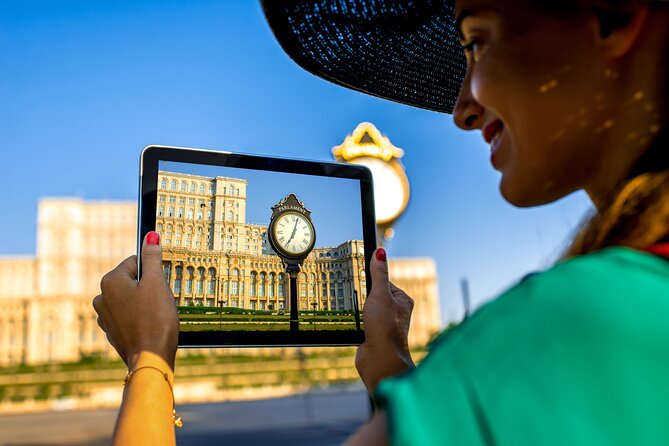
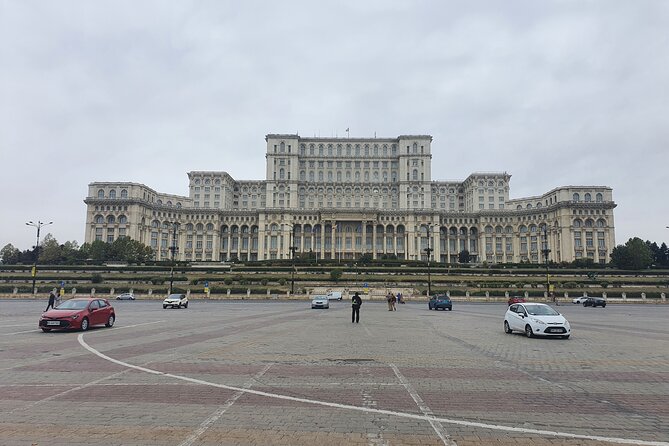
The tour gives about one hour to the Palace of Parliament, also called the People’s House. This is the visual centerpiece of the day and the place where the political story becomes physical.
You will see a building created under Nicolae Ceaușescu, Romania’s communist dictator. Its enormous scale helps explain the destructive side of a totalitarian system: vast resources were directed toward one leader’s vision while large parts of the city were reshaped to make room for it.
The experience is not only about architecture. It is about the human cost behind grand state projects and the way a building can express a government’s priorities. Your guide can frame the palace as an example of megalomania rather than treating it as just another impressive monument.
Admission is not included. That matters because the one-hour stop may be partly an exterior visit unless you arrange entry and have enough time for the interior tour. If going inside is important to you, confirm the ticket arrangements before the day begins and ask how the timing fits the rest of the route.
The building is often described as the second-largest administrative building in the world after the Pentagon. Even from outside, its scale is difficult to grasp in a quick photograph. You need the guide’s political context to make the visit meaningful, and this is one of the stops where a private format pays off.
Village Museum: Romania in one open-air setting
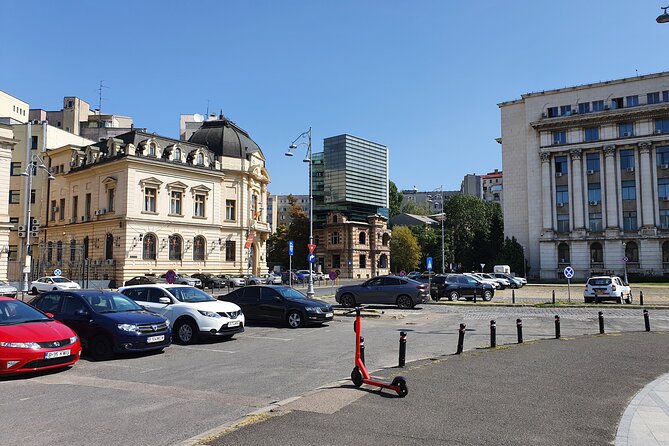
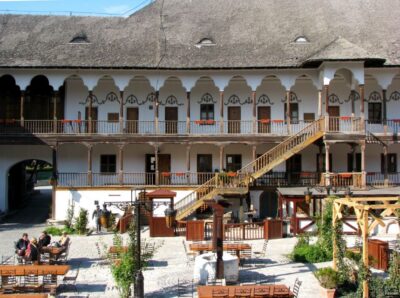
The National Village Museum, Dimitrie Gusti, offers a very different picture of the country. Instead of state power, you see traditional houses gathered from many parts of Romania, including structures made from wood, adobe, stone, and other local materials.
The planned stop lasts about forty-five minutes. That is enough for a clear introduction and some memorable buildings, but not enough to inspect every corner of a large open-air museum. Keep your expectations focused: this is a sampler of Romanian rural life, not a full museum day.
Your guide will point out features such as mills and wooden churches, along with the practical ways homes were built around local resources. The emphasis is on a modest, sustainable way of living, with religious and social traditions tied closely to the surrounding environment.
I like this stop because it gives balance to the Palace of Parliament. After seeing a government project built on overwhelming scale, you encounter homes shaped by everyday needs. The pairing makes the day feel more thoughtful than a standard list of famous buildings.
The open-air setting may also make this the most relaxed stop, though the supplied schedule does not promise time for a long walk. Wear comfortable shoes and ask your guide where to focus if the museum grounds are too large to cover in forty-five minutes.
Calea Victoriei: royal buildings, churches, and city life
Calea Victoriei, or Victory Avenue, is the tour’s broadest city snapshot. The route presents Bucharest as a city of conflicting eras, where royal institutions, communist power, Orthodox churches, museums, theaters, restaurants, shops, and cafes sit within the same central story.
The guide highlights the Royal Palace on one side of the historical divide and the former Central Committee of the Romanian Communist Party near Revolution Square on the other. This is a useful way to understand how Bucharest changed from monarchy to communism and then toward the present day.
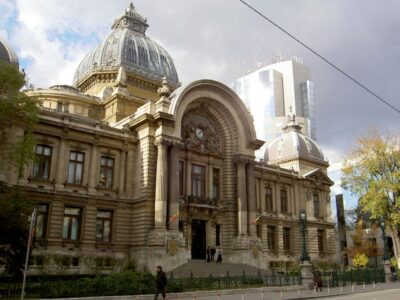
You may also pass the Romanian National History Museum, the CEC Palace, old Orthodox churches, the Romanian Athenaeum, music shops, casinos, restaurants, tea shops, and souvenir stores. The mix is part of the avenue’s appeal. It is not polished into one neat style, and that makes the route feel like a real city rather than a single historical exhibit.
The stop lasts about forty-five minutes and has no separate admission charge. Much of it is likely to be a guided drive or short exterior stops, so ask early if there is a specific building you want to see inside. The time is too brief to tour several museums and landmarks in detail.
For first-time visitors, this is a useful orientation stretch. You can note places to return to later, especially the Athenaeum, National History Museum, or a church that catches your eye. The private vehicle helps you cover more ground, but it also means you may not get the same feel as a long pedestrian walk along the avenue.
A few more Bucharest trips worth putting side by side
- Castles of Transylvania: Private Day Trip from Bucharest
★ 4.5 · 248 reviews - Dracula’s Castle, Peles Castle and Brasov – Private Day Trip from Bucharest
★ 5.0 · 211 reviews - Best of Bucharest | Private Walking Tour
★ 5.0 · 199 reviews - Bucharest Panoramic Sightseeing – Private City Tour
★ 5.0 · 128 reviews
Revolution Square: the place where the regime broke
Revolution Square receives about thirty minutes and carries the heaviest political weight after the Palace of Parliament. The former Central Committee building, now associated with the Senate, is tied to the December 1989 revolution that ended Ceaușescu’s rule.
This is where the tour connects architecture with a specific moment. Ceaușescu fled by helicopter after the uprising reached the center of power. The guide also covers the controversies around the dictator’s fortune, the security service, and offshore accounts.
Thirty minutes is enough to understand the location and hear the main sequence of events. It is not enough for a long discussion of every political debate surrounding the revolution. If this subject matters greatly to you, use the private setting to ask for more detail while you are there.
The square works best when you look beyond the individual buildings. The important point is that these were not distant symbols of government. They were places where people gathered, resisted, and paid a human price for political change.
Because Revolution Square is free to view, there is no extra ticket issue here. The value comes from having the site explained instead of simply passing it from a car window.
Patriarchal Palace and the Orthodox side of Bucharest
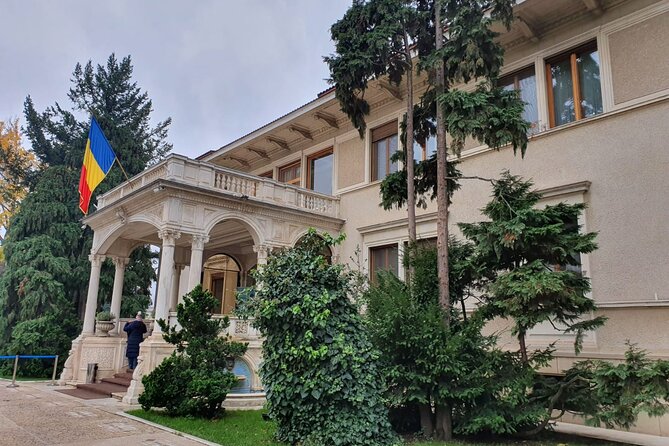
The stop at Palatul Patriarhiei lasts about forty-five minutes and adds the religious dimension of the city. The supplied description focuses on the role of patriarchs in several Christian traditions, including Eastern Orthodoxy, Oriental Orthodoxy, Catholicism, the Hussite Church, and the Church of the East.
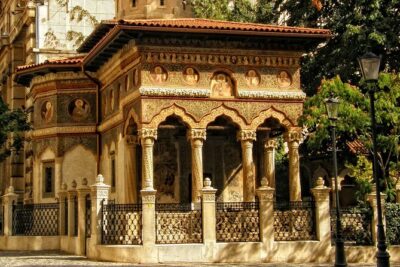
For most people, the useful question is not the full list of titles. It is how the Patriarchal Palace and nearby religious institutions fit into Romanian public life. Bucharest’s Orthodox identity is visible in its churches, ceremonies, and architecture, and this stop gives the political tour a spiritual counterpoint.
Admission is listed as free. The description does not promise a specific interior tour, so ask your guide what can be entered on the day. One available comment specifically urges making time for the Patriarchal Church, which suggests that the interior may be an important part of the experience when access allows.
This is another place where the private format helps. You can ask for a slower explanation of the church and its role, rather than receiving only a quick name and photo stop. Dress and conduct should be respectful in any active religious site.
Romanian Athenaeum: Bucharest’s elegant concert hall
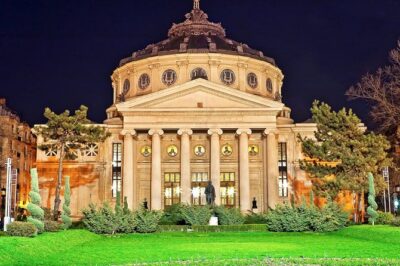
The final listed stop is the Romanian Athenaeum, with about fifteen minutes set aside. The ornate, domed, circular concert hall opened in 1888 and is home to the George Enescu Philharmonic and the George Enescu Festival.
Fifteen minutes is a short visit, but the building is one of Bucharest’s key architectural landmarks. Your guide can explain why it matters and point out details from the exterior. The tour description also indicates that a visitor may want to see the inside, but the entrance fee is not included.
That creates a practical choice. If you want only a quick look, the scheduled stop works. If the interior is a priority, ask whether the schedule can be changed and confirm the ticket cost before booking. The private tour allows itinerary changes even after the tour begins, but flexibility cannot guarantee that a building will be open or that an interior visit will fit the available time.
The Athenaeum also rounds out the day nicely. You have seen authoritarian scale, rural tradition, revolutionary politics, Orthodox faith, and now a major concert hall linked to Romania’s cultural life.
Private transport and flexible planning
Hotel pickup and drop-off are included within Bucharest. You wait in the lobby, or on the sidewalk if your address does not have a lobby. The provider also offers airport pickup, with a representative waiting near the InfoDesk in the arrivals area on the main floor, holding a sign with your name.
Airport pickup can be useful if you want to turn an arrival day into a city introduction. Still, allow enough time after landing for baggage and airport formalities. The tour information says the provider can also return you to the airport or take you to another Bucharest address.
The car, fuel, parking, road tolls, and taxes are included. That removes the small transport costs that can make private sightseeing harder to price. It also means you can avoid piecing together several taxi rides between distant sights.
The guide and driver speak English, and the activity is private for your group alone. Most people can participate, service animals are allowed, and the route is near public transportation. The information does not give vehicle dimensions or detailed mobility specifications, so contact the provider if you need a particular vehicle setup.
The strongest practical benefit is the ability to change the daily itinerary, even after the tour starts. You might spend more time at the Palace of Parliament, shorten the Village Museum, or adjust the route around opening times. That freedom is especially useful when your interests do not match a fixed group schedule.
What the $173.03 price really buys
At $173.03 per person, the tour is not simply a ticketed sightseeing package. You are paying for a private vehicle, a private English-speaking guide and driver, hotel transport, fuel, parking, tolls, taxes, and schedule control.
That can be fair for a family or small group that would otherwise need several taxis and a separate guide. The price also buys time. You can start at your accommodation, cover sights spread across Bucharest, and finish at a chosen address without negotiating transport at every step.
The value drops if you are traveling alone or mainly want free outdoor sights. Revolution Square, Calea Victoriei, and the exterior views of several buildings do not require admission tickets. In that case, a walking route and public transportation could cost less, though you would give up the private guide and door-to-door service.
Remember to budget for entrance tickets separately. The Palace of Parliament, Village Museum, and Romanian Athenaeum are all marked as excluding admission. Food and drinks are also not included.
The tour is booked, on average, about seventeen days ahead. That is useful planning information, especially if you are visiting Bucharest on fixed dates. It does not mean you must book exactly that early, but a private vehicle and guide have less capacity than a large group tour.
Who should book this private Bucharest tour?
I would choose this for a first visit when you want the main political, cultural, and religious sights in one half-day. It suits families, couples, and friends who value a private car and want to ask questions without sharing the guide with strangers.
It is also a good fit if you have limited time in Bucharest, need hotel or airport transport, or want to adjust the pace. The route gives you enough context to decide where you would like to return on your own.
I would be more cautious if you want long interior visits. The schedule gives only fifteen minutes to the Athenaeum and forty-five minutes to the Village Museum and Patriarchal Palace. Since entrance tickets are extra, you should confirm exactly what can be entered and how much time remains at each site.
The activity carries a 4.4 rating from seven reviews, and the clearest praise focuses on seeing the Parliament, Patriarchal Church, and Athenaeum interiors. Treat that as useful advice: ask about inside access before the tour starts, rather than assuming every landmark includes a full visit.
Should you book it?
Book this tour if you want Bucharest explained through its biggest contrasts: dictatorship and revolution, royal architecture and communist power, village traditions and concert-hall culture. The private car, English-speaking guide, pickup service, and flexible route make the $173.03 price easier to justify for a small group.
Skip it if you prefer slow museum days, independent walking, or the lowest possible cost. If you do book, reserve early, confirm the separate entrance fees, and tell the provider which interiors matter most. That small bit of planning will help turn a quick four-hour overview into a much better introduction to Bucharest.
FAQ
How long does the Bucharest private tour last?
The tour lasts approximately four hours. The listed stops total about three hours and forty minutes, with the remaining time used for transport and transitions.
Is hotel pickup included?
Yes. Hotel pickup and drop-off in Bucharest are included. You should wait in the lobby, or on the sidewalk if your address does not have a lobby.
Can I be picked up at Bucharest airport?
Yes. An airport pickup is available. A representative will wait near the InfoDesk in the arrivals area on the main floor with a sign showing your name.
Are entrance tickets included?
No. Entrance tickets are not included. This applies to the Palace of Parliament, Village Museum, and Romanian Athenaeum. Food and drinks are also excluded.
Is this a group tour?
No. This is a private activity for only your own group. Transport is by private car or minibus, and an English-speaking guide and driver are available throughout the tour.
Can I change the itinerary?
Yes. The tour includes flexibility for changes to the daily itinerary, including changes after the tour has started. The provider can also drop you at another Bucharest address or return you to the airport.
Newest Bucharest trips we have written up
- Bucharest: Dealu Mare Winery Private Trip with Wine Tasting★ 4.9 · 6 reviews
- Winery touring & private wine tasting – one day private tour★ 5.0 · 3 reviews
- Traditions in Bucharest: Village Museum and Wine Tasting★ 5.0 · 8 reviews
- Village Museum Bucharest Guided Tour★ 5.0 · 6 reviews
- Your rendez-vous with Europe’s past: time-travel to Maramures, Transylvania★ 5.0 · 6 reviews
- Private Wine Tasting at Bucharest’s First Wine Bar★ 5.0 · 3 reviews
- Walking Tour of Bucharest City Center – Private Tour★ 5.0 · 4 reviews
- Wine tasting in Bucharest Old town – bonus cheese platter★ 4.5 · 6 reviews
Bucharest City Tours, compared.

Bucharest Panoramic Sightseeing – Private City Tour
Read our review →
Browse the lists this tour appears in