
Reviewed · BUCHAREST CITY TOURS
Bucharest City Tour 2 hours – by Car with a Private Guide
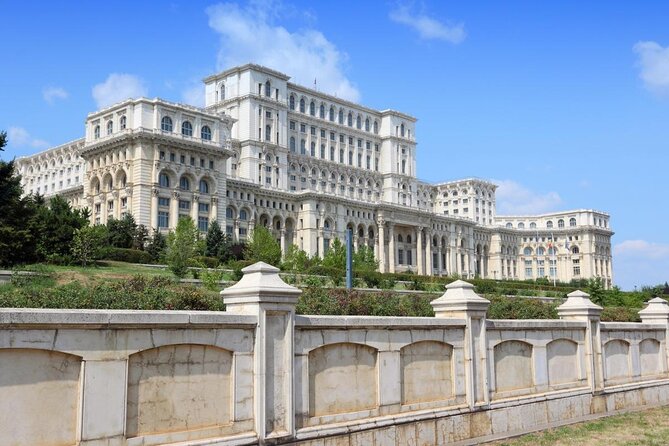
Bucharest reveals its sharpest contrasts from the back seat of a car: Ceauşescu’s enormous Palace of Parliament, quiet wooden village homes, grand royal buildings, and the sites of the 1989 revolution all fit into one fast-moving introduction. This two-hour private tour is built for a first look, especially if your time in Romania is short.
I like the door-to-door pickup and the freedom to adjust the route with your guide. I also like the personal angle offered by Nicolas, whose humor, family stories about life under communism, and favorite éclair stop can add warmth to a serious subject. The main drawback is time: seven major areas in two hours means you will see some places briefly, and entrance visits may need careful timing.
Key points at a glance
- Palace of Parliament: Face one of the world’s largest administrative buildings and learn how Ceauşescu’s rule reshaped Bucharest.
- National Village Museum: See traditional houses, mills, and a wooden church brought together in an open-air setting.
- Personal communist-era context: Nicolas can connect national events with family experience under the former regime.
- Private transport: Your own car or minibus keeps the route flexible and avoids the work of piecing together distant sights.
- Classic Bucharest landmarks: The Arch of Triumph, Romanian Athenaeum, Revolution Square, and central boulevards round out the city picture.
- Clear pricing: Gas, parking, tolls, taxes, and the guide’s service are included, while food and drinks are not.
A fast introduction to Bucharest’s contradictions
Bucharest is easiest to understand when you see its grand plans and ordinary homes side by side. This tour moves from communist power to rural tradition, then through royal Bucharest and the city center. The short drive between stops helps you cover ground, but the experience works best as an overview rather than a slow museum day.
You book the whole vehicle for your own group, not a seat in a large shared coach. That matters if you are traveling with family or friends and want to ask direct questions, change the order of the stops, or spend less time at a place that does not hold your interest.
The tour is offered in English, and pickup is arranged at the address you provide. Different start times let you fit it around a flight, train arrival, or another Bucharest plan. Since the guide also drives, your attention can stay on the city rather than on maps and traffic.
More Bucharest city tours:
- Bucharest: City Highlights Guided Walking Tour
★ 4.9 · 1,482 reviews - Bucharest Highlights Walking Tour
★ 5.0 · 469 reviews - Bucharest: 2-Hour City Highlights Bike Tour
★ 4.8 · 269 reviews
Palace of Parliament: the heavy symbol of communist power
The Palace of Parliament is the tour’s most forceful stop. It is the second-largest administrative building in the world after the Pentagon, an astonishing claim made more striking by its setting in a city where the human scale can feel much smaller.
Your guide uses the building to explain the damage caused by Romania’s totalitarian government. The palace was not simply an oversized office block. Its scale and opulence expressed the power, vanity, and isolation of Nicolae Ceauşescu’s regime.
You may feel the contradiction immediately. A building meant to display national strength also reminds you of the homes and neighborhoods cleared to make room for it. The experience is less about admiring grand architecture than about asking what such grandeur cost.
A two-hour city tour cannot give you unlimited time inside the palace, and the available information does not specify an interior admission or a dedicated building tour. Treat this stop as a major visual and historical landmark, and ask Nicolas in advance how much time is planned for an inside visit and whether any separate entry charge applies.
The National Village Museum: Romania at a human scale
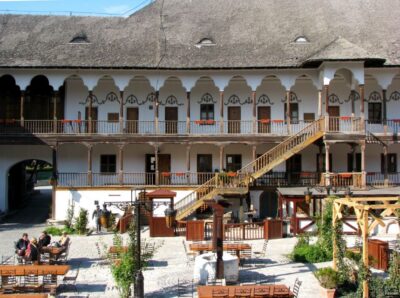
The National Village Museum changes the mood completely. Here, you see traditional Romanian homes made from wood, adobe, stone, and other local materials, along with structures such as mills and a wooden church.
The value of this stop is not just pretty old buildings. It gives you a way to understand how rural families organized daily life, work, worship, and community. The homes reflect practical use of local materials and a modest relationship with the surrounding environment.
You also get a wider view of Romania’s regional character. The country is not one uniform cultural block, and the museum brings different building styles and local traditions together in one place. The wooden church and mill help show that village life involved both spiritual and practical centers.
This is one of the places where a guide can make a real difference. Without context, you may simply photograph houses. With explanation, you can notice how a home was built, what the materials say about local conditions, and why these structures still matter to Romanian identity.
The museum takes time to appreciate. On a tight two-hour route, you may get a concise introduction rather than a full walk through every corner. If traditional architecture is your main interest, ask to give this stop extra attention and accept a shorter look at another landmark.
Revolution Square and the fall of Ceauşescu
The route also reaches the former headquarters of the Central Committee of the Romanian Communist Party, now associated with the Senate Palace. This is where the December 1989 revolution began in Bucharest, the event that brought Ceauşescu’s rule to an end.
The location carries unusual weight because it links a physical building with a dramatic political collapse. Ceauşescu fled from here as the uprising grew. Your guide can explain how the revolution moved from public protest to a change of power, and how ordinary people paid a heavy price.
This is also where the tour’s personal storytelling can be especially useful. Nicolas is identified as an English-speaking guide and driver, and his family stories about living under communism add a human layer to the political account. That sort of detail helps you understand that communism was not only a chapter in a textbook. It shaped daily choices, careers, families, and fears.
The subject is serious, so expect a historical explanation rather than a light sightseeing stop. If you want time for photographs or a closer look at nearby buildings, tell your guide early. The private format makes that request possible, though the clock still limits what can be covered.
A few more Bucharest trips worth putting side by side
- 4h Bucharest Private Tour (2h by Car and 2h Walking in Old Town)
★ 5.0 · 90 reviews - 2h Bucharest Private Tour by Car
★ 5.0 · 10 reviews
Ceauşescu Mansion and the private life behind the regime
The Ceauşescu Mansion was the private home of Nicolae and Elena Ceauşescu and their children, Nicu, Zoia, and Valentin, from 1965 until 1989. It offers a different view of the regime from the huge public palace.
At the Palace of Parliament, you see state power on a massive scale. At the mansion, you get a more intimate look at how the ruling family lived. The contrast can be revealing: public austerity and political control existed alongside a private residence designed for the country’s top family.
The stop is particularly useful if you want to understand the people behind the political system, not only its buildings. The mansion can help connect the names, dates, and political events with a household and family story.
Again, the precise format matters. The tour information does not state how long you spend inside or whether a separate admission is included. Ask about this before booking if the mansion is one of your main reasons for choosing the tour.
The Arch of Triumph and Romania’s national story
Bucharest’s Arch of Triumph recalls the better-known monument in Paris, but its meaning is specifically Romanian. The current structure is 27 meters high and reflects several changes made before reaching its present design.
The arch is tied to Romania’s national development and the fight for freedom. Depending on access and timing, you may be able to see exhibits covering the Great War for the Unification of Romania, the heraldry of major boyar families, the arch itself through photographs and models, and the Great Union of 1918.
Those exhibits can turn a quick photo stop into a useful history lesson. They connect the monument to war, national identity, aristocratic families, and the political union that shaped modern Romania.
Do not assume every exhibit will be open during your visit. The information says you can see them with some luck, so treat interior access as a bonus rather than the main reason to book the tour. Even from outside, the arch gives the route a strong visual landmark and a clear link to Romania’s national story.
The Romanian Athenaeum and central Bucharest
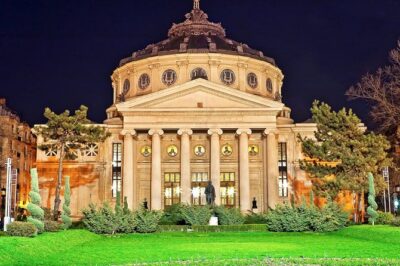
The Romanian Athenaeum is often treated as one of Bucharest’s defining cultural symbols. Its place on the European Heritage list adds weight to its role, but you do not need a long lecture to see why it matters. The building represents the city’s musical and cultural ambitions and gives the tour a welcome change from communist-era monuments.
The stop may be brief, especially if the guide is keeping the full route on schedule. Still, it is an important part of the city’s identity. Bucharest is not only a city of political upheaval and oversized government buildings. It also has institutions built around music, art, learning, and national pride.
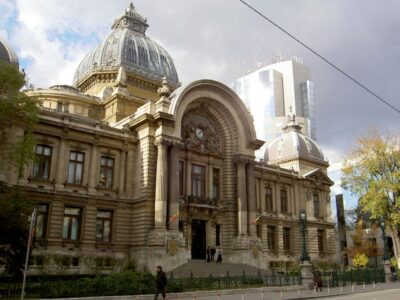
The final central-city section gathers several layers of Bucharest into one area. You may see the Royal Palace, the former Central Committee headquarters, the National History Museum in the old Post Palace, the CEC Palace, the Palace of the National Military Circle, Cantacuzino Palace, churches, hotels, restaurants, cafes, statues, and the Central University Library.
This is a good place to let your guide point out details you might miss from a map. The buildings show how the city moved through royal rule, commercial growth, communism, and the post-1989 period. You will not explore every address in two hours, but you will leave with a useful list of places to revisit on foot.
What $123.91 per person really buys you
At $123.91 per person, this is not a budget sightseeing bus. The price makes more sense for a small private group that values time, pickup, and direct access to a guide.
You are paying for a private car or minibus, a licensed English-speaking guide and driver, fuel, parking, road tolls, and taxes. There are no added charges for those vehicle costs. If you split the price among several people, the value improves because the same private vehicle serves your family or group.
The price is less attractive for a solo visitor who is comfortable using public transport and exploring slowly. It is also worth remembering that food and drinks are not included. Nicolas once took a family group to a favorite éclair shop, but you should treat that as a possible personal recommendation, not as a promised part of the route.
The biggest value is the time saved. Bucharest’s sights are spread across different parts of the city, and a private car lets you cover far more than you could comfortably walk in two hours. You are also not paying separately for fuel, parking, or tolls.
Who should book this two-hour tour
I would choose this experience if you are visiting Bucharest for the first time and want a clear orientation before exploring alone. It also suits you if you have only a short stop in the city, prefer a private setting, or are traveling with relatives who need an easier way to reach several distant sights.
Families may appreciate the flexible format. The guide can adjust the daily route even after the tour begins, within the limits of time and access. Nicolas’s humor and family stories may also help younger visitors stay engaged during the communist history sections.
The tour is less suitable if you want a slow museum visit, long walks through central Bucharest, or detailed interior access at every stop. Seven major areas in two hours is ambitious. You will see a lot, but some stops will be introductions rather than complete visits.
At booking, provide the pickup time and address clearly. Service animals are allowed, and the experience is near public transportation. Most people can participate, though the supplied information does not give detailed mobility notes for every site.
Should you book it?
Book this tour if you want maximum coverage with minimum fuss. The private vehicle, included driving costs, flexible route, and English-speaking guide make it a practical first look at a complicated city.
Choose it with realistic expectations. You are buying orientation, context, and efficient transport, not a leisurely day inside every museum. Ask Nicolas how the two hours will be divided, confirm which buildings can be entered, and tell him which stop matters most to you.
For a first visit, a short layover, or a family group, I think the private format earns its price. For a slower, more detailed look at Bucharest, use this as your starting point and return later to the Palace of Parliament, Village Museum, mansion, or central squares on your own.
FAQ
How long does the Bucharest city tour last?
The tour lasts approximately two hours.
Is this a private tour?
Yes. Only your group participates, using a private car or minibus.
Is hotel or accommodation pickup available?
Yes. Pickup is offered. You need to provide the pickup time and address.
What language is the tour offered in?
The tour is offered in English with a private licensed English-speaking guide and driver.
Are fuel, parking, tolls, and taxes included?
Yes. Gasoline, parking, road tolls, and taxes are included in the tour price.
Are food and drinks included?
No. Food and drinks are not included.
Can I cancel for a full refund?
Yes, if you cancel at least 24 hours before the experience start time. Cancellations made within 24 hours are not refunded, and changes within that period are not accepted.
Newest Bucharest trips we have written up
- Bucharest: Dealu Mare Winery Private Trip with Wine Tasting★ 4.9 · 6 reviews
- Winery touring & private wine tasting – one day private tour★ 5.0 · 3 reviews
- Traditions in Bucharest: Village Museum and Wine Tasting★ 5.0 · 8 reviews
- Your rendez-vous with Europe’s past: time-travel to Maramures, Transylvania★ 5.0 · 6 reviews
- Village Museum Bucharest Guided Tour★ 5.0 · 6 reviews
- Private Wine Tasting at Bucharest’s First Wine Bar★ 5.0 · 3 reviews
- Walking Tour of Bucharest City Center – Private Tour★ 5.0 · 4 reviews
- Wine tasting in Bucharest Old town – bonus cheese platter★ 4.5 · 6 reviews
Bucharest City Tours, compared.

Bucharest Panoramic Sightseeing – Private City Tour
Read our review →
Browse the lists this tour appears in