
Reviewed · BUCHAREST COMMUNISM AND CEAUSESCU TOURS
Bucharest: Communism, Revolution & City Highlights Tour
Bucharest’s story becomes clearest when you walk from elegant Belle Époque palaces to the vast, chilly boulevards built by Nicolae Ceaușescu. This private four-hour tour connects the 1989 Revolution, student protests, food rationing, surveillance, and the destruction of entire neighborhoods.
I especially like the sharp contrast between restored Old Town and the former Communist Civic Center. I also like the personal format: your English-speaking guide can adjust the pace and spend more time on the subjects that interest you. Guides Mihai and the company owner have received especially strong praise for making the communist era understandable and compelling.
The main limitation is simple: you do not enter the Palace of Parliament or other government buildings. You see the exterior and learn the story from outside, so book this for context and interpretation rather than indoor access.
Key points at a glance
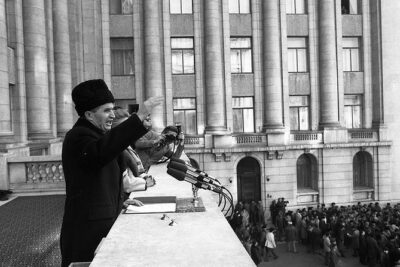
- Revolution Square: See where Ceaușescu gave his final public speech before the regime collapsed.
- Two Bucharests in four hours: Compare aristocratic avenues and restored Old Town with Ceaușescu’s oversized socialist Civic Center.
- A private guide: English or Romanian commentary, a flexible pace, and room for questions.
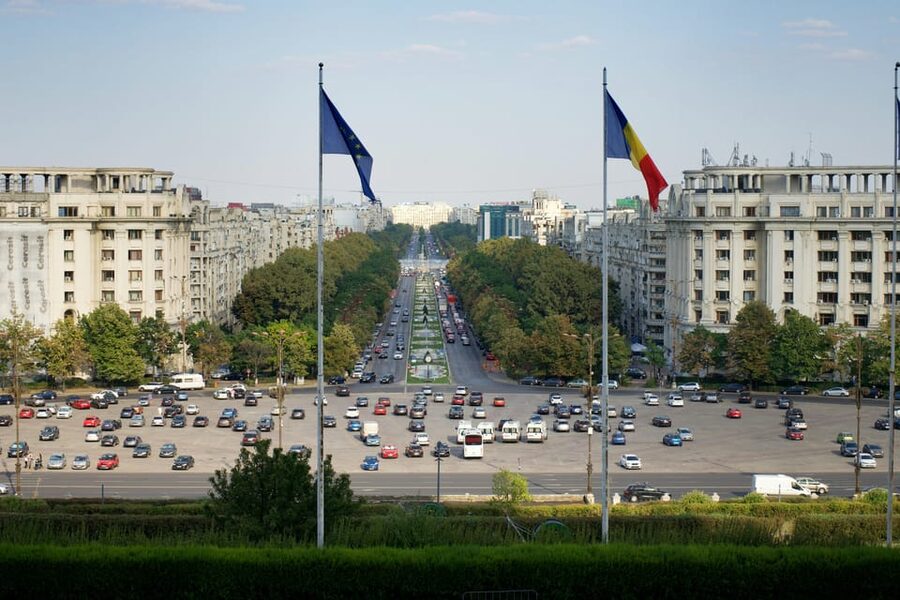
- The Palace of Parliament: Admire the world’s heaviest building from outside and learn how its construction displaced about 40,000 people.
- Moderate walking: The route covers less than 2 miles, with frequent stops for photos, rest, and refreshments.
- Old Town finish: The tour ends near restaurants, museums, shops, and central hotels.
Why Bucharest’s past makes sense on foot
Bucharest can feel confusing at first. One block may show ornate 19th-century architecture, while the next presents a blunt concrete office block or a giant government avenue with little street life. This tour gives those contrasts a clear story.
The first half focuses on the city before, during, and immediately after communism. You hear how Bucharest earned the nickname Little Paris, how World War II and postwar Soviet influence changed Romania, and how Ceaușescu’s 42-year rule moved from early independence from Moscow toward severe control and austerity.
The private format matters here. Communist history is full of dates and political terms, but the useful part is understanding how those policies affected ordinary life. Your guide can explain food rationing, propaganda, surveillance, human rights abuses, and the reasons public anger finally boiled over in 1989.
This is not a tour built around grand interiors. It is about streets, public squares, monuments, and the gap between what a government wanted a city to say and what the city actually experienced.
More communism and Ceausescu tours in Bucharest:
- The Real tour of Communism
★ 5.0 · 666 reviews - Life under Communism
★ 5.0 · 358 reviews - 3-Hour Guided Tour of Communist Bucharest
★ 4.9 · 303 reviews
Revolution Square and the end of Ceaușescu’s rule
The tour begins around Revolution Square, one of Bucharest’s most important public spaces. This is where Ceaușescu delivered his final speech in December 1989. What began as a carefully staged political appearance turned into a public collapse when the crowd began to resist him.
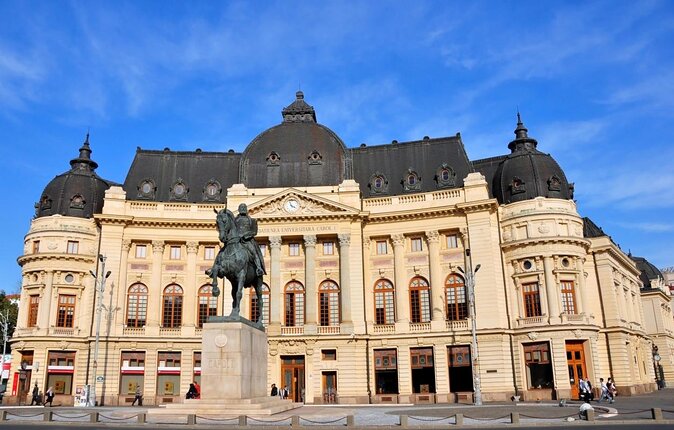
You will have time for several nearby sights, including the Romanian Athenaeum, the former Royal Palace, and the Memorial of Rebirth. Each gives you a different piece of the city’s story.
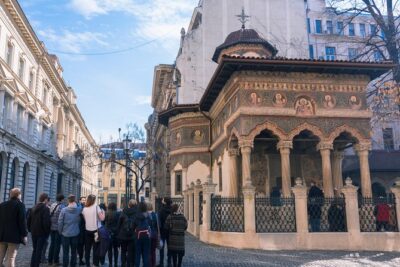
The Romanian Athenaeum represents the graceful Bucharest that existed before communist rebuilding. Its ornate appearance helps explain why the city once looked toward Paris for inspiration. The former Royal Palace adds another layer, linking the square to Romania’s monarchy and precommunist political life.
The Memorial of Rebirth is more modern and more disputed in tone. Its presence near the revolution site gives your guide an opening to discuss how Romania remembers 1989. This is a good place to ask questions, since the meaning of monuments can be as revealing as the events they commemorate.
The itinerary allows about 15 minutes at each of these stops. That is enough for photographs and a clear explanation, but not enough for a long architectural study or an interior visit. If you want to see the Athenaeum or former Royal Palace inside, you will need separate time.
Victory Avenue, the National Military Circle, and University Square
From Revolution Square, you continue along Victory Avenue, historically one of Bucharest’s grandest streets. Embassies, old palaces, and communist-era buildings share the route, making it an excellent place to see the city’s architectural collision in real time.
I like this section because it avoids treating communism as an isolated chapter. The older city did not vanish completely. It was cut through, altered, and placed beside new structures that expressed a very different idea of power.
The National Military Circle adds another major architectural stop. You will pause for a photograph and hear how public buildings helped project authority in different periods. The point is not simply to admire facades. It is to notice who built them, who used them, and what they were meant to communicate.
University Square shifts the focus from official power to public resistance. The guide discusses student uprisings, Cold War pressure, surveillance, and daily life under a system where political loyalty mattered. The longer 30-minute stop gives you more room to ask about Romania’s transition and the events surrounding the end of the regime.
For anyone interested in recent European history, this may be one of the strongest parts of the tour. You are standing in a real civic space, not looking at a distant museum display. At the same time, the experience depends heavily on the guide’s storytelling because the square itself does not explain its past.
Old Town, where restoration meets difficult memory
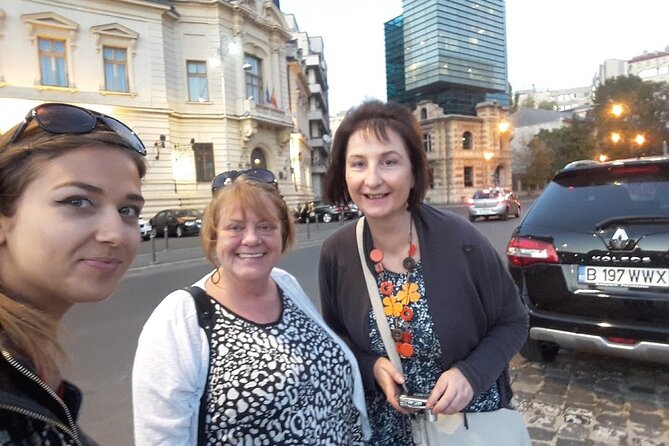
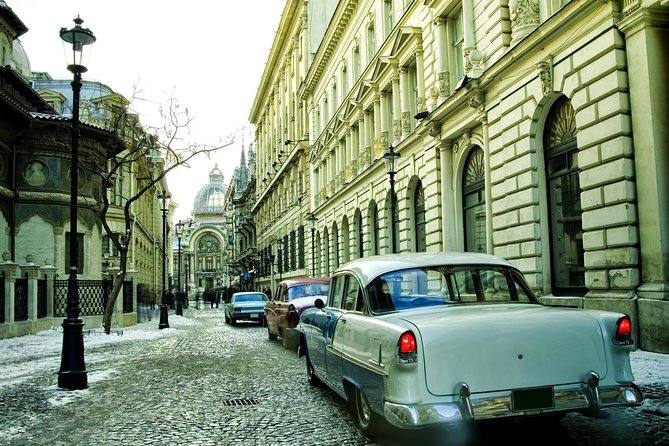
Old Town provides a welcome change of pace. Its cobbled streets, restored mansions, and compact lanes show why Bucharest once attracted comparisons with Paris. You get a 15-minute break here, followed by about 75 minutes of guided sightseeing.
That longer stretch gives the guide time to connect the architecture with Ceaușescu’s policies. You hear about his early reforms and attempts to act independently of the Soviet Union, followed by growing austerity, political control, propaganda, and shortages.
The contrast is powerful. Old Town feels intimate and human-scaled, while the former Civic Center was designed to overwhelm. One area invites wandering between buildings and small streets. The other uses scale, symmetry, and enormous open space to make the individual feel small.
You should not expect Old Town to be a preserved time capsule. It is a living central district with shops, restaurants, and tourist activity, and its restored appearance does not erase the damage done to other parts of Bucharest. That makes the guide’s context important. The tour helps you see both the charm of the area and the uncomfortable question of what was saved, what was demolished, and what was left behind.
The break is also practical. Four hours of walking is easier when you have a chance to pause, take photographs, and get a refreshment if needed. Meals and drinks are not included, so plan to buy anything you want during the stop.
More Bucharest city tours:
- Bucharest: City Highlights Guided Walking Tour
★ 4.9 · 1,482 reviews - Bucharest Highlights Walking Tour
★ 5.0 · 469 reviews - Bucharest: 2-Hour City Highlights Bike Tour
★ 4.8 · 269 reviews - Bucharest Tuk Tuk city tour
★ 5.0 · 188 reviews
The former Communist Civic Center and the Palace of Parliament
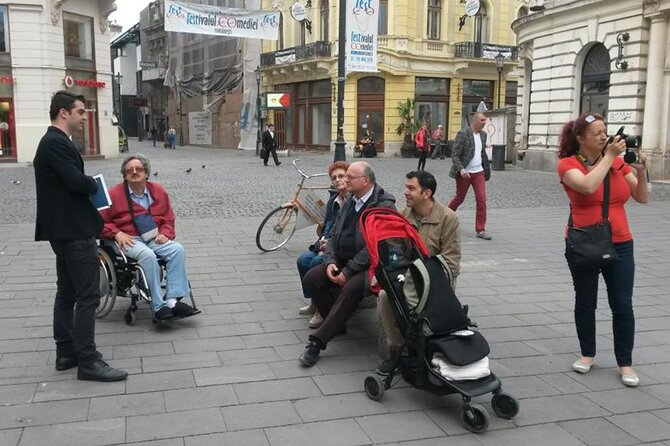
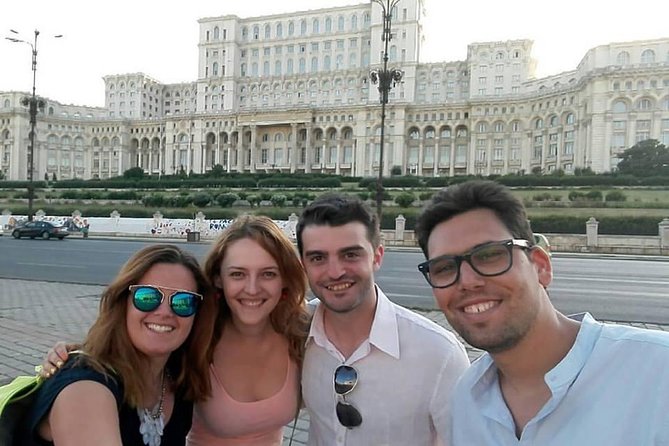
The final major section takes you toward Ceaușescu’s former Communist Civic Center. This was intended as a grand socialist vision for Bucharest, with enormous boulevards and monumental government structures. In practice, the project erased neighborhoods and displaced about 40,000 residents.
That human cost is the key to understanding the area. The buildings are not simply oversized examples of brutalist design. They represent forced relocation, demolished homes, altered streets, and a government determined to remake the capital around its own image.
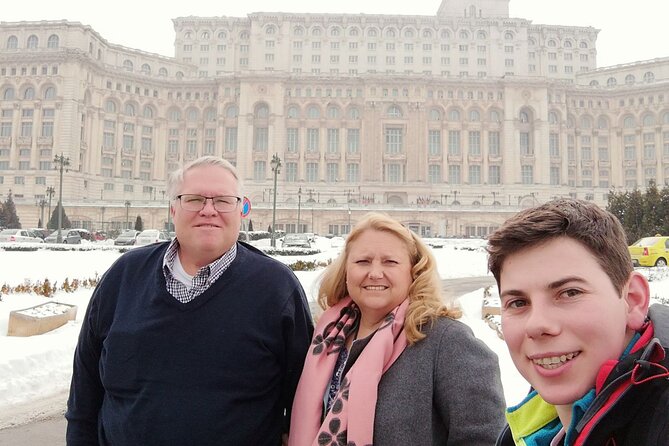
The Palace of Parliament is the unavoidable centerpiece. It is described as the world’s heaviest building, and its size is difficult to grasp from photographs alone. You can admire the exterior and hear how the building fit into Ceaușescu’s plan for a socialist capital.
You will not go inside during this tour. That is an important limitation, especially because the Palace of Parliament does offer public visits at times. Access requires a phone reservation one day ahead, places are limited, and conferences can cause occasional closures. If the interior matters to you, arrange that separately rather than assuming this walking tour includes it.
The exterior visit still has value. The surrounding avenues and structures make the scale of the project visible, and the guide can explain what disappeared to create it. One past winter tour even included a drive to the parliament building before continuing on foot through Old Town during heavy snowfall, showing that the experience can sometimes be adapted to conditions. The standard plan, however, is a walking tour.
After seeing the parliament, you walk back toward the center. The tour finishes near the Palace of the Deposits and Consignments, in the Old Town area. That is a useful ending point because you are close to restaurants, museums, shops, and hotels rather than being left at an isolated monument.
What the private format adds

At $90 per person, this is not the cheapest way to walk around Bucharest. Its value depends on how much you want historical explanation rather than a quick list of landmarks.
For a private group, the price buys more than route planning. You have a licensed guide for four hours, hotel pickup, and the ability to ask detailed questions without waiting for a large group to catch up. The guide can slow the pace, adapt explanations to your interests, and suggest other Bucharest activities afterward.
That flexibility is especially useful for a subject as complicated as Romanian communism. You may want more detail about the revolution, architecture, daily shortages, Romania’s relationship with Moscow, or the treatment of dissidents. A private guide can follow that interest instead of sticking rigidly to a script.
The strongest guide feedback centers on Mihai, who is described as especially effective at explaining Bucharest and communist-era history. Another guide, identified as the company owner, was praised for bringing the period to life through passion and clear storytelling. The experience is therefore a good match for someone who values conversation and interpretation.
The main value question is whether you need interiors. You do not enter the Palace of Parliament, museums, universities, or other public buildings. If you want a series of indoor attractions, spend the $90 elsewhere. If you want a guided explanation of how Bucharest was reshaped, the private format makes more sense.
Walking, weather, and practical comfort
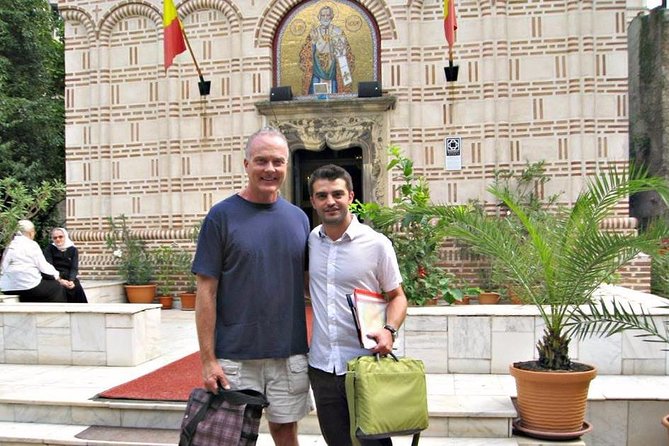
The tour covers less than 2 miles, or about 3 kilometers, at a slow pace. That distance is manageable for most people, but the route includes cobblestones, city sidewalks, open squares, and several hours on your feet.
Frequent stops make it less demanding than a continuous walk. You pause for photographs at the Athenaeum, Royal Palace, Memorial of Rebirth, Revolution Square, National Military Circle, University Square, and the Palace of Parliament. You also have time in Old Town to rest or get refreshments.
The tour is listed as wheelchair accessible, and the private format allows the guide to adjust the pace. Since the route involves historic streets and public spaces, it is sensible to discuss specific mobility needs when booking.
Weather can affect the feel of the experience. Summer sun may make the open Civic Center tiring, while winter conditions can make cobblestones and long outdoor explanations less comfortable. Dress for several hours outside and keep the season in mind when choosing a start time.
Hotel pickup is included. The guide waits in your hotel lobby beside reception, or downstairs in front of the building if your accommodation has no lobby. The tour ends in central Bucharest rather than returning you to the hotel, which is convenient if you plan to continue sightseeing or eat in Old Town.
Who should book this Bucharest tour?
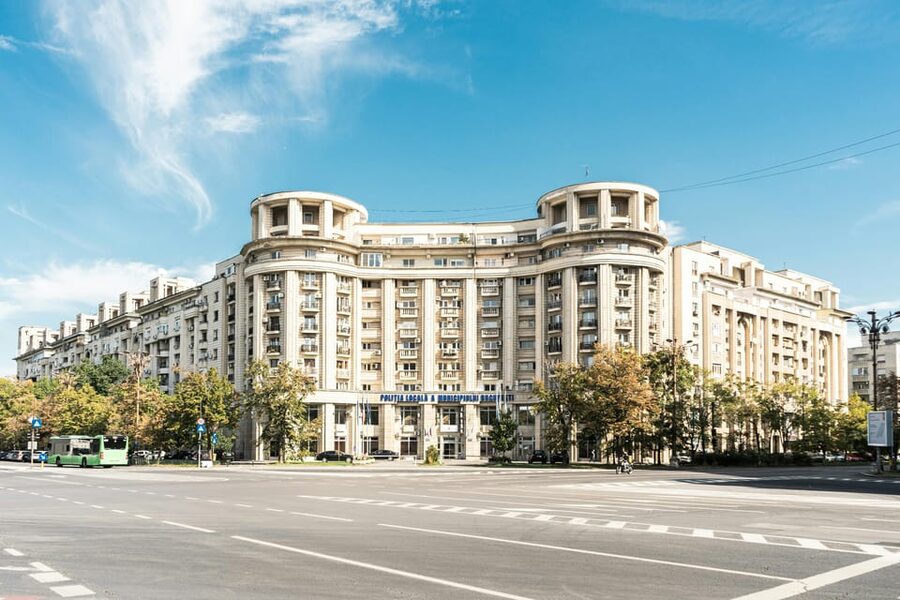
I would choose this tour early in a Bucharest visit if you want a clear framework for the city. It introduces the main central districts, explains the revolution, and shows why Bucharest can feel both elegant and imposing within a short walk.
It suits:
- First-time visitors who want orientation with real historical context
- People interested in communism, the Cold War, or the 1989 revolutions
- Visitors who prefer a private guide to a large group
- Architecture fans interested in Belle Époque buildings and socialist monumental design
- Anyone who wants hotel pickup and a central finish
- Couples, families, or small groups who need a flexible walking pace
It is less suitable if your priority is entering the Palace of Parliament, touring museums, or spending most of the day inside historic buildings. It also may not satisfy you if you want a broad survey of all Bucharest neighborhoods, since the route concentrates on the central districts.
Should you book it?
Book this tour if you want Bucharest’s buildings and squares to make sense as part of a difficult modern story. The best feature is the route itself: elegant old streets lead into the sites of revolution and then toward a gigantic civic project that displaced tens of thousands of people.
At $90 per person, it is best value for a private group that will ask questions and use the guide’s flexibility. Go in knowing that the Palace of Parliament is an exterior stop, not an interior visit. For a first look at Bucharest’s communist past, the 1989 Revolution, and the city’s uneasy rebirth, this is a strong choice.
FAQ
How long does the tour last?
The tour lasts four hours.
What is the price?
The price is $90 per person.
Is this a private tour?
Yes. The tour is designed for a private group.
Is hotel pickup included?
Yes. The guide waits in your hotel lobby beside the reception desk. If your accommodation has no lobby, the guide waits downstairs in front of the building.
Which languages are available?
The live guide is available in English or Romanian.
Does the tour enter the Palace of Parliament?
No. The tour includes an exterior visit and historical explanation, but it does not include entry into the Palace of Parliament.
How much walking is involved?
The route covers less than 2 miles, or about 3 kilometers, at a slow pace with several stops.
Where does the tour finish?
It finishes near the Palace of the Deposits and Consignments in central Bucharest, also known as the Old Town area.
Can the tour be canceled for a full refund?
Yes. You can cancel up to 24 hours in advance for a full refund.
Newest Bucharest trips we have written up
- Bucharest: Dealu Mare Winery Private Trip with Wine Tasting★ 4.9 · 6 reviews
- Winery touring & private wine tasting – one day private tour★ 5.0 · 3 reviews
- Traditions in Bucharest: Village Museum and Wine Tasting★ 5.0 · 8 reviews
- Your rendez-vous with Europe’s past: time-travel to Maramures, Transylvania★ 5.0 · 6 reviews
- Village Museum Bucharest Guided Tour★ 5.0 · 6 reviews
- Private Wine Tasting at Bucharest’s First Wine Bar★ 5.0 · 3 reviews
- Walking Tour of Bucharest City Center – Private Tour★ 5.0 · 4 reviews
- Wine tasting in Bucharest Old town – bonus cheese platter★ 4.5 · 6 reviews
Bucharest Communism and Ceausescu Tours, compared.
Bucharest Essential Tour: Old Town, Calea Victoriei & Communism
Read our review →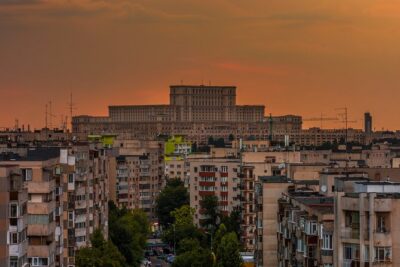
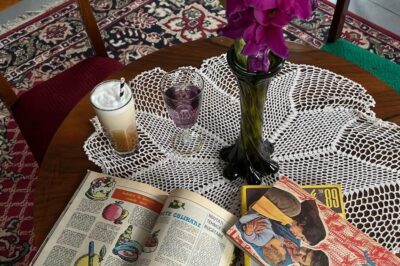

Museum of Communism Ticket with Communist Coffee
Read our review →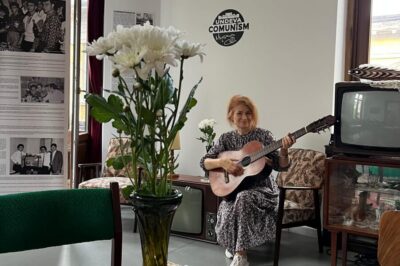
Dinner+Tour at Museum of Communism after closing
Read our review →Browse the lists this tour appears in