Reviewed · TOURS
Bucharest Discovery morning tour
Bucharest’s story is written in sharp contrasts: royal squares beside Communist scars, French-style facades beside Soviet apartment blocks, and old churches tucked into streets shaped by Ottoman rule. This walking tour takes you from the equestrian statue of Carol I through Revolution Square, along Calea Victoriei, and into Old Town before ending beneath the vast bulk of Parliament Palace.
I like the small group limit of 12, which should make it easier to hear the guide and ask questions. I also like the route itself: it gives you both Bucharest’s elegant Little Paris image and the harder story of dictatorship and revolution. The main consideration is pace. You will walk for roughly two and a half to three hours, with no hotel pickup and no full meal included.
Key points at a glance
- Revolution Square begins the story: Hear how kings, dictators, and ordinary Romanians shaped the country’s modern history.
- Calea Victoriei shows old Bucharest at its grandest: Expect ornate buildings, churches, theaters, and the famous Palace of Telephones.
- The route covers several eras: Ottoman influence, French-inspired architecture, royal Bucharest, and Communist planning all appear in one walk.
- The tour ends at Constitution Square: Parliament Palace provides the clearest view of the scale of the Communist building program.
- A street snack is included: Food and drinks beyond that are your responsibility.
- The practical setup is simple: Meet at 11:00, use public transport to reach the start if needed, and finish in Old Town.
A useful first look at Bucharest
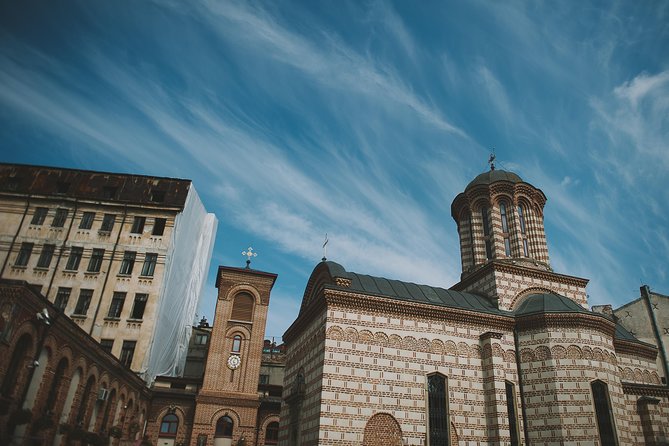
I like this tour because it gives you a city map in story form. Instead of treating Bucharest as a collection of unrelated sights, it links the old royal capital, the French influence of the late 19th and early 20th centuries, and the Communist rebuilding that changed whole districts.
That matters in Bucharest. The city can feel confusing at first. One block may show an ornate Orthodox church, the next a severe apartment block, and the next a grand public building from a different political age. A guide helps you connect those pieces instead of simply photographing them one by one.
The tour is conducted in English, and the listed group size is no more than 12 people. That is a useful middle ground. You get the social feel of a group walk, but not the crowd and loose formation of a large city tour.
Other Bucharest trips people line up next to this one:
- Bucharest: Dracula’s Castle, Peles Castle, & Brasov Old Town
★ 4.5 · 17,858 reviews - Bucharest: Dracula Castle, Peles Castle & Brasov Old Town
★ 4.6 · 10,891 reviews - Bucharest: Dracula’s Castle, Peleș Castle & Brașov Day Trip
★ 4.5 · 5,919 reviews
Meeting Carol I at 11:00
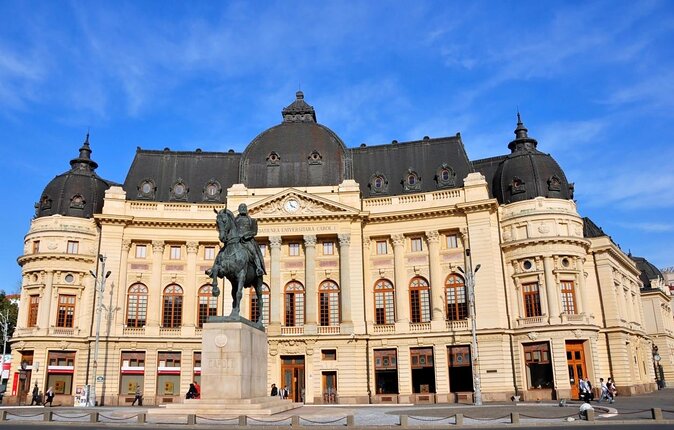
The morning begins at the equestrian statue of Carol I in central Bucharest. This is a practical starting point because the first stop, Revolution Square, is close by and the route then moves naturally toward Calea Victoriei and the historic center.
You should arrive ready to walk at 11:00. The meeting point is listed as Equestrian Statue of Carol I, Sector 1, 030167 Bucharest. The tour does not include hotel pickup, so you will need to make your own way there. The area is near public transportation, which makes the start easier to reach from other parts of the city.
Wear comfortable shoes. The route lasts about two and a half hours according to the duration information, while the highlights describe it as a three-hour walk. The stop times add up to about 140 minutes, not counting the movement between locations, so you should allow close to three hours in your plans.
Revolution Square and the weight of 1989
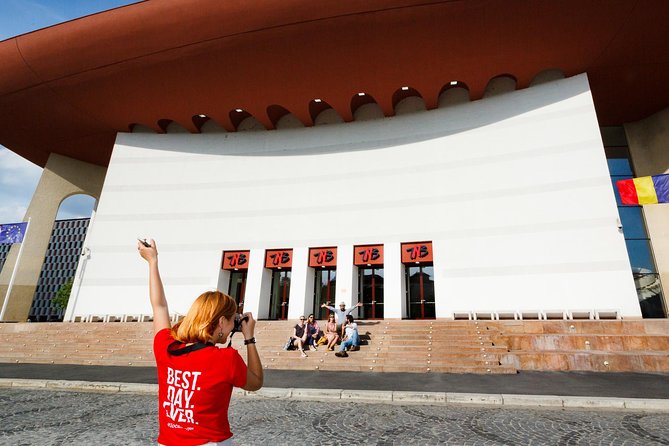
Revolution Square is the emotional starting point. You are not simply looking at another open space in the capital. You are standing where Romania’s political future shifted dramatically during the 1989 revolution.
The tour frames the square through the people who shaped Bucharest, from kings to dictators. That broad view is useful because it avoids treating the Communist period as an isolated chapter. The square connects royal rule, dictatorship, public protest, and the country’s attempt to take control of its own future.
You have about 20 minutes here. That is enough for an introduction and orientation, though not enough for a lengthy examination of every building around the square. If modern Romanian history is your main interest, you may want to return later and spend more time on your own.
Still, as a first stop, Revolution Square does important work. It gives the rest of the walk a political frame. Bucharest’s architecture is not only about style. Many buildings carry the marks of power, wealth, fear, or national ambition.
The Palace of Telephones and a changing city
The next stop is the Palace of Telephones, with about 15 minutes set aside for its story. The building is treated as more than a quick photo stop. Your guide explains why it became famous, who built it, and why it mattered to Bucharest.
That is the sort of detail I value on a city walk. You may pass an unusual building by yourself and wonder about it, but keep moving because you do not know whether it is important. A short explanation can turn an anonymous facade into a piece of the city’s social and technological story.
The limited time here also keeps the tour moving. This is an overview, not a specialist architecture walk, so expect a concise explanation rather than a full architectural lecture. The Palace of Telephones works well as a bridge between the political setting of Revolution Square and the grand avenue ahead.
Same city, a completely different sort of day:
- Bucharest: Palace of Parliament Tickets and Guide
★ 4.3 · 3,182 reviews - Bucharest: Day Trip to Dracula Castle, Peles Castle & Brașov
★ 4.4 · 3,049 reviews - Bucharest to Dracula Castle, Peles Castle and Brasov Guided Tour
★ 4.5 · 2,933 reviews - Bucharest: Palace of Parliament Tickets and Guided Tour
★ 4.4 · 1,877 reviews
Walking Calea Victoriei, Bucharest’s grand avenue

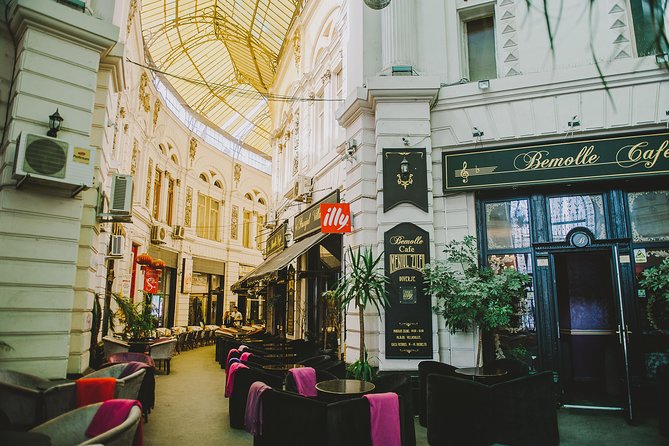
Calea Victoriei is the route’s most elegant stretch. The description of the street as a place where the spirit of La Belle Époque still floats is a reference to the period when Bucharest gained its reputation as Little Paris.
Here, look for the mix of ornate facades, old churches, theaters, and civic buildings. The appeal is not that every building belongs to one neat style. The pleasure comes from seeing how Bucharest borrowed, adapted, and mixed outside influences with local traditions.
You have around 30 minutes on Calea Victoriei. That gives you time to take in the main sights and hear why the avenue became so important, but it is not a leisurely architectural survey. Keep your camera ready, and listen for the guide’s explanation of how the city’s polished image developed.
I especially like this part for first-time visitors. It shows why Bucharest once attracted comparisons to Paris without pretending that the city is simply a Romanian copy of France. The avenue is one of the clearest places to see Bucharest’s royal and modern European ambitions.
Old Town, where the layers get close together
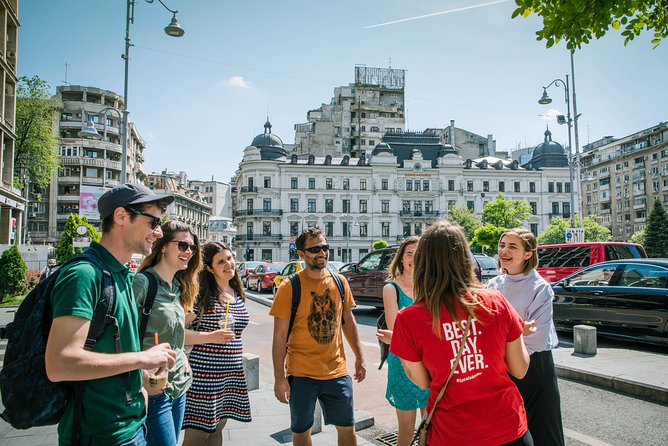
From Calea Victoriei, the walk moves into Old Town. This is the longest stop, with about 45 minutes for the winding streets at the heart of the city.
Old Town brings several periods close together. The route covers Ottoman invasions, French architectural influence, and the many changes Bucharest has seen over time. The streets are more intimate here than on the grand avenue, and the contrast helps you understand how the city developed in pieces rather than according to one master plan.
This is also where the tour ends. That makes Old Town a convenient place to continue your day after the guide says goodbye. You can eat, explore more streets, or use the area as a base for another central sight.
There is a practical tradeoff. Old Town can be more distracting than the earlier stops, especially if you are focused on shops, cafes, or the general street scene. Stay close enough to hear the guide, particularly when the group moves through narrower streets.
A street snack is included during the experience. The details of the snack are not specified, so do not treat it as lunch. Food and drinks beyond what is included are not covered, and you should plan accordingly.
Constitution Square and the scale of Parliament Palace
The itinerary also includes Constitution Square, with about 30 minutes devoted to the Communist legacy of the city. This is where the tour presents Parliament Palace, described as the largest building in Europe and the centerpiece of the dictator’s most ambitious construction project.
The building’s size is difficult to understand from photographs alone. From Constitution Square, the scale becomes the point. The square and the immense structure show how Communist planning reshaped Bucharest, not just through individual buildings but through broad changes to streets, neighborhoods, and public space.
This stop gives the walk a strong ending because it brings together the political themes introduced at Revolution Square. You begin with a country taking its fate into its own hands, then finish with a physical reminder of how much power one regime tried to project.
There is one oddity in the stated route: the tour ends in Old Town, yet Constitution Square is listed as a later stop. The route information does not explain the exact order of these final stops. When you book, it is sensible to confirm whether Constitution Square comes before the final return to Old Town. Either way, you should expect the walk to cover both areas.
What the architecture tells you
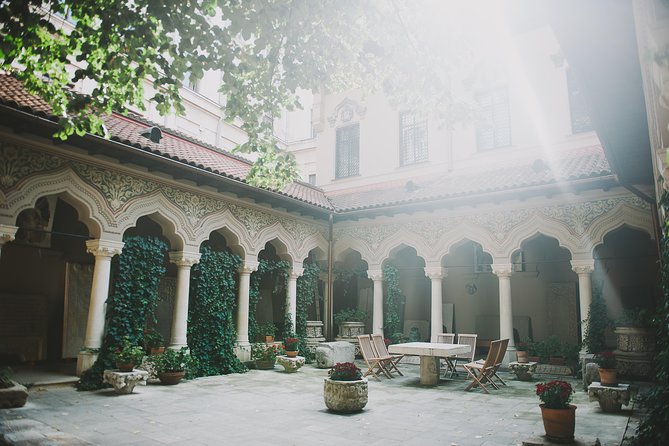
One of the tour’s strongest features is its range of building styles. In a short period, you see Soviet-style apartments, ornate churches, theaters, grand avenues, and Communist monumental construction.
That variety can feel visually scattered without context. The guide’s job is to explain why the city looks this way. Bucharest was shaped by royal modernization, European cultural influence, Ottoman pressure, political upheaval, and a Communist rebuilding program. The result is not a single postcard style. It is a city of collisions.
I prefer that kind of introduction to a tour that shows only the prettiest streets. Bucharest’s character comes from the rough edges as much as the polished ones. You see an attractive church, then a severe apartment block. You admire a Belle Époque facade, then confront the sheer mass of Parliament Palace.
For photographers, the route offers useful variety. For history-minded visitors, it provides a sequence of political chapters. For anyone trying to learn the city quickly, it gives you reference points you can recognize during the rest of your stay.
Price, group size, and what you receive

At $46.86 per person, the tour is not the cheapest way to walk around Bucharest. You can see many of these streets without paying an admission fee. The value comes from the guide’s organization and interpretation, not from entry to a museum or monument.
No admission tickets are listed for the stops. You are paying for a local guide, the small group format, the planned route, and the included street snack. If you want a quick orientation on your first day, that can be fair value because it saves you from piecing together the city’s history yourself.
The group maximum of 12 is important. A guide can usually keep a group that size together more easily, and you have a better chance of asking a question without holding up dozens of people. The published rating is 5.0 from seven reviews, including praise for the English-speaking guide and the length of the walk. That is encouraging, though the number of ratings is still small, so I would treat it as a positive signal rather than absolute proof.
The tour is a good fit for a first visit, especially if you have limited time. It is less suited to you if you want interior visits, museum admission, or a highly specialized architecture tour.
Who should book this walk
I would choose this experience for:
- A first visit to Bucharest
- Anyone who wants history tied to real streets and squares
- People who prefer small groups
- Visitors who want English-language guiding
- Anyone with a free morning or early afternoon
- Couples and solo visitors who want a clear city orientation
You should think twice if walking for up to three hours is difficult, or if you want extensive time inside landmarks. Most stops are viewed from the outside, and no hotel transportation is included.
The tour should also suit most participants, with service animals allowed and the activity described as accessible to most people. Comfortable walking shoes remain essential. The route’s exact surface conditions are not specified, so practical footwear is the safest choice.
Booking and cancellation details
Confirmation is provided at the time of booking. The experience begins at 11:00, is offered in English, and is available with mobile tickets.
Free cancellation is allowed until 24 hours before the start time for a full refund. If you cancel less than 24 hours before the start, you should not expect a refund, and changes made inside that window are not accepted. The cut-off follows Bucharest local time.
Should you book the Bucharest Discovery morning tour?
Book it if you want a clear, guided introduction to Bucharest’s major central stories rather than a long list of isolated sights. The route covers Revolution Square, the Palace of Telephones, Calea Victoriei, Old Town, and Constitution Square, giving you a useful first map of the city.
The best reasons to choose it are the small group, the English guide, the broad historical range, and the way the walk links elegant old Bucharest with its Communist past. The main limits are the outdoor focus, the lack of hotel pickup, and the uncertain timing between the stated two-and-a-half-hour duration and the three-hour description.
For a first morning in Bucharest, I think the tour offers a sensible introduction. You will finish with enough context to decide which churches, streets, buildings, and political sites deserve a closer look on your own.
FAQ
Where does the Bucharest Discovery morning tour begin?
It begins at the Equestrian Statue of Carol I in Sector 1, Bucharest.
What time does the tour start?
The tour starts at 11:00 am.
Where does the tour end?
The listed end point is Old Town, Bucharest.
How long does the walking tour last?
The duration is listed as approximately 2 hours 30 minutes, while the highlights describe it as a 3-hour tour. Plan for roughly two and a half to three hours.
What language is the tour offered in?
The tour is offered in English.
How many people can join the group?
The group has a maximum of 12 travelers.
What is included in the price?
The price includes a local guide and a street snack.
Is hotel pickup included?
No. Hotel pickup and drop-off are not included.
Can I cancel for a full refund?
Yes. You can cancel at least 24 hours before the experience start time for a full refund. Cancellations or changes made less than 24 hours before the start time are not accepted for a refund.
Newest Bucharest trips we have written up
- Bucharest: Dealu Mare Winery Private Trip with Wine Tasting★ 4.9 · 6 reviews
- Winery touring & private wine tasting – one day private tour★ 5.0 · 3 reviews
- Traditions in Bucharest: Village Museum and Wine Tasting★ 5.0 · 8 reviews
- Your rendez-vous with Europe’s past: time-travel to Maramures, Transylvania★ 5.0 · 6 reviews
- Village Museum Bucharest Guided Tour★ 5.0 · 6 reviews
- Private Wine Tasting at Bucharest’s First Wine Bar★ 5.0 · 3 reviews
- Walking Tour of Bucharest City Center – Private Tour★ 5.0 · 4 reviews
- Wine tasting in Bucharest Old town – bonus cheese platter★ 4.5 · 6 reviews
Tours, compared.
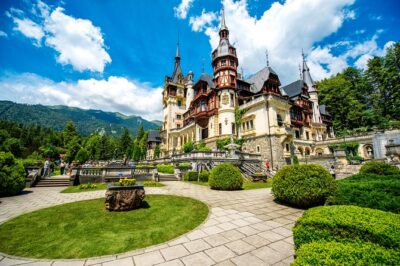
Bucharest to Dracula Castle, Peles Castle and Brasov Guided Tour
Read our review →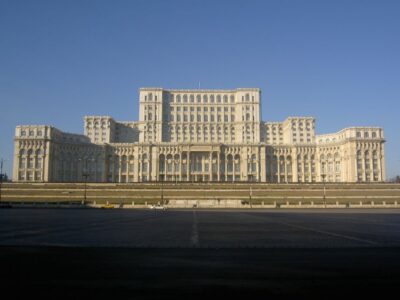
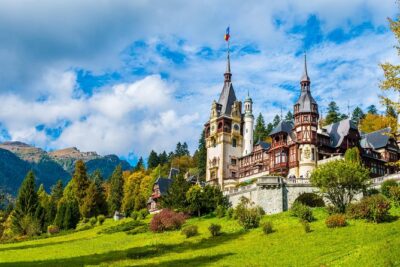
Transylvania and Dracula Castle Full Day Tour from Bucharest
Read our review →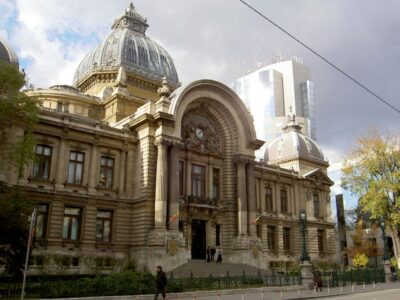
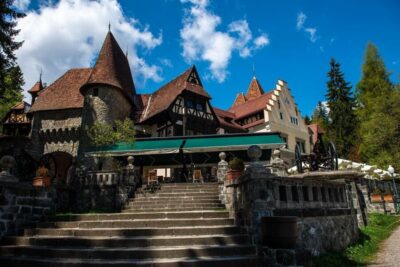
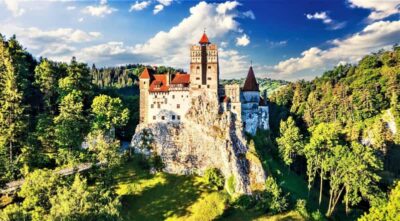
Peles Castle, Bran Castle, & Brasov Old Town Tour
Read our review →
Peles Castle, Bran Castle, & Brasov Full-Day Tour
Read our review →