
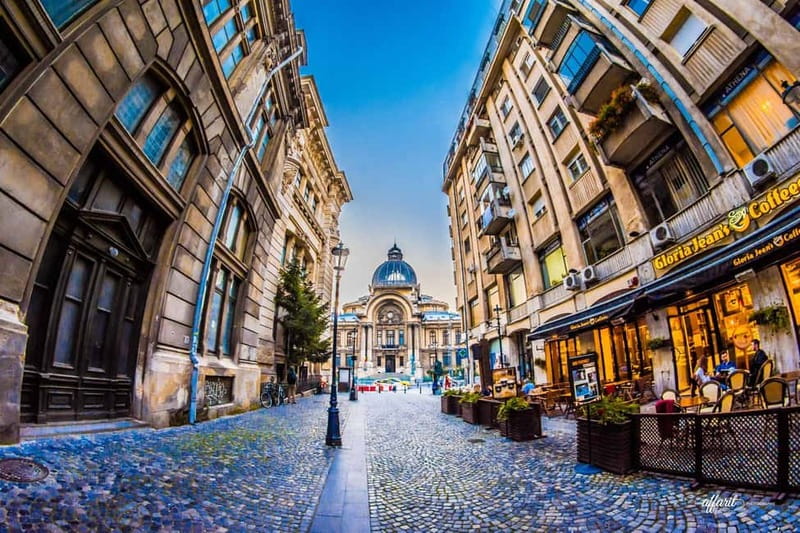
Reviewed · BUCHAREST CITY TOURS
Bucharest Private City Tour 4h with Hotel Pickup & Drop-Off
Bucharest’s most striking story is the clash between grand royal buildings, modest village traditions, and the oversized remains of communist rule. This private tour brings that contrast into focus, especially at the Palace of Parliament, the former People’s House, and Revolution Square, where Nicolae Ceausescu’s regime ended in 1989.
I like the private car and hotel pickup, which make it easier to cover a spread-out capital in only four hours. I also like the mix of the open-air National Village Museum, polished Calea Victoriei, and atmospheric Old Town. The drawback is pace: with so many stops, some visits are mainly sightseeing and photo stops rather than long, quiet explorations.
Key points at a glance
- Communist-era spectacle: See the Palace of Parliament and the former Central Committee building connected to the 1989 revolution.
- Romanian village life: Walk among traditional wooden, adobe, and stone houses at the Dimitrie Gusti National Village Museum.
- Private and comfortable: Ride in an air-conditioned vehicle with Wi-Fi, hotel pickup, and hotel drop-off.
- Strong historical focus: Learn how royal Bucharest, communist Bucharest, and modern Romania meet along Calea Victoriei.
- Efficient four-hour route: Cover major sights without organizing taxis, routes, or separate guides yourself.
- English-speaking guidance: Guides including Vlad and Alex have been praised for clear explanations, flexibility, and careful time management.
Why Bucharest’s Contrasts Make This Tour Work
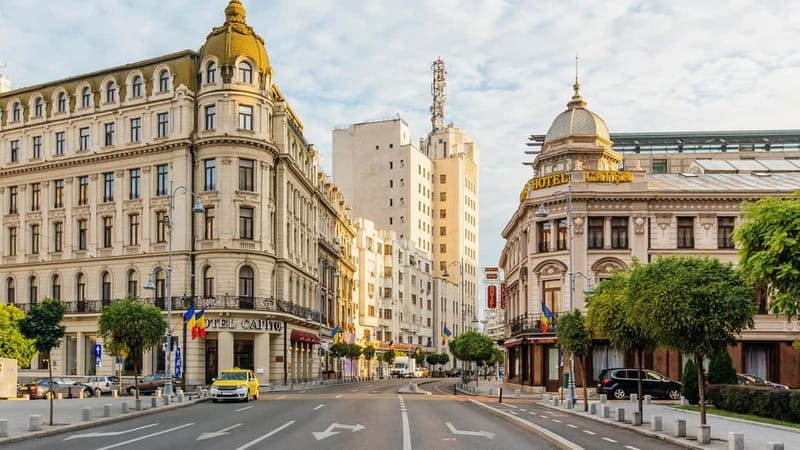
Bucharest can feel scattered at first. Its grand avenues, Orthodox churches, museums, communist blocks, and old restaurants do not always form an obvious sightseeing route. A private vehicle helps you connect these pieces quickly, while the guide supplies the political and cultural links between them.
The route is not just a parade of buildings. It moves between three different Bucharests. You see the ambition of the monarchy on Calea Victoriei, the rural traditions preserved at the Village Museum, and the harsh scale of communist urban planning at the Palace of Parliament.
I find that combination useful if you are visiting Bucharest for the first time. You get a broad introduction before deciding which places deserve a longer return visit. The private format also lets the guide respond to your interests. If you want more explanation at Revolution Square, or a quicker pass through a shopping area, the schedule can be adjusted within reason.
The tour costs $131 per person. That is a serious price for four hours, but it includes private transportation, a private guide, pickup from your address, drop-off, and Wi-Fi in the vehicle. The value improves if you are traveling as a small group and want a personal guide rather than joining a larger bus tour.
Admission fees and food are not included. Also note that the schedule is tightly packed. The stated stops add up to more than four hours when their listed sightseeing times are combined, so the route should be understood as a brisk overview with driving and flexible timing, not a leisurely full visit at every location.
More Bucharest city tours:
- Bucharest: City Highlights Guided Walking Tour
★ 4.9 · 1,482 reviews - Bucharest Highlights Walking Tour
★ 5.0 · 469 reviews - Bucharest: 2-Hour City Highlights Bike Tour
★ 4.8 · 269 reviews
The Palace of Parliament: Monument to Communist Excess
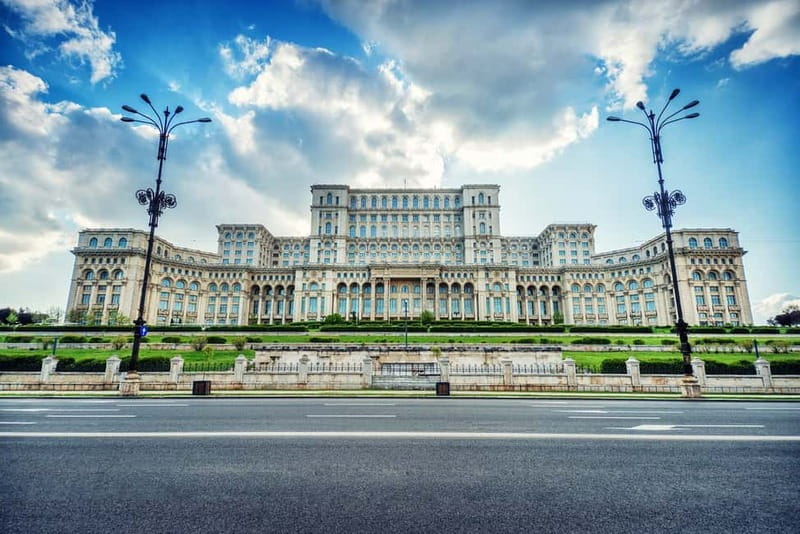
The Palace of Parliament is the tour’s most dramatic sight. You get about 30 minutes for a photo stop and sightseeing, enough to grasp the building’s size and heavy symbolism even if you do not spend hours inside.
Often called the People’s House, it is the world’s second-largest administrative building. Its scale reflects the ambition of Nicolae Ceausescu’s communist government, which reshaped central Bucharest on a vast scale. The building is not simply large. It represents the power of a regime willing to spend enormous public resources on an official monument while ordinary people faced severe shortages.
I find the guide’s interpretation especially important here. Without context, the Palace can look like an oversized stone curiosity. With context, its corridors and grand proportions become evidence of authoritarian rule, forced urban change, and political vanity.
The tour description lists entrance fees as extra, so confirm the exact access arrangements when booking. The schedule identifies this stop as sightseeing and a photo stop, so you should not assume that a full interior visit is part of the four-hour plan.
Piața Unirii and the City’s Broad Scale
The vehicle passes through Piața Unirii, or Union Square, for about ten minutes. This is a short section of the route, but it helps you see how Bucharest’s major roads and open spaces fit together.
You will not have much time here for a separate visit. Instead, treat it as a useful bridge between the Palace of Parliament and the city’s other districts. The private car matters at this point because you can keep moving without dealing with public transport connections or finding your way through unfamiliar streets.
The National Village Museum: Romania in One Open-Air Setting
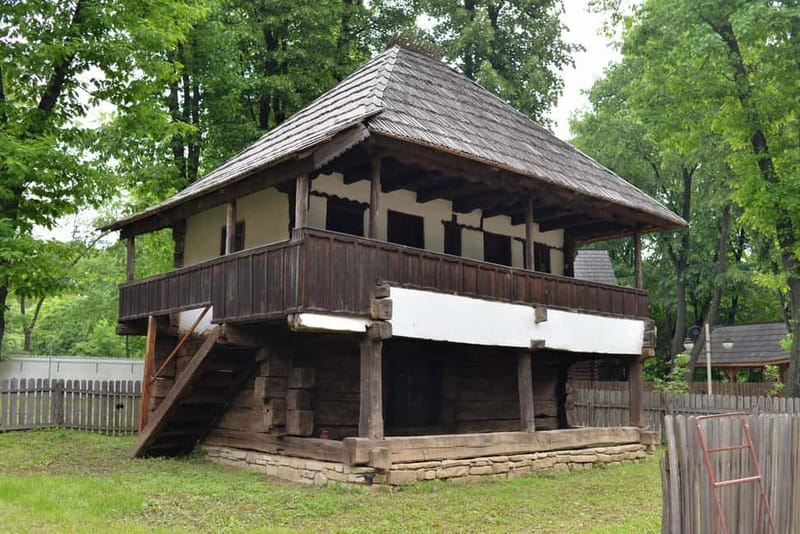
The Dimitrie Gusti National Village Museum receives about an hour, making it one of the more substantial stops. It offers a needed change of scale after the Palace of Parliament.
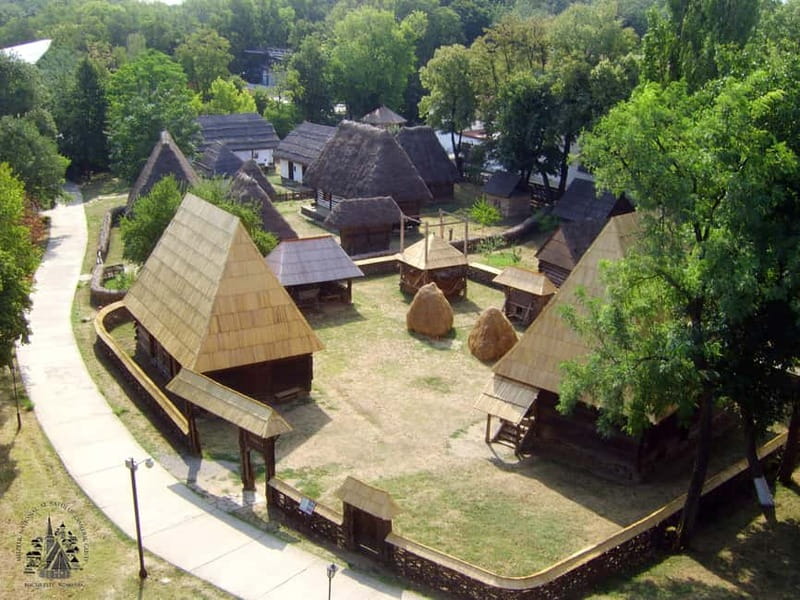
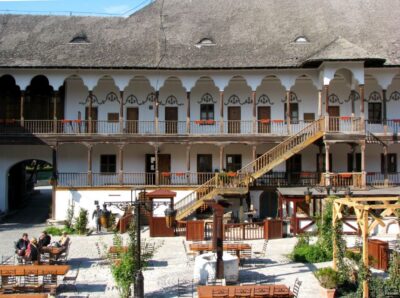
Here, traditional Romanian homes are presented in an open-air setting. The buildings use materials such as wood, adobe, and stone, and they come from different parts of the country. You can see how homes, mills, wooden churches, and other structures reflected local resources and everyday needs.
I like this stop because it gives the tour a human scale. The Palace shows what a government could impose from above. The Village Museum shows how families and communities shaped practical surroundings over generations.
The guide can explain the social and spiritual meaning of the buildings, not just point out their age or construction. The museum also helps explain Romanian traditions as living systems rather than museum decoration. You see how work, worship, family life, and the natural setting were connected.
The exact entrance arrangement should be checked because admission fees are not included. Since the visit is listed as a photo stop and sightseeing, the hour may be used for a guided walk rather than a detailed look at every structure.
A few more Bucharest trips worth putting side by side
- Castles of Transylvania: Private Day Trip from Bucharest
★ 4.5 · 248 reviews - Dracula’s Castle, Peles Castle and Brasov – Private Day Trip from Bucharest
★ 5.0 · 211 reviews - Best of Bucharest | Private Walking Tour
★ 5.0 · 199 reviews - Bucharest Panoramic Sightseeing – Private City Tour
★ 5.0 · 128 reviews
Revolution Square and the End of Ceausescu’s Rule
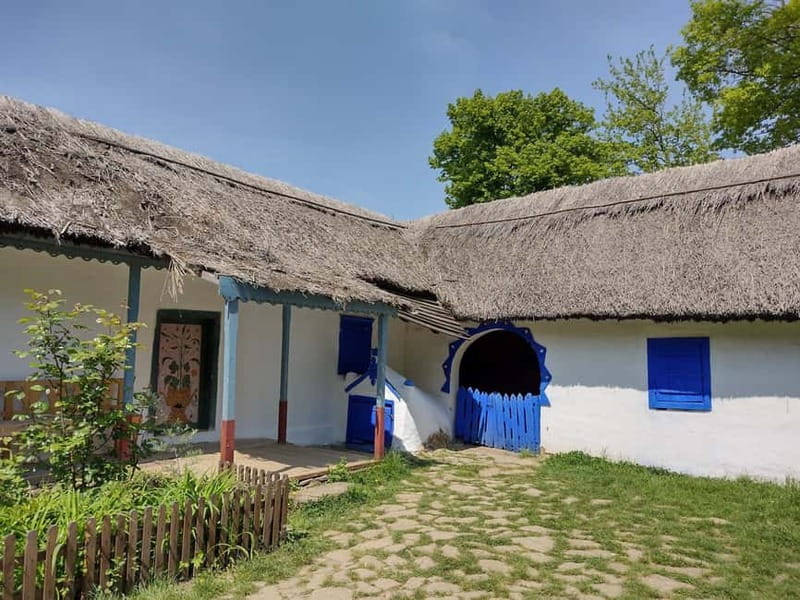
Revolution Square receives about 30 minutes with guided commentary. This is one of the most important historical stops in Bucharest, even though the space itself may not look dramatic at first glance.
The square is tied to the December 1989 revolution that removed Ceausescu from power. It was also the place where he fled by helicopter after his final public appearance. Your guide connects the square with the former Central Committee building, now associated with the Senate Palace.
That context changes the way you see the surrounding buildings. The square is not merely an architectural stop. It is a place where Romania’s communist government visibly broke apart.
I would listen closely here and ask questions if the pace allows. The tour’s strongest quality is its ability to connect physical places with political events. A quick photo without explanation would miss much of what makes Revolution Square important.
Calea Victoriei: Bucharest’s Grandest Urban Mix
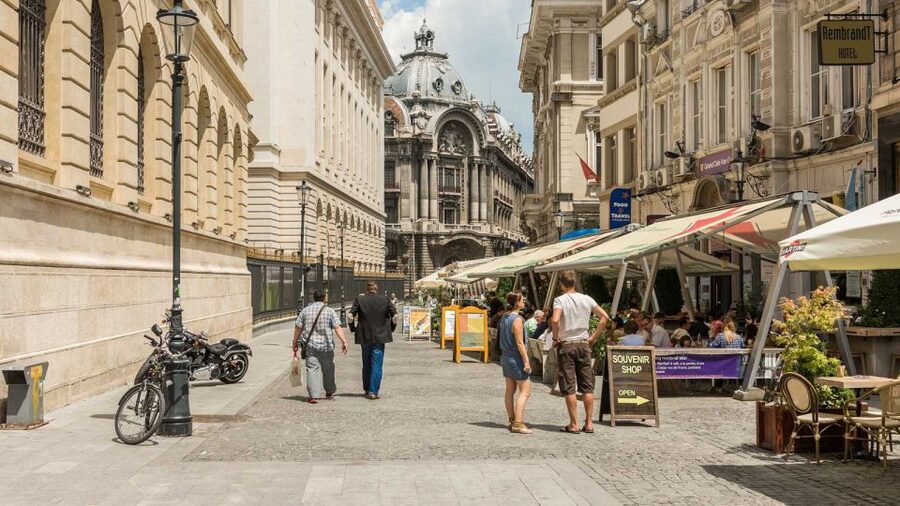
The tour spends roughly 45 minutes along Calea Victoriei, one of Bucharest’s best-known avenues. It offers a concentrated look at the city’s changing fortunes and styles.
The route passes the Royal Palace on one side and political buildings linked to the communist period on the other. That contrast is central to Bucharest. Royal, religious, commercial, and communist spaces sit close together, sometimes with little visual warning between them.
You may also pass old Orthodox churches, museums, theatres, casinos, tea shops, music stores, restaurants, retail businesses, and souvenir shops. This gives the avenue a social life beyond its official monuments.
I like Calea Victoriei as a walking and driving introduction because it shows Bucharest as a lived-in city, not only a collection of historical sites. The drawback is that a vehicle tour can only provide a sample. You might want to return later for a slower walk, especially if a particular church, museum, theatre, or shop catches your attention.
The Athenaeum, CEC Palace, and National History Museum
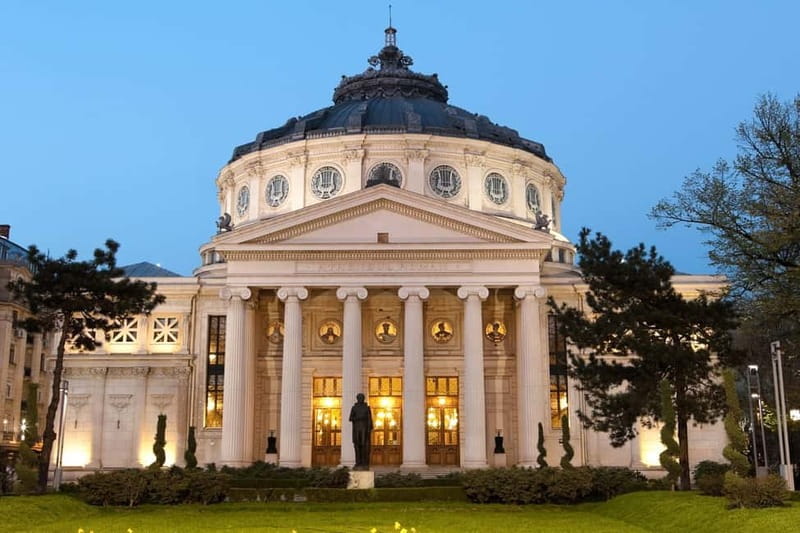
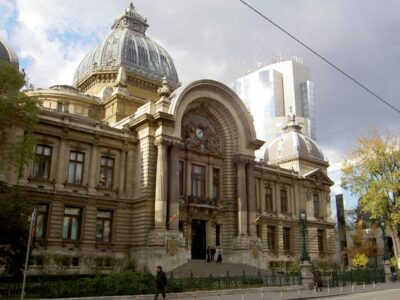
The route also takes in several of Bucharest’s best-known architectural landmarks, including the Romanian Athenaeum, the CEC Palace, and the National History Museum.
The Romanian Athenaeum is associated with music and national culture. The CEC Palace brings a different architectural note, with its distinctive historic appearance. The National History Museum adds another layer, linking the modern capital with Romania’s earlier past.
These sights are primarily part of the broader sightseeing route rather than guaranteed long interior visits. If you have a particular interest in the Athenaeum or museum, ask the guide whether the timing allows entry. Food and drinks are not included, and the itinerary does not promise a meal break, so plan your expectations around seeing rather than lingering.
Old Town: Churches, Restaurants, and a Bohemian Finish
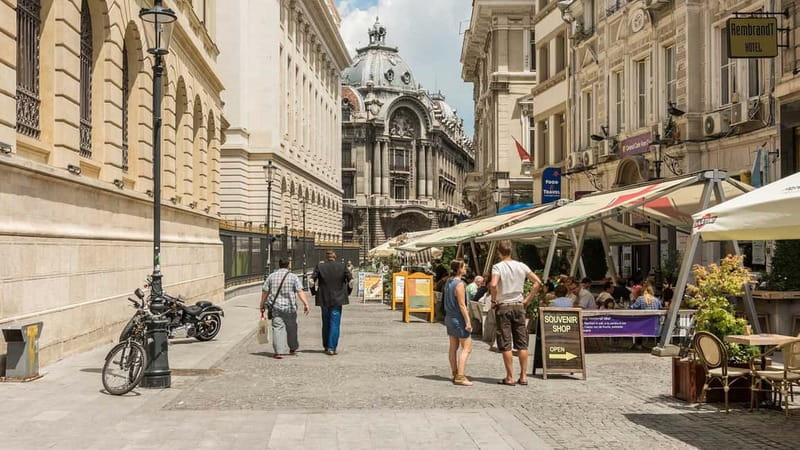
The final major sightseeing section is Bucharest Old Town, with about an hour for guided touring and photographs. This is where the tour becomes more informal and street-level.
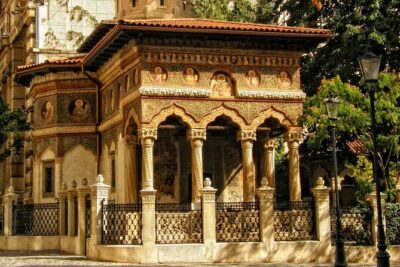
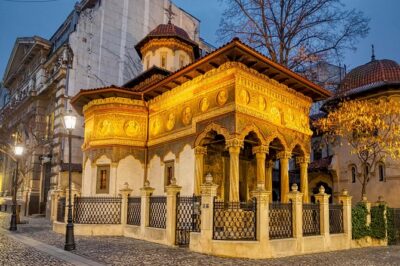
You can expect a mix of old Orthodox churches, restaurants, shops, gift stores, and entertainment venues. The area has a bohemian side, but it is also a busy commercial quarter, so the appeal comes from the mixture rather than from a perfectly preserved historic district.
I like ending here because the Old Town gives you a chance to compare Bucharest’s official monuments with its everyday social spaces. After the political weight of the Palace and Revolution Square, the restaurants, music shops, and small retail businesses make the city feel more approachable.
The guide can point out places worth returning to later. Since the tour finishes back in Bucharest, you can use the final stop to decide where to spend your evening. Still, the hour is not a promise of an unhurried meal, and food is not included.
What the Private Vehicle Adds
The air-conditioned car with Wi-Fi is more than a comfort detail. Bucharest’s major sights are spread across different parts of the city, and a four-hour tour needs efficient transfers.
Private transportation also means you are not spending part of the morning or afternoon learning the transit system. Pickup and drop-off from your address remove another layer of planning. This is especially useful if you have limited time in the capital or are using the tour as a first orientation.
The tradeoff is that driving gives you less time to wander. If you prefer markets, long museum visits, or spontaneous stops, a private walking day may suit you better. Here, the vehicle is designed to help you see a lot, not to replace a slower exploration of each district.
The Guides and the Pace of the Visit
The tour is offered in English with a live guide, and the private format allows the guide to shape the commentary around your questions. Vlad is described as helpful, adaptable, and willing to respond to the group’s wishes.
Alex is especially noted for time management and for presenting a large amount of information in a clear way. That matters on this route because the schedule covers royal architecture, traditional villages, communism, the 1989 revolution, and modern city life in a short period.
You should expect an information-heavy introduction rather than a relaxed sightseeing ride with little commentary. If you enjoy connecting buildings to political events, this is a strength. If you prefer to stop often for photographs or sit over coffee, tell the guide early so the route can be adjusted where possible.
Who Will Get the Most From Four Hours
I would recommend this tour to you if you are visiting Bucharest for the first time and want a reliable overview. It works particularly well for visitors with only half a day, because the route covers sights that would be awkward to combine without a car.
It also suits you if modern Romanian history interests you. The Palace of Parliament, Revolution Square, and the former Central Committee building give the tour a clear political thread, while the Village Museum prevents the story from becoming only about communism.
Families and small private groups may appreciate the flexible format. The guide can respond to questions and adjust attention to different interests more easily than on a large group outing.
I would hesitate if your main goal is interior access to every major building. Several stops are listed as sightseeing or photo stops, and entrance fees are separate. I would also choose a slower self-guided day if your priority is sitting in Old Town cafés, browsing shops, or spending a long time in one museum.
The tour offers free cancellation up to 24 hours before departure and lets you reserve now while paying later. Starting times depend on availability, so check the schedule before building the rest of your day around it.
Should You Book the Bucharest Private City Tour?
Book it if you want a private, history-focused introduction to Bucharest with hotel pickup, efficient transport, and an English-speaking guide. The best parts are the sharp contrast between the Palace of Parliament and the Village Museum, plus the political context at Revolution Square and along Calea Victoriei.
The $131 price is easiest to justify for a small group that values convenience and personal attention. Before booking, confirm which buildings you will enter and how admission fees will be handled. If you accept the brisk pace and treat the tour as a well-guided overview, it is a useful way to get your bearings and choose where to return on your own.
FAQ
How long is the Bucharest private city tour?
The tour lasts four hours. Starting times depend on availability.
Is hotel pickup and drop-off included?
Yes. Pickup and drop-off from your address are included, with hotel pickup specified in the tour details.
Is the tour private?
Yes. This is a private group experience with private transportation and a live guide.
What language is the tour conducted in?
The tour is conducted in English.
What vehicle is used?
Transportation is provided in a private, air-conditioned vehicle with Wi-Fi on board.
Which major sights are included?
The route includes the Palace of Parliament, Piața Unirii, the Dimitrie Gusti National Village Museum, Revolution Square, Calea Victoriei, central Bucharest, and Bucharest Old Town.
Are entrance fees included?
No. Entrance fees required during the itinerary are not included. Food and drinks are also not included.
Can the booking be canceled for a refund?
Yes. You can cancel up to 24 hours in advance for a full refund. The tour also allows you to reserve now and pay later.
Newest Bucharest trips we have written up
- Bucharest: Dealu Mare Winery Private Trip with Wine Tasting★ 4.9 · 6 reviews
- Winery touring & private wine tasting – one day private tour★ 5.0 · 3 reviews
- Traditions in Bucharest: Village Museum and Wine Tasting★ 5.0 · 8 reviews
- Your rendez-vous with Europe’s past: time-travel to Maramures, Transylvania★ 5.0 · 6 reviews
- Village Museum Bucharest Guided Tour★ 5.0 · 6 reviews
- Private Wine Tasting at Bucharest’s First Wine Bar★ 5.0 · 3 reviews
- Walking Tour of Bucharest City Center – Private Tour★ 5.0 · 4 reviews
- Wine tasting in Bucharest Old town – bonus cheese platter★ 4.5 · 6 reviews
Bucharest City Tours, compared.

Bucharest Panoramic Sightseeing – Private City Tour
Read our review →

Browse the lists this tour appears in