
Reviewed · BUCHAREST COMMUNISM AND CEAUSESCU TOURS
Footprints of Bucharest: History, Communism & Urban Tales
Bucharest makes more sense when you connect its grand royal buildings with the scars of communism. This small-group night tour does exactly that, moving from the Romanian Athenaeum and Revolution Square to Old Town and the huge Palace of Parliament.
I like the personal angle, especially the guides’ stories about daily life under communism, from scarce food to green bananas saved for Christmas. I also like the practical help: Manuela has shared a favorite local snack, while Marius has offered tea, coffee, street food, and useful restaurant tips.
The main drawback is pace. You cover a large slice of central Bucharest in two to three hours, so most stops are exterior visits and quick explanations. The $72.25 price is fair for a group capped at eight, but less attractive if you want museum interiors or a slow architectural walk.
Key points to know before booking
- Communist-era stories make the history personal: Your guide may explain everyday life, not just dates and political events.
- Night lighting suits Bucharest: The Athenaeum, former Royal Palace, Old Town, and Palace of Parliament take on a different look after dark.
- A maximum of eight people keeps it focused: You have a better chance to ask questions and stop for photos.
- The route covers royal, communist, and modern Bucharest: It links major landmarks instead of treating them as isolated sights.
- Guides add local food advice: Toni, Manuela, and Marius have been praised for restaurant tips and small local treats.
- Most of the tour is outdoors: You see many buildings from the street, while entrance fees and food are not included.
Why this tour gives you a useful first look at Bucharest
Bucharest can feel confusing on a first visit. French-style architecture sits beside Communist blocks, ornate churches appear between cafés, and grand avenues reveal their meaning only after someone explains who built them and why.
This tour gives you that framework. The route begins near Strada Benjamin Franklin 2 and ends at Piața Unirii, close to the Old Town. That makes it a handy introduction early in your stay, since you finish near cafés, restaurants, and the central pedestrian streets.
The tour is offered in English and lasts roughly two to three hours. With no more than eight people, it has the feel of a guided walk rather than a large procession. The guide can respond to questions, pause for photos, and adjust the explanation to your interests.
Several guides have led this experience, including Toni, Manuela, and Marius. The strongest part of the experience is the human storytelling. Toni has explained what Christmas treats meant during the Communist period, including the special value of green bananas. Manuela has been noted for patience, clear historical explanations, photo time, and food suggestions. Marius has added local touches with tea, coffee, and street food.
You should still set your expectations correctly. This is not a full museum tour. You will not spend long inside each building, and several sights are viewed from outside. The value lies in the connections between places, the guide’s commentary, and the amount of central Bucharest you can cover in a short evening.
More communism and Ceausescu tours in Bucharest:
- The Real tour of Communism
★ 5.0 · 666 reviews - Life under Communism
★ 5.0 · 358 reviews - 3-Hour Guided Tour of Communist Bucharest
★ 4.9 · 303 reviews
The Romanian Athenaeum begins the story with old-world style
The Romanian Athenaeum is one of Bucharest’s most recognizable buildings. Its broad entrance and classical columns give it the appearance of an ancient Greek temple, a sharp contrast to the city’s more irregular streets.
You have about 15 minutes here, with no admission fee included because the stop is an exterior visit. This is a good place to start taking photos, especially if the building is lit after dark.
The Athenaeum helps introduce the older image of Bucharest, a city that once looked toward Paris and Western Europe for inspiration. Your guide can place the building within the city’s royal and cultural story before the route turns toward the political upheavals of the 20th century.
Revolution Square explains the fall of Ceaușescu
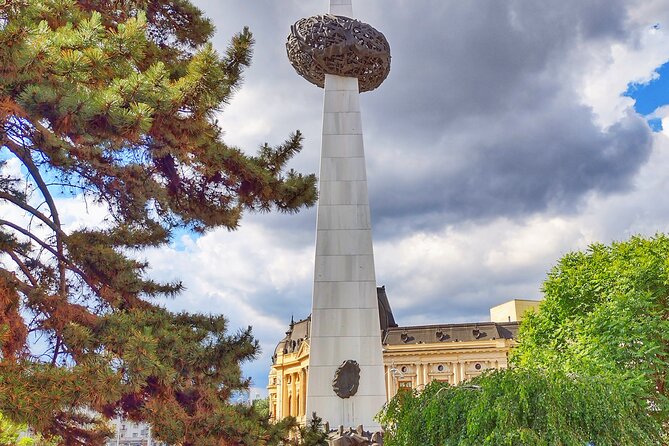
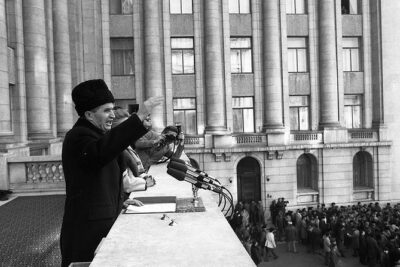
Revolution Square is the emotional center of the tour. It is where Communist leader Nicolae Ceaușescu gave his final speech in 1989, shortly before the regime collapsed.
The stop lasts about 45 minutes, making it the longest part of the route. That extra time matters. Instead of a quick photo stop, you get room for photographs, questions, and visual material about the Revolution, including pictures and video presentations.
This is also where the personal stories matter most. Political history can feel distant when it is reduced to leaders and dates. A guide who explains food shortages, family routines, and the small luxuries of Communist life gives you a clearer idea of how the system shaped ordinary people.
The square also offers a useful lesson in reading Bucharest. You are not simply looking at monuments. You are standing in a place where public speech, government power, and mass protest collided. Allow the guide time here, even if the evening schedule feels tight.
The grand avenue links royal Bucharest together
The route continues along one of the city’s most elegant avenues, lined with major buildings and monuments. The exact rhythm of this section depends on the guide and the traffic, but it works as a connecting stretch between the landmarks.
Look up as you walk. Bucharest is easy to experience at street level, yet many of its best details are above shopfronts and traffic. Decorative façades, statues, domes, and formal public buildings tell you how much effort earlier rulers put into giving the capital a European appearance.
At night, lighting can help the grand buildings but can also hide small architectural details. If you care more about façades than atmosphere, a daytime walk may suit you better. If you like seeing the city after work, with Old Town opening into its evening rhythm, the night setting has real appeal.
More history-led tours in Bucharest:
- Bucharest: 3-Hour Dark History Tour with a Local
★ 4.9 · 301 reviews - Bucharest: Small Group History, Art & Secrets Tour
★ 4.7 · 152 reviews - Guided Walking Tour of Historical Bucharest
★ 5.0 · 84 reviews - Bucharest Jewish Heritage | Holocaust Memorial | Private Car Tour
★ 5.0 · 38 reviews
The university library and Royal Palace reveal the royal chapter
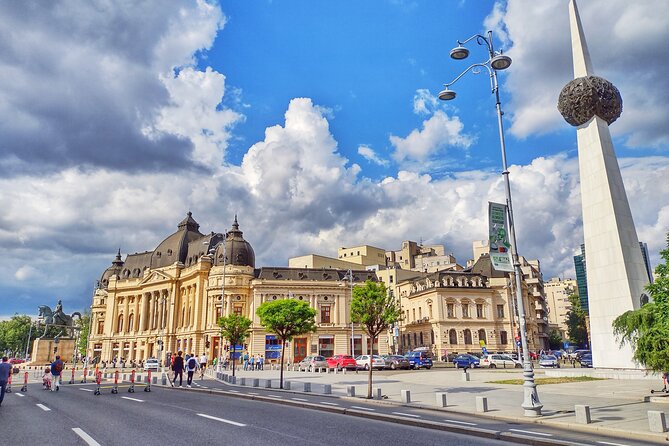
The Central University Library was designed in an eclectic style by French architect Paul Gottereau with support from King Carol I. In front of it, you can see the equestrian statue of the king.
The stop is brief, about 10 minutes, but the pairing of library and statue gives your guide a chance to explain the ambitions of the Romanian monarchy. The building is a reminder that Bucharest’s identity was shaped not only by politics, but also by education, culture, and imported architectural ideas.
The nearby Royal Palace was the winter residence of Romania’s kings. The current structure dates from 1937 and was built under the direction of Queen Maria and her son, King Carol II.
You spend about 10 minutes here as well. The palace is now connected with the National Museum of Art of Romania, but this tour does not include entry. If you want to see the interior galleries, you will need a separate visit and admission ticket.
That limitation is worth noting. The exterior gives you the royal setting, while a museum visit would provide a fuller sense of the palace’s decoration and collections. For a short orientation tour, the outside view is enough to place the monarchy within Bucharest’s story.
Old Town shifts the mood from politics to daily life
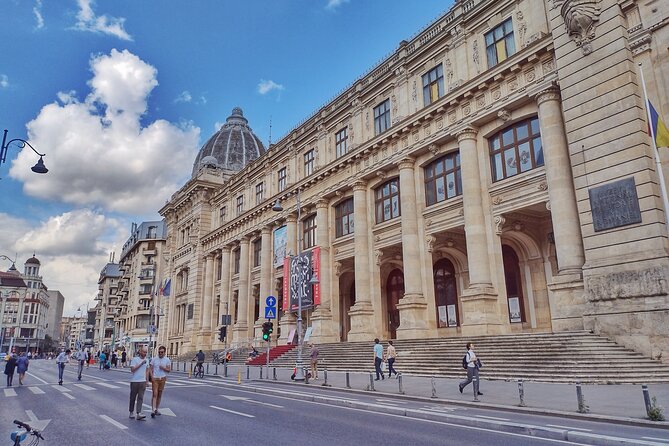
The Old Town section gives the tour a welcome change of pace. The area has cafés, pubs, restaurants, and 19th-century buildings, along with plenty of foot traffic and evening activity.
You have about 15 minutes for the walking portion, so do not expect a complete Old Town exploration. Think of it as a guided introduction, with the chance to note places you may want to revisit later.
This is where the local advice becomes especially useful. Manuela has been praised for restaurant tips, and the guides can point you toward places to eat and drink after the tour. Marius has also shared tea, coffee, and street food during a tour, though you should not treat those extras as guaranteed inclusions.
Old Town is also the section where you may want more time than the schedule allows. If cafés, bookshops, and old façades interest you, return during daylight or after the tour. The short guided visit helps you get oriented, but it is not meant to replace an evening spent exploring on your own.
Stavropoleos Monastery offers a quieter pause
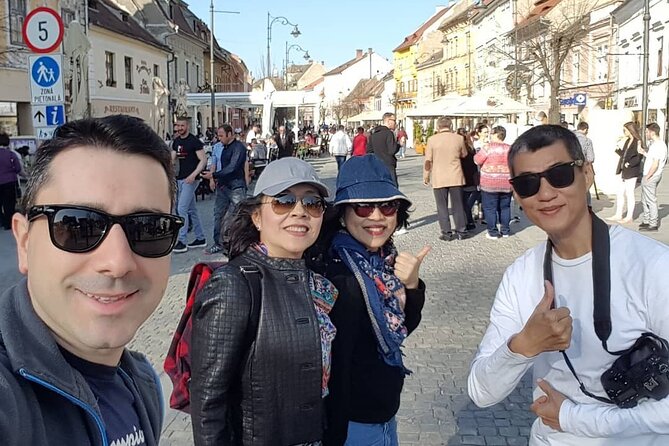
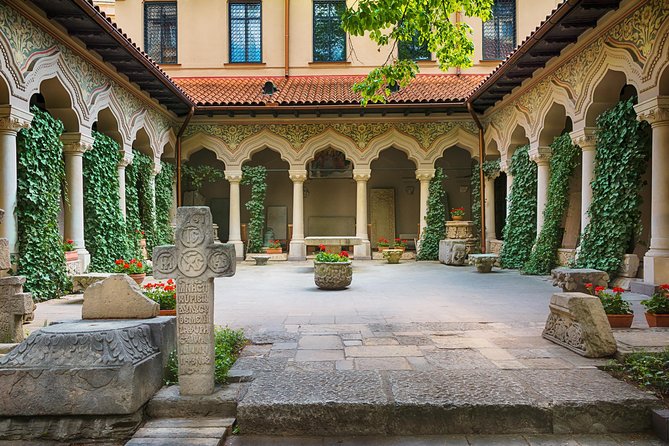
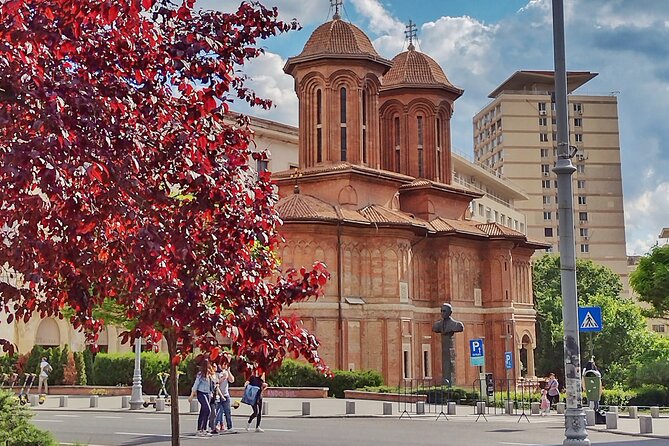
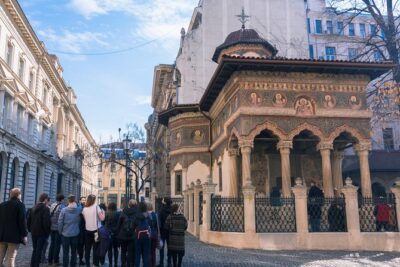
Stavropoleos Monastery is a small 18th-century church dating from 1724. It is one of the oldest churches in Bucharest and feels more intimate than the large civic buildings earlier in the route.
The stop lasts about 10 minutes. That is enough to appreciate the church’s scale and position in the middle of the Old Town, though it may feel brief if you want a longer look at the details.
I like this stop because it breaks up the political and architectural material. Bucharest is not only royal palaces and Communist monuments. Religious buildings such as Stavropoleos show another layer of the city, one tied to local tradition and older forms of worship.
The Palace of Parliament gives communism a physical scale
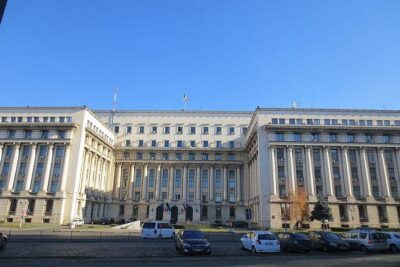
The exterior of the Palace of Parliament is the tour’s largest visual statement. Construction began in 1984, and the building is described as the heaviest in the world and the third-largest administrative building. Its volume is said to exceed that of the Great Pyramid of Giza by 2 percent, which explains why it is often described as a pharaonic project.
You do not go inside on this experience. Instead, you view the enormous structure from outside while hearing how it came to dominate the city.
The building is hard to understand from a photograph. Standing near it helps you grasp the scale, but the guide’s explanation supplies the human context. The palace represents the vast resources committed to one leader’s vision during a period when ordinary people faced shortages and restrictions.
This is another place where the guide’s personal knowledge can make the difference. A good explanation keeps the building from becoming only a large backdrop. You should come away understanding both its size and the cost of the world that produced it.
Macca-Villacrosse Passage and Lipscani bring you back to street life
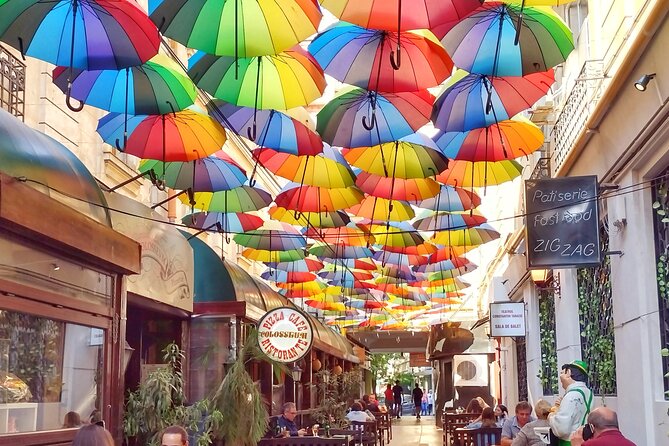
Macca-Villacrosse Passage is a short stop, about five minutes. Its glass roof and café setting make it one of the more photogenic corners of central Bucharest. Hookah cafés fill the passage, giving it a different mood from the formal avenues and government buildings.
You then walk along Lipscani, one of the Old Town’s best-known streets. The scheduled walk lasts about 10 minutes, so use it to watch the change from restored façades to cafés, shops, and evening foot traffic.
These stops are less about a single historical event and more about how Bucharest feels today. They also provide easy places to mark for a later return. If you want a meal or drink after the tour, the finish near Piața Unirii puts you close to the central Old Town area.
Cărturești Carusel adds a modern cultural stop
Cărturești Carusel is a renovated bookshop with Romanian souvenirs and gifts. The stop lasts about 10 minutes.
It is a useful inclusion because it shows a present-day Bucharest that is creative, commercial, and easy to enjoy. The shop can also help if you want a small Romanian gift without spending time searching on your own.
Do not expect a long shopping break. The tour is still moving, and the guide’s main purpose here is to show you the place and explain why it is worth knowing. You can return later if you want to browse properly.
CEC Palace and the two national museums complete the route
Palatul CEC is a five-minute exterior stop. Its 19th-century design is decorated with statues, making it one of the route’s quickest architectural photo opportunities.
The National Museum of Art of Romania is also seen from outside. As the former Royal Palace, it connects back to the royal section near the beginning of the tour. Entry is not included, so plan another visit if you want the art collections and palace interiors.
The National Museum of Romanian History occupies the former 19th-century Post Office Palace. Again, the tour only gives you an exterior look, and admission is not included.
The National Library of Romania is another brief stop, listed at about five minutes. It is an iconic palace in the Old Town area and rounds out the route with another major civic building.
By this stage, you have seen royal residences, Communist-era power, religious architecture, cultural buildings, and modern Old Town life. The stops are short, but together they give you a strong map of central Bucharest.
What $72.25 buys you
At $72.25 per person, this is not the cheapest way to walk around Bucharest. You are paying for a certified English-speaking guide, a small group capped at eight, printed presentation material, and a planned route that covers many major sights.
The price makes the most sense if you are new to the city, have limited time, or want history explained as you walk. It is less compelling if you prefer to move slowly, enter museums, or explore without a schedule.
There are no food or drinks included, and entrance fees are not included. That keeps the listed experience simple, but you should budget separately if you decide to visit the National Museum of Art, the National Museum of Romanian History, or other interiors.
A group discount is available, and the tour is often booked about a month ahead. That suggests you should reserve early if your Bucharest dates are fixed, especially if you want a particular time or a small group.
Who will get the most from this Bucharest walk
I would choose this tour for a first visit, a short stay, or an evening when you want the city explained rather than simply photographed. It suits anyone interested in the contrast between monarchy, communism, and modern urban life.
It is also a good choice if you enjoy asking questions. Guides such as Toni, Manuela, and Marius have been praised for clear English, patience, personal stories, photo help, and local food advice.
You may want a different experience if you have mobility limits or dislike walking outdoors. A moderate level of physical fitness is required, and the tour depends on good weather. Service animals are allowed, and the route is near public transportation.
The free cancellation policy allows a full refund when you cancel at least 24 hours before the start time. If bad weather or an insufficient number of bookings cancels the experience, you are offered another date or a full refund.
Should you book Footprints of Bucharest?
Book it if you want a compact, story-led introduction to Bucharest, especially one that treats the Communist period as lived experience rather than a list of political facts. The small group, evening setting, and strong local advice add real value.
Skip it if your priority is going inside buildings or spending an hour at each sight. In that case, use the route as a personal map and plan separate museum visits.
For most first-time visitors, I see this as a useful opening chapter. You get the Athenaeum, Revolution Square, royal landmarks, Old Town, Stavropoleos Monastery, and the Palace of Parliament in one evening, then finish close to places where you can continue exploring on your own.
FAQ
How long does the tour last?
The tour lasts approximately two to three hours.
Where does the tour start?
It starts at Strada Benjamin Franklin 2, București 030167, Romania.
Where does the tour end?
It ends at Piața Unirii, near Bucharest’s Old Town area.
Is the tour offered in English?
Yes. The tour is offered in English.
How many people can join the tour?
The maximum group size is eight people.
Are entrance fees included?
No. Entrance fees are not included. Most listed stops are exterior visits, and admission to museums or other interiors must be paid separately.
Are food and drinks included?
No. Food and drinks are not included, though guides may offer local suggestions and individual tours have included small treats such as tea, coffee, or street food.
Is the tour suitable for people with limited fitness?
The tour requires a moderate level of physical fitness. Service animals are allowed, and the route is near public transportation.
Can I cancel for a full refund?
Yes, if you cancel at least 24 hours before the experience start time. Cancellations made less than 24 hours before the start are not refunded. Poor weather or failure to meet the minimum number of participants may lead to a different date or a full refund.
Newest Bucharest trips we have written up
- Bucharest: Dealu Mare Winery Private Trip with Wine Tasting★ 4.9 · 6 reviews
- Winery touring & private wine tasting – one day private tour★ 5.0 · 3 reviews
- Traditions in Bucharest: Village Museum and Wine Tasting★ 5.0 · 8 reviews
- Village Museum Bucharest Guided Tour★ 5.0 · 6 reviews
- Your rendez-vous with Europe’s past: time-travel to Maramures, Transylvania★ 5.0 · 6 reviews
- Private Wine Tasting at Bucharest’s First Wine Bar★ 5.0 · 3 reviews
- Walking Tour of Bucharest City Center – Private Tour★ 5.0 · 4 reviews
- Wine tasting in Bucharest Old town – bonus cheese platter★ 4.5 · 6 reviews
Bucharest Communism and Ceausescu Tours, compared.
Bucharest Essential Tour: Old Town, Calea Victoriei & Communism
Read our review →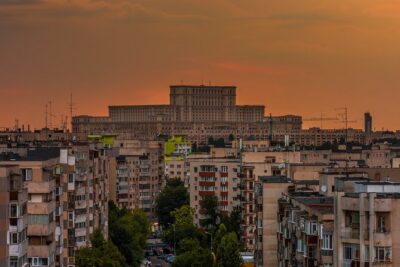
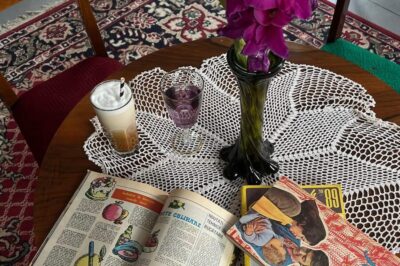

Museum of Communism Ticket with Communist Coffee
Read our review →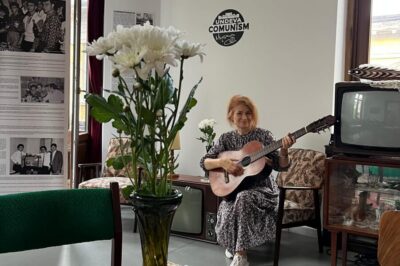
Dinner+Tour at Museum of Communism after closing
Read our review →Browse the lists this tour appears in