
Reviewed · BUCHAREST PRIVATE CAR TOURS
Private: RedPatrol Bucharest Contrasts Tour in a Vintage Car
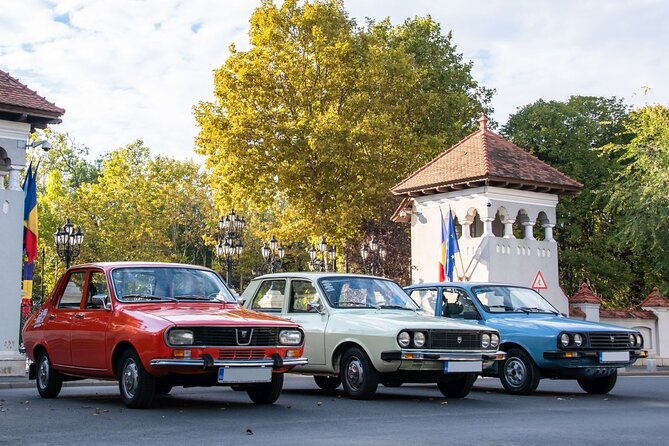
Bucharest makes the most sense when you see its sharp changes side by side. This private tour takes you from royal villas and belle époque streets to communist housing blocks, abandoned factories, and Ferentari, all from the seat of a restored Dacia 1300 or 1310.
I like the personal scale, since your own group gets the car, driver, and guide. I also like the route’s honest look at Bucharest, including places most standard city tours skip. The main drawback is comfort: these 1970s and 1980s cars have no air-conditioning, power steering, ABS, GPS, or automatic transmission.
Key points to know before booking
- See Bucharest’s sharpest contrasts: The route links royal Cotroceni, working-class Drumul Taberei, post-socialist Ferentari, and the vast rebuilding around the Palace of Parliament.
- Ride in a real Romanian classic: The restored Dacia is part of the experience, not just transport. You will not drive it.
- Travel privately: Hotel pickup and drop-off are included for addresses in Bucharest, and only your group joins the tour.
- Expect local stories, not a standard sightseeing loop: Guides such as Mihai and Ivan Crinu add context about communism, factory closures, poverty, and urban change.
- Allow half a day: The tour lasts about 3 to 4 hours, with several short stops for photos, explanations, and a market visit.
- Know the age limits: Red Patrol does not allow children under 10 or pets.
Why this Dacia tour shows you a different Bucharest
The appeal here is not a checklist of famous monuments. It is the way the route connects the city’s past to its present.
Bucharest was reshaped by monarchy, Stalinist planning, Nicolae Ceaușescu’s demolition schemes, the 1989 Revolution, and the rough economic changes of the 1990s. You see those layers in buildings and neighborhoods that sit close together but feel worlds apart.
The restored Dacia adds a useful sense of place. The model was part of everyday Romanian life during the communist period, so riding in one gives the tour a direct link to the era being discussed. It is a small car, and the ride is old-fashioned. That is part of its charm, but it also means you should not expect modern-car comfort.
This is a private activity, so the guide can focus on your questions and adjust the rhythm for your group. Hotel pickup and drop-off from Bucharest are included, which saves you from finding a meeting point across town.
More private car days around Bucharest:
- Private -RedPatrol Tour of Bucharest with a Romanian Vintage Car
★ 5.0 · 74 reviews - Transylvania: Cultural Full-Day Trip by Minivan
★ 4.8 · 57 reviews - Bucharest Jewish Heritage | Holocaust Memorial | Private Car Tour
★ 5.0 · 38 reviews
Uranus and the unfinished communist vision
The first stop is near the Romanian Academy in Uranus, an area tied to one of Bucharest’s most destructive building campaigns.
During the 1980s, Ceaușescu ordered huge sections of the city cleared for a new civic center and government district. Homes, churches, businesses, and streets disappeared. The Romanian Revolution of 1989 stopped the work before the entire plan was completed.
You will spend about 20 minutes here. The point is not simply to photograph a large building. It is to understand what was removed to make room for the state’s grand project. The contrast between the scale of the buildings and the lost neighborhood is one of the tour’s strongest historical moments.
Admission is not included, although this stop is primarily an exterior presentation. Ask your guide to explain how the demolition changed the shape of central Bucharest and how the unfinished sections fit into the wider story.
Fântână and the first royal-era neighborhoods
The short stop at Fântână introduces the bourgeois quarter that developed in the 19th century around Romania’s first Royal Palace.
This section helps balance the communist story. Before the large apartment districts and state factories, Bucharest was also a city of private villas, royal institutions, and growing commercial wealth. The presentation is brief, about 15 minutes, but it gives you a useful reference point for the more polished parts of the route.
There is no admission charge here. Expect a quick orientation rather than a long walk or museum visit. If you want more detail about the monarchy and the city’s wealthy residents, this is a good place to ask questions.
Cotroceni gardens and belle époque Bucharest
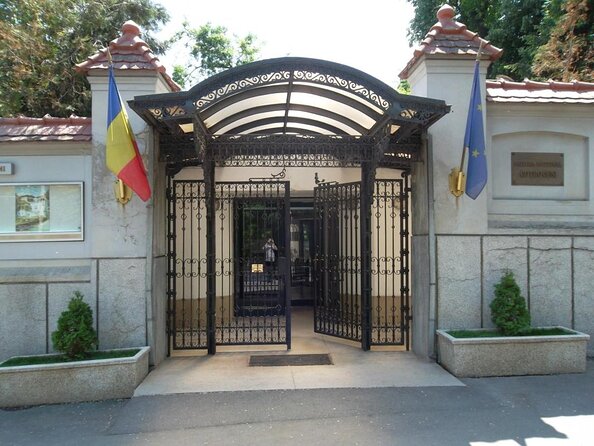
The Cotroceni Palace gardens provide a 30-minute look at the first Royal Palace of Romania and the city’s modern monarchy era.
Cotroceni is one of the tour’s more attractive changes of pace. After the heavy subject of Uranus, you see the setting associated with royal life and the belle époque period. The route uses this stop to explain how Bucharest developed a more European character in the late 19th and early 20th centuries.
Admission to the gardens is not included, so confirm with Red Patrol how the visit is handled on your date. The listed stop is a presentation rather than a guaranteed extended interior visit.
I like this part because it prevents the tour from treating Bucharest as only a communist city. The city’s older social divisions and architectural character matter just as much as the later apartment blocks.
A few more Bucharest trips worth putting side by side
- Castles of Transylvania: Private Day Trip from Bucharest
★ 4.5 · 248 reviews - Dracula’s Castle, Peles Castle and Brasov – Private Day Trip from Bucharest
★ 5.0 · 211 reviews - Best of Bucharest | Private Walking Tour
★ 5.0 · 199 reviews - Bucharest Panoramic Sightseeing – Private City Tour
★ 5.0 · 128 reviews
Drumul Taberei and the practical city of apartment blocks
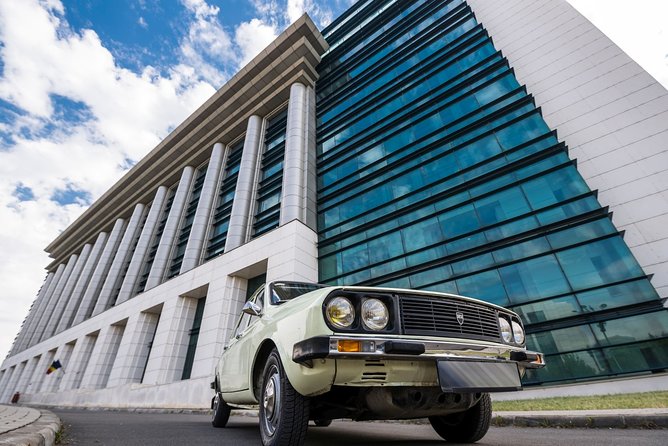
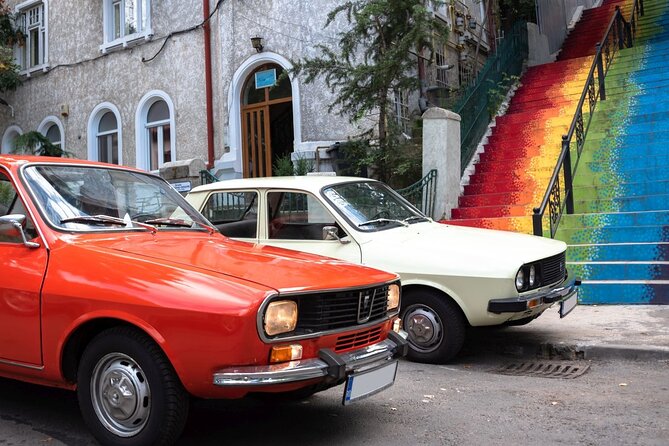
At Drumul Taberei, you see a working-class district built around communist apartment blocks. The stop lasts about 20 minutes and includes time for photos and stories.
The area also shows how old communist sites have been reused. A shopping mall was built on the ruins of a communist canteen, a clear example of how Bucharest has replaced, adapted, or covered parts of its socialist past.
This is not a polished historic quarter. The value is in seeing how ordinary people lived and how the city expanded beyond the central districts. Large blocks can look anonymous from a passing car, but a guide can explain their purpose, daily routines, and place in the old industrial economy.
You might find the stop less visually dramatic than Cotroceni or the Palace of Parliament. Its strength is social context. If you want only grand buildings, this may feel plain. If you want to understand daily Bucharest, it earns its place.
Ferentari and the difficult post-socialist story
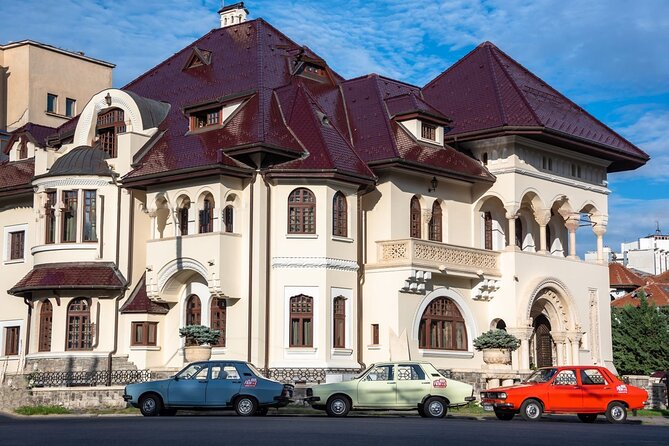
The route then heads toward Ferentari, including the former industrial area built up during the communist period and the apartment districts around Piața Rahova.
This is likely the most confronting section of the tour. Ferentari was developed as an industrial and workers’ area, then suffered badly after the collapse of state factories. In the post-socialist 1990s, the district became associated with poverty, neglected buildings, and ghetto-style housing.
The tour does not present Ferentari as a simple sightseeing backdrop. It links the visible problems to the loss of industrial jobs and the difficult transition from communism to a market economy. That connection is important. You see not only poor housing, but also the effects of factories closing and communities losing their economic base.
At Piața Rahova, you visit a peasant market and spend about 30 minutes in the area. The market adds a more ordinary, human side to the stop. You might see local shopping habits, food stalls, and neighborhood life rather than another grand monument.
Because Ferentari has a troubled reputation, listen closely to the guide and follow the planned route. The purpose is to learn about the district, not to treat hardship as entertainment. This section suits adults interested in urban change and social history. It may not suit anyone looking for a light, carefree city drive.
The former Rocar factory and the ruins of socialism
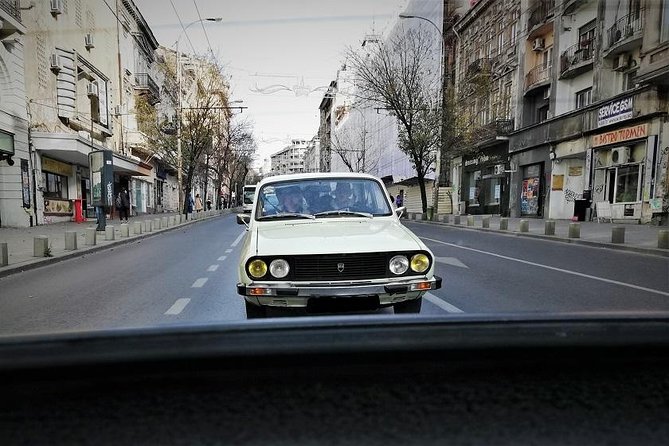
The former Rocar factory provides a 20-minute look at the abandoned industrial side of Bucharest.
Rocar was tied to the socialist factory system, when large workplaces shaped entire neighborhoods and gave people a clear place in the city’s economy. After the fall of communism, many such factories closed or declined. Their empty buildings now show the physical cost of that transition.
This stop is included in the tour price. It is brief and described as an exploration, so expect a compact visit rather than a full industrial museum. The strongest part is the story of rise and collapse: how an industrial district could once support working families, then lose its purpose when the system changed.
You will want practical shoes if you expect to walk around rough ground, though the supplied details do not specify the exact walking conditions. The Dacia keeps the group moving between these sites without turning the tour into a long walking day.
Broscuțe Park and the Stalinist years
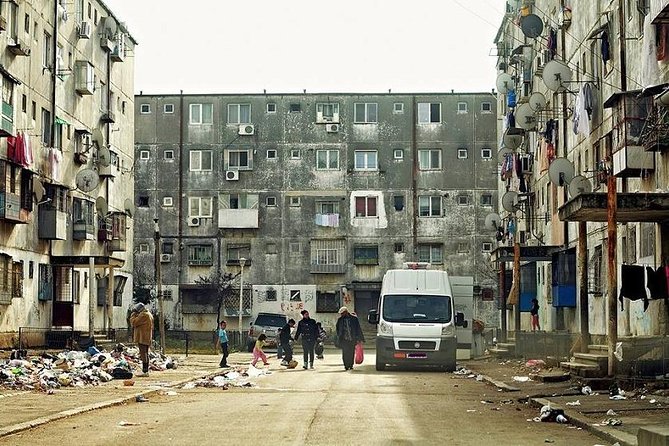
Broscuțe Park introduces the Colonel’s Quarter, described as the first neighborhood built during the Soviet occupation era.
The stop lasts about 20 minutes and focuses on daily life during the Stalinist period in Bucharest. It gives the tour another time layer. You have already seen royal development, later communist apartment planning, and post-socialist decline. Here, the guide explains the earlier Soviet-influenced years that helped shape the capital after World War II.
Admission is included. The presentation is short, but it can help you place the later districts in order. Bucharest’s communist decades were not all the same. The Stalinist period, the later industrial expansion, and Ceaușescu’s rebuilding campaign each left different marks.
The Palace of Parliament and the city that vanished
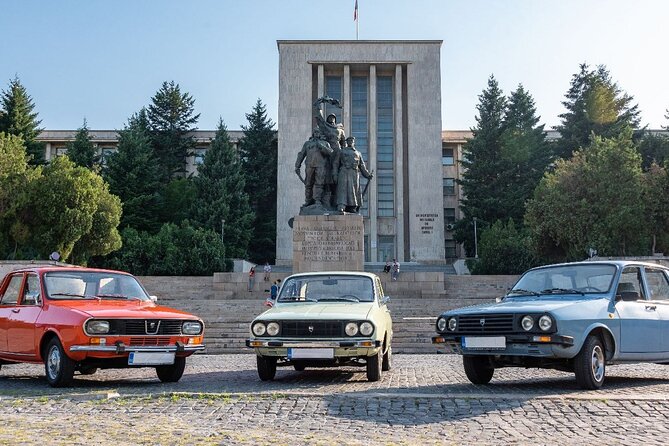
The final major stop is the Palace of Parliament, reached through the vast district rebuilt after complete demolition.
The building is often described as the world’s largest civil building, and its size is difficult to grasp from photographs alone. The more important story is the neighborhood that disappeared to create it. About 20 square kilometers were rebuilt as part of Ceaușescu’s civic center project, displacing homes, churches, and established streets.
The tour spends about 20 minutes here. Admission is not included, so this experience is best understood as an exterior explanation unless you make separate arrangements for an interior visit.
I like ending here because the Palace of Parliament brings together the tour’s main ideas: state power, forced redevelopment, urban scale, and the long shadow of dictatorship. After seeing Uranus at the start, you can better understand what this enormous complex replaced.
What the restored Dacia is really like
The Dacia is a major part of the appeal, especially if you like old cars or Romanian industrial history. The cars used by Red Patrol are fully restored classics that meet current traffic safety regulations.
Still, you should know what you are booking. The Dacia 1300 or 1310 does not have air-conditioning, ABS, GPS navigation, power steering, or an automatic gearbox. During winter, the cars are heated, but summer conditions may feel warm, especially in traffic.
You will not drive the car. A professional local guide drives and presents the tour from the front seat. Guides named in the available tour material include Mihai and Ivan Crinu, both praised for friendly, engaging presentations. The exact guide depends on availability.
Water is provided in the car, along with a small personalized gift. Food and drinks beyond the supplied water are not included, and personal shopping is your responsibility.
Is $126.43 per person a fair price?
At $126.43 per person, this is not the cheapest way to see Bucharest. The value depends on how much you want from the day.
You are paying for a 3 to 4 hour private circuit, hotel pickup and drop-off, a restored classic car, a dedicated guide and driver, water, and a route that reaches districts you would not easily connect on your own. For a private group, that can be fair, particularly if you want history explained as you go rather than simply viewed through a window.
The price is harder to justify if you mainly want central monuments or a standard introduction to Bucharest. Much of the tour focuses on neighborhoods, social change, and exterior views. It is not a substitute for a full museum visit or a formal tour inside the Palace of Parliament.
Group discounts may be available. Since the tour is often booked well ahead, around 132 days in advance on average, reserve early if you have fixed dates.
Who will get the most from this tour?
I would choose this tour if you are interested in:
- Communist-era architecture and everyday life
- The effects of factory closures after 1989
- Royal Bucharest and the city before communism
- Photography of unusual urban areas
- Old Romanian cars
- A private route with hotel pickup
- Social and economic contrasts rather than only famous sights
It is especially useful early in a Bucharest stay because it gives you a framework for the city. Afterward, central streets, apartment districts, churches, and government buildings make more sense.
You may want a different activity if you dislike older cars, need air-conditioning, want extensive walking, or prefer a polished monument tour. Children under 10 and pets cannot join, and the listing says most people can participate without giving more specific accessibility details.
Booking, cancellation, and practical details
Pickup is offered from all addresses in Bucharest, with drop-off included as well. Confirmation arrives at booking, and the activity is offered in English.
Free cancellation is available up to 24 hours before the start time for a full refund. Cancellations or changes made less than 24 hours before departure are not accepted for a refund, and the cut-off uses local Bucharest time.
Bring water beyond the bottle provided if needed, dress for the season, and remember that the car has no air-conditioning. Keep your schedule flexible after the tour if you want to add a museum or interior visit, since the stops here focus mainly on presentations and exterior exploration.
Should you book the Bucharest Contrasts Tour?
Book it if you want Bucharest explained through its neighborhoods, not just its postcard sights. The restored Dacia is fun, but the stronger reason to go is the route from royal Cotroceni through communist housing, abandoned industry, Ferentari, and the Palace of Parliament.
For the best fit, think of this as a history and city-life tour with a classic car attached. At $126.43 per person, it makes the most sense for couples, families with older children, or small private groups who value a guide’s interpretation and convenient pickup.
Skip it if modern comfort is essential or if you want a formal indoor tour of the capital’s main buildings. For everyone else, this is a thoughtful way to see how Bucharest’s political changes remain visible in its streets, factories, markets, and homes.
FAQ
How long does the Bucharest Contrasts Tour last?
The tour lasts approximately 3 to 4 hours.
Is hotel pickup included?
Yes. Pickup and drop-off are included from all addresses in Bucharest.
Is the tour private?
Yes. Only your group participates in the activity.
What kind of car is used?
Red Patrol uses restored Dacia 1300 and Dacia 1310 cars from the 1970s and 1980s.
Will I drive the Dacia?
No. A professional local guide also serves as the driver, and you will not drive the car.
Does the car have air-conditioning?
No. The Dacia cars do not include air-conditioning, ABS, GPS navigation, power steering, or automatic transmission. The cars are heated during winter.
Are children and pets allowed?
Children under 10 and pets are not allowed on the tour.
Can I cancel for a full refund?
Yes, if you cancel at least 24 hours before the experience start time. Cancellations or changes made less than 24 hours before the start time are not eligible for a refund.
Newest Bucharest trips we have written up
- Bucharest: Dealu Mare Winery Private Trip with Wine Tasting★ 4.9 · 6 reviews
- Winery touring & private wine tasting – one day private tour★ 5.0 · 3 reviews
- Traditions in Bucharest: Village Museum and Wine Tasting★ 5.0 · 8 reviews
- Your rendez-vous with Europe’s past: time-travel to Maramures, Transylvania★ 5.0 · 6 reviews
- Village Museum Bucharest Guided Tour★ 5.0 · 6 reviews
- Private Wine Tasting at Bucharest’s First Wine Bar★ 5.0 · 3 reviews
- Walking Tour of Bucharest City Center – Private Tour★ 5.0 · 4 reviews
- Wine tasting in Bucharest Old town – bonus cheese platter★ 4.5 · 6 reviews
Bucharest Private Car Tours, compared.

Private -RedPatrol Tour of Bucharest with a Romanian Vintage Car
Read our review →
Bucharest Jewish Heritage | Holocaust Memorial | Private Car Tour
Read our review →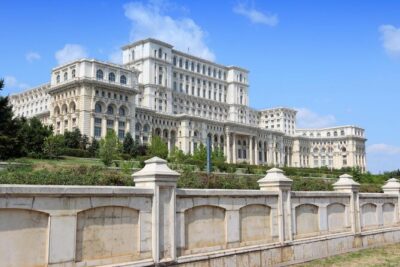
Private – Romanian Vintage Car Driving Tour of Bucharest 120 min
Read our review →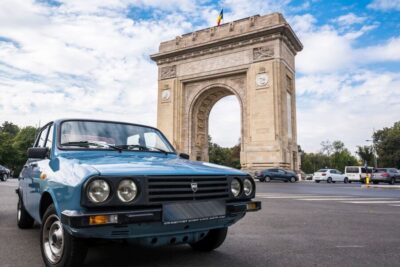
Private Communist Tour in a Romanian Vintage Car
Read our review →
Bucharest Luxury Airport Transfer with Minivan and Business Cars
Read our review →
5h Bucharest City Tour by Car/Minivan – Small Group max 7 people
Read our review →
Minivan 8 Places : Dracula Castle, Peles, & Brasov Day Tour
Read our review →Browse the lists this tour appears in