
Reviewed · BUCHAREST PRIVATE CAR TOURS
Private – Romanian Vintage Car Driving Tour of Bucharest 120 min
A restored Dacia 1300 or 1310 gives this Bucharest tour its point. You are not simply riding between monuments. You are moving through the city in the car that shaped everyday life in communist Romania, while a local guide explains what those decades felt like beyond dates and political slogans. I especially like the personal, social angle and the chance to drive the car yourself if you bring a valid EU or international license.
I also like the small scale. With up to three people per car, you can ask questions without shouting across a bus. The stops at Revolution Square, Constitution Square, Cotroceni, and the Triumph Arch cover major sights in a short time. The trade-off is the car itself: these Dacias have no air conditioning, ABS, GPS, power steering, or automatic transmission, so this is a characterful old-car ride, not a modern comfort tour.
Key points to know before booking
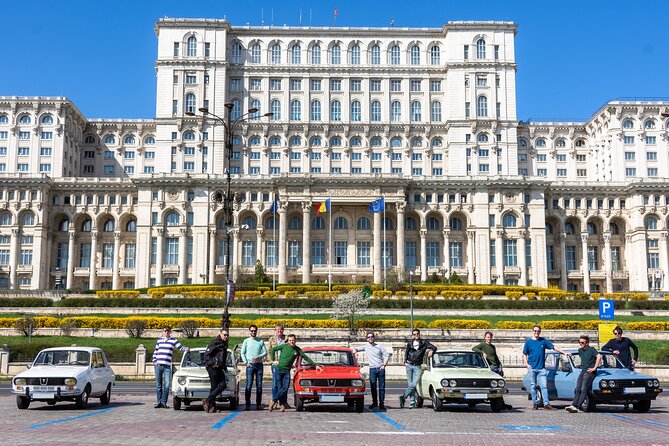
- The Dacia is part of the lesson: The 1970s and 1980s car helps explain daily life in communist Romania.
- Serban is a featured guide: He is known for clear social stories, useful local context, and a relaxed manner.
- Three people fit in each car: Larger groups travel in a convoy of two or three restored vehicles.
- You may drive: A valid EU or international driving license is required.
- The route covers major Bucharest sights: Expect Revolution Square, Cotroceni, the Palace of Parliament, Constitution Square, the Triumph Arch, and a panoramic ride.
- The tour lasts about two hours: It is a good first look at the city, but not a substitute for a full museum or walking tour.
Why an old Dacia changes the Bucharest story
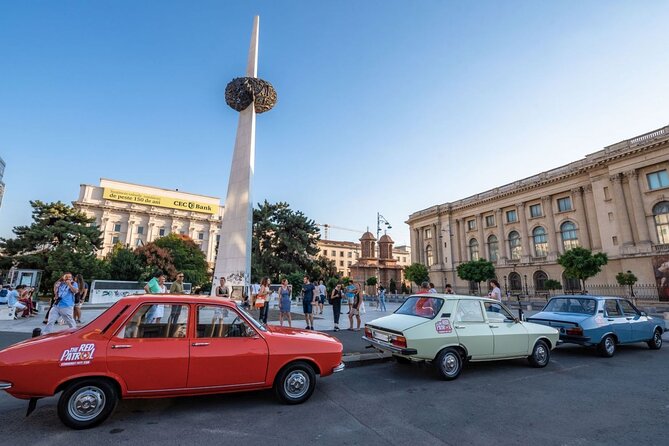
Bucharest can be hard to read at first. Grand nineteenth-century buildings, broad communist-era avenues, royal connections, and modern traffic all sit close together. A standard sightseeing ride can show you the buildings, but the Dacia adds a useful layer: it puts you inside an object that belonged to ordinary Romanian life.
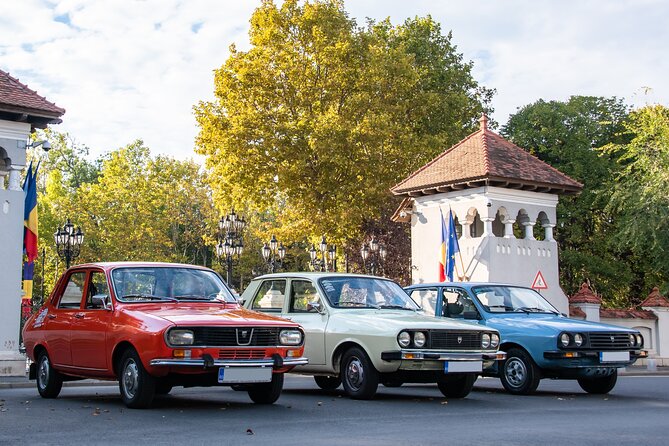
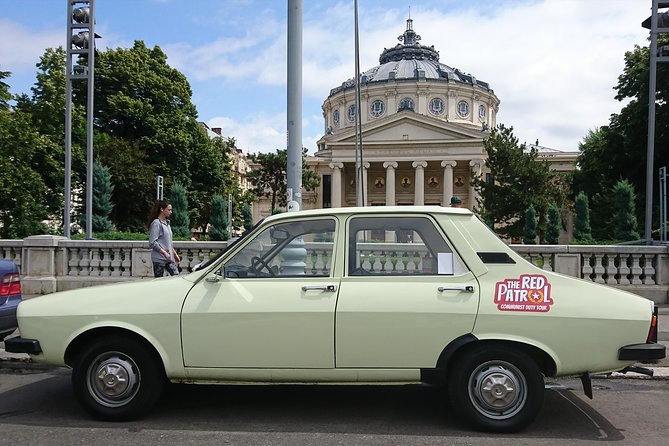
The Dacia 1300 and 1310 were common cars during the 1970s and 1980s. Here, the vehicle is not just transport. It becomes a talking point about work, family life, shortages, mobility, and the social rules of the communist period. That focus gives the tour a different flavor from a basic monument circuit.
The cars used by Red Patrol are fully restored classics that meet current traffic safety regulations. They remain old-fashioned in operation, though. You will not find air conditioning, ABS, GPS navigation, power steering, or an automatic gearbox. If you like vintage machinery, those limits are part of the fun. If you need quiet, climate control, and easy handling, think carefully before booking.
The cars are heated in winter, which matters on a chilly morning. In warm weather, you should expect a less controlled ride because there is no air conditioning. The tour is not offered to children under 10 or to pets, so check that point before you pay.
More private car days around Bucharest:
- Private -RedPatrol Tour of Bucharest with a Romanian Vintage Car
★ 5.0 · 74 reviews - Transylvania: Cultural Full-Day Trip by Minivan
★ 4.8 · 57 reviews - Bucharest Jewish Heritage | Holocaust Memorial | Private Car Tour
★ 5.0 · 38 reviews
Revolution Square starts the story
The meeting point is Revolution Square, Piața Revoluției. This is a sensible place to begin because the square connects Bucharest’s royal, communist, and revolutionary past.
The first 20 minutes are used for the meet and greet, the car presentation, and an introduction to the route. Give yourself time to look at the Dacia before setting off. Its condition is part of the experience, and the guide uses the car to set up the larger story of the city.
This is also where you can clarify how the driving will work. The guide is the driver, but you can drive the Dacia yourself if you present a valid EU or international driving license. Ask at the start so the plan is clear for everyone in your group.
The small-car format works well here. One car holds three people, allowing the guide to talk naturally and answer questions. A group of 18 can still take the tour, but it will travel as a convoy of two or three cars. That makes the outing social and memorable, though it may feel less intimate than a private ride for two or three.
Cotroceni adds royal and residential context
The stop at Fântână takes you into the Cotroceni quarter, an area that began growing around the Royal Palace. The stop lasts about 10 minutes and helps you see Bucharest beyond its central monuments.
Cotroceni is useful because it provides a different setting from the huge avenues and state buildings associated with communist Bucharest. The guide can connect the neighborhood’s royal beginnings with the city’s later political changes. You get a glimpse of how Bucharest developed in layers, rather than as one single architectural style.
Do not expect a long neighborhood walk here. The scheduled stop is short, and admission to buildings is not included. Treat it as a visual pause and a piece of the wider city story, not as a full visit to a palace or museum.
Constitution Square faces the Palace of Parliament
The next major stop is Constitution Square, where the guide presents the story of the Palace of Parliament. You get about 15 minutes here, with the focus on Romania in the 1970s and 1980s.
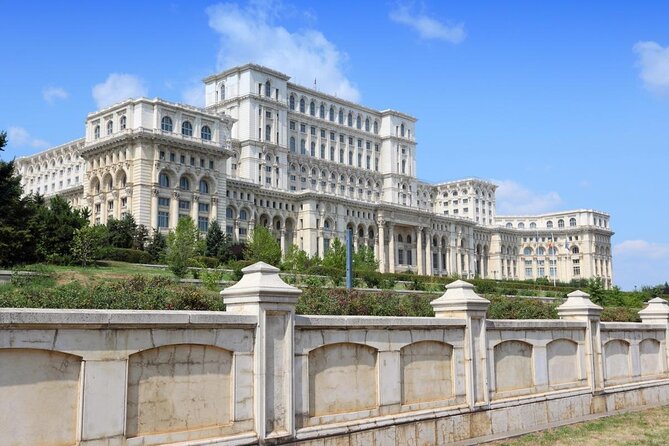
This is likely the strongest history stop on the route. The Palace of Parliament is an enormous symbol of Nicolae Ceaușescu’s rule and of the scale of communist redevelopment in Bucharest. From outside, the building can feel abstract. The guide’s social stories help connect its size and setting to the lives of people who experienced that period.
That human angle is what makes this tour useful. You are not only told when buildings were created. You hear about the atmosphere of the era and the way Romanians lived through it. Serban, one of the named guides, is praised for explaining communist-era stories in a relaxed, clear way and for answering questions without rushing.
Admission fees for buildings are not included. This tour is built around the exterior stops and the drive, so plan a separate visit if you want to go inside the Palace of Parliament. The two-hour route cannot cover every interior attraction in Bucharest.
A few more Bucharest trips worth putting side by side
- Castles of Transylvania: Private Day Trip from Bucharest
★ 4.5 · 248 reviews - Dracula’s Castle, Peles Castle and Brasov – Private Day Trip from Bucharest
★ 5.0 · 211 reviews - Best of Bucharest | Private Walking Tour
★ 5.0 · 199 reviews - Bucharest Panoramic Sightseeing – Private City Tour
★ 5.0 · 128 reviews
The Triumph Arch gives you a clean photo stop
The Triumph Arch, or Arcul de Triumf, is the next planned stop. The visit lasts about 10 minutes and includes time for photographs and a presentation.
The arch is one of Bucharest’s best-known landmarks, and the stop breaks up the ride with a chance to get out and take pictures. The presentation also gives you another way to view the city’s national story, alongside the royal setting of Cotroceni and the communist-era focus at Constitution Square.
Ten minutes is enough for photos and a short explanation, but not a detailed architectural visit. If you want a slow look or an interior visit, this tour will leave you wanting more time. That is normal for a compact city circuit. The value here is in seeing several parts of Bucharest in one connected route.
The final panoramic ride keeps the tour moving
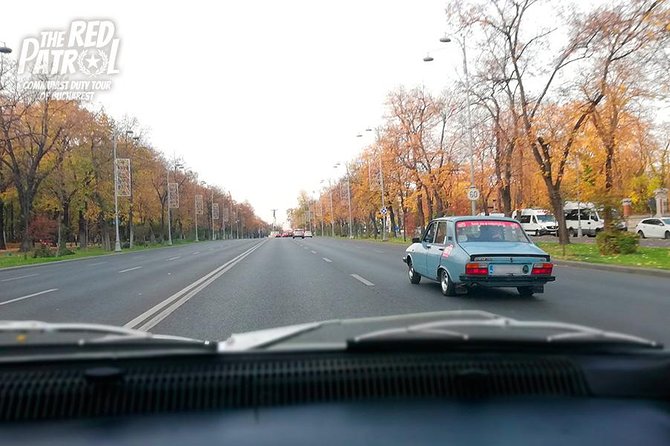
After the formal stops, the route includes a panoramic ride along a famous promenade area associated with Bucharest in the 1940s. The supplied schedule does not name the promenade, so you should think of this section as a scenic drive rather than a stop with a long guided visit.
This part matters because Bucharest is best understood while moving through it. You see how streets, neighborhoods, grand avenues, and landmark buildings relate to each other. The Dacia also makes the ride feel less passive. You are aware of the engine, the older controls, and the pace of a car from another period.
The tour ends back at Revolution Square. Some past arrangements have included a drop-off near Căruța cu Bere, but the stated end point is the original meeting point, so do not count on a different drop-off unless you confirm it in advance.
What the two-hour timing really gives you

The tour is advertised at about 120 minutes. The listed stops account for roughly 55 minutes, leaving the rest for driving, the panoramic section, traffic, introductions, and transitions between sites.
That is a useful length for a first orientation. You can fit it into a morning or afternoon and still have time for a museum, meal, or independent walk. It also works well after arriving in Bucharest, when you want an overview before choosing which areas deserve more time.
The limit is depth. You will not have long at each landmark, and you will not cover every major Bucharest sight. I would use this as an introduction, especially if the communist period is new to you, then return on foot to the places that catch your interest.
The guides can adapt to questions, and the experience is private for your group. That matters more than it may sound. A fixed two-hour route can feel rushed in a large coach, while a small car lets you ask about a building, neighborhood, or social custom as it comes up.
The driving experience, including its rough edges
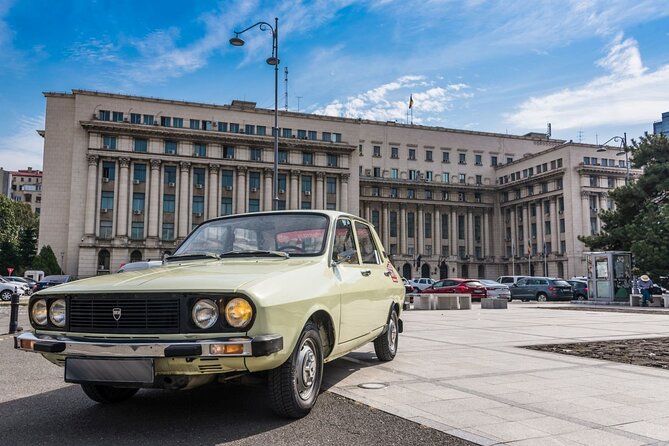
The Dacia is a 1970s or 1980s classic, not a replica built to modern touring standards. It has a manual gearbox and lacks automatic convenience features. You should be comfortable with an older car before choosing the self-drive option.
The cars are restored and meet current traffic safety regulations, but restoration does not turn them into modern vehicles. There is no air conditioning, ABS, GPS navigation, or power steering. The lack of air conditioning is the main seasonal issue, while the manual controls and older steering are the main practical considerations for anyone driving.
In winter, the cars are heated. That makes the experience possible on cold days and gives the Dacia an appealing role as a warm refuge between stops. In summer, dress for a car without climate control and keep your expectations realistic.
The self-drive option is a major reason to book this rather than a standard city tour. You get a direct feel for the car and a better sense of why it has such a strong place in Romanian memory. You must present a valid EU or international driving license, and you should confirm the driving arrangement at the beginning.
Price, group size, and overall value
The listed price is $115.59 per person. That is not a bargain sightseeing ride, but the price needs to be judged against what you receive: a private activity, a restored classic car, a local guide and driver, a tailored small-group format, and the option to drive.
For a couple or a small group that values a distinctive experience, the cost can make sense. You are paying for the car, the guide’s interpretation, and the private setup, not simply for transportation to four landmarks. It is especially good value if this will be your main introduction to communist-era Bucharest.
Larger groups may get better practical value from the convoy arrangement. Three people ride in each car, and groups above that size are divided among two or three cars. The cars travel together, so the group can share the outing, though conversation with one guide will naturally be more limited than in a car with two people.
Admission fees to buildings are not included. Since the tour does not promise interior visits, this is unlikely to be a major problem, but budget separately if you plan to enter any landmark afterward.
Who will enjoy this most
I would choose this tour if you want Bucharest explained through everyday life, not just grand buildings. It suits couples, small groups of friends, and families with children aged 10 or older. It also works well for visitors who already took a regular city tour and want a more social, personal look at the recent past.
The tour is particularly strong for anyone interested in cars, Cold War Europe, architecture, or local stories. It is also a good choice for a celebration outing. The car gives a group something to talk about, and the convoy format can work for a larger party.
I would hesitate if you want a long walking tour, museum entry, a fully air-conditioned vehicle, or a broad survey of all Bucharest history. The focus leans toward the communist period and social life, with selected architectural and royal context.
The experience is offered in English. The guides are described as speaking good English, and Serban is specifically noted for his clear explanations and relaxed style. Confirmation is provided at booking, and free cancellation is available up to 24 hours before the start time. Changes or cancellations made inside that window are not refunded.
Should you book the Red Patrol Dacia tour?
Book it if you want to understand Bucharest from inside an object that ordinary Romanians knew well. The restored Dacia, the personal stories, and the small-group format give the route a clear identity. You will see major sights, but the real subject is how the city and its people lived through the twentieth century.
Skip it if your priority is interior access, modern vehicle comfort, or a long and detailed visit at each landmark. For everyone else, especially first-time visitors who want a short, unusual, and informed introduction, this is one of the more memorable ways to get your bearings in Bucharest.
FAQ
Where does the Romanian vintage car tour start?
The tour starts at Revolution Square, Piața Revoluției, in Bucharest.
Where does the tour end?
The activity ends back at the meeting point at Revolution Square.
How long does the tour last?
The tour lasts approximately two hours, or 120 minutes.
How many people can ride in one car?
The tour allows up to three people per car. Groups larger than three travel in a convoy of two or three cars.
Can I drive the Dacia myself?
Yes. You can drive the Dacia if you present a valid EU or international driving license.
What type of car is used?
The cars are restored Dacia 1300 or 1310 models from the 1970s and 1980s. They do not have air conditioning, ABS, GPS navigation, power steering, or automatic transmission.
Are admission fees included?
No. Admission fees for buildings at the landmarks are not included.
Newest Bucharest trips we have written up
- Bucharest: Dealu Mare Winery Private Trip with Wine Tasting★ 4.9 · 6 reviews
- Winery touring & private wine tasting – one day private tour★ 5.0 · 3 reviews
- Traditions in Bucharest: Village Museum and Wine Tasting★ 5.0 · 8 reviews
- Your rendez-vous with Europe’s past: time-travel to Maramures, Transylvania★ 5.0 · 6 reviews
- Village Museum Bucharest Guided Tour★ 5.0 · 6 reviews
- Private Wine Tasting at Bucharest’s First Wine Bar★ 5.0 · 3 reviews
- Walking Tour of Bucharest City Center – Private Tour★ 5.0 · 4 reviews
- Wine tasting in Bucharest Old town – bonus cheese platter★ 4.5 · 6 reviews
Bucharest Private Car Tours, compared.
Private -RedPatrol Tour of Bucharest with a Romanian Vintage Car
Read our review →
Bucharest Jewish Heritage | Holocaust Memorial | Private Car Tour
Read our review →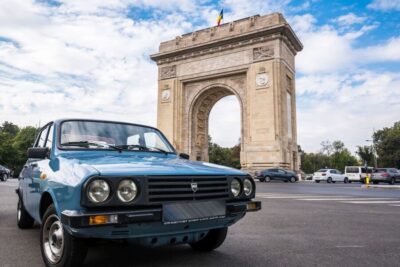
Private Communist Tour in a Romanian Vintage Car
Read our review →
Bucharest Luxury Airport Transfer with Minivan and Business Cars
Read our review →
5h Bucharest City Tour by Car/Minivan – Small Group max 7 people
Read our review →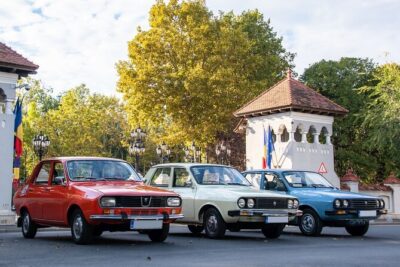
Private: RedPatrol Bucharest Contrasts Tour in a Vintage Car
Read our review →
Minivan 8 Places : Dracula Castle, Peles, & Brasov Day Tour
Read our review →Browse the lists this tour appears in