
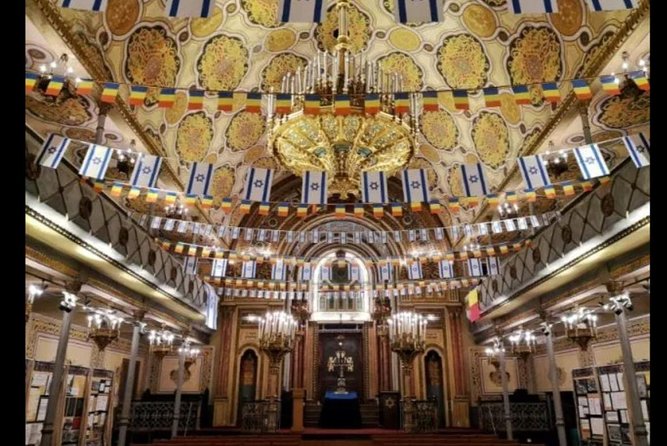
Reviewed · JEWISH HERITAGE TOURS IN BUCHAREST
4h Jewish Legacy in Bucharest – Private Tour by Car and Walking
Bucharest’s Jewish story is best understood through the buildings that survived, the buildings that no longer serve their original purpose, and the memorials that force Romania to face its wartime past. This private tour links those places by car and on foot, with the Choral Temple, Jewish Community Museum, Holocaust Memorial, and Jewish State Theatre forming the core of the morning.
I like the private transportation, since Bucharest’s Jewish sites are spread out and the car saves you from piecing together several short taxi rides. I also like the chance to meet Jewish guides or curators at the temple and museum, rather than hearing every detail only from the driver.
The main caution is simple: access is not guaranteed at every stop. Religious holidays, synagogue schedules, and theatre rehearsals can change the day, and the three admission fees are extra.
Key points to know before booking
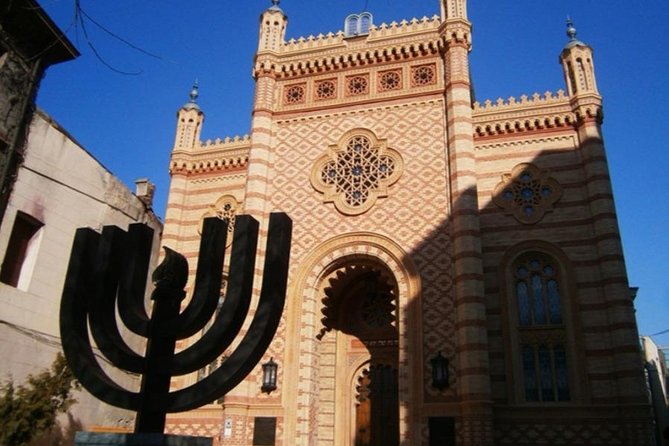
- The Choral Temple is still active: Daily services continue in its smaller hall, making this more than a preserved monument.
- Radu and Sebastian are named guides: Past tour experiences specifically praise both guides for their English, local knowledge, and personal connection to Bucharest.
- The Holocaust Memorial adds necessary context: The tour addresses Romania’s role in the murder of Europe’s Jews with unusual directness.
- You visit four major sites in about four hours: The private car keeps the schedule practical, but each stop is planned around roughly one hour.
- Admission costs about 85 RON extra: The Choral Temple, museum, and Jewish State Theatre each charge separately.
- Opening hours can shape the experience: The Jewish Theatre may be unavailable during rehearsals, and the Mamular Synagogue does not open every day.
Why this tour matters in Bucharest
Bucharest is often introduced through grand avenues, Orthodox churches, Belle Époque buildings, and the heavy mark of the communist era. Its Jewish past is easier to miss. This tour corrects that gap by taking you into the former Jewish quarter and to the institutions that preserve what remains.
The experience is not just a sequence of religious buildings. You see a working synagogue, a former synagogue now used as a museum, a Holocaust memorial, and a theatre tied to Jewish and Yiddish culture. Together, these stops show community life, worship, persecution, remembrance, and cultural survival.
That range is the tour’s greatest strength. You are not asked to view Jewish history as something sealed in the past. At the Choral Temple, religious life continues. At the museum, objects and documents preserve earlier generations. At the theatre, Jewish culture remains part of Bucharest’s public life.
The private format also matters. Your guide can explain what you are looking at, answer questions, and adjust the pace for your group. Radu is a retired chemical engineer who has spent much of his life in Bucharest, and Sebastian is also specifically praised for making visitors feel welcome while sharing the story of his hometown. Guide assignment is not guaranteed, but the named guides give you a useful sense of the experience’s personal character.
More Jewish Heritage Tours in Bucharest
- Bucharest Jewish Heritage | Holocaust Memorial | Private Car Tour
★ 5.0 · 38 reviews - Half-Day Jewish Heritage Walking Tour in Bucharest
★ 5.0 · 20 reviews - The Jewish heritage of Bucharest – half day walking tour
★ 5.0 · 15 reviews
The Choral Temple and Bucharest’s living Jewish community
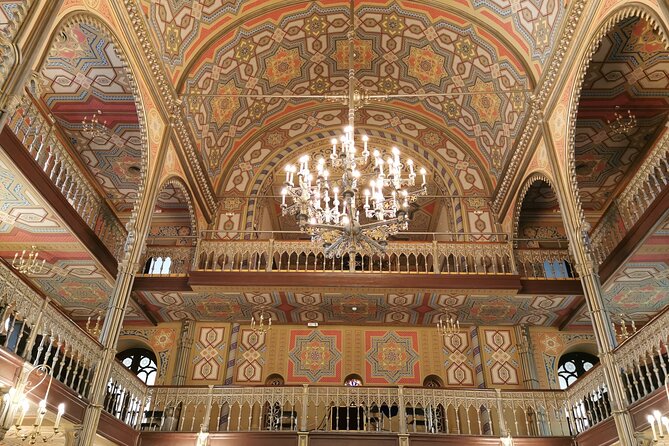
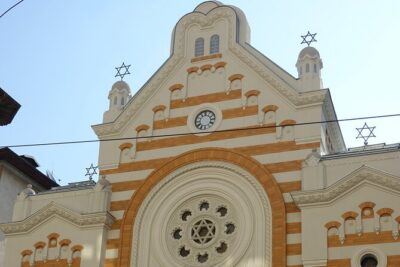
The Choral Temple is usually the emotional center of the morning. Its design was based on Vienna’s Leopoldstadt-Tempelgasse Great Synagogue, giving the building an ornate Central European character that may surprise you in Bucharest.
The synagogue suffered severe damage from Romania’s far-right Legionaries and the Nazis. It was restored after the Second World War, in 1945, and remains one of the few active synagogues in Bucharest and Romania.
That distinction is important. You are not looking at a building that has been converted into a shell or museum. Daily religious services still take place in the smaller hall. If your visit coincides with a service or another religious event, the atmosphere may feel especially immediate, though the schedule is not something the tour can fully control.
Plan on about an hour here. The admission fee is listed at 30 RON, or about €6, and it is not included in the tour price. Dress and behavior should suit an active place of worship. Your guide can help you understand what is appropriate on the day.
One past visit coincided with a Torah procession, an unscheduled moment that made the synagogue feel like a living institution rather than a historical exhibit. You should not book expecting that exact event, but it shows why timing and local conditions can shape this tour.
The Holy Union Temple and Jewish Community Museum
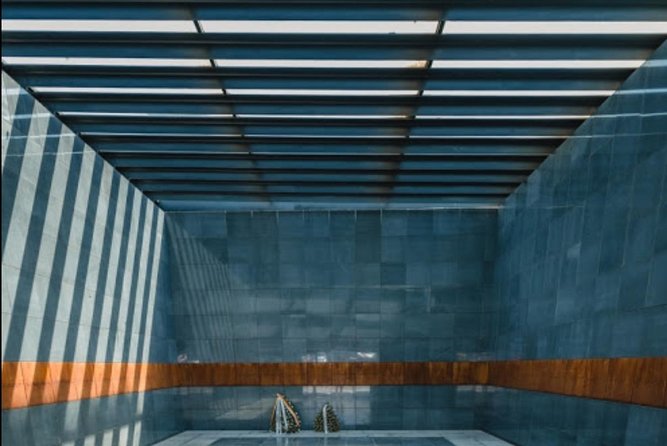
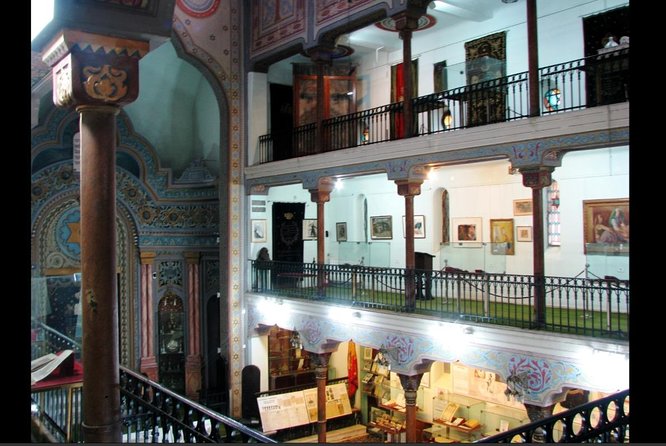
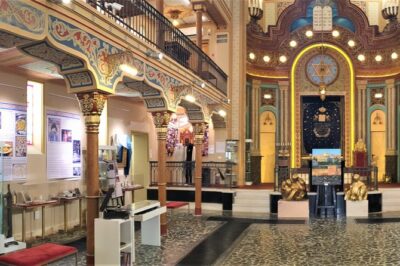
The Jewish Community Museum occupies the former Holy Union Temple, built in 1836. The building has served as a museum of Jewish history since 1978, and it gives you the most concentrated look at how Jewish life in Bucharest developed over time.
The exhibitions cover the daily life of a community that was once far larger and more active than the present one. The museum also holds an important collection of Jewish religious objects. Much of it was assembled by Moses Rosen, who served as Romania’s chief rabbi from 1964 to 1994 and founded the museum.
This is where a good guide makes a real difference. Objects in a display case can be interesting but hard to place. An English-speaking guide can connect them to worship, family life, community institutions, and the changing political conditions of Romania.
You should allow about an hour. Entry costs 30 RON, about €6, and is paid separately. The museum is a strong reason to choose a guided visit instead of simply passing through the old Jewish quarter by car. You see the setting, but you also learn why these objects mattered.
The museum stop also balances the Choral Temple. The temple shows Jewish practice continuing today. The museum shows the scale and texture of the community that came before, with religious pieces and exhibitions that help you picture a fuller social world.
The Holocaust Memorial and Romania’s difficult record
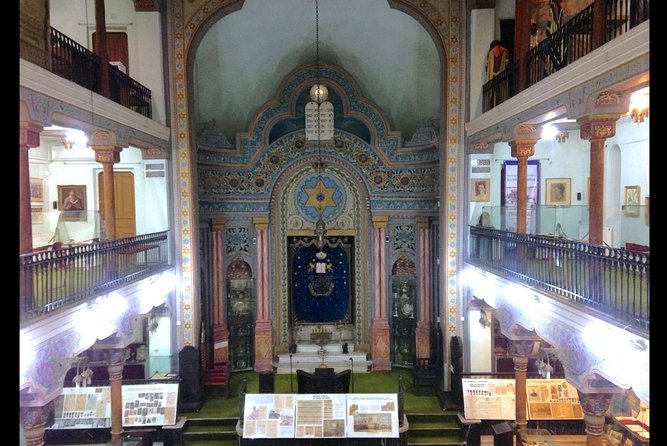
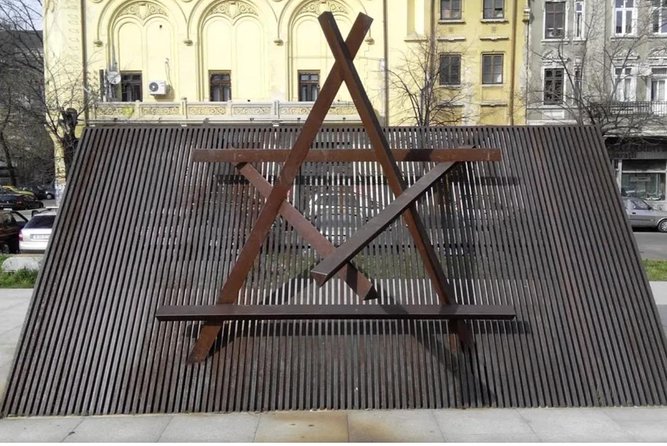
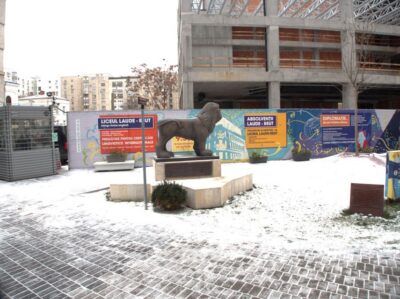
The Holocaust Memorial, unveiled in October 2009, gives the tour its most serious pause. It was created to recognise Romania’s role in the genocide of Europe’s Jews, a subject long treated with evasions and omissions in public memory.
The Wiesel Report, commissioned by the Romanian government, concluded that no country outside Germany was responsible for the deaths of more Jews than Romania. That fact gives the memorial more weight than a brief photo stop. It asks you to place Romanian Jewish history within the wider machinery of wartime persecution and murder.
The memorial includes a column marked on each side with a single Hebrew letter. Together, the letters spell zachor, meaning remember. There is also a hall of remembrance and plaques listing the names of many Romanian Holocaust victims.
Unlike the other main stops, admission is free. You will likely spend about an hour here, though the emotional pace may be slower than the clock suggests. The memorial is not designed as light sightseeing, and a guide who speaks plainly about Romania’s responsibility is valuable.
One particularly strong account of this tour praised the guide for discussing that responsibility directly. That tone suits the site. You do not need a softened version of the past, and the tour does not appear to offer one.
More Bucharest walking tours:
- Bucharest: City Highlights Guided Walking Tour
★ 4.9 · 1,482 reviews - Bucharest Highlights Walking Tour
★ 5.0 · 469 reviews - Bucharest: Ghost Stories & Romanian Mythology Walking Tour
★ 4.9 · 287 reviews - Bucharest: Guided Walking Tour with Romanian Snack
★ 4.9 · 228 reviews
The Jewish State Theatre and Yiddish culture
The Jewish State Theatre, or Teatrul Evreiesc de Stat, adds a cultural dimension to the tour. It is described as an edifice of Hebrew culture, and the theatre is also associated with performances in Yiddish. One particularly memorable visit included time with Marcel, who explained the theatre’s role and its unusual place in Jewish cultural life.
This stop may appeal most to visitors interested in language, theatre, and living culture rather than architecture alone. It shows that Jewish heritage in Bucharest is not limited to old synagogues and memorials.
Entry is listed at 25 RON, about €5, and is not included. The theatre can be visited only when there are no rehearsals, so you should treat this as a planned possibility rather than an absolute promise. Some people find the theatre less compelling than the synagogues or museum, while others value the chance to hear about its Yiddish tradition from someone connected with the institution.
If the building is closed, your guide may need to adjust the visit or explain it from outside. That is one reason to ask about the day’s access when you book or confirm the pickup.
Seeing the former Jewish quarter by private car
The car is not just a comfort feature. It helps connect sites that are not arranged in one compact pedestrian route. You can ride between stops in a climate-controlled vehicle while your guide explains Bucharest, the city’s Jewish population, and the streets you are passing.
Some previous itineraries included a drive through the old Jewish area and lunch at an Israeli-style restaurant. Lunch is not listed as an included part of the tour, so treat that as a possible addition rather than part of the fixed four-hour program.
The private format gives you more room to ask questions than a large coach tour would. You can ask about Romanian Jewish life before the Second World War, the postwar period, the current community, or the way the city has changed around these buildings.
It also makes the tour manageable for visitors who do not want to navigate unfamiliar streets and public transport between several stops. Most people can participate, and the tour is near public transportation, but the included car remains the easier choice for a tightly timed morning.
What $130.97 buys you
At $130.97 per person, this is not a budget sightseeing tour. The price includes an English-speaking professional guide and private transportation, but not the three principal entrance fees.
The extra admission comes to 85 RON in total:
- Choral Temple: 30 RON
- Jewish Community Museum: 30 RON
- Jewish State Theatre: 25 RON
The Holocaust Memorial is free. The final amount in euros can shift with exchange rates, but the listed fees total about €17.
For a solo visitor or couple, the cost buys convenience and personal attention. You avoid arranging transport between scattered sites, and you have a guide dedicated only to your group. For a family or small party, group discounts may improve the value.
The price is harder to justify if several sites are closed. One past visit found only one of three synagogues open because of a religious holiday, and the guide compensated by driving around and explaining what could not be seen. The operator offered a partial refund in that situation. Still, you should understand the risk before paying for a private tour built around buildings with variable access.
I would ask about synagogue openings, the museum schedule, and theatre rehearsals before committing. That one message could tell you whether the morning will include full interiors or more exterior explanation and driving.
Timing, pickup, and the shape of the morning
The advertised start time is 10:00 a.m., with hotel pickup and drop-off offered. The tour lasts about four hours. Since the itinerary gives roughly one hour to each of four stops, driving time and schedule changes are built into the approximation.
Hotel pickup is a practical advantage in Bucharest, especially if you are staying outside the old center. You should provide the correct hotel details and be ready at the stated time. Confirmation is provided when you book.
The tour is private, so only your group participates. That makes it easier to ask sensitive questions and spend longer at a meaningful stop, though the total length remains about four hours unless an adjustment is agreed.
Book at least 24 hours ahead. A same-day reservation made at 7:30 a.m. for a 10:00 a.m. departure once could not be operated because no guide was available. Free cancellation is allowed up to 24 hours before the start time, but cancellations or changes inside that window are not accepted.
Who will get the most from this experience
I would choose this tour if Jewish history is central to your Bucharest visit or if you want a serious introduction to the city beyond its standard sights. It is also a good fit for visitors who prefer a private guide and car over independent research and complicated local transport.
You do not need to be Jewish to find value here. The tour explains how Bucharest changed before, during, and after the Second World War, and it gives you a clearer view of Romania’s responsibility during the Holocaust.
It may be less suitable if you need guaranteed access to every interior. The Mamular Synagogue is not open every day, and the Jewish Theatre may be unavailable during rehearsals. The tour also asks you to spend time with difficult history, so it is not a light morning of decorative architecture.
The strongest part of the experience is the guide. Radu’s long connection to Bucharest and Sebastian’s warm, welcoming approach can turn a series of stops into a connected story. Ask questions, especially about the current Jewish community and what has changed since the buildings were first used.
Should you book the Jewish Legacy in Bucharest tour?
Book it if you value context, personal guiding, and a frank account of Jewish life and the Holocaust in Romania. The Choral Temple, Holy Union Temple Museum, Holocaust Memorial, and Jewish State Theatre give you four different views of the subject, and the private car makes the route practical.
Before booking, confirm which synagogues are open and ask whether the Jewish Theatre can be visited that day. If access is good, $130.97 per person plus admission is a fair price for private transport and a dedicated English-speaking guide. If a religious holiday or rehearsal closes several stops, the value drops sharply.
For the best chance of a full morning, avoid last-minute booking and allow the tour to be a serious historical experience, not just a collection of photo stops.
FAQ
How long does the Jewish Legacy in Bucharest tour last?
The tour lasts approximately four hours.
What time does the tour start?
The stated start time is 10:00 a.m.
Is hotel pickup and drop-off available?
Yes. Convenient pickup and drop-off at your hotel are offered.
Is transportation included?
Yes. Private transportation in a climate-controlled vehicle is included, along with an English-speaking professional guide.
Are entrance fees included in the tour price?
No. The Choral Temple costs 30 RON, the Jewish Community Museum costs 30 RON, and the Jewish State Theatre costs 25 RON. The Holocaust Memorial is free.
Can the Jewish State Theatre always be visited?
No. The theatre can be visited only when there are no rehearsals.
What happens if I need to cancel?
You can cancel for a full refund up to 24 hours before the experience starts. Cancellations or changes made less than 24 hours before the start time are not accepted.
Newest Bucharest trips we have written up
- Bucharest: Dealu Mare Winery Private Trip with Wine Tasting★ 4.9 · 6 reviews
- Winery touring & private wine tasting – one day private tour★ 5.0 · 3 reviews
- Traditions in Bucharest: Village Museum and Wine Tasting★ 5.0 · 8 reviews
- Your rendez-vous with Europe’s past: time-travel to Maramures, Transylvania★ 5.0 · 6 reviews
- Village Museum Bucharest Guided Tour★ 5.0 · 6 reviews
- Private Wine Tasting at Bucharest’s First Wine Bar★ 5.0 · 3 reviews
- Walking Tour of Bucharest City Center – Private Tour★ 5.0 · 4 reviews
- Wine tasting in Bucharest Old town – bonus cheese platter★ 4.5 · 6 reviews
Jewish Heritage Tours in Bucharest, compared.
Bucharest Jewish Heritage | Holocaust Memorial | Private Car Tour
Read our review →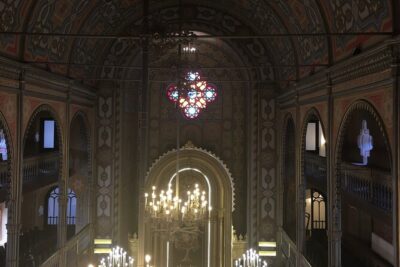
Browse the lists this tour appears in