
Reviewed · JEWISH HERITAGE TOURS IN BUCHAREST
Half-Day Jewish Heritage Walking Tour in Bucharest
Bucharest’s Jewish story is best understood on foot, where synagogues, memorials, and surviving community buildings sit within the city’s older streets. This private tour visits the Great Synagogue, the Choral Temple, and the Jewish Museum, using historical photos on an iPad to connect today’s buildings with their earlier lives.
I like the private format, since your guide can follow your questions instead of rushing a fixed group along. I also like the personal touch reported with guides such as Laura, Jacky, and Loan, especially Laura’s ability to connect Jewish life with Bucharest under Communism and after 1989. The main drawback is the confusing admission information: the tour price is $318.06 per group, but an additional $25 per person may be due for synagogues and museums, so confirm the exact total before booking.
Key points to know before you book
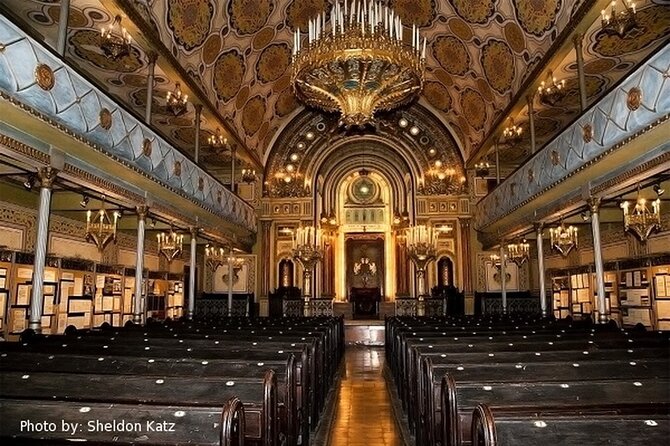
- The Great Synagogue opens the story with survival: Built in 1845 by the Polish-Jewish community, it was later damaged by the Iron Guard and restored after the Second World War.
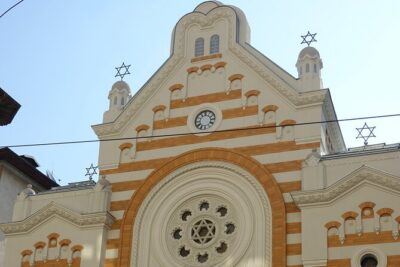
- The Choral Temple brings striking architecture: Its design closely follows Vienna’s Leopoldstadt-Tempelgasse Great Synagogue.
- The Jewish Museum occupies a former synagogue: The Templul Unirea Sfântă survived the Second World War and now presents the history of Romania’s Jewish community.
- Your guide works only with your group: The private setup suits families, couples, and small groups who want time for questions.
- Historical photographs add useful context: Images shown on a tablet help you compare past and present Bucharest.
- The tour is a morning walk: It begins at 9:30 a.m. near Starbucks on Strada Franceză and returns there after roughly 3 to 4 hours.
Why Bucharest’s Jewish story deserves a morning
Bucharest can feel like a city of grand avenues, battered façades, cafés, and changing neighborhoods. Its Jewish past is easier to miss than its better-known royal or Communist-era landmarks. That is precisely why this tour can be worthwhile. It gives you a clear thread to follow through the city rather than leaving you to piece together isolated buildings on your own.
The focus is not only on religious architecture. You also learn about the communities that built these places, the damage caused by far-right Legionnaires, the impact of the Second World War, and the later life of Jewish culture in Romania. The tour also reaches into the present, with time for questions about Jewish life today.
I would choose this experience if you want more than a quick photograph outside a synagogue. The guide-led format matters here because the buildings carry layers of meaning that are not always obvious from the street. A historical photograph on a tablet can show you how a façade, street, or interior changed over time, making the past easier to picture.
The tour is conducted in English and is private for your group of up to eight people. That is a good size for conversation. You can ask why a building was designed in a certain way, what happened to its congregation, or how Bucharest changed under Communism without having to wait for a large group to catch up.
More Jewish Heritage Tours in Bucharest
- Bucharest Jewish Heritage | Holocaust Memorial | Private Car Tour
★ 5.0 · 38 reviews - 4h Jewish Legacy in Bucharest – Private Tour by Car and Walking
★ 4.5 · 17 reviews - The Jewish heritage of Bucharest – half day walking tour
★ 5.0 · 15 reviews
Starting at Strada Franceză at 9:30 a.m.
The meeting point is Starbucks at Strada Franceză 62, in the 030106 area of Bucharest. The activity begins at 9:30 a.m. and ends back at the same meeting point.
This location is near public transportation, which makes the start practical if you are staying elsewhere in the city. Private hotel pickup is not included, so plan your route before the morning begins. The tour is entirely on foot, and the stated duration is approximately three to four hours. Wear shoes you can walk in comfortably and allow enough time for synagogue and museum visits.
Starting in the morning is useful in Bucharest. You get the history portion finished before the hottest part of the day in warm weather, and you still have an afternoon free for the Old Town, museums, or a second neighborhood walk. The tour requires good weather, so keep some flexibility in your plans if rain is likely.
The Great Synagogue and a difficult chapter
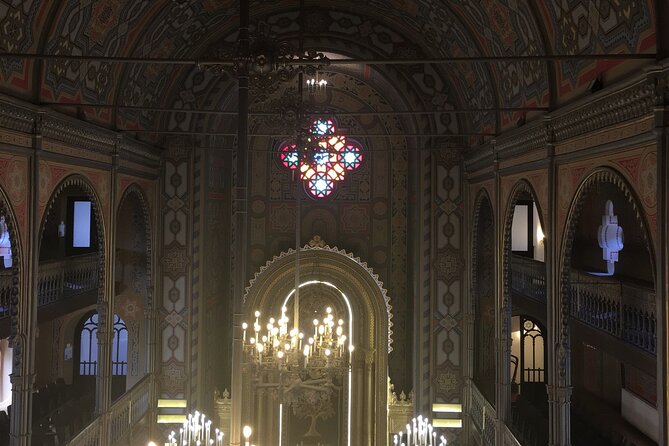
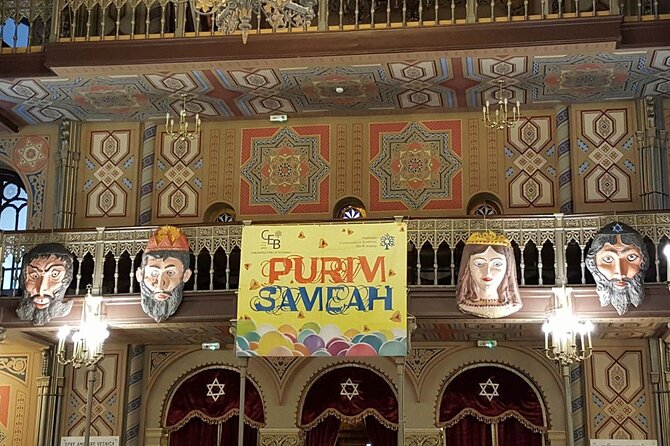
The Great Synagogue is the first major stop. It was built in 1845 by Bucharest’s Polish-Jewish community, then repaired in 1865 and redesigned in 1903 and 1909. In 1936, Ghershon Horowitz repainted the interior in a Rococo style.
Those dates help you see the building as a living place rather than a single moment in time. Its appearance changed as the community changed, and later restoration became necessary after severe damage by the far-right Legionnaires, also known as the Iron Guard movement. The synagogue was restored again in 1945.
You have about 20 minutes here. That is not a long visit, but the guide’s explanation gives the stop weight. I would pay close attention to the photographs shown on the iPad, since they can make the damage, repairs, and changing appearance easier to understand.
This stop may be emotionally demanding. The tour deals directly with persecution and loss, but it does not treat the subject as a distant museum display. If you prefer only light sightseeing, this may feel heavy. If you want an honest account of Bucharest’s Jewish past, the Great Synagogue provides an important beginning.
The admission details need checking. The stop is described as including an admission ticket in the itinerary, while the general information says synagogue and museum admission is not included and lists a $25 per-person fee. Ask the provider what that $25 covers and whether it is paid separately on the day.
The Choral Temple and its Vienna connection
The Choral Temple, known in Romanian as Templul Coral, is the second major stop and receives about 30 minutes. Designed by Enderle and Freiwald, it was built between 1864 and 1866.
Its design closely copies Vienna’s Leopoldstadt-Tempelgasse Great Synagogue, built between 1855 and 1858. That connection gives the building more than visual interest. It places Bucharest’s Jewish community within the wider Jewish and architectural life of nineteenth-century Central Europe.
A guide is especially useful here because architectural details can otherwise pass you by. You can ask how the Bucharest temple relates to its Viennese model and how the building fits into the city’s Jewish story. The private format leaves room for those questions, which is one of the strongest reasons to pay for this type of tour rather than simply walking past on your own.
The 30-minute visit is the longest of the three named stops. That suggests time to look carefully, listen, and take in the design without turning the stop into a rushed photo call. Dress respectfully for synagogue visits and follow any instructions given at the site.
The tour also mentions the Jewish state theater among possible sites connected with the experience. One account describes a visit to the Yiddish theater as especially meaningful, but the supplied itinerary lists the three main stops above. If the theater is important to you, ask in advance if it is part of your date’s route and whether its admission is covered.
More Bucharest walking tours:
- Bucharest: City Highlights Guided Walking Tour
★ 4.9 · 1,482 reviews - Bucharest Highlights Walking Tour
★ 5.0 · 469 reviews - Bucharest: Ghost Stories & Romanian Mythology Walking Tour
★ 4.9 · 287 reviews - Bucharest: Guided Walking Tour with Romanian Snack
★ 4.9 · 228 reviews
The Jewish Museum in a surviving synagogue
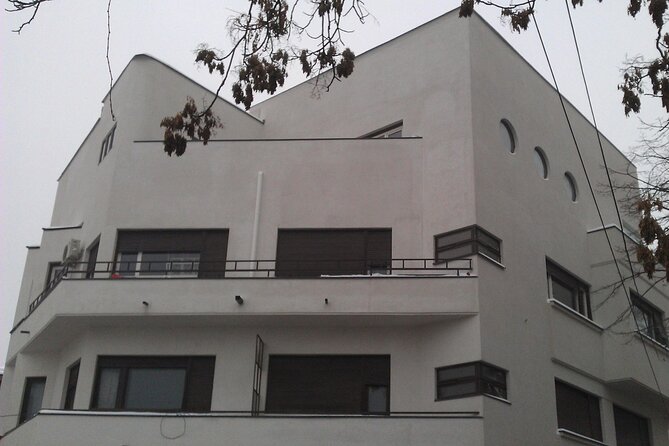
The Jewish Museum occupies the former Templul Unirea Sfântă synagogue. This building survived the Second World War and now houses the Museum of the History of the Romanian Jewish Community, also called the Jewish Museum in Bucharest.
You spend about 20 minutes here. The museum gives the walking tour a more organized historical setting after the synagogue visits. Instead of looking only at buildings, you can place them within the broader experience of Romania’s Jewish community.
For me, this is where the tablet photographs and the guide’s narration can work together best. You see a real place, then connect it with images and explanation. The result is more useful than a list of dates because the buildings become part of a continuing story.
The short time allotted means you should not expect to see every object or read every display in detail. Think of this as a focused introduction rather than a full museum visit. If the subject captures your interest, you may want to return independently with more time.
What the private guide adds

The strongest feature of this experience is not simply the route. It is the person leading it.
Jacky is praised for creating a well-organized tour with a good balance of culture and history. Loan is described as able to discuss Jewish life in Bucharest across the past, present, and future, including a particularly moving connection with the Yiddish theater. Laura is praised for her clear explanations, patience, and personal connection to people involved in preserving Jewish traditions.
Laura also brings wider Bucharest context into the walk. Her stories include growing up under Communism and seeing the transition to the present day. That kind of background can help you understand why a building or neighborhood looks the way it does today, even when the main subject is Jewish heritage.
Guide assignments can vary, so you should not assume you will receive a particular person. Still, the names give you a useful sense of the guiding style available: historical preparation, personal stories, openness to questions, and an ability to adjust the route for a small group.
Because only your group participates, you can ask for clarification without worrying about holding up strangers. A family may want simpler explanations for younger members. A student or history-minded visitor may want more detail about architecture, wartime persecution, or life under Communism. The private format can handle both better than a large scheduled walk.
Price, admissions, and what you actually receive
The listed cost is $318.06 per group of up to eight people. At the maximum group size, that works out to about $39.76 per person before any separate admission costs. For two people, the per-person cost is much higher, so the value improves as your group grows.
You are paying for a private English-language guide, a fully narrated walking tour, historical photographs shown on a tablet, and recommendations for the rest of your stay in Bucharest. There is no private transportation or hotel pickup.
The possible extra charge is important. The information for the experience says admission to all synagogues and museums costs $25 per person, while individual itinerary entries say admission is included. Since those statements conflict, I would not book without confirming the current arrangement. If the $25 fee is extra, a full group of eight could pay $200 in admissions on top of the $318.06 tour price.
At the full group size, that would be about $64.76 per person in total. That can still be reasonable for a private, three-to-four-hour cultural walk, especially if you value direct access to a guide and are splitting the cost among several people. For one or two people, compare the total with your interest level and budget.
The experience also includes recommendations for your stay. That can be useful on a first visit, though the value depends on how much time you spend asking for advice. I would arrive with a short list of questions about Bucharest so you can make the most of the private conversation.
Who will get the most from this walk?
This tour suits you if Jewish heritage is a main reason for visiting Bucharest, or if you want a more serious historical layer beneath the city’s familiar Old Town sights. It also works well for families and small groups who prefer their own guide.
You do not need to be an expert. The tour is designed to explain the buildings and their context, and the historical photographs should help make the material accessible. Most people can participate, and the activity is near public transportation.
It may not suit you if you want a relaxed café stroll with only a few historical comments. The subject includes persecution, wartime destruction, and the loss and survival of communities. Expect a thoughtful morning rather than a light sightseeing loop.
You should also be comfortable walking for up to four hours, with visits inside religious and museum buildings. Since the activity depends on good weather, keep a little room in your schedule for a change of date if conditions are poor.
Booking details and cancellation
Confirmation is normally sent when you book. If you reserve within one day of the tour, confirmation is sent as soon as possible, subject to availability.
You can cancel for a full refund up to 24 hours before the local start time. Cancellations or changes made less than 24 hours before the experience are not refunded or accepted. If bad weather causes the provider to cancel, you are offered another date or a full refund.
The experience is frequently reserved well ahead of time, with an average booking lead time of 65 days. That does not guarantee a sellout on your dates, but it is a good reason to reserve early if you are visiting during a fixed itinerary.
Should you book the Jewish Heritage Walking Tour?
Book it if you want a focused, private introduction to Bucharest’s Jewish community, especially if you are traveling with four to eight people and can share the group price. The Great Synagogue, Choral Temple, and Jewish Museum form a logical route, while the tablet photographs and strong guide personalities add context that you would miss on a self-guided walk.
Before paying, confirm the admission fee and ask whether the Jewish state theater is included on your date. If that detail is clear and the subject matters to you, this is a thoughtful use of a morning in Bucharest.
FAQ
How long does the Jewish Heritage Walking Tour last?
The tour lasts approximately three to four hours.
Where does the tour begin?
It begins at Starbucks, Strada Franceză 62, Bucharest, Romania.
What time does the tour start?
The start time is 9:30 a.m.
Where does the tour finish?
The activity ends back at the meeting point.
Is this a private tour?
Yes. Only your group participates, with a maximum group size of eight people.
Is the tour offered in English?
Yes. The tour is offered in English.
Is transportation from my hotel included?
No. Private transportation and hotel pickup are not included in the price.
Can I cancel for a full refund?
Yes. You can cancel at least 24 hours before the local start time for a full refund. If poor weather causes the provider to cancel, you are offered a different date or a full refund.
More history-led tours in Bucharest
- Bucharest: 3-Hour Dark History Tour with a Local
★ 4.9 · 301 reviews - Bucharest: Small Group History, Art & Secrets Tour
★ 4.7 · 152 reviews - Guided Walking Tour of Historical Bucharest
★ 5.0 · 84 reviews - Private Bucharest: History & Food with Traditional Meal
★ 5.0 · 34 reviews
Newest Bucharest trips we have written up
- Bucharest: Dealu Mare Winery Private Trip with Wine Tasting★ 4.9 · 6 reviews
- Winery touring & private wine tasting – one day private tour★ 5.0 · 3 reviews
- Traditions in Bucharest: Village Museum and Wine Tasting★ 5.0 · 8 reviews
- Your rendez-vous with Europe’s past: time-travel to Maramures, Transylvania★ 5.0 · 6 reviews
- Village Museum Bucharest Guided Tour★ 5.0 · 6 reviews
- Private Wine Tasting at Bucharest’s First Wine Bar★ 5.0 · 3 reviews
- Walking Tour of Bucharest City Center – Private Tour★ 5.0 · 4 reviews
- Wine tasting in Bucharest Old town – bonus cheese platter★ 4.5 · 6 reviews
Jewish Heritage Tours in Bucharest, compared.
Bucharest Jewish Heritage | Holocaust Memorial | Private Car Tour
Read our review →
4h Jewish Legacy in Bucharest – Private Tour by Car and Walking
Read our review →
Browse the lists this tour appears in