
Reviewed · BUCHAREST PRIVATE CAR TOURS
Bucharest: Private Three Neighborhoods Tour by Vintage Car
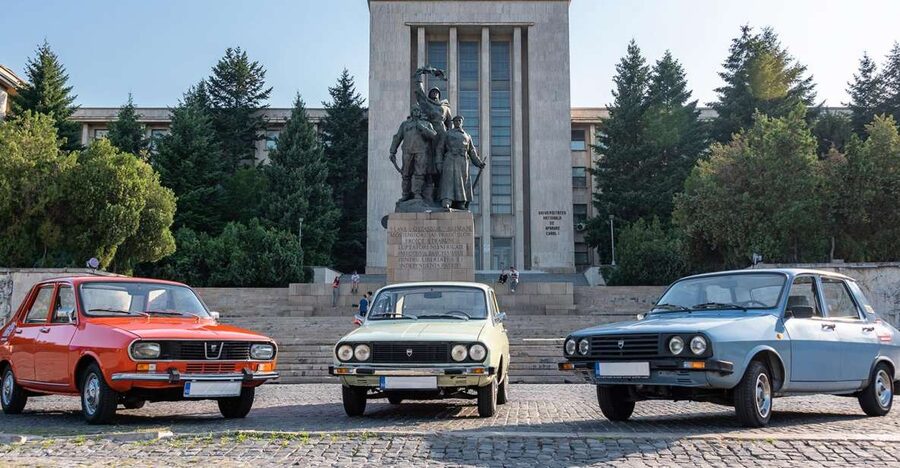
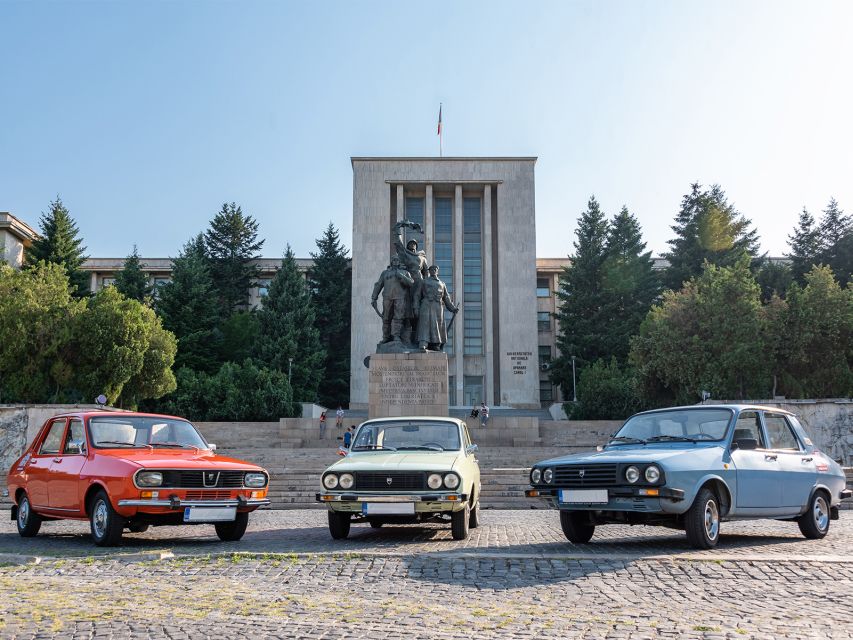
Bucharest looks different from the back seat of a restored Dacia 1310, Romania’s once-everywhere family car. This private ride links three very different neighborhoods: grand Cotroceni, working-class Drumul Taberei, and poor Ferentari. It is less a standard monument tour than a moving lesson in how Romanians live.
I like the way the tour adds social context to the usual palace-and-parliament circuit. I also like the small group setup, with up to three people in one car, hotel pickup, photo stops, water, and a souvenir included. The main catch is the car itself: there is no air-conditioning, ABS, GPS, power steering, or automatic gearbox, and the ride is not suitable for children under 10 or people with mobility limits.
- A restored Dacia 1310: Ride in an iconic Romanian car from the 1970s and 1980s, rather than a regular tour vehicle.
- Three sharply different neighborhoods: Compare bourgeois Cotroceni, everyday Drumul Taberei, and impoverished Ferentari.
- A social history focus: Learn about housing, markets, churches, poverty, and daily life, not only famous buildings.
- Private transport for up to three people: Your guide drives, so you can focus on the views and conversation.
- Hotel pickup and return in Bucharest: The tour lasts about three and a half hours and includes water and a souvenir.
- A well-liked guide experience: Mihai is praised for friendly guiding, strong local knowledge, and safe driving.
What This Dacia Ride Actually Shows You
Many Bucharest tours focus on grand avenues, royal buildings, communist monuments, and the Palace of the Parliament. This one uses those sights as a frame for a more personal question: how did different Romanians live, and how do they live now?
The route moves through neighborhoods associated with different income groups. Cotroceni brings villas, institutions, and the presidential palace. Drumul Taberei shows large communist apartment blocks, a peasant market, and Orthodox churches. Ferentari presents a far harder side of the city, with poverty and ghetto-style buildings.
That contrast is the reason to book. You are not simply collecting photos of attractive façades. You are seeing how Bucharest changes from street to street, and your guide explains the human side of those changes.
The Dacia adds character. It is a genuine vintage car, not a modern vehicle dressed up for tourists. You cannot drive it yourself, and you should not expect a smooth luxury ride. The car has the equipment of its era, including manual transmission and no air-conditioning. In winter, it is heated, but in warmer weather you should be ready for a less controlled cabin.
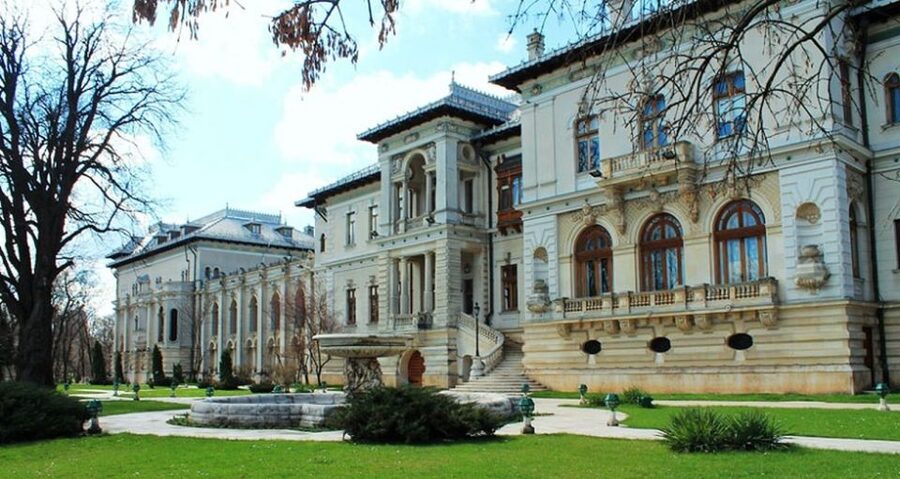
Starting at Bragadiru Palace
The tour begins with pickup in Bucharest and heads to Bragadiru Palace for about 30 minutes of sightseeing, guiding, and photographs. This gives you an early taste of the city’s grander architectural side before the route turns toward residential Bucharest.
The stop is useful because it sets up the social contrasts that follow. You begin with an impressive historic building, then move into neighborhoods where the focus is not one famous façade but the daily setting around it.
Expect the guide to pause here and tell stories rather than rush you through a checklist. Since this is a private tour, you have a better chance to ask questions or spend a little longer taking photos if the timing allows.
More private car days around Bucharest:
- Private -RedPatrol Tour of Bucharest with a Romanian Vintage Car
★ 5.0 · 74 reviews - Transylvania: Cultural Full-Day Trip by Minivan
★ 4.8 · 57 reviews - Bucharest Jewish Heritage | Holocaust Memorial | Private Car Tour
★ 5.0 · 38 reviews
Costache Negri Fountain and Cotroceni Palace
The next break is at the Costache Negri Fountain, with around 20 minutes for photographs and explanation. Short stops like this matter on a neighborhood tour because they break up the time in the car and give you a chance to look closely at the city rather than view it only through the windows.
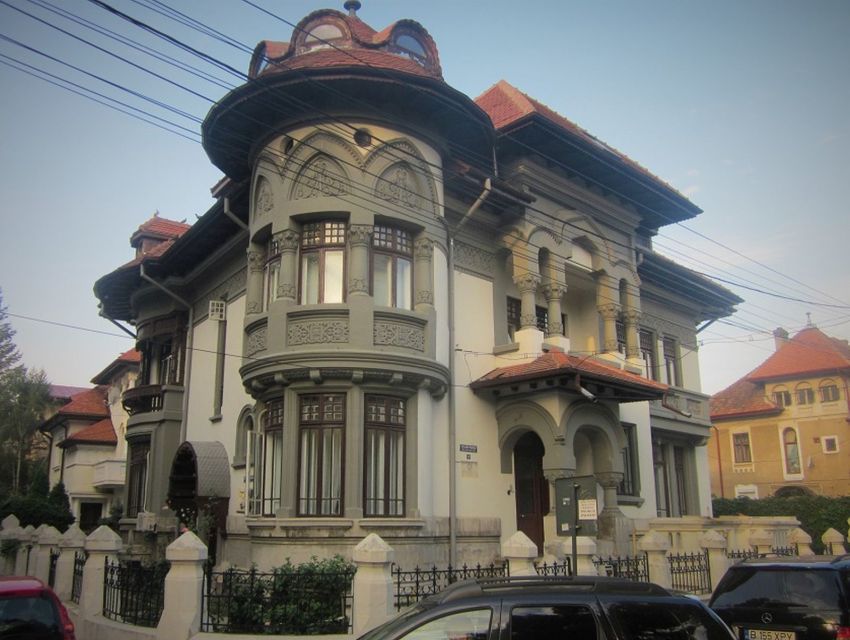
Cotroceni Palace follows, with about 15 minutes for a guided photo stop. The wider Cotroceni neighborhood is one of Bucharest’s most prestigious residential areas, known for villas associated with the 19th-century and modern bourgeoisie.
You will also see or pass sights connected with the area, including the presidential palace, the Military Academy Building, the Botanical Garden, and residential villas. The tour does not present Cotroceni as a museum district alone. It uses the buildings to explain who has traditionally lived here and why this part of Bucharest feels different from the apartment-block districts later in the route.
Do not expect an extended interior visit to the palace. The stop is built around exterior sightseeing, stories, and photographs. That makes it a good companion to a dedicated Bucharest history tour, especially if another tour has already covered the major monuments in greater depth.
A Pause at La Broscuțe
Parcul La Broscuțe is another short stop, lasting about 15 minutes. It gives you time to photograph the surroundings and hear more about the local setting.
The stop also helps the tour keep its pace. Three and a half hours in a small vintage car can feel cramped if you remain seated the entire time. These breaks let you stretch your legs, but comfortable shoes are still important because the experience includes several short walks and photo stops.
The itinerary does not promise a major attraction at every pause. That is worth understanding before booking. Some stops are valuable mainly because they help your guide explain a neighborhood or a piece of local life.
Drumul Taberei and the Everyday Bucharest
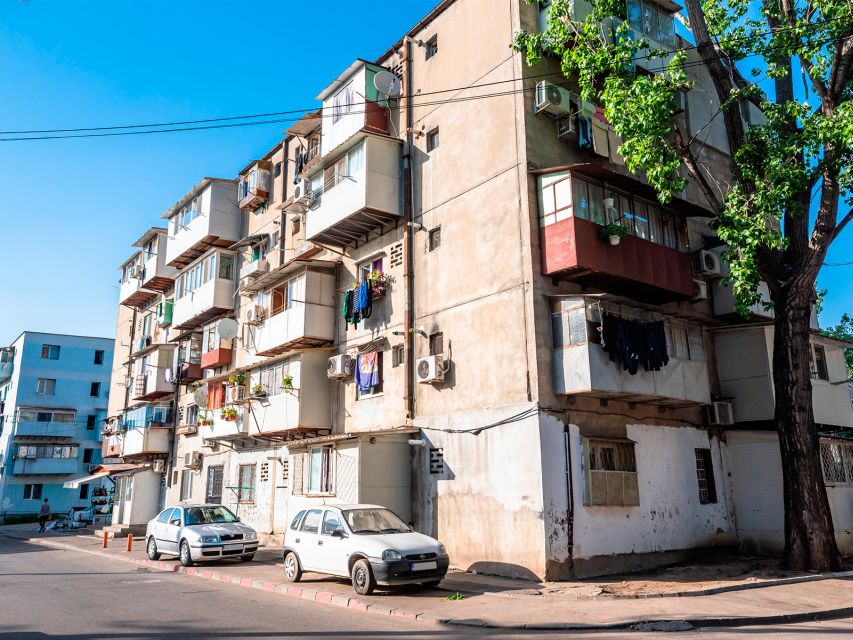
Drumul Taberei is the clearest look at ordinary urban life on this route. You spend about 20 minutes here, with time for photographs and a guided walk or explanation.
The neighborhood is associated with large communist apartment blocks, the peasant market, and Orthodox churches used by average Romanian residents. The setting is much less polished than Cotroceni, but it tells you more about the everyday city most residents know.
This is one of the tour’s strongest sections because the buildings are not treated as background scenery. Your guide explains what life is like in a district shaped by large-scale communist housing. The market and churches add useful detail: one shows the practical side of shopping and food, while the other points to the role of religion in community life.
If your idea of a city tour is a string of famous landmarks, Drumul Taberei may feel understated. I see that as the point. You are looking at the spaces where people live, shop, worship, and move through their daily routines.
A few more Bucharest trips worth putting side by side
- Castles of Transylvania: Private Day Trip from Bucharest
★ 4.5 · 248 reviews - Dracula’s Castle, Peles Castle and Brasov – Private Day Trip from Bucharest
★ 5.0 · 211 reviews - Best of Bucharest | Private Walking Tour
★ 5.0 · 199 reviews - Bucharest Panoramic Sightseeing – Private City Tour
★ 5.0 · 128 reviews
Rahova, Toporași Street, and Ferentari
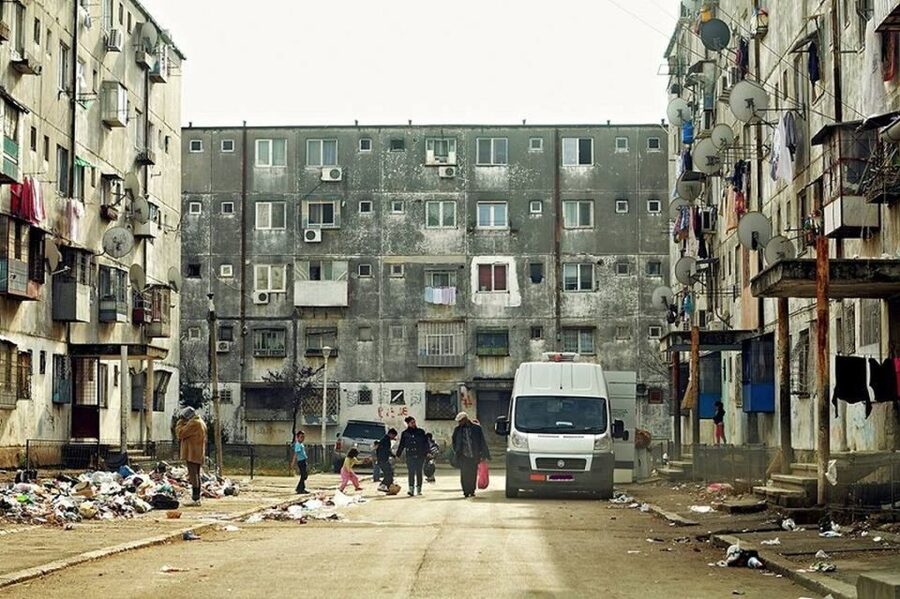
The route continues through Piața Rahova for around 15 minutes, then to Strada Toporași for about 10 minutes. These are short guided photo stops on the way toward Ferentari, and they help show how quickly Bucharest’s character can change.
Ferentari is the most difficult part of the tour. It is described as one of the city’s most photographic and contrasting areas, also known by the nickname Machala city. Here you see poverty, ghetto-style buildings, and the everyday struggles faced by Romania’s poorest residents.
This section requires a respectful attitude. Ferentari is not a theme park or a backdrop for careless photographs. The value lies in listening to your guide and trying to understand the economic and social conditions behind what you see.
The route gives you a look at a part of Bucharest many standard sightseeing tours skip. That can be eye-opening, but it may also feel uncomfortable. If you want only elegant streets and famous monuments, this is not the right experience. If you want a fuller picture of the city, Ferentari is an important reason to go.
The available information does not promise a walking tour through every part of the neighborhood. Much of the experience takes place from the vehicle, with selected stops for photos and explanation. That format offers some structure and keeps the visit focused, but it also means you should not expect a long, independent exploration.
Ending at the Palace of the Parliament
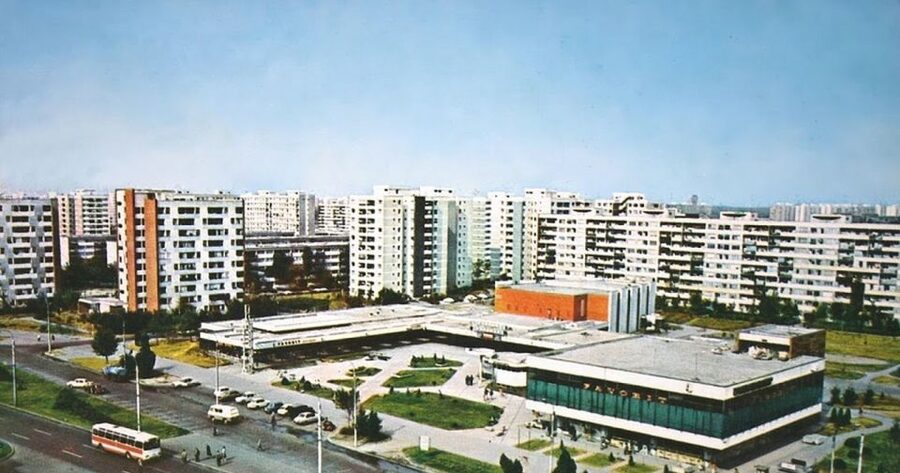
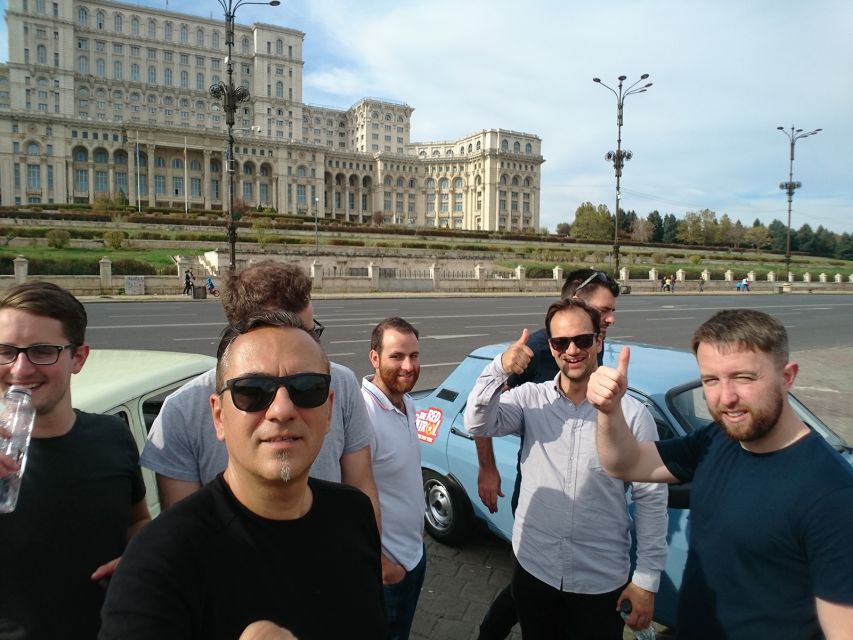
The final major stop is the Palace of the Parliament, with about 20 minutes for sightseeing, guiding, and photographs. The building brings the tour back to one of Bucharest’s best-known symbols of communist-era power and modern national identity.
After visiting neighborhoods at different income levels, the palace has extra meaning. You have just seen the housing and streets of ordinary and poor Romanians. Now you finish at a building famous for its enormous scale and political history.
This is another exterior-focused stop based on the supplied schedule. An interior visit is not listed, so you should not book this tour expecting access to the building’s rooms.
Afterward, your driver returns you to your Bucharest accommodation. Hotel pickup and drop-off are included, which saves you the trouble of arranging transport to a starting point and makes the tour easier to fit into a busy city stay.
Riding in a 1970s or 1980s Dacia
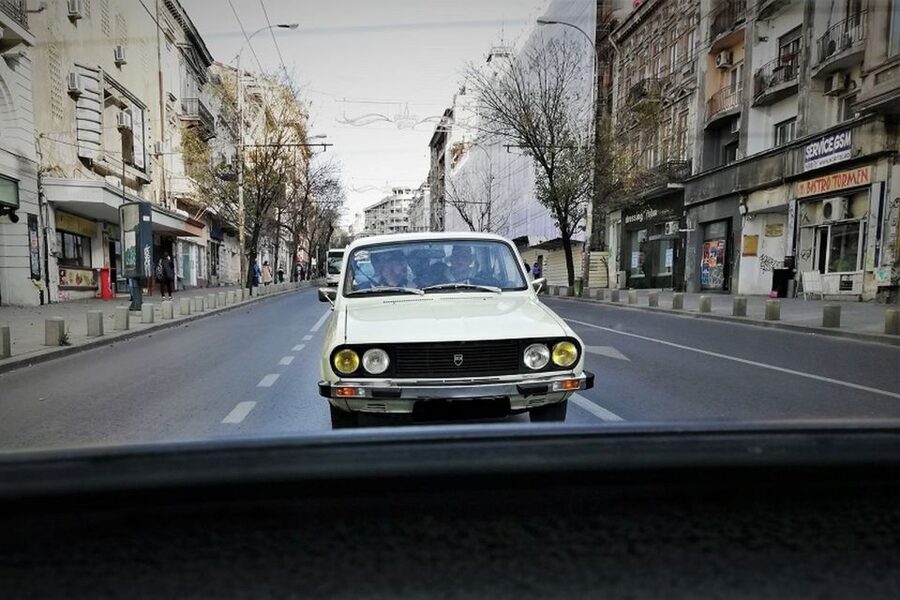
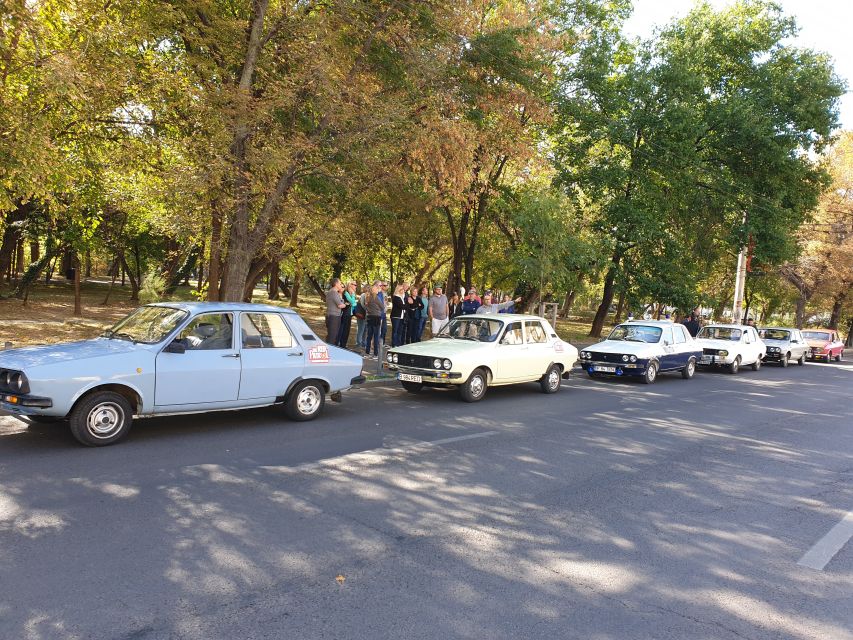
The vehicle is a major part of the experience, not a minor detail. The Dacia 1300 or 1310 was a familiar Romanian car, and the restored example gives the tour a strong connection to recent everyday life.
You will get unusual photos with the car, both during stops and as part of the ride itself. The novelty is real, but so are the limitations. The Dacia does not have air-conditioning, ABS, GPS navigation, power steering, or an automatic gearbox. Participants are not allowed to drive.
That makes the car best suited to people who enjoy old vehicles and do not mind a more basic ride. If you need a quiet, climate-controlled vehicle, this may frustrate you. In winter, the cars are heated, which makes cold-weather use more practical.
Each car carries three people. If your private party is larger, a convoy can be arranged. That keeps the group private while allowing more people to join, though a convoy will not feel quite as intimate as one car with your guide.
Guide Quality and the Private Format
The tour is conducted in English by a live local guide. Mihai received specific praise for being friendly, well informed, and an excellent driver. That matters here because the guide is responsible for both the social explanation and the vintage-car experience.
A good guide can help you understand why Cotroceni, Drumul Taberei, and Ferentari feel so different without turning the route into a simple rich-versus-poor display. The tour works best when the explanations connect buildings and streets with real patterns of housing, work, income, and community life.
The private format gives you room to ask direct questions. You are not listening from the back of a large coach, and the guide can keep the focus on your interests. It also makes hotel pickup and return more convenient.
The tradeoff is price. At $126 per person, this is not a budget sightseeing ride. For three people, the cost buys a private car, a professional driver-guide, hotel transport, water, and a three-and-a-half-hour route with several stops. For one person, the per-person price feels steep. For a small private party that values a distinctive vehicle and local social context, the cost is easier to justify.
Who Should Book This Tour
I would choose this tour if you have already seen the main central monuments and want to understand Bucharest beyond the postcard view. It also suits anyone interested in communist-era housing, class differences, local neighborhoods, and unusual transport.
You will probably enjoy it most if you:
- Like small private tours rather than large groups
- Want a social view of Bucharest, not only architectural facts
- Enjoy vintage cars and unusual photo opportunities
- Are comfortable seeing difficult urban conditions respectfully
- Want hotel pickup and return
- Have at least three and a half hours available
I would choose something else if you want a polished luxury car, a fully air-conditioned ride, extensive museum interiors, or a standard list of major monuments. The tour is also not suitable for children under 10, pregnant women, wheelchair users, or people with mobility impairments.
Bring comfortable shoes. Oversize luggage, large bags, smoking, alcohol, drugs, and pets are not allowed.
Is the Three Neighborhoods Tour Worth It?
Book it if you want Bucharest explained through its people and residential districts, and if the idea of riding in an old Dacia sounds fun rather than inconvenient. The strongest part is the contrast between Cotroceni’s villas, Drumul Taberei’s apartment blocks, and Ferentari’s poverty.
The experience pairs well with a more traditional historical city tour. One focuses on monuments and historical events, while this one adds social detail and ordinary street life. That combination can give you a much broader understanding of Bucharest.
Skip it if you need modern vehicle comforts or prefer not to visit areas marked by poverty. At $126 per person, the value depends on caring about the private format, the guide, and the Dacia itself. For the right visitor, those details make this a memorable half-day rather than just another drive around town.
FAQ
How long does the Bucharest vintage car tour last?
The tour lasts about 3.5 hours. The supplied details describe it as a three to four-hour ride.
What kind of car is used?
You ride in a fully restored Dacia 1310, also described as a Dacia 1300 or 1310 from the 1970s and 1980s.
Can I drive the Dacia myself?
No. Participants are not allowed to drive the car. Your professional guide drives throughout the tour.
How many people can ride in one vehicle?
Three people can ride in each vehicle. If more people are required, a convoy can be arranged.
Which Bucharest neighborhoods does the tour visit?
The main neighborhood stops are Cotroceni, Drumul Taberei, and Ferentari. The route also includes Rahova and Strada Toporași.
Is hotel pickup included?
Yes. Pickup and drop-off from accommodation in Bucharest are included.
Is the tour offered in English?
Yes. The tour has a live English-speaking guide.
What does the tour price include?
The price includes the guided circuit, a professional local guide in the car, Bucharest hotel pickup and drop-off, water in the car, and a souvenir.
Does the car have air-conditioning and automatic transmission?
No. The vintage Dacia does not have air-conditioning, ABS, GPS navigation, power steering, or automatic gear drive. The cars are heated during winter.
Who cannot take this tour?
Children under 10, pregnant women, people with mobility impairments, and wheelchair users should not book this experience. Pets are also not allowed.
Newest Bucharest trips we have written up
- Bucharest: Dealu Mare Winery Private Trip with Wine Tasting★ 4.9 · 6 reviews
- Winery touring & private wine tasting – one day private tour★ 5.0 · 3 reviews
- Traditions in Bucharest: Village Museum and Wine Tasting★ 5.0 · 8 reviews
- Your rendez-vous with Europe’s past: time-travel to Maramures, Transylvania★ 5.0 · 6 reviews
- Village Museum Bucharest Guided Tour★ 5.0 · 6 reviews
- Private Wine Tasting at Bucharest’s First Wine Bar★ 5.0 · 3 reviews
- Walking Tour of Bucharest City Center – Private Tour★ 5.0 · 4 reviews
- Wine tasting in Bucharest Old town – bonus cheese platter★ 4.5 · 6 reviews
Bucharest Private Car Tours, compared.
Private -RedPatrol Tour of Bucharest with a Romanian Vintage Car
Read our review →
Bucharest Jewish Heritage | Holocaust Memorial | Private Car Tour
Read our review →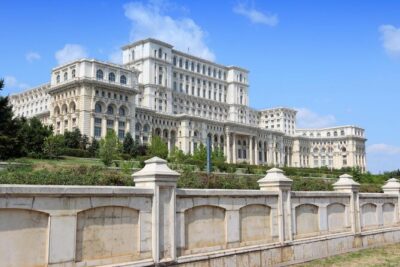
Private – Romanian Vintage Car Driving Tour of Bucharest 120 min
Read our review →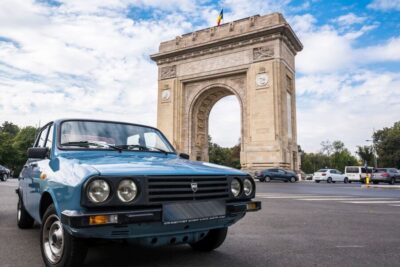
Private Communist Tour in a Romanian Vintage Car
Read our review →
Bucharest Luxury Airport Transfer with Minivan and Business Cars
Read our review →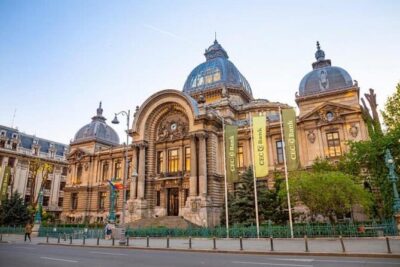
5h Bucharest City Tour by Car/Minivan – Small Group max 7 people
Read our review →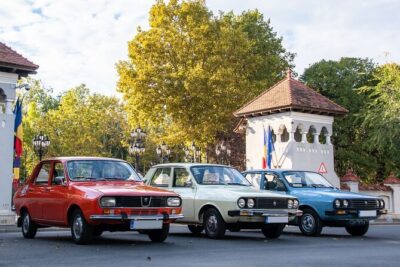
Private: RedPatrol Bucharest Contrasts Tour in a Vintage Car
Read our review →Browse the lists this tour appears in