
Reviewed · BUCHAREST WALKING TOURS
Bucharest: Walking tour with Italian speaking guide for small groups
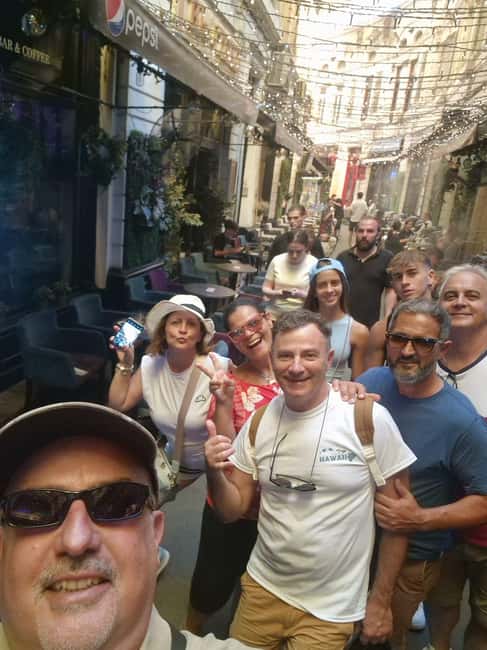
Bucharest reveals its character on foot, where medieval lanes, ornate boulevards, communist-era memories, and polished cafés sit close together. This three-hour Italian walking tour takes you from Old Town to Revolution Square, with time for Stavropoleos Monastery, Manuc’s Inn, Cărturești Carusel, and the Romanian Athenaeum. Guides such as Filippo Di Cataldo and Giuseppe bring personal stories and clear historical context.
I like the small-group format, which gives you a better chance to ask questions than on a large city walk. I also like the route itself: it connects nightlife, architecture, religion, banking, royalty, and the 1989 revolution instead of treating Bucharest as just a collection of pretty façades.
The main consideration is simple: three hours on foot can feel long in hot, cold, or wet weather. You will also pay separately for food, drinks, and personal expenses, and the tour focuses on exterior visits rather than extended indoor sightseeing.
Key points to know before booking
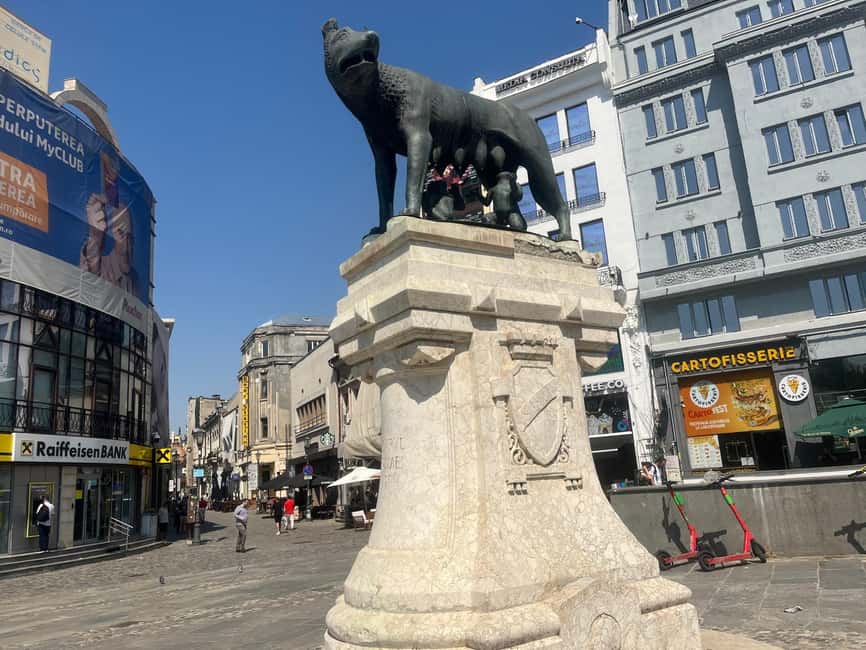
- Three hours on foot: The route begins and ends at Caru’ cu Bere, with several short stops and a longer visit in Revolution Square.
- Italian-speaking guide: Filippo Di Cataldo and Giuseppe are among the guides associated with this experience.
- A strong first look at Bucharest: You cover Old Town, Calea Victoriei, Revolution Square, and the Romanian Athenaeum in one walk.
- Small groups matter: The format is well suited to questions, conversation, and a more personal pace.
- Mostly exterior sightseeing: Several stops are guided walks or photo stops, so this is not a museum-heavy tour.
- Plan for comfort: Wear good walking shoes. The tour is wheelchair accessible, but it is not suitable for people with hearing impairments according to the activity information.
Starting at Caru’ cu Bere in Old Town
Your meeting point is in front of Caru’ cu Bere on Stavropoleos Street 5. The guide waits outside the well-known restaurant and carries a professional identification card, so you should enter the address carefully into your navigation app rather than simply searching for a general Old Town meeting point.
Caru’ cu Bere is a useful starting place because it puts you right in the middle of Bucharest’s historic core. It is also a practical landmark if you want to arrive early for a meal or coffee, though food and drinks are not part of the tour price.
The opening stretch introduces the Old Town as more than a nightlife district. Lipscani Street and the nearby lanes are filled with restaurants, bars, shops, and old buildings, but the real interest is in the layers behind the busy façades. Your guide helps connect these streets to Bucharest’s religious, commercial, and civic past.
A small group is especially helpful here. The lanes can be crowded, and a guide can keep the walk moving without turning the whole thing into a hurried march. You should still expect city-center noise and uneven walking surfaces in places.
More Bucharest walking tours:
- Bucharest: City Highlights Guided Walking Tour
★ 4.9 · 1,482 reviews - Bucharest Highlights Walking Tour
★ 5.0 · 469 reviews - Bucharest: Ghost Stories & Romanian Mythology Walking Tour
★ 4.9 · 287 reviews
Stavropoleos Monastery and Manuc’s Inn
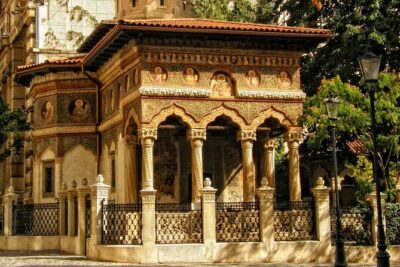
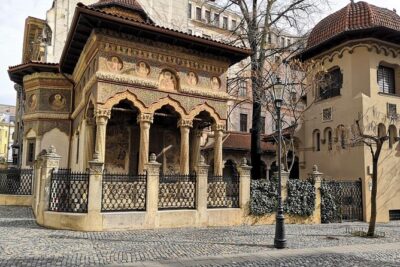
Stavropoleos Monastery is one of the prettiest early stops. The visit lasts about 10 minutes, which is enough to see the church and absorb its quiet courtyard without turning the tour into a long religious-history lecture.
This stop gives the Old Town a needed pause. Behind the busy streets, the monastery offers a more delicate architectural side of Bucharest, with carved details and a calmer mood. Your guide can explain the place within the larger story of Romanian Orthodox culture and the city’s changing fortunes.
The next listed visit is Manuc’s Inn, also planned for about 10 minutes. Historic inns mattered in a city positioned between commercial routes and different cultural worlds. The stop helps you picture Old Bucharest as a place of merchants, lodging houses, trade, and movement, not simply a preserved backdrop for restaurants.
You should keep your expectations realistic. These are short visits, not lengthy guided tours inside every building. Their value comes from seeing important places in context and then moving on to the next part of the city.
Cărturești Carusel and the central Old Town
The walk continues through Bucharest’s Old Town, with a guided segment of about 15 minutes and a 10-minute photo stop at Cărturești Carusel. This bookshop is known for its elegant interior and curved balconies, making it one of the route’s most popular picture stops.
The contrast is part of the fun. Within a few streets, you move from an Orthodox monastery and historic inn to a stylish modern bookshop, then toward major financial and civic buildings. Bucharest often feels suspended between old traditions and newer ambitions, and this route lets you see that contrast without needing a bus or taxi.
Cărturești Carusel is primarily a photo stop here, so do not count on a long browsing session. If the shop is busy, your time inside may feel brief. Still, it is a smart inclusion because it adds a visual break to the more formal architectural stops.
The itinerary also includes two additional 10-minute guided-tour sections whose specific names are not provided. These appear within the Old Town portion of the route, so the exact pacing may depend on the guide and the day’s conditions. That flexibility can be useful in a pedestrian district where crowds and street activity change from hour to hour.
The National Bank and Pasajul Villacrosse
The National Bank of Romania receives about 10 minutes of guided attention. This is one of the stops that gives the walk substance. You are not only looking at churches and decorative buildings. You are also seeing the financial center of the country and hearing how institutions fit into Bucharest’s story.
The building’s presence adds a formal note after the lively Old Town streets. It helps explain the city’s role as Romania’s political and economic center, while the guide’s commentary fills in the historical background that a passing glance cannot provide.
Next comes Pasajul Villacrosse, another 10-minute guided stop. This covered passage is one of those urban details that can be easy to miss if you explore Bucharest alone. Its architectural character makes it a pleasant change from open streets and broad avenues.
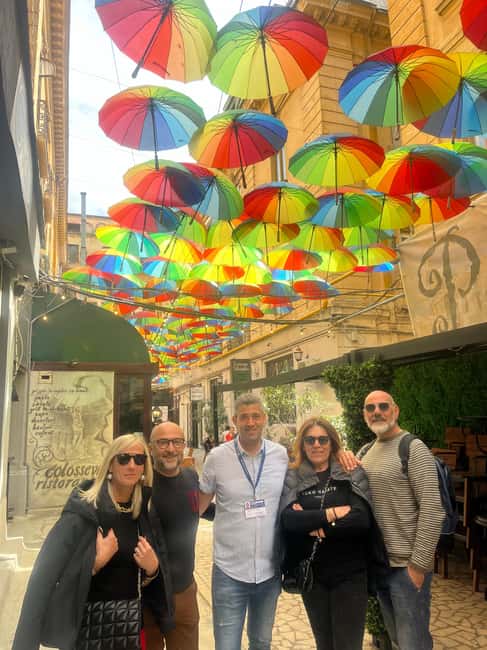
The route then pauses for five minutes at Umbrellas Street. This is a quick photo stop, not a major historical visit. It works best as a light, colorful interlude before the tour shifts toward the more serious subject of Revolution Square.
I appreciate this mix of large landmarks and smaller city details. You get the buildings that define Bucharest, but also the compact passages and decorated streets that give a walk personality. The tradeoff is that no single place receives a very long visit.
Same city, a completely different sort of day:
- Bucharest: Dracula’s Castle, Peles Castle, & Brasov Old Town
★ 4.5 · 17,858 reviews - Bucharest: Dracula Castle, Peles Castle & Brasov Old Town
★ 4.6 · 10,891 reviews - Bucharest: Dracula’s Castle, Peleș Castle & Brașov Day Trip
★ 4.5 · 5,919 reviews - Bucharest: Palace of Parliament Tickets and Guide
★ 4.3 · 3,182 reviews
Walking toward Revolution Square
Revolution Square is the tour’s longest scheduled stop, with about 25 minutes of guided time. That length is justified. This is where Bucharest’s modern political story becomes clearest, especially the events of December 1989 and the end of Nicolae Ceausescu’s dictatorship.
The square is also architecturally varied. Around it you find the Royal Palace, the National Library, the Romanian Athenaeum, and other buildings tied to different periods of Romanian public life. The setting rewards a guide who can explain how the buildings relate to one another rather than treating each one as an isolated monument.
This is likely the most important historical section of the walk. You can see how a beautiful civic space became connected with protest, political change, and the end of communist rule. The subject is serious, but it gives the rest of Bucharest’s architecture a sharper meaning.
You should expect information rather than a dramatic reenactment. The tour provides a short introduction to the events and the surrounding buildings, not an exhaustive study of Romania’s twentieth century. If you want a detailed account of the revolution, you will need additional time elsewhere.
The Italian language option is valuable here. Political history can become confusing when it involves several decades, institutions, and changes of regime. A guide who explains it in fluent Italian can make the material easier to follow and gives you a chance to ask about points that are unclear.
The Romanian Athenaeum and Calea Victoriei
The Romanian Athenaeum receives about 15 minutes of guided attention. It is one of Bucharest’s most admired cultural buildings, and its grand appearance helps explain why Calea Victoriei is often considered the city’s most elegant boulevard.
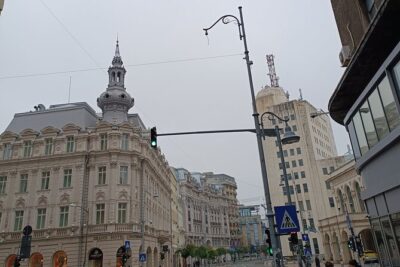
The route presents Calea Victoriei through its architecture, shops, and cafés. This is not just a road between two points. It is a showcase of Bucharest’s formal side, with historic buildings placed beside contemporary businesses and restaurants.
The Athenaeum adds a strong finish because it brings culture into the story. After the religious setting of Stavropoleos, the commercial character of the Old Town, and the political weight of Revolution Square, this building represents music, art, and national pride.
Again, the visit is guided rather than an extended interior tour. You should think of the walk as an introduction to the city’s buildings and stories, not as a ticketed museum program. That makes the tour easy to fit into a first day, but you may want to return later if one landmark catches your interest.
What the three-hour pace feels like
The schedule adds up to several short stops, with the longest blocks at Old Town, Revolution Square, and the Romanian Athenaeum. You are constantly changing settings, which keeps the walk interesting, but it also means you should not expect long periods to sit down.
Comfortable walking shoes are essential. The route covers central streets and pedestrian areas, and even a flat city walk can become tiring when you stop, start, listen, and stand for three hours.
The experience is wheelchair accessible, though accessibility in a historic central district can still depend on the exact route and street conditions. If you use a wheelchair, it is sensible to confirm any specific access needs before booking.
The activity is not suitable for people with hearing impairments. That matters because the main value comes from the live spoken explanation, not from printed materials or an audio recording. Audio recording is also not allowed.
The tour is not designed for very young children. The supplied age information says it is unsuitable for children under two, children under three, and babies under one, so the wording is inconsistent. If you are traveling with a small child, confirm the applicable age rule before reserving.
Is $35 a fair price?
At $35 per person, the tour sits in a reasonable range for a private-feeling small-group introduction to central Bucharest. You are paying for three hours of live Italian guidance and a route that links several of the city’s main sights.
The value is strongest if you are visiting Bucharest for the first time, want historical context, or prefer asking questions in Italian. A good guide can save you from spending your first morning piecing together the relationship between Old Town, Calea Victoriei, and Revolution Square on your own.
The value is weaker if you mainly want to enter interiors, take your time with photographs, or stop for food. Personal expenses, meals, and drinks are not included, and the schedule does not leave much room for a leisurely restaurant visit during the walk.
The tour returns to Caru’ cu Bere, which is convenient for continuing your day. You can stay in Old Town for lunch, return to a favorite building, or use the central location to reach another part of Bucharest.
Who will enjoy this walk most?
I would choose this tour for an Italian-speaking visitor who wants a clear first orientation to Bucharest without committing to a full-day program. It is also a good fit if you enjoy architecture but want the political and cultural background explained along the way.
The small-group setup suits people who prefer conversation over a rigid procession. The supplied comments specifically praise the guides’ easygoing manner, strong historical explanations, and ability to show parts of the city that are easy to miss alone. Those qualities matter more than flashy presentation on a city walk.
This is also a useful choice for a short stay. In three hours, you reach several major districts and landmarks, then finish where you started. You will not see every important place in Bucharest, but you will have a workable map of the center and a better sense of what deserves a longer return visit.
I would hesitate if your priority is a food tour, museum access, or a slow photography walk. The itinerary is active and information-focused, with many ten-minute stops. It gives you breadth rather than long, quiet time at one site.
Should you book this Bucharest walking tour?
Book it if you want Italian-language history, a friendly small-group setting, and a smart route through Bucharest’s central districts. The best parts are the range of subjects, the personal guidance, and the way the walk connects elegant architecture with the difficult story of December 1989.
Skip it if you dislike walking, need extensive indoor access, or want every stop to include a full visit. For most Italian-speaking first-time visitors, however, $35 buys a useful three-hour introduction with a good balance of monuments, city details, and conversation.
FAQ
Where does the Bucharest walking tour start?
The tour starts in front of Caru’ cu Bere at Stavropoleos Street 5, 030081, Bucharest. The Italian-speaking guide waits outside and can be identified by a professional identification card.
Where does the tour finish?
The walk ends back at Caru’ cu Bere, the same place where it begins.
How long does the activity last?
The walking tour lasts three hours. Starting times depend on availability when you book.
What language does the guide speak?
The live tour guide speaks Italian. Guides associated with the activity include Filippo Di Cataldo and Giuseppe.
What places are included on the route?
The route includes Bucharest Old Town, Stavropoleos Monastery, Manuc’s Inn, Cărturești Carusel, the National Bank of Romania, Pasajul Villacrosse, Umbrellas Street, Revolution Square, the Romanian Athenaeum, and sections of Calea Victoriei.
Is food included in the price?
No. Food, beverages, and personal expenses are not included.
Is the tour wheelchair accessible?
The activity is listed as wheelchair accessible. Because the route passes through historic central streets, you should confirm any specific accessibility needs before booking.
Can I cancel the booking?
You can cancel up to 24 hours in advance for a full refund. The activity also offers a reserve-now-and-pay-later option.
Newest Bucharest trips we have written up
- Bucharest: Dealu Mare Winery Private Trip with Wine Tasting★ 4.9 · 6 reviews
- Winery touring & private wine tasting – one day private tour★ 5.0 · 3 reviews
- Traditions in Bucharest: Village Museum and Wine Tasting★ 5.0 · 8 reviews
- Village Museum Bucharest Guided Tour★ 5.0 · 6 reviews
- Your rendez-vous with Europe’s past: time-travel to Maramures, Transylvania★ 5.0 · 6 reviews
- Private Wine Tasting at Bucharest’s First Wine Bar★ 5.0 · 3 reviews
- Walking Tour of Bucharest City Center – Private Tour★ 5.0 · 4 reviews
- Wine tasting in Bucharest Old town – bonus cheese platter★ 4.5 · 6 reviews
Bucharest Walking Tours, compared.

Ghost Stories & Romanian Mythology Walking Tour
Read our review →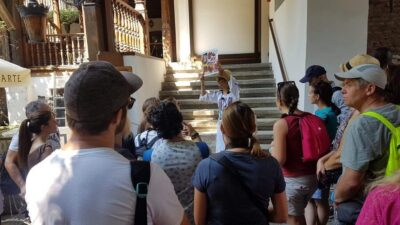
Walking Tour- Delightful Bucharest (Highlights, Stories, Sights)
Read our review →
4h Bucharest Private Tour (2h by Car and 2h Walking in Old Town)
Read our review →
Browse the lists this tour appears in