
Reviewed · HISTORICAL TOURS
Private Bucharest: History & Food with Traditional Meal
Bucharest makes the most sense when you taste it. This private four-hour tour links the city’s royal squares, Ottoman-era lanes, Communist scars, and modern nightlife with the foods that came from each period. You begin at Revolution Square with a salty covrig, then walk through central Bucharest before sitting down to a full Romanian meal.
I like the private format, which lets your guide adjust the pace and answer the questions that come up along the way. I also like the way food is tied to history, from Balkan mici and Ottoman sarmale to sour soups and Austro-Hungarian schnitzel. The main consideration is that the tasting portion before lunch may be lighter than the description suggests, so think of this as a history walk with one substantial meal, not a food crawl with many small stops.
Key points to know before booking

- Revolution Square sets the scene: Begin where Ceausescu’s final public speech helped trigger the 1989 Romanian Revolution.
- Old Town is the culinary crossroads: See how Ottoman, Balkan, Russian, and Austro-Hungarian influences shaped Romanian food.
- The guide makes the difference: Guides named in past departures include Andra, Elaina, Mara, Ioanna, Monica, Dana, and Andrei.
- The meal is the main food event: Finish with three courses at a traditional hanu, plus house beer, wine, or a soft drink.
- The walk covers several eras: Royal Bucharest, interwar architecture, medieval lanes, and Ceausescu’s giant People’s Palace all fit into four hours.
- It suits families and first-time visitors: Children under six join free, and the private pace works well for young children.
Starting at Revolution Square
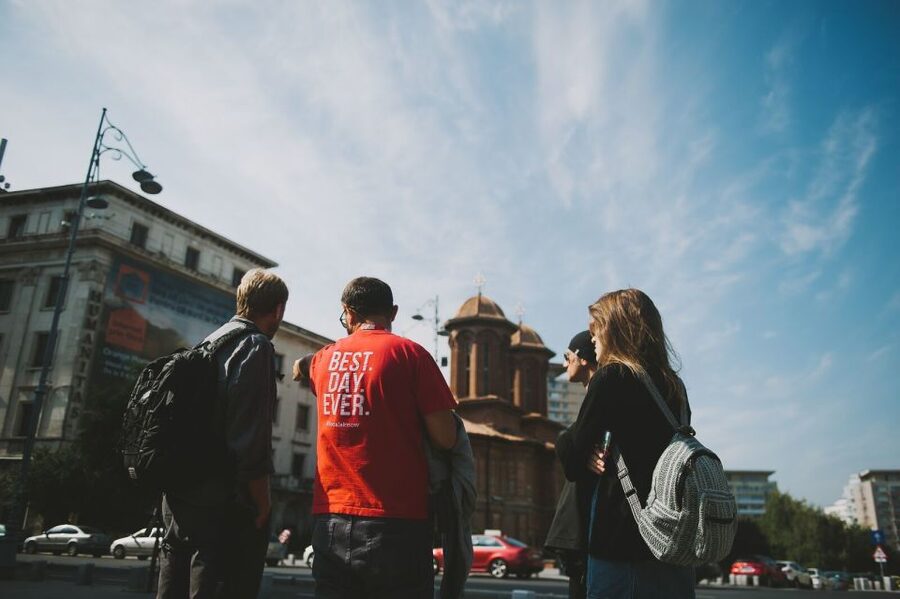
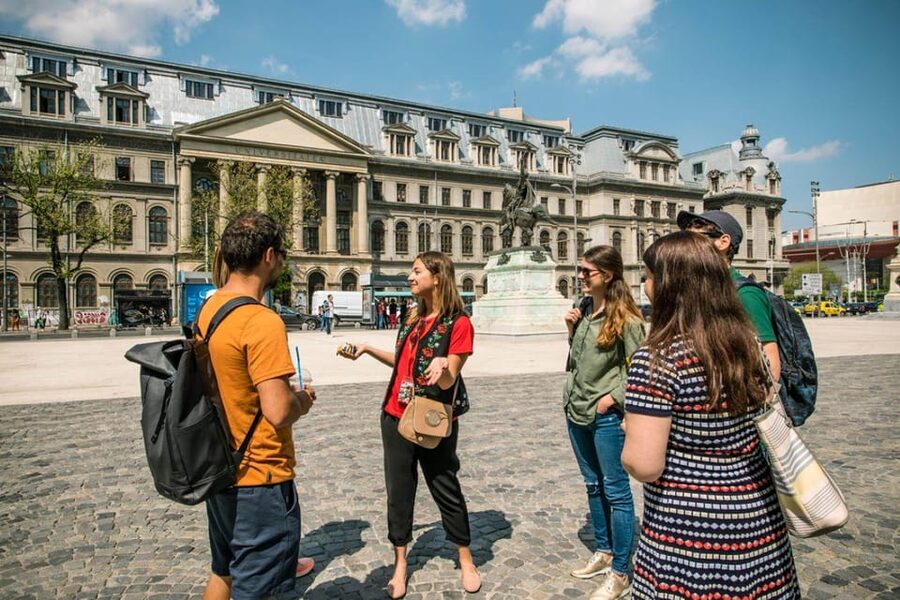
Your tour begins beside the Equestrian Statue of Carol I in Revolution Square, in central Bucharest. This is a useful starting point because the square gives you a quick lesson in the country’s modern political story before the walk moves into older parts of town.
The square was once called Palace Square. Around it are the former Royal Palace, now home to the National Art Museum, the Romanian Athenaeum concert hall, and the Athenee Palace. The latter became famous between the world wars as a meeting place for diplomats, journalists, spies, and political operators. Your guide uses these buildings to show how Bucharest once looked toward Paris and Western Europe while remaining close to the political pressures of the Balkans and the East.
The most dramatic story belongs to December 1989. Nicolae Ceausescu stood here to give a speech meant to show public support for his Communist government. The crowd turned against him, and the moment helped set the Romanian Revolution in motion. This is not just a square with handsome buildings. It is a place where a dictatorship visibly lost control.
You also get your first taste here: a covrig, the Romanian version of a salted pretzel. It is an everyday snack, but its likely links to Habsburg or German merchants show how even a simple street food can point to centuries of trade and outside influence.
More food tours in Bucharest:
- Taste Bucharest: A Food Lover’s Tour of Markets & Neighbourhoods
★ 5.0 · 689 reviews - Street Food’n’Culture Tour
★ 5.0 · 209 reviews - Wine Tasting in Bucharest
★ 5.0 · 183 reviews
Walking Victory Street and the interwar city
From Revolution Square, you head south along Victory Street, or Calea Victoriei. Its name refers to Romania’s 1871 victory in the War of Independence, though the country’s full unification did not come until 1918.
That date matters to the food story. The historic Romanian principalities did not all share the same customs or cooking traditions. Moldova is associated with sweeter flavors, Transylvania with earthier dishes, and Muntenia, the region around Bucharest, with spicier food. You will not taste every regional specialty during this short tour, but the guide uses these differences to explain why Romanian cuisine can feel varied from one part of the country to another.
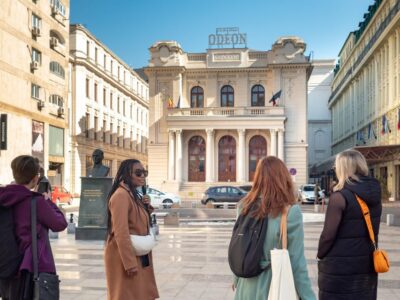
Victory Street also offers a fast lesson in Bucharest’s interwar ambition. You pass the Telephone Palace, the Military Circle, the former National Theatre, and Kretzulescu Church. The buildings reflect the period when Bucharest earned its nickname as the Little Paris, though the city’s architectural story is less tidy than that label suggests.
Look for the contrast between ornate facades, Communist-era repairs, and newer commercial spaces. A private guide can stop when you want to ask about a building or take a photo. That flexibility is useful here because the street is more than a parade of landmarks. It shows how Bucharest repeatedly rebuilt itself after war, political change, earthquakes, and neglect.
Old Town’s East meets West food story
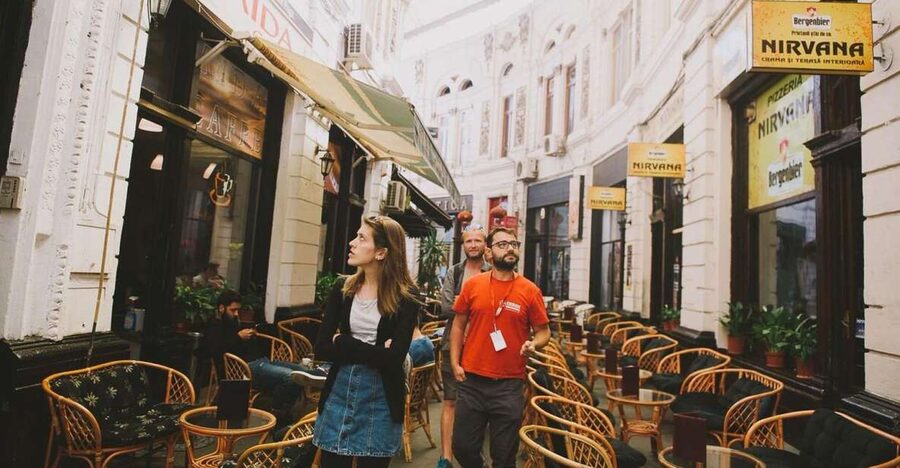
The walk turns into the Old Town, where Bucharest becomes more intimate and less formal. Narrow passages, courtyards, churches, old commercial buildings, and restaurant terraces fill the medieval core.
This area once sat between major cultural and trading worlds. Ottoman officials, Transylvanian princes, merchants, monks, and local rulers all passed through Bucharest. Churches and mosques once existed close to one another, and the city absorbed ideas from many directions.
That history appears on the plate. The guide may explain connections between:
- Mici, skinless grilled sausages with Balkan roots
- Sarmale, stuffed cabbage leaves linked to Ottoman cooking
- Borscht and ciorba, sour soups shaped by Russian and regional traditions
- Schnitzel, an Austro-Hungarian influence
The point is not that Romanian food is simply borrowed from its neighbors. Romanian cooks adapted these outside influences to local ingredients and tastes. The result is a cuisine with strong regional character and plenty of cross-border connections.
Old Town also provides some of the tour’s best changes of mood. You may pass a calm Orthodox monastery, then emerge near a busy restaurant street. Lavish interiors and former princely courts sit close to worn facades and nightlife venues. The contrast helps explain Bucharest’s transition from medieval trading center to royal capital, Communist city, and modern party destination.
Hanul lui Manuc is one of the key sights in this section. This large wooden inn recalls the days when merchants and officials needed a place to sleep, eat, trade, and conduct business. It is also a fitting symbol for a city shaped by movement. The tour later ends at a traditional inn, so the idea of food, lodging, and conversation continues into the final meal.
Seeing the People’s Palace from the outside
Before the meal, the route includes a view of the People’s Palace, also called the Palace of Parliament. It was the centerpiece of Ceausescu’s plan to reshape Bucharest on a giant scale.
The building is often described as the second-largest administrative building in the world, after the Pentagon. Its size is the point. Ceausescu ordered enormous civic works while ordinary Romanians faced shortages and strict controls. The palace and the broad avenues around it required major demolition, displacing historic neighborhoods and changing the city’s shape.
This part of the tour is especially useful if you are new to Bucharest. You see that Communist architecture here was not limited to plain apartment blocks or government offices. It also involved grand, expensive projects meant to project power.
The tour information does not promise an interior visit, so you should book this experience for the historical context and view rather than for access inside the palace. If seeing the interior is a priority, plan that separately.
Same city, a completely different sort of day:
- Bucharest: Dracula’s Castle, Peles Castle, & Brasov Old Town
★ 4.5 · 17,858 reviews - Bucharest: Dracula Castle, Peles Castle & Brasov Old Town
★ 4.6 · 10,891 reviews - Bucharest: Dracula’s Castle, Peleș Castle & Brașov Day Trip
★ 4.5 · 5,919 reviews - Bucharest: Palace of Parliament Tickets and Guide
★ 4.3 · 3,182 reviews
The three-course Romanian meal

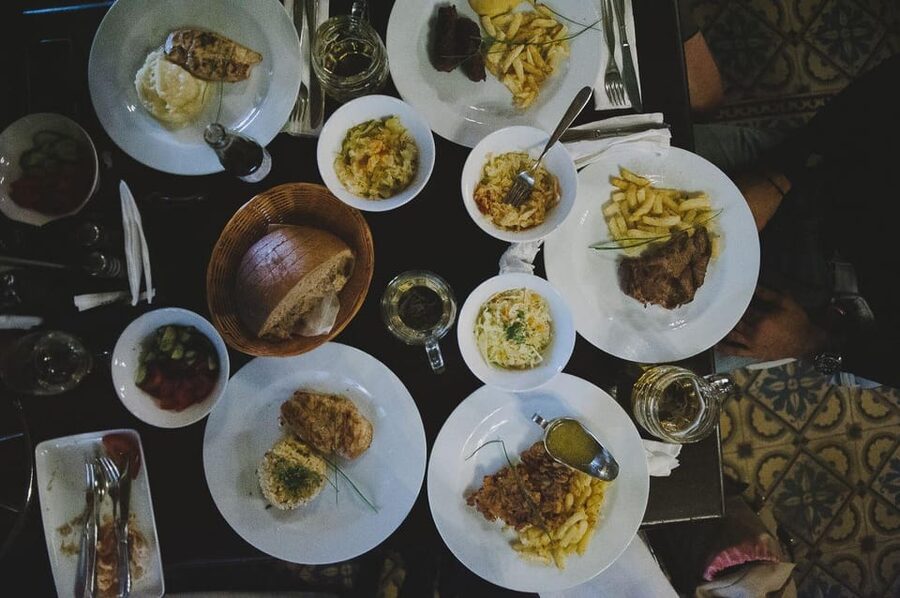
The final stop is a traditional hanu, or inn, described as one of the most charming restaurants in Bucharest. Here, the food becomes more than a snack between sights. You sit down for three courses of local dishes designed to give you a broad taste of Romanian cooking and its regional connections.
The meal is included in the $140 per person price, along with house beer, wine, or a soft drink. Additional food and drink cost extra. Past guides have also helped diners understand what they are eating, and one guide even helped a participant obtain recipes for favorite dishes.
Expect the meal to be generous rather than highly polished in a formal fine-dining sense. The appeal is the setting, the traditional dishes, and the chance to ask questions while you eat. It is a good ending after several hours of walking, especially because the earlier covrig is only a small snack.
One useful point is to keep your expectations clear. The tour description names several Romanian and regional foods, but the actual pre-meal sampling may not include every item. One booking party expected more individual tastings and found the three-course meal itself satisfying. If your main goal is to sample many tiny portions at different places, choose a dedicated food crawl instead. If you want one proper meal connected to a broad city introduction, this format makes more sense.
The drink choice adds a small historical joke. According to the tour’s story, the ancient Dacian leader Burebista banned wine production because his people drank too much of it. The Dacians responded by brewing beer instead. Your included house beer or wine lets you raise a glass to both sides of the story.
What the private format changes
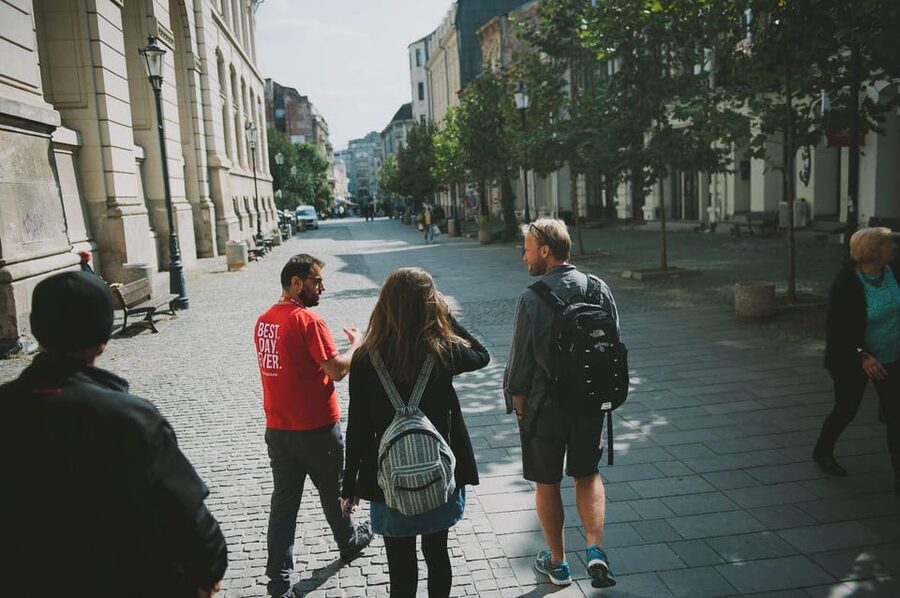
A private tour is more than a smaller group. It gives you room to ask about the things you notice, whether that is a church icon, a Communist-era building, or the difference between ciorba and borscht.
The guide can also adjust the walking rhythm. This matters for families. An eight-year-old was included in the conversation and given photo breaks and a pace suited to the group on one past tour. Children under six can join free, but you need to tell the supplier when booking.
Guide quality is central here. Names associated with past departures include Elaina, Andra, Mara, Ioanna, Monica, Dana, and Andrei. Their strongest shared traits were clear storytelling, warmth, practical city tips, and an ability to connect architecture with daily life. You should not assume a particular guide will lead your departure, but the private structure gives your assigned guide a good chance to shape the experience around your interests.
English is the tour language. Casual clothing is appropriate. Since the experience combines walking with a full meal, wear shoes and clothes that keep you comfortable for four hours.
Is $140 per person good value?
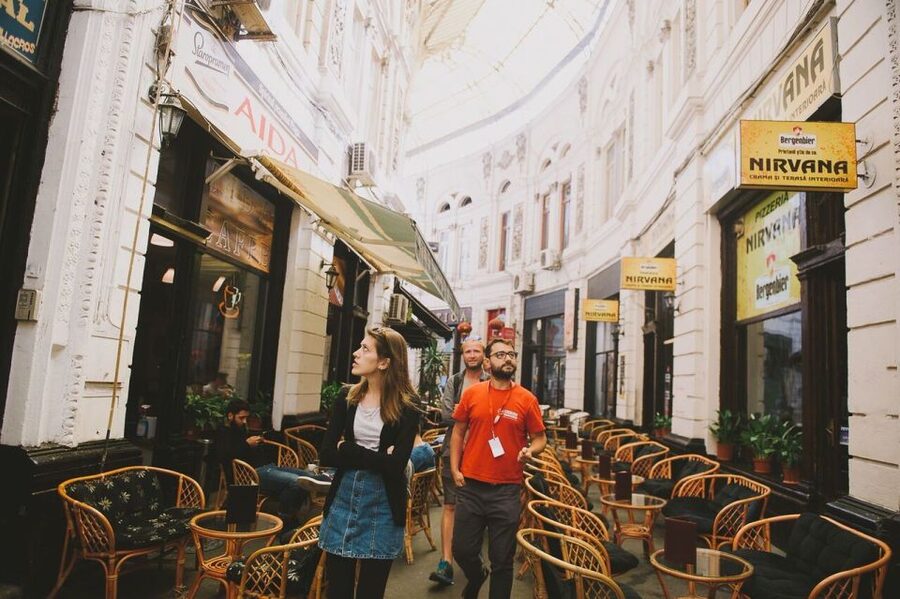
At $140 per person, this is not the cheapest way to see Bucharest. The value depends on how many parts of the experience you would otherwise arrange separately.
You are paying for a private English-speaking guide, a four-hour city walk, a three-course Romanian meal, and a house drink. You also get a focused introduction to central Bucharest, with political history, architecture, food, and local customs tied together. For a first visit, that combination can save you from spending your first day figuring out where the old center begins and how the major sights relate to one another.
The price is easier to justify for two or more people sharing the private experience, families who want a flexible pace, and visitors who value conversation over a large group format. It is harder to justify if you mainly want a cheap lunch or a quick list of landmarks.
The meal is important to the value calculation. Since it is a full three-course stop rather than just a pastry and a few bites, you receive a proper dining experience. Still, extra drinks and food are not included, and the tour should not be treated as an all-day eating event.
Timing, cancellation, and the eco policy
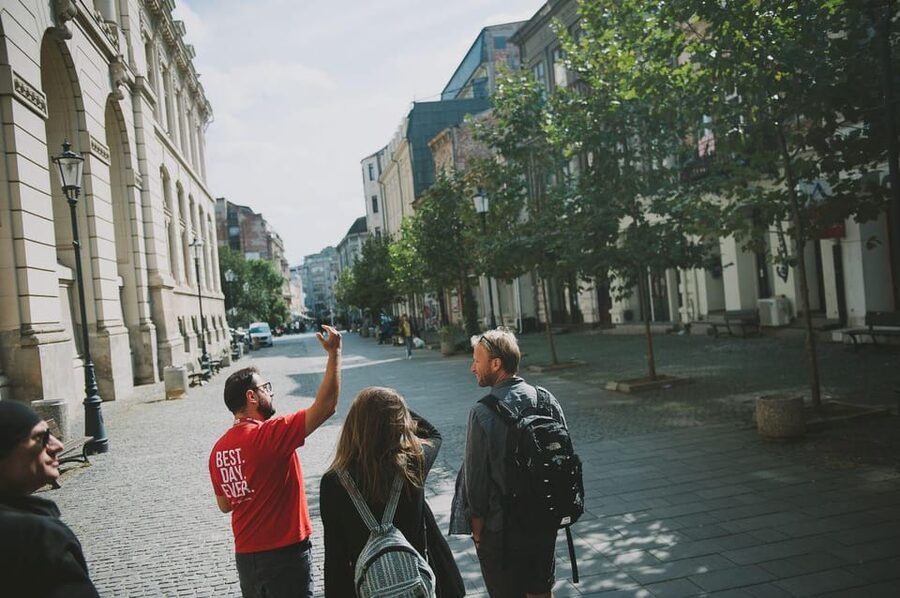
The activity lasts four hours, with starting times based on availability. You meet at the Equestrian Statue of Carol I in Sector 1, Bucharest.
You can cancel up to 24 hours before the start for a full refund, and the reserve-now-pay-later option keeps your plans flexible. Those terms are useful when your Bucharest schedule is still moving.
The operator describes the tour as carbon neutral and B Corp certified. That does not change the sights or meal, but it may matter if you prefer to book with a company that has formal environmental and social commitments.
Who should book this Bucharest tour?
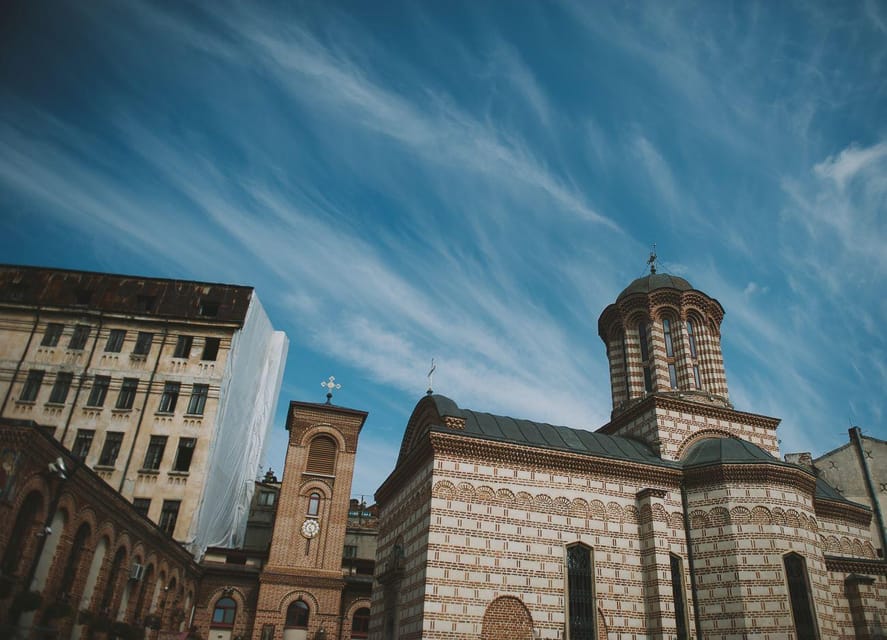
I would choose this tour for a first visit, especially if you want Bucharest explained through both politics and food. It is also a strong fit for couples, families, and small private groups who dislike being rushed through a crowded city walk.
It suits you if you enjoy stories about buildings, political change, and local customs as much as you enjoy eating. The food gives the history a practical shape, while the landmarks keep the meal from feeling disconnected from the city.
I would look elsewhere if your top priority is a long series of tastings, a palace interior tour, or a broad trip across Bucharest beyond the central districts. This is a compact introduction, not a full survey of the city.
Should you book it?
Book it if you want a well-paced first look at Bucharest with a proper Romanian meal at the end. The private guide, family-friendly pace, and connection between food and history are the strongest reasons to choose it.
Go in expecting one small snack, a substantial three-course meal, and a story-led walk through several eras. With that expectation, the experience offers a useful and flavorful start to a Bucharest visit.
FAQ
How long does the Bucharest food and history tour last?
The tour lasts four hours.
Where does the tour meet?
You meet at the Equestrian Statue of Carol I, Sector 1, Bucharest 030167, Romania.
Is the tour private?
Yes. It is offered as a private group experience.
What food and drink are included?
The price includes a three-course Romanian meal and one house beer, wine, or soft drink. Additional food and drinks are not included.
Is the tour suitable for children?
Yes. The tour is child-friendly, and children under six can join free of charge. You should tell the supplier when booking if you are bringing a child under six.
Can I cancel the booking?
Yes. You can cancel up to 24 hours in advance for a full refund. You can also reserve now and pay later.
More history-led tours in Bucharest
- Bucharest: 3-Hour Dark History Tour with a Local
★ 4.9 · 301 reviews - Bucharest: Small Group History, Art & Secrets Tour
★ 4.7 · 152 reviews - Guided Walking Tour of Historical Bucharest
★ 5.0 · 84 reviews - Bucharest Jewish Heritage | Holocaust Memorial | Private Car Tour
★ 5.0 · 38 reviews
Newest Bucharest trips we have written up
- Bucharest: Dealu Mare Winery Private Trip with Wine Tasting★ 4.9 · 6 reviews
- Winery touring & private wine tasting – one day private tour★ 5.0 · 3 reviews
- Traditions in Bucharest: Village Museum and Wine Tasting★ 5.0 · 8 reviews
- Your rendez-vous with Europe’s past: time-travel to Maramures, Transylvania★ 5.0 · 6 reviews
- Village Museum Bucharest Guided Tour★ 5.0 · 6 reviews
- Private Wine Tasting at Bucharest’s First Wine Bar★ 5.0 · 3 reviews
- Walking Tour of Bucharest City Center – Private Tour★ 5.0 · 4 reviews
- Wine tasting in Bucharest Old town – bonus cheese platter★ 4.5 · 6 reviews
Historical Tours, compared.
Bucharest Jewish Heritage | Holocaust Memorial | Private Car Tour
Read our review →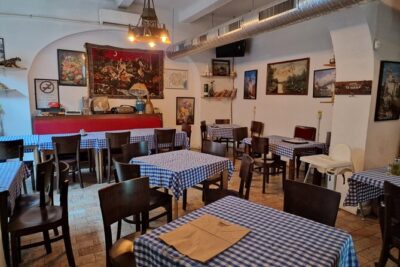
Sweet Delights History and Desserts Walking Tour
Read our review →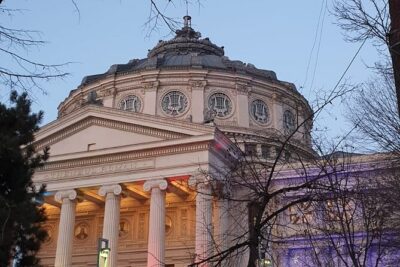
Private Tour – Food, Culture, History & Traditions
Read our review →Browse the lists this tour appears in