

Reviewed · BUCHAREST WALKING TOURS
Bucharest: 3-Hour Walking Tour
Bucharest’s story turns quickly from royal palace and concert hall to revolution, medieval inns, and the former home of Dracula’s real-life inspiration. This three-hour city walk gives you that sharp contrast in one compact route, led by an English-speaking guide such as Mara, Andrea, Elena, or Alex.
I like the start at Revolution Square, where the 1989 uprising becomes more than a date in a textbook. I also like the Old Town portion, especially the quiet Stavropoleos Monastery courtyard, the ornate Carturesti Carusel bookstore, and the chance to try a covrig, Romania’s soft pretzel-style snack.
The main consideration is pace. You cover a lot of ground, including cobbled streets, and the tour is mostly about outdoor sights rather than long indoor visits. Wear proper walking shoes, and remember that summer sun can be strong.
At a glance
- Revolution Square sets the tone: Begin where Nicolae Ceaușescu’s final public speech helped trigger the 1989 Romanian Revolution.
- Victory Avenue connects the main sights: Walk past the Romanian Athenaeum, former Royal Palace, Kretzulescu Church, and the Athenee Palace Hilton.
- Old Town brings the city’s older layers together: See Stavropoleos Monastery, Hanul lui Manuc, and streets once shaped by trade between East and West.
- Carturesti Carusel adds a modern pleasure: Visit one of Bucharest’s most beautiful bookstores in a restored historic building.
- The snack is simple and local: A traditional covrig gives you a quick taste of an everyday Romanian favorite.
- The small-group format helps: With no more than 12 people, you have a fair chance to ask questions and hear the guide.
Why this Bucharest walk works well on a first day
Bucharest can feel hard to read at first. Its grand French-inspired buildings, Communist-era memories, Orthodox churches, lively cafés, and rougher patches do not always appear in a neat order. This walk gives you a basic map and, more importantly, explains why the city looks the way it does.
The route starts in the capital’s political center and ends in the medieval heart. That is a smart arrangement. You begin with modern Romanian politics and national identity, then work backward through royal Bucharest, merchant life, Ottoman influence, and the 15th-century court linked with Vlad Tepes.
I would choose this tour early in a city break. Several guides, including Andrea, Mara, Elena, and Ioana, are praised for giving practical suggestions about food, sights, and places to visit afterward. That kind of local advice is most useful before you have filled your schedule.
The small group size is another plus. The maximum is 12 people, though some departures may be much smaller. One booking even had a private-feeling experience because only one person attended. You should not count on that, but the limit keeps the walk from becoming a crowd-following exercise.
More Bucharest walking tours:
- Bucharest: City Highlights Guided Walking Tour
★ 4.9 · 1,482 reviews - Bucharest Highlights Walking Tour
★ 5.0 · 469 reviews - Bucharest: Ghost Stories & Romanian Mythology Walking Tour
★ 4.9 · 287 reviews
Revolution Square and the moment Bucharest changed
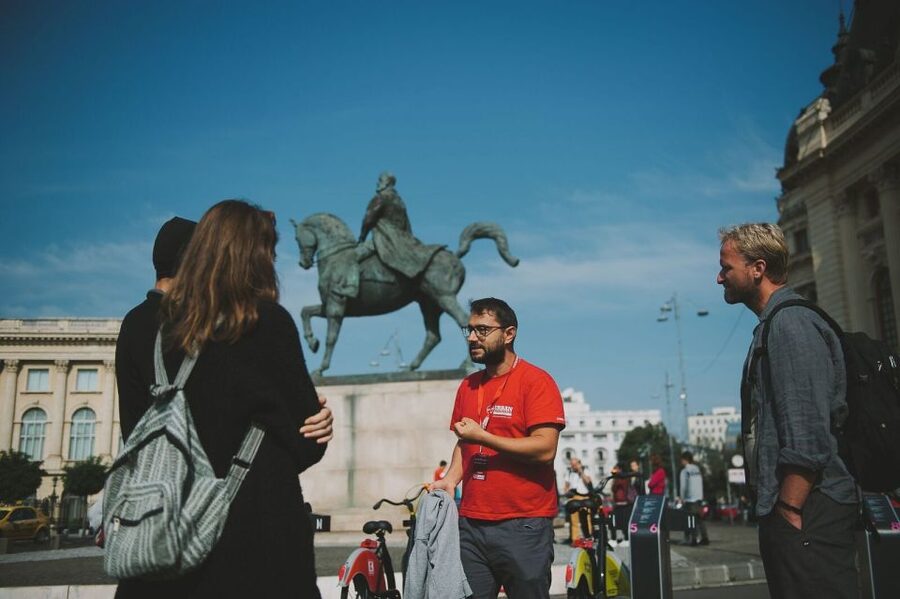
Meet at Revolution Square, in front of the statue of King Carol I. It is the only horse statue in the square, which makes the meeting point fairly easy to identify.
This is not just a convenient starting place. Palace Square, as it was once called, has witnessed key moments in Romanian public life. The former Royal Palace faces the square, while the Romanian Athenaeum gives it an elegant cultural presence.
The political centerpiece is the 1989 revolution. Nicolae Ceaușescu came here to address a crowd expecting support, but the gathering turned against him. The event helped set the Romanian Revolution in motion and brought the end of his dictatorship.
A good guide can make this stop especially useful by connecting the buildings around you with the political events that took place here. The tour is not simply a list of façades. It asks you to look at the square as a place where power, ceremony, and public anger collided.
You also hear about the Athenee Palace Hilton, built in 1914. Its old reputation as a favorite meeting place for spies adds a lighter, more colorful note after the difficult story of 1989. I like this balance. Bucharest’s past is not presented as one long tragedy, but as a succession of political drama, social change, and human oddities.
Victory Avenue, royal buildings, and Kretzulescu Church
From Revolution Square, the walk continues south along Victory Avenue. The street takes its name from Romania’s victory in the 1877 War of Independence, an important step in the formation of the modern Romanian state.
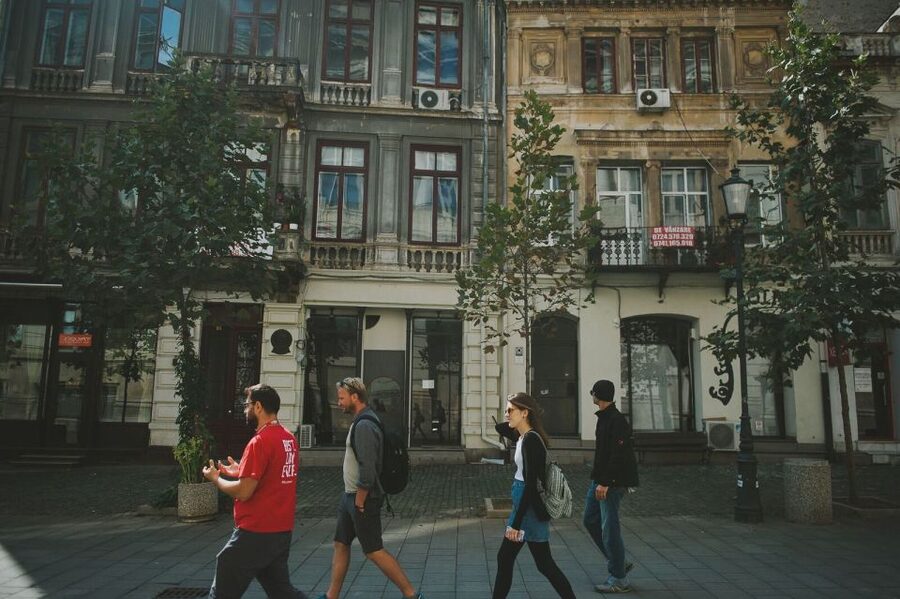
This section is best for travelers who enjoy architecture with a story attached. You pass palaces, museums, churches, and other major city buildings, while the guide explains how they fit into Bucharest’s development.
The Romanian Athenaeum is one of the visual high points. It serves as the city’s main concert hall and gives the avenue a sense of ceremony. The former Royal Palace adds another reminder that Bucharest once functioned as a royal capital.
Kretzulescu Church offers a different kind of beauty. It is one of the city’s best-known churches, and its presence helps show how religious buildings sit alongside royal and civic architecture. You may not spend a long time inside any of these places, so think of this part as an outdoor introduction rather than a museum visit.
That distinction matters. The $53 price is easier to justify if you want context, orientation, and a guided look at the city center. It is less appealing if you expect admission to several major interiors or a full meal. No museum or attraction entrance fees are listed as included.
Bucharest’s Old Town, where trade routes met

The route then shifts into Old Town, the most atmospheric part of the walk. Its winding, cobbled streets once formed the medieval core of Bucharest and linked merchants and rulers moving between East and West.
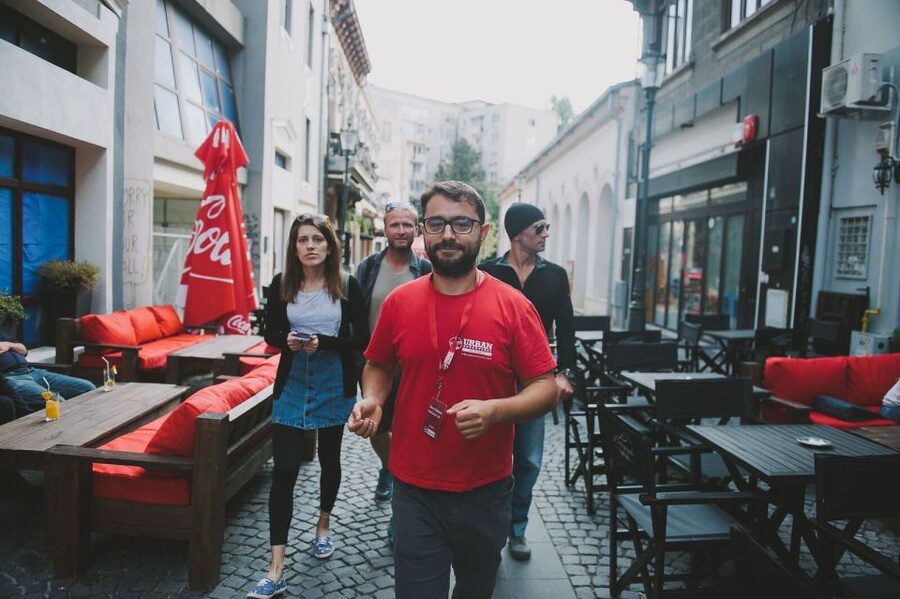
The area has changed over time, and today you will find bars, cafés, shops, and restaurants among the older buildings. That mix can feel busy, especially compared with the quieter courtyards nearby, but it also gives the district its everyday energy.
This is where the guide’s storytelling matters most. Ottoman pashas, Transylvanian princes, merchants, and local rulers all belong to the area’s long story. You are not only looking at old walls. You are getting a sense of Bucharest as a meeting point for different powers and cultures.
The uneven paving deserves a practical warning. Comfortable shoes are not optional for this route. Add sunscreen and something to cover your head in summer, since the sun can be intense. In winter, warm clothing matters just as much, as one December group completed the walk in snow and cold.
Same city, a completely different sort of day:
- Bucharest: Dracula’s Castle, Peles Castle, & Brasov Old Town
★ 4.5 · 17,858 reviews - Bucharest: Dracula Castle, Peles Castle & Brasov Old Town
★ 4.6 · 10,891 reviews - Bucharest: Dracula’s Castle, Peleș Castle & Brașov Day Trip
★ 4.5 · 5,919 reviews - Bucharest: Palace of Parliament Tickets and Guide
★ 4.3 · 3,182 reviews
Stavropoleos Monastery and Hanul lui Manuc
Old Town includes two stops that help break up the street activity.
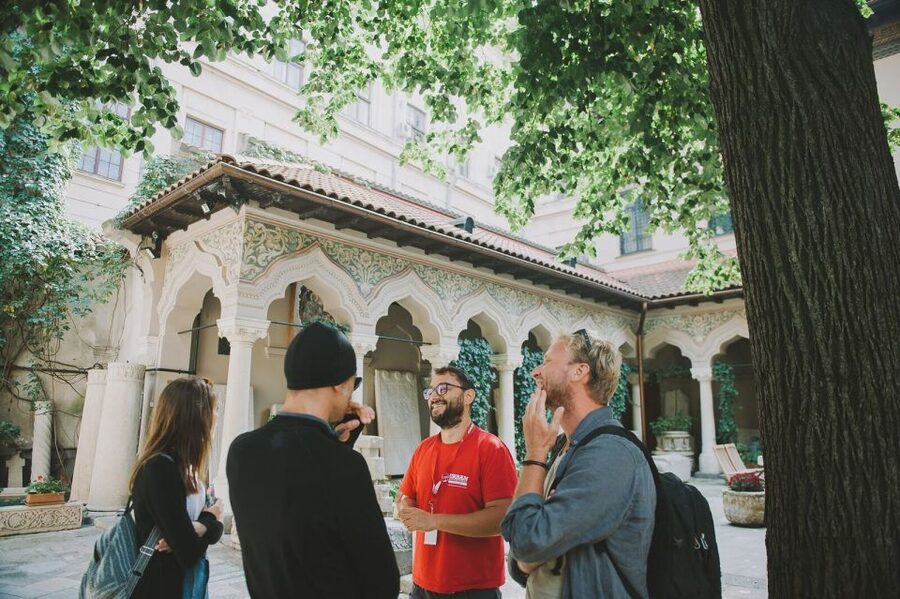
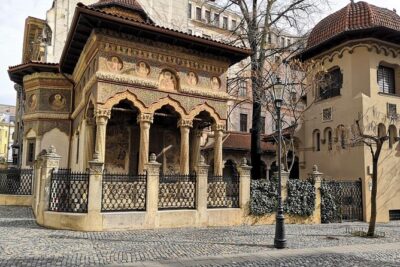
Stavropoleos Monastery offers a peaceful courtyard and a chance to pause. The setting is especially welcome after the traffic and commercial activity of the surrounding lanes. Its calm atmosphere also gives you a better sense of the city’s religious architecture without requiring a separate church tour.
Hanul lui Manuc brings you into the world of the old inn. Its large wooden structure offers a glimpse of the way travelers, traders, and merchants once found food and lodging in Bucharest. This is one of the most useful stops for understanding the practical side of the city’s past.
I like that the route includes both grand public buildings and places built for ordinary movement and trade. The former Royal Palace tells you about national power. Hanul lui Manuc tells you how people actually passed through the city.
Do keep your expectations clear. The tour provides explanations and exterior sightseeing, but the supplied details do not promise extended interior visits at each stop. If you want to explore the monastery, inn, or other buildings at length, leave time to return on your own.
Carturesti Carusel and the covrig break
One of the most enjoyable stops is Carturesti Carusel, a striking bookstore often described as one of the most beautiful in the world. The building gives the Old Town route a modern, visual pause, even though its setting is historic.
This is a good stop for people who want more than monuments. You can see how Bucharest now uses its old center for design, books, shopping, and social life. It also makes a pleasant contrast with the political landmarks earlier in the walk.
The included food is a traditional covrig. Think of it as a Romanian soft pretzel-style snack, popular as an everyday street food. It is not a meal, and additional food and drinks are not included, but it is a useful little taste of local life.
That point is worth stressing because one older booking expected a broader food experience and did not receive the promised food sampling. The current details describe one traditional snack, so book this as a history and city walk with a small food taste, not as a full food tour.
Vlad Tepes and the end at the Old Princely Court
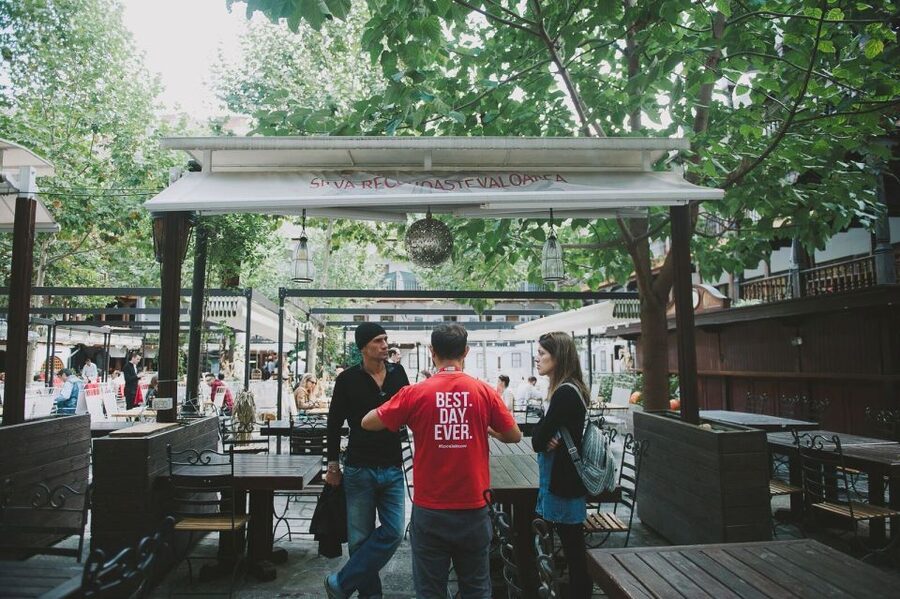
The tour finishes at the ruins of the Old Princely Court. The site dates to the 15th century and was once the residence of Vlad Tepes, the ruler who inspired the Dracula legend.
The real Vlad Tepes is more complicated than the fictional count. This stop gives your guide room to separate the historical figure from later storytelling while placing him in the actual setting of medieval Bucharest.
Ending here works well because the Old Princely Court ties together the tour’s older themes: rulers, trade, religion, and the growth of the city. You finish with a recognizable name, but the larger value is seeing Vlad Tepes as part of Romanian history rather than only as a horror character.
The location also leaves you in Old Town, where you can continue eating, shopping, or walking. You will need to arrange your own onward plans, since transport is not part of the experience.
How much value do you get for $53?
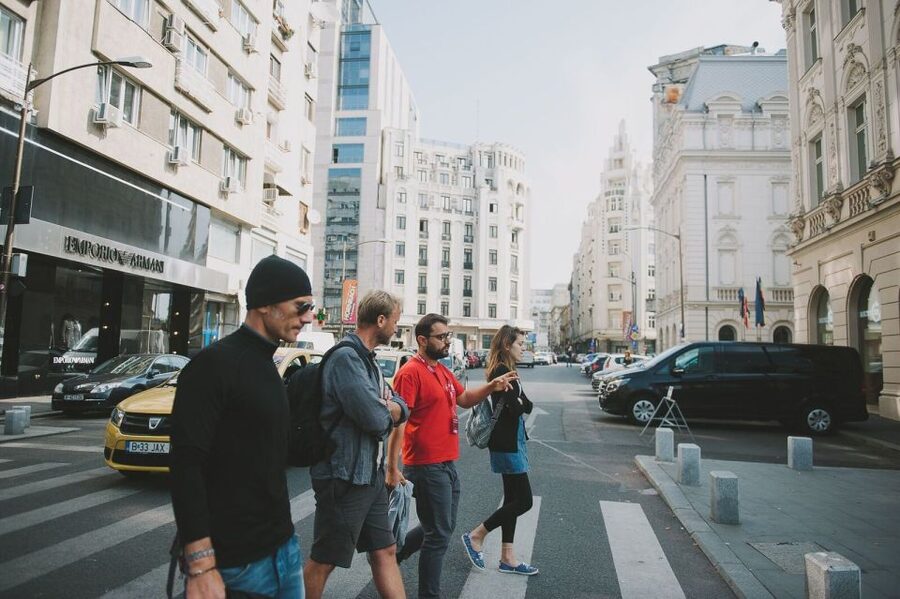
At $53 per person, this is not the cheapest way to stroll through Bucharest. You can walk many of the streets independently. The price pays for the guide’s explanation, the planned route, the small-group setting, and the included covrig.
For a first visit, that can be good value. Bucharest’s key buildings are spread through a route that is easy to walk but harder to understand without context. The strongest part of the experience is not simply seeing the Romanian Athenaeum or Kretzulescu Church. It is learning how royal rule, independence, dictatorship, revolution, religion, and commerce connect.
The price also makes more sense if you use the guide’s suggestions for the rest of your stay. Andrea, Mara, Elena, and other guides are praised for sharing food tips and ideas for places to see after the walk. You are paying for three hours, but you may gain a practical plan for the next two days.
I would hesitate if you already know central Bucharest well, prefer long museum visits, or want a serious food tour. The route is broad rather than specialized. It introduces many places, but you will not get a deep examination of every building.
The overall rating is 4.9 from 77 ratings, with repeated praise for clear English, friendly presentation, strong knowledge of Romanian history, and willingness to answer questions. One four-star assessment felt that the route missed a few opportunities, possibly because time was tight. That is a fair caution: three hours gives you a strong overview, not every corner of the center.
Who should book this walking tour?
I would recommend it to:
- First-time visitors who want a quick mental map of central Bucharest
- Couples and small groups who prefer conversation over a large coach tour
- Families with children aged 6 and older
- History fans interested in the 1989 Revolution, monarchy, and Vlad Tepes
- Travelers who want local restaurant and sightseeing suggestions
- People who enjoy architecture but do not need lengthy museum interiors
Children from 6 through 11 pay the listed child rate. Children under 6 can join free, but you must mention them when booking. The tour is therefore family-friendly, though parents should consider the three-hour duration and cobbled streets.
It is also a good fit for solo visitors. The small maximum group size and the chance to ask questions can make the city feel less difficult to navigate. Several guides are described as patient, engaging, and able to adjust the conversation to questions from the group.
Practical advice before you go
Meet at the Carol I statue in Revolution Square. Wear comfortable shoes, bring sunscreen, and carry something to cover your head in hot weather.
The guide speaks English, and the tour lasts three hours. Check the available start times when booking, since the exact departure time is not fixed in the supplied details.
The experience includes the local guide and one traditional snack. Plan to pay separately for any other food, drinks, souvenirs, or shopping.
You can cancel up to 24 hours before the tour for a full refund, and the reserve-now, pay-later option keeps your plans flexible. These policies are useful if your Bucharest schedule may change.
Should you book it?
Book this walk if you want Bucharest explained rather than simply photographed. The route covers the city’s major political and architectural sights, then moves into Old Town for quieter courtyards, an old inn, a beautiful bookstore, a covrig, and Vlad Tepes’s former court.
Skip it if you want a full food tour, several long indoor visits, or a relaxed stroll with little historical commentary. For most first-time visitors, especially those arriving for a short city break, the compact route and strong English-speaking guides make $53 a reasonable investment in getting your bearings.
FAQ
How long is the Bucharest walking tour?
The tour lasts three hours.
Where does the tour meet?
It meets in Revolution Square, in front of the Carol I statue. This is the only horse statue in the square.
What language is the tour in?
The live tour is conducted in English by a local English-speaking guide.
What food is included?
One traditional Romanian covrig is included. Additional food and drinks are not included.
Is the tour suitable for children?
Yes. Children aged 6 through 11 can join at the listed child rate. Children under 6 can join free, but you should mention them when booking.
How large is the group?
The group has a maximum of 12 people.
What should I bring?
Bring comfortable shoes, sunscreen, and something to cover your head in summer. The route includes cobbled streets and can involve strong sun.
Newest Bucharest trips we have written up
- Bucharest: Dealu Mare Winery Private Trip with Wine Tasting★ 4.9 · 6 reviews
- Winery touring & private wine tasting – one day private tour★ 5.0 · 3 reviews
- Traditions in Bucharest: Village Museum and Wine Tasting★ 5.0 · 8 reviews
- Village Museum Bucharest Guided Tour★ 5.0 · 6 reviews
- Your rendez-vous with Europe’s past: time-travel to Maramures, Transylvania★ 5.0 · 6 reviews
- Private Wine Tasting at Bucharest’s First Wine Bar★ 5.0 · 3 reviews
- Walking Tour of Bucharest City Center – Private Tour★ 5.0 · 4 reviews
- Wine tasting in Bucharest Old town – bonus cheese platter★ 4.5 · 6 reviews
Bucharest Walking Tours, compared.
Ghost Stories & Romanian Mythology Walking Tour
Read our review →
Walking Tour- Delightful Bucharest (Highlights, Stories, Sights)
Read our review →
4h Bucharest Private Tour (2h by Car and 2h Walking in Old Town)
Read our review →
Browse the lists this tour appears in