
Reviewed · BUCHAREST COMMUNISM AND CEAUSESCU TOURS
Communism Walking Tour from Lenin to Ceausescu in Bucharest
Bucharest’s communist story is written across its streets. This 2.5-hour walk links Ceausescu’s grand building schemes with the places where Romania’s 1989 revolution turned deadly, giving you a useful way to read the city beyond its cafes and pretty facades.
I like the route for two clear reasons: it combines major sights with political history, and it makes room for smaller details, such as how Antim Monastery nearly vanished for a new boulevard. Guides Alex and Lucia are noted for strong storytelling, humor, and the ability to adjust their explanations to different ages and backgrounds.
The main drawback is that the tour is in English only, and the format is almost entirely an outdoor walking lesson. If you want to visit the Palace of Parliament or the National Art Museum inside, you will need to arrange those admissions separately.
Key points to know before booking

- See the physical scale of Ceausescu’s final project: The Palace of Parliament is the dramatic opening point and a useful symbol of communist excess.
- Follow the route of revolution and control: University’s Square and Revolution Square connect the final days of the regime to the people who died in 1989.
- Compare old Bucharest with socialist planning: Antim Monastery, the Old Town, and Victory Boulevard show what was removed, neglected, or reshaped.
- Expect a compact city walk: The tour lasts about 2 hours 30 minutes and ends at Revolution Square.
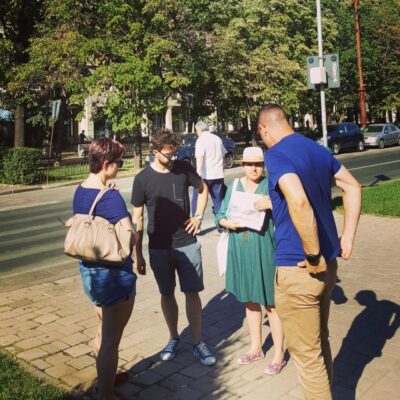
- Benefit from a small-to-medium group: The maximum group size is 25, large enough for energy but still manageable for questions.
- Pay $24 for interpretation, not entry tickets: Every listed stop is viewed from outside or in public space, so the value rests mainly on the guide’s storytelling.
Why this Bucharest walk works as a history lesson
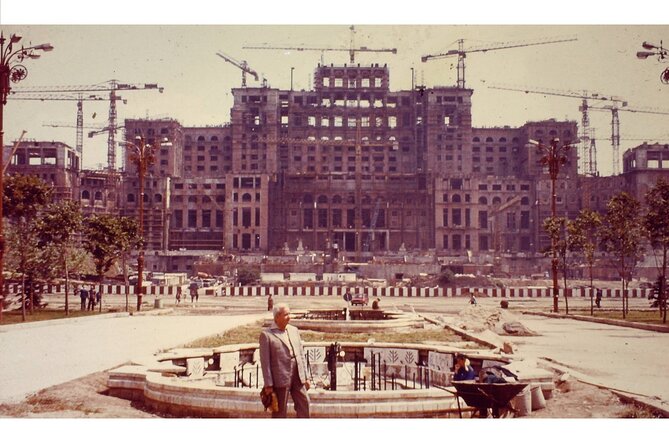
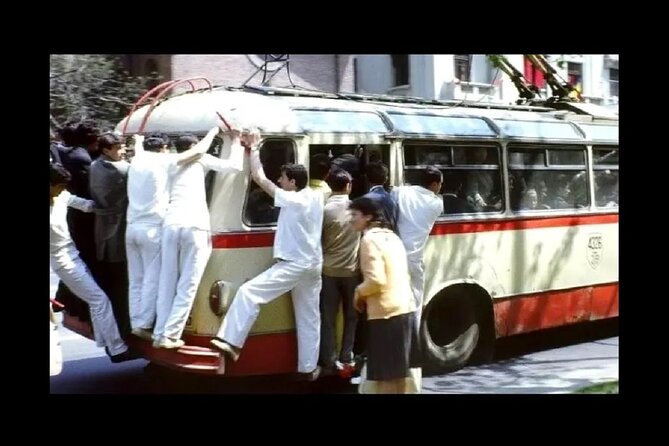
Romania’s communist period can seem confusing when you meet it only through dates and political names. This route gives you a physical sequence: a royal city, a forced rebuilding program, a dictatorship’s public image, and the uprising that ended it.
You begin at Bulevardul Unirii 5 at 10:30 in the morning. That starting point puts you close to the Palace of Parliament, the building that best expresses the scale and self-confidence of Nicolae Ceausescu’s final urban project. From there, the walk moves through religious, royal, civic, and commercial spaces before ending at Revolution Square.
I like that the route does not treat communism as a sealed-off chapter. You see how the old city survived beside socialist avenues, how royal buildings were given new political roles, and how ordinary public squares became sites of protest and loss.
The emphasis is on explanation rather than formal museum visits. Your guide supplies the links between buildings and events. Alex is one guide associated with this experience, while Lucia also leads tours in English. The strongest parts, judging from the available feedback, are the guides’ ability to connect separate places into one understandable story.
More communism and Ceausescu tours in Bucharest:
- The Real tour of Communism
★ 5.0 · 666 reviews - Life under Communism
★ 5.0 · 358 reviews - 3-Hour Guided Tour of Communist Bucharest
★ 4.9 · 303 reviews
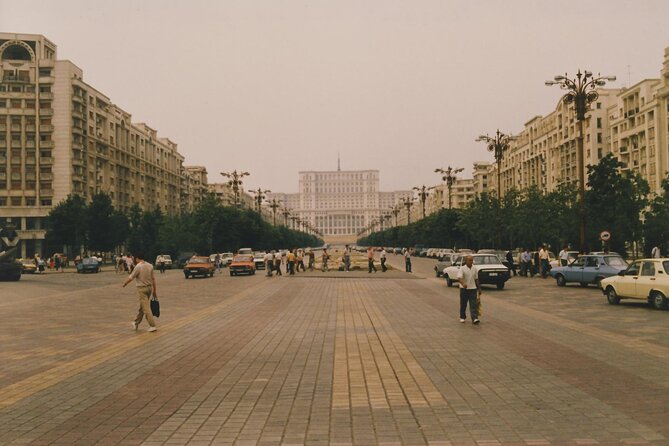
The Palace of Parliament puts the scale into perspective
The first stop is the Palace of Parliament, described as the second-largest administrative building in the world. You have about 20 minutes here, enough to take in the exterior and hear why it belongs to the last major communist building program.
This is not simply a large government office. Its size helps you understand the political message behind Ceausescu’s redevelopment of central Bucharest. The building represents the concentration of power, the use of state resources for monumental construction, and the reshaping of the capital around the leader’s vision.
Starting here is smart. You see the result before hearing about the human and urban cost of the plan. The tour does not include admission inside, so you should treat this stop as an exterior viewpoint and history briefing, not a palace visit.
If you want to tour the interior, plan that separately. The walking experience itself stays focused on the city’s public spaces and the guide’s account of how they fit together.
Antim Monastery shows what the boulevard threatened
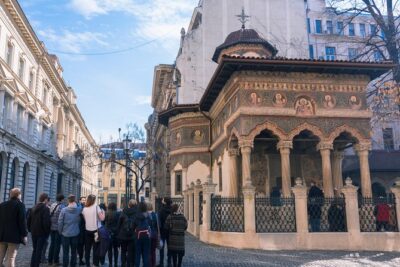
The walk then reaches Antim Monastery, part of Bucharest’s older city. You spend around 15 minutes here, hearing how it was nearly demolished to make room for the new Socialist Victory Boulevard.
This is one of the route’s most useful contrasts. The Palace of Parliament can feel like a single oversized project. Antim shows what that project put at risk: older buildings, religious sites, and the texture of an established neighborhood.
I like this stop because it changes the question from how big was the communist project to what had to move or disappear for it to happen. The monastery also gives the route a pause from broad avenues and official architecture.
You should not expect a long religious or architectural tour here. Its purpose is to explain the clash between the older city and the planned socialist capital. The stop lasts only 15 minutes, so listen closely when the guide draws that connection.
Patriarchal Palace links power, faith, and politics

At Palatul Patriarhiei, the guide spends about 20 minutes explaining a building inspired by the Garnier Opera in Paris. This site is tied both to the beginnings of democracy in Romania and to the start of the communist movement.
That mix makes it an important stop for anyone who wants more than a simple dictator-focused story. Romania’s political change did not begin in 1945, and the building’s earlier associations help place communism inside a longer national argument about power and government.
The stop also reinforces a theme running through the walk: buildings change meaning when political systems change. A place connected with one era can be assigned a new role under another.
Because the tour is conducted outside and admissions are not included, you will mainly use the palace as a setting for the guide’s explanation. The value comes from the context, not from an extended interior visit.
More Bucharest walking tours:
- Bucharest: City Highlights Guided Walking Tour
★ 4.9 · 1,482 reviews - Bucharest Highlights Walking Tour
★ 5.0 · 469 reviews - Bucharest: Ghost Stories & Romanian Mythology Walking Tour
★ 4.9 · 287 reviews - Bucharest: Guided Walking Tour with Romanian Snack
★ 4.9 · 228 reviews
Unirii Square reveals socialist planning in public view
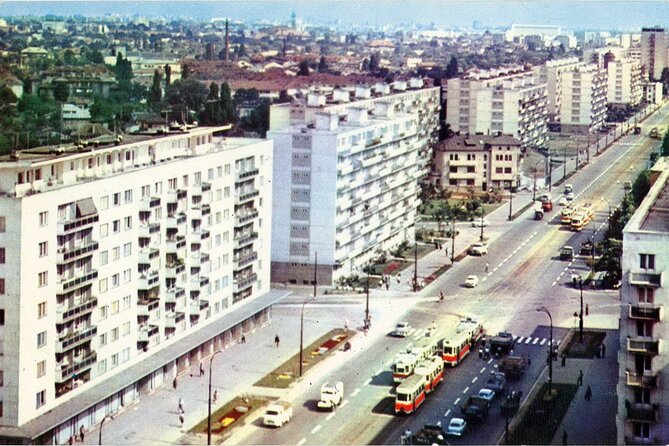
Piata Unirii takes about 20 minutes and shows another part of the 1980s redevelopment program. The square was built as part of the Socialist Victory Boulevard, and today it is known for its Dancing Fountains.
This is a good place to see how an urban space can carry two identities at once. The fountains may feel like a present-day attraction, but the square’s shape and purpose were tied to a period when public space was planned on a grand scale and linked to state display.
I would pay attention to the contrast between the square’s current use and its original political role. The tour helps you see that communist architecture was not limited to block housing or gray offices. It also included ceremonial avenues, oversized plazas, and carefully framed views.
The stop is broad rather than intimate. You will not get the same close-up sense of old Bucharest that you find near Antim Monastery or the Old Town. Its strength is scale.
Old Town makes the absence of care visible
The Old Town stop lasts about 15 minutes. Today it is one of Bucharest’s best-known areas, but during the communist period it was abandoned and came to symbolize the old regime.
That detail gives you a helpful warning about judging a city only by what you see now. An area that feels central and lively today had a very different place in the city during communism. The walk uses the Old Town to show how the regime viewed older urban fabric and how priorities shifted toward planned redevelopment.
I like this section because it prevents the tour from becoming a parade of official buildings. The Old Town gives you a human-scale setting and a reminder that political systems affect everyday streets, not only ministries and monuments.
The allotted time is short, so this is more of a guided orientation than a full Old Town visit. You can return later if you want time for restaurants, shops, or closer architectural inspection.
University’s Square brings the 1989 revolution close
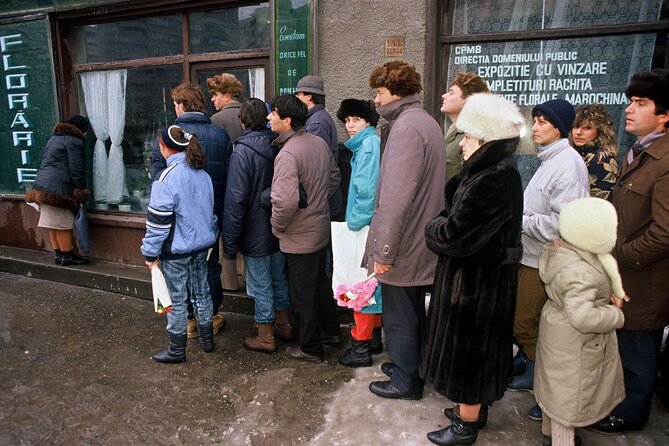
University’s Square is one of the most serious stops. The tour spends about 15 minutes here and explains that Romania was the only country in the communist bloc where the regime ended in a bloody revolution. Many victims were shot in this square.
This is where the tour’s earlier discussion of monumental power meets the danger of public opposition. A square can be a traffic point, a meeting place, and a battlefield within the space of a few days. Your guide’s job here is to connect the location to the final collapse of communist rule.
Expect a sober change in tone. The walk is informative and may include humor elsewhere, but this site calls for attention to the human cost. I find that placing this stop after the older buildings and socialist avenues makes the revolution easier to understand as an event rooted in the city itself.
The tour does not present this as a distant political story. You are standing in one of the places where the end of the regime was paid for with lives.
The Royal Palace shows how symbols were reassigned
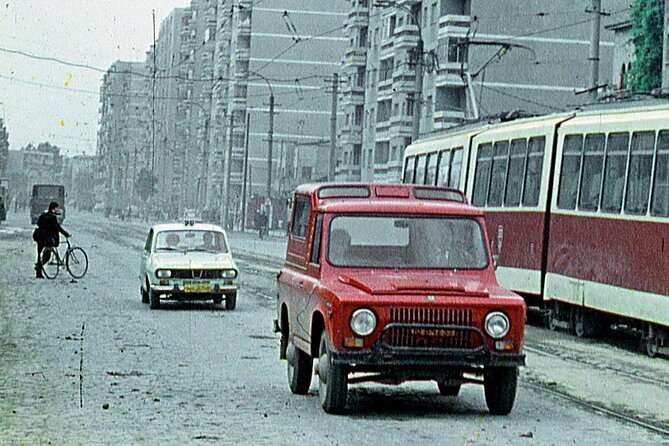
The former Royal Palace, now home to the National Art Museum, receives about 15 minutes. It once served as the winter residence of Romania’s royal family. In the early communist years, it became the Palace of the Republic and a protocol building.
This is a strong stop for understanding how a new government handles the symbols of the old order. The building did not lose its importance. Instead, its meaning was redirected toward the republic and the new political system.
The route also gives you a useful visual change after the massive communist avenues. The former royal residence represents another idea of national power, one tied to monarchy, ceremony, and inherited institutions rather than a single-party state.
Admission to the National Art Museum is not included, and the tour does not turn into an art visit. If you want to see the collections, plan another visit. During the walk, the building functions mainly as evidence of changing political ownership.
The Romanian Athenaeum offers a five-minute architectural pause
The Romanian Athenaeum is the shortest stop, at about five minutes. It is one of Bucharest’s most representative buildings and appears on the five-lei banknote.
Do not expect a long explanation here. The stop works as a quick architectural pause and a reminder that Bucharest’s identity is not only communist. The city also has grand cultural buildings that predate the dictatorship and continue to shape its public image.
A five-minute stop may feel brief if architecture is your main interest. Still, the compact timing helps the guide keep the walk moving toward its main destination, Revolution Square.
Revolution Square is the tour’s emotional finish
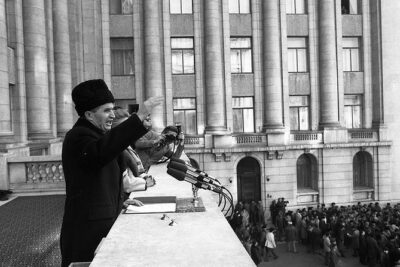
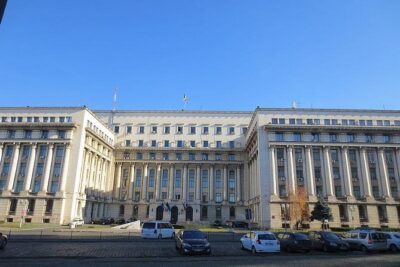
The final stop is Piata Revolutiei, or Revolution Square, where you spend about 25 minutes. The main building here was the Central Committee of the Communist Party, and it was from this building that Nicolae Ceausescu gave his last speech to the Romanian people.
This is the right place to finish. The route has already shown you the regime’s buildings, its treatment of older Bucharest, and its monumental avenues. Here, the political story reaches its public breaking point.
You will have time to take in the setting and hear how Ceausescu’s final speech fits into the events of 1989. Ending here also gives you a clear sense of the walk’s title, from Lenin to Ceausescu. The tour is not just about one leader or one building. It follows the rise, shape, and collapse of a system.
The end point is Revolution Square, not the original meeting point. That matters if you have a lunch reservation, museum plan, or transport connection afterward. You finish in a central area, but you should still allow a little time before making a tight booking.
What $24 buys you in practical terms
At $24 per person, this is a reasonably priced guided introduction to a difficult subject. You are paying for roughly 2 hours 30 minutes with a local guide, not for admission to the Palace of Parliament, the National Art Museum, or other interiors.
I see the value in the route’s range. In one morning, you cover the Palace of Parliament, Antim Monastery, the Patriarchal Palace, Unirii Square, the Old Town, University’s Square, the former Royal Palace, the Athenaeum, and Revolution Square. Doing that alone with a guidebook would take more planning, and the connections between sites would be easier to miss.
The price is less attractive if you want a building-by-building architecture tour or long visits inside museums. It is strongest for you if the guide’s interpretation is the main product.
The group can include up to 25 people. That is not a private walk, but it is limited enough to keep the route organized. Alex has been praised for storytelling, humor, scientific knowledge, and adapting to different people, including a three-generation family group. That suggests the experience can work across ages, provided everyone can follow English.
Who should book this walk?
I would choose this tour early in a Bucharest visit if you want political context before exploring the city on your own. It gives you names, places, and a basic timeline that can make later sightseeing more meaningful.
It suits:
- First-time Bucharest visitors who want a guided orientation
- People interested in 20th-century Europe and the 1989 revolution
- Families or mixed-age groups looking for one shared history activity
- Visitors who prefer outdoor sightseeing to long museum visits
- Anyone curious about how communist planning changed an older capital
It may not suit you if you need a slow pace, want detailed interior access, or do not understand spoken English comfortably. One person who joined with Google translation found it hard to follow, so English ability matters here. Service animals are allowed, the route is near public transportation, and most people can participate, but the supplied details do not promise a fully step-free route.
The tour is offered with a mobile ticket, and confirmation arrives when you book. You can cancel for a full refund up to 24 hours before the start time. If the minimum group size is not reached, the operator may offer another date or experience, or provide a full refund.
My booking verdict for the Lenin to Ceausescu walk
Book it if you want Bucharest’s communist past explained through real streets rather than presented as a list of dates. The route is especially useful because it balances monumental sites with places that show what was threatened, neglected, or repurposed.
The best reason to go is the guide. Alex and Lucia bring the human connection that turns a sequence of buildings into a story about power, memory, and ordinary life. The main limitation is clear: this is an English-language outdoor walk with no included admissions.
At $24, I consider it a good buy for a focused introduction to Bucharest’s recent past. Pair it with separate visits to the Palace of Parliament or National Art Museum if you want to go inside. If your priority is the 1989 revolution, make sure you have enough time at University’s Square and Revolution Square to absorb what happened there. This tour gives you the framework, then leaves you room to explore further.
FAQ
How long does the Communism Walking Tour from Lenin to Ceausescu last?
The tour lasts approximately 2 hours and 30 minutes.
Where does the tour begin?
It begins at Bulevardul Unirii 5, București 040101, Romania.
Where does the tour end?
The tour ends at Revolution Square, also called Piața Revoluției, in Bucharest.
What time does the tour start?
The stated start time is 10:30 am.
Is the tour offered in English?
Yes. The experience is offered in English.
Are admission tickets included?
No admission charges are included. The listed stops are presented as part of the walking route, and food and drinks are also not included.
What is the cancellation policy?
You can cancel at least 24 hours before the start time for a full refund. Cancellations or changes made less than 24 hours before the start time are not accepted for a refund.
Newest Bucharest trips we have written up
- Bucharest: Dealu Mare Winery Private Trip with Wine Tasting★ 4.9 · 6 reviews
- Winery touring & private wine tasting – one day private tour★ 5.0 · 3 reviews
- Traditions in Bucharest: Village Museum and Wine Tasting★ 5.0 · 8 reviews
- Your rendez-vous with Europe’s past: time-travel to Maramures, Transylvania★ 5.0 · 6 reviews
- Village Museum Bucharest Guided Tour★ 5.0 · 6 reviews
- Private Wine Tasting at Bucharest’s First Wine Bar★ 5.0 · 3 reviews
- Walking Tour of Bucharest City Center – Private Tour★ 5.0 · 4 reviews
- Wine tasting in Bucharest Old town – bonus cheese platter★ 4.5 · 6 reviews
Bucharest Communism and Ceausescu Tours, compared.
Bucharest Essential Tour: Old Town, Calea Victoriei & Communism
Read our review →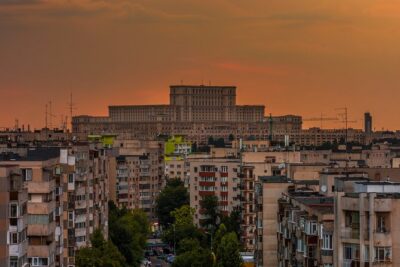

Museum of Communism Ticket with Communist Coffee
Read our review →
Dinner+Tour at Museum of Communism after closing
Read our review →Browse the lists this tour appears in