
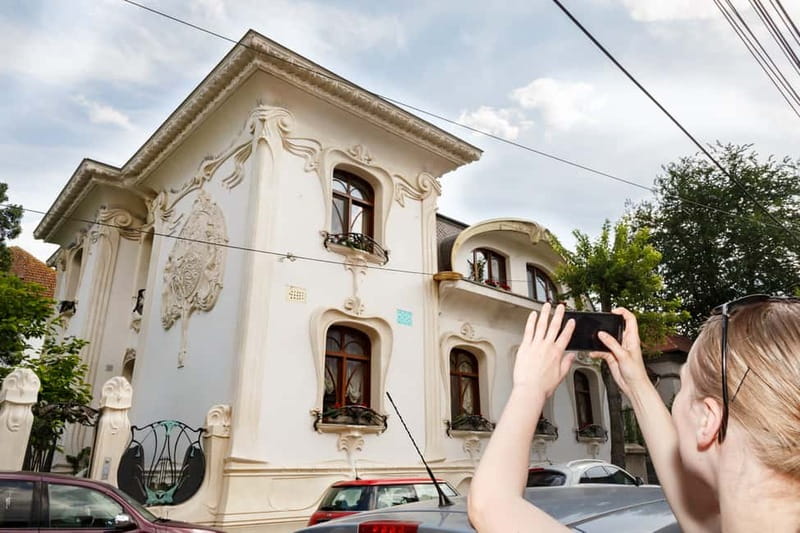
Reviewed · BUCHAREST HIDDEN GEMS AND ALTERNATIVE TOURS
Bucharest: Hidden Gems 2.5-Hour Walking Tour
Bucharest’s best stories often hide behind ordinary streets, and this walk takes you straight into them. You’ll pass an 18th-century church in Batistei, enter the city’s oldest house, and follow streets tied to writer Mircea Eliade. I especially like the small-group format and the chance to taste a fresh covrig, a simple Romanian snack with a long backstory.
The tour also gives you a useful first look at neighborhoods many visitors miss. The main drawback is that it is a walking tour with several historical stops, so you should expect steady time on your feet and limited time inside each place.
Key points to know before booking
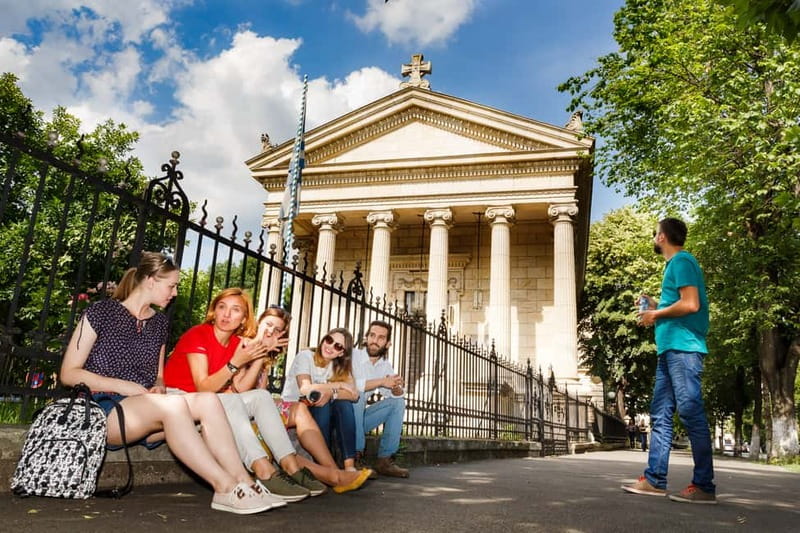
- Batistei reveals old Bucharest in layers: See a historic mahala, its church, and the marks left by earthquakes, war, modernization, and demolition.
- Casa Melik is the tour’s most unusual stop: This traditional Wallachian house includes a high cellar, a glass-covered veranda, an art collection, and local legends.
- The Armenian quarter adds a different cultural thread: Visit an Orthodox church built as a copy of a cathedral in Ecmiazin.
- Mantuleasa connects streets with literature: Learn about Mircea Eliade and the elegant mix of neoclassical, Romanian, and modernist buildings.
- A covrig is included: This salty, pretzel-like snack makes a tasty break and gives you a small piece of Romanian food history.
- The group is capped at 12 people: That is a useful size for questions and for moving through residential streets.
A smart introduction to Bucharest beyond the grand center
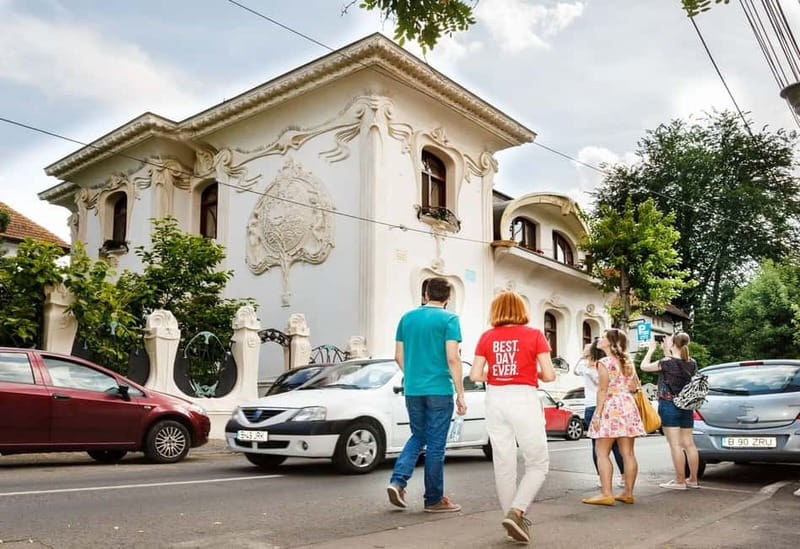
Bucharest is often presented through its grand avenues, Communist-era blocks, public parks, and neo-classical façades. This tour takes a quieter route. Instead of treating the city as a collection of major sights, it uses neighborhoods to explain how Bucharest grew and changed.
You begin on the stairs of the National Theater, in front of the main entrance. That central meeting point is practical if you are staying in or near the core, and the activity returns there at the end. From that point, the walk moves into residential areas where the city’s past is easier to read at street level.
The tour is listed as a 2.5-hour experience by name, while the activity details give a duration of 3 hours. Check the confirmed timing when you book. Either way, set aside a full morning and avoid scheduling a tight connection immediately afterward.
The group size is limited to 12 people. I consider that a strong feature for this kind of walk. Small streets, church interiors, and historic houses are easier to appreciate when you are not part of a large crowd. You can also ask the guide about restaurants, cafés, and other places to visit after the walk.
More hidden corners of Bucharest:
- Bucharest: Small Group History, Art & Secrets Tour
★ 4.7 · 152 reviews - Private Walking Tour: Essential Bucharest + Hidden Gems
★ 5.0 · 53 reviews - Unique Tour of Hidden Bucharest
★ 5.0 · 42 reviews
Batistei and the story of the mahala
The first neighborhood is Batistei, one of Bucharest’s old mahalas. A mahala traditionally grew around a religious building and gathered people with shared ethnic, social, or religious ties. It was not simply a street or district. It was a small community shaped by work, worship, family, and local connections.
Batistei gives you a useful way to understand Bucharest before the Communist period. The neighborhood survived modernization, earthquakes, wars, and Nicolae Ceausescu’s demolition projects, though it did not escape them unchanged. As you walk, the guide explains what daily life here was like before the Communist regime took control.
The area’s 18th-century stone church is a key stop. It is protected as a historic monument by Romania’s Ministry of Culture and Religious Affairs. The building is important not only for its age, but also because it anchors the story of the neighborhood around it.
I like this part of the walk because it avoids the usual mistake of treating architecture as decoration. The church becomes evidence of how Bucharest communities formed and how much of the old city survived by chance, care, or stubbornness.
The word old does not mean every building is perfectly restored. That is part of the appeal, but it also means you should expect an uneven streetscape rather than a polished museum district. Wear shoes that can handle ordinary city pavement.
The Armenian neighborhood and its remarkable church
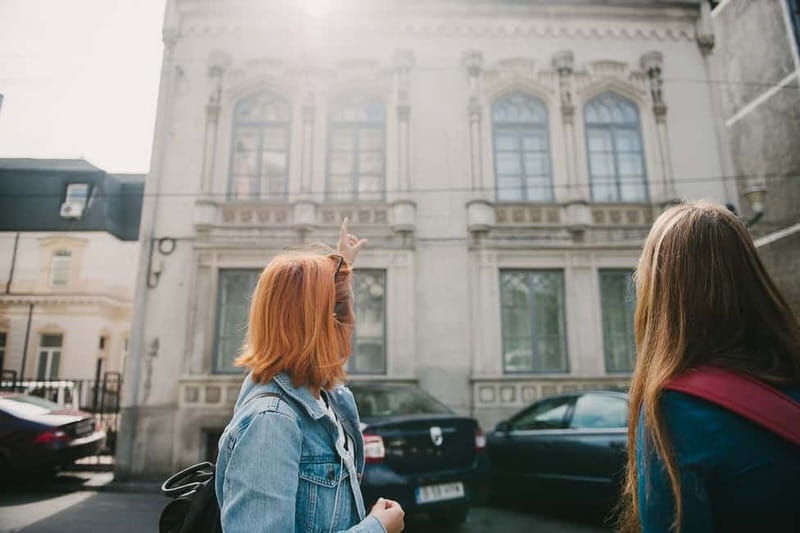
From Batistei, the route continues toward Bucharest’s Armenian neighborhood. This brings another group and another chapter into the city’s story. The Armenian community once had a much larger presence here, and the neighborhood still preserves an important reminder of that past.
The Orthodox church is among the best-preserved in Bucharest. It was built in the early 20th century for the Armenian population and follows the design of a cathedral in Ecmiazin, an Armenian city. The connection is unusually specific: this is not merely a church with Armenian influence, but an exact replica of that cathedral.
That detail gives the stop real weight. You are not just looking at another handsome religious building. You are seeing how a community maintained a connection with its homeland through architecture.
The tour is conducted in English, and the guide explains the church within the wider story of Bucharest’s neighborhoods. Guides named Elena, Andrei, and Livia have led this experience, and their approaches differ in personality. Elena is described as fun and informative, Andrei as especially attentive, and Livia as enthusiastic and fluent in English. The important point for you is that the guide is central to making these places meaningful. The buildings alone will not explain themselves.
Casa Melik, Bucharest’s oldest home
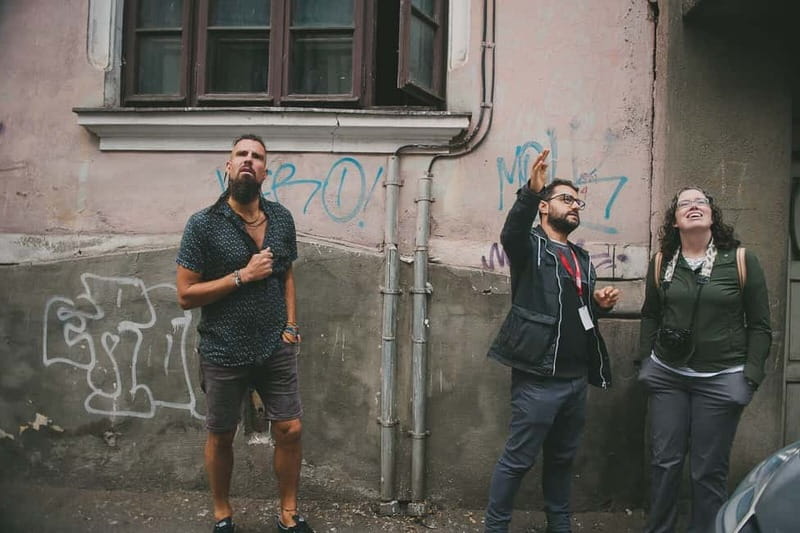
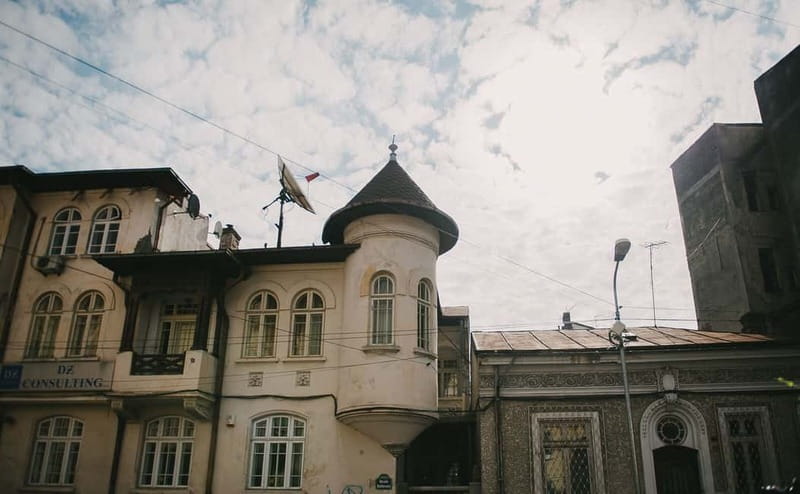
Casa Melik is likely to be the most memorable stop for anyone interested in domestic architecture. It is described as the oldest home in Bucharest and offers a glimpse of a traditional Wallachian peasant house.
Its design includes a high cellar and a veranda covered with glass. Those features help you picture a home shaped by both practical needs and local building customs. It feels very different from the grand public buildings often used to represent Bucharest.
The house also contains an art collection, giving the visit more than architectural interest. You get a look at how a historic home can become a place for art and memory at the same time.
Casa Melik comes with stories of hidden secrets, including a local legend about underground tunnels linking the house with Masonic lodges. Treat that as folklore rather than proven history. Still, these stories are useful because they show how old buildings gather layers of rumor and imagination.
This is one place where the guide’s storytelling matters a great deal. A short visit can feel flat if you only see walls and furniture. With context, the high cellar, veranda, collection, and legends become clues to the city’s past.
The stop may appeal most to you if you prefer homes, neighborhoods, and personal stories to large formal museums. If your main interest is grand architecture, it will be a quieter change of pace.
More Bucharest walking tours:
- Bucharest: City Highlights Guided Walking Tour
★ 4.9 · 1,482 reviews - Bucharest Highlights Walking Tour
★ 5.0 · 469 reviews - Bucharest: Ghost Stories & Romanian Mythology Walking Tour
★ 4.9 · 287 reviews - Bucharest: Guided Walking Tour with Romanian Snack
★ 4.9 · 228 reviews
A covrig break with a Romanian backstory
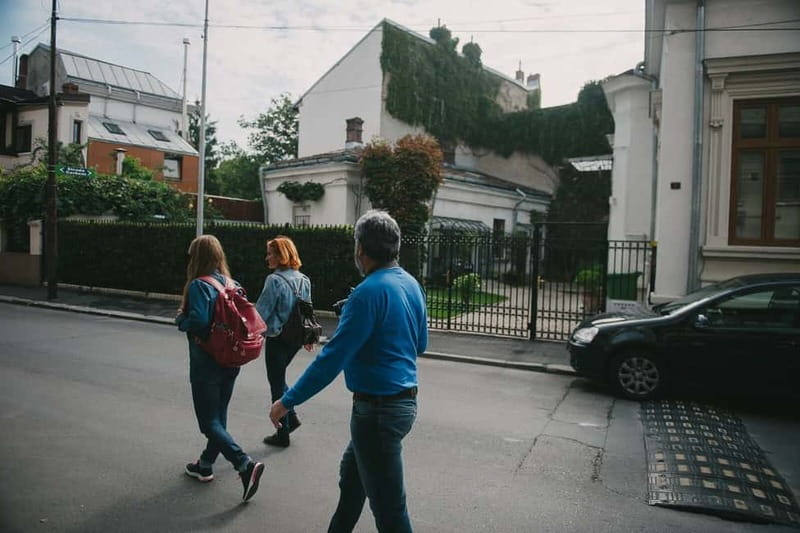
The included food stop is refreshingly simple. You try a covrig, a salty snack similar to a pretzel. It is a small item, but it gives the morning a pleasant pause and introduces a piece of everyday Romanian food culture.
The story behind the covrig is just as interesting as the snack. One explanation says Greek merchants introduced it in the 19th century to encourage people to drink more of their wine. Its similarity to German pretzels, however, leaves open the possibility that Romanians were eating something similar much earlier.
You should not expect a full meal. The covrig is a snack, and additional food and drinks are not included. If you need a substantial breakfast, eat beforehand or plan lunch after the tour.
One guide, Andrei, has been especially thoughtful about this part of the experience, greeting the group with freshly baked bagels and bottled water. The official inclusion is the covrig, so do not assume every guide will provide extras. Still, that detail shows how small gestures can make a morning walk feel more personal.
Mantuleasa Street and Mircea Eliade
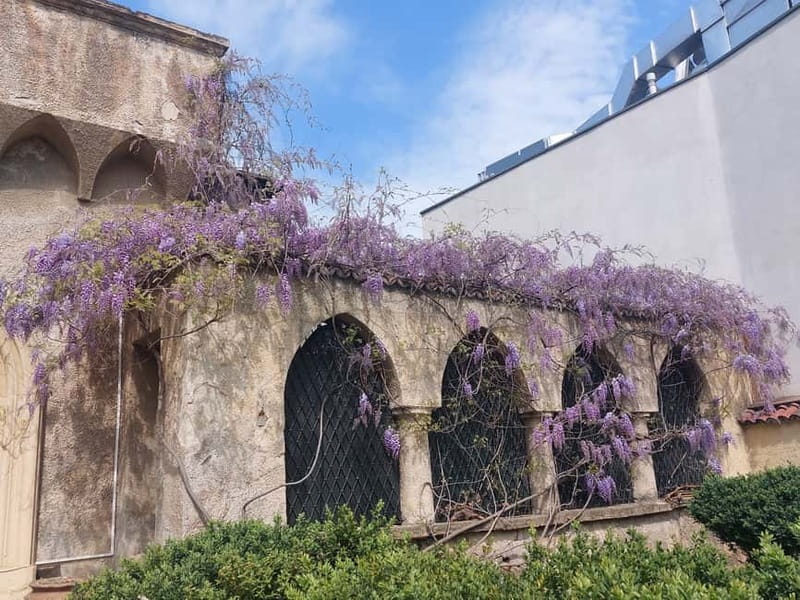
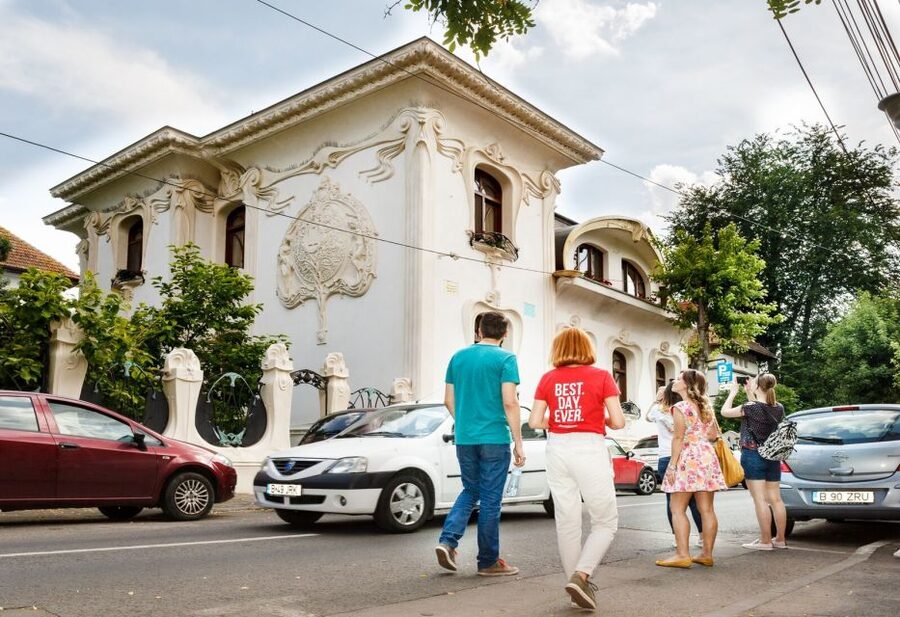
Mantuleasa Street is presented as one of Bucharest’s prettiest areas, and it offers a welcome change after the more church-centered sections of the route. It began as a mahala for wealthy merchants, so the architecture reflects a more prosperous side of old Bucharest.
Look for a mixture of neoclassical, Romanian, and modernist styles. The buildings do not belong to one tidy period, and that variety is part of what makes the street worth seeing. Bucharest often feels like several eras placed close together, with elegant façades beside later additions and Communist-era structures.
Mantuleasa also connects the physical city with Romanian literature. It was a favorite part of Bucharest for Mircea Eliade, one of Romania’s most respected writers and philosophers. The guide explains his life and work, including his years as a professor at the University of Chicago before his death in 1986.
You do not need to know Eliade’s books in advance to enjoy this stop. The value comes from seeing how a writer’s sense of place can add meaning to an otherwise ordinary street. You learn to look at the neighborhood not only as architecture, but also as a setting for memory and creative work.
This section may be especially rewarding if you like literary connections. If you are mainly seeking photographic landmarks, the attraction is subtler. There is no single grand viewpoint. The pleasure comes from walking, listening, and noticing details.
Ioanid block and Icoanei mahalla
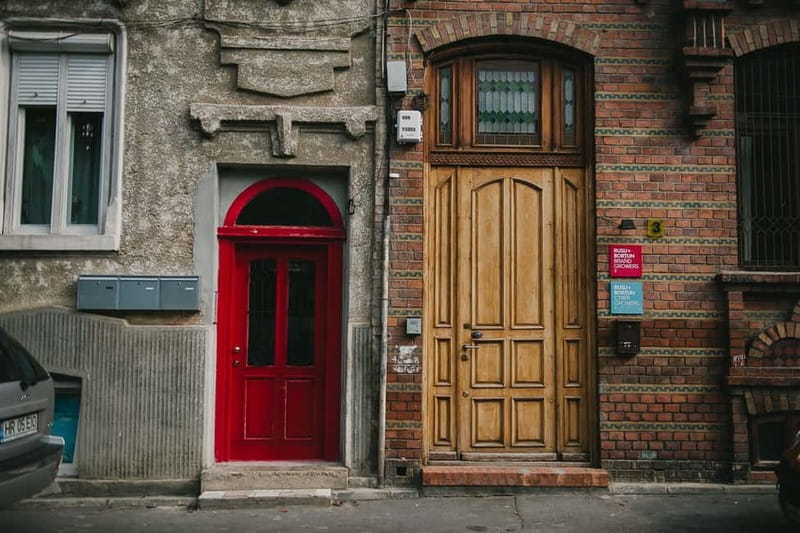
The final section takes you to the Ioanid block and the Icoanei mahalla. These areas provide a graceful finish, with attractive architecture and a stronger sense of Bucharest as a city of contrasts.
The Ioanid block is described as breathtakingly beautiful, and the Icoanei area adds another look at the city’s older residential character. By this point, you will have seen several kinds of Bucharest: religious communities, merchant neighborhoods, traditional homes, literary streets, and later urban development.
The route ends back at the National Theater meeting point. That makes the tour easy to fit into a first morning in the city. You can then ask the guide for practical suggestions about eating, drinking, and continuing your sightseeing.
This final advice may be one of the most useful parts of the experience. A local guide can help you turn a three-hour orientation into a better day in Bucharest, especially if you are unsure which parts of the city to visit next.
What the $45 price gets you
At $45 per person, the tour is not a bargain-priced city stroll, but the price is reasonable if you value interpretation and access to smaller historic places. The fee includes an English-speaking local guide and a covrig. It does not include extra food, drinks, shopping, or souvenirs.
The real value comes from the connections between the stops. You are not simply paying to walk past churches and houses. You are paying for an explanation of mahalas, minority communities, religious buildings, domestic architecture, food traditions, and literary history.
The maximum group size of 12 also matters. A private tour would cost more, while a large bus tour would not suit these streets nearly as well. This sits in the middle: personal enough for questions, but less expensive than a fully private guide.
I would book it early in your Bucharest stay rather than on your final morning. The route gives you a working map of several neighborhoods, and the guide’s restaurant and sightseeing advice can help shape the rest of your visit.
Timing, comfort, and who should take it
This is a morning walking tour, though you need to check the available starting times. Bring comfortable shoes, sunscreen, and something to cover your head. Summer sun can be intense, and the route includes outdoor walking between stops.
Children are welcome. Ages 6 through 11 pay the listed child rate, while children under 6 may join free of charge if you mention them when booking. The walk includes churches, residential streets, historic buildings, and food, so it can work well for families interested in learning rather than constant entertainment.
I would recommend it most strongly to:
- First-time visitors who want context before exploring alone
- Architecture fans who prefer old houses and neighborhood streets
- People interested in Romanian religious and cultural communities
- Readers familiar with Mircea Eliade or curious about his Bucharest
- Families able to manage a few hours of walking
- Anyone who wants a local guide’s suggestions for the rest of the city
You may want to skip it if you dislike walking, want a large number of major monuments, or prefer a food tour with several tastings. The covrig is a snack, not a full culinary itinerary.
The tour allows free cancellation up to 24 hours before departure, and you can reserve while paying later. Those terms are useful if your Bucharest schedule is still changing.
Should you book the Bucharest Hidden Gems walking tour?
Book this tour if you want Bucharest explained through its neighborhoods rather than reduced to a list of famous buildings. Batistei, the Armenian quarter, Casa Melik, Mantuleasa, and Icoanei create a varied morning, and the local guide ties them together with history, literature, architecture, and food.
I especially recommend it early in a longer stay. You will leave with a clearer sense of how Bucharest grew, where its communities lived, and which areas deserve more time. Just bring comfortable shoes, protect yourself from the sun, and remember that this is a story-rich neighborhood walk, not a grand-monument checklist.
FAQ
Where does the tour start?
The tour starts on the stairs of the National Theater, in front of the main entrance.
Where does the tour finish?
The activity ends back at the National Theater meeting point.
How long does the tour last?
The activity details give a duration of 3 hours. The experience title describes it as a 2.5-hour walking tour, so check the confirmed timing when booking.
What language is the tour conducted in?
The tour is conducted in English by a live local guide.
What is included in the price?
The price includes the local English-speaking guide and a covrig street snack.
Is the tour suitable for children?
Yes. Children from ages 6 through 11 may join at the listed child rate. Children under 6 may join free of charge if you mention them when booking.
How large is the group?
The group is limited to a maximum of 12 people.
Newest Bucharest trips we have written up
- Bucharest: Dealu Mare Winery Private Trip with Wine Tasting★ 4.9 · 6 reviews
- Winery touring & private wine tasting – one day private tour★ 5.0 · 3 reviews
- Traditions in Bucharest: Village Museum and Wine Tasting★ 5.0 · 8 reviews
- Your rendez-vous with Europe’s past: time-travel to Maramures, Transylvania★ 5.0 · 6 reviews
- Village Museum Bucharest Guided Tour★ 5.0 · 6 reviews
- Private Wine Tasting at Bucharest’s First Wine Bar★ 5.0 · 3 reviews
- Walking Tour of Bucharest City Center – Private Tour★ 5.0 · 4 reviews
- Wine tasting in Bucharest Old town – bonus cheese platter★ 4.5 · 6 reviews
Bucharest Hidden Gems and Alternative Tours, compared.
Private Walking Tour: Essential Bucharest + Hidden Gems
Read our review →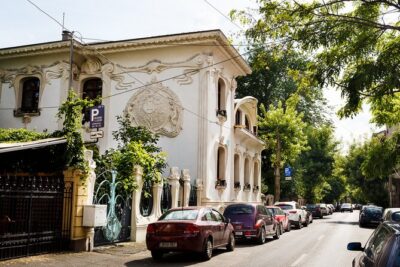
Alternative Bucharest: 2.5-3 Hours Walking tour (Small groups)
Read our review →
Discover Bucharest: Explore Hidden Old Town Walking Tour
Read our review →
Troubled – Notorious Neighborhood – area known for social issues
Read our review →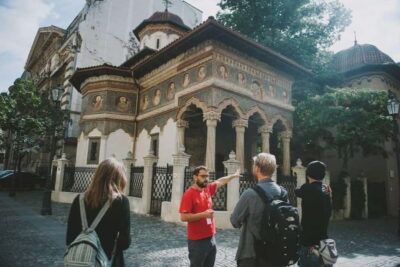
Hidden Bucharest: Discover Secrets of the Old Town
Read our review →Browse the lists this tour appears in