
Reviewed · BUCHAREST CITY TOURS
Bucharest: Alternative Sightseeing 2.5-3h-Hour Guided Tour
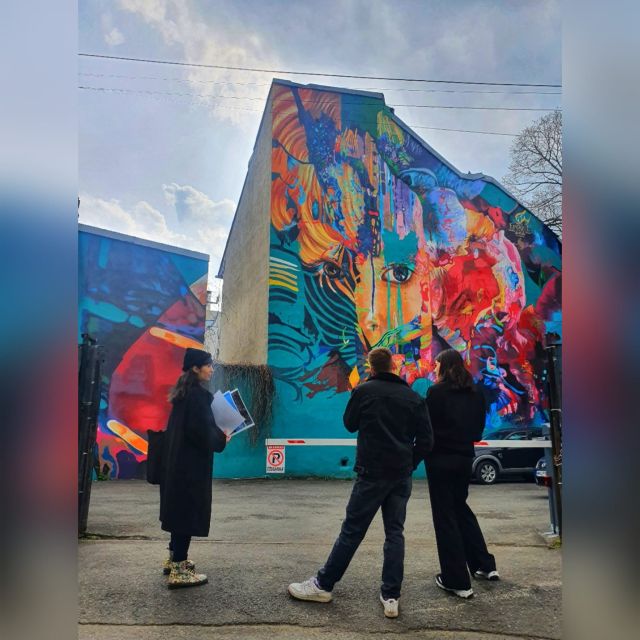
Bucharest’s street art is not confined to one polished gallery district. It appears on side streets, café walls, old buildings, and public spaces, often carrying a political or social message. This 2.5-hour walk uses those works as a way into the city’s changing identity, beginning at Izvor Metro Station and finishing near Food Hood.
I like the small group of no more than 10 because it gives you room to ask questions and study the artwork without being herded along. I also like the link between art and daily life: the route includes cafés, libraries, bars, theaters, and open-air film spaces rather than treating graffiti as decoration. The main drawback is simple: this is a walking tour, not a traditional Bucharest highlights tour, so you will not spend much time at the city’s famous monuments.
Key points to know before booking
- Street art with context: The guide explains artists, symbols, social issues, and the connection between graffiti and freedom of expression.
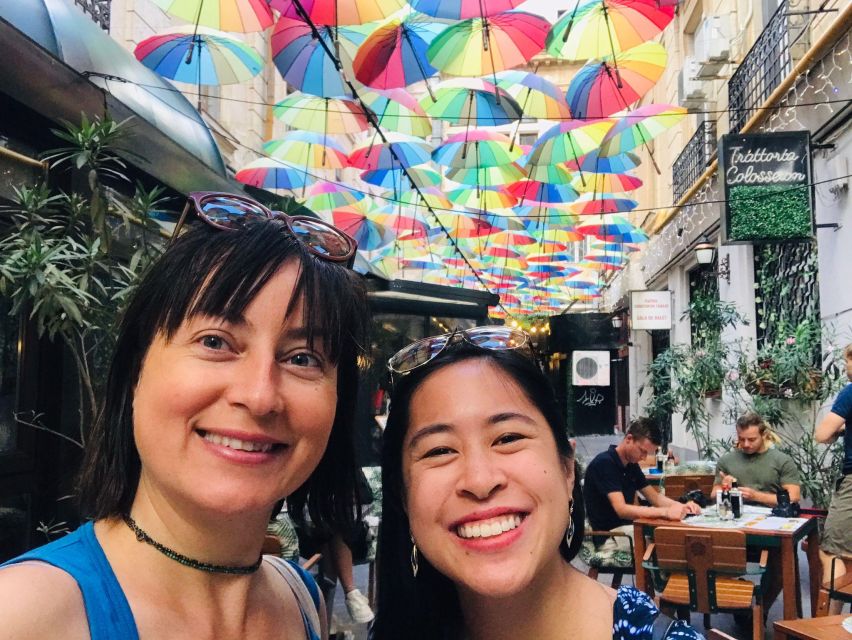
- A route beyond the postcard sights: Expect side streets, independent cultural spaces, cafés, murals, stickers, and installations.
- A genuinely small group: The maximum of 10 people makes conversation and photo stops easier.
- Guides who make the route personal: Elena, Anca, Mara, Livia, and other guides have been praised for storytelling, humor, and local tips.
- A useful first-day activity: The walk can help you notice Bucharest’s signs, art, cafés, and alternative venues for the rest of your stay.
- Bring good walking shoes: The tour lasts about 2.5 hours and includes plenty of strolling outdoors.
Why Bucharest street art makes a good city introduction
You may arrive in Bucharest expecting grand avenues, old churches, ornate buildings, and the heavy imprint of the communist period. Those subjects matter, but they do not explain everything you see on today’s streets. Street art gives you another route into the city, one shaped by young artists, public debate, local frustration, humor, and hope.
The guide does not simply point at a mural and name its creator. You learn how a piece fits into its surroundings and what it may say about public space, politics, identity, or social change. A wall becomes a conversation starter rather than a quick photo stop.
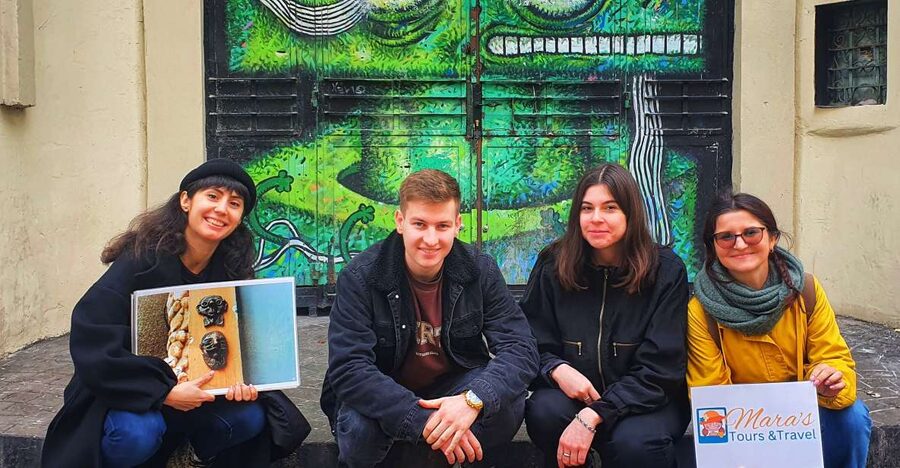
That approach is especially useful if you are new to graffiti or unsure how to read it. The walk includes large murals, small stickers, painted signs, and installations. Some works may be bright and playful, while others are more pointed. Your guide encourages you to form your own interpretation before explaining the background, which makes the discussion more open than a standard speech delivered at every stop.
The subject also gives you a better sense of how Bucharest is changing. The tour connects contemporary art with the city’s past and with the concerns of younger residents. You are not only looking at paint on a wall. You are considering who gets to shape public space and what a city chooses to display.
More Bucharest city tours:
- Bucharest: City Highlights Guided Walking Tour
★ 4.9 · 1,482 reviews - Bucharest Highlights Walking Tour
★ 5.0 · 469 reviews - Bucharest: 2-Hour City Highlights Bike Tour
★ 4.8 · 269 reviews
Starting at Izvor and finding the first signs of expression
The meeting point is outside Izvor Metro Station. That is a practical place to begin because you can reach it by public transport, and the tour starts right in the city rather than requiring a separate transfer to a distant neighborhood.
The first section introduces freedom of expression and sets the tone for the walk. Instead of opening with a list of dates, the guide begins with visible clues in the public realm. This helps you understand why street art matters in Bucharest and how it relates to wider cultural and social realities.
The exact works can change. Street art is temporary, and walls may be painted over, altered, or replaced. That is part of the nature of the subject. You are seeing a living part of the city rather than a fixed museum collection.
At this point, listen for the guide’s reading of the city as much as for the art itself. Past participants have singled out guides such as Elena and Anca for clear English, warm conversation, and strong storytelling. Guides have also included Mara, Livia, and Helena, so the tone may vary, but the common thread is an informed local perspective rather than a memorized sightseeing script.
The sociology faculty and public life in Bucharest
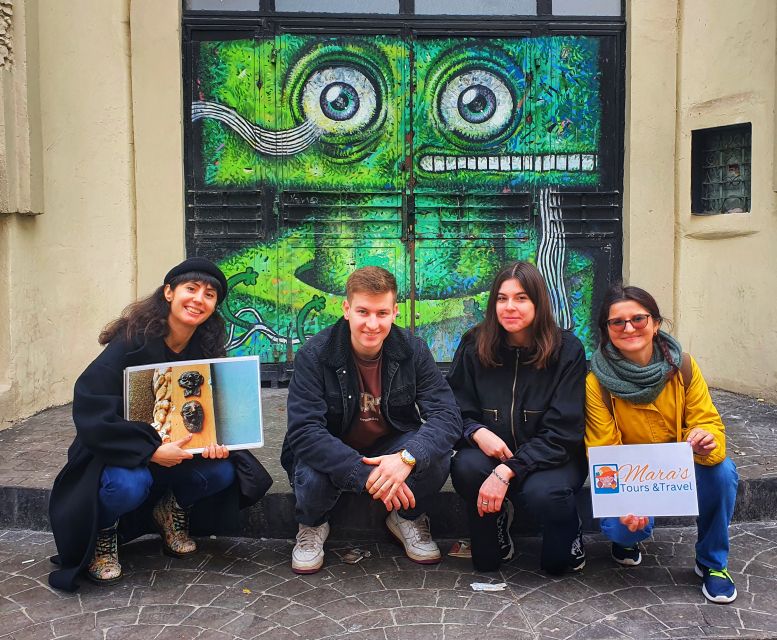
The stop at the Faculty of Sociology and Social Work lasts about 15 minutes. Its place on the route makes sense: the tour is concerned with how people use public space and how art reflects social life.
Here, you begin to look beyond style. A mural may say something about belonging, protest, memory, or the way young people see their city. The guide helps connect those ideas to Bucharest without turning the stop into a formal academic lecture.
I would pay attention to the questions raised along the way. One of the better features of this tour is its conversational feel. You can ask about Romanian society, the city’s past, or the meaning of a particular image. One guide, Anca, has been described as especially good at answering questions and tailoring the walk to a participant’s interests.
If you want only landmark photographs, this stop may seem less important. If you want to understand the forces behind the art, it gives the rest of the route a useful frame.
Epoque Hotel and the contrast between old and new Bucharest
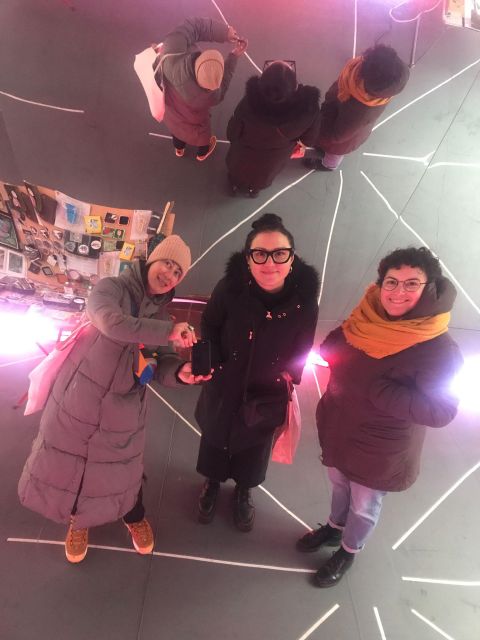
The route continues to Epoque Hotel for about 20 minutes. This stop adds an interesting contrast. A historic or refined setting can sit close to informal street expression, showing how Bucharest’s architectural and cultural layers overlap.
The value here is not just the building itself. The guide uses the surrounding area to explain how different parts of the city coexist. Established institutions, hotels, old façades, independent projects, and new creative work can share the same streets, sometimes comfortably and sometimes less so.
You will likely notice that the tour is not a single-style art walk. It moves between architecture, social history, and contemporary culture. That variety keeps the experience from becoming a long sequence of similar walls.
The 20-minute timing should give you enough space for explanation and photographs without making the stop feel rushed. Still, keep your expectations realistic. This is an urban walk with several short stops, not a private architectural inspection of every building along the way.
A few more Bucharest trips worth putting side by side
- 3-Hour Guided Tour of Communist Bucharest
★ 4.9 · 303 reviews - Bucharest: 3-Hour Dark History Tour with a Local
★ 4.9 · 301 reviews - Bucharest: 3-Hour Walking Tour
★ 4.9 · 77 reviews - Bucharest: Relics of Communism 3-Hour Walking Tour
★ 4.9 · 77 reviews
Beans & Dots and the role of cafés in creative Bucharest
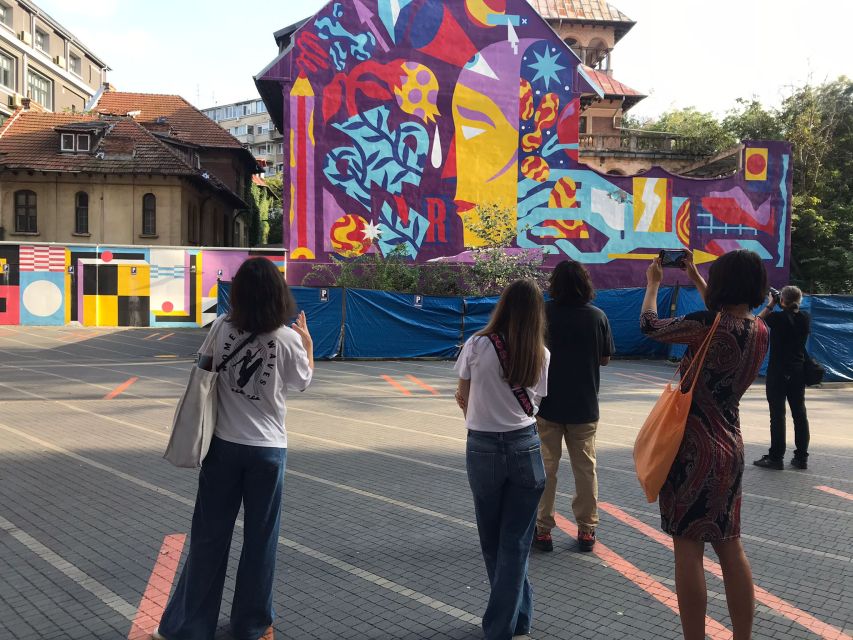
Beans & Dots Specialty Coffee is scheduled for about 20 minutes. This is one of the more useful stops for understanding how alternative culture works in everyday Bucharest. Cafés can act as meeting places for artists, designers, students, and people interested in local projects.
The tour may include time to look at art connected with the venue and to hear how independent spaces support young artists. It also gives you a natural pause during the walk. One guide has included a stop at a family-run bakery and offered suggestions for local treats, so the food element may be informal rather than a fixed tasting included in the ticket.
Do not book this tour expecting a full coffee experience or a meal. The listed price covers the guide, not food and drinks. But if you enjoy finding places to return to after a tour, this stop is practical. You can note the café and ask for other recommendations for restaurants, bars, galleries, and cultural venues.
This is also where the tour’s local friend quality can be most useful. Several guides have offered advice for the rest of a visit, including places to eat and alternative venues. That can add real value if this is your first day in Bucharest.
Kraft Market and the city’s independent creative network
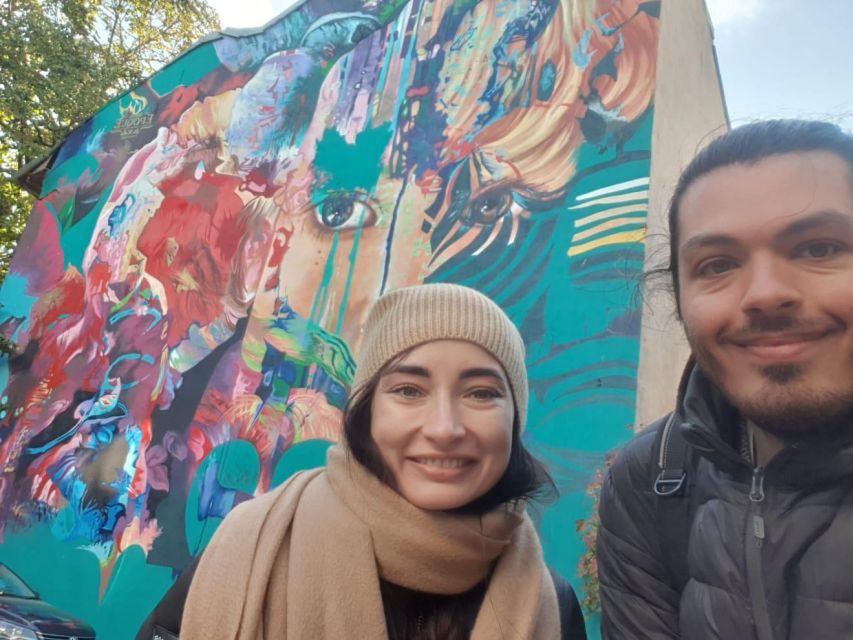
The Kraft Market stop is brief, around 10 minutes. Its shorter length does not mean it is an afterthought. It shows how art and commerce can meet in a small, independent setting.
A place like this helps you understand that Bucharest’s creative activity is not limited to large institutions. Young artists often work through temporary projects, cafés, markets, bars, galleries, and community spaces. The guide explains how such venues welcome installations and murals and how they fit into the city’s cultural life.
This stop is likely more interesting to you if you enjoy design, small businesses, handmade work, or local creative scenes. If your main interest is large-scale mural photography, you may find the time here less visually dramatic than the next sections.
The route’s mix of venue types is one of its strengths. You are not simply walking from one painted wall to another. You are learning where art is made visible, who supports it, and how it reaches people who may never enter a formal gallery.
Calea Victoriei, where the city’s layers meet
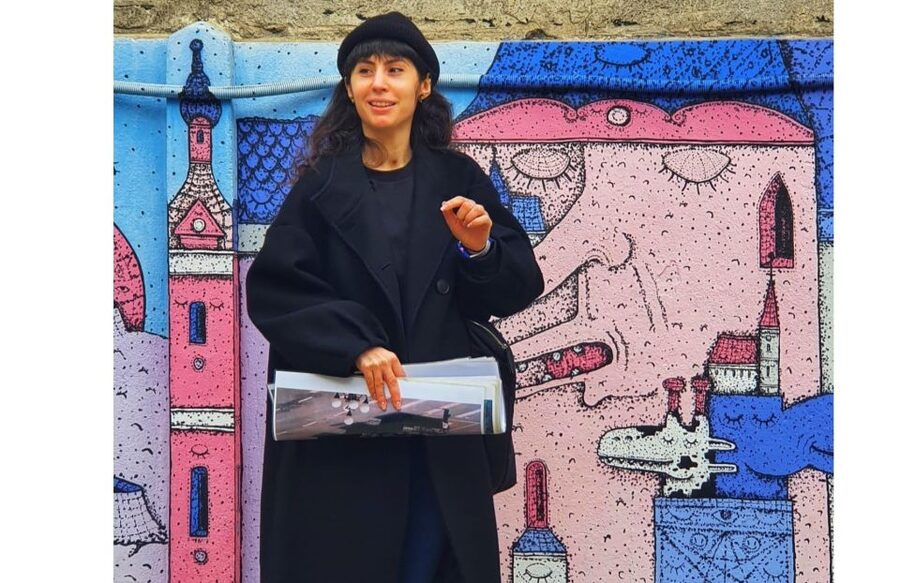
The 30-minute section along Calea Victoriei is the longest single stop. This major avenue gives the guide room to connect the alternative art scene with Bucharest’s broader urban story.
You will see how contemporary work appears alongside some of the city’s more established architecture and public spaces. That contrast matters. Street art can be easy to dismiss when viewed in isolation, but its meaning changes when you consider the age, purpose, and social role of the buildings around it.
This part should also help you get your bearings. Calea Victoriei is central, useful for later sightseeing, and full of places you may want to revisit. The guide can point out details you might miss on your own, including smaller pieces that do not announce themselves as tourist attractions.
Allow time for photographs, but do not expect every image to be a giant mural. Some of the most interesting finds may be modest stickers, small painted marks, or works tucked into side streets. Good walking shoes matter here, and comfortable clothing will make the long outdoor section easier.
Bram Stoker, Dracula, and the masonic mural
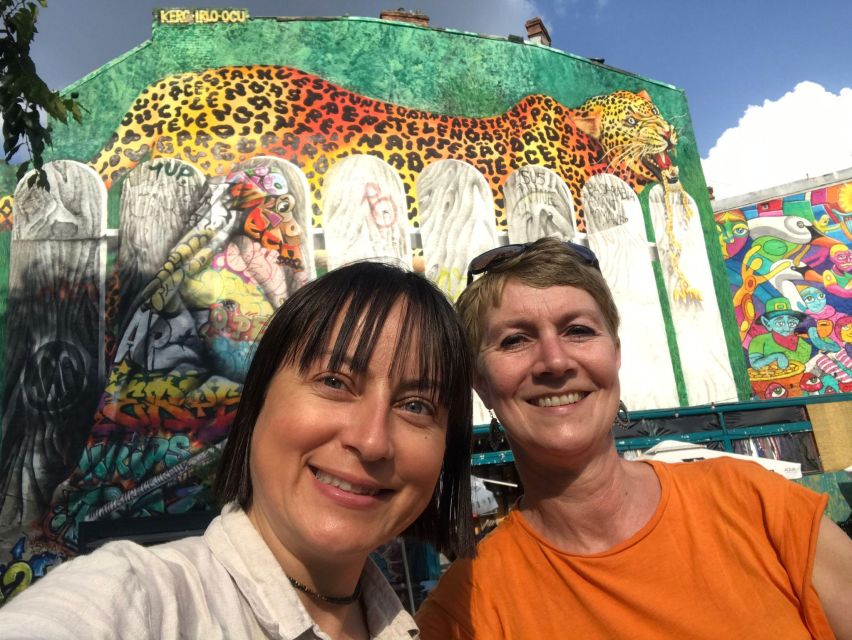
One of the most distinctive stops is the mural connected with Bram Stoker and Dracula, described as a masonic painting. The guide spends about 15 minutes explaining it.
This is the sort of work that makes the tour different from a standard city walk. It brings together popular culture, local visual language, symbolism, and the way Bucharest uses familiar figures to tell new stories. Dracula is internationally known, but the artwork gives you a chance to consider how that image is adapted in a Romanian urban setting.
The guide’s role is important here because the mural may not explain itself. Ask about the symbols, the artist, and the local response. The tour is strongest when you treat the artwork as a prompt for discussion rather than trying to find one official meaning.
This stop is also a reminder that the route is not narrowly focused on one art form. You may encounter political images, playful references, abstract work, and pieces tied to local history. The range keeps the walk lively.
Finishing near Food Hood with ideas for the rest of your stay
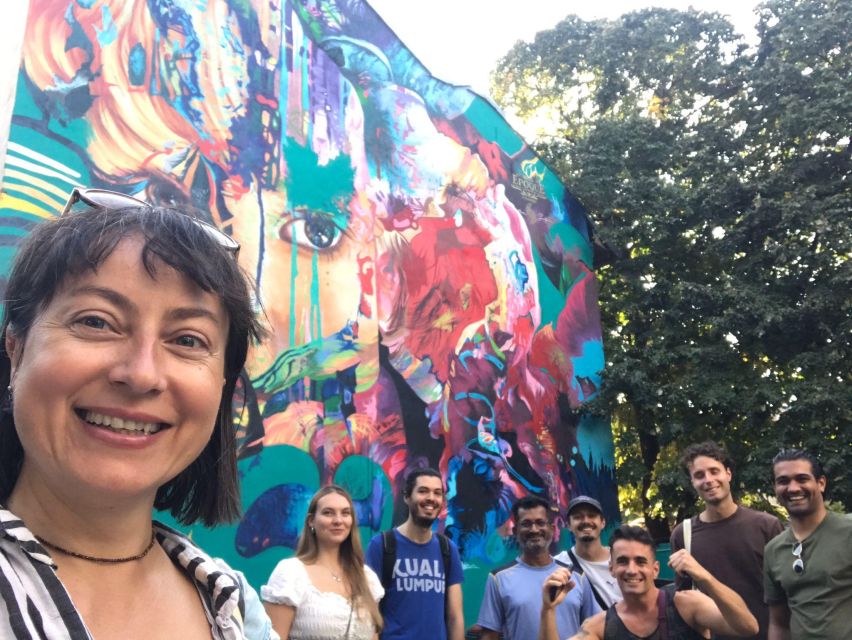
The tour ends at Food Hood. That gives you an easy place to continue the day with food or conversation, though the activity does not state that a meal is included.
Finishing in a food-focused setting is useful after a 2.5-hour walk. You can ask the guide for further suggestions, compare your favorite works, or continue exploring on your own. Several past guides have been praised for sharing practical recommendations, and this is a good moment to ask about cafés, restaurants, art spaces, and neighborhoods worth visiting later.
The end point also fits the tour’s purpose. You finish not at a grand monument, but in an active part of the city where culture, food, and social life overlap.
Guide style and the value of a small group
The guide is the heart of this experience. The advertised language is English, and the guide is live rather than audio-recorded. Named guides connected with the tour include Elena, Anca, Mara, Livia, Helena, and others.
Their most useful qualities are clear storytelling and openness to questions. Elena has been praised for explaining artists and the ideas behind their work, while Anca has been described as a strong storyteller who can adapt the walk to individual interests. Mara has been noted for enthusiasm and for linking street art with Romanian history.
A small group capped at 10 people improves the format. You can hear the guide more easily, stop for photos without blocking a large crowd, and take part in interpretation. It also makes the tour more suitable for a solo visitor who wants conversation without booking a private guide.
The experience may feel less formal than a museum tour. That is a benefit for many people, but not for everyone. If you prefer a fixed lecture with exact timings and no discussion, this walk may feel loose. If you like asking why a work is there and what it means, the format should suit you well.
Price, timing, and who gets the best value
At $47 per person, the tour is not the cheapest way to walk around central Bucharest. Its value comes from access to context. You could photograph walls for free, but you would miss much of the background, the connection to activism, and the locations of smaller cultural venues.
The price is easier to justify if you treat this as both a guided walk and an orientation to the city’s independent side. A good guide can save you hours of searching for scattered murals and can give you places to return to during your stay.
The duration is listed as 2.5 hours, with the activity description allowing up to three hours. Plan for an outdoor walk rather than a tightly timed indoor tour. Wear comfortable shoes, bring a phone or camera, and leave room in your schedule afterward.
Free cancellation is available up to 24 hours before the start, and you can reserve now and pay later. Those terms help if your Bucharest plans are still shifting.
Who should book this walk
I would recommend it to you if you enjoy contemporary art, local stories, and city life away from the usual route. It is especially useful early in a Bucharest visit because the guide can point out places and ideas that shape the rest of your stay.
It also suits visitors who are skeptical about graffiti. The discussion can show how street art carries meaning, not just color. You do not need prior art knowledge, and the guides are used to explaining work in plain terms.
Families with children may find some topics more political or abstract than expected. People with limited walking stamina should also consider the outdoor length and wear supportive shoes. If your priority is the Palace of Parliament, the Old Town, or a broad survey of major monuments, choose a conventional sightseeing tour instead, or pair this one with a standard city walk.
Should you book Bucharest Alternative Sightseeing?
Book it if you want to understand how Bucharest expresses itself today, not just photograph its most famous buildings. The strongest parts are the small group, the thoughtful guides, the connection between murals and social issues, and the chance to find cafés and cultural spaces you might otherwise miss.
Skip it if you want a monument-heavy itinerary or dislike walking between varied, sometimes temporary art sites. For everyone else, $47 buys more than a collection of photographs. It gives you a new way to read the city, and after the walk you may start noticing signs, murals, and small acts of public expression everywhere.
FAQ
Where does the Bucharest Alternative Sightseeing Tour start?
It starts outside Izvor Metro Station in Bucharest.
Where does the tour finish?
The tour finishes at Food Hood.
How long does the experience last?
The tour lasts about 2.5 hours, with the activity description allowing approximately 2.5 to 3 hours.
What language is the tour conducted in?
The live guided tour is conducted in English.
How many people can join the group?
The group is limited to a maximum of 10 participants.
What does the tour include?
The tour includes a live guide. Food, drinks, and other purchases are not listed as included.
What should I bring?
Bring comfortable shoes for the walking route.
Does the tour visit Bucharest’s main tourist attractions?
The focus is on alternative Bucharest, including street art, graffiti, independent cultural spaces, cafés, murals, and social themes rather than the city’s standard tourist attractions.
Can I cancel and receive a full refund?
Yes. You can cancel up to 24 hours in advance for a full refund.
Newest Bucharest trips we have written up
- Bucharest: Dealu Mare Winery Private Trip with Wine Tasting★ 4.9 · 6 reviews
- Winery touring & private wine tasting – one day private tour★ 5.0 · 3 reviews
- Traditions in Bucharest: Village Museum and Wine Tasting★ 5.0 · 8 reviews
- Your rendez-vous with Europe’s past: time-travel to Maramures, Transylvania★ 5.0 · 6 reviews
- Village Museum Bucharest Guided Tour★ 5.0 · 6 reviews
- Private Wine Tasting at Bucharest’s First Wine Bar★ 5.0 · 3 reviews
- Walking Tour of Bucharest City Center – Private Tour★ 5.0 · 4 reviews
- Wine tasting in Bucharest Old town – bonus cheese platter★ 4.5 · 6 reviews
Bucharest City Tours, compared.

Bucharest Panoramic Sightseeing – Private City Tour
Read our review →
Browse the lists this tour appears in